

What happens with vitamin B deficiency: Symptoms and help
TL;DR:
- Untreated vitamin B deficiency can lead to permanent nerve damage and nonspecific symptoms such as fatigue and concentration problems.
- Early diagnosis, including functional markers such as methylmalonic acid and homocysteine, is crucial for effective treatment.
Vitamin B deficiency is one of the most underestimated nutrient deficiencies of all. Many people do not notice it for years, even though their bodies are already suffering. The symptoms are often nonspecific: fatigue, tingling in the hands, and poor concentration. Who would think of a deficiency first? That is exactly the problem. What happens when vitamin B deficiency remains untreated for too long, and which warning signs you should not ignore, is explained in this article, from the basics to targeted treatment.
Table of contents
- Key findings
- Why B vitamins are so important for the body
- Symptoms of vitamin B deficiency
- Causes of vitamin B deficiency
- Diagnostics: How to reliably detect a deficiency
- Treatment: From diet to injections
- My assessment of early detection
- Targeted Vitamin B Status Testing at Mybody-x
- FAQ
Key findings
| Point | Details |
|---|---|
| Symptoms are often nonspecific | Fatigue, tingling, and depressed mood can indicate vitamin B deficiency, but they are often misinterpreted. |
| Neurological damage is a risk | Untreated B12 deficiency can lead to irreversible nerve damage that recovers only slowly or not at all. |
| Functional markers are decisive | Serum B12 alone is not enough. Methylmalonic acid and homocysteine show whether cells are actually receiving an adequate supply. |
| There are many possible causes | A vegan diet, malabsorption disorders, and certain medications are among the most common causes of deficiency. |
| Early action pays off | Testing and treating the first signs helps prevent lasting complications and supports faster recovery. |
Why B vitamins are so important for the body
The eight B vitamins are not a single substance but a family of water-soluble micronutrients with very different roles. Together, they keep cellular metabolism running, support the nervous system, and are essential for blood formation.
Three of these vitamins are particularly important when it comes to clinically relevant deficiencies:
- Vitamin B12 (Cobalamin): Essential for the formation of red blood cells, the myelin sheath of nerves, and DNA synthesis. A deficiency causes megaloblastic anemia and neurological impairments.
- Vitamin B6 (pyridoxine): Involved in more than 100 enzymatic reactions, including protein metabolism and neurotransmitter synthesis. B6 deficiency occurs mainly in alcoholism or chronic digestive disorders.
- Folate (B9): Essential for cell division and particularly important during pregnancy. A deficiency also causes megaloblastic anemia.
What many people do not know: These vitamins work as a team. Folate can mask the blood-count abnormality caused by a B12 deficiency, but it cannot prevent nerve damage. This makes diagnosis particularly challenging and the risk of overlooking something particularly high.
Symptoms of vitamin B deficiency
What happens in everyday life with a vitamin B deficiency? The answer is complex because the symptoms develop gradually and are rarely clear-cut. This is no coincidence. B vitamins are involved in many bodily processes, so deficiencies show up in unexpected places.
Typical symptoms can be divided into three groups:
Physical symptoms:
- Persistent tiredness and exhaustion without an identifiable cause
- Paleness, dizziness, and a racing heart due to anemia
- Inflammation of the tongue and oral mucosa
- Hair loss and brittle nails
Neurological warning signs:
- Tingling or numbness in the hands and feet
- Muscle weakness, coordination problems, and unsteady walking
- Poor concentration and memory problems
- In the worst case, cognitive impairment progressing to confusion
Psychological symptoms:
- Depressive moods and inner restlessness
- Irritability, lack of drive, emotional flatness
The tricky part: Many of these symptoms are initially dismissed as stress, lack of sleep, or “normal aging.” Many neurological symptoms of B12 deficiency are ignored for so long that permanent damage occurs. Studies show that elevated homocysteine levels above 15 µmol/l are an early warning sign of a functional deficiency of B12, B6, and folate, even before classic changes in the blood count become visible.
Pro tip: Anyone who is chronically tired, sleeps poorly, and has difficulty concentrating should not only have their thyroid and iron levels checked. Vitamin B12, folate, and homocysteine should be included in every good screening panel.
Causes of vitamin B deficiency
The most common question after diagnosis is: How could this happen? The answer varies greatly from person to person. Vitamin B deficiency is caused either by insufficient intake or impaired absorption in the intestine.
-
Plant-based or vegan diet: Vitamin B12 is found almost exclusively in animal products. Anyone who follows a strictly vegan diet without taking supplements will develop a deficiency sooner or later. This is not an opinion; it is biochemistry.
-
Malabsorption: Intrinsic factor, a protein produced by the stomach lining, is essential for B12 absorption. Conditions such as Crohn’s disease, celiac disease, atrophic gastritis, or stomach surgery can permanently impair this absorption. Certain medications, especially metformin (for diabetes) and proton pump inhibitors (stomach-protective medications), have also been shown to reduce B12 absorption.
-
Use of nitrous oxide: Less well known, but medically significant. Nitrous oxide irreversibly inactivates vitamin B12. People who frequently use nitrous oxide can develop a severe deficiency within a very short time, even if their initial levels were normal.
-
Age: As people get older, the stomach lining produces less intrinsic factor and stomach acid. Causes of vitamin B12 deficiency in older age are systematically underestimated, even though people over 60 are among the classic risk groups.
Pro tip: Anyone taking metformin or taking a proton pump inhibitor for years should have their B12 levels checked at least once a year. Gastroenterological guidelines also recommend this, but it is rarely implemented in practice.
Diagnostics: How to reliably detect a deficiency
This is one of the biggest pitfalls. The standard blood test measures total B12 levels in the serum. That sounds reliable, but it is not always. Serum B12 measures inactive and active forms simultaneously, which is why a “normal” value does not rule out a functional deficiency at the cellular level.

The following table shows which markers provide which information:
| Marker | What it measures | Strengths and limitations |
|---|---|---|
| Serum B12 | Total amount in the blood | Cost-effective, but not very informative for borderline values |
| Methylmalonic acid (MMA) | Functional B12 status in cells | Sensitive marker that rises early in deficiency |
| Homocysteine | B12, B6, and folate status | Nonspecific, but important for vascular health |
| Holotranscobalamin (HoloTC) | Active, transportable form of B12 | Most accurate individual value, not yet available everywhere |
Another common mistake is that many doctors prescribe B12 before testing. This distorts the results and makes an accurate diagnosis impossible. Anyone planning to get tested should stop taking supplements for a few weeks beforehand.
Pro tip: If your doctor only checks your serum B12 level and it is within the normal range, but you continue to have symptoms, specifically ask for methylmalonic acid and homocysteine testing. These functional markers show whether your cells are actually receiving an adequate supply.
For at-risk groups, including vegans, older adults, people with malabsorption, and metformin users, regular testing is recommended even without acute symptoms. Mybody-x provides a detailed explanation of how medical B12 testing should be structured.
Treatment: From diet to injections
What should you do if you have vitamin B12 deficiency? The answer depends largely on the cause and severity of the deficiency.
Adjust your diet: In cases of mild deficiency caused by insufficient intake, targeted dietary changes can help. Good sources of B12 include:
- Liver, kidneys, and beef muscle meat
- Fish, especially mackerel, herring, and salmon
- Eggs and dairy products
- Fortified plant-based foods such as certain oat drinks
Anyone wanting to know what foods are suitable for B12 deficiency will find a detailed nutrition guide for various diets on Mybody-x.
Supplements or injections: If a deficiency has been confirmed, diet alone is often not enough. High-dose oral supplements (1,000 µg daily) can be effective when absorption is intact, as a small amount of B12 can also be absorbed passively without intrinsic factor. In cases of malabsorption, injections are the safer option. For acute deficiency, up to 1,000 µg of B12 is injected daily initially, until levels stabilize.
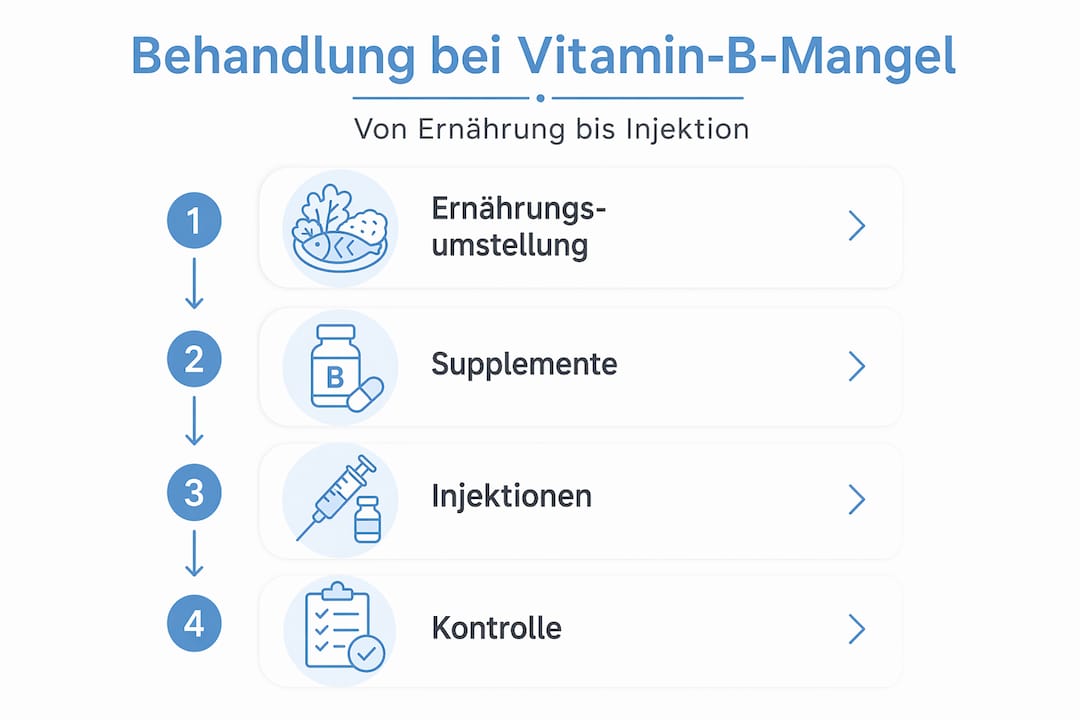
Treatment duration and monitoring: Blood formation generally improves within two to four weeks. Neurological symptoms take significantly longer: several months to up to a year is not uncommon. And some damage does not fully resolve. This underscores why early diagnosis is so valuable.
Pro tip: Anyone who has symptoms and begins treatment should not stop therapy on their own simply because their blood count and levels have improved. Neurological aftereffects take time to resolve, and stopping treatment too early can lead to a relapse.
Anyone who also explores iron and B12 deficiency symptoms will find more information at Mybody-x, as both deficiencies cause similar fatigue symptoms and often occur together.
My assessment of early detection
I repeatedly see people come to us with months of fatigue, strange tingling sensations, and low mood, even though they had already seen a doctor and had been told that “nothing was found.” It is frustrating and, unfortunately, not uncommon.
The problem often lies in diagnostics. A normal serum B12 level is considered a clean bill of health in many places. Yet science has known for years that MMA and homocysteine are more reliable markers of actual cellular nutrient status. Anyone who measures only serum B12 sees only part of the picture.
What I have also learned: When it comes to neurological symptoms, patience is not a weakness but a medical necessity. Neurological symptoms respond slowly to treatment, and anyone expecting a full recovery after four weeks will be disappointed. Sometimes it takes a year. Sometimes some symptoms remain. People need to be told that honestly.
My clear advice: Anyone who belongs to a risk group—whether due to a vegan diet, medication, digestive disorders, or age—should not wait for symptoms. Regular testing that also includes functional markers is the smartest preventive measure you can take.
— MYBODY
Targeted Vitamin B Status Testing at Mybody-x
Anyone who truly wants to know their vitamin B status cannot avoid a thorough laboratory analysis. Mybody-x offers certified blood tests that measure not only serum B12 but also functional markers such as homocysteine. This gives you a complete picture of your nutritional status, conveniently from home. The result comes with a personalized report containing specific dietary recommendations and options for action. No more guesswork or missed warning signs. On the Mybody-x homepage, you will find the right test package for your situation. With more than 11,300 satisfied customers and an ISO-certified laboratory, Mybody-x stands for quality you can rely on.
FAQ
What are the first signs of vitamin B deficiency?
The most common early symptoms are persistent fatigue, tingling in the hands or feet, difficulty concentrating, and paleness. These symptoms are nonspecific and are often attributed to other causes.
What should you do if you have a vitamin B12 deficiency?
If a deficiency has been confirmed, you should see your doctor and request a blood test with functional markers. Depending on the cause, high-dose oral supplements or injections may be considered. You can find more information about what to do for vitamin B12 symptoms at Mybody-x.
What should you eat if you have a B12 deficiency?
Animal products such as liver, mackerel, eggs, and dairy products provide the highest amounts of vitamin B12. People following a vegan diet should rely on fortified foods and targeted supplementation, as plant-based sources contain little usable B12.
Can a vitamin B12 deficiency exist despite normal blood values?
Yes. Normal serum B12 levels do not rule out a functional deficiency. Methylmalonic acid and homocysteine provide a more reliable indication of whether the cells are actually receiving an adequate supply.
How long does recovery from vitamin B deficiency take?
Blood cell production usually returns to normal within two to four weeks. Neurological symptoms take significantly longer, in some cases up to a year, and may not always fully resolve. Early diagnosis and consistent treatment are therefore crucial.



Share now:
Food Intolerance Test: Which One Is Right?
At-home allergy blood test: Your path to certainty