
What does fasting before a blood draw mean? Your guide
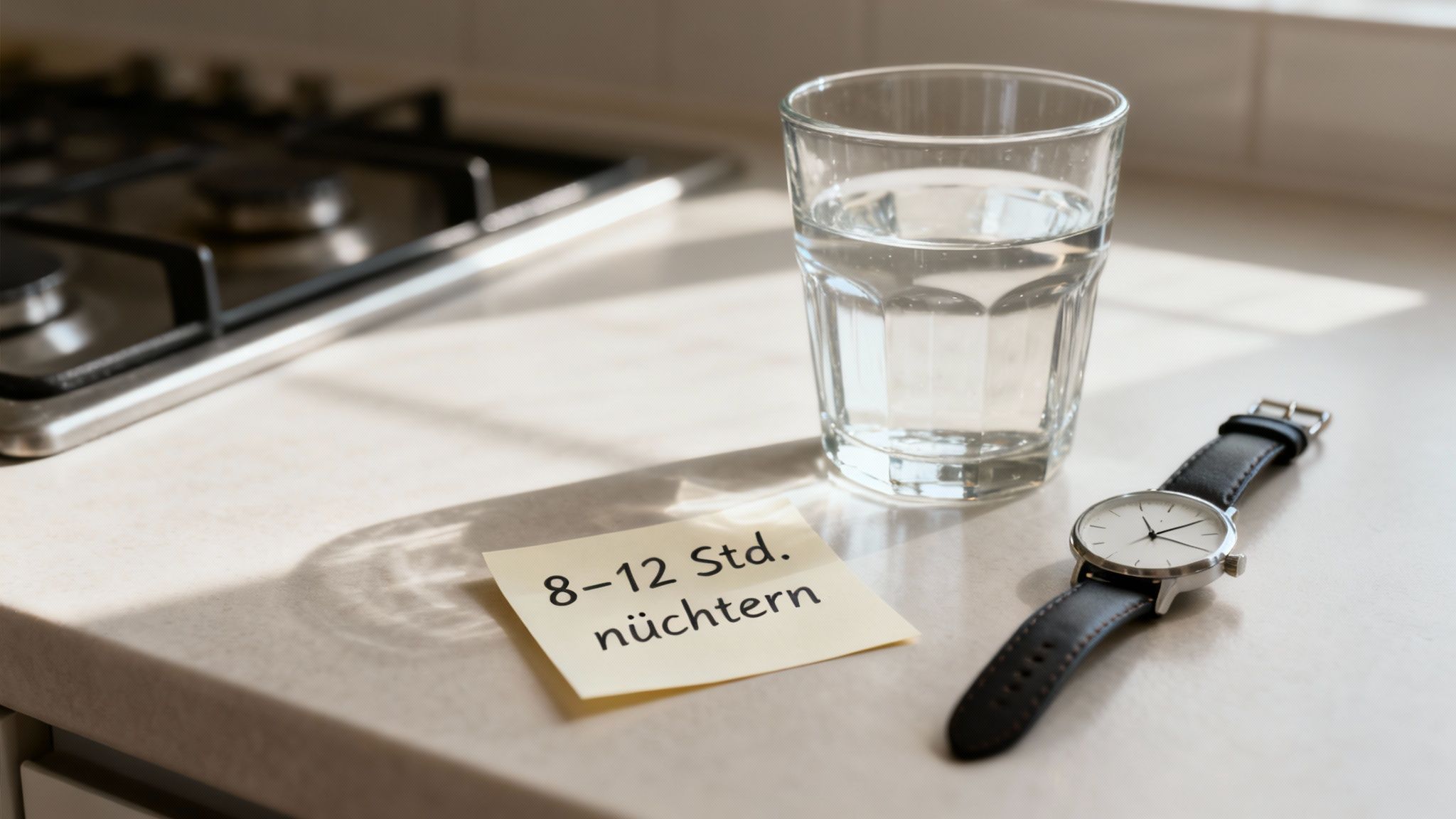
“You should come for your blood draw fasting”—you have surely heard this sentence before. But what exactly does it mean? Basically, it is very simple: You should not eat anything for 8 to 12 hours before the test and should drink only water or unsweetened tea. This simple rule is absolutely crucial for obtaining accurate and meaningful blood values in the end—in other words, a truly honest picture of your health.
What being fasting means for your blood test
Being “fasting” means much more than simply skipping breakfast. It is about giving your body a deliberate period of rest so that your blood values are not distorted by the short-term effects of your last meal.
Think of it this way: Your blood is like a mirror of your internal health. After eating, however, this mirror is temporarily “fogged up” because your body is fully occupied processing nutrients such as sugar and fats from your food and distributing them throughout your blood.
Why this rule is so important
This fasting period before having your blood drawn ensures standardized and therefore comparable conditions. It is the only way to reliably compare your values—whether measured by a doctor or with a mybody-x home test—with the general reference ranges. The goal is to obtain a clear and unaltered picture so that your health can be assessed correctly.
This approach is not a new trend, but an established medical standard in Germany for decades. The guidelines of the German Society for Laboratory Medicine (DGKL) also emphasize how crucial fasting is, especially when measuring blood sugar, cholesterol, and triglycerides, as these values react extremely quickly to what we eat. You can also read more about these standards at the VdK Germany Social Association.
So, being “fasting” is not an arbitrary obstacle but the most important prerequisite for a precise snapshot of your health. It ensures that the results are determined not by your last meal, but by your actual metabolism.
Whether you are planning a hormone test, nutrient test, or intolerance test, proper preparation is always the first step toward a result you can rely on. This is especially true of mybody-x home tests, where you are responsible for carrying them out correctly. You can find detailed instructions on how to collect the sample correctly at home in our capillary blood test instructions. This ensures that you get the most out of your analysis.
How a meal can distort your blood values
Why is fasting actually so important? Imagine your blood sugar level as a calm lake early in the morning. Every meal, especially a sugar- or fat-rich breakfast, is like a large stone you throw into it: It creates high waves and stirs everything up.
Something very similar happens in your bloodstream. After eating, your body is fully occupied with converting carbohydrates into glucose and processing fats. These nutrients enter the bloodstream directly, causing values such as blood sugar and blood fats (triglycerides) to rise sharply for a while.

These values are particularly sensitive
For a short period, your blood values look completely different from their resting state. This is a completely normal process, but it can significantly distort the results of your mybody-x nutrient or hormone test. An artificially elevated value could falsely indicate a problem, even though your metabolism is simply doing its job.
These values are particularly sensitive to food:
- Glucose (blood sugar): Shoots up immediately after carbohydrate-rich meals.
- Triglycerides (blood fats): Increase significantly after fatty foods.
- Cholesterol: Can also be affected by the last meal.
- Certain hormones: Some hormone levels also fluctuate after eating.
A 2018 study demonstrated this impressively: In 78 percent of patients who followed the fasting requirement, triglyceride levels were on average 10 to 15 percent lower than in those who had eaten shortly beforehand. Since laboratory reference ranges are based on fasting conditions, accurate results are only possible this way. The Sozialverband VdK also offers further insights on this topic.
So it is not about a rigid rule, but about obtaining a clear and unaltered snapshot of your health. This is the only way to be sure that the results – such as those obtained in a comprehensive blood count, for example – truly reflect your long-term state of health. In our article, you can learn more about what is tested in a comprehensive blood count.
A tried-and-tested rule for reliable laboratory results
Being asked to arrive at a blood test fasting is not harassment, but a method that has been tried and tested for decades to enable truly reliable diagnoses. This simple rule has deep roots in medicine and is absolutely crucial for the quality of your laboratory results.
Imagine that you want to compare two apples. This is only possible if both grew under the same conditions. The same applies to blood values. Doctors recognized early on that the values of different people can only be meaningfully compared when the initial conditions are the same. Fasting quickly became the gold standard for ruling out confounding factors such as temporarily elevated sugar or fat levels.
The gold standard for comparability
This standardized approach ensures that your values can be compared with the official reference ranges – because these were also determined in fasting individuals. This is the only way to get a clear, unaltered picture of your metabolism.
The importance of this rule is firmly rooted in German medical history. A survey by the Robert Koch Institute showed that 92 percent of family doctors in Germany ask their patients to come to the blood draw fasting. A long time ago, the German Nutrition Society (DGE) already recommended eating the last meal at least twelve hours before the test. A practice that has stood the test of time to this day. You can find more fascinating background information about blood draws here.
So if you follow the instructions for your mybody-x home test and remain fasting, you are following an important medical tradition. This provides the best foundation for maximum accuracy, allowing you to fully trust your results.
Ultimately, the fasting rule is a small but extremely important step. It ensures that your blood values reflect your long-term state of health – and not simply last night's delicious dinner.
When you don't have to fast
First, the good news: You don't have to go without breakfast for hours before every blood test. The idea that every blood draw must be done on an empty stomach persists – but it is actually a myth. For many analyses, a previous meal makes no difference at all and does not distort the results in the slightest.
Knowing about these exceptions is invaluable because it relieves unnecessary stress before a test. For some examinations, it simply does not matter whether you have eaten shortly beforehand. Knowing when discipline is required and when you can stay completely relaxed can greatly help you prepare.
Tests without a fasting period
For certain blood values, the concentration is so stable that eating shortly beforehand makes little difference. These include, for example:
- Thyroid hormones (TSH, fT3, fT4): These values change very slowly. They reflect the long-term function of your thyroid, not what you ate this morning.
- Many hormone tests: Other hormones, such as sex hormones, are often unaffected by meals as well. You can find out how to keep track of your hormone levels, for example, in our article on measuring cortisol.
- Inflammatory markers (e.g. CRP): Whether you have acute or chronic inflammation in your body cannot be hidden or intensified by eating breakfast.
- Food intolerance tests (e.g. IgG4): Here, we examine your immune system’s long-term response to specific foods—not acute digestion.
Science takes a similar view, by the way: The fasting rule does not always need to be so strict. A study involving children showed that the differences in most blood lipid levels between fasting and non-fasting samples were surprisingly small. The strict requirement is therefore not set in stone. The Ärztezeitung provides fascinating insights into this.
Whether you are taking a mybody-x home test or visiting a doctor, always read the instructions carefully. This is the only way to be absolutely sure what applies to your specific analysis.
Your checklist for perfect preparation
To make sure your blood collection goes smoothly, we have put together a simple checklist for you. It guides you step by step through the crucial 24 hours before the test and answers the most important questions so you can be fully prepared.
Proper preparation is essential for reliable results. This is especially true when you use a mybody-x home test, where you are responsible for carrying it out correctly. This guide will help you keep track of everything.
The following infographic shows you at a glance which types of tests definitely require you to fast and when it is usually not necessary.
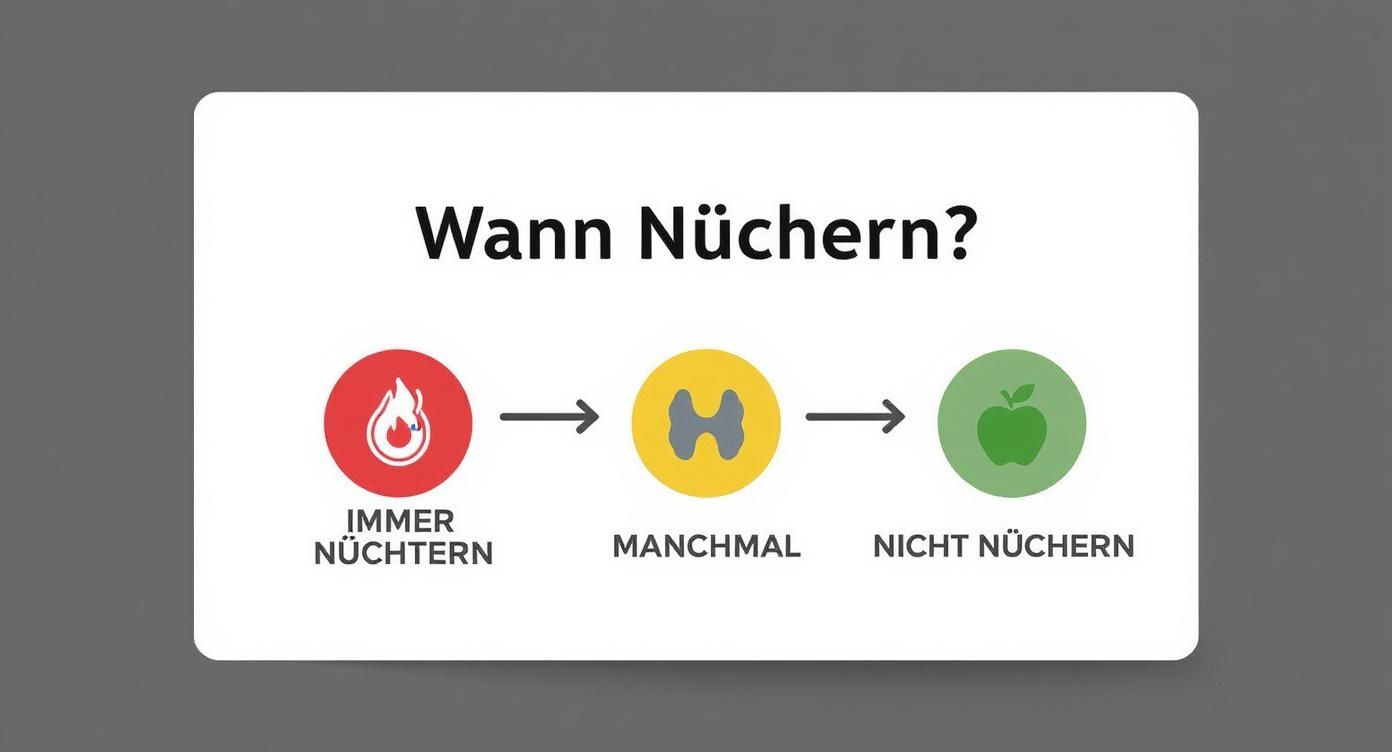
As you can see, fasting is particularly important for blood sugar and blood lipid measurements, while many other tests are considerably more flexible.
The 24 hours before the test: Your roadmap
So that you do not forget anything, we have summarized the most important steps for you in a practical table.
Blood draw checklist A step-by-step guide to optimal preparation for your blood draw, from the last meal to the time of the test.
| Time | Action | Important note |
|---|---|---|
| The evening before | Choose a light meal that is not too fatty. | Heavy meals and alcohol can distort liver and blood lipid values. |
| 8–12 hours beforehand | Your fasting period begins after your last meal. | From now on, only water or unsweetened herbal tea is allowed. |
| On the morning of the test | No breakfast, coffee, chewing gum, or smoking. | Even the smallest amounts can affect blood sugar and other values. |
| Immediately beforehand | Drink plenty of water. | This makes the veins fuller and makes the blood draw easier. |
| Medications | Discuss taking them beforehand with your doctor or laboratory. | Certain supplements (e.g., vitamins) may need to be paused. |
These simple rules will help you obtain an accurate and meaningful result that reflects your actual state of health.
One final tip: Drinking water is not only allowed but expressly encouraged! Good hydration makes your veins nice and full and makes the blood draw considerably easier—for you as well as for the person drawing your blood. If you would like to learn more, our guide explains whether you can drink water before a blood draw.
Blood draw: Your most frequently asked questions
Here we have compiled the most important questions about fasting for you—brief, concise, and straight from practical experience. Perfect if you need a quick answer before your test.
Can I drink water before a blood draw?
Yes, absolutely! Drinking water is not only allowed but highly recommended. If you are well hydrated, your veins will be fuller and easier to find. This makes the blood draw much more comfortable, especially when you are performing a home test.
The only important thing is that it must be plain water, without lemon, syrup, or sugar. Unsweetened herbal tea is usually fine too, but still water is always the safest option.
What happens if I accidentally eat something after all?
Don’t panic; it can happen. The most important thing now is to be honest. Be sure to inform the person drawing your blood. If you are using a mybody-x home test, simply contact our customer service team.
If you conceal it, your results could be misinterpreted. In the worst case, this could lead to unnecessary worry or incorrect health recommendations. It is usually wiser to simply reschedule the appointment to obtain a result you can rely on 100%.
Always be honest with yourself and your healthcare provider. An inaccurate result helps no one—least of all you. After all, it concerns your health.
Exactly how long do I need to fast: 8 or 12 hours?
It all depends on which levels are being measured. However, the general rule is usually a window of 8 to 12 hours.
- For blood lipids (triglycerides), 12 hours are generally necessary to obtain a meaningful result.
- For blood glucose (glucose), 8 hours is often sufficient.
It is best to always follow your doctor’s instructions or the instructions included with your mybody-x test kit. If in doubt, 12 hours is always the better choice.
Do I also need to fast for a hormone or intolerance test?
Not necessarily; it depends on the test in question. For many of our analyses, it is not necessary to take the test on an empty stomach.
Tests for certain hormones, such as thyroid levels, or for food intolerances, such as our IgG4 test, are often not affected by a previous meal. Nevertheless, always take a close look at the instructions for your mybody-x test kit before collecting your sample. This is the only way to ensure that you create the ideal conditions for your individual test.
Do you want to gain clarity about your body and take control of your health? Discover the variety of blood tests from mybody-x and find out what your body really needs. Visit us at https://mybody-x.com and start your journey toward greater well-being.



Share now:
Reduce Inflammation in the Body: Your Practical Guide
What is a blood test? Everything important explained