

Vitamin B6 Deficiency: Recognize Typical Symptoms in Women & Take Action
Do you often feel tired even though you’ve had enough sleep? Do you struggle with blemished skin, or does your mood constantly go on a roller coaster ride? We often attribute such vague signs to everyday stress. But there may be more to it: a nutrient deficiency. In particular, vitamin B6 deficiency causes very specific symptoms in women, ranging from skin problems to hormonal upheaval.
Why Vitamin B6 Is So Important for You as a Woman
Vitamin B6, also known as pyridoxine, is much more than just a single substance in your body. Think of it instead as a multitasking manager working behind the scenes on more than 100 essential processes to keep everything running smoothly. It’s a quiet hero for your well-being, especially as a woman.
Its most obvious job? It helps convert the nutrients in your food into pure energy. If you lack it, you can quickly feel sluggish and lacking in drive. But that’s far from all.
- For your mood: Vitamin B6 is essential when your brain wants to produce the feel-good neurotransmitters serotonin and dopamine. These neurotransmitters largely determine how you feel—whether motivated and balanced or rather down.
- For your nervous system: It plays a key role in forming the myelin sheath, a kind of protective covering for your nerve fibers. A deficiency can therefore sometimes manifest as an unpleasant tingling sensation in your hands or feet.
- For your hormonal balance: And this is where things become especially interesting for us women. Vitamin B6 plays a regulatory role in hormone metabolism. It can help relieve the typical symptoms of premenstrual syndrome (PMS) and promote more stable hormonal balance.
A deficiency in this important vitamin often develops very quietly. At first, the symptoms are so nonspecific that it’s easy to dismiss them as normal everyday complaints. That’s precisely why it’s so important to learn to listen to your body’s signals.
When you correctly interpret your body’s messages, you give yourself the opportunity to take proactive care of your health instead of merely reacting to symptoms.
This guide is designed to help you do exactly that. Together, we’ll decode the typical signs of vitamin B6 deficiency in women, look at the most common causes, and show you how a simple at-home test can finally give you clarity. Because knowledge is the first step toward regaining control over your well-being.
The key role of vitamin B6 in your body
Vitamin B6 is much more than just another nutrient on a long list. Think of it instead as a diligent director pulling the strings behind the scenes for more than 100 vital processes in your body. Without its clear instructions, quite a few things can become unbalanced—and we women often feel this particularly clearly when we are deficient.
Vitamin B6 (also known as pyridoxine) perhaps plays its most important role as your personal energy manager. It is, so to speak, the spark that transforms proteins, fats, and carbohydrates from your food into pure, usable energy for your everyday life. Without this spark, even the smallest task can suddenly feel like a marathon.
From nutrient to well-being
But vitamin B6’s talents go far beyond simply producing energy. It is also central to communication in your brain.
This is where it becomes an indispensable helper in the production of neurotransmitters. These are the messengers that transmit signals between nerve cells and therefore directly regulate your mood, sleep, and overall well-being.
- Serotonin: Known as the “happiness hormone,” it promotes balance and a positive feeling.
- Dopamine: This drives your motivation and internal reward system.
- GABA: This neurotransmitter has a calming effect and helps you cope better with stress.
When there is too little vitamin B6, this delicate chemical cocktail can quickly become disrupted. The result can be irritability, difficulty concentrating, or even depressive moods. Your emotional balance is therefore directly linked to a healthy B6 level.
You could say that vitamin B6 is the interpreter between what you eat and how you feel. It ensures that the right messages reach the brain, helping you feel energized and balanced.
Hormonal balance and strong defenses
For us women in particular, the connection between vitamin B6 and hormonal balance is extremely important. It helps regulate hormonal balance and can noticeably alleviate typical symptoms of premenstrual syndrome (PMS). By supporting the metabolism of estrogen and progesterone, it contributes to a more harmonious cycle.
The following infographic illustrates how closely vitamin B6's functions are connected to your body, your hormones, and your energy.
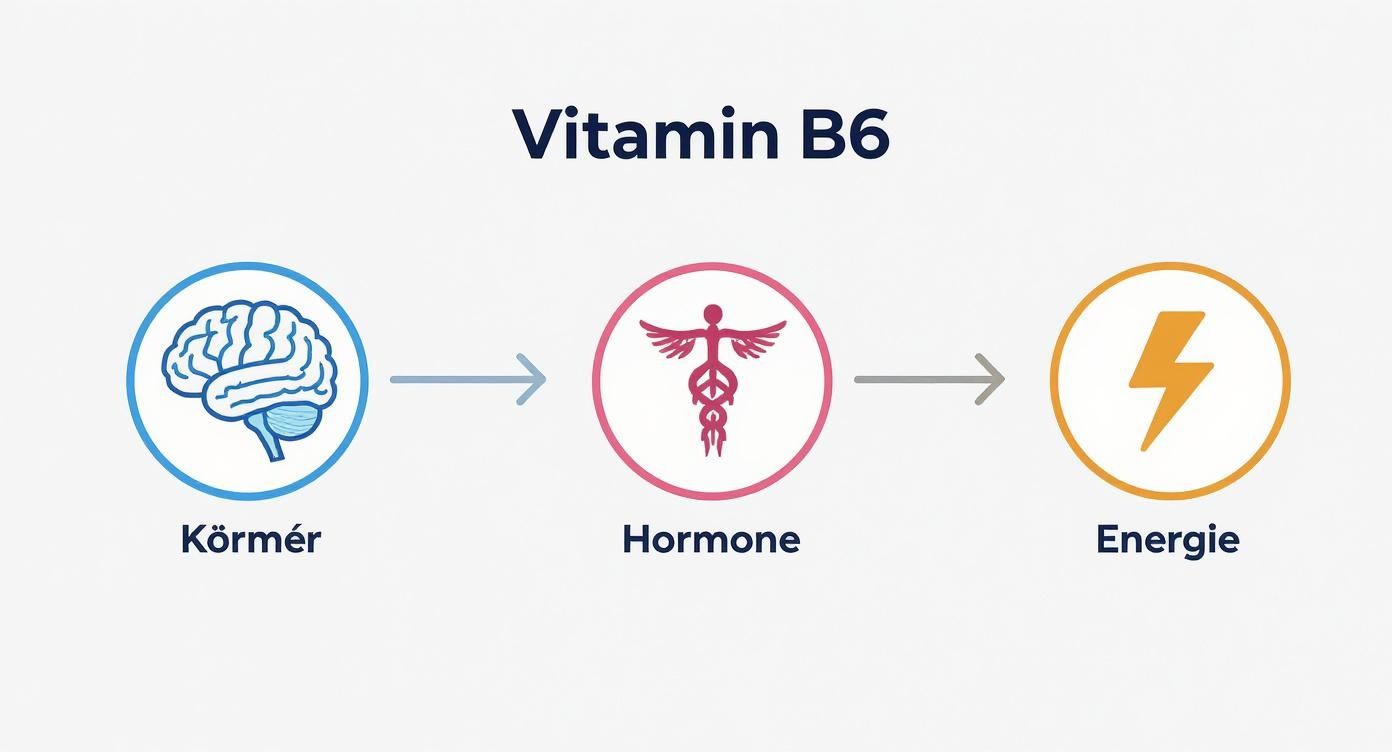
As you can see, its effects in the body form the basis for regulated hormonal balance, which in turn directly influences your energy in everyday life.
And as if that were not enough, a good B6 level is also essential for a strong immune system. It contributes to the production of antibodies and red blood cells—so a deficiency makes you more susceptible to infections.
If you would like to explore how different deficiencies interact in greater depth, you can find valuable information in our article about the science behind nutrient deficiencies. These complex connections show why a seemingly simple vitamin deficiency can have such far-reaching consequences.
Recognizing typical deficiency symptoms in women
A vitamin B6 deficiency usually develops quietly. The signs are rarely clear-cut and are all too easily dismissed as everyday stress or other minor ailments. That is precisely why it is so important to understand your body's subtle signals—especially those that occur particularly often in women.
The symptoms of vitamin B6 deficiency in women are incredibly varied. They usually become noticeable precisely where the vitamin plays a key role: in the skin, nerves, and hormonal balance.
When your skin is crying out for help
Your skin is often the first mirror to reveal nutrient deficiencies. When you lack vitamin B6, it often shows up in the face in a very classic way.
Typical skin problems include:
- Cracked corners of the mouth: Painful small cracks, also called rhagades, are a typical warning sign that you should not ignore.
- Seborrheic dermatitis: A flaky, sometimes itchy rash that is especially common in areas with many sebaceous glands—on the face, scalp, or upper body.
- Glossitis: Your tongue feels inflamed, swells, and develops a noticeably smooth, red surface.
These symptoms appear because vitamin B6 is essential for the regeneration and health of skin cells. When it is lacking, these important processes come to a halt.
Neurological and psychological warning signs
Because vitamin B6 plays a key role in the production of neurotransmitters such as serotonin and dopamine, a deficiency often affects your mood directly. Do you feel irritable for no apparent reason, have trouble concentrating, or feel emotionally on edge? These could be signs.
Another clear neurological sign is tingling or numbness in the hands and feet—as if a body part had “fallen asleep.” This phenomenon is called peripheral neuropathy and is caused by impaired nerve function. If you would like to learn more about how different deficiencies are connected, you can find valuable information in our guide to general nutrient deficiency symptoms.
Hormonal turbulence and PMS
For women in particular, the connection between vitamin B6 and their well-being throughout the cycle is often very noticeable. A deficiency can significantly worsen the symptoms of premenstrual syndrome (PMS).
A vitamin B6 deficiency can disrupt the delicate hormonal balance, often resulting in more pronounced mood swings, breast tenderness, or water retention before your period.
In general, a genuine vitamin B6 deficiency is rather rare in industrialized countries such as Germany, as a balanced diet is usually sufficient. Nevertheless, there are risk groups in which deficiencies occur more frequently. These include women who use hormonal contraceptives such as the pill, as estrogen preparations can lower vitamin B6 levels. Learn more about the background of vitamin B6 deficiency on netdoktor.de.
Recognizing these signs is the first and most important step. It’s not about worrying, but about becoming more attentive and understanding the causes behind the symptoms.
The most common causes of vitamin B6 deficiency
A vitamin B6 deficiency rarely comes out of nowhere. It is usually the result of certain lifestyle habits, health conditions, or a diet that simply does not meet your body’s needs. Knowing the most common causes can help you assess your own situation much better and take targeted action.
Sometimes it’s not that you’re taking in too little vitamin B6, but rather that your body temporarily needs more of it. Especially during periods of major physical change, such as pregnancy and breastfeeding, the need increases noticeably—after all, your body has to provide for not only you but also your child.
Lifestyle factors and diet
A crucial factor is often what ends up on your plate each day. A diet consisting mainly of highly processed foods may provide calories, but few valuable micronutrients such as vitamin B6. During industrial processing, much of the vitamin naturally present is simply lost.
Very restrictive or unbalanced diets can also quickly lead to an inadequate supply. If you eliminate entire food groups from your diet without providing a sensible replacement, you risk depriving your body of important building blocks for good health.
Another factor that is often underestimated is chronic alcohol consumption. Alcohol not only interferes with the absorption of vitamin B6 in the intestines but also accelerates its breakdown in the body. This significantly increases the risk of deficiency.
Hormonal contraception and medication
For women in particular, the connection between hormonal contraception and vitamin B6 levels is worth noting. Taking the contraceptive pill, especially preparations containing estrogen, can affect vitamin B6 metabolism and increase your body’s requirements. This does not automatically lead to a deficiency in every woman, but it does increase the risk.
In addition, certain conditions can hinder nutrient absorption in the intestines. Chronic inflammatory bowel diseases such as Crohn’s disease or celiac disease make it difficult for the body to effectively extract vitamins from food.
For adult women in Germany, a daily intake of around 1.4 mg of vitamin B6 is recommended. During pregnancy, this amount even rises to 1.8 mg. Although studies such as the National Nutrition Survey II show that most women are adequately supplied on average, the risk factors mentioned can quickly change this picture. You can find more information here about the official vitamin B6 intake recommendations from the German Federal Institute for Risk Assessment. Taking a close look at your personal circumstances is therefore always the best way to ensure that you are adequately supplied.
How to find out what your body is really lacking
Guessing will not get you anywhere. If you suspect that a vitamin B6 deficiency could be behind your symptoms, there is only one way to be sure: a targeted test. This turns a vague suspicion into concrete facts and puts you back in control of your health.
Fortunately, it is easier today than ever before. You do not need to make appointments or spend ages sitting in a waiting room. With modern self-tests, you can conveniently check your vitamin B6 level from home.
Your direct connection to your body: the mybody-x nutrient test
That is exactly why we developed the mybody-x nutrient test—to give you clarity quickly and easily. The test allows you to discreetly collect a small blood sample in the comfort of your own home.
The entire process is designed to be as simple as possible:
- Collecting a sample is easy: With a small, gentle prick to your fingertip, you collect a few drops of blood. The test kit contains everything you need, including an easy-to-follow step-by-step guide.
- Analysis in a certified specialist laboratory: You send your sample free of charge to our German specialist laboratory. There, experts precisely analyze your vitamin B6 level.
- Straight talk instead of medical jargon: You will receive your personal results report after just a short time. You can understand it at a glance even without a medical degree and immediately see whether your levels are within the healthy range.
A test gives you more than just a number. It is like a personal compass that shows you exactly where you stand. This way, you know what to do to get your vitamin B6 deficiency symptoms as a woman under control.
This direct insight into your body is the crucial first step. It replaces assumptions with knowledge and gives you a solid basis for finally making targeted adjustments to your diet or lifestyle.
If you want to learn more about the options available for checking your vitamin levels, also read our comprehensive article on vitamin B testing. This way, you can take active control of your well-being.
Replenish your vitamin B6 stores in a targeted way
A confirmed deficiency is no reason to worry. Instead, see it as your great opportunity to actively do something for your well-being. Once you know the cause, you can take targeted action. The key usually lies in a conscious, nutrient-rich diet.

Fortunately, nature provides us with a huge range of foods rich in vitamin B6. This allows you to replenish your stores naturally and keep them stable over the long term.
The best vitamin B6 sources
The simplest and most effective way to get your B6 levels under control is through your plate. Many delicious, everyday foods are true powerhouses of this important vitamin.
Here are some of the best sources for you:
- Animal products: Chicken and turkey breast, salmon, and mackerel are excellent sources. Beef liver stands out for its particularly high concentration.
- Plant-based powerhouses: Chickpeas, lentils, and green beans are fantastic vegan options. Among fruits, bananas are at the top, closely followed by avocados.
- Nuts and seeds: Walnuts, sunflower seeds, and pistachios are perfect snacks between meals and provide a good portion of vitamin B6 along the way.
Try incorporating these foods into your diet regularly. A salmon fillet for dinner, chickpea hummus as a dip, or a banana in your morning cereal—even small changes can make a huge difference.
Your diet is the most powerful tool for addressing the root cause of vitamin B6 deficiency symptoms in women. It supplies your body not only with B6, but also with many other important nutrients that work together.
When supplements make sense
Sometimes diet alone is not enough to quickly correct a pronounced deficiency or meet particularly high needs. In such cases, targeted supplementation with dietary supplements can be entirely appropriate.
But it’s important to remember: Never simply take high-dose supplements on suspicion! Supplementation should always be based on solid results, such as those from your mybody-x nutrient test. This is the only way to ensure that you give your body exactly what it really needs and avoid overdosing.
Ideally, you should also discuss the right dosage with a specialist. You can find out more about how to optimize your nutrient intake in our general guide to vitamins and minerals.
Your most frequently asked questions about vitamin B6
To wrap things up, we want to answer a few questions that are probably weighing on your mind. This way, you can put your new knowledge into practice right away and clear up any remaining uncertainties.
Can the pill really cause a vitamin B6 deficiency?
Yes, that is indeed possible. Hormonal contraceptives containing estrogen can significantly disrupt vitamin B6 metabolism and thereby increase your daily requirement. Of course, this does not mean that every woman who takes the pill will automatically develop a deficiency—but the risk is simply higher.
So if you take the pill and at the same time notice typical vitamin B6 deficiency symptoms as a woman, such as unexplained mood swings or skin problems, testing your current status could really shed some light on the situation.
How quickly will I notice an improvement if I change something?
It varies greatly from woman to woman. Of course, it depends heavily on how depleted your stores were and how consistently you change your diet or use supplements.
However, many women report the first positive changes after just a few weeks. Usually, energy levels and overall mood are the first things to improve. If you have neurological symptoms, such as tingling in your hands or feet, you may need a little more patience before they disappear completely.
Give your body the time it needs. Your stores do not replenish overnight. Notice the small improvements and do not put yourself under pressure—patience really is the key to success here.
Can too much vitamin B6 be harmful?
Absolutely, yes. A permanently high dose of vitamin B6 from supplements can harm the body and, in the worst case, even cause nerve damage. But do not worry: An overdose through a normal, balanced diet is virtually impossible.
That is exactly why it is so important not to take supplements based on guesswork. A test gives you the reassurance that you are giving your body exactly what it lacks—without the risk of meaning well but ultimately causing more harm than good.
Are you ready to stop guessing and finally get the facts? Find out what is really behind your symptoms and how well supplied you are with nutrients with a simple at-home test.
mybody-x provides you with reliable blood tests that give you clear insights into your body. Start your journey toward greater well-being now at https://mybody-x.com.



Share now:
Vitamin B12 foods for vegetarians: what meets their needs
Measuring cortisol at home: what a single result really tells you