

Estrogen deficiency and weight gain: Understanding the causes, finding solutions
A clear yes: estrogen deficiency can lead to weight gain, even if you have not changed your eating habits or exercise routine at all. This hormone is essentially the chief regulator of your metabolism. When its levels fall, your body reduces energy expenditure while simultaneously promoting fat storage—especially around the abdomen.
Why you gain weight despite having the same habits
Imagine estrogen as the long-standing, absolutely reliable manager of your metabolism. For years, it has ensured that your energy balance runs like clockwork. But what happens when this manager suddenly leaves the job? All the old rules suddenly seem to no longer apply.
You eat as usual, you are no less active than before, and yet the number on the scale steadily rises. This is not only frustrating but also deeply unsettling. But you are not alone. This phenomenon is one of the most common and burdensome effects of declining estrogen levels, especially during menopause.
Your metabolism shifts down a gear
Estrogen acts like an accelerator for your energy metabolism. It helps your cells efficiently convert sugar into energy. When estrogen levels fall, your body essentially takes its foot off the gas. Your basal metabolic rate—in other words, the amount of energy you burn while completely at rest—noticeably decreases.
Specifically, this means that your body now needs fewer calories than before to keep its vital functions running. So if you continue eating as usual, you will reach a calorie surplus much more quickly, which goes directly into your fat stores.
This change often happens gradually, but it is incredibly impactful. Many women find that they suddenly gain one to two kilograms per year without knowing why. This is not a personal failure, but simply a new biological reality. If you would like to learn more about what this feels like, read our article about the symptoms of a slow metabolism.
To make these connections even clearer, we have summarized the key points for you in a table.
Quick overview: How estrogen deficiency directly affects your weight
This table gives you an overview of the key connections between declining estrogen levels and the noticeable changes in your body.
| Changes caused by estrogen deficiency | What this means for your body | The direct impact on your weight |
|---|---|---|
| Slower basal metabolic rate | Your body burns fewer calories at rest. | A calorie surplus develops more quickly, even with the same diet. |
| Changed fat distribution | Fat is preferentially stored around the abdomen (viscerally) rather than around the hips & buttocks. | An increase in abdominal fat, which is considered particularly metabolically active and unhealthy. |
| Disrupted hunger & fullness cues | Your appetite increases while your sense of fullness decreases. | You tend to eat more and have cravings more often, which promotes weight gain. |
The table makes it clear: several mechanisms interact here, making it harder for you to maintain your weight.
Your body becomes a fan of belly fat
A declining estrogen level changes not only whether you gain weight, but above all where. In the past, the hormone ensured that fat reserves were distributed more around the hips, buttocks, and thighs—the classic female “pear shape.”
As estrogen levels decline, the male hormone testosterone, which is also present in the female body, has relatively more influence. Testosterone, in turn, directly promotes fat storage in the midsection. The result is an increase in so-called visceral abdominal fat, which is not only cosmetically bothersome but also metabolically very active and can pose long-term health risks.
Hunger and fullness get out of balance
As if that weren’t enough, estrogen deficiency also disrupts your feelings of hunger and fullness. Estrogen has an appetite-suppressing effect, after all. When there is less of it, you may:
- You feel hungry more often: Your body sends the signal that it needs more nourishment more frequently.
- You have a harder time feeling full: The pleasantly full feeling sets in more slowly or only weakly.
- You have more cravings for sweets: Fluctuating blood sugar levels can further fuel the desire for quick carbohydrates.
This knowledge is the first and most important step toward regaining control. It’s not about eating even less from now on or exercising obsessively. It’s about adapting your strategy to your body’s new rules.
The biological reasons for hormonal weight gain
Now that you know the basic principle, let’s take a look behind the scenes—directly into the fascinating biology of your body. Don’t worry, this won’t be a dry lecture. It’s about understanding why your body suddenly starts playing by new rules and why estrogen deficiency weight gain is so common.
Once you know why your body stores fat around your abdomen or your basal metabolic rate decreases, you can take much more targeted and effective action. Because this has nothing to do with a lack of willpower, but with changed biological rules.
Your metabolic engine is running on low power
Imagine your metabolism as a car engine. For years, estrogen was premium fuel that kept the engine running at full speed while remaining highly efficient. When this hormone is lost, it is as if you suddenly switched to a more economical but also weaker fuel mixture.
Your body slows down its basal metabolic rate—the amount of energy it uses at complete rest for breathing, heartbeat, and cell repair alone. This process already begins very gradually around the age of 30 because muscle mass slowly declines. And muscles are, after all, your most important calorie burners.
Fewer muscles and lower estrogen levels therefore act as a double brake on your energy expenditure. Your body now needs about 300 to 500 fewer calories per day than it did a few years ago just to maintain its weight.
If you continue eating as usual, a calorie surplus develops almost unnoticed. It is no longer simply burned but goes directly into your reserves for “leaner times.” That is exactly why conventional diets so often fail during this phase of life—they ignore this new metabolic reality.
This infographic shows you at a glance how estrogen deficiency affects the three key areas of your body.
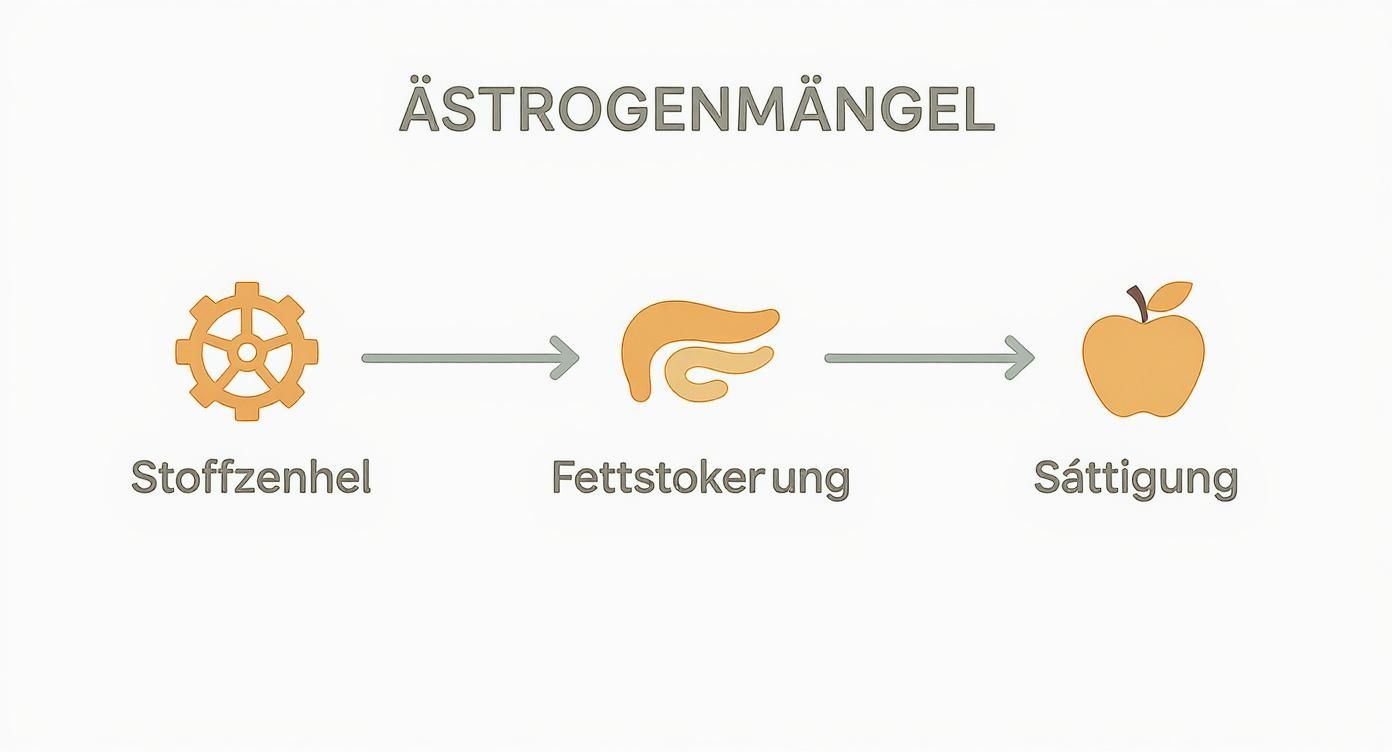
As you can see, the deficiency directly affects your metabolism, fat storage, and sense of fullness. A real trio that strongly promotes weight gain.
The new preference for visceral belly fat
One of the most frustrating changes is probably the redistribution of body fat. In the past, estrogen ensured that fat reserves accumulated mainly around the hips and thighs. As estrogen levels fall, the male hormone testosterone gains influence relatively speaking.
Testosterone, in turn, directs fat storage preferentially toward the midsection. The result: an increase in what is known as visceral fat. This fat is particularly insidious because it accumulates not only under the skin but also directly around your internal organs, such as the liver and intestines.
- Metabolically active: Visceral fat is not a passive storage depot but an active gland. It continuously releases pro-inflammatory messengers that further disrupt metabolism.
- Health risk: It has been shown to increase the risk of cardiovascular disease, insulin resistance, and type 2 diabetes.
This change is deeply rooted in biology and explains why even slim women suddenly develop a small, stubborn belly. It is a direct physical signal of the altered hormonal balance. You can read more about the diverse functions of this hormone in our article about what estrogen actually is.
The change in your body composition
The number on the scale is only one side of the story, however. At the same time, a rather unfavorable change is taking place in your body composition: As body fat increases, muscle mass decreases. This process is called sarcopenia, and unfortunately, estrogen deficiency accelerates it.
The first and most important step is to understand that these processes are biological and have nothing to do with a lack of discipline. The second is to recognize that you can actively influence these new rules.
When estrogen deficiency also affects younger women
The idea that estrogen deficiency and the associated weight gain only affect women going through menopause persists. But that is a misconception. Hormonal imbalances can occur at any age. Even if menopause is still far away, your body may be sending you signals that your estrogen levels are too low—and frustrating weight gain around your abdomen can be one of them.
Think of your hormonal system as a finely tuned orchestra. Different stages of life, stress, or your lifestyle can disrupt this delicate balance. Suddenly, symptoms appear that you may never have associated with your hormones. Yet this is often the key to your well-being.
Causes of estrogen deficiency at a young age
Low estrogen levels before perimenopause can take many forms and are often closely linked to your daily life, your health, and particular stages of life. It is not just about getting older, but about the complex processes taking place in your body.
The most common triggers include:
- PCOS (polycystic ovary syndrome): This hormonal disorder is one of the most common among women of reproductive age. The balance between estrogen and male hormones (androgens) is often disrupted, which can seriously throw metabolism off track and promote weight gain.
- The period after giving birth: After pregnancy, estrogen and progesterone levels drop suddenly. This hormonal “crash” can cause not only mood swings but also changes in metabolism, making weight loss a real challenge.
- Intense stress: Chronic stress is pure poison for your hormonal system. Your body releases more of the stress hormone cortisol, which can severely inhibit the production of sex hormones such as estrogen.
- Eating disorders or being severely underweight: Your body needs a certain percentage of body fat to produce enough estrogen. When you are severely underweight or malnourished, the body switches to energy-saving mode and reduces hormone production.
- Excessive exercise: Competitive sports without enough recovery and calories put the body into a state of stress. This can suppress ovulation and send estrogen levels plummeting.
You see, your body reacts incredibly sensitively to everything that happens around it and inside it. If you know the possible causes, you can interpret the signals much better.
Low estrogen levels at a young age are not uncommon. They are a sign from your body that something has become unbalanced. By listening to it, you give yourself the chance to take countermeasures early.
When protection against belly fat fades early
Estrogen is something like your body's natural bodyguard against the accumulation of visceral belly fat—the fat that forms around your organs. It helps ensure that fat deposits tend to accumulate around your hips and thighs instead. When estrogen levels fall, regardless of age, this protective shield becomes weaker. At the same time, the male hormone testosterone gains relatively more influence, and the result is clear: more fat accumulates around the midsection.
This problem is widespread. You can read more about it in the Pharmazeutische Zeitung. So instead of continuing to wonder why your favorite jeans suddenly feel tight around the waist, create clarity. Estrogen deficiency and the resulting weight gain are absolutely treatable once you know the cause. A simple test can give you certainty about your hormone status—and is the first, decisive step toward regaining control.
Test your hormone status easily and safely
When it comes to your health, guessing and vague assumptions simply won't get you anywhere. You sense that something is out of balance, struggle with frustrating weight gain due to estrogen deficiency, and notice many small changes in everyday life. All of this calls for a clear answer, not another question mark. That's why the first, decisive step toward a real solution is always gaining clarity about your hormone status.
Fortunately, this step is much easier today than most people think. You don't have to wait weeks for an appointment with a specialist or feel uncomfortable in a crowded waiting room. With an at-home hormone test from mybody-x, you take control yourself—directly and without complications.
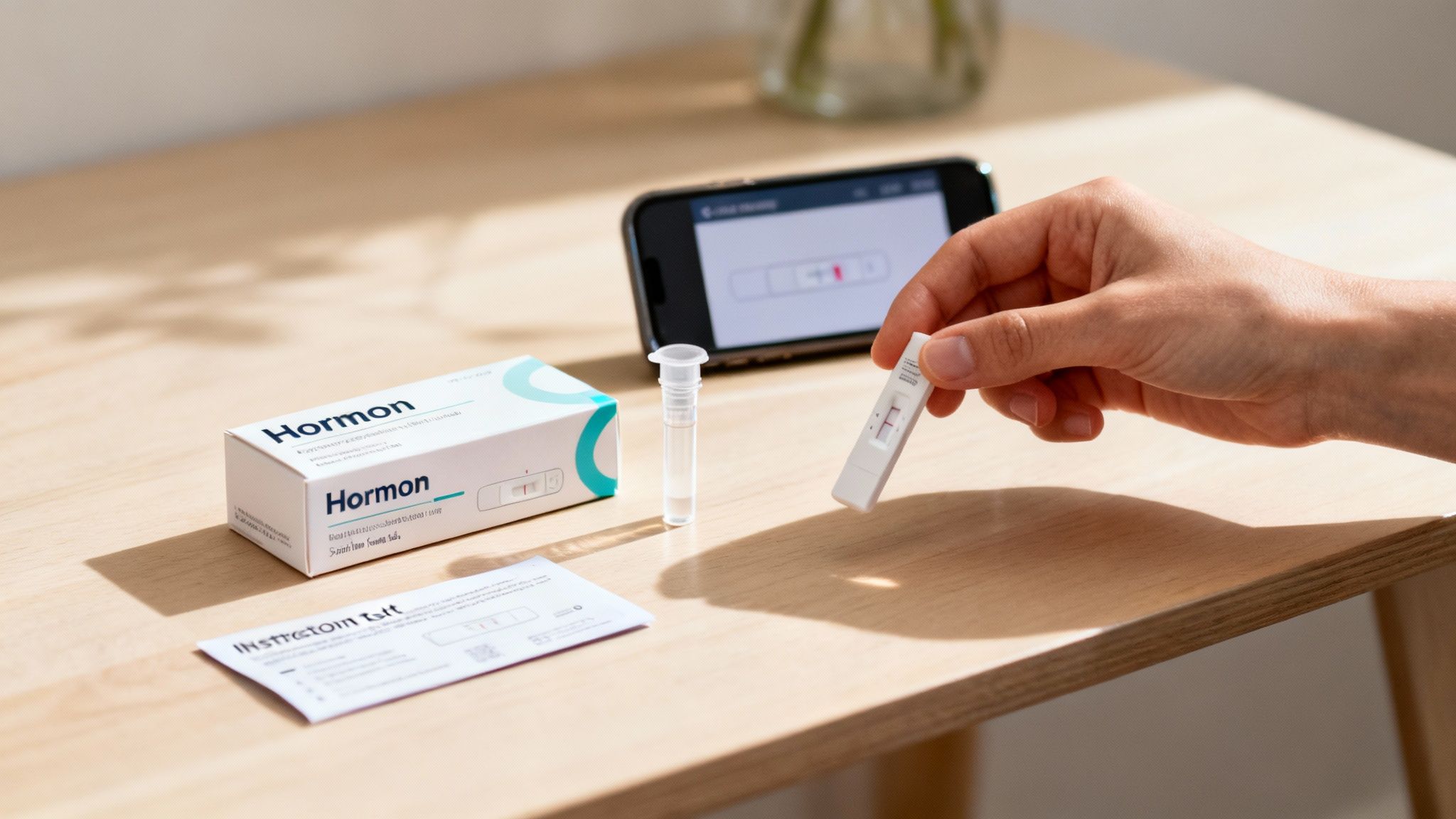
The mybody-x at-home hormone test
Imagine being able to get a precise snapshot of your hormone balance in your familiar surroundings, without stress or appointment pressure. That’s exactly what the mybody-x hormone test makes possible. We developed it to show you, simply and reliably, where you currently stand hormonally.
The entire process is designed to fit seamlessly into your everyday life:
- Convenient sample collection: You can easily collect the sample yourself at home. Our instructions are simple to follow and guide you through the process step by step.
- Free return shipping: You send your sample in the prepared envelope directly to our certified German specialist laboratory.
- Professional laboratory analysis: Our experts evaluate your sample according to the highest scientific standards. This ensures that you receive results you can rely on.
This process replaces uncertain guesswork with a solid, scientifically sound data foundation. That’s the difference between groping in the dark and taking targeted action.
Understanding your personal hormone profile
Your results are available after just a few days. But we won’t leave you alone with the numbers. Instead of complicated technical jargon, you’ll receive an analysis that presents your personal hormone profile graphically and explains it clearly. At a glance, you’ll see which levels are in the green zone and where action may be needed.
Knowledge is power—especially when it comes to your health. A clear picture of your hormone levels is the key to understanding the causes of your weight gain and setting the right levers in motion.
This clarity is often the turning point. It gives you the foundation for making informed decisions. Suddenly, you can adjust your diet with purpose, optimize your exercise program, and shape your lifestyle so that it truly supports your body. If you want to learn more about how you can test your hormone balance, you’ll find all the details in our related article.
Your result is more than just a piece of paper—it’s your personal map. With this knowledge, you take back control and turn uncertainty into active self-care. It’s your chance to stop working against your body and start a healthier future together with it.
Your personal strategy against hormonal chaos
Okay, you now have clarity about your hormone levels—great! That means the most important step is done, because you now know the cause. Now the exciting part begins: you take back control and can take targeted action. Here you’ll find a concrete plan to guide you.
We will skip the usual platitudes here. Instead, we will focus entirely on what really makes a difference for weight gain due to estrogen deficiency. It is about giving your body exactly what it needs during this new hormonal phase of life.

Rethinking Blood Sugar and Nutrition
Due to estrogen deficiency, your body reacts much more sensitively to fluctuations in blood sugar. Imagine your insulin level riding a roller coaster—each of these wild rides fuels cravings and promotes fat storage, especially around the abdomen. Your most important mission, therefore, is to keep your blood sugar level as stable as possible.
You can achieve this by putting your meals together intelligently. Every time you eat, these three building blocks should be on your plate:
- High-Quality Proteins: They are the anchor for your blood sugar. Foods such as fish, lean meat, eggs, legumes, and tofu keep you full for a long time and protect your valuable muscle mass.
- Healthy Fats: Avocados, nuts, seeds, and healthy oils (such as olive or flaxseed oil) are your allies. They slow the absorption of sugar into the bloodstream while also having an anti-inflammatory effect.
- Fiber-Rich Carbohydrates: Leave empty calories from white flour and sugar behind. Instead, choose whole grains, plenty of vegetables, and some fruit. Fiber not only keeps you full but also nourishes your beneficial gut bacteria.
Think of the simple formula with every meal: Protein + Fat + Fiber. This helps you avoid nasty cravings and supplies your body with steady energy instead of overwhelming it with sugar spikes.
Strength Training Instead of Hours of Cardio
When estrogen is no longer protecting your muscles, targeted strength training becomes your most effective weapon. Your muscles are like small power plants that burn calories around the clock—even when you are relaxing on the sofa. The more muscle mass you have, the higher your basal metabolic rate.
Say goodbye to the myth that you have to sweat for hours on the treadmill. Short, intense strength-training sessions are much more effective now. They send your body an unmistakable signal: preserve and build muscle! This is the crucial factor in keeping your metabolism running efficiently and fighting weight gain due to estrogen deficiency.
The Power of Stress Management and Sleep
Two often overlooked but absolutely crucial factors are stress and sleep. Chronic stress floods your body with the hormone cortisol. This hormone is a true saboteur: It promotes fat storage around the abdomen while simultaneously accelerating muscle breakdown.
Restful sleep is just as important. At night, your body regenerates, regulates the appetite-controlling hormones ghrelin and leptin, and lowers cortisol levels. Sleep deprivation completely throws this sensitive system off balance, makes your appetite spiral the next day, and makes you more susceptible to unhealthy food choices.
Your holistic toolkit for this phase therefore consists of four pillars:
- Blood-sugar-stabilizing diet: Focus on protein, healthy fats, and fiber.
- Targeted strength training: Maintain and build muscle mass to boost your metabolism.
- Active stress management: Find your personal relaxation rituals—whether yoga, meditation, or a walk in nature.
- Sleep priority: Get 7–8 hours of restful sleep per night to bring your hormones back into balance.
This strategy is your way to tame the hormonal chaos and help your body find a new, healthy balance. If you would like to delve deeper into the topic, you will find valuable tips in our guide on how to regulate your hormones.
Your most frequently asked questions about estrogen deficiency and weight
The topic of estrogen deficiency and weight gain concerns many of you—and naturally raises questions. You are not alone! We have collected the most frequently asked questions and answered them briefly and concisely here, so you can quickly gain clarity about your situation.
Can I lose weight at all despite estrogen deficiency?
A clear yes! But—and this is the crucial point—it requires a different, smarter approach. The old diet rules no longer work because they simply ignore your changed metabolism and new hormonal reality. Forget about merely counting calories. It's not about eating less, but about eating differently and better.
Make a protein-rich diet your top priority. It keeps your blood sugar levels stable and curbs cravings. Combine this with targeted strength training to protect and even build your muscles—your body's own calorie-burning furnaces. Good sleep and smart stress management are not nice extras, by the way, but the foundation on which your success rests.
How quickly will I see results if I adjust my lifestyle?
Your best allies here are patience and consistency. Once you understand your hormone levels and start making targeted changes, many women feel the first positive effects after just a few weeks. This might mean more energy in everyday life, deeper sleep, or simply a more stable mood.
Visible results on the scale or in body fat are a process that generally takes several months. Your body needs time to adjust to the new balance and restore hormonal equilibrium. Give it that time. Every small step counts and lays the foundation for your long-term well-being.
Does only estrogen play a role, or do other hormones matter too?
Definitely not just estrogen! Your hormonal system is like a finely tuned orchestra—when one instrument is out of tune, the entire sound suffers. While estrogen deficiency is often the starting point for estrogen deficiency weight gain, other hormones also play a significant role.
Progesterone is particularly important here, as its levels often fall in parallel with estrogen, as is the stress hormone cortisol. Persistently elevated cortisol levels specifically promote fat storage around the abdomen while also accelerating muscle loss. In many cases, there is therefore not an isolated deficiency but an imbalance in the ratio between the hormones.
That is precisely why it is so valuable to look at the bigger picture instead of just one individual value. A comprehensive test like the mybody-x hormone test provides the overall picture you need and shows where the real levers in your body are.
What is the first sign of estrogen deficiency?
Weight gain, especially around the midsection, is a very noticeable symptom, but it often does not appear first. Many women notice other, sometimes subtler, changes in their bodies and well-being beforehand.
Typical early signs may include:
- Sleep disturbances: You constantly wake up at night or cannot fall asleep in the first place.
- Hot flashes & night sweats: Sudden waves of heat that overwhelm you out of nowhere.
- Mood swings: You become irritable more quickly, feel more anxious, or feel down for no apparent reason.
- Dry skin and mucous membranes: Your skin feels tight and less elastic.
- Declining libido: Your desire for intimacy is noticeably decreasing.
Do some of these points sound familiar? Then taking a closer look at your hormone status could be the crucial next step toward understanding the causes and finally taking active countermeasures.
Do you finally want clarity instead of continuing to stumble in the dark? With mybody-x hormone tests, you get a clear picture of your hormone status—simply and conveniently from home. Discover the possibilities now at https://mybody-x.com and take control of your health again.


Share now:
What hemoglobin level is normal? Your easy-to-understand guide
Dietary Supplement Test: Find out what your body really needs