
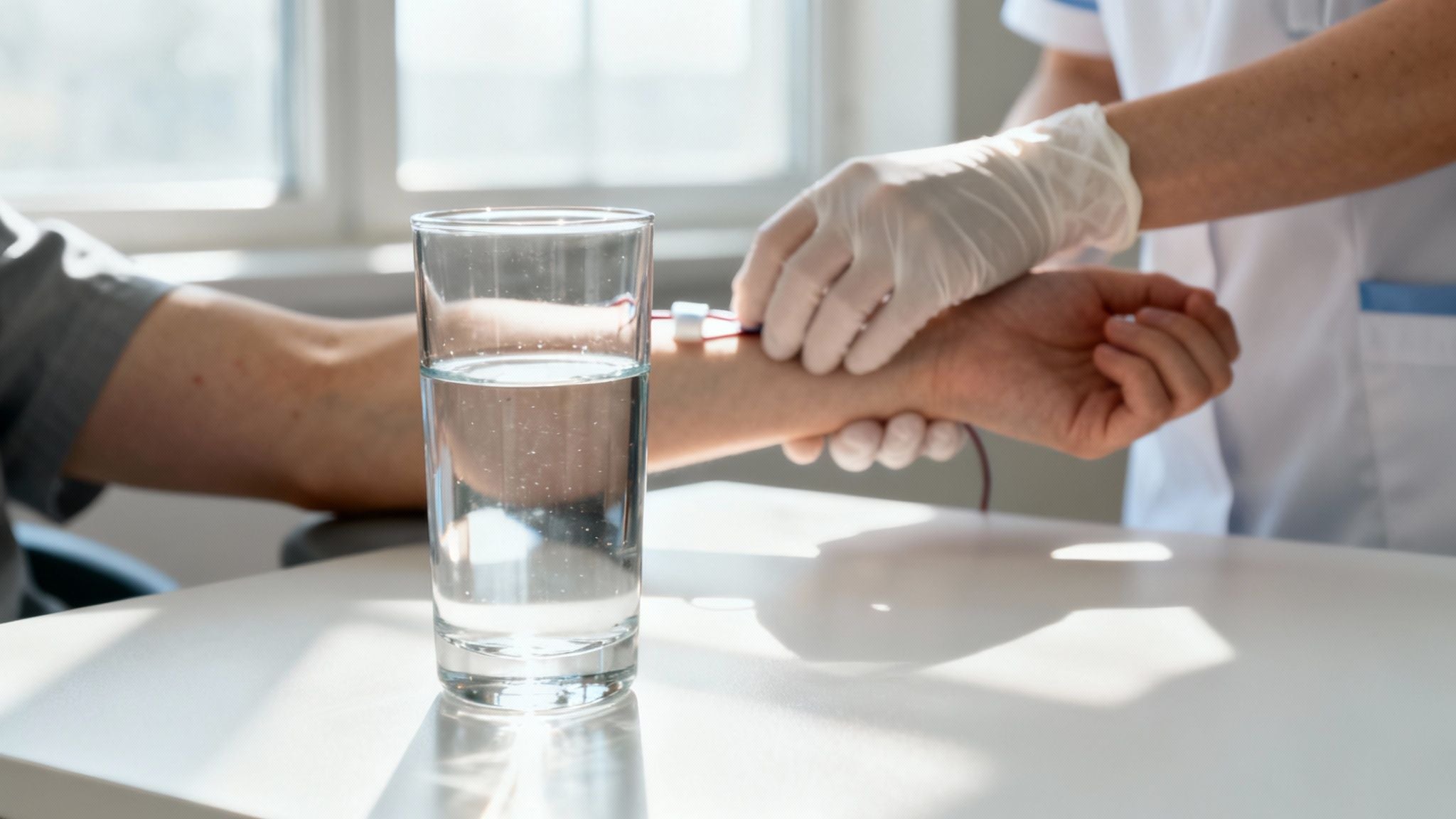
Is it okay to drink water before having blood drawn? A brief explanation.
You're probably wondering: Is it okay to drink water before having your blood drawn? The answer is a resounding yes! Water is not only permitted, but actually highly recommended. This small detail can make the entire process much more comfortable for you and the results of your test more accurate – whether you're planning a nutrient, hormone, or intolerance test from mybody-x.
Why drinking water before a blood test is so important
Many people are unsettled when their doctor tells them to come for a blood test "fasting." This is often mistakenly equated with completely abstaining from all liquids. However, this is a widespread misconception that only complicates the process unnecessarily.
"Fasting" almost always refers only to abstaining from solid food and drinks containing sugar, milk, or fat – and even then, only for a specific period before the test. Still water is definitely not included.
Three reasons why your body will thank you for water
Adequate hydration before blood collection has several benefits that you will feel immediately:
- Better veins: When you're well hydrated, your veins are fuller and much easier to find. This makes it easier for medical personnel to insert the needle quickly and accurately – meaning less pricking for you.
- Smooth blood flow: Sufficient water intake ensures that your blood is slightly thinner. It flows more easily, which shortens the time required for the blood draw and ensures the quality of the sample.
- Stable circulation: Good hydration keeps your circulation stable. This significantly reduces the risk of feeling dizzy during or after weight loss.
Remember: Water is the only beverage that doesn't disrupt your blood levels. Unlike coffee, juice, or soft drinks, it doesn't affect blood sugar or blood lipids. This gives you an accurate picture of your health.
Experts repeatedly confirm that you can drink as much water as you like before a blood test. It simply helps promote blood flow and, as mentioned, does not distort the results.
To give you a quick overview of what is and isn't possible, we have compiled a small table for you here.
Drink check before blood draw
A quick overview of which liquids are allowed and which you should avoid to prevent falsifying your test results.
| beverage | Recommendation | Why it's important |
|---|---|---|
| Still water | ✅ Highly recommended | Hydrates the body, improves blood flow, and does not distort test results. |
| Unsweetened tea | ⚠️ With caution | Some herbal teas can affect blood test results. Black tea contains caffeine. It's best to avoid it. |
| Coffee (black) | ❌ Not allowed | Caffeine can temporarily alter blood pressure and other vital signs. |
| Juices & Sodas | ❌ Not allowed | The high sugar content distorts blood sugar levels and other metabolic parameters. |
| Milk & Milk Drinks | ❌ Not allowed | They contain fats and sugars, which strongly affect blood lipid and blood sugar levels. |
So when in doubt, stick with still water; you can't go wrong with that.
Whether you're taking a nutrient test, a hormone test, or an intolerance test from mybody-x – proper preparation is always key to reliable results. You can also learn how to best prepare for different analyses in our other articles about blood tests .
What "fasting" really means for your blood test
The term "fasting" before a blood test often causes confusion and sounds quite strict at first. But don't worry: you definitely don't have to stay thirsty. It's simply about not eating for a certain period of time so that your blood test results are completely reliable.
As soon as you eat, sugars, fats, and proteins enter your bloodstream. These nutrients directly influence many lab results, such as blood sugar and cholesterol. Eating a meal shortly before a test would immediately alter these values and render the result invalid.
Why the right timing is so important
For most blood tests, we recommend a fasting period of eight to twelve hours . This timeframe is perfectly sufficient for your body to digest your last meal and process all the nutrients. This ensures that your results reflect your body's true baseline condition – and are not distorted by a late dinner or an evening juice.
Especially with the analyses from mybody-x, this preparation is absolutely essential:
- The nutrient test aims to measure your actual storage levels, not the vitamins you just ingested with breakfast.
- During hormone testing, certain foods can temporarily boost or inhibit hormone production, which would distort the measurement results.
An unbiased result is the basis for reliable insights into your body and meaningful recommendations for action. Sobriety ensures the quality of your analysis.
The easiest way to bridge this gap is to schedule your blood test appointment for first thing in the morning. This way, you're essentially fasting while you sleep. And very importantly: drinking water during this time is not only allowed, but expressly encouraged! It keeps your circulation stable and has no effect on the relevant test results.
If you want to understand in more detail why fasting is so important, take a look at what is examined in a complete blood count . This will help you understand the connections even better.
This is how your mybody-x home test will work perfectly the first time.
An at-home blood test is fantastic – it gives you maximum freedom and puts your health in your own hands. However, to ensure that the results of your mybody-x nutrient or hormone test are truly meaningful, proper preparation is just as important as it is at the doctor's office. But don't worry, it's really straightforward.
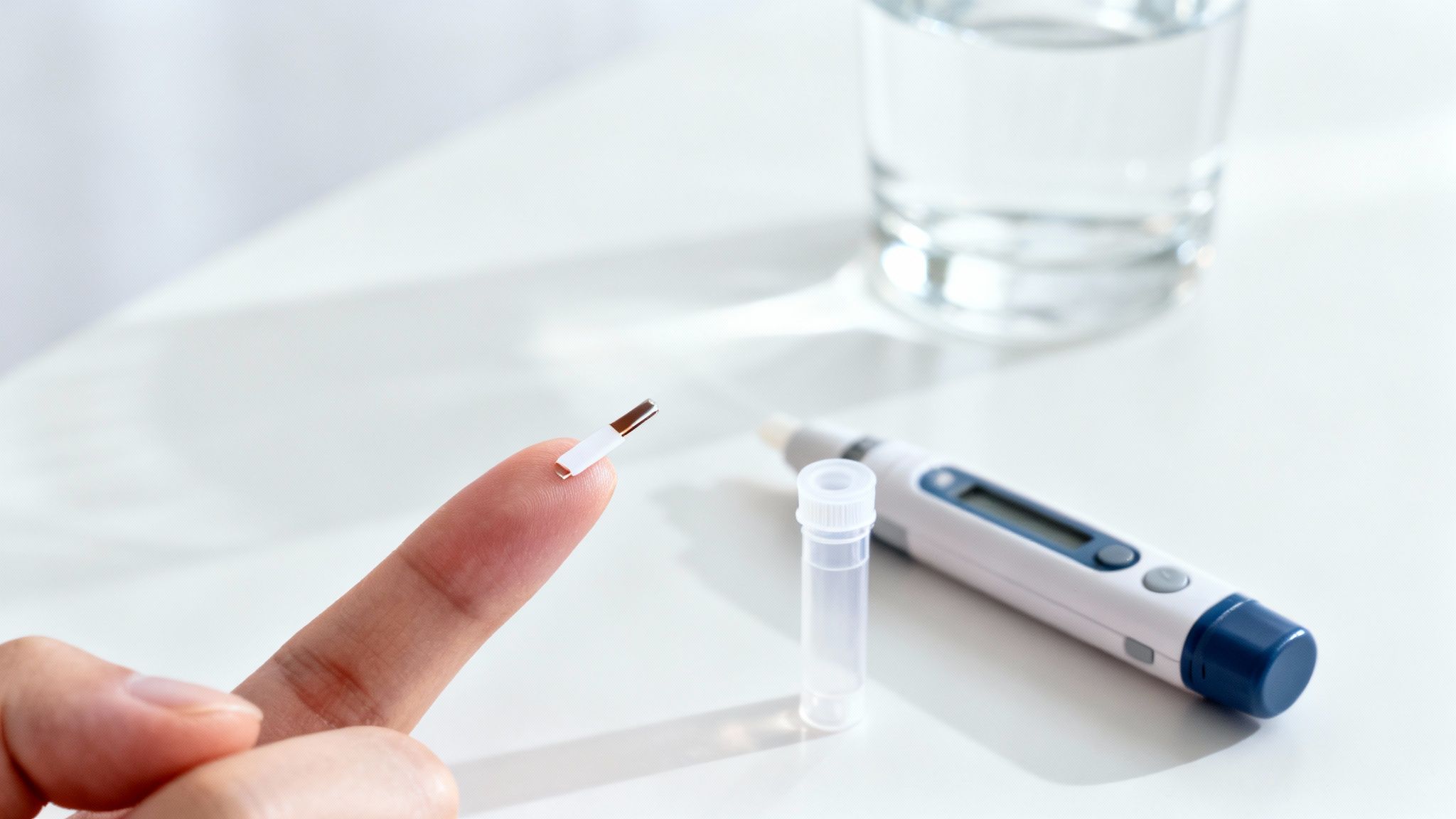
The best time for blood sampling is first thing in the morning after waking up . Your body is then still in its fasting state, which ensures clean, unadulterated results. This way, we can be sure that your last meal hasn't affected your hormone and nutrient levels.
Why water is your best friend in home testing
Especially when drawing blood from the fingertip, proper hydration plays a crucial role. Therefore, we don't just answer the question "Can I drink water before having my blood drawn?" with a simple "yes," but we say: It's one of the most important factors for success!
Being well-hydrated improves blood circulation, even to the finest capillaries in your fingers. This has a very practical advantage for you:
- Easier blood collection: The blood simply flows better. This makes it much easier to get the necessary drops from your fingertip – without any hard squeezing. This makes the whole process faster and more comfortable.
- Improved sample quality: Good blood flow ensures that the sample does not clot as quickly and you can easily collect a sufficient amount for analysis.
Ideally, you should drink a large glass of still water the evening before and then again immediately after waking up. This will perfectly prepare your body.
Your checklist for precise results
To ensure your mybody-x test runs smoothly, we have a few simple but highly effective tips for you. These small steps make a huge difference to the quality of your analysis.
Good preparation is the basis for accurate insights. Take your time – after all, it's about your health and getting the most out of your analysis.
This short checklist will keep you on the safe side:
- Wash your hands: Clean your hands thoroughly with warm water before taking the product. The warmth further stimulates blood circulation.
- Move your finger: Gently massage the finger you have chosen for the blood draw. Briefly shaking your hands also helps to stimulate blood flow.
- Read the instructions: Detailed instructions are included in every mybody-x test kit. Take your time to read them carefully before you begin.
These simple tips will ensure your home test works smoothly and you get reliable results that allow you to take proactive control of your health. You can also find a detailed description in our guide to the capillary blood test .
The consequences of insufficient fluid intake before the test
What actually happens if you don't drink enough before having your blood drawn? To put it simply: you make it unnecessarily difficult for yourself and the medical staff. Dehydration can make the entire process much more complicated than it needs to be.
When your body lacks water, your veins constrict. They become thinner and are barely visible or palpable under the skin. This increases the likelihood that the medical professional will have to make several attempts to find a vein – and nobody wants to experience that.
Additionally, the lack of fluids makes your blood thicker. It flows more slowly and, in the worst case, can even clog the fine needle. For you, this not only means that everything takes longer, but it can also lead to circulatory problems or dizziness during or after the blood draw.
Why good hydration is especially important for some
People who naturally have more "difficult" veins, or older individuals, benefit enormously from good preparation. Adequate hydration makes the veins fuller and more elastic, which noticeably eases the injection.
This advice isn't meant to scare you. On the contrary, it's meant to motivate you to take this simple yet incredibly effective step of preparation seriously. A glass of water can make the difference between a quick, uncomplicated blood draw and an unpleasant experience.
The importance of good hydration is also firmly established in other medical fields. A good example is blood donation in Germany. Here, adequate fluid intake is one of the most important prerequisites. It is recommended to drink at least 1.5 liters of fluid before donating to prevent circulatory problems and impaired blood flow. Read more about how to prepare for your blood donation . This simple principle also applies to your nutrient or hormone test.
Your roadmap for a smooth process
For your blood test to go smoothly, the last 24 hours are crucial. Good preparation not only reduces stress but also ensures the quality of your blood sample – whether at the doctor's office or with the mybody-x home test.
You should keep a few things in mind the day before the test. It's best to eat light meals and avoid a large, fatty meal in the evening. This can affect your blood lipid levels until the next morning. Intense exercise is also off-limits for now, as it can temporarily raise muscle values and inflammatory markers.
On the morning of the test
On the day of the blood test, two things are most important: staying calm and drinking enough fluids. Start the day relaxed, as hectic activity and stress can disrupt certain hormone levels.
Important note: If you regularly take medication, be sure to check with your doctor beforehand whether you should take it as usual or only after the blood test. Never stop taking it on your own!
The following infographic illustrates why drinking too little before the test is a bad idea.
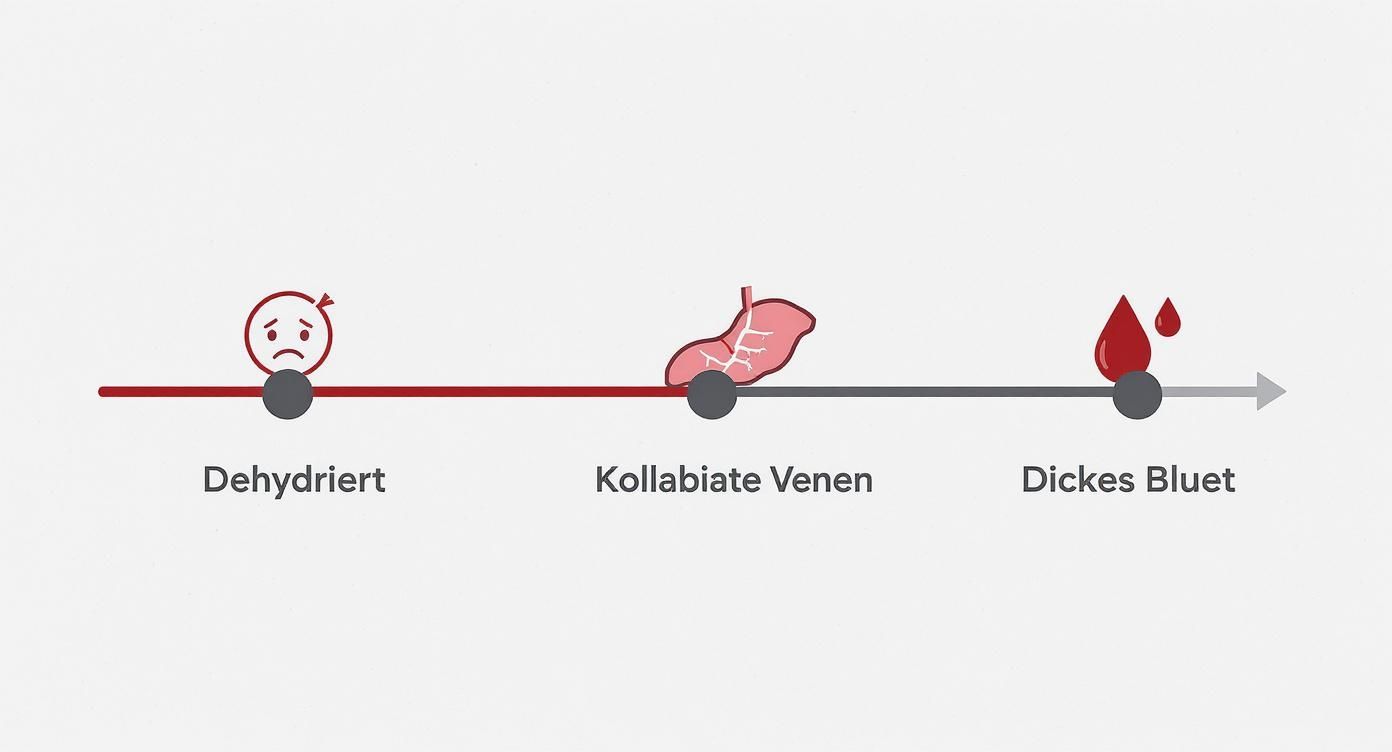
As you can see, dehydration makes the whole process unnecessarily complicated. My tip from experience: One or two large glasses of water about an hour before the appointment are ideal. This makes your veins appear fuller and more visible, and improves blood flow.
With these simple tips, you'll be perfectly prepared. If you're now curious about how straightforward the entire process is, from sample collection to your personal results report, take a look at how our tests work at mybody-x.
Questions that are often asked before blood is drawn
We frequently receive similar questions about preparing for a blood test. To clear up any remaining uncertainties and ensure everything is clear and understandable, we've summarized the most frequently asked questions for you here.
Coffee or tea before the test – a good idea?
The clear answer: Still water is always the best and safest choice before you go for a blood test or take a mybody-x test. Unsweetened herbal tea is also fine in the vast majority of cases.
Coffee is a different story. Even black and without sugar, it contains caffeine – a stimulant that activates the body. This can temporarily raise certain values, such as blood pressure or stress hormones, and thus distort the results. To be on the safe side, you should therefore avoid it.
So, how much water is exactly right?
There's no single amount of water that works for everyone. But a good rule of thumb is to drink about a liter of water the evening before the test and again on the morning of the test, spreading it out evenly.
Ideally, drink one or two large glasses of water – that's about 0.5 liters – about an hour before your appointment. You shouldn't force yourself to drink, but gentle, sufficient hydration ensures that the blood draw goes smoothly.
What should I do with my medication in the morning?
A very important point! You should definitely discuss taking your medication with your doctor beforehand . Some active ingredients can directly affect blood test results. In such cases, it's sometimes better to take them only after the blood test.
But be careful: Never stop taking medication on your own! A small sip of water with your tablets is usually completely harmless and will not negatively affect your test results.
Can smoking affect my blood test results?
Yes, absolutely. Nicotine has a significant and demonstrable effect on the body and can alter several blood values. This includes, for example, the number of certain blood cells, hormone levels, and inflammatory markers.
For truly meaningful and accurate results, we strongly recommend that you do not smoke on the morning of your blood test. Ideally, you should completely abstain from cigarettes from the moment you wake up until after the sample has been taken. This is the only way to ensure that the test results accurately reflect your true state of health.
With the right preparation, you create the best foundation for precise insights into your body. Discover at mybody-x how easy it is to check important health values and optimize your diet with a home blood test .
Share:
Estrogen deficiency and weight gain: Understanding the causes, finding solutions
Dietary supplement test: Find out what your body really needs