
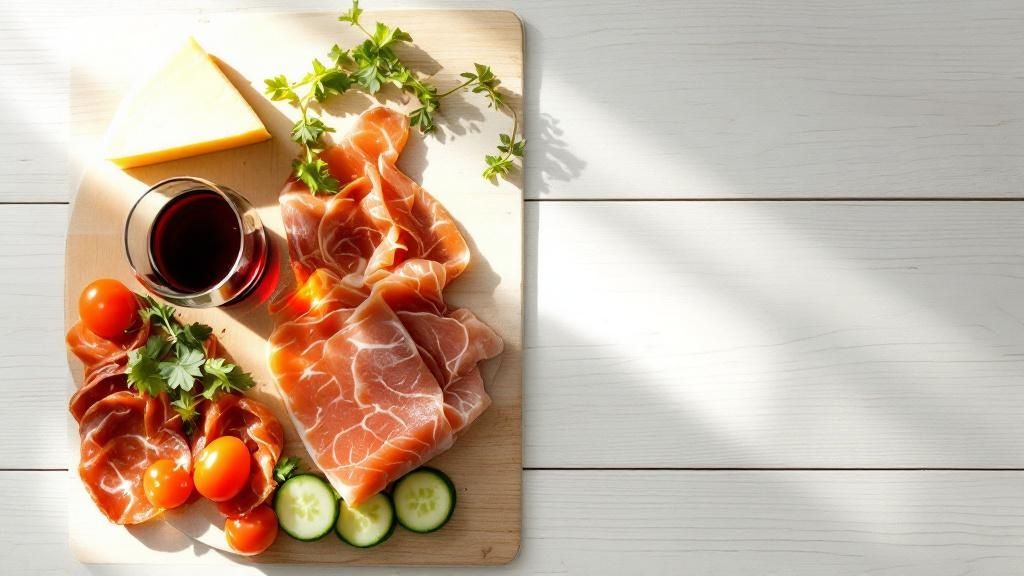
Foods Containing Histamine: The Complete Guide to Your Well-Being
Do you often feel unwell after eating, suffer from headaches, or suddenly develop a skin rash? Histamine could be the culprit—a messenger substance that plays an important role in your body and is also found in many foods containing histamine. It is important to understand that histamine itself is not bad. Only an imbalance throws your body out of rhythm.
What is histamine, and why does your body react?
Histamine is a completely natural substance that performs important functions in your body. It is a key component of your immune system, helps defend against foreign substances, and regulates inflammatory reactions. Think of it simply as a diligent messenger who is always there when needed.
It only becomes problematic when there is too much histamine circulating in your body. This can happen because your body produces too much of it itself or because you eat too many foods containing histamine. If your body also does not have enough of the enzyme diamine oxidase (DAO) to break down the excess histamine, the system becomes destabilized.
The barrel overflows
To understand the principle, a simple image helps: Imagine your body as a barrel. Every day, histamine flows into it—through what you eat, but also through processes within your body. Normally, a drain at the bottom of the barrel, the DAO enzyme, prevents it from overflowing.
With histamine intolerance, this drain is virtually clogged or simply too small. The barrel therefore fills up faster than it can be emptied. Sooner or later, it overflows—and you feel this exact moment in the form of unpleasant symptoms.
A constantly “full barrel” leads to chronic overload of the system. The result is allergy-like reactions, even though there is no actual allergy. It is the amount of histamine that makes the difference.
Your body then sends you clear signals, but they are often difficult to identify. Many people suffer from vague complaints for years without knowing the true cause.
Typical signals from your body
The symptoms of histamine intolerance are extremely varied and can manifest differently in everyone. Sometimes they appear immediately after eating, but sometimes not until hours later.
- Skin: Sudden itching, skin redness, hives (urticaria), or even eczema flare-ups.
- Digestive system: Abdominal pain, a bloated stomach, diarrhea, or stomach cramps.
- Head and circulation: Sudden headaches, sometimes progressing to migraines, dizziness, or a racing heart.
- Respiratory tract: A runny or blocked nose, frequent sneezing, or even difficulty breathing.
- General well-being: Unexplained fatigue, feeling completely exhausted, or sleep disturbances.
If you recognize these patterns in yourself, there could be a connection with your diet. Comprehensive information on how you can identify various intolerances will help you better understand the connections and finally gain clarity.
The comprehensive list of high-histamine foods
Okay, now that you have an idea of how your body can react to too much histamine, let's get specific. Here is a clear list of the foods that most often cause problems. Once you know where the biggest histamine traps lie, you can plan your meals much more consciously and find out what makes you feel good.
One simple rule of thumb to start with: The longer a food matures, ferments, or is stored, the higher its histamine content usually is. Fresh, unprocessed products are therefore almost always the better choice. In Germany, around 1 percent of the population suffers from histamine intolerance, the causes of which often lie precisely in these maturation and fermentation processes. Think of long-aged cheese, smoked ham, or certain types of fish such as mackerel and tuna. If you would like to delve deeper into the subject, NetDoktor provides fascinating details about histamine-related issues here.
This graphic shows you at a glance which typical foods are often among the culprits in everyday life.
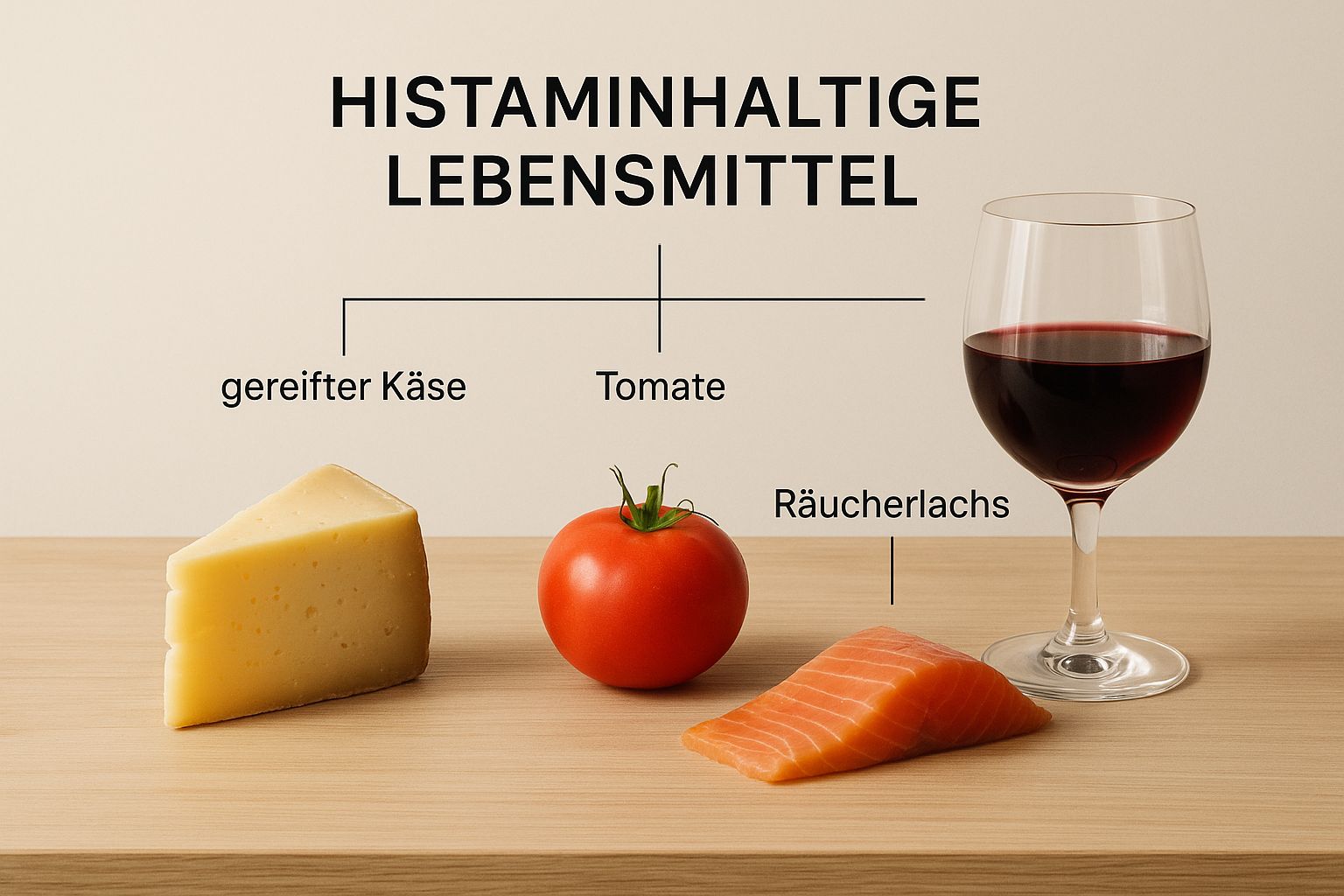
It's immediately clear: Often, it's precisely indulgent foods such as red wine, flavorful cheese, or smoked fish that drive up histamine levels.
To make it easier for you to keep track, we have summarized the most common high-histamine foods in a table. This lets you see at a glance which products you may want to avoid or reduce at first.
Overview of high-histamine foods by category
| Category | Foods particularly high in histamine (examples) |
|---|---|
| Cheese & dairy products | Hard cheeses (Parmesan, aged Gouda, Emmental), mold-ripened cheeses (Camembert, Gorgonzola), sour dairy products (kefir, buttermilk) |
| Meat & sausage products | Smoked & cured meats (salami, raw ham, bacon), long-aged sausages, Mettwurst |
| Fish & seafood | Canned fish (tuna, sardines), smoked fish (salmon), marinated fish (Matjes), seafood (shrimp, mussels) |
| Vegetables | Sauerkraut, tomatoes (especially ketchup & tomato paste), spinach, eggplant, avocado |
| Fruit | Strawberries, raspberries, citrus fruits (oranges, lemons), bananas, pineapple, kiwi |
| Beverages | Red wine, white wine, sparkling wine, beer, kombucha |
| Other | Yeast extract, soy sauce, wine vinegar, ready-made meals |
This table serves as an initial guide. Below, we take a closer look at the individual categories.
Cheese and dairy products
When it comes to cheese, aging time is the be-all and end-all. The longer a cheese ages, the more histamine is produced as proteins break down.
- Hard cheeses and long-aged varieties: Parmesan, aged Gouda, Emmental, Gruyère, and strong Alpine cheese are the top contenders here.
- Mold-ripened soft cheeses: Camembert, Brie, and blue cheeses such as Gorgonzola or Roquefort often also contain high amounts.
- Sour milk products: Yogurt, kefir, and buttermilk can also be problematic due to fermentation, although the levels vary considerably.
Fresh cheese, young Gouda, butterkäse, and mozzarella are generally much better tolerated.
Meat and sausage products
Processing also makes the difference with meat products. Fresh, raw meat is virtually histamine-free, but curing, smoking, or prolonged aging causes the levels to shoot up.
Just remember: The more heavily a product is processed, the more likely it is to have a high histamine content. Salami, raw ham, and Mettwurst are classic examples of such histamine bombs.
- Cured and smoked meats: These include salami, raw ham (such as Parma or Serrano ham), bacon, and Landjäger sausages.
- Processed meat: Sausages made for long shelf life, liver sausage, and ground meat that is no longer completely fresh.
Fish and seafood
Fish is a particularly tricky subject, as it forms histamine extremely quickly if it is not processed absolutely fresh. Some fish species naturally contain more of the amino acid histidine, which rapidly converts into histamine.
The biggest triggers here are:
- Canned fish: Canned tuna, sardines, herring, or mackerel are often true histamine bombs.
- Marinated or smoked fish: Bismarck herring, soused herring, and smoked salmon are also included.
- Seafood: Shrimp, mussels, and crabs can also quickly increase histamine levels.
If you suspect that your symptoms are connected to certain foods, a food intolerance test can be a great help in finally getting some clarity.
Vegetables and fruit
Yes, there are also a few well-known suspects in the plant kingdom. Here, it’s not always the histamine-rich varieties themselves, but also so-called histamine liberators—foods that release the body’s own histamine. We’ll take a closer look at those in the next chapter.
- Vegetables: Sauerkraut (due to fermentation), tomatoes (especially when concentrated in ketchup or tomato paste), spinach, eggplants, and avocados.
- Fruit: Strawberries, raspberries, citrus fruits (such as oranges and lemons), bananas, pineapple, and kiwi.
Drinks and other foods
Last but not least, we must not forget liquid sources of histamine. Alcohol is doubly problematic here: It often contains histamine itself and also inhibits the DAO enzyme responsible for breaking it down.
- Alcoholic drinks: Red wine is the best-known culprit. But white wine, sparkling wine, and beer can also trigger symptoms.
- Fermented drinks: The health drink kombucha can also contain high levels of histamine.
- Other foods: Yeast extract (often found in broths and ready-made seasonings), soy sauce, vinegar (especially wine vinegar), and all kinds of ready-made meals.
This list gives you a good basis for identifying the most common triggers and adjusting your meal plan step by step.
Recognizing hidden triggers and histamine liberators

You now have a good overview of the most obvious foods high in histamine. But what if you've been diligently avoiding them and still have symptoms? Sometimes the triggers are more cleverly hidden or work in ways you wouldn't immediately think of.
It's not always the foods themselves that cause problems. An equally important factor is the so-called histamine liberators. These are foods that contain very little histamine themselves but encourage your body to release its own stored histamine.
The hidden instigators in food
Just imagine that tiny packets full of histamine are stored in your body's cells (the so-called mast cells). Histamine liberators are like little keys that unlock these packets and release the histamine. Your personal histamine bucket suddenly fills up from the inside, even though you haven't eaten anything high in histamine.
The tricky thing is that some of the best-known histamine liberators are foods that are considered particularly healthy and popular.
- Strawberries and citrus fruits: The absolute classic among liberators. Many people react to oranges, lemons, pineapples, or strawberries without knowing the real reason.
- Tomatoes: They are a double agent—they not only contain some histamine themselves but also act as a strong liberator.
- Cocoa and chocolate: Yes, unfortunately, beloved chocolate is also one of the culprits that can trigger histamine release.
- Nuts: Walnuts and cashews in particular are known for this.
This list makes it clear why changing your diet is often such a major challenge. Sometimes the very foods you consider particularly healthy are the ones that completely throw your system out of balance.
The crucial point is this: The food itself is not the “enemy,” but rather the reaction it triggers in your individual body. Your body is simply overreacting because its regulatory system is already reaching its limits.
Additives and the freshness of your food
Another area where triggers like to hide is ready-made meals and highly processed products. Many additives that provide a more intense flavor and extend shelf life can also act as histamine liberators or block the breakdown of histamine in the body. These include flavor enhancers such as glutamate (E620-E625) and certain colorants, for example.
The freshness of your food is just as crucial. The longer a food is stored, the more histamine can form through completely natural bacterial processes. This is especially true of protein-rich products such as fish and ground meat. What was completely harmless yesterday may already trigger unpleasant symptoms today.
So it’s best to shop as fresh as possible and make sure foods are stored in a cool place and processed quickly. Leftovers reheated from the day before are also often a hidden source of histamine, as levels can increase significantly overnight in these foods as well. With this knowledge, you’ll sharpen your eye for the details and gradually uncover the hidden triggers in your diet.
Practical tips for an enjoyable low-histamine diet
Changing your diet? At first, that sounds like deprivation and complicated rules. But I can assure you: A low-histamine diet can be surprisingly delicious and varied if you keep a few simple things in mind. It’s not about banning everything, but about making smart choices that noticeably improve your well-being.
The absolute most important principle is: Freshness is your best friend. The shorter the storage time of a food, the less histamine can form. So it’s better to shop more often and in smaller quantities than to do one huge weekly shop, leaving the food in the fridge for days.
You can also make a big difference through the way you prepare your food. The gentler you cook your meals, the better. Steaming, cooking with steam, or briefly sautéing food are often much better tolerated than long braising, grilling, or searing at high temperatures. This not only preserves the nutrients but also minimizes histamine formation.
Smart food choices for everyday life
The key to an enjoyable diet is replacing the “culprits” with well-tolerated and equally delicious alternatives. Often, it only takes small adjustments in your everyday life to make a huge difference to how your stomach feels and to your energy levels.
Here are some tried-and-tested substitution tips you can put into practice right away:
- Fresh instead of aged: Choose young Gouda, cream cheese, or mozzarella instead of aged Parmesan or flavorful alpine cheese.
- Homemade instead of ready-made: Your salad dressing can be made in no time with high-quality rapeseed oil, a splash of apple cider vinegar, and fresh herbs—and it is worlds better than ready-made dressings with wine vinegar or yeast extract.
- Fresh fish instead of canned: A piece of freshly prepared cod or pike-perch is a wonderful alternative to canned tuna or smoked salmon.
Always focus on what you can eat, not what you have to leave out. Discover new recipes and foods that do you good—this way, the adjustment becomes an exciting culinary journey rather than a restriction.
High-histamine foods and their well-tolerated alternatives
To make getting started even easier, we have put together a practical table for you here. At a glance, it shows how easy it is to replace problematic histamine-containing foods with better-tolerated options.
| High-histamine choice (to avoid) | Low-histamine alternative (better suited) |
|---|---|
| Parmesan, aged Gouda, Camembert | Young Gouda, cream cheese, mozzarella, butter cheese |
| Salami, cured ham, Mettwurst | Freshly cooked ham, sliced turkey breast, fresh ground meat |
| Tomato paste, ketchup, sauerkraut | Fresh bell peppers, carrots, cucumbers, beetroot |
| Canned tuna, smoked salmon | Freshly caught fish (e.g. cod, pike-perch), frozen fish |
| Red wine, sparkling wine, beer | Water, herbal teas (e.g. chamomile), heavily diluted fruit juices (apple, blackcurrant) |
| Wine vinegar, balsamic vinegar | Apple cider vinegar (in moderation), herb vinegar without wine |
| Strawberries, raspberries, citrus fruits | Apples, blueberries, melons, apricots, peaches |
Consider this list a good starting point for redesigning your diet. The most important thing is to carefully observe how your body reacts to the new foods, because everyone’s tolerance threshold is different. Over time, you will develop a reliable sense of what truly does you good and how to effortlessly balance enjoyment and well-being.
How an intolerance test provides clarity
Have you suspected for some time that histamine could be behind your symptoms, but are simply exhausted by the constant guesswork? A food diary is a great first step toward recognizing patterns. But if you finally want certainty, a targeted blood test from mybody-x can make all the difference.
The feeling of waiting for the next reaction after every meal is incredibly draining. Many people affected keep restricting their diet purely as a precaution, without really knowing which histamine-containing foods are the real culprits. This is exactly where an intolerance test comes in: it gives you facts instead of leaving you in the dark.
More than just a histamine check
Histamine intolerance rarely occurs on its own. The body often reacts to several substances at the same time, which makes finding the cause a real detective job. That is why it is so important to look at the bigger picture.
The mybody-x intolerance test does not just look at a possible reaction to histamine in isolation. It tests a broad range of potential triggers, from gluten and lactose to many other foods. This gives you a clear and comprehensive picture of what is really going on in your body. Perhaps it is not the histamine-rich cheese alone, but a combination with other foods that pushes your bucket over the edge.
Clarity as the foundation for change
With a clear result in hand, the blind fumbling in the dark comes to an end. At last, you know where you stand and can approach your dietary changes in a focused and confident way. This gives you not only peace of mind but also the motivation you need to stick with it.
A test result is like a personal map for your body. It shows you exactly which paths are safe and which ones you should avoid for now to reach your destination: greater well-being.
In fact, a survey shows that around 11 percent of respondents in Germany consciously make an effort to eat fewer histamine-rich foods. Since studies show that affected individuals react to an average of two different substances, taking a comprehensive look is essential. If you would like to learn more about the prevalence of intolerances, DER SPIEGEL offers interesting insights into study results. A test can help you find the approach that is right for you.
Your questions about histamine and nutrition answered
Finally, we want to answer a few questions that regularly come up in everyday life around foods containing histamine and possible intolerance. Here you will find short, concise answers to help you quickly.
How quickly do I notice symptoms after eating?
This is one of the trickiest questions when it comes to histamine intolerance, because unfortunately there is no fixed rule. Your body's reaction is completely individual and depends on many factors: how full your personal “histamine bucket” already was, how much histamine you consumed, and how well your body can break it down.
Some people feel the effects almost immediately, often within 15 to 30 minutes of a meal. Typical immediate reactions include sudden itching, red patches on the skin, or a runny nose.
For others, however, it can take several hours for headaches, stomach rumbling, or leaden fatigue to appear. This delay is exactly what often makes it so incredibly difficult to identify the culprit in the food.
Can cooking reduce histamine levels?
Unfortunately, this is a widespread misconception. Histamine is an extremely heat-stable substance. In plain terms: neither boiling, frying, baking, nor grilling can truly reduce the histamine content of a food. If a piece of fish already has a high histamine level, it will remain just as high after preparation.
What you can influence, however, is the formation of new histamine. Processing fresh foods quickly and storing them in a cool place prevents their histamine content from increasing further. The preparation method therefore does not change the histamine already present—but handling the freshness of your ingredients correctly makes all the difference!
Can histamine intolerance be cured?
This question cannot be answered simply with yes or no. In most cases, histamine intolerance is not a lifelong diagnosis set in stone. It is often more of a symptom of another, deeper underlying problem. Experts refer to this as secondary histamine intolerance.
Possible causes include:
- A disrupted gut microbiome: If your gut flora is out of balance, this can impair the function of the histamine-degrading enzyme DAO.
- Nutrient deficiencies: The body needs, among other things, vitamin B6, vitamin C, and zinc to produce the DAO enzyme. If these nutrients are lacking, the breakdown process can stall.
- Chronic inflammation: Persistent sources of inflammation in the body can burden the entire system and further worsen histamine-related problems.
The good news is that when the underlying cause is identified and treated, histamine intolerance can improve significantly or even disappear completely. So it is worth digging deeper and focusing on the health of your gut. If you would like to learn more about the scientific background of intolerances, you will find further information on scientific aspects of food intolerances in our knowledge portal.
If you want to stop guessing and finally gain clarity about your individual situation, mybody-x is exactly the right place for you. A blood test can help you better understand your body and take targeted steps toward greater well-being. Discover the possibilities now at https://mybody-x.com.


Share now:
Measuring cortisol: what tests are available and who orders them
What is cortisol, and how does it control your body?