

Strengthen Your Immune System Naturally: Your Plan for Lasting Defenses
You want to strengthen your immune system—naturally and sustainably? Perfect. The key is to understand and support your body as a whole—with the right nutrition, a smart lifestyle, and an awareness of your very personal needs. Forget short-term “boosters”; together, we are building real, lasting defenses.
Your Immune System: More Than Just a Shield Against Colds

When you think about your immune system, the first thing that probably comes to mind is fighting off the next cold. But this idea falls far too short. Your immune system is not a simple on-off switch that you can just activate with a hot lemon drink.
Instead, imagine it as an incredibly complex network of cells, organs, and messenger substances that works for you continuously in the background. It protects you not only from viruses and bacteria, but is also crucial for wound healing, clearing away old cells, and defending against misdirected cells in the body.
The Silent Enemies of Your Defenses
Often, it is not the obvious pathogens that weaken your defenses the most. Far more dangerous are the gradual stresses of everyday life that constantly put your immune system under pressure without you immediately noticing:
- Chronic stress: Constant tension floods your body with the hormone cortisol, which has been shown to suppress the activity of your immune cells.
- Unnoticed lack of sleep: Even a single night of too little or poor-quality sleep can significantly reduce the number of important immune cells.
- Hidden nutrient deficiencies: If your body lacks essential building blocks such as vitamin D, zinc, or selenium, your immune cells simply cannot perform their tasks optimally.
These factors often operate beneath the surface and are the real reasons why you may be more susceptible to infections than others. Short-term measures only scratch the surface.
True, lasting strength comes from within. It develops when you understand what your body individually needs instead of following generic advice. Your immune system is as unique as you are.
Why Your Lifestyle Makes the Difference
The close connection between your lifestyle and your immune health is not a guess but is strongly supported by scientific evidence. An analysis of health insurance data showed that in Germany, more than 6.3 million people were affected by at least one autoimmune disease in 2022. Factors such as stress, obesity, and an unbalanced diet can fuel silent inflammatory processes in the body and misdirect the immune system.
Your daily habits therefore have a direct impact on how robust your defenses are. It is about sending your body the right signals. You can read more about how these signals work at the cellular level in our article about epigenetics and lifestyle.
That is why the first and most important step is to understand your personal starting point. Instead of blindly taking random vitamins, you can use a targeted mybody®x nutrient or hormone test to find out where your individual gaps really are. This gives you a sound foundation for making real improvements and provides your body with exactly what it needs to become strong and resilient.
Harnessing the right nutrients for your immune defenses
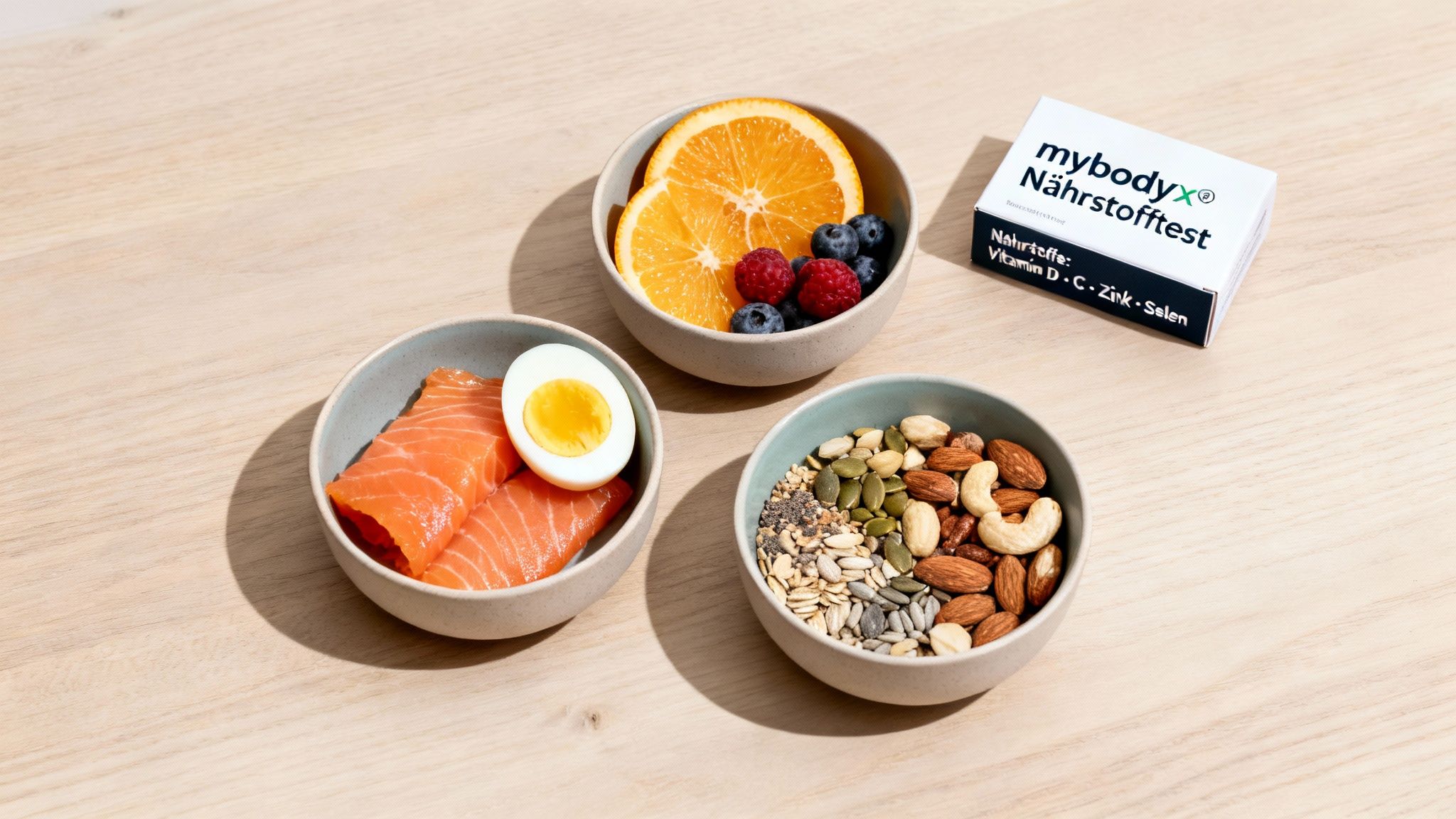
Your diet is the foundation on which your immune system stands or falls. Of course, the advice to “eat more fruit and vegetables” is a good start, but to truly strengthen your defenses in a targeted way, we need to go a level deeper. Imagine your immune cells as a specialized army—they need very specific fuel and building blocks to be ready for action.
If these essential helpers are missing, the entire machinery begins to stall. Communication between cells suffers, antibody production slows down, and defense against invaders becomes inefficient. An unnoticed deficiency in just one micronutrient can weaken your entire line of defense.
The key players in your immune defenses
Some vitamins and minerals are particularly crucial for your immune system. They are, so to speak, the generals and technicians of your body's army.
Here are the most important ones at a glance:
- Vitamin C: The classic among immune-supporting nutrients. As a powerful antioxidant, it protects your immune cells from damage and boosts the production of white blood cells that directly fight pathogens.
- Vitamin D: The “sunshine vitamin” is actually a hormone that controls the activity of your immune cells like a conductor. A deficiency is often associated with increased susceptibility to infections, especially in winter.
- Zinc: Without this trace element, the development and function of important defense cells such as T cells and natural killer cells would not be possible. Even a mild deficiency can noticeably weaken your immune response.
- Selenium: It also acts as a powerful antioxidant and is involved in the production of cytokines—messenger substances that coordinate the entire immune response.
It is important to understand that these nutrients work as a team. A zinc deficiency cannot simply be offset by an extra portion of vitamin C. The right balance is what matters.
To give you a better overview of which nutrients can be found where and when testing is useful, we have compiled this table.
Immune-relevant nutrients and their sources
This table shows the most important micronutrients for a strong immune system, their function, and the foods in which they can be found.
| Nutrient | Function in the immune system | Top food sources | When a mybody®x test is useful |
|---|---|---|---|
| Vitamin D | Regulates the activity of T and B cells and has an anti-inflammatory effect. | Fatty fish (salmon, herring), egg yolk, mushrooms, cod-liver oil. Main source: sunlight. | If you have little sun exposure (October to April), experience fatigue, or suffer from frequent infections. |
| Vitamin C | Protects cells from oxidative stress and promotes the production of white blood cells. | Bell peppers, broccoli, citrus fruits (oranges, lemons), berries, kiwi. | If you have a one-sided diet, smoke, or experience high levels of stress. |
| Zinc | Crucial for the development and function of T cells and antibodies. | Oysters, beef, pumpkin seeds, lentils, oats. | If you follow a vegetarian or vegan diet, have digestive problems, or experience hair loss. |
| Selenium | Antioxidant that supports the production of cytokines (messenger substances). | Brazil nuts, fish (tuna, sardines), eggs, sunflower seeds. | If you suspect thyroid problems, as it is important for hormone production. |
| Iron | Essential for the proliferation of immune cells. | Red meat, lentils, beans, spinach, tofu. | If you experience persistent fatigue or paleness, especially if you have heavy periods. |
These nutrients are the fuel your immune system needs every day to protect you effectively.
The Hidden Danger of Deficiency
The tricky thing about nutrient deficiencies is that they often go unnoticed for a long time. You may simply feel a little more tired than usual, catch every cold going around, or take ages to get back to full strength. An inadequate supply may be behind this, quietly undermining your immune defenses.
Vitamin D is a particularly important example: data from the Robert Koch Institute show that a large proportion of people in Germany do not reach the recommended levels. Especially during the darker months, a deficiency can increase your susceptibility to infections. If you would like to learn more about the symptoms, read our guide to addressing vitamin D deficiency.
Taking supplements blindly is like fumbling around in the dark. The key is to know your personal gaps and fill them strategically, rather than taking a scattershot approach.
From insight to implementation
Instead of guessing what your body is lacking, you can find out exactly. A mybody®x nutrient test analyzes your blood and shows you in black and white where you are optimally supplied and where there is room for improvement. This is the ideal basis for truly tailoring your diet to your needs.
With this knowledge, your meal plan becomes a true immune ally. You no longer simply eat generally “healthy” foods, but specifically incorporate the foods your body needs most urgently.
An immune-boosting breakfast could look like this, for example:
- Oatmeal as a source of zinc and valuable fiber.
- A handful of berries for plenty of vitamin C and antioxidants.
- Two to three Brazil nuts cover your daily selenium requirement.
- Greek yogurt for high-quality protein and gut-friendly probiotics.
Such a start to the day gives your immune cells exactly what they need for their demanding work. These targeted meals are the most effective way to strengthen your immune system sustainably—because they are based on your individual needs. This is particularly important because, according to the German Diabetes Health Report 2025, metabolic disorders—which affect over 9.1 million people in Germany—can also weaken the immune system.
Designing your daily routine as an immune regulator

Even the best diet has little effect if the rest of your lifestyle is constantly undermining your immune system. Think of your daily routine as the most powerful lever for naturally strengthening your defenses—or weakening them. Three areas are crucial: sleep, stress, and exercise. They regulate your immune response, either fine-tuning it or throwing it completely off balance.
If you get these three pillars under control, you lay the foundation for defenses that can respond robustly and quickly. It is not about perfection, but about making conscious choices for your body every day.
Sleep: The Underestimated Superpower
Sleep is so much more than a passive period of recovery. While you sleep, your immune system is working at full capacity. It produces and distributes important defensive cells, known as T cells and cytokines, which specifically fight infections and regulate inflammation in the body.
Even a single night with less than six hours of sleep significantly disrupts this process. Production of these crucial immune cells slows down and immediately makes you more susceptible to viruses and bacteria. Chronic sleep deprivation is like a permanent act of sabotage against your own line of defense.
What you can do right away to improve your sleep quality:
- Create a cool, dark, and quiet sleeping environment. Your bedroom should be a true retreat, free from distracting light sources or noise.
- Avoid blue light from screens for at least an hour before going to bed. This light inhibits the production of the important sleep hormone melatonin.
- Establish a consistent bedtime, even on weekends. A regular schedule trains your internal clock and sustainably improves sleep quality.
Don't view sleep as a luxury, but as active and essential immune care. It is the simplest and most effective way to recharge your defenses every night.
Stress: The Silent Immune System Killer
Stress is initially a completely natural response by your body to challenges. It only becomes a problem when stress becomes chronic—due to constant pressure at work, personal worries, or the feeling that you always have to be available. During such periods, your body continuously releases the stress hormone cortisol.
Cortisol does have an anti-inflammatory effect, which is useful in the short term. However, a persistently elevated level suppresses the function of your immune cells and makes your defenses sluggish and ineffective. Chronic stress therefore opens the door wide to viruses and bacteria.
Your stress level is directly linked to your susceptibility to infections. A high cortisol level acts like a handbrake pulled on your immune system—it can no longer react quickly and powerfully when needed.
So it is crucial that you make active stress management a fixed part of your daily routine. Even small, regular breaks can make a huge difference.
Here are a few strategies you can implement right away:
- Breathing exercises: Take five minutes several times a day to breathe deeply and consciously into your abdomen. This immediately signals to your nervous system that it can relax.
- Walks in nature: Just 20 minutes in green spaces can demonstrably lower cortisol levels and clear your mind.
- Digital breaks: Consciously set times when you put your smartphone away and don’t respond to emails or messages.
If you feel that stress is dominating your everyday life and you constantly feel tired and drained, a hormonal imbalance could be behind it. A mybody®x hormone test can provide clarity by measuring your daily cortisol pattern. This lets you see in black and white how your body responds to stress. To explore the topic in greater depth, we recommend our detailed article on lowering cortisol.
Exercise: The right dose makes all the difference
Regular, moderate exercise is a fantastic way to strengthen your immune system naturally. It boosts the circulation of your immune cells, allowing them to detect and fight pathogens in the body more quickly. At the same time, exercise helps break down stress hormones and reduce inflammation.
Activities such as brisk walking, jogging, cycling, or swimming for around 30 to 45 minutes on most days of the week are considered moderate. The important thing is to challenge yourself without completely exhausting yourself.
However, there can also be too much of a good thing. Overtraining and extreme exertion without sufficient recovery have the exact opposite effect. They place the body under massive stress, drive up cortisol levels, and can weaken the immune system for hours or even days. This phenomenon is known as the “open window effect”—a period during which you are particularly susceptible to infections.
So find the sweet spot that suits your fitness level. Listen to your body’s signals and consciously give yourself breaks to recover. This way, exercise becomes one of your most reliable allies.
Make your gut the center of your defenses
Did you know that your gut is the undisputed headquarters of your immune defenses? An incredible 70 to 80% of your immune cells are stationed right here. That’s why a healthy, diverse gut flora isn’t a nice extra—it’s the absolute foundation if you want to strengthen your immune system naturally.
Imagine your microbiome as a blooming garden. The good bacteria are diligent gardeners: They train your immune cells, produce important vitamins, and form a protective barrier against pathogens. But if they are given the wrong food, they wither—and weeds in the form of harmful bacteria spread.
Probiotics and prebiotics: The dream team for your gut
To make this inner garden bloom, you need two things: the right plants (probiotics) and the right fertilizer (prebiotics). Both are essential for building a resilient gut flora.
- Probiotics: These are living microorganisms—in other words, the “good” bacteria themselves. You can find them in fermented foods, which directly enrich your gut flora with beneficial helpers.
- Prebiotics: These are, so to speak, food for the good bacteria. They are indigestible fibers that nourish the beneficial microbes already present and help them multiply.
They work best as a team. Probiotic foods provide new troops for the gut army, while prebiotic foods keep the soldiers already stationed there strong and ready for action.
Here are some top sources that you can easily incorporate into your diet:
- Probiotic foods: plain yogurt, kefir, raw sauerkraut, kimchi, miso, and kombucha.
- Prebiotic foods: onions, garlic, leeks, asparagus, chicory, bananas (especially those that are still slightly green), oats, and legumes.
If you would like to delve deeper into the topic, you will find many more tips in our guide on how to build your gut flora with the right diet.
When eating becomes a stress test: The role of intolerances
Yet even the best gut-friendly diet can come to nothing if unidentified food intolerances sabotage the system. Every time you eat a food your body reacts sensitively to, it triggers an immune response in the gut.
It's like a constant false alarm for your immune system. Your immune system is constantly busy fighting these supposed “enemies.” The result is low-grade, chronic inflammation in the gut, which unnecessarily ties up your defenses and gradually exhausts them.
Imagine your fire department having to respond every day because of a faulty smoke alarm. Eventually, it no longer has the strength to deal with a real fire. That is exactly what happens to your immune system when it is constantly alerted by foods you cannot tolerate.
This constant burden weakens your entire immune system. Resources that would actually be needed to defend against viruses and bacteria are wasted fighting harmless foods. Symptoms such as bloating, fatigue after eating, or skin problems may be the first clues.
Find the troublemakers in your diet
The problem is that these reactions are often delayed and diffuse, making them difficult to attribute to a specific food. Starting an elimination diet blindly is arduous and often ends in frustration.
This is exactly where the mybody®x intolerance test comes in. Instead of guessing, it analyzes your IgG4 antibody reactions to a wide variety of foods. This gives you a clear, scientifically sound overview of which foods might personally be acting as “troublemakers” for you.
With this knowledge, you can make targeted adjustments to your diet and extinguish the smoldering fires in your gut. By avoiding these triggers, you directly relieve the burden on your immune system. You give it the much-needed break it needs to refocus on its actual task: effectively protecting you from genuine pathogens. This is a crucial step toward strengthening your defenses sustainably and from the ground up.
Your personal roadmap to a stronger immune system
Theory is all well and good, but what really matters at the end of the day is putting it into practice in everyday life. In the previous sections, we looked at which levers you can adjust—from nutrition and stress management to gut health. Now we are bringing it all together in an actionable 12-week plan that will guide you step by step in naturally strengthening your immune system without making you feel overwhelmed.
Think of this roadmap as your personal guide. It is divided into three logical phases: analysis, optimization, and stabilization. This will help you build new, healthy habits that truly stick.
Phase 1: Analysis (Weeks 1–4)
The first month is dedicated solely to an honest assessment of your current situation. Before you change anything, you need to know exactly where you stand. This is the crucial first step to taking targeted, effective action instead of simply groping around in the dark.
This is your focus for this month:
- Week 1: Determine your current status. The best way to start is to understand your individual starting point. A mybody®x nutrient or hormone test is the ideal tool for this. It provides objective data on possible deficiencies (such as vitamin D or zinc) or hormonal imbalances (for example, cortisol-related ones) that could weaken your immune defenses. The result is, so to speak, your personal roadmap.
- Week 2: Keep a food diary. Write down everything you eat and drink for one week. Be completely honest with yourself. It’s not about perfection, but about recognizing patterns: Are you getting enough fiber? Are you eating too much sugar? How often do immune-supporting foods actually end up on your plate?
- Week 3: Take a closer look at sleep and stress. Observe your sleeping habits very carefully. How many hours do you really sleep? Do you feel rested in the morning? At the same time, you should identify your biggest sources of everyday stress – are they certain situations, people, or perhaps recurring tasks?
- Week 4: Evaluate and set goals. Now take a look at your notes and the results of your mybody®x test. Based on these, set two to three very specific goals for the next phase. For example: “I will deliberately increase my vitamin D level” or “I will establish a consistent evening routine to sleep better.”
A plan without data is just a good intention. The analysis phase gives you the clarity you need to direct your energy precisely where it will make the biggest difference to your immune system.
Phase 2: Optimization (Weeks 5–8)
Now it’s time to get practical! This phase is about putting the insights from the first month into action and deliberately incorporating new habits into your daily routine. Ideally, take on just one new focus each week – this keeps motivation high and prevents you from taking on too much.
This graphic wonderfully illustrates why gut health plays such a central role, especially during this phase.
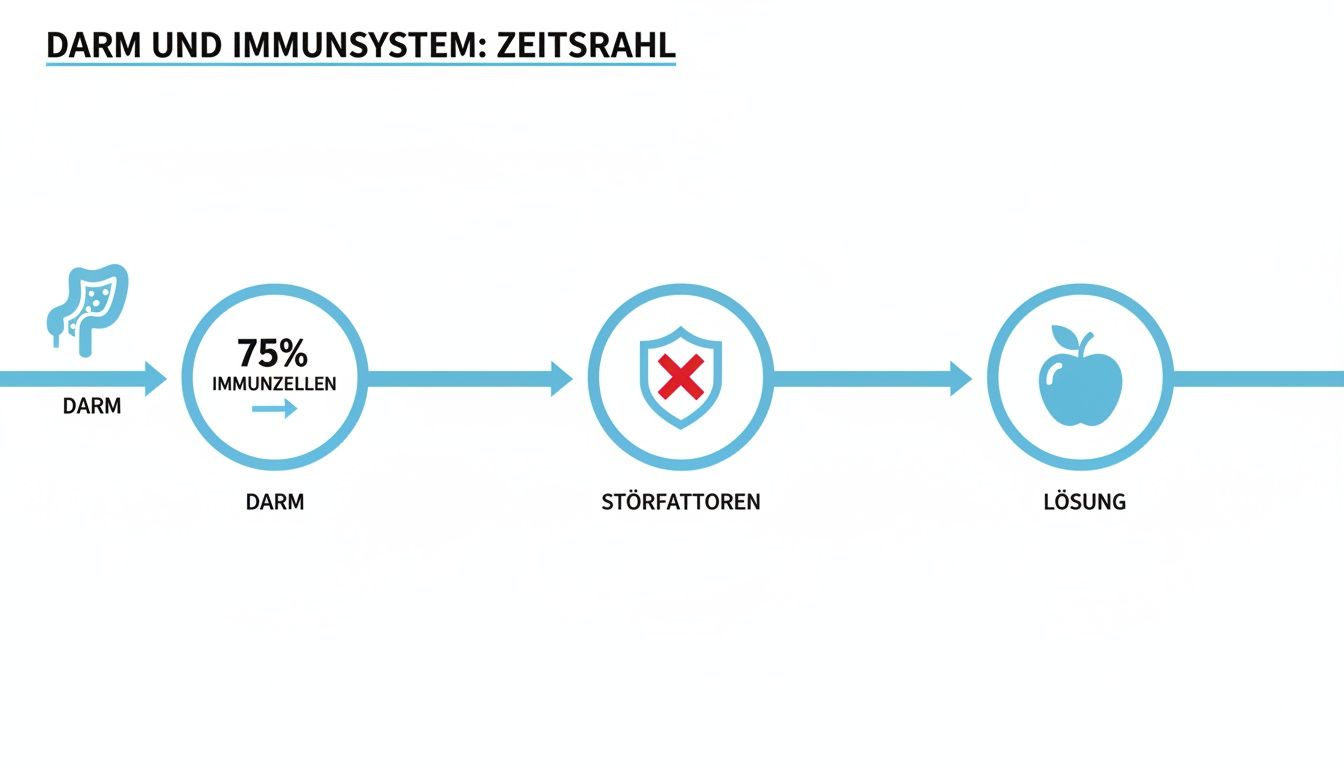
It shows how crucial gut care is: A huge proportion of our immune cells are located there and are weakened by various disruptive factors. A targeted diet is the most important lever here.
Possible weekly focus areas could include:
- Week 5: The nutrient upgrade. Focus on one or two nutrients for which your test revealed a deficiency. Consciously incorporate foods that are rich in these nutrients. For example, replace sugary snacks with a handful of nuts (zinc, selenium) or make fish a regular part of your diet (vitamin D, omega-3).
- Week 6: Establish an evening routine. Set a fixed “screen-free” period, ideally one hour before going to bed. Instead, read a book, do a few gentle stretches, or listen to relaxing music. The goal is to give your body clear signals that it is time to wind down.
- Week 7: Schedule mindful stress breaks. Incorporate two set 5-minute breaks into your workday. During this time, simply take a few deep breaths or step outside for some fresh air. These small interruptions help enormously to prevent stress from building up throughout the day.
- Week 8: Find your movement routine. Choose a form of moderate exercise that you genuinely enjoy. It does not have to mean 90 minutes at the gym! A daily, brisk 30-minute walk during your lunch break is already a perfect start.
Phase 3: Stabilization (Weeks 9–12)
In the final phase, the main focus is on solidifying your new habits so that they become a normal part of your life. This is also a good time to review your progress and make small adjustments if needed.
Your path to sustainability:
- Weeks 9–10: Consistency is everything. Stick to your new routines. At this point, it is less about adding new things and more about stabilizing what you have achieved. Pay close attention to how your energy levels and overall well-being change.
- Week 11: Reflect and adjust. What feels easy, and what is more difficult? Be honest with yourself. Maybe you notice that a morning walk fits into your day better than one at lunchtime. Adjust your plan to your everyday life—this is the only way it will work in the long term.
- Week 12: Celebrate your achievements and look ahead. Take a moment to look back at the past three months. You have collected valuable data about your body and put very specific steps into practice. That is a huge achievement! Think about which habits you definitely want to maintain and which ones you would like to tackle next.
Here is a brief summary to help you keep track.
Overview of your 12-week immune plan
A summary of the focus areas for each month to strengthen your immune system systematically and sustainably.
| Phase (month) | Focus | Specific measures | Recommended mybody®x focus |
|---|---|---|---|
| Month 1 | Analysis & taking stock | Test blood values, keep a nutrition and stress journal, and define clear goals | Nutrient or hormone test |
| Month 2 | Optimization & building habits | Replenish specific nutrients, improve sleep hygiene, reduce stress, and incorporate exercise | Focus on foods that address the deficiencies identified in the test |
| Month 3 | Stabilization & sustainability | Establish routines, reflect on progress, adjust the plan if needed, and celebrate successes | Possibly repeat testing to review the results after 3–6 months |
This 12-week plan isn’t meant to be a rigid framework, but a flexible guide. It gives you a clear structure to help you regain control of your health and strengthen your immune system in a targeted and, above all, sustainable way.
Frequently asked questions: Everything you want to know
After so much information about nutrition, lifestyle, and your personal plan, you may still have a few questions on your mind. That’s completely normal! When you start taking a closer look at your own health, new questions keep coming up in everyday life. Here, we’ve collected the most frequently asked questions we receive to give you even more clarity on your journey.
How quickly can I naturally strengthen my immune system?
This is probably one of the most important questions, and the honest answer is: It’s a marathon, not a sprint. Your immune system is an incredibly complex network that cannot be reprogrammed to be “strong” overnight.
While you’ll often notice initial positive effects, such as more energy or better sleep, after just a few weeks, profoundly and sustainably strengthening your immune defenses takes time. Give your body at least three to six months to truly integrate the positive changes. A continuous supply of nutrients, good sleep, and less stress build up your defenses step by step—and sustainably.
Do home remedies like ginger and garlic really help?
Yes, absolutely—but they’re not magic potions. Plants such as ginger, garlic, thyme, and turmeric are packed with valuable secondary plant compounds. These have proven anti-inflammatory and antimicrobial properties and can wonderfully support your immune system, especially during cold season.
So, a hot ginger tea or a meal with fresh garlic are great additions. But they can never replace the foundation: a nutrient-rich diet, sufficient sleep, and good stress management. Think of them as valuable helpers that can reach their full potential as part of a healthy overall approach.
Are expensive “immune boosters” from the pharmacy worthwhile?
A little caution is advised here. The dietary supplement market is booming, and not without reason: For 81 % of people in Germany, their own health is very important. Many products promise quick results, but their effectiveness is often not sufficiently supported by scientific evidence, as also emphasized by the official German federal health portal.
Rather than blindly relying on expensive combination supplements, taking a targeted approach is much smarter. A blood test that shows you in black and white whether you are deficient in vitamin D, zinc, or iron is the smarter way to go. This way, you give your body exactly what it needs instead of guessing. Read more about this topic in this fascinating article about health behavior in Germany.
Targeted knowledge always beats blanket promises. Instead of taking supplements indiscriminately, find out what your body really needs. A test is an investment in your health, not a guess in the dark.
What is the first and most important step I can take?
The most important first step is always to understand your personal starting point. Before completely overhauling your diet or buying supplements, get clarity. A mybody®x nutrient test is the ideal starting point, as it provides objective data about where your individual weaknesses may lie.
This test takes the guesswork out of the equation and gives you a concrete starting point. Perhaps an unnoticed vitamin D deficiency is making you more susceptible to illness, or your iron levels are low and draining your energy. With this knowledge, you can take targeted action and be confident that your efforts are focused exactly where they will have the greatest benefit. It is simply the most effective way to strengthen your immune system sustainably from the ground up.
Are you ready to stop guessing and give your immune system exactly what it needs? With the at-home self-tests from mybody®x, you gain precise insights into your body and personalized recommendations that really make a difference. Start your journey toward more robust health now at https://mybody-x.com.



Share now:
What helps with hot flashes? Quick tips and causes for your women’s health
Get your thyroid tested: The guide for doing it at home