

Testing for histamine intolerance: Your path to greater clarity and well-being
Do you often feel simply unwell after eating without knowing exactly why? If you want to test for histamine intolerance, it all starts with carefully observing your body. Sudden headaches, red patches on the skin, or digestive problems immediately after certain meals are often the first puzzle pieces that point you in the right direction.
Recognizing the first signs of histamine intolerance

Suspecting an intolerance can be quite unsettling. Precisely because the symptoms seem so diffuse and varied, people are often at a loss. Sometimes it is the skin that suddenly itches; other times, it is heart palpitations after a glass of red wine or a piece of aged cheese. None of this is imagined—it may be your body clearly signaling that something is wrong.
The tricky thing about histamine is that it is found in countless foods we enjoy and eat regularly. Salami on pizza, sauerkraut as a side dish, tomatoes, spinach—the list of potential culprits is long and sometimes truly surprising.
More than just a little rumbling in your stomach
The symptoms of histamine intolerance are a true chameleon and extend far beyond the gastrointestinal tract. Many people first think of digestive problems, but the reactions can appear throughout the body:
- Skin: Sudden facial flushing, severe itching, hives, or even a worsening of eczema.
- Cardiovascular system: A racing or irregular heartbeat, dizziness, or a sudden, unexplained drop in blood pressure.
- Nervous system: Severe headaches that can develop into migraines, lightheadedness, or heavy fatigue after eating.
- Respiratory tract: A runny or blocked nose, bouts of sneezing, or the feeling of having trouble breathing.
It is estimated that around 1 to 3% of people in Germany are affected by histamine intolerance, with middle-aged women being affected disproportionately often. Typically, symptoms occur anywhere from a few minutes to several hours after eating. You can find more about the background to these statistics at the RKI.
Your most important tool: The symptom diary
The first and crucial step toward greater clarity is self-observation. A simple food diary is worth its weight in gold here. It helps you identify patterns and establish connections between certain foods and how you feel.
To make getting started easier for you, we have created a table. It links common symptoms with typical histamine-rich foods and can serve as a cheat sheet for your own diary.
| Overview of typical symptoms and possible triggers | | :--- | :--- | :--- | | Symptom area | Examples of symptoms | Possible food triggers | | Skin | Itching, redness (flushing), hives | Strawberries, citrus fruits, tomatoes, seafood | | Digestion | Bloating, diarrhea, abdominal cramps | Sauerkraut, smoked meat, aged cheese, yeast | | Nervous system | Headaches, migraines, dizziness, fatigue | Red wine, chocolate, avocado, nuts | | Heart & circulation | Rapid heartbeat, fluctuations in blood pressure | Alcohol (especially red wine), energy drinks, ripe bananas | | Respiratory tract | Runny nose, sneezing, breathing difficulties | Aged cheese, processed meats, canned fish |
Keep in mind that these are only examples. Everyone reacts differently, and the triggers can be highly individual.
Note not only what you eat, but also when you eat it and how you feel afterward. Sometimes it is the small details that provide the crucial clue.
These observations provide the perfect foundation for getting tested specifically for histamine intolerance. You collect valuable information that helps not only you but also a doctor or therapist correctly interpret the test result. This helps you regain control over your well-being. A home blood test, such as the one offered by mybody-x, can then provide the confirmation you need.
How to prepare for the test so that the result is truly meaningful

A reliable test result does not simply appear out of nowhere—it is the result of careful preparation. Before undergoing a histamine intolerance test, there are a few crucial points to keep in mind. This is the only way to get a clear and accurate picture of what is really going on in your body.
Think of the preparation as your personal roadmap to a result you can rely on. This ensures that external factors do not distort the result and that you finally gain clarity.
The right way to handle medication
One of the most common sources of error is medication. Antihistamines in particular, which many people take for hay fever or other allergies, can significantly affect the test result. The name says it all: They act directly on histamine levels.
Most importantly: never stop taking medication on your own. That is an absolute no-go. Be sure to speak with your doctor beforehand. Together, you can clarify whether and for how long you can safely pause a particular medication. A period ranging from a few days to a week before the test is often recommended, but this is an entirely individual decision that must be medically supervised.
By the way, other medications, such as some painkillers or antibiotics, can also impair the activity of the histamine-degrading enzyme DAO. It’s best to have an up-to-date list of your medications ready.
Diet: Simply continue as before
This may sound strange at first, but the most important rule is: Don’t change anything about your diet. You want to find out how your body reacts to histamine under everyday conditions. If you follow a strict diet beforehand, you’ll obscure the underlying problem.
- Don’t start a diet: Continue eating normally, even if you already suspect certain foods. This is the only way the test can show whether your body is overwhelmed by the usual amount of histamine in your diet.
- Don’t provoke symptoms: At the same time, you shouldn’t have a “histamine party” by deliberately drinking red wine or eating aged cheese. This could not only lead to severe symptoms but also distort the result.
Your body should be tested as part of your normal everyday routine. This is exactly where your symptom diary becomes valuable again—it will later provide the crucial context for the laboratory results.
Your goal is to obtain an authentic picture. For the two weeks before the test, behave as though you weren’t taking a test at all.
With these simple but essential preparations, you can ensure that your histamine intolerance test from mybody-x provides an accurate and helpful result. This lays the foundation for finally gaining clarity and taking the right steps for your well-being.
The at-home histamine intolerance blood test: It’s that easy
So, you’ve been observing your symptoms, perhaps even keeping a food diary, and now you finally want to know where you stand. The good news: Finding clarity doesn’t have to involve a crowded waiting room and lengthy appointment scheduling. You can carry out a histamine intolerance blood test conveniently and discreetly in your own home.
With a mybody-x test kit, we’ll guide you step by step through the entire process. Everything you need to collect the sample will be sent directly to your home by mail. This makes finding out for sure truly straightforward.
How easy the test is in practice
The thought of having blood drawn makes many people uncomfortable—we understand. But we can reassure you: We’re not talking about a needle in the crook of your arm, just a tiny drop of blood from your fingertip. The process is quick, hygienic, and virtually painless.
In the test kit, you will find easy-to-follow instructions and, of course, all the necessary accessories, from the lancets to the sample tube.
- Preparation: Wash your hands thoroughly and find a clean, quiet spot.
- Collecting the sample: A small prick in your fingertip is all it takes. With the included lancet, it only takes a few seconds.
- Collecting the sample: You then collect a few drops of blood in the small tube. The instructions show you exactly how much is needed.
The only important thing is to collect the sample cleanly so that the result is truly meaningful. So, it is best not to touch the puncture site or the inside of the tube directly with your fingers.
You remain in full control throughout the entire process. You decide when and where you feel most comfortable carrying out the test in peace.
Once the sample has been collected, you safely pack everything in the included return box and send it directly to our certified German partner laboratory. From that moment on, our experts take over.
In focus: The DAO value
When diagnosing histamine intolerance in Germany, doctors primarily look at one value: the enzyme diamine oxidase (DAO). Think of DAO as histamine’s most important counterpart in your intestines. If this enzyme does not work properly or there is too little of it, histamine cannot be broken down quickly enough—and that is exactly what causes the typical symptoms.
Clinical studies confirm this: Around 80% of patients suspected of having histamine intolerance actually have a relevant DAO deficiency.
This infographic gives you another quick overview of how straightforward the mybody-x self-test is.
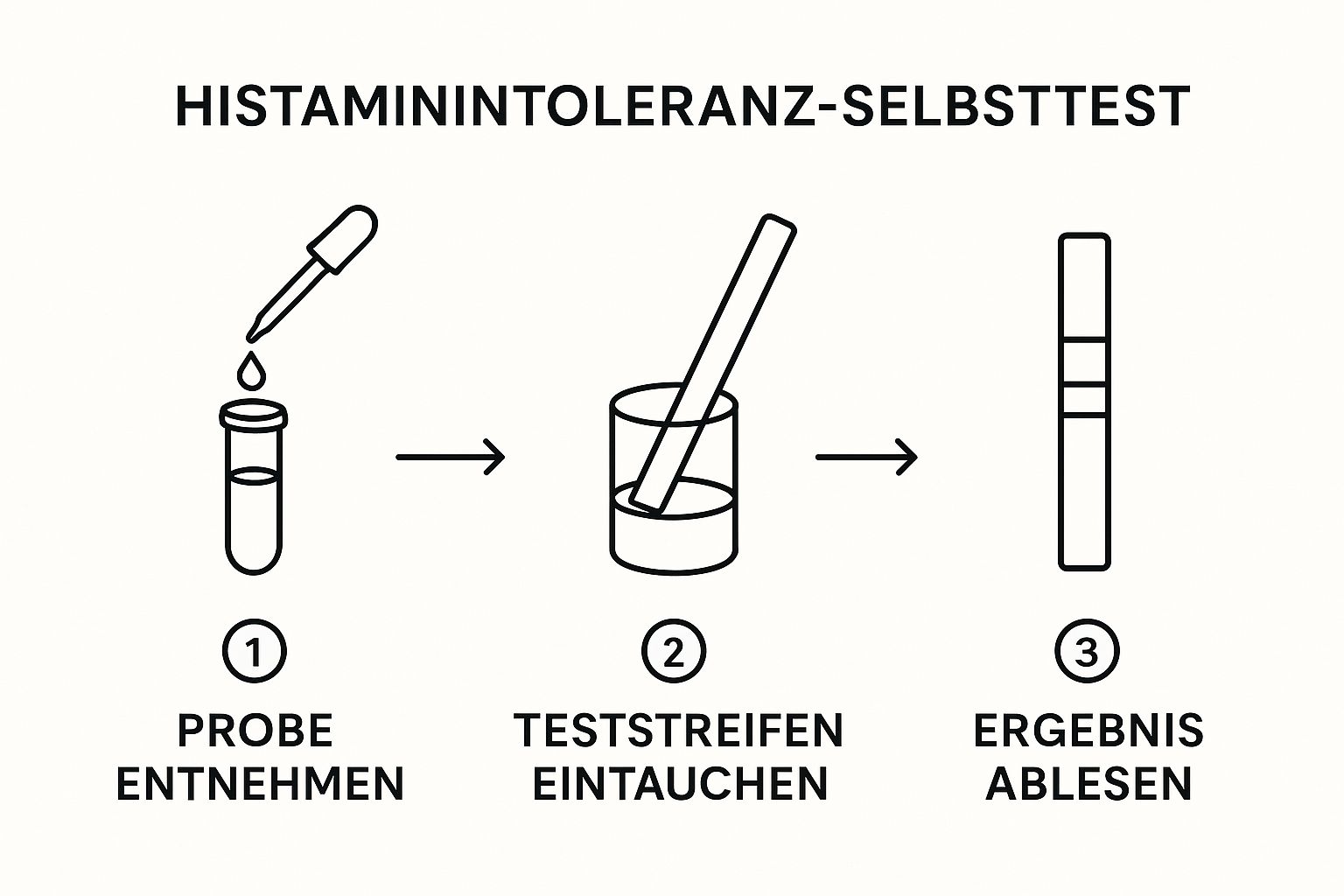
The entire process is designed to make your path to a diagnosis as easy as possible—from collecting the sample at home to receiving an easy-to-understand result.
The mybody-x blood test precisely measures the activity of your DAO enzyme. A low value is a very strong indication that your body is overwhelmed by breaking down histamine. Combined with the observations from your symptom diary, this provides a clear and meaningful overall picture.
If you are wondering what other intolerances there are and how they can be tested, you will find more information on the subject in our guide: Blood test for food intolerance.
Correctly interpreting and understanding your laboratory results

At last, the time has come: the laboratory report is here. But what do you do with all those numbers and technical terms? Don't panic—you don't have to be a medical professional to understand the results of your histamine intolerance test. We'll look at them together.
At mybody-x, our goal is not only to provide you with data, but also to give you the tools you need so that you do not simply file away your report, but can use it as a personal guide toward greater well-being. This enables you to make confident decisions about your health.
The focus: the DAO level
The most important value in your report is the DAO level. DAO is short for diamine oxidase—the enzyme in your intestines that breaks down histamine from food.
If your DAO level is low, this simply means that your body has too little of this enzyme or that it is not working at full capacity. The result? Histamine is not broken down quickly enough, accumulates, and causes the typical symptoms that you are probably all too familiar with. Your result indicates the activity of this enzyme in U/ml (units per milliliter), which already allows for an initial, important assessment.
A single laboratory value is like a single puzzle piece. Only when combined with your personal symptoms from your food diary does a complete and meaningful picture emerge.
What the reference ranges really mean
There are scientifically established reference ranges to help you correctly assess your individual level. They are essentially the “normal range” and show whether your DAO activity is within the normal range or impaired.
Although symptoms can vary greatly from person to person, the digestive processes are similar for many people. That is why the symptoms of histamine intolerance can be confusingly similar to those of other intolerances. If you are unsure, take a look at our guide on how to test for lactose intolerance. This will help you understand the differences better.
The following table provides clear guidance on what your DAO level means and which next steps might be appropriate.
DAO levels and what they mean, simply explained
A clear overview of how to interpret the DAO levels from your blood test and what next steps could follow.
| DAO level (U/ml) | Interpretation | Possible next steps |
|---|---|---|
| > 10 U/ml | Normal enzyme activity: Histamine intolerance is unlikely. Your symptoms probably have another cause. | Look for other possible triggers, check for other intolerances, and speak to your doctor if necessary. |
| 3 - 10 U/ml | Reduced enzyme activity: Histamine intolerance is likely. Your body can only break down histamine to a limited extent. | Start a low-histamine diet. This relieves the strain on your body and helps alleviate the symptoms quickly. |
| < 3 U/ml | Severely reduced enzyme activity: Histamine intolerance is very likely and is often pronounced. | A consistent dietary change is now key. It is also worth investigating the causes of DAO deficiency (e.g., nutrient deficiencies). |
Your mybody-x report naturally provides not only the raw numbers but also clear explanations. This means you are well equipped to understand the results and draw the right conclusions from them.
What should you do if the test is positive? Your plan for a better quality of life
A positive result for histamine intolerance is not initially a reason to panic. Quite the opposite: at last, you have an explanation for your symptoms and can take targeted action against them. Consider it the starting point for becoming more conscious of and taking better care of your body.
By far the most effective lever you have right now is your diet. And don't worry, this doesn't mean you have to give up everything forever. First, the goal is to give your body a break so it can regenerate.
Your plan: A low-histamine diet in practice
The most proven first step is a so-called elimination diet. This may sound strict, but it is actually quite simple: for a manageable period—usually two to four weeks—you eliminate all foods known to contain high levels of histamine or promote its release.
Even if this initially seems like a huge adjustment, you will probably soon notice how much better you feel.
For now, focus on avoiding these food groups:
- Aged & fermented foods: Foods such as aged cheese (Parmesan, Camembert), sauerkraut, salami, raw ham, or soy sauce are the classic examples.
- Certain fish: Canned fish such as tuna and mackerel in particular, as well as smoked fish, can be veritable histamine bombs.
- Selected vegetables & fruit: Tomatoes, spinach, eggplants, avocados, as well as strawberries and citrus fruits, are often problematic to begin with.
- Alcohol: Red wine is particularly notorious, but other alcoholic beverages can also trigger symptoms.
At the same time, there is a huge variety of delicious foods you can still eat. Fresh meat, freshly caught fish, most vegetables such as cucumbers, carrots, and broccoli, or fruit such as apples and melons are usually completely unproblematic.
A very simple but crucial rule of thumb: freshness is your best friend. The longer something is stored, processed, or reheated, the higher its histamine content generally becomes. So cooking with fresh ingredients makes a huge difference.
After this initial, stricter phase, you slowly start reintroducing foods. You deliberately reintroduce individual foods and observe how your body reacts to them. Over time, this helps you determine your own personal tolerance threshold.
What else you can do for yourself
Diet is central, but histamine intolerance is often part of a larger puzzle. There are other factors you can adjust to improve your well-being.
Your nutrient intake is a particularly important factor. The DAO enzyme, which is responsible for breaking down histamine, needs certain “helpers” to function properly. These include, above all, vitamin C, vitamin B6, zinc, and copper. If these micronutrients are lacking, DAO activity may decrease and your symptoms may worsen. A simple nutrient test from mybody-x can quickly provide clarity here.
Don't forget about stress, either. Ongoing stress can stimulate the body's own histamine release and noticeably worsen your symptoms. So make a conscious effort to get enough sleep and build small moments of relaxation into your daily routine. Taking a holistic view is often the key to long-term success. In the process, many people also discover new ways to positively influence their body weight, which you can learn more about in our guide: Learn more about strategies for healthy weight loss.
With these specific steps, you can take control of your health again. You now have the knowledge and tools to sustainably improve your quality of life.
Frequently asked questions about the histamine intolerance test
When it comes to testing for histamine intolerance, questions naturally come up again and again. That's perfectly normal—you want to make sure you're doing everything correctly and end up with a result you can rely on. Let's clear up the most common uncertainties right away.
How reliable is a home DAO blood test?
In short: very reliable. A home test, like the one from mybody-x, is not a guessing game. Your sample is analyzed in a certified specialist laboratory according to exactly the same high standards as if you submitted it directly at a doctor's office. So you receive a precise measurement of the activity of your DAO enzyme.
A low DAO level is a strong, scientifically substantiated indication that your body cannot properly break down histamine. However, it is important—and we cannot emphasize this often enough—not to consider the result in isolation. It is a crucial piece of the puzzle, but only together with the symptoms recorded in your food diary does it provide a clear picture.
Do I need to change my diet before the test?
No, absolutely not! This is one of the most important points of all if you want an accurate result. Eat normally in the weeks before collecting the sample, just as you always do.
Why is this so important? If you suddenly start a strict low-histamine diet, it can artificially improve your body’s condition. This could cause the test to show an unremarkable result even though an intolerance is present. The test is intended to show exactly how your body copes with histamine under everyday conditions. Changing your diet is then the next logical step, but only after a result is available.
Remember: The test should reflect your everyday life, not an exceptional situation. Eat as you usually do to obtain an accurate result.
What else can affect DAO levels?
Your DAO level is not a fixed number set in stone forever. Of course, genetic predisposition is often a factor, but other factors can also influence enzyme activity—sometimes temporarily, sometimes over a longer period.
These include, for example:
- Medications: Certain painkillers, antibiotics, and some mucolytics are known to inhibit DAO activity.
- Alcohol: It is a known DAO blocker and can often noticeably worsen symptoms.
- Nutrient deficiencies: The enzyme sometimes lacks important “helpers.” A deficiency in vitamin B6, vitamin C, zinc, or copper can impair its function.
- Chronic intestinal diseases: If something is wrong in the intestines, for example due to inflammation, this can directly disrupt DAO production in the intestinal lining.
However, symptoms such as bloating or diarrhea do not always come from histamine. Sometimes other intolerances are behind them. To better understand the differences, you can read more in our article about the symptoms of lactose intolerance.
Do you finally want clarity and to find the cause of your symptoms? With the reliable blood tests from mybody-x, you can easily have your DAO levels checked from home. Discover the possibilities now at https://mybody-x.com and take control of your well-being.


Share now:
Gluten intolerance test – Find out whether you’re affected
What is histamine, and what’s behind it?