

Inflammatory marker in the blood: What your body is really trying to tell you
Do you often feel tired and drained, or do you have symptoms for which there simply seems to be no clear cause? Unnoticed inflammation simmering beneath the surface could be behind these vague symptoms.
An inflammatory marker in the blood is exactly what its name suggests: a measurable marker that shows how active your immune system is at the moment. You can think of it as an alarm signal from your body, pointing to all kinds of things—from acute infections and injuries to chronic processes you may not even notice.
What your blood reveals about inflammation
Imagine your body as a perfectly coordinated orchestra. When danger threatens, whether it is a small cut or a nasty pathogen, your immune system immediately sounds the alarm and starts an inflammatory response.
This is a completely normal and even vital process. Inflammation is essentially the body's internal fire department, which rushes out to put out the “fire,” fight intruders, and initiate healing. As soon as the danger has been eliminated, the fire department withdraws, and everything is back in balance.
The dangers of silent inflammation
However, it becomes problematic when this alarm signal simply does not switch off. This is known as chronic or “silent” inflammation. These are not loud, painful events. Rather, they are like a smoldering fire that burns unnoticed in the body for months or even years. At first, it causes no acute symptoms, but it can undermine your well-being and health in the long term.
These silent inflammations are often linked to our modern lifestyle—stress, an unhealthy diet, and too little exercise. They are insidious because you do not feel them directly until they eventually become noticeable through persistent fatigue, joint problems, or other chronic conditions.
Here, a blood test becomes an important detective for your health. It can make the subtle messages from your immune system visible and show you whether hidden processes are taking place in the background that require your attention.
A test like this measures very specific inflammatory markers in the blood, which serve as indicators of your immune system's activity. They provide valuable insights into what is really going on in your body.
Knowing these values is the first step toward taking back control and actively doing something for your health. When you understand what your blood is trying to tell you, you can get to the root of the causes and take proactive action. These values are often closely linked to other blood parameters. It is therefore worth knowing what is examined in a complete blood count to gain a more comprehensive picture. This insight helps you better understand individual values such as CRP or ESR and put their significance for your personal preventive healthcare into context.
The most important inflammation markers explained in detail
Okay, you now know why inflammation is vital for your survival. Now it is time to delve deeper into the subject and examine the specific blood values that reveal inflammation.
It is best to think of these values as a team of specialists. Each has its own task, reacts at a different speed, and contributes a different piece of the puzzle to the overall picture of your health.
This graphic shows very clearly how a hidden, silent inflammation can be made visible through a blood test.
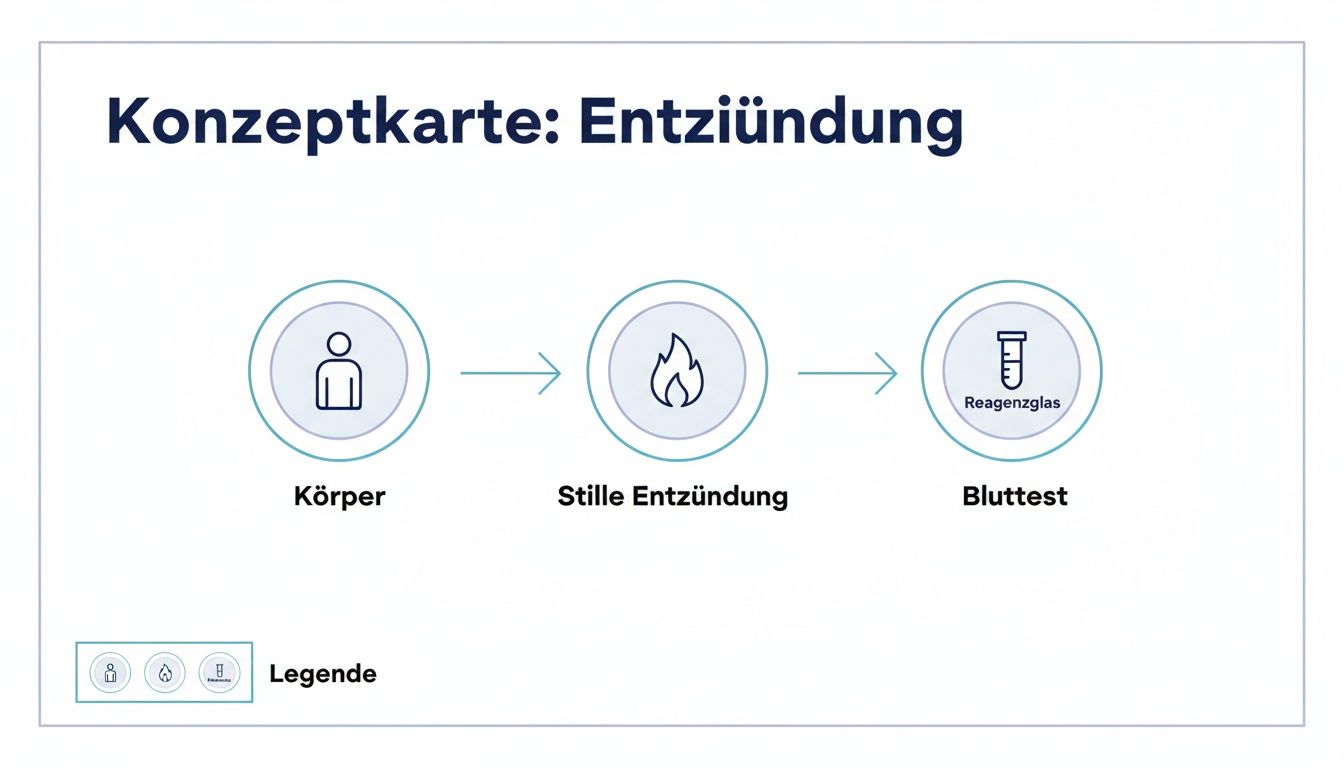
It becomes immediately clear: A simple blood test can be the crucial step in uncovering processes that would otherwise remain invisible in the body.
C-reactive protein (CRP): the rapid first responder
The C-reactive protein, usually simply called CRP, is your immune system’s “first responder.” It is produced in the liver and rises extremely quickly during acute inflammation, such as a bacterial infection—often within just six to twelve hours.
This rapid rise makes CRP one of the most important markers in acute diagnostics. It reliably signals that something is wrong, even if it does not immediately reveal what exactly is causing it. A level below 5 mg/l is considered normal, while levels up to 50 mg/l often indicate milder infections. If the level climbs above 100 mg/l, something serious is usually behind it, such as sepsis or a severe bacterial infection. If you want to delve even deeper, you can find more details here about the C-reactive protein and its levels.
There is also a particularly sensitive testing method known as high-sensitivity CRP (hs-CRP). This test detects even tiny amounts of CRP, making it ideal for identifying subtle, chronic inflammatory processes. Such “silent inflammation” is often linked to our lifestyle—diet or stress, for example—and can increase the risk of cardiovascular disease.
The erythrocyte sedimentation rate (ESR): the deliberate observer
The erythrocyte sedimentation rate (ESR), sometimes also called the blood sedimentation rate, is the “deliberate observer,” so to speak. This test measures how quickly red blood cells settle to the bottom of a narrow tube. Simple, but effective.
During inflammation, blood cells clump together more readily and therefore settle faster—ESR rises. Unlike the fast-reacting CRP, however, ESR responds much more slowly. It can take days to rise and sometimes weeks to return to normal.
Because of this sluggishness, ESR is less suitable for the rapid diagnosis of acute infections. Its strength lies elsewhere: It is a valuable indicator of prolonged, chronic processes, such as those associated with autoimmune diseases or rheumatism.
Leukocytes (white blood cells): your body's police force
Leukocytes are simply white blood cells—and, in a sense, your body's “police force.” They are a core part of your immune system and tirelessly patrol your bloodstream to neutralize invaders such as bacteria, viruses, and fungi.
When you have an infection, your body ramps up production, causing the number of leukocytes in your blood to rise. An elevated leukocyte count is therefore a very typical inflammatory marker in the blood and is routinely measured as part of a complete blood count.
To narrow down the cause more precisely, doctors often examine what is known as a differential blood count. This breaks down the different subgroups of leukocytes:
- Neutrophils: Elevated levels often indicate a bacterial infection.
- Lymphocytes: An increase is typical of viral infections.
- Eosinophils: These may indicate allergies or a parasitic infection.
Each of these markers provides an important piece of the puzzle. When considered together, they create an increasingly clear picture of what is happening in your body right now and why your immune system is working at full speed.
Common causes of elevated inflammatory markers
An elevated inflammation marker in your blood is an important signal from your body—it shows that your immune system currently has its hands full. But what exactly is behind it? The causes are as varied as life itself, ranging from brief, intense defense responses to prolonged, smoldering processes.
Imagine your body as a fortress. Sometimes there is a sudden attack from outside, to which the guards respond immediately and with full force. In other cases, a conflict smolders unnoticed inside, keeping the fortress garrison permanently on alert.
Acute triggers that challenge your immune system
Often, everyday things cause the inflammation marker in your blood to briefly spike. These acute inflammations are a completely normal and healthy response by your body to a direct threat. As soon as the danger has passed, the situation settles down again.
The most common acute triggers include:
- Bacterial infections: Whether tonsillitis, a bladder infection, or pneumonia, bacteria trigger a strong and rapid immune response. This is also clearly reflected in values such as CRP.
- Viral infections: A common flu-like infection or actual influenza also activates your immune system and causes inflammation markers to rise, even though the response is often somewhat different here than with bacteria.
- Injuries and surgeries: Any type of tissue damage, whether a cut, a broken bone, or a surgical procedure, triggers an inflammatory cascade. That is a good thing, because this process is absolutely essential for wound healing.
These acute phases are therefore normal and important. It only becomes problematic when the inflammation simply does not go away.
Chronic causes and “silent” inflammation
Much subtler and often unnoticed for a long time are chronic inflammations. This is not about a short-term defense response, but about a permanent state of alert in your immune system. This state can gradually undermine your health.
Chronic inflammation is like a quiet, constant background hum. You may not consciously notice it, but it continuously consumes energy and can place strain on organ systems in the long term.
Typical reasons for this kind of chronic activation include:
- Autoimmune diseases: In conditions such as rheumatoid arthritis, Crohn’s disease, or Hashimoto’s thyroiditis, the immune system mistakenly attacks the body’s own tissue. The result is persistent inflammation.
- Metabolic disorders: Conditions such as type 2 diabetes mellitus or severe obesity (especially abdominal fat) are closely linked to chronic inflammatory processes. Adipose tissue itself produces pro-inflammatory messenger substances.
- Persistent infections: Sometimes viruses or bacteria take up residence in the body and cause a subtle but lasting immune response. Undetected dental or jaw infections are a classic example.
The impact of your lifestyle
Our modern lifestyle plays a particularly important role, especially in chronic processes. Certain habits can constantly irritate your immune system and thus contribute to the “silent inflammation” already mentioned.
These factors are often the root cause of the problem:
- Unbalanced diet: High sugar intake, highly processed foods, and a lack of omega-3 fatty acids and antioxidants can literally fuel inflammation in the body.
- Chronic stress: Persistent psychological or physical stress causes the release of hormones that can throw the immune system out of balance.
- Lack of sleep: Too little or poor-quality sleep prevents the body from carrying out important regeneration and repair processes and promotes inflammatory conditions.
- Lack of exercise: A sedentary lifestyle not only weakens the muscles but can also promote inflammatory processes in the body.
Understanding these causes is the first and most important step. It shows that you are not helplessly at the mercy of your inflammation levels. Once you know the triggers, you can take targeted action. In-depth information on how to identify the causes of high inflammation levels will help you draw the right conclusions for your health.
How you can actively improve your inflammation levels
The good news is that you are not simply at the mercy of an elevated inflammation level in your blood. A large part of the chronic inflammatory processes that often smolder unnoticed can be deliberately influenced through a conscious lifestyle. Essentially, it is about giving your body the right tools so that it can regain its natural balance.
Here we give you very specific and, above all, practical everyday tips on how to put out the smoldering fires in your body. Think of it as your personal toolkit for an anti-inflammatory lifestyle.

Anti-inflammatory agents straight from your plate
Your diet is probably the most powerful lever you have. Every meal is a decision—either for building blocks that fuel inflammation or for those that calm it.
Think of it like building a house: If you use brittle, low-quality bricks, the house will be unstable. But if you use high-quality, sturdy building materials, it will be strong and resilient. The same applies to your body's cells.
These foods are true inflammation fighters:
- Omega-3 fatty acids: These healthy fats directly counteract inflammatory processes. You can find them in fatty fish such as salmon and herring, as well as in flaxseeds, chia seeds, and walnuts. They act like a natural cooling agent for your immune system.
- Antioxidants from fruits and vegetables: Colorful berries, dark green leafy vegetables such as spinach or kale, and brightly colored bell peppers are full of them. These little helpers neutralize free radicals—aggressive molecules that trigger cellular stress and inflammation. Eat the rainbow!
- Spices and herbs: Turmeric (with its active compound curcumin), ginger, and rosemary not only taste good, they are also packed with powerful anti-inflammatory compounds. A teaspoon of turmeric in curry or a slice of ginger in tea can already make a difference.
On the other hand, you should avoid foods that tend to fuel inflammation. These primarily include sugar, white flour products, highly processed ready-made meals, and too many omega-6-rich vegetable oils such as sunflower oil. You can find even more practical approaches in our guide on how to specifically reduce inflammation in the body.
Sleep and stress management as a foundation
Never underestimate the power of good sleep and inner peace. At night, important repair and regeneration processes in the body are working at full speed. Sleep deprivation seriously disrupts this “cleanup work” and puts your body into an alarm state that promotes inflammation.
Chronic stress is like a constant false alarm for your immune system. Your body continuously releases stress hormones such as cortisol, disrupting its delicate balance and promoting inflammatory responses.
Stress-reduction techniques can truly work wonders here:
- Meditation and mindfulness: Just 10–15 minutes a day can calm your nervous system.
- Yoga or Tai Chi: These practices combine gentle movement with mindful breathing and promote relaxation on every level.
- Time in nature: A walk in the forest has been shown to lower cortisol levels.
Exercise that heals instead of burdening
Regular exercise is another crucial factor. But this is not about athletic achievements that would only place additional stress on the body. Moderation is key.
Physical activity helps break down inflammation-promoting abdominal fat, stimulates circulation, and releases the body’s own anti-inflammatory substances. Ideally, combine endurance exercise such as brisk walking or cycling with light strength training. Choose something you enjoy—that’s the only way you’ll stick with it in the long term.
Elevated inflammatory markers—when should you see a doctor?
You’re holding your blood test results in your hands, or you simply feel that something in your body isn’t quite right—and now what? An elevated inflammatory marker can be quite unsettling at first. But don’t worry—the most important thing now is not to panic. Think of this level as what it is: a general signal from your body, not a definitive diagnosis.
The key question is: How do you really feel? A slightly elevated level shortly after recovering from a nasty cold is usually nothing to worry about and returns to normal on its own. But if certain symptoms appear as well, you should not hesitate to see a doctor. These symptoms are the signposts showing you when self-monitoring should give way to professional medical evaluation.
Warning signs you should take seriously
Some symptoms, when combined with elevated inflammatory markers, are clear warning signs. Your body is unmistakably telling you that it needs help finding the cause and fighting it.
Pay particular attention to these signs:
- Unexplained fever or chills: If your body temperature rises for no apparent reason, this is a classic sign of a more serious infection that a doctor needs to investigate.
- Severe, persistent pain: Whether in your joints, head, or abdomen—if the pain simply refuses to go away, an underlying source of inflammation could be responsible.
- Extreme, debilitating fatigue: Have you felt so exhausted for weeks that it is affecting your daily life? This may indicate a chronic inflammatory process.
- Localized swelling, redness, or warmth: If you notice visible signs of inflammation in your joints or other parts of your body, that is always a reason to see a doctor.
- Sudden confusion or changes in behavior: Especially in older people, this can be an alarming symptom of a serious infection such as sepsis.
If one or more of these points apply to you, it’s time to take action. Don’t ignore these warnings, because early diagnosis is often the key to successful treatment.
How the doctor gets to the bottom of the matter
For a doctor, an elevated inflammation marker is like the first clue for a detective. They now know that something is going on, but not yet what exactly. That is why the value alone is almost never enough for a diagnosis. Instead, it is the starting point for further, targeted tests.
A good doctor never considers a single blood value in isolation. They always put it into the context of your symptoms, medical history, and other laboratory results to form a complete picture.
A medical evaluation typically proceeds in the following steps:
- The medical history: First, your doctor will ask you detailed questions about your symptoms, lifestyle, and medical history. Every detail may be important.
- The physical examination: The doctor will then examine you thoroughly, looking for visible or palpable signs of inflammation.
- Further blood tests: A differential blood count is often performed to examine the white blood cells more closely. Specific markers for autoimmune diseases or the function of certain organs may also be tested.
- Imaging procedures: Depending on what the doctor suspects, ultrasound, X-rays, or other imaging procedures may be used. This makes it possible to directly visualize areas of inflammation in the body.
This process helps narrow down the cause step by step and find the right treatment. It is a structured path that takes away the uncertainty and finally provides clarity.
Take charge of your health with an at-home test
Knowledge is the first and most important step toward any change. In the past, you had to wait weeks for a doctor's appointment to gain initial insight into the signals your body was sending. Fortunately, things work differently today: You can take proactive action and take your health into your own hands.
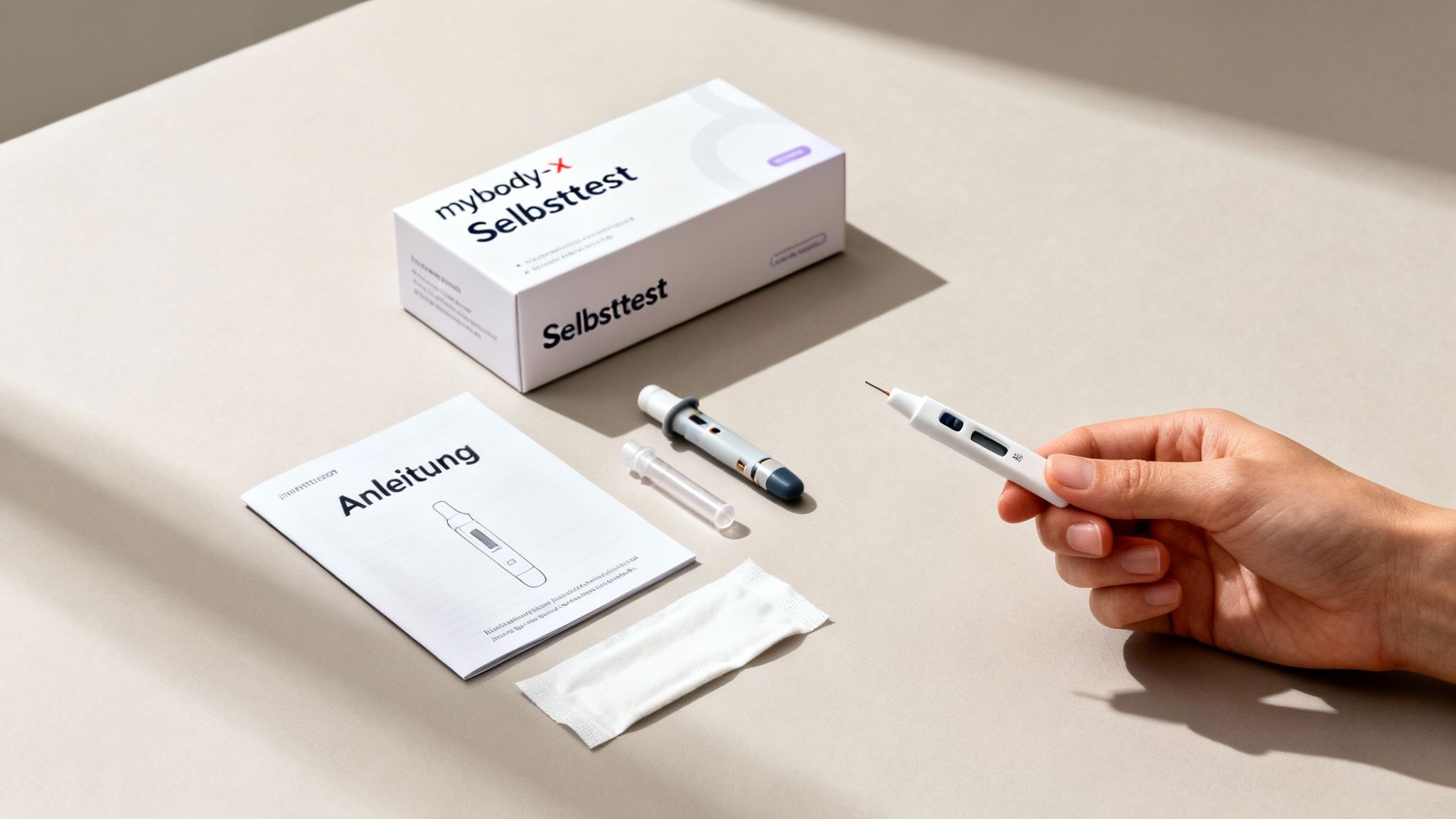
This is exactly where mybody-X self-tests come in. They are a straightforward and discreet way to gather important initial insights into your health—from the comfort of your own sofa.
How does a mybody-X self-test work?
The principle is surprisingly simple and designed to give you complete control with minimal effort. You don't need any medical knowledge and don't have to visit a practice. The entire process is designed so that you can carry it out safely and easily yourself.
A mybody-X at-home self-test generally works as follows:
- Simple sample collection: You receive a small kit with everything you need. Using a tiny, nearly painless lancet, you collect a few drops of blood from your fingertip. Don’t worry—a detailed guide takes you through the process step by step.
- Secure shipping: You collect your sample in a special tube and send it directly to a certified specialist laboratory in the prepaid return envelope.
- Professional analysis: Experts analyze your sample in the laboratory—with the same care and accuracy as a sample from a doctor’s office. Your blood inflammation marker or other important markers, such as nutrients, are determined precisely.
- Clear results: You will receive your results digitally in your personal, secure area after just a few days. Instead of dry figures, you get a clear, easy-to-understand presentation that genuinely helps you.
Your personal tool for self-monitoring
A home test is much more than just a measurement. It is a valuable tool that supports you on your journey toward greater well-being and helps you make informed decisions about your health.
Think of a mybody-X self-test as your personal health compass. It shows you where you currently stand and helps you consciously set your course to achieve your goals.
When you know your blood inflammation marker or other important parameters, such as your nutrient or hormone status, you can do a great deal:
- Determine your current status: Find out whether silent inflammation may be smoldering unnoticed in your body or whether you are lacking important nutrients.
- Make progress visible: Observe how your values improve when you make positive lifestyle changes—whether through an anti-inflammatory diet or better stress management.
- Understand your body’s signals: Learn to better interpret the connections between how you feel and measurable biological values.
- Have informed conversations: With specific values in hand, you can have a much more targeted conversation with your doctor or therapist and plan the next steps together.
It is the modern, accessible way to take responsibility for your own well-being. With the right information, you are well equipped to actively pursue your health goals.
What you should know about inflammation markers
Finally, we’ll explore a few questions that repeatedly come up in connection with the inflammation marker in the blood. Here you’ll find short, concise answers to clear up any remaining uncertainties and round out your knowledge.
Do I automatically feel ill if my inflammation levels are elevated?
Not necessarily, and that is precisely the tricky part about “silent inflammation.” You can feel perfectly fit for weeks or even months while inflammatory processes smolder unnoticed in the background. Only much later might they become apparent through nonspecific symptoms such as constant fatigue or joint problems.
An elevated level without clear symptoms is therefore no reason to panic, but it is an important warning sign. It gives you the opportunity to take a closer look—perhaps at your lifestyle or diet—and take early corrective action before serious problems develop.
What is the difference between acute and chronic inflammation?
Think of acute inflammation as a brief, heavy rain shower. It comes on suddenly, is intense, and has a clear purpose: to ward off an immediate threat such as an infection or injury. Your immune system ramps up, your levels—especially CRP—shoot up, and once the danger has passed, everything returns to normal.
Chronic inflammation, on the other hand, is more like constant drizzle. It is much subtler, but it simply does not stop. This permanent state of alarm wears down your body, consumes valuable resources, and can eventually lead to actual tissue damage and secondary illnesses.
How quickly do levels decrease when I change my lifestyle?
It all depends on the inflammation marker and how consistently you follow through. The responsive CRP level can react within just a few days or weeks to positive changes such as an anti-inflammatory diet or better sleep. Sometimes you can see initial results surprisingly quickly.
Other values, such as the relatively sluggish erythrocyte sedimentation rate (ESR), often take considerably longer to return to normal. So be patient with yourself and your body. Real, lasting improvements take time. But every small, consistent step can make a measurable difference and enhance your well-being in the long term.
Are you curious and want to proactively find out what’s going on in your body? With a self-test from mybody-X, you can conveniently check important parameters from home. Find out where you stand and take targeted control of your health. Discover your personal blood test now at mybody-x.com



Share now:
High inflammation levels: How to identify the cause and respond wisely
What does a complete blood count tell you, and how do you interpret it?