
Iron and vitamin B12 deficiency symptoms: recognize and take action
Do you often feel tired and worn out even though you have actually slept enough? Difficulty concentrating or noticeably pale skin can also be early warning signs—and typical iron and vitamin B12 deficiency symptoms are often behind them. These two nutrients are absolute key players in your energy and overall well-being.
The hidden energy thieves in your body

Think of your body as a state-of-the-art power plant. To keep everything running smoothly, it needs two essential operating materials: iron and vitamin B12. The two work closely together, but each has its own indispensable role. If even one is missing, the entire system begins to slow down.
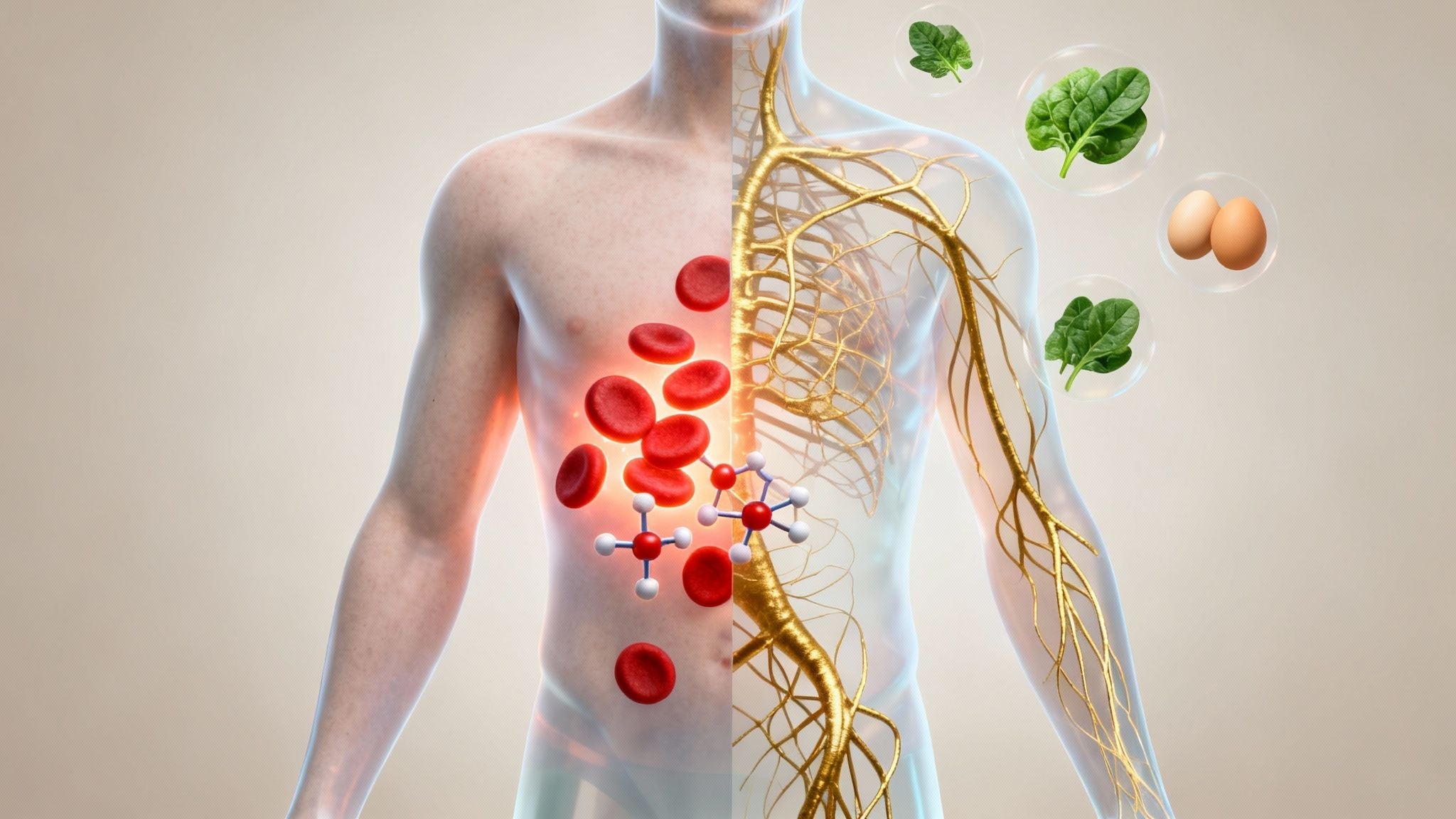
Iron is essentially the delivery service for oxygen in your blood. As the main component of the red blood pigment hemoglobin, it ensures that oxygen from your lungs actually reaches every single cell. Without enough iron, this vital cargo is left behind—and you feel it immediately through a massive drop in energy.
Vitamin B12, on the other hand, is your body's architect and maintenance technician at the same time. It is essential for the formation of red blood cells, protects your nerve pathways, and is involved in every cell division. If it is lacking, not only are the “oxygen transporters” built incorrectly, but communication between your nerves also suffers.
Why the symptoms are so often confused
The tricky thing is that the symptoms of a deficiency can be very similar and overlap. The same symptoms can occur with both an iron deficiency and a vitamin B12 deficiency:
- Persistent tiredness and exhaustion: Your body simply does not get enough energy to handle everyday life.
- Pale skin and mucous membranes: A lack of red blood cells often shows as a sallow complexion.
- Difficulty concentrating and forgetfulness: Your brain is no longer supplied with oxygen optimally.
- Dizziness and headaches: This can also indicate an inadequate supply of oxygen.
These similarities make it almost impossible to determine the exact cause based on symptoms alone. You may have only one deficiency or even be affected by both at the same time. If you want to take a closer look at which other signs may indicate deficiencies, check out our article on general nutrient deficiency symptoms.
A deficiency in iron or vitamin B12 is not a sign of weakness, but a signal from your body that it is missing important building blocks for its daily work.
To really find out what is behind your fatigue, guessing is not the answer. A simple blood test from mybody-x can quickly and easily provide clarity. Instead of fumbling in the dark, you get a precise analysis of your results. This allows you to take targeted action, replenish your energy stores, and finally feel fit and capable again.
Recognizing the typical symptoms of iron deficiency
Iron deficiency often creeps in quietly. You may simply feel tired and think nothing of it. But imagine that your body is missing the crucial building block for oxygen transport—the effects eventually go beyond simple fatigue and affect almost every area of your life. It is like trying to get through the day with an almost empty battery.
The signs are extremely varied and often develop slowly. This is because your body is clever and initially draws on its emergency reserves, stored iron (ferritin). Only when these reserves begin to run low does it send increasingly clear distress signals.
Your body's classic warning signs
Some symptoms are so characteristic that they are considered classic warning signs. If you notice several of them, you should definitely take notice. These signs indicate that the deficiency is already impairing your body's oxygen supply.
- Pale skin and mucous membranes: A quick look in the mirror can reveal a lot. Is the inside of your lower eyelid no longer a delicate pink but noticeably pale? This is often a clear indication of a deficiency of red blood cells.
- Brittle nails and hair loss: Are your nails suddenly developing ridges, becoming brittle, or even curving inward like a spoon? Unexplained hair loss is also a typical sign because the hair roots simply are no longer receiving enough nutrients.
- Cracked corners of the mouth (angular cheilitis): Small, often painful cracks at the corners of the mouth can also indicate a nutrient deficiency, especially iron.
These external changes are often the most visible signs of an imbalance that lies much deeper. If you would like to learn more about the background, take a look at our post What Is Iron Deficiency.
The stages of iron deficiency and their signs
Iron deficiency does not develop overnight; it progresses through various stages. The symptoms become increasingly severe as the stores become more depleted.
| Stage of deficiency | Description | Typical symptoms |
|---|---|---|
| Stage 1: Empty iron stores | The reserves (ferritin) are depleted, but blood formation is still functioning normally. | Usually no symptoms or only very nonspecific symptoms such as mild fatigue. |
| Stage 2: Iron deficiency without anemia | There is no longer enough iron available to produce red blood cells. | Increasing fatigue, concentration problems, pale skin, hair loss. |
| Stage 3: Iron-deficiency anemia | The hemoglobin level falls, and clinically significant anemia develops. Oxygen transport is severely impaired. | Severe exhaustion, shortness of breath during exertion, dizziness, headaches, brittle nails. |
As you can see, it all starts quite harmlessly. That's why it's so important to pay attention to the first subtle signs.
Subtle warning signs you shouldn't ignore
Alongside the obvious signs, there are also subtler symptoms that are easily mistaken for everyday stress or other causes. Yet these gradual changes steadily diminish your quality of life and energy.
Iron deficiency is more than just a physical problem. It affects your concentration, your mood, and your overall sense of well-being and inner strength.
Pay particular attention to these lesser-known but equally important warning signs:
- Shortness of breath during exertion: Do you become completely out of breath just climbing the stairs or sprinting briefly to catch the bus? This is because your blood can no longer transport enough oxygen to supply your muscles optimally.
- Restlessness and concentration problems: Do you find it difficult to focus, or do you often feel nervous and irritable? Iron deficiency can also seriously disrupt your brain function.
- Headaches and dizziness: Inadequate oxygen supply to the brain can also manifest as recurring headaches or feelings of dizziness.
- Increased susceptibility to infections: Do you feel like you catch every infection going around? Iron is absolutely essential for a strong immune system. Without enough of it, viruses and bacteria have an easy time.
In fact, iron deficiency is one of the most common deficiency conditions in Germany. Statistics show that at least 50 percent of all cases of anemia are attributable to a deficiency of this important trace element. Important to know: Symptoms often only appear after months because the body first depletes its stores. A publication by the National Association of Statutory Health Insurance Physicians offers further insights.
The variety of iron and vitamin B12 deficiency symptoms makes self-diagnosis almost impossible. Instead of continuing to wonder why you don't feel fit, a targeted nutrient test from mybody-x can quickly and easily give you clarity. This will tell you precisely whether your iron stores are truly depleted, allowing you to take targeted steps to regain your energy and well-being.
Do not overlook signs of vitamin B12 deficiency

While iron deficiency primarily slows down your energy metabolism and blood formation, a vitamin B12 deficiency affects an even more sensitive system: your nervous system and brain. The symptoms are therefore often diffuse, difficult to attribute, and easily mistaken for stress or the normal challenges of everyday life.
You can think of vitamin B12 as the protective sheath around our nerve pathways, much like the insulation around an electrical cable. When this layer is missing, “short circuits” occur and signal transmission begins to falter. These neurological impairments are often the first, but also the clearest, warning signs—and you should never ignore them.
Neurological symptoms as warning signs
Unlike many other nutrient deficiencies, the damage that a severe vitamin B12 deficiency causes to the nervous system can sometimes be irreversible. That is why it is so damn important to recognize and correctly interpret the first signs early on.
Pay particular attention to these physical warning signs:
- Tingling or numbness in your hands and feet: This strange sensation, as if ants were crawling over your skin (paresthesia), is a classic early warning symptom. It often occurs symmetrically, meaning in both hands or feet at the same time.
- Unsteadiness when walking and coordination problems: Do you sometimes feel unsteady on your feet or trip more often than before? A B12 deficiency can disrupt precisely the nerve pathways responsible for your balance and coordination.
- Muscle weakness: You suddenly lack strength in your arms or legs without having exerted yourself physically.
These symptoms are not merely unpleasant; they are genuine warning signals from your body. They show that communication between your brain and the rest of your body is impaired.
Psychological and cognitive consequences of a deficiency
But the effects of a B12 deficiency do not stop at physical symptoms. Since this vitamin is absolutely essential for your brain to function, a deficiency also affects you mentally and emotionally. Many people affected describe the feeling as a dense “fog in the head.”
A vitamin B12 deficiency can feel as though someone is slowly dimming the brightness of your consciousness. Your thoughts become slower, your memories hazier, and your mood more subdued.
Take a moment to observe whether you notice the following changes in yourself:
- Concentration and memory problems: You suddenly forget appointments, cannot find the right words, or find it difficult to focus on a single task.
- Mood swings and irritability: You feel down for no clear reason, become irritable quickly, or feel emotionally unstable.
- Unexplained exhaustion and lack of motivation: Unlike the physical tiredness associated with iron deficiency, this exhaustion often feels mental and profound.
Vitamin B12 deficiency is also more widespread in Germany than many people think. The risk increases significantly with age. Studies suggest that around 25% of people over 65 in Germany have too little vitamin B12 in their blood. Since the body can store large amounts of the vitamin in the liver, symptoms often develop gradually over a period of years. If you would like to learn more about this often underestimated problem, you can find fascinating facts in a publication by the Helmholtz Center.
The wide range of iron and vitamin B12 deficiency symptoms makes it difficult to identify the right cause without a thorough analysis. Rapid action is particularly important when it comes to the neurological and psychological signs of a B12 deficiency. If you would like to learn more about the background and causes, read our detailed article on vitamin B12 deficiency. A mybody-x nutrient test can quickly and easily provide clarity and help you prevent a serious deficiency before permanent damage occurs.
Causes and at-risk groups: What causes a combined deficiency?
Have you ever wondered why iron and vitamin B12 deficiencies often go hand in hand? The answer is surprisingly logical and usually comes down to two main causes: Either we do not absorb enough of both nutrients, or our body has an increased need for certain reasons.
Once you know the causes, you can assess your own risk much more accurately. It is no coincidence that the same circumstances or health problems often contribute to both deficiencies. That is precisely why, if a deficiency is suspected, it is so important to monitor both levels in order to understand the bigger picture.
Diet as the key factor
The most common and direct cause of a combined deficiency can be found on your plate. Both iron and vitamin B12 are found in highly bioavailable forms primarily in animal-based foods. If you eliminate these foods or eat them only rarely, a double nutritional gap can develop very quickly.
Those particularly at risk include:
- Vegans: Since vitamin B12 is found almost exclusively in animal products, a deficiency without supplements is virtually inevitable. At the same time, plant-based iron (non-heme iron) is significantly harder for the body to process than the iron found in meat.
- Vegetarians: Intake can quickly become critical here too. Although dairy products and eggs provide some vitamin B12, getting enough readily absorbable iron often remains a real challenge.
The tricky thing about plant-based iron is the so-called antinutrients. Substances such as phytates in grains and legumes or oxalates in spinach can effectively block absorption in the gut. As a result, even a plant-based diet that is rich in iron on paper may sometimes be insufficient in practice.
A combined deficiency of iron and vitamin B12 is rarely pure coincidence. It is usually the logical consequence of dietary habits or bodily processes that affect both nutrients at the same time.
When the gut becomes a bottleneck
Your gut is your body’s gatekeeper—it decides which nutrients are allowed in. If it does not function properly, even the healthiest food is of little use. Many gastrointestinal diseases interfere with the absorption of iron and vitamin B12 at the same time.
- Chronic inflammatory bowel diseases (IBD): In Crohn’s disease or ulcerative colitis, the intestinal lining is constantly inflamed. It is like trying to scoop water with a leaky bucket—the nutrients simply get lost.
- Celiac disease: This gluten intolerance damages the fine villi in the small intestine that are responsible for nutrient absorption. This affects not only iron and B12, but also a whole range of important vitamins and minerals.
- Low stomach acid: Older people or those who regularly take acid blockers often have too little stomach acid. However, it is essential for releasing vitamin B12 from food and preparing iron for absorption.
Specific life stages and risk groups
Sometimes the issue is not insufficient intake at all, but increased requirements or loss. During certain life stages or under specific health conditions, the risk of both deficiencies increases significantly.
To make things clearer, we have compared the most common risk factors here:
Main risk factors for iron and vitamin B12 deficiency compared
| Risk factor | Increased risk of iron deficiency | Increased risk of vitamin B12 deficiency |
|---|---|---|
| Diet | Vegan, vegetarian, restrictive diets | Vegan, strictly vegetarian |
| Life stage | Women of childbearing age (menstruation), pregnancy, breastfeeding, growth (adolescents) | Older people (aged 65 and over), pregnancy, breastfeeding |
| Health | Gastrointestinal diseases (IBD, celiac disease), frequent blood donations, surgeries involving blood loss | Gastrointestinal diseases, autoimmune diseases (e.g. pernicious anemia), low stomach acid, use of acid blockers |
| Lifestyle | Competitive sports (increased loss through sweat and microbleeding) | Chronic alcohol consumption |
The table shows how closely the risk factors are often intertwined. For example, a pregnant woman has a higher need for both nutrients. And someone with undiagnosed celiac disease often struggles to absorb sufficient amounts of both substances.
That is precisely why it is so important not to check just one value when experiencing symptoms such as persistent fatigue or concentration problems. A comprehensive nutrient test from mybody-x examines both parameters closely and gives you a clear picture of your nutritional status. This allows you to take targeted action and prevent an undetected deficiency from continuing to hold you back.
From suspicion to certainty with a blood test
Symptoms such as fatigue or persistent concentration problems are initially only signposts. They tell you that something is wrong, but not exactly what is going on. Think of it like the warning light in a car: It comes on, but it does not tell you whether the oil is low or the tire pressure is too low.
To move from a vague suspicion to a firm diagnosis, there is no getting around a blood test. It is the only way to see in black and white what your nutritional status is really like. This step is absolutely crucial because it gives you the certainty and clear roadmap you need to reclaim your energy and well-being.
Which blood values really matter
When it comes to iron and vitamin B12 deficiency symptoms, a simple “complete blood count” is often not enough. There are much more specific values that provide deep insights into your stores and your current status—and can detect a deficiency before it fully develops.
Two values are especially important when it comes to iron status:
- Ferritin: This is the most important marker! You can think of ferritin as the fill level of the body’s iron tank. It shows how much iron is stored as a reserve. If this value is low, your reserves are running empty—and often long before actual anemia becomes visible in the blood count.
- Transferrin saturation (TSAT): This value reveals how many of the “iron taxis” (the transport protein transferrin) are currently loaded. In other words, it shows how much iron is currently available for immediate use in the body.
Vitamin B12 is very similar. The standard B12 level in the blood can be misleading. A more modern marker is much more precise:
- Holotranscobalamin (Holo-TC): This is the active form of vitamin B12 that can be used directly by cells. You could say it is the B12 that really reaches its destination. This value is an excellent early warning system because it often detects a deficiency when the total blood level still appears normal.
A blood test is like looking behind the scenes of your body. It makes invisible deficiencies visible and turns vague symptoms into clear, measurable facts.
This infographic summarizes the most common causes of nutrient deficiencies, ranging from diet and certain stages of life to gut health.
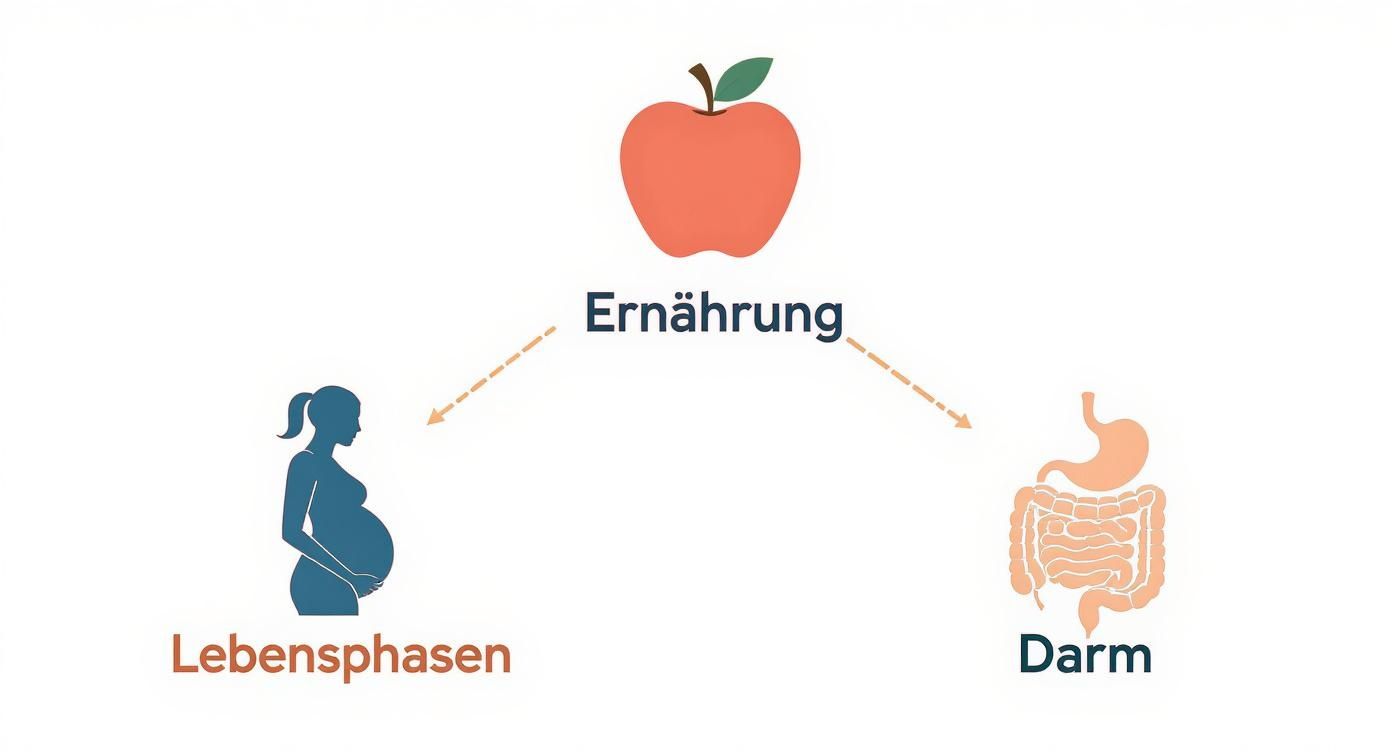
The graphic makes it clear: A deficiency rarely has just one cause. It is usually the result of several factors working together, making an accurate analysis all the more important.
Your path to clarity with a self-test
In the past, a blood test always meant making a doctor’s appointment, waiting a long time, and dealing with organizational hassle. Fortunately, it’s much easier and more discreet today—directly from home. A self-test from mybody-x is designed specifically to give you back control over your health with minimal hassle.
The process couldn’t be easier:
- Simple sample collection: Using the test kit, you collect a few drops of blood from your fingertip at home. It’s quick, virtually painless, and detailed instructions guide you safely through every step.
- Analysis in a certified laboratory: You send your sample directly to our German specialist laboratory in the enclosed return envelope. There, it is analyzed according to the same high standards as a sample from any doctor’s office.
- Easy-to-understand report: You’ll receive your results after just a few days in a clear, well-organized report. Instead of confusing columns of numbers, you’ll get a precise explanation of what your values mean and where they should be within the optimal range.
- Specific recommendations for action: The most important thing is that you won’t be left alone with the results. You’ll receive personalized recommendations for your diet and lifestyle to address and effectively correct a deficiency.
This is a super straightforward way to finally gain clarity. If you’d like to learn more about how to check your nutrient levels, you’ll find all the important information in our comprehensive nutrient deficiency test. Instead of continuing to feel uncertain, you’re creating a solid foundation for your health.
The first steps after diagnosis: what now?
Does your mybody-x test result show a deficiency? Great! That’s no reason to worry—it’s the starting point for your journey toward more energy and well-being. You finally have clarity and know exactly what your body needs. With this knowledge, you have the perfect roadmap in your hands to take targeted action.
The good news: you can get started right away. This is not about complicated diets, but about a few smart adjustments in your daily routine that can have a huge impact.
Diet as the foundation: how to rebuild your stores
Your daily diet is the foundation for sustainably replenishing your stores. Even small changes can make a big difference and provide your body with what it has been missing. The key is to cleverly incorporate iron- and B12-rich foods into your meal plan.
Here are a few simple tips you can put into practice right away:
- Harness the power of iron: Regularly include high-quality sources of iron. Lean red meat and liver are true powerhouses because they provide so-called heme iron, which your body can absorb particularly well. Plant-based alternatives such as lentils, chickpeas, pumpkin seeds, and whole-grain products are also great—they just need a little trick to unleash their full potential.
- Combine wisely with vitamin C: The body absorbs plant-based iron much better when you consume it together with vitamin C. This is easier than it sounds: a glass of orange juice with your muesli, a few strips of bell pepper in your lentil salad, or a squeeze of lemon over your vegetables. So simple, so effective!
- Focus on vitamin B12: This vitamin is found almost exclusively in animal products. Meat, fish, eggs, and dairy products are therefore the best sources. If you follow a vegan diet, changing your diet alone is not enough—targeted supplementation is essential.
Targeted supplementation: the turbo boost for your energy
When a deficiency has been confirmed, diet alone is often not enough to quickly replenish depleted stores. Think of your stores like an almost empty battery—the diet recharges it slowly but steadily. High-quality dietary supplements are the turbo boost that speeds up the process and gives you back your energy faster.
Do not view supplements as a replacement for a balanced diet, but as targeted support. They fill the gaps caused by an increased need or prolonged inadequate intake.
When choosing your supplements, be sure to pay close attention to quality and the correct dosage. Your mybody-x report already provides valuable guidance on which nutrients you particularly need now. This helps you make an informed decision and deliberately restore your body’s balance so you can finally leave the symptoms of iron and vitamin B12 deficiency behind.
Your questions, our answers
Here, we have summarized the most frequently asked questions about iron and vitamin B12 deficiency for you—brief, concise, and easy to understand. This will quickly give you clarity and help you better assess the symptoms of iron and vitamin B12 deficiency.
Can I correct a deficiency through diet alone?
It depends entirely on the severity. In the case of a mild, early-stage deficiency without severe symptoms, consciously changing your diet may often be enough to gradually but reliably replenish your stores.
However, if the deficiency is already advanced and you constantly feel tired or even have neurological symptoms, diet alone will be difficult. The process then becomes very lengthy. In this case, targeted supplementation is usually unavoidable to effectively replenish your depleted stores.
A blood test such as the one from mybody-x provides clarity. It shows you exactly how severe your deficiency is. This way, you know whether changing your diet is enough or whether you need targeted support to regain your energy.
How quickly will I notice an improvement?
This is highly individual and depends greatly on which nutrient is lacking and how depleted your stores are.
With iron deficiency, many people notice a real difference after just a few weeks—their energy returns and constant fatigue subsides. More patience is needed for the neurological symptoms of vitamin B12 deficiency, such as tingling or numbness. Here, it can take several months before noticeable improvement occurs.
The key to success here is to stick with it. A follow-up test after some time is ideal for seeing whether your measures are working and whether you are on the right track.
Do I necessarily need to take supplements as a vegan?
For vitamin B12, the answer is a clear yes. This vitamin is found almost exclusively in animal products. Regular supplementation is therefore essential for vegans to prevent a deficiency and its serious consequences.
Iron is a little more complicated. Although iron is also found in many plant-based foods, the body absorbs this so-called non-heme iron much less efficiently than iron from animal sources. This increases the risk of deficiency. Regular blood tests are particularly important here to make sure everything is within the normal range and that you maintain your vitality.
Are you finally ready to gain clarity about your nutrient levels and get to the bottom of the cause of your fatigue? With a blood test from mybody-x, you receive precise results and personalized recommendations to specifically replenish your stores. Discover the easy self-tests for use at home now at https://mybody-x.com.



Share now:
What are cross-allergies, and what can you do about them?
Causes of vitamin B12 deficiency uncovered