
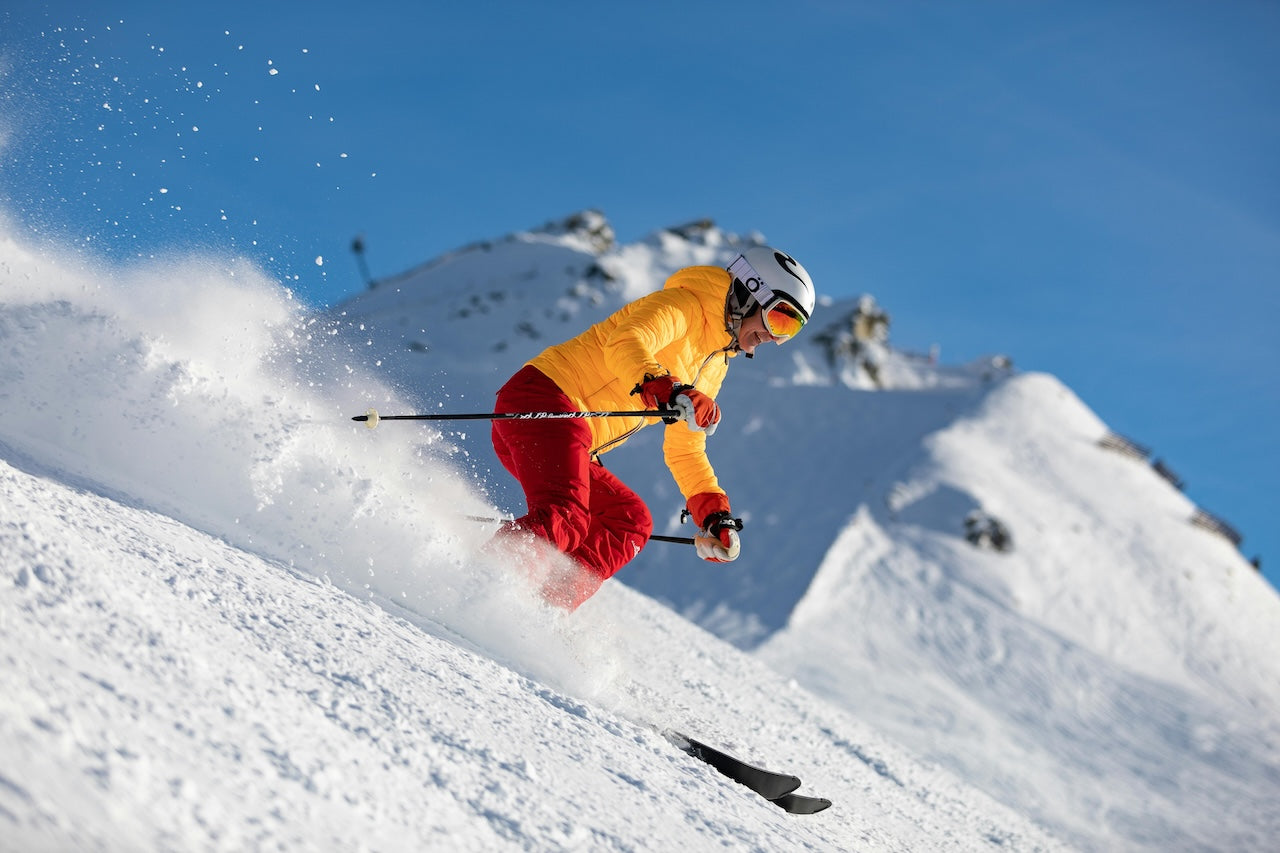
Train according to your genes—DNA test for sports in Austria
You train regularly and give it your all—but see no progress? Your training partner follows the same program and achieves effortless results? Maybe it is not a matter of discipline, but of your genes. In Austria, where health, fitness, and prevention are becoming increasingly important, a DNA test can help you finally tailor your training to suit your body.
Why you respond better to some types of training—and others only frustrate you
We all know the myth: "Exercise always helps." But in reality, people respond very differently to strength training, endurance sports, or interval exercises. While some people quickly become fitter through running, others build muscle faster through strength training—and feel better as a result. This phenomenon is not only related to training habits or nutrition—it is also genetically determined.
What genes have to do with sports—explained scientifically
A DNA test can show how your body responds to exercise. It examines genes associated with muscle type, oxygen uptake, recovery ability, and injury risk.
Examples include:
-
ACTN3 gene: Determines whether you are more predisposed to explosive strength (e.g., sprinting, weightlifting) or endurance performance (e.g., marathon running, cycling).
-
PPARGC1A gene: Influences how efficiently you burn fat and store energy in your muscles.
-
COL5A1 gene: Provides indications of connective tissue stability and injury risks under intense strain.
Genetic information does not replace training—but it helps you train more purposefully and efficiently.
Why a DNA test makes sense in Austria in particular
Austria has a strong enthusiasm for sports—from ski regions such as Tyrol to the running groups in Vienna’s Prater. At the same time, studies show that many recreational athletes fail to achieve lasting training results despite their motivation—or repeatedly suffer injuries.
A DNA test helps you avoid unnecessary frustration and unlock your individual potential.
The “Sports Medicine & Prevention” sector is also booming in Austria—DNA-based training advice is already being offered in fitness centers, longevity studios, and pharmacies in cities such as Salzburg, Vienna, and Graz.
How to train healthier over the long term with genetic knowledge
When you know how your body responds to different types of stress, you can not only train more purposefully, but also:
-
Prevent injuries (e.g., in the case of an unstable connective tissue structure)
-
Optimize recovery times (depending on muscle type & recovery rate)
-
Set training stimuli efficiently – whether HIIT, cardio, or strength training
-
Promote your longevity over the long term – in other words, grow old healthily
In Austria, more and more studios are offering individualized programs that integrate DNA tests into training and nutrition plans. The trend is moving away from one-size-fits-all plans toward personalized exercise.
New insight: Using your genes in everyday life
What exactly does the test do for you?
For example:
-
You recognize why endurance runs exhaust you, while interval training gives you energy.
-
You find out why you recover more slowly than others after intense sessions.
-
You understand why you tend to build muscle mass – or why you need more recovery.
-
You gain clarity about whether your training actually suits your biological profile.
This knowledge can revolutionize your training while also strengthening your self-confidence.
Conclusion: Sport is individual – and your genes show you the way
Especially in a sports-oriented country like Austria, it is time to train smarter. Instead of blindly believing that “more is better,” a DNA test helps you recognize what truly suits you – physically, genetically, and sustainably. This way, you train with your body rather than against it.
Whether you climb in Innsbruck, swim in Lake Neusiedl, or jog in the Vienna Woods – your body is unique. A DNA test can help you understand it better. And that is the first step toward genuine, long-lasting training success.
References
-
Ahmetov, I. I., & Fedotovskaya, O. N. (2015). Sports genomics: current state of knowledge and future directions. Cellular and Molecular Exercise Physiology, 4(1), e1.
https://doi.org/10.4127/cme.2015.0101 -
Pickering, C., & Kiely, J. (2017). Understanding personalized training responses: can genetic assessment help? Journal of Functional Morphology and Kinesiology, 2(4), 19.
https://doi.org/10.3390/jfmk2040019 -
World Health Organization (WHO). Physical activity – Key facts.
https://www.who.int/news-room/fact-sheets/detail/physical-activity -
Statistics Austria (2023). Population by sporting activity and lifestyle.
https://www.statistik.at/statistiken/mensch-und-gesellschaft/gesundheit/lebensstil-und-verhalten/sport-und-bewegung -
Pitsiladis, Y. P. et al. (2016). Genomics of elite sporting performance: what little we know and necessary advances. British Journal of Sports Medicine, 50(9), 518–519.
https://doi.org/10.1136/bjsports-2015-095180



Share now:
Mental Load & Depression: Can a DNA test in Austria help better understand psychological distress?
Preventive Health & Longevity in Austria: What Genetic Tests Can Do