
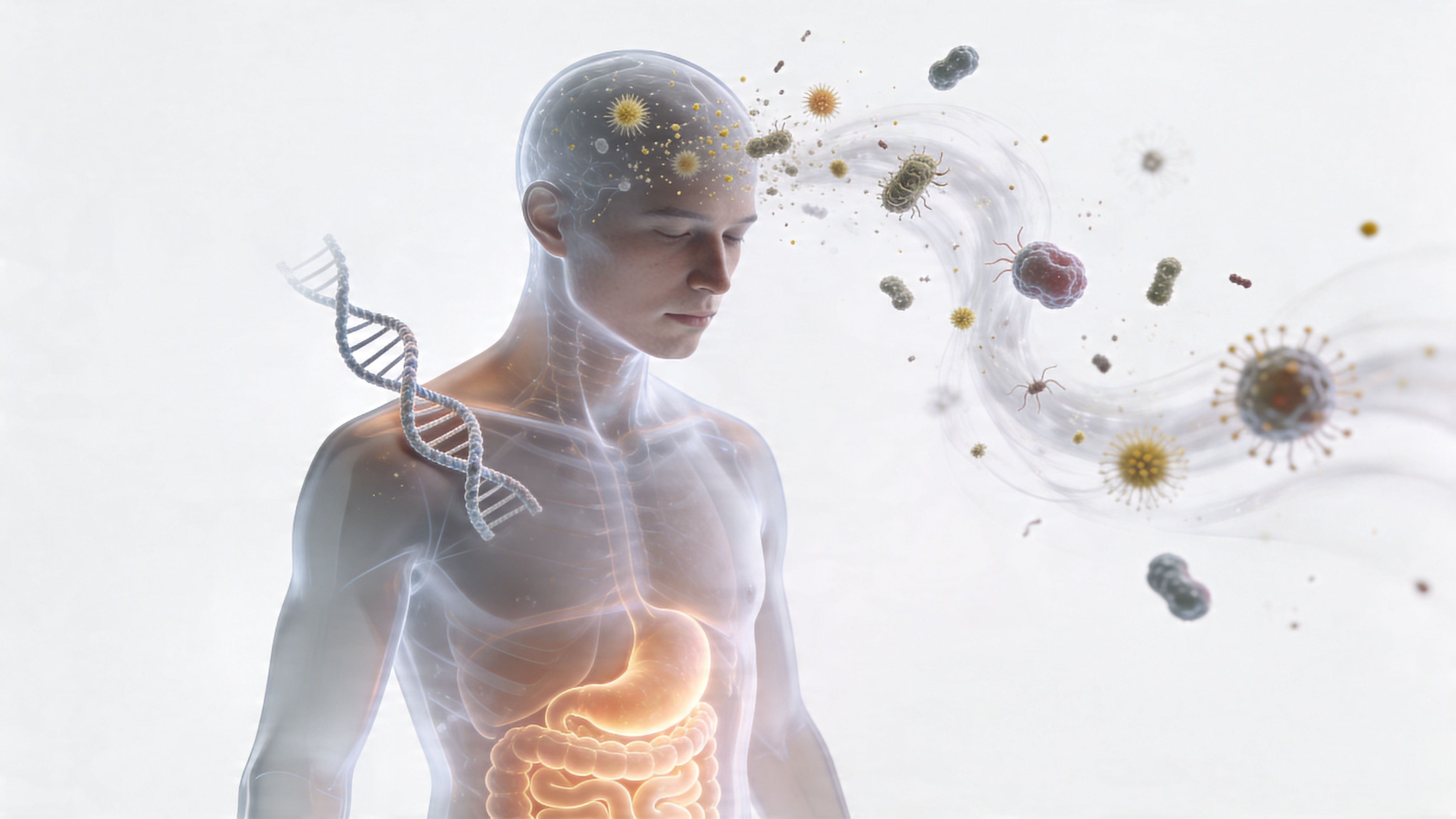
How Do Allergies Develop? Your Complete Guide for 2026
Your nose runs every spring. After eating an apple, your mouth suddenly tingles. Or you repeatedly experience symptoms after eating certain foods and do not know whether it is a true allergy, an intolerance, or something else entirely.
You are not alone in this uncertainty. Many people feel that their body reacts noticeably to substances that are actually harmless, but they cannot interpret the signals. That is exactly where the question becomes interesting: how do allergies develop in the first place?
The short answer is: Your immune system mistakes something harmless for a threat. The helpful answer is a little more detailed. And that is exactly what you will get here, step by step and without unnecessary jargon.
When the body overreacts Your guide through the world of allergies
You open the window in the morning, take a deep breath, and shortly afterward notice: your nose is running, your eyes are itchy, and your head feels heavy. Later, you eat something familiar, and suddenly your body reacts again. Moments like these make allergies so confusing because everyday things suddenly seem to act as triggers.

The core of the problem is often not a “bad” substance, but a misjudgment. Your immune system is actually designed to recognize genuine threats such as viruses or bacteria. With an allergy, it reacts to something harmless, such as pollen, animal dander, or certain proteins in food, as though an alarm were necessary.
That seems contradictory. Biologically, however, it makes sense.
A simple way to picture it is this: Your immune system works like a highly sensitive security system. Normally, it distinguishes between a burglar and the wind pressing against the window. With an allergy, harmless movement is recorded as a threat. The alarm is real—only the target is wrong.
That is why symptoms can be so difficult to classify. Itchy eyes feel like irritation, sneezing like a cold, and stomach problems like stress or something spoiled. Knowing the basics makes it much easier to sort these signals and observe them more closely. You can also find a clear introduction in the overview of what is an allergy.
Cats are a good everyday example. Some people already react during a brief visit to an apartment with watery eyes or a stuffy nose. Others notice nothing for a long time, and symptoms only appear later. If you would like to learn more, this article on cat allergies clearly explains common triggers and symptoms.
The most important point is this: Your body is not deliberately “acting up,” and you are not hypersensitive in the colloquial sense. The reaction is based on a learnable pattern involving immune mechanisms, personal predispositions, and influences from your everyday life. Understanding this interplay will later also help you better assess modern explanations of causes and choose the right next steps for yourself.
The two phases of an allergy: sensitization and reaction
Allergies do not develop in a single moment. In a type 1 allergy, the process occurs in two phases. This makes many things easier to understand, especially why you may have tolerated something for a long time and then suddenly react to it later.

Phase one Sensitization
The first time you come into contact with an allergen, often nothing happens—at least nothing you notice. That is precisely what makes this phase so deceptive.
Your immune system detects the substance and mistakenly classifies it as dangerous. B cells then produce specific IgE antibodies, which attach to mast cells. This process is symptom-free and, according to the mechanism described, can go unnoticed in a type 1 allergy until the reaction occurs later, as explained here regarding the development of a type 1 allergy.
You can think of IgE as a misfiled wanted poster. The immune system remembers: “Next time, stop this substance.”
Phase two The reaction
The next time you come into contact with the allergen, the silent preparation becomes a visible alarm. The allergen binds to the IgE antibodies already present on mast cells. These cells then release histamine and other inflammatory mediators.
This is the moment when symptoms develop. They include, for example:
- In the nose Sneezing, runny or blocked nose
- In the eyes Itching, watery eyes, redness
- On the skin Hives, itching, swelling
- In the airways Coughing, tightness, wheezing
- In the gastrointestinal tract Symptoms after contact with certain triggers
Why the body reacts so strongly
Histamine is not a “bad” substance. It is a messenger substance that your body uses for good reasons, for example in defense reactions. With an allergy, this system is simply activated in the wrong situation.
A simple analogy can help: Imagine your immune system as an alarm system. Normally, it only goes off when there is a real break-in. With an allergy, however, it reacts even to a harmless visitor carrying a bouquet of flowers.
| Phase | What happens in the body | What you notice |
|---|---|---|
| Sensitization | formation of specific IgE, binding to mast cells | usually nothing |
| reaction | repeat contact, release of histamine and other mediators | typical allergy symptoms |
Important to know: A blood test for specific IgE can detect sensitization before you fully understand the mechanism behind the symptoms.
A common misconception
Many people say, “I have eaten it for years, so it cannot be an allergy.” Yet that fits this mechanism exactly. The first phase can remain unnoticed for a long time. Only upon later contact does it become apparent that the immune system has already stored the substance.
That is why it is so helpful not to assess symptoms based on feelings alone. The timing often seems illogical, but biologically it is not.
Genes, environment, and lifestyle: the real causes of allergies
You are eating outdoors with friends, the birch trees are blooming, and everyone is breathing the same air. One person enjoys the afternoon. Another develops itchy eyes, sneezing fits, or breathing difficulties. This is exactly where the question often arises: Why does one body react while the other remains calm?

The short answer is: allergies usually arise through an interaction of factors. Genes influence how vigilant your immune system is. The environment and lifestyle then shape what this system reacts to and how easily it goes on high alert.
Genes are the predisposition, not the whole script
If allergies are common in your family, the likelihood that your immune system will also react more sensitively increases. However, that does not mean your symptoms were predetermined from the start. Genes provide more of a basic setup, similar to a smoke detector with a particular sensitivity. Whether it goes off frequently later also depends on how much smoke, dust, or vapor enters the room.
This is exactly where it helps to look at epigenetics and how environmental factors can influence gene activity. This is interesting for allergies because it explains why predisposition and everyday life influence each other.
Why allergies are more common today
Many immunologists assume that the immune system needs a kind of fine-tuning during the first few years of life. It has to learn what is dangerous and what is harmless. A variety of stimuli can help with this: contact with other people, microorganisms, nature, animals, and different foods.
If such stimuli are absent for an extended period, this distinction can become blurred. The immune system then reacts more like an overcautious bouncer who eyes even peaceful guests with suspicion.
Added to this are influences from modern everyday life. Spending a lot of time indoors, urban air, highly processed food, little contact with nature, and frequent stress change the environment in which the immune system learns and works. This does not explain every individual allergy. But it does explain why the question “Why now?” is so important and why the answer rarely lies only in the genes.
Early conditioning makes a difference
The start of life can also influence how tolerantly the immune system responds later. Birth, nutrition during infancy, and the early use of antibiotics affect contact with microbes at a stage when the immune system is still sorting and storing information. You can think of it like the first lessons of a school class. What is missing then often has to be learned later with greater effort.
This does not mean that a single factor determines your future. It simply means that the body gathers experiences early on, and these experiences can shape its response patterns.
Why two people react differently to the same substance
Pollen, pet dander, or certain foods are only the visible part. Behind them lies an entire pattern of predisposition, early conditioning, current lifestyle, and environmental exposure. That is why two people can inhale the same pollen and still react in completely different ways.
This is a helpful perspective for you. It moves allergies out of the “just bad luck” category. At the same time, it shows where you can take action yourself: observe triggers, take lifestyle factors seriously, and consider your own history.
Allergies often develop where a sensitive immune system encounters an environment that puts its tolerance under pressure in several ways.
The key role of your gut in a strong immune system
When many people think of allergies, pollen, pet dander, or foods come to mind first. They think of the gut less often. Yet it plays a central role in immune regulation.
The gut as a training center
Your gut is more than a digestive tube. It is a place where the immune system is constantly deciding: What belongs to me, what is harmless, and what do I need to respond to?
The microbiome helps with this—the community of microorganisms in the gut. A diverse gut flora acts like a calm, intelligent trainer. It helps the immune system develop tolerance to harmless substances instead of sounding the alarm too quickly.
When the balance tips
This system is sensitive. Antibiotics, an unbalanced diet, ongoing stress, or highly processed foods can disrupt the balance. The immune system may then be missing part of its training.
The RKI describes exactly this direction: Reduced contact with microbes, animals, and nature, as well as a one-sided diet, can contribute to a less diverse gut microbiome, which dysregulates the immune system and promotes allergies. This fits well with what many people experience in practice: symptoms do not always arise from just one individual trigger, but within an environment where the internal balance is already disrupted.
Why this is relevant to you
If you only look for the trigger, you may sometimes overlook the foundation on which the reaction develops. The gut is often that foundation.
This does not mean that every allergy “comes from the gut.” It does mean that gut health can influence how well your immune system distinguishes between harmless and dangerous. You can find more information in the article on a healthy gut flora.
An irritated immune system is more likely to overreact. A well-regulated immune system assesses things more accurately.
Three practical points to consider
- Pay attention to patterns If symptoms become more pronounced during periods of stress, after taking antibiotics, or with an unbalanced diet, it is worth taking a holistic view.
- Don't think only in terms of prohibitions Not every reaction immediately requires a long list of foods to eliminate.
- Look for connections Skin, digestion, and the airways are not separate islands. The immune system connects them.
Allergy or intolerance? Find the triggers with a blood test
When symptoms keep recurring, the same question often arises: Is this really an allergy, or is it more likely an intolerance? This is exactly where sound diagnostics are important.

The difference in simple terms
An allergy is an immune reaction. In a type 1 allergy, specific IgE antibodies play an important role. An intolerance can cause symptoms without the same allergy mechanism being involved.
This is crucial because it leads to different next steps. People who confuse the two often avoid foods unnecessarily or overlook the actual trigger.
Skin test and blood test compared
Both approaches can be useful. However, they do not answer exactly the same practical question.
| Method | What it is useful for | What you should consider |
|---|---|---|
| Skin test | make a direct reaction to specific allergens visible | depends on the timing of the test and is not suitable for every situation |
| Blood test | Detection of specific IgE in the blood | provides a laboratory analysis without a local skin reaction |
A blood test is particularly useful when you want to systematically determine whether your immune system has already developed sensitization. This fits the allergy mechanism described, in which specific IgE plays a central role.
When a home test may be useful
Not everyone wants to arrange several doctor’s appointments right away, especially when symptoms are vague or recurring. A home self-test can help clear the initial fog and assess symptoms more systematically.
One option is the food intolerance blood test. Such services do not replace medical evaluation in the case of severe or acute reactions, but they can provide a useful basis for identifying patterns and planning the next steps more effectively. In this context, the mybody x blood test can also be mentioned as an option if you would like to initiate a structured analysis at home.
Where many people struggle
Many people rely solely on their memory. “I think it was after eating tomatoes.” Or: “Whenever I’m outside, it gets worse.” The problem is that symptoms may appear after a delay, or several factors may be involved at the same time.
That is why a combination of the following is usually helpful:
- Record your symptoms When do they occur, how quickly, and how severe are they?
- Narrow down the triggers Foods, animals, pollen, situations
- Use laboratory values Especially when a genuine immune reaction is suspected
Clarity rarely comes from guessing. It emerges when observation and appropriate testing come together.
Your path to greater well-being: prevention and practical recommendations
Once you know the triggers, the genuinely helpful part begins. Do not avoid everything blindly; take targeted action instead.
What you can influence immediately
When triggers have been confirmed, the first step is usually simple to describe but challenging in everyday life: reduce contact. Depending on the allergy, this may involve certain foods, periods of pollen exposure, or contact with animals.
But the second step is often more important. You strengthen the conditions under which your immune system reacts more calmly. These include sleep, stress management, nutrition, and the targeted correction of nutrient deficiencies.
Nutrients as part of an allergy strategy
A nutrient deficiency can promote allergies. According to the information presented here, around 60% of allergy sufferers have a vitamin D level below 30 ng/ml. Targeted correction of such deficiencies, identified through a blood test, can reduce IgE production by 25 to 35%, as described in this overview of the development of allergies and the influence of nutrients.
This does not mean that vitamin D alone can solve every allergy. It does mean, however, that your nutrient status can be a useful lever instead of merely reacting to symptoms.
This is what a sensible daily routine looks like
- Avoid triggers selectively Not indiscriminately, but based on genuine evidence.
- Check your nutrient status Especially if you are often tired, get infections, or develop additional vague symptoms.
- Eat a varied diet Variety supports many regulatory processes in the body.
- Take stress seriously An overburdened body often reacts more sensitively.
- Observe reactions What improves when you specifically change something?
What you should not do
After their first suspicion, many people make a drastic cut and eliminate entire food groups on their own. This may seem logical in the short term, but it often leads to uncertainty and unnecessary restrictions.
A structured approach is more sensible:
- Take symptoms seriously.
- Check triggers carefully.
- Identify deficiencies.
- Derive appropriate measures.
Rule of thumb: The clearer your data, the more relaxed your everyday decisions become.
When you know whether an immune reaction, an intolerance, or a nutrient issue is behind it, vague discomfort becomes a problem with direction. That alone brings relief.
Take charge of your health
Allergies often seem chaotic. In reality, they follow biological patterns. Your immune system goes through a silent learning phase, reacts visibly later, is shaped by your environment and lifestyle, and is closely connected to your gut health.
The key point is this: You do not have to simply put up with your symptoms. If you understand how these reactions arise, you can better assess your symptoms, avoid common misconceptions, and search more purposefully for the real causes.
Change often begins not with a perfect solution, but with clarity. A clear look at possible allergens, intolerances, and nutrient deficiencies helps you make decisions not out of uncertainty, but on the basis of understandable evidence.
If you have been wondering for months whether pollen, food, or a deeper imbalance is behind your symptoms, the first step is smaller than it feels. You do not have to solve everything at once. You only need to start understanding your body systematically.
If you want clarity about possible allergies, intolerances, or nutrient deficiencies, a mybody x blood test can be a sensible first step. This gives you a concrete basis for better assessing your symptoms and coordinating the next steps more purposefully with your daily life or medically.



Share now:
Determine your health type: 5 steps for nutrition & well-being
Which foods? The 10 best for your health