

Determine your health type: 5 steps for nutrition & well-being
TL;DR:
- Many testing methods, including DNA tests, blood analyses, microbiome analyses, and questionnaires, help determine your health type. Reputable providers in Switzerland are governed by regulatory standards and data protection requirements. Sustainable health optimization requires combining methods, professional advice, and behavioral changes.
Many people in Switzerland want to improve their nutrition and optimize their weight but do not know which testing method is truly right for them. Should they choose a DNA test, a blood analysis, or simply a questionnaire? The selection is extensive, the promises are enticing, and testing options in Switzerland are diverse and regulated. This article shows you step by step how to determine your personal health type safely and based on scientific evidence, which methods really work, and how to use the results sustainably for your nutrition and well-being.
Table of contents
- Fundamentals: The most important testing methods for determining your health type
- Preparation: What you need to consider before the test
- Step-by-step guide: How to determine your health type
- Type evaluation and applying the results: targeted optimization of diet & well-being
- Personal perspective: What really matters when determining your health type
- Next steps: Start your personal health type assessment with mybody®x
- Frequently asked questions
Key insights
| Point | Details |
|---|---|
| Compare testing methods | DNA, blood, microbiome tests, and questionnaires provide different, complementary results. |
| Ensure quality | Choose Swiss providers approved by the FOPH for security and data protection. |
| Holistic evaluation | Combine different testing methods and expert advice for sustainable health. |
| Put results into practice | Use your individual results strategically to guide your nutrition and lifestyle. |
| Avoid mistakes | Do not focus on individual results; think holistically and seek professional advice. |
Fundamentals: The most important testing methods for determining your health type
Anyone who wants to determine their health type now has more options than ever before. Four main methods dominate the market: genetic DNA tests, blood and laboratory tests, microbiome analyses, and questionnaires. Each method provides different information and is suited to different goals.
Genetic DNA tests analyze your genetic information and provide insights into metabolic types, nutrient utilization, and genetic risks. They are ideal for long-term nutrition and weight-management strategies. The role of DNA tests in health optimization is well documented scientifically. Genes, blood values, and questionnaires work together to help optimize nutrition and weight in a targeted way.
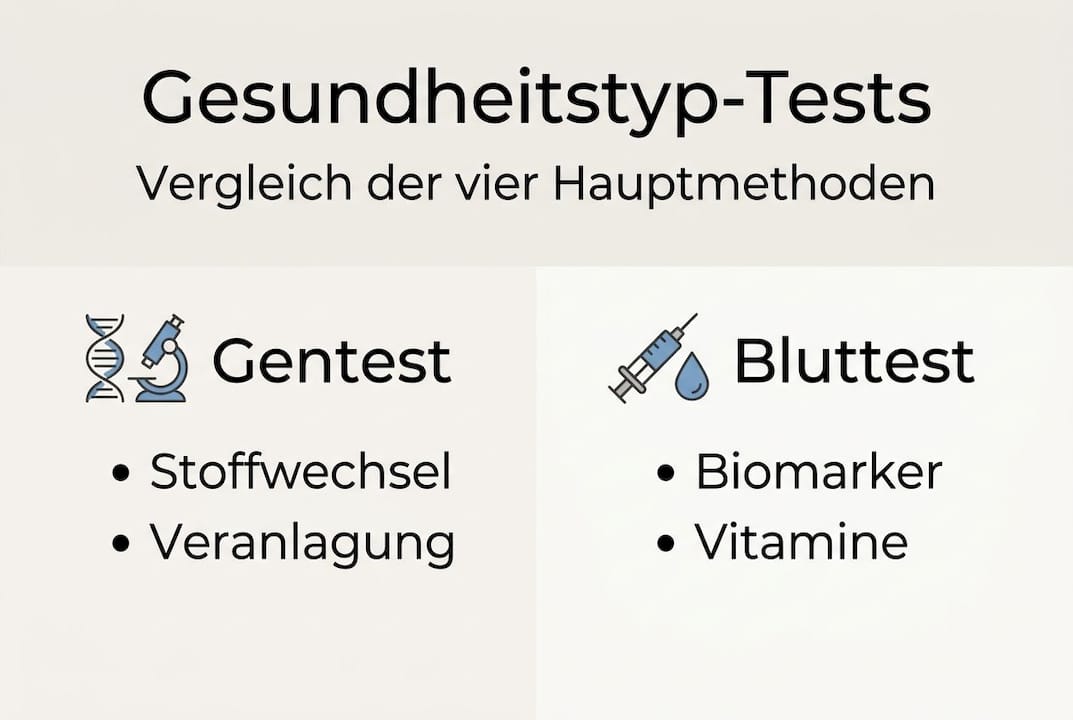
Blood and laboratory tests measure specific biomarkers such as vitamins, hormones, inflammation markers, and minerals. Modern laboratory tests analyze 75 to 150+ parameters, providing a highly precise picture of your current health status. They are particularly useful for identifying deficiencies or checking your nutrient levels. Find out more at Blood Test Methods.
Microbiome analyses examine the composition of your gut bacteria. The microbiome affects not only digestion, but also the immune system, mood, and body weight. This method is particularly valuable for people with digestive problems or persistent fatigue.
Questionnaires are quick, free, and non-invasive. They provide initial indications of stress types, dietary habits, or sleep patterns, but do not replace laboratory analysis.
| Method | Measures | Suitable for | Effort |
|---|---|---|---|
| DNA test | Genetic predisposition | Nutrition, weight, fitness | Medium |
| Blood test | Biomarkers, nutrients | Deficiency diagnosis, hormones | Medium |
| Microbiome | Gut flora | Digestion, immune system | Medium |
| Questionnaire | Behavior, type | Initial guidance | Low |
You can find a structured overview of which test type is right for you in our guide. In Switzerland, non-medical genetic tests are subject to special regulatory requirements imposed by the Federal Office of Public Health (FOPH), which you should know before ordering a test.
Statistics: Laboratory tests can now detect up to 150 biomarkers in a single analysis, enabling unprecedented precision in determining health types.
Preparation: What you need to consider before the test
Before ordering a test, it is worth clarifying a few important points. Good preparation saves time, money, and frustration.

Regulatory requirements in Switzerland: In Switzerland, non-medical genetic tests are permitted only for adults who have the capacity to consent. Providers must obtain informed consent and use laboratories approved by the FOPH. Make sure your provider meets these requirements.
Quality criteria when choosing a provider:
- Prefer ISO-certified laboratories
- Review transparent data privacy policies
- Choose Swiss or EU providers for GDPR compliance
- Ensure that samples are pseudonymized
- Require scientifically validated analysis methods
Data privacy is not a minor issue. Your genetic data is highly sensitive. Reputable providers pseudonymize samples and destroy them after analysis. Ask explicitly about this before ordering. Information about DNA tests and health regulations can help you ask the right questions.
Edge cases: When you should consult a doctor first:
- Pregnancy or breastfeeding
- Chronic conditions or current symptoms
- Tests for children under 18
- Mental health conditions
Pro tip: Before making a purchase, compare at least three providers. Do not focus only on the price, but also consider the depth of the analysis, the consultation services, and the quality of the laboratory partners. An inexpensive test without expert support is often less valuable than a comprehensive package.
| Criterion | Swiss provider | Foreign provider |
|---|---|---|
| Data protection | GDPR, revised FADP | Varies greatly |
| Laboratory standard | ISO, FOPH-approved | Not always verified |
| Language/consultation | German, direct | Often only available in English |
| Regulation | FOPH requirements | Not always compliant |
You can find a direct comparison of microbiome tests in our guide for users in Switzerland.
“Anyone who really wants to know their health type needs more than a questionnaire. Science, data protection, and personal consultation belong together.”
Step-by-step guide: How to determine your health type
Once you have completed the preparation, the actual process follows. These steps will guide you safely and efficiently to your result.
-
Define your goal: Consider what you want to optimize. Weight, energy, digestion, or general well-being? Your goal determines which test method makes the most sense.
-
Researching and choosing a provider: Look for certified providers with transparent laboratory methods. Read reviews and check whether the provider meets FOPH requirements. A stress type questionnaire can provide initial guidance before you invest in a laboratory analysis.
-
Registration and ordering: Register with your chosen provider, read the privacy policy carefully, and give your informed consent. Order the test kit to your home.
-
Submitting samples: Follow the instructions in the kit carefully. Saliva, blood, or stool samples must be collected correctly and sent in promptly. Improper storage can distort the results.
-
Evaluation and consultation: After the sample is received, you will receive your results, usually within two to four weeks. The best approach is to combine genetics, blood, and the microbiome for a complete picture. Then schedule a consultation with a nutrition coach or doctor.
-
Putting results into context: Remember: Tests do not replace a medical diagnosis. They are guides, not verdicts. Always consult a doctor if the results are unclear.
Pro tip: Combine your DNA test with a blood test. This gives you both your genetic predisposition and your current nutrient status, enabling much more precise dietary adjustments. The benefits of personalized nutrition are measurably greater when multiple data sources are combined.
If you are not making progress because of an unclear diagnosis, you should not simply buy another test; instead, consult a nutritional medicine specialist or primary care physician. More tests without consultation rarely provide greater clarity.
Type evaluation and applying the results: targeted optimization of diet & well-being
After completing the tests, the crucial phase begins: putting the results into practice. Many people read their report once and then set it aside. That is wasted potential.
Interpret the results correctly:
- DNA reports show tendencies, not certainties. A gene associated with slow fat metabolism does not mean that you will automatically gain weight.
- Blood values are snapshots. Have critical values retested after three to six months.
- Microbiome results change with your diet. What is true today may look different in six months.
Avoid common mistakes: The biggest mistake is relying on a single result. Genetics alone is not enough for sustainable success; lifestyle remains more decisive. Anyone who treats their DNA test as absolute truth ignores the fact that diet, sleep, stress, and exercise have at least as much impact.
Pro tip: After receiving your results, create a specific 30-day plan. Choose no more than three changes that you can implement immediately. Too many changes at once lead to overwhelm and a return to old habits.
Ensure sustainable implementation:
- Adjust your diet gradually rather than changing it radically
- Discuss the results with a coach or doctor
- Take another test after six months to measure your progress
- Pay attention to symptoms of a nutrient deficiency and take targeted action if necessary
A detailed guide to optimizing your diet after receiving your test results will help you approach the next steps in a structured way. For an in-depth insight into your vitamin requirements, an additional micronutrient analysis is recommended.
Personal perspective: What really matters when determining your health type
Genomic testing is the latest hype in the healthcare market. Every week, a new offering appears promising to decode your body completely. Our experience shows that this is often exaggerated.
DNA is stable, but it is not causal for success. Anyone who believes a single test answers all health questions will be disappointed. What really works is the combined approach: DNA analysis plus a blood test plus the microbiome, accompanied by genuine consultation. Swiss providers with ISO certification and transparent data protection policies have a clear advantage over low-cost providers from abroad.
Long-term implementation always beats isolated tests. A test without behavioral change is worthless paper. The benefits of personalized nutrition only emerge when you consistently integrate the insights into your everyday life. This takes time, support, and sometimes the courage to question cherished habits.
Next steps: Start your personal health type assessment with mybody®x
You now know which testing methods exist, how to prepare, and how to use the results effectively. The next step is up to you. At mybody®x, you will find ISO-certified DNA tests, blood analyses, and microbiome tests that can conveniently be performed at home. All analyses are carried out to Swiss quality standards, with strict data protection in accordance with the GDPR and personalized guidance. More than 11,300 satisfied customers and a rating of 4.77 stars speak for themselves. Start your individual health analysis now and receive specific, scientifically sound recommendations for your diet, weight, and well-being.
Frequently asked questions
Which testing methods are permitted in Switzerland for determining health types?
DNA tests approved by the FOPH, blood tests, and laboratory methods, as well as questionnaires, are permitted provided that consent and data protection regulations are observed. Non-medical lifestyle genetic tests require informed consent and FOPH-approved laboratories.
How reliable are genetic tests for optimizing nutrition and weight?
Genetic tests show potential but do not replace a medical diagnosis. Evidence for weight loss through genetics alone is limited; lifestyle and guidance are more important.
How are blood tests and micronutrient analyses evaluated?
Modern laboratories analyze 75 to 150+ parameters and provide personalized evaluations of vitamin, hormone, and microbiome balance. Laboratory tests analyze up to 150 biomarkers, providing a precise picture of your health.
What role do questionnaires such as those from Sanitas play in determining your type?
Questionnaires provide quick, non-invasive insights, for example into your stress type. The Sanitas questionnaire is an alternative to invasive tests and should be combined with laboratory analyses for the best results.
What mistakes should I avoid when determining my health type?
Avoid relying on isolated results and opt for integrated approaches with expert guidance. The best practice is to combine genetics, blood tests, and microbiome analysis with professional advice for sustainable success.



Share now:
Vitamins and Health: What You Really Need to Know
How Do Allergies Develop? Your Complete Guide for 2026