

Vitamin B Complex: Effects, Benefits, and Safety
TL;DR:
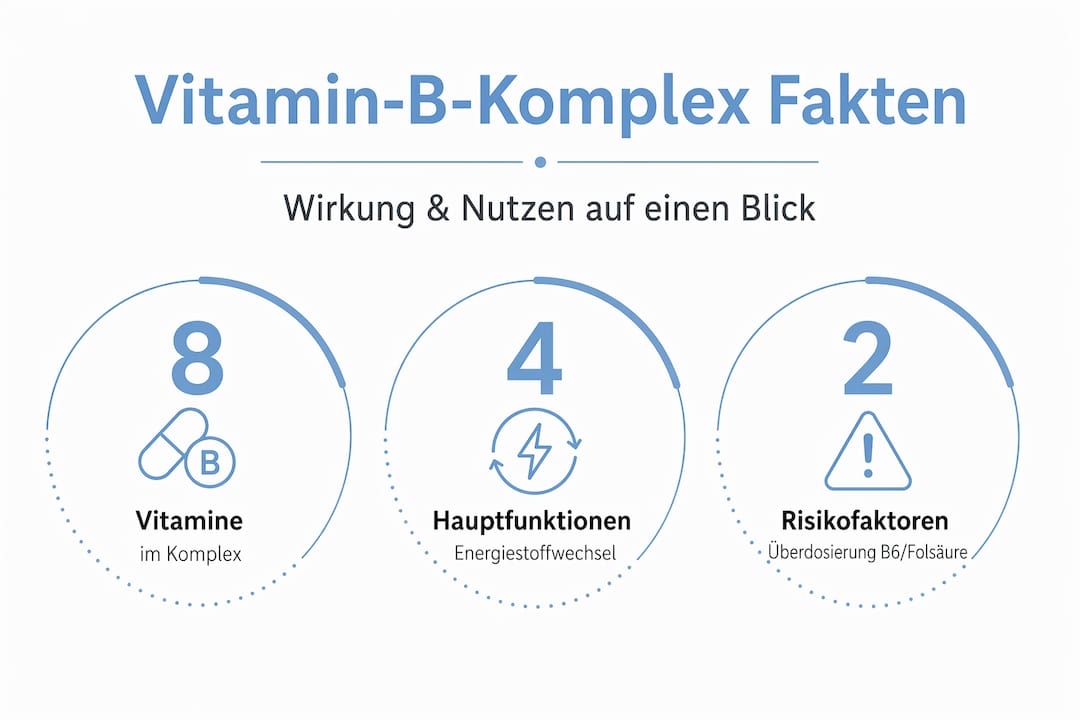
- The vitamin B complex comprises eight water-soluble vitamins that support metabolism, nerve function, and blood formation. It does not provide energy itself; instead, it activates enzymes that convert nutrients into energy, and it is useful in cases of deficiency or increased need. Overdosing, particularly on vitamin B6 and folic acid, can pose health risks; blood testing is advisable before supplementation.
The vitamin B complex is one of the best-selling dietary supplements worldwide, yet surprisingly many misconceptions about its effects persist. The biggest one is that B vitamins provide energy directly. They do not. They help the body release energy from nutrients, which is an important distinction. As a collective term for eight water-soluble vitamins, the vitamin B complex supports functions ranging from nerve function to blood formation. This article explains when supplementation really makes sense, the risks of overdosing, and what current research says.
Table of contents
- Key findings
- The eight B vitamins at a glance
- Who Can Benefit from a Vitamin B Complex?
- Safety and Dosage: What You Need to Know
- Vitamin B complex and health: What studies show
- My assessment of supplementation
- Know your vitamin B status with Mybody-x
- FAQ
Key findings
| Point | Details |
|---|---|
| Eight vitamins, one complex | The vitamin B complex includes B1 through B12, each with its own functions in the body. |
| Not a direct source of energy | B vitamins act as coenzymes in metabolism; they do not provide calories themselves. |
| Supplementation when needed | Vegans, pregnant women, and older people benefit most from targeted supplementation. |
| Overdosing is possible | Vitamin B6 in particular can cause neurological damage when taken in high doses over a prolonged period. |
| Testing before supplementation | A blood test shows whether a deficiency is actually present before you start taking supplements. |
The eight B vitamins at a glance
Eight water-soluble B vitamins work together to form the vitamin B complex. Each has its own area of responsibility, and none can replace another. Here is an overview of their functions, sources, and typical deficiency signs:
- Vitamin B1 (Thiamine): Supports carbohydrate metabolism and nerve function. Sources: whole-grain products, legumes, pork. Deficiency symptoms: fatigue, concentration problems, and, in severe cases, beriberi.
- Vitamin B2 (Riboflavin): Involved in energy production and cell protection. Sources: dairy products, eggs, almonds. Deficiency symptoms: cracks at the corners of the mouth, sensitivity to light, skin problems.
- Vitamin B3 (Niacin): Important for DNA repair and energy metabolism. Sources: Meat, fish, peanuts. Deficiency leads to pellagra with skin changes and diarrhea.
- Vitamin B5 (Pantothenic acid): A component of coenzyme A, which is needed for fat metabolism. Sources: Almost all foods, especially liver and mushrooms. Isolated deficiency is rare.
- Vitamin B6 (Pyridoxine): Involved in more than 100 enzyme reactions, particularly in protein metabolism. Sources: Poultry, potatoes, bananas. Deficiency symptoms: Irritability, skin changes, anemia.
- Vitamin B7 (Biotin): Important for fat and amino acid metabolism as well as skin and hair. Sources: Eggs, nuts, sweet potatoes. Deficiency is rare but can manifest as hair loss and skin problems.
- Vitamin B9 (Folic acid): Essential for cell division and DNA synthesis, especially during pregnancy. Sources: Leafy greens, legumes, liver. Deficiency symptoms: Anemia; in pregnant women, an increased risk of neural tube defects.
- Vitamin B12 (Cobalamin): Necessary for blood formation, nerve function, and DNA synthesis. Sources: Exclusively animal products. Deficiency symptoms: Fatigue, tingling in the limbs, cognitive impairment.
An important difference between these vitamins lies in their ability to be stored. B vitamins other than B9 and B12 are barely stored in the body and therefore need to be obtained regularly through the diet. Vitamin B12 is the exception: it can be stored in the liver for months to years. This explains why a B12 deficiency in vegans often becomes apparent only after years.
| Vitamin | Main function | Important sources |
|---|---|---|
| B1 (Thiamine) | Carbohydrate metabolism, nerve function | Whole grains, legumes, pork |
| B2 (Riboflavin) | Energy production, cell protection | Dairy products, eggs, almonds |
| B3 (Niacin) | DNA repair, energy metabolism | Meat, fish, peanuts |
| B6 (Pyridoxine) | Protein metabolism, enzyme reactions | Poultry, potatoes, bananas |
| B9 (Folic acid) | Cell division, DNA synthesis | Leafy greens, legumes, liver |
| B12 (Cobalamin) | Blood formation, nerve function | Meat, fish, dairy products |
If you would like to learn more about common nutrient deficiencies in Germany, it is worth taking a look at the widespread deficiencies among the population.
Who Can Benefit from a Vitamin B Complex?
Not everyone needs vitamin B supplements. With a varied diet containing meat, fish, eggs, dairy products, and plenty of vegetables, requirements are generally met. Without a confirmed deficiency, supplementation often offers only limited benefits. Nevertheless, there are groups for whom targeted supplementation is clearly recommended:
- Vegans and vegetarians: Since vitamin B12 is found exclusively in animal products, a deficiency is almost inevitable on a vegan diet without supplementation. B2 and zinc may also become scarce on a strictly plant-based diet.
- Pregnant and breastfeeding women: The need for folic acid and B12 increases significantly during pregnancy. The DGE recommends that pregnant women supplement with folic acid before conception to prevent neural tube defects.
- Adults aged 50 and over: The absorption of vitamin B12 from food declines with age because stomach acid production decreases. As a result, many older people have low B12 levels without knowing it.
- People under chronic stress: Stress increases the consumption of B vitamins, especially B5 and B6. Anyone under constant pressure has a higher requirement.
- People with certain medical conditions or taking certain medications: Metformin (a common diabetes medication) blocks B12 absorption. Proton pump inhibitors, antibiotics, and alcohol also impair the utilization of B vitamins.
Pro tip: Before you start taking a vitamin B complex, have your levels measured in a blood test. This is the only way to know whether you actually have a deficiency or whether your money would be better spent on a balanced diet.
For optimal vitamin B12 intake with a plant-based diet, there are specific recommendations that go beyond simply taking supplements.
Safety and Dosage: What You Need to Know
Because B vitamins are water-soluble, many people believe that overdosing is not a problem. This is true for most B vitamins, but not all. Two exceptions deserve special attention.

The Risk of Vitamin B6
Chronically high doses of vitamin B6 are associated with sensory neuropathy. This means tingling, numbness, and coordination problems that can develop with continued overdose. The recommended daily dose is approximately 1.3 mg for adults. Many over-the-counter supplements contain ten times that amount or more. As little as 50 mg per day for several months can trigger symptoms in sensitive individuals.
You can find more about the warning signs of a vitamin B6 deficiency and its consequences in a separate article.
The risk of folic acid
The EFSA recommends an upper limit of 1000 µg of folic acid per day to prevent masking a B12 deficiency. This may sound abstract, but it is practically important: High folic acid intake can normalize blood formation even though a B12 deficiency continues to damage the nerves. The problem then remains undetected until serious neurological damage has occurred.
Additional safety information at a glance:
- Add up all sources: If you take a multivitamin and an additional B complex, unnoticed double dosing can occur. This applies especially to B6 and folic acid.
- Pay attention to the form: Methylcobalamin and methylfolate are more readily available to many people than the synthetic standard forms.
- Take B vitamins in the morning: Since they activate energy metabolism, high doses in the evening can interfere with sleep.
- Get tested regularly: Anyone who takes supplements long-term should have their vitamin B status checked at least once a year.
Pro tip: Read the labels of all the supplements you take daily and add up the total amounts of B6 and folic acid. If you consistently exceed 25 mg of B6 per day, talk to a doctor.
Vitamin B complex and health: What studies show
How does vitamin B really affect the body? The answer lies in biochemistry. B vitamins act as coenzymes in hundreds of metabolic reactions. They activate enzymes that convert carbohydrates, fats, and proteins. Without them, these processes cannot occur. However, they do not provide energy themselves, which is a common misconception.
“The benefits of a vitamin B complex are most apparent when a deficiency or increased need is present. In well-nourished people, the effects of supplementation are generally small.”
Folic acid, B12, and homocysteine
One of the best-documented effects concerns homocysteine levels. Homocysteine is an amino acid that, when elevated, increases the risk of cardiovascular disease and cognitive impairment. A meta-analysis of 29 studies shows that combined folic acid and vitamin B12 supplementation significantly lowers homocysteine levels and reduces the risk of complications in type 2 diabetes. However, the heterogeneity of the results is high, meaning that the effects vary considerably depending on the initial situation.
| Area of effect | Level of evidence | Note |
|---|---|---|
| Homocysteine reduction | Well established | Particularly effective for B12 and folate deficiency |
| Energy metabolism | Moderate | Benefits clearly demonstrable only in cases of deficiency |
| Nerve function | Well established | B12 and B1 particularly relevant |
| Cognitive performance | Limited | Effects strongest in older adults with a deficiency |
| Type 2 diabetes | Promising | More research needed |
The benefits of vitamin B are therefore real, but context-dependent. People who are already well nourished will not feel any dramatic effects. Those with a deficiency or who belong to a risk group can benefit significantly from targeted supplementation. Research also shows that individual supplements are often more targeted than a complex, because the actual need rarely involves all eight vitamins at the same time.
For a better understanding of the role of macronutrients in metabolism, it is also helpful to understand the relationship between fat, carbohydrates, and protein.
My assessment of supplementation
I see people every day starting a vitamin B complex because they feel tired, without first knowing whether they actually have a deficiency. That is understandable, but it is not always the best approach.
What I have learned in my work: The biggest mistake is not taking supplements itself, but taking them without diagnostic testing. Laboratory tests are the only reliable way to know which B vitamins are actually deficient. Anyone who blindly takes a high-dose complex risks, in the best case, wasting money and, in the worst case, masking a B12 deficiency with high doses of folic acid.
My advice: Start with a blood test that shows your individual vitamin B status. Then decide specifically whether you need a complex or a single supplement. And if you supplement, choose moderate doses close to the reference values—not products advertised with ten times the recommended amount. More is rarely better here.
— MYBODY
Know your vitamin B status with Mybody-x
Before reaching for the supplement shelf, it is worth looking at your actual levels. Mybody-x offers a vitamin B test that lets you conveniently determine your status from home. The results show you exactly where you stand and which measures really make sense. No guesswork, and no wasting money on supplements you may not even need. If you also want to know why you constantly feel tired, Mybody-x also provides information about which vitamins might be lacking. Evidence-based, personalized, and easy to put into practice.
FAQ
What is a vitamin B complex?
A vitamin B complex is a dietary supplement that combines all eight water-soluble B vitamins (B1, B2, B3, B5, B6, B7, B9, B12) in one capsule or tablet. Together, these vitamins support energy metabolism, nerve function, and blood formation.
Who is a vitamin B complex particularly suitable for?
Taking it is particularly beneficial for vegans, pregnant women, older people, and those taking certain medications such as metformin. With a balanced diet and no deficiency, the benefits are limited.
Can you overdose on vitamin B?
Yes, especially vitamin B6 can cause neurological damage when taken in high doses over a long period. Excessive folic acid intake can mask a B12 deficiency. Moderate doses close to the reference values are therefore recommended.
How does vitamin B work in the body?
B vitamins act as coenzymes in metabolic reactions and help the body release energy from carbohydrates, fats, and proteins. They do not provide energy themselves, but they are essential for these processes to function.
How can I recognize a vitamin B deficiency?
Typical signs include persistent fatigue, difficulty concentrating, tingling in the hands and feet, and skin changes. A deficiency can only be reliably confirmed with a blood test.



Share now:
B-Complex Vitamin Supplements: Proper Dosage
Yogurt with Bifidobacteria: Your Guide to Gut Health