

Testing micronutrients – Why it changes your health
Around 90 percent of European adults do not obtain all the necessary micronutrients from their diet every day. Anyone who values their personal health knows that small deficiencies can have a major impact on well-being and performance. At-home micronutrient tests finally offer the opportunity to conveniently and scientifically determine your individual needs. This approach brings transparency to your nutrition and opens up individual paths to greater energy and vitality.
Table of contents
- Testing micronutrients: What is behind it?
- Recognizing common deficiencies and signs
- Scientific laboratory tests for home use
- Personalized nutrition based on analysis
- Risks of ignoring deficiencies and self-medication
Key insights
| Point | Details |
|---|---|
| Micronutrients are essential | They play a crucial role in numerous metabolic processes and are essential for optimal bodily functions. |
| Micronutrient tests provide individual insights | They help detect potential deficiencies at an early stage and provide targeted recommendations for improving health. |
| Early detection of nutrient deficiencies is important | Pay attention to subtle signals from your body and have your micronutrient levels checked regularly to prevent deficiencies. |
| Personalized nutrition optimizes well-being | A nutrition strategy based on individual analyses can improve nutrient absorption and reduce the risk of chronic diseases. |
Testing micronutrients: What is behind it?
Micronutrients are tiny but highly significant substances that are essential for our bodies. They play a crucial role in numerous metabolic processes and fundamentally influence our health. Although vitamins, minerals, and trace elements are needed only in small amounts, they are essential for optimal bodily functions.
Testing micronutrients provides precise insight into your individual nutritional status. Scientifically based nutrient analyses can detect potential deficiencies at an early stage and address them specifically. This not only improves your current health, but also effectively prevents possible future illnesses.
What makes a micronutrient test so valuable? It precisely identifies which nutrients may be missing from your diet or present in concentrations that are too low. Modern laboratory analyses enable a detailed examination of your individual metabolism and provide specific recommendations for action. This allows you to make targeted dietary adjustments or take supplements tailored precisely to your needs.
Pro tip for health-conscious individuals: Have a micronutrient test performed and document your results. This allows you to systematically track your health status over time and optimize.
Recognizing common deficiencies and signs
Nutrient deficiencies can manifest themselves in many different ways—often subtly and gradually. Deficiencies in vitamins, minerals, and trace elements are particularly common and can have a lasting impact on our health. Recognizing nutrient deficiency symptoms is the first step toward targeted treatment.
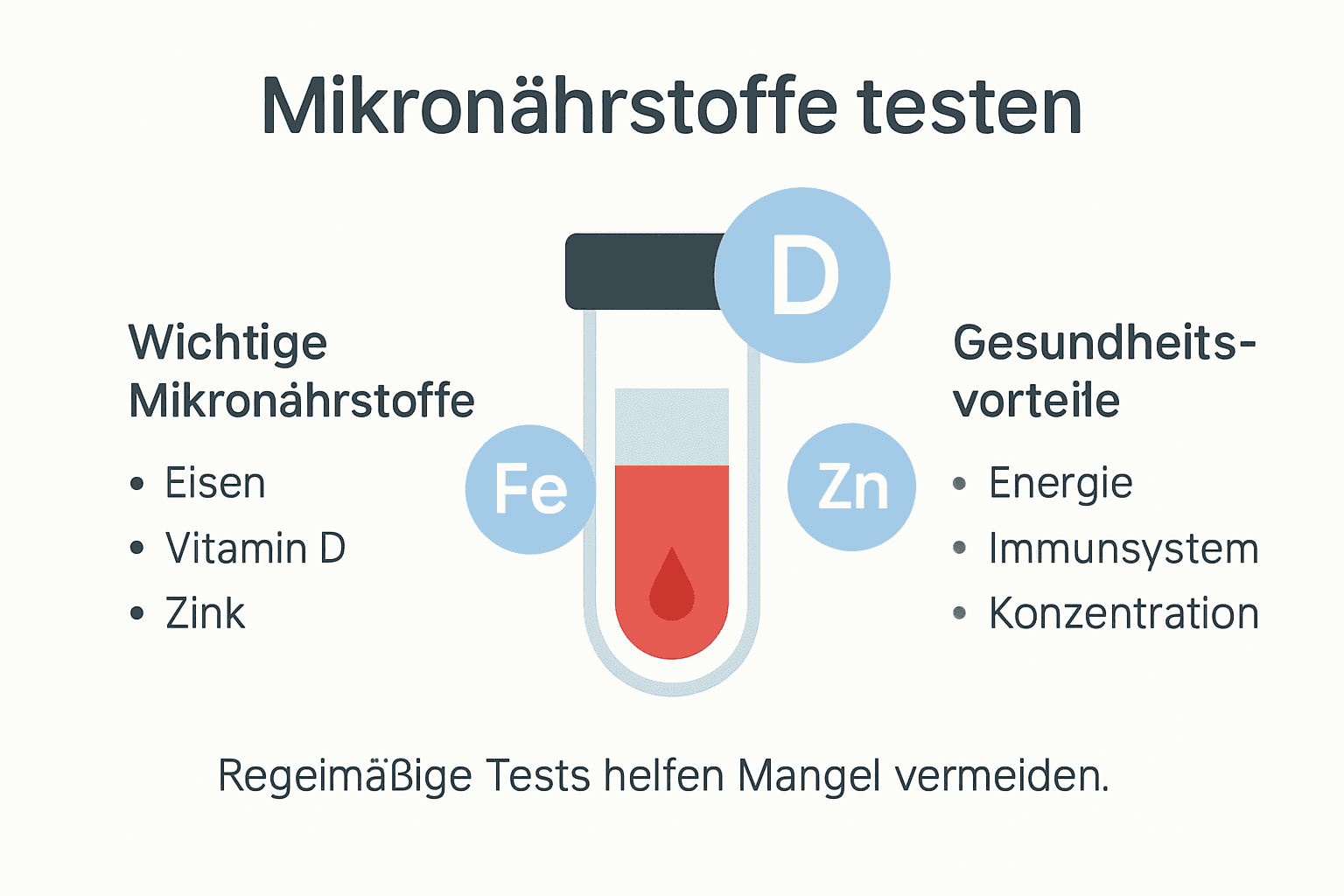
The most common signs include persistent fatigue, a weakened immune system, hair loss, brittle nails, and difficulty concentrating. These symptoms are often underestimated but may indicate serious nutrient deficiencies. Deficiencies in vitamin D, vitamin B12, iron, zinc, and magnesium are particularly critical, as they impair numerous metabolic processes.
Comprehensive diagnostics are essential for identifying hidden deficiencies. Laboratory tests can precisely show which micronutrients are present in insufficient amounts. This is the only way to develop targeted countermeasures through an adapted diet or targeted supplementation.

Pro tip for health-conscious individuals: Pay attention to subtle signals from your body and have your micronutrient levels checked regularly. Early detection is key to preventing deficiency symptoms.
Below you will find an overview of the commonly tested micronutrients and their specific functions in the body:
| Micronutrient | Main function in the body | Possible consequences of deficiency |
|---|---|---|
| Vitamin D | Regulation of calcium balance | Bone weakness, weakened immune system |
| Vitamin B12 | Blood formation, nerve function | Anemia, memory problems |
| Iron | Oxygen transport in the blood | Fatigue, paleness, hair loss |
| Zinc | Immune system, cell division | Susceptibility to infections, skin problems |
| Magnesium | Muscle and nerve function | Muscle cramps, lack of concentration |
Scientific laboratory tests for home use
Modern health diagnostics have undergone a revolution—with scientific laboratory tests that you can conveniently perform at home. At-home health tests enable a precise and convenient analysis of your health status, without lengthy doctor’s appointments or complicated laboratory visits.
Performing these tests is remarkably simple. Whether a capillary blood test, stool examination, or saliva analysis, modern test kits are designed to enable reliable sample collection even for people without medical training. Standardized collection procedures and precise instructions are essential to guarantee scientifically valid results.
The major advantage of these at-home tests lies in their accuracy and convenience. Instead of waiting weeks for laboratory results, you receive fast and detailed analyses directly on your smartphone or by email. These results are based on the highest scientific standards and are evaluated by appropriately qualified laboratory physicians.
Pro tip for health-conscious individuals: Store your test results systematically and make regular comparisons. This allows you to track your health development precisely over the long term.
Below is a comparison between classic laboratory analysis tests and modern at-home tests:
| Criterion | Classic laboratory test | At-home test |
|---|---|---|
| Sample collection | At the doctor’s office/with laboratory staff | Independently at home |
| Analysis time | Several days to weeks | Within a few days |
| Convenience | Appointment required, waiting times | Flexible, available at any time |
| Result delivery | In person/by mail | Digital via email/smartphone |
Personalized nutrition based on analysis
The days of one-size-fits-all dietary recommendations are over. Personalized nutrition today means a scientifically based nutritional strategy tailored individually to your metabolism and genetic makeup. Every person is unique—and the same applies to their nutrient requirements and the way their body processes food.
While traditional dietary approaches follow a one-size-fits-all model, a personalized nutrition strategy takes factors such as your genetic predisposition, metabolic characteristics, life circumstances, and individual health goals into account. Precise analyses can identify specific nutrient deficiencies and enable tailored dietary recommendations.
The benefits are impressive: optimized nutrient absorption, better energy supply, improved performance, and a significant increase in well-being. A nutrition strategy based on scientific data can lower inflammation levels, strengthen the immune system, and demonstrably reduce the risk of chronic diseases.
Pro tip for health-conscious individuals: View your diet as a personal optimization project. Document your progress and remain open to adjustments based on your individual analysis results.
Risks of ignoring deficiencies and self-medication
Nutrient deficiencies are no trivial matter. Ignoring them can have serious health consequences. Medication and nutrient interactions are an additional risk factor that many people underestimate. Untreated micronutrient deficiencies can lead to premature cellular aging, weakened immune defenses, and increased susceptibility to illness.
Self-medication without professional advice is particularly dangerous. Overdosing on vitamins and minerals can paradoxically do more harm than good. Incorrectly dosed supplements can cause metabolic disorders, strain kidney function, and trigger unwanted interactions with existing medications.
The key lies in a holistic, scientifically sound approach. Only precise analyses and individualized advice can safely and effectively correct nutrient deficiencies. Professional laboratory tests provide insight into your actual nutritional status and enable tailored supplementation.
Pro tip for health-conscious individuals: Always consult a nutrition expert before starting any dietary supplement. Have your individual values professionally interpreted instead of acting on suspicion.
Start your micronutrient test and effectively improve your health
A deficiency of important micronutrients such as vitamin D, iron, or magnesium often remains unnoticed for a long time and has a lasting impact on your well-being and performance. Precisely determining your individual nutrient status is therefore the first and most important step toward specifically addressing symptoms such as fatigue, difficulty concentrating, or a weakened immune system. Modern scientific tests offer fast and convenient solutions directly in your own home.
Discover now how you can accurately analyze your health with Identify & prevent nutrient deficiencies – at-home tests | mybody® – mybody®x. In addition, our specialized offerings can support you, such as Identify and correct vitamin deficiencies | mybody®x. Benefit from certified laboratory standards and personal consultation at mybody® so you know exactly which micronutrients your body needs. Take action now and lay the foundation for better health with lasting benefits. You can find all the information and your tests easily and securely at mybody-x.com.
Frequently Asked Questions
What are micronutrients, and why are they important?
Micronutrients are essential substances, such as vitamins, minerals, and trace elements, that are needed in small amounts but are essential for numerous metabolic processes and overall health.
How does a micronutrient test work?
A micronutrient test enables a detailed analysis of your nutrient status. Samples are taken and then analyzed in a laboratory for missing or insufficient nutrients.
What symptoms indicate a nutrient deficiency?
Common signs of nutrient deficiencies include fatigue, a weakened immune system, hair loss, brittle nails, and difficulty concentrating. These symptoms may indicate serious deficiencies.
Why should I have my micronutrient levels checked regularly?
Regular checkups are important for detecting subtle deficiencies early and taking targeted measures to improve your health status. Early detection can help prevent serious illnesses.



Share now:
Health Optimization Options: Personalized Paths to Greater Vitality
Metabolism Type Test: Find out how your body really works