

Your path to personalized nutrition: Why a one-size-fits-all diet doesn't work
Have you tried everything? Low-carb diets, intermittent fasting, calorie counting – but long-term success just isn't happening? This constant up and down, the fleeting hope followed by disappointment, can really wear you down. If this sounds familiar, you've come to the right place.
Personalized nutrition breaks this cycle. It's based on a simple yet revolutionary truth: your body is unique and deserves a strategy that reflects that. It's time it finally all about you.
Why standard diets often fail

Do you remember that feeling when you start a new diet full of motivation? The first few pounds melt away, you feel great, but then you reach a point where you hit a wall. Suddenly you're battling cravings, feeling sluggish, and the strict rules just don't fit into your daily routine anymore.
The problem isn't with you or your willpower. It's with the concept itself. Standard diets are like a one-size-fits-all garment – they're designed to fit as many people as possible, but only suit a very few perfectly.
The myth of the one perfect diet
For years we've been led to believe there's one universal formula for health and an ideal weight. But science is showing more and more clearly: this formula simply doesn't exist. Your body reacts to food completely differently than the bodies of your friends, your family, or the influencers on social media.
I was constantly tired for a long time – until I learned how my body reacts to certain carbohydrates. The realization that my blood sugar rises more sharply after a banana than after a piece of dark chocolate changed everything. No general diet in the world could have told me that.
"The biggest flaw of standard diets is that they ignore the most important variable: you. Personalized nutrition finally puts you and your biological uniqueness at the center."
To illustrate this, here is a quick overview of the fundamental differences between traditional approaches and a personal concept.
General diet versus personalized nutrition
| feature | General diet | Personalized nutrition |
|---|---|---|
| Approach | One size fits all ("One-size-fits-all") | Tailor-made for the individual |
| basis | General Health Guidelines & Trends | Personal data (genes, microbiome, blood values) |
| focus | Calories, macro targets, prohibitions | Nutrient optimization, biological response |
| Result | Often short-term, yo-yo effect likely | Sustainable, holistic well-being |
| motivation | Discipline & Abstinence | Understanding & Self-Empowerment |
The table clearly shows it: It's about a complete change of perspective – away from rigid rules, towards a deep understanding of one's own body.
Your body has its own language.
Your genetic blueprint, your metabolism, your hormone balance, and even the trillions of microorganisms in your gut (your microbiome ) determine how you process nutrients.
- Genetics: Your DNA can reveal whether you are sensitive to carbohydrates, metabolize fats particularly well, or have an increased need for certain vitamins.
- Metabolism: Some people burn significantly more calories at rest than others. Therefore, a general calorie target can quickly backfire.
- Lifestyle: Your daily routine, stress level, and sleep rhythm have a huge impact. A shift worker needs a completely different energy strategy than someone with a traditional office job.
This section aims to offer you a new perspective. It's not about what you've done "wrong" so far, but about finally finding the right strategy for you . The journey to personalized nutrition is the first step away from guilt and blanket rules – and towards true self-empowerment.
What personalized nutrition really means

You might be wondering what personalized nutrition actually means. Is it just another complicated trend, or is there more to it? Imagine going to a tailor to have a suit made. No one would expect an off-the-rack suit to fit perfectly – why should your diet be any different?
That's precisely the core idea: your diet is tailored to your body like a bespoke suit. It goes far beyond simply counting calories or blindly following general rules. Rather, it's an approach that finally puts your biological individuality at the center.
More than just food: It's about your biology
Personalized nutrition means learning and understanding your body's unique language. It takes into account crucial factors that influence how you react to certain foods. That's why a banana might be the perfect energy source for your workout partner, but unnecessarily spike your blood sugar and trigger cravings.
These individual factors are at the heart of a tailor-made strategy:
- Your genetics: Your DNA is the blueprint for your metabolism. It can reveal how efficiently you process fats, carbohydrates, or proteins, and whether you have a predisposition for certain intolerances.
- Your microbiome: The trillions of bacteria in your gut play a huge role in your digestion, your immune system, and even your mood. The composition of your gut flora also determines which nutrients you can optimally absorb.
- Your current blood values: A look at your blood can precisely show whether you are lacking important vitamins, minerals or trace elements that are essential for your energy and well-being.
The realization that nutrition doesn't work the same for everyone is the first step towards true well-being. It's about eating smarter, not harder – based on what your body is telling you.
A growing trend with a scientific basis
This type of self-optimization is no longer a niche idea. In Germany , personalized nutrition is considered one of the most important future trends. A survey conducted as part of the Nutrition Trend Report 2025 revealed that 69 percent of the experts surveyed from science and practice expect further growth in this area.
New technologies, such as continuous glucose monitoring systems, make it easier than ever to directly observe your body's reactions. You can read more about this exciting development in the Nutrition Trend Report .
The key is transforming data into actionable knowledge. Instead of guessing what's good for you, a personalized analysis provides concrete guidance. You learn not only what you should eat, but also why . This approach empowers you to finally make informed decisions that fit your body and your life. If you'd like to delve deeper into exactly how this works, you'll find valuable information in our article on whether a DNA test can improve your diet .
Ultimately, personalized nutrition is the ultimate form of self-care. It's the way to finally stop working against your body and instead become its most important ally.
The science behind your nutrition plan
Doesn't all of this sound incredibly complex and scientific? The good news is: modern methods that enable personalized nutrition are more accessible than ever before. They're like detectives who read your body's unique signals and finally give you clear answers instead of leaving you guessing.
Think of these methods as the three main pillars on which your customized nutrition plan rests. Each pillar provides a crucial piece of the puzzle of what truly benefits you.
Pillar 1: DNA analysis – A look into your blueprint
Your DNA is like your body's personal instruction manual. It's unchanging and contains valuable information about how your metabolism naturally functions. A simple saliva sample is all it takes to decode this code and get answers to fundamental questions.
- How do you process macronutrients? Are you a "carbohydrate type" who can easily utilize energy from pasta and bread, or a "fat type" whose body uses fats more efficiently for energy?
- Do you have any genetic predispositions? Are you naturally prone to lactose intolerance, gluten sensitivity, or do you metabolize caffeine more slowly than others?
- Which vitamins are particularly important for you? Your genes can indicate whether you have a genetically determined higher need for certain micronutrients such as folic acid or vitamin D.
A DNA analysis provides you with a fundamental basis, a framework for understanding your metabolism. It explains why your body reacts the way it does. If you'd like to learn more about how your genes determine your eating habits, check out our detailed article that explains what nutrigenetics is and how it influences our lives .
Pillar 2: The blood test – A snapshot of your nutrient status
While DNA reveals your lifelong predisposition, a blood test is like a current inventory. It tells you what's going on in your body right now . Your lifestyle, stress, or an unbalanced diet can quickly lead to deficiencies that sabotage your energy and well-being.
"A blood test makes the invisible visible. It shows you in black and white which nutrients are lacking before a real deficiency manifests itself in the form of fatigue or lack of concentration."
A blood test, which you can often conveniently perform from home, can answer questions such as:
- Could I be deficient in iron, which could explain my constant fatigue?
- Is my vitamin D level too low after winter?
- Are my Omega-3 levels optimal for counteracting inflammation in the body?
This analysis is particularly valuable for specifically addressing deficiencies and ensuring that your body has all the building blocks it needs for full performance.
The following infographic shows how this scientific data, together with your personal goals and lifestyle, forms the basis for your personalized nutrition.
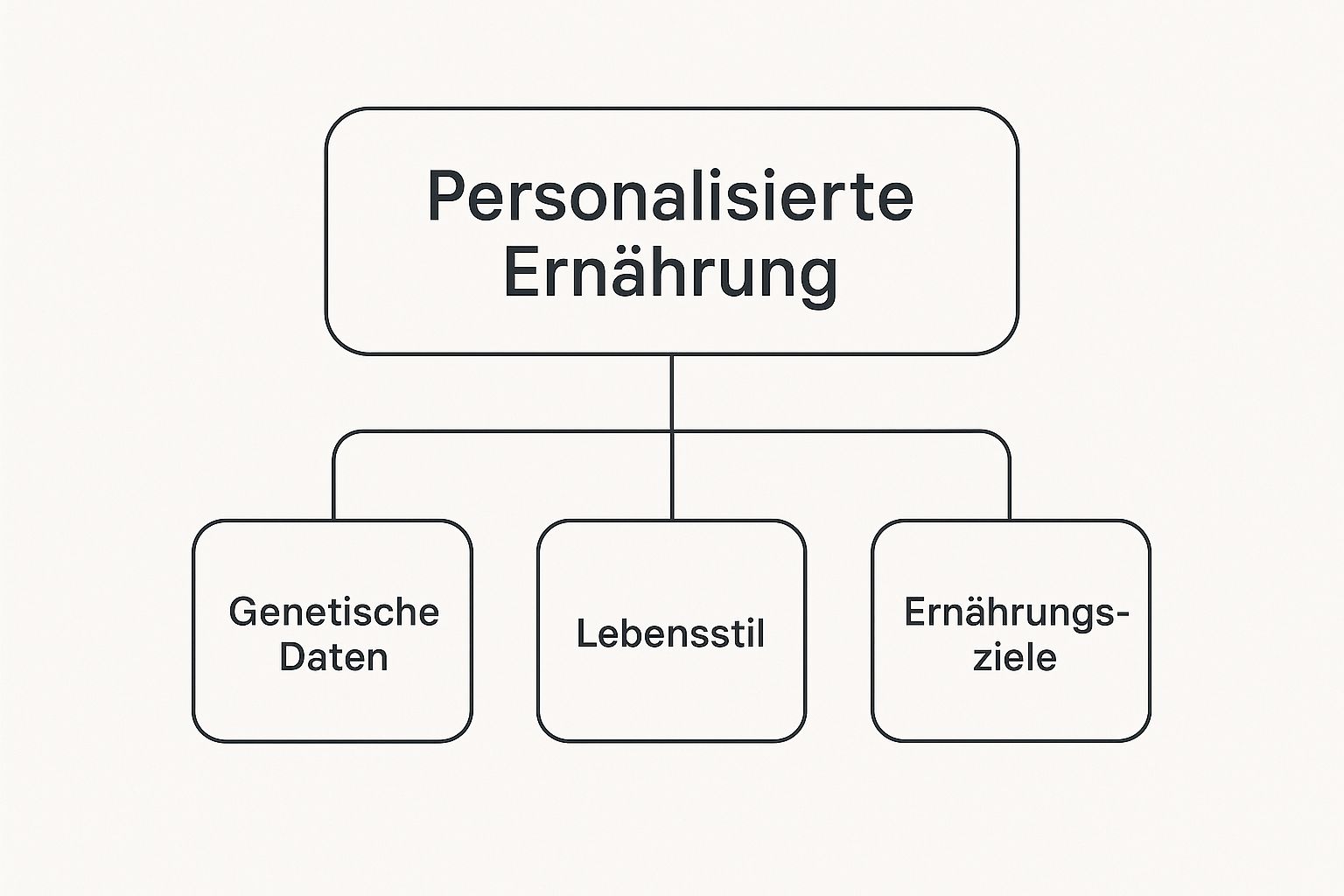
As you can see, it is the interplay of these elements that makes for a truly effective and individual strategy.
Pillar 3: Microbiome Analysis – The Power of Your Gut
Your gut is home to an entire ecosystem of trillions of microorganisms – your microbiome. These tiny helpers have a tremendous impact on your health. They not only support your digestion, but also influence your immune system, your mood, and even your body weight.
An analysis of your gut microbiome (using a simple stool sample) can tell you:
- How diverse is your gut flora? A high diversity is generally associated with better health.
- Which bacteria are dominant? Is there an imbalance that could lead to bloating, discomfort, or other digestive problems?
- How well can you utilize dietary fiber? Certain bacteria produce short-chain fatty acids from dietary fiber, which have an anti-inflammatory effect and protect your intestinal lining.
These three pillars – DNA, blood, and microbiome – are the scientific tools that make personalized nutrition so effective. They take the guesswork out of it and replace it with sound knowledge about your own body.
Your benefits: What personalized nutrition can do for you

The scientific background is fascinating, no doubt. But what really matters at the end of the day is how you feel. How exactly does personalized nutrition change your life? It's about so much more than the number on the scale. It's about finally feeling truly comfortable, energized, and capable in your own skin again.
Imagine waking up refreshed in the morning, getting through the day without the dreaded afternoon slump, and still having energy for your family or hobbies in the evening. These are precisely the tangible benefits you can experience when you finally start speaking the language of your body.
Finally, sustainable weight loss without the yo-yo effect
For many, the desire to lose weight is the initial impetus to examine their diet. However, most diets end in the frustration of the yo-yo effect. A personalized strategy tackles the problem at its root.
Perhaps your body metabolizes fats much more efficiently than carbohydrates – or vice versa. Once you know this, you can design your diet so that you feel full and satisfied while your body breaks down excess reserves. It's about finding the right foods for your metabolism so that a diet for weight loss without deprivation becomes a reality for you.
"For years I struggled with intense cravings. Only an analysis showed me how strongly my blood sugar reacts to certain fruits. Since I adjusted my snacking habits, the cravings are gone – and the pounds are practically melting away." – A personal observation
More energy and focus in everyday life
Do you know that feeling? You've slept enough, but still feel constantly tired and drained. Often, an undetected nutrient deficiency (e.g., iron or vitamin B12) is the culprit, sapping your energy reserves. Sometimes, however, it's foods that unknowingly trigger inflammation and drain your strength.
- Case study Anna: Anna, 34, constantly suffered from a severe afternoon slump at the office. An analysis revealed that her body reacted to the large portion of pasta she ate at lunchtime with a significant drop in blood sugar. She switched to a meal higher in protein and fiber and now stays focused and alert throughout the day.
Improved athletic performance and recovery
Whether you're training ambitiously or simply want to be fit, your diet is the fuel for your muscles. Personalized nutrition reveals what your body truly needs before, during, and after exercise to perform at its best and recover optimally. This can be the difference between stagnation and real progress.
Relief from everyday ailments
Bloating, fullness, or skin blemishes don't have to be "normal." Often, they are your body's way of telling you to help. Personalized nutrition can uncover the underlying causes, whether it's an imbalanced gut flora, an undiagnosed intolerance, or a nutrient deficiency. By addressing these issues directly, you can significantly improve your quality of life.
Your path to personalized nutrition: The first steps
Are you already sensing the possibilities that personalized nutrition offers you? Of course, the next question is usually: Where do I even begin? Don't worry, getting started is easier than you think. Here's your practical guide to the first, crucial steps.
The journey doesn't begin in the lab, but with yourself. One of the most effective methods is self-observation. Try keeping a food diary for a week or two. Don't just note what you eat, but more importantly, how you feel afterward.
- When are you bursting with energy?
- When does the classic afternoon slump hit you?
- Which meals cause a feeling of fullness or stomach rumbling?
This simple tool helps you recognize initial patterns and develop a feel for your body's reactions. It's the perfect starting point to understand what truly benefits you.
Find the right test for you
If you're ready for the next step and want deeper, data-driven insights, the question arises: Which test is right for me? Whether DNA, blood, or microbiome analysis – the choice depends entirely on your personal goals.
A DNA test is great for understanding your basic genetic predisposition. It answers questions like: How do I naturally react to fats or carbohydrates? If you want to delve deeper into how your genes influence your diet, check out our guide , Your Genes, Your Diet . A blood test, on the other hand, provides a snapshot of your current nutrient status—perfect if you want to get to the bottom of persistent fatigue or lack of energy.
The best test is always the one that answers your most pressing questions about your well-being. It's not about doing everything at once, but about focusing on the areas where you see the greatest potential for improvement.
When choosing a provider, you should pay attention to a few important things. After all, your health and your data are your most valuable assets.
Checklist for selecting a provider:
- Scientific foundation: Is the analysis based on recognized scientific methods? Is it carried out in a certified laboratory (e.g., according to ISO standards)?
- Data privacy: What happens to your sensitive data? A transparent privacy policy compliant with GDPR standards is absolutely essential. Is the data pseudonymized or even destroyed after analysis?
- Understandable results: Do you just get a table with raw data, or an understandable report with concrete, actionable tips for your everyday life?
- Support and assistance: Is an expert available to answer your questions and explain the results to you?
From insight to daily routine
You're holding your results in your hands – a real eye-opener! But the real change only begins now, when you integrate the recommendations into your daily life. The key to success lies in initiating small, sustainable changes , rather than turning your life upside down overnight.
Start with a single, simple adjustment. Did your analysis show that you're sensitive to caffeine? Then try swapping your afternoon coffee for an herbal tea. Did your blood test indicate a slight iron deficiency? Consciously incorporate more lentils or leafy green vegetables into your meals.
This approach is gaining momentum not only in Germany. In the context of nutrition trends for 2025, personalized nutrition is considered a key element for a self-determined and healthy lifestyle. The combination of modern technology with individual customization makes it possible to improve eating habits much more effectively and take control of one's own health. You can read more about these exciting developments in this trend report on the future of nutrition .
Celebrate every small success! Every meal that makes you feel good is a win. With each step, your self-confidence grows and you become an expert on your own body.
Frequently Asked Questions
Taking the leap into the world of personalized nutrition often feels like a big step. That's perfectly normal. After all, it's about questioning familiar advice and finding your own unique path to health. To help you overcome any remaining uncertainties, we've compiled the most frequently asked questions and answered them openly.
Isn't personalized nutrition extremely expensive?
We hear this concern often, and it's completely understandable. Terms like genetic testing and lab analyses initially sound like a huge financial hurdle. But the reality is quite different.
Getting started doesn't have to cost you a single cent. As we've already discussed, you can begin with a simple food diary. This costs nothing but a little time and attention, but it will give you extremely valuable initial insights into how your body works.
Professional analyses, such as DNA or blood tests, are of course an investment. But think of it this way: it's a one-time expense for a kind of lifelong "user manual" for your body. The insights—for example, how you react to fats, carbohydrates, or caffeine—never become outdated. You learn the fundamental principles of your metabolism. Providers like us at MYBODY Lab GmbH now offer various testing packages so you can find exactly what suits your budget and goals.
The true value often lies not in the initial expense, but in the long-term savings. Imagine no longer spending money on useless diet products, overpriced superfoods that do nothing for you, or supplements your body doesn't even need. Personalized nutrition can ultimately benefit not only your health but also your wallet.
Can a DNA test replace a doctor or nutritionist?
A very important question with a crystal-clear answer: No, absolutely not. A test is an incredibly valuable tool that provides you with pure data – the "what" and the "why." For example, it can show you that you have a genetic predisposition for slower caffeine metabolism or a higher need for omega-3 fatty acids.
But the professional interpretation of this data – the translation into a practical, actionable plan – that's the "how." And this is precisely where qualified experts like doctors or nutritionists come in. They help you correctly interpret the results within the context of your life, your preferences, and any potential health issues.
Reputable providers of analyses repeatedly emphasize this. They see themselves as part of a larger healthcare network. The test is the starting point, the data foundation. Professional consultation is the guide that leads you safely through the implementation. Especially with pre-existing medical conditions, consultation with a doctor is essential.
How secure is my data with a genetic testing provider?
Your health data is among the most sensitive information you can possess. Protecting it is our absolute priority – it's not an option, but a mandatory requirement. Reputable providers, especially those based in Europe, are subject to the strict regulations of the General Data Protection Regulation (GDPR) .
Before choosing a provider, carefully review their privacy policy. Pay attention to a few key points to ensure you're on the safe side:
- Pseudonymization: Are your samples and data immediately pseudonymized? This means that your name and other personal characteristics are separated from the sample and replaced with a code. Therefore, no one in the lab knows who the sample belongs to.
- Data usage: What is your data used for? Is it solely for your personal analysis? Some providers use anonymized data for research purposes, but this must always be voluntary and you must be able to object.
- No selling to third parties: Selling your data to insurance companies, pharmaceutical companies, or other businesses is absolutely unacceptable. A trustworthy provider will explicitly guarantee this.
- Sample destruction: What happens to your saliva or blood sample after analysis? Reputable laboratories destroy the biological material after the examination is complete.
Your data belongs to you. You must retain full control over what happens to it at all times. Transparent and responsible handling is the foundation for trust between you and the provider.
Do I have to eat according to this plan for the rest of my life?
No, and that's perhaps one of the most liberating thoughts. It's not about forcing yourself into a rigid, lifelong diet corset. Instead, think of the insights from the analyses as your personal compass – and not as a rigid map showing only one path.
Your body isn't a static system. It changes: through age, through new life phases like pregnancy or menopause, through increased stress, a different exercise regimen, or altered sleep habits. A nutrition plan that's perfect today might need adjusting in five years.
This is precisely where the strength of the whole thing lies. You learn the fundamental principles that apply to your body. If you know that you're more sensitive to fast-acting carbohydrates, you can apply this knowledge in any situation – whether on vacation, in the midst of everyday stress, or while training for a marathon. You develop genuine nutritional expertise that makes you flexible and confident.
The goal is not to dogmatically follow rules. It's about understanding your body's signals and intuitively giving it what it truly needs. It's a dynamic learning process that empowers you, rather than restricting you.
Are you ready to learn the language of your body and take control of your health?
At MYBODY Lab GmbH, we offer scientifically sound at-home analyses that provide clear answers instead of more questions. Discover your true potential with our ISO-certified tests – from your metabolic type to your individual nutritional needs.
Start your journey to personalized nutrition now at mybody-x.com


Share:
Genetics explained simply for beginners
Nutrigenetics for your personalized nutrition