
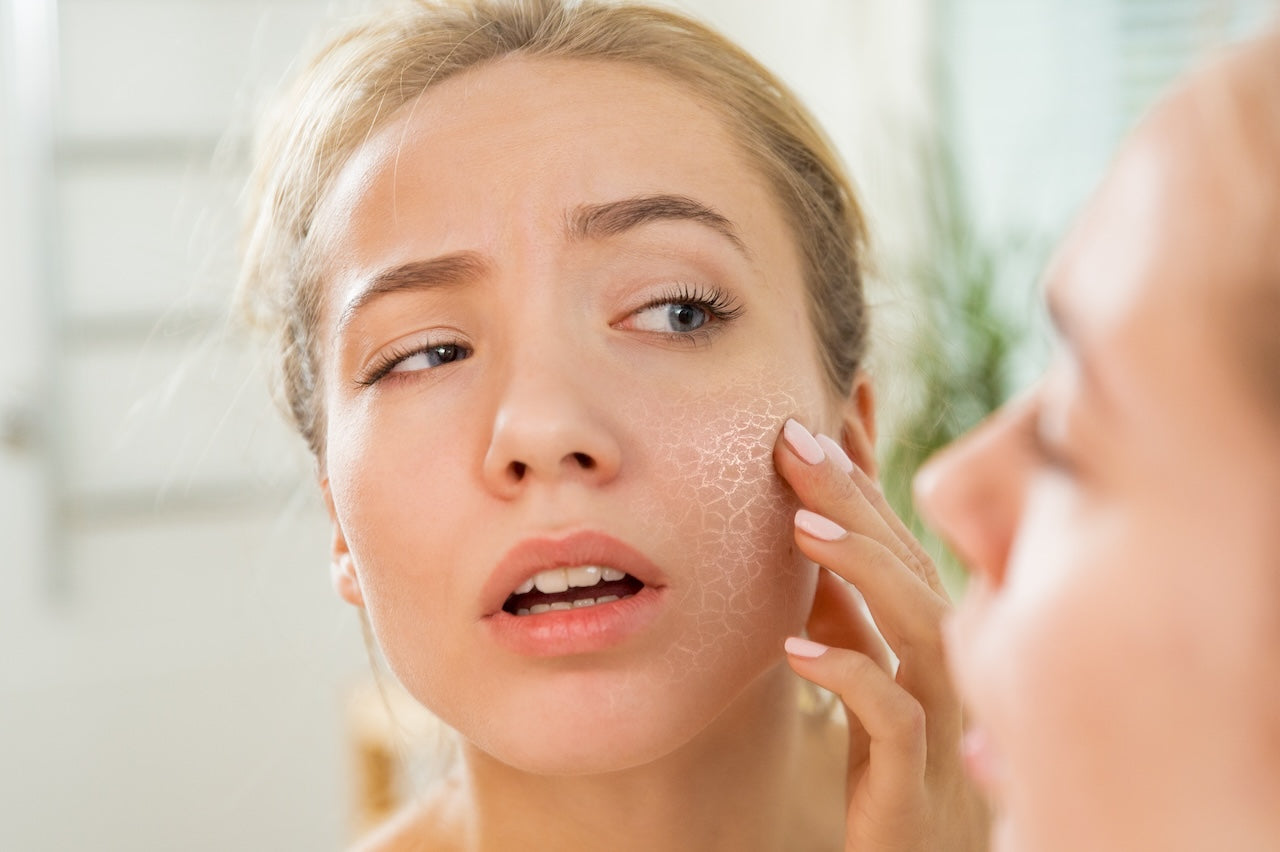
Hormone Test for Women: Your Path to Greater Well-being
A hormone test for women is essentially a simple blood test that you can conveniently do at home to finally gain clarity about your hormone levels. It measures crucial hormones like estrogen and progesterone and can help you uncover the true causes behind symptoms such as persistent fatigue, mood swings, or menstrual irregularities .
Why a hormone test is often the best first step for women

Does this sound familiar? You often feel like you're no longer in your own skin. This inexplicable exhaustion, sudden irritability, or simply the feeling that your body is presenting you with a puzzle – such signals are not only widespread but also incredibly frustrating.
Behind these symptoms, a silent director often pulls the strings: your hormonal balance. Think of your hormones as your body's invisible operating system. They control practically everything – from your energy levels and sleep to your metabolism and menstrual cycle. When this delicate system becomes unbalanced, you feel the effects throughout your entire body.
Understand what your body is trying to tell you.
Many women live with their symptoms for months, sometimes even years, without knowing the actual cause. You are absolutely not alone. Current figures show just how common hormonal problems really are: In Germany, over 9 million women are going through menopause, and of these, around 6 million suffer from severe symptoms. In addition, 74 percent of women report experiencing menstrual cramps every month, which are often directly related to hormonal fluctuations. If you'd like to delve deeper, you can find more background information on women's health in Germany in this report.
A hormone test for women, which you can discreetly perform at home, finally sheds light on this matter. Instead of continuing to grope in the dark, it provides you with a solid data foundation.
A hormone test translates your body's signals into understandable facts. No more guesswork – it's the first step towards making conscious decisions for your health.
More than just a snapshot
Such a test is far more than just a number on a piece of paper. It's a powerful tool that allows you to gradually regain control over your well-being. With the results in hand, you can finally:
- Recognizing connections: You suddenly understand why on some days of the month you can hardly contain your energy, while on others you would prefer to stay in bed.
- Have targeted discussions: A lab report is the ideal basis for a conversation with your doctor to plan the next, correct steps together.
- Act proactively: You will receive concrete recommendations tailored to your values that you can immediately integrate into your everyday life.
If you've become curious and would like to know how you can have your hormone levels tested and which values really play a role, feel free to read more about it in our follow-up article.
The main players in your hormonal balance
Imagine your body as a finely tuned orchestra. Hormones are the musicians, and each one plays a very specific part. If even one instrument plays incorrectly, too quietly, or too loudly, the entire symphony of your well-being falls out of time. A hormone test for women is like the conductor, listening very carefully to find the disruptive elements.
Let's take a closer look at the key players in your hormonal orchestra. Once you understand their roles, you'll quickly realize why even tiny shifts can have such a significant impact on your daily life.
Estrogen and progesterone: the dynamic duo
Estrogens are the driving force in the first half of your cycle. They ensure the build-up of the uterine lining, keep your skin firm, your bones strong, and even have a positive effect on your mood. A deficiency can manifest itself, for example, through dry skin, irregular periods, or hot flashes.
Progesterone is its calming counterpart. It dominates the second half of the cycle after ovulation and prepares the body for a possible pregnancy. Almost more important, however, is its relaxing effect: it promotes deep sleep and acts as a natural calming influence on your nervous system.
When this duo becomes unbalanced, we often speak of estrogen dominance . This is one of the most common causes of PMS, breast tenderness, water retention, or irritability. If you'd like to delve deeper into the role of this hormone, feel free to read more in our article about estrogen and its diverse functions.
Testosterone: the often underestimated energy supplier
Yes, testosterone is absolutely essential for us women too – albeit in much smaller quantities than in men. It's your engine for energy, muscle strength, a healthy libido, and your overall assertiveness. If you often feel tired and lethargic, or notice a decrease in your sex drive, a low testosterone level could be the culprit.
Hormones never act in isolation. They are part of a complex, interconnected system. The goal is always a harmonious balance, never an isolated maximum.
Thyroid and cortisol: the pacemakers for metabolism and stress
Your thyroid gland is the powerhouse of your metabolism. With its hormones fT3 , fT4 , and the regulating hormone TSH, it determines how efficiently your body burns energy. Even the slightest imbalances can trigger a whole cascade of symptoms: unexplained weight gain, hair loss, constant feeling cold, or even inner restlessness and heart palpitations.
Cortisol, better known as the stress hormone, is actually our friend. It quickly provides us with energy in stressful situations. It only becomes a problem when stress becomes chronic and cortisol levels remain chronically elevated. This not only robs you of sleep and promotes fat storage around the abdomen, but can also effectively block the production of other important hormones, such as progesterone.
This is precisely where a good hormone test for women comes in: it measures these key values to paint a clear picture. This makes it possible to identify which musician in the orchestra might be out of step and disrupting the overall melody.
This table summarizes the functions of the central hormones and the symptoms that may indicate an imbalance.
| hormone | Central function in the body | Typical symptoms of an imbalance |
|---|---|---|
| Estrogens | Cycle regulation, build-up of the uterine lining, bone health, skin condition | Menstrual irregularities, PMS, hot flashes, mood swings, sleep problems, dry skin |
| progesterone | Preparation for pregnancy, calming of the nervous system, promotion of sleep | PMS, irritability, anxiety, sleep disturbances, short luteal phase |
| testosterone | Energy, libido, muscle growth, assertiveness, bone density | Lack of motivation, decreased libido, depressive mood, hair loss, skin problems |
| TSH, fT3, fT4 | Control of the entire metabolism, energy production, body temperature | Weight gain/loss, fatigue, hair loss, sensitivity to cold, inner restlessness |
| Cortisol | Stress response, energy supply, inflammation reduction | Sleep disorders, exhaustion, abdominal fat, cravings, susceptibility to infections, irritability |
Keep in mind that many of these symptoms are nonspecific and can overlap. That's precisely why a test is so valuable – to provide clarity instead of groping in the dark.
Finding the perfect time for your hormone test
Timing is everything – especially when it comes to hormone tests for women . Your hormone levels aren't fixed numbers set in stone. They fluctuate and change with the rhythm of your monthly cycle. A test on the wrong day can therefore quickly provide a distorted picture and lead to completely wrong conclusions.
Imagine it like surfing: You want to catch the perfect wave. To do that, you need to know exactly when the tide is at its peak. It's very similar with your hormones. To get a meaningful result, we need to measure them precisely at the point in your cycle when they are most significant.
Your cycle as a roadmap for the test
A typical menstrual cycle is roughly divided into two halves, and different hormones play the main role in each phase. This knowledge is key to finding the ideal time to test.
-
Follicular phase (the first half of your cycle): This begins on the first day of your period. During this time, hormones such as FSH (follicle-stimulating hormone) and LH (luteinizing hormone) are particularly important. They tell us how well your ovaries are responding to the signals for egg maturation. Estrogen levels are also an important indicator at this stage.
-
Luteal phase (the second half of the cycle): After ovulation, around the middle of the cycle, progesterone takes over. To find out if you're producing enough of this important "feel-good hormone," a measurement about five to seven days after ovulation is optimal. In a classic 28-day cycle, this falls roughly between cycle days 19 and 22.
A quick rule of thumb: A progesterone test at the very beginning of your cycle is pointless, as the level is naturally low at that time. It's only in the second half of your cycle that you'll see whether your body is actually producing enough after ovulation.
And what if the cycle is irregular or menopause is approaching?
Don't worry, even if your cycle isn't regular or you're in perimenopause, there are good solutions. For example, if your cycle is irregular, it can be helpful to determine ovulation using ovulation tests. This way, you can still find the right time to measure your progesterone levels.
Especially for women going through hormonal changes, a hormone test is invaluable for seeing these changes in black and white. The body goes through different phases during this time, and a test can show exactly where you stand.
This graphic illustrates the hormonal life stages that every woman goes through.
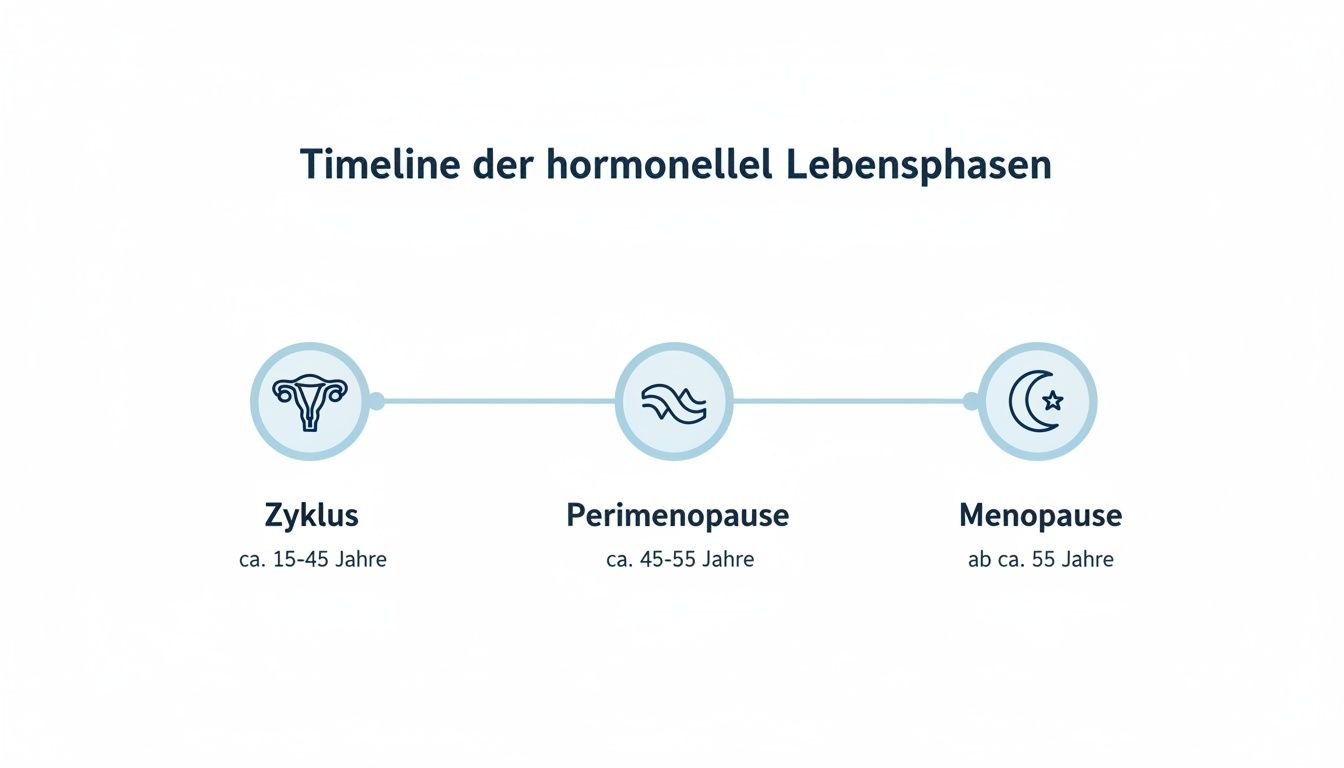
Here you can clearly see how the hormonal focus shifts: from pure cycle control through the often turbulent phase of perimenopause to the stable, but lower hormone production after menopause.
Especially during this transitional period, close attention is crucial. In Germany, the average age for menopause is between 50 and 52. Many women suffer from symptoms such as hot flashes or sleep disturbances, but do not receive appropriate treatment, even though early therapy can significantly minimize later risks.
Regular hormone tests for women over 45 can help detect estrogen deficiency early and thus prevent long-term consequences such as bone loss. If you'd like to delve deeper into the topic, you can learn more here about the reassessment of hormone replacement therapy and its significance . This will ensure that your test provides you with the most reliable data.
Blood, saliva or urine – choosing the right testing method
If you're looking into hormone testing for women , one question inevitably arises: Which method is actually the best? Blood, saliva, or urine – each has its merits, but also its very specific applications. To shed some light on this, a brief analogy can help.
Imagine your hormone levels as a busy warehouse. In this analogy, a blood test is the precise, comprehensive inventory of the entire warehouse. It measures the total amount of hormones circulating in your body – both the freely available hormones and those bound to specific transport proteins. For medical professionals, this complete picture is the gold standard, as it provides the most stable and clinically meaningful values.
Blood test as the gold standard for precision
A blood test like the one we offer at mybody-x.com captures your body's complete hormonal profile. Analysis in a certified laboratory provides a stable and reliable picture of your hormonal status. This precision is crucial for drawing informed conclusions about your health and creating a solid foundation for discussions with your doctor.
The great thing about it: A modern blood test using a finger prick, which you can conveniently do at home, combines this diagnostic capability with maximum comfort. You save yourself a trip to the doctor's office, but still receive top-quality lab results.
When a saliva test can be useful
A saliva test, on the other hand, focuses on a different area. Using the warehouse analogy, it only measures the "active workers"—that is, exclusively the free, unbound hormones that can directly bind to cells and exert their effects. This sounds very appealing at first glance, but there's a catch: these values are often just a snapshot and can fluctuate significantly throughout the day. They are also more susceptible to interference from other factors.
Nevertheless, the saliva test has one niche where it is unbeatable: measuring the stress hormone cortisol . Its level follows a natural daily rhythm – it is highest in the morning and falls towards evening. To depict this pattern, taking multiple saliva samples throughout the day is ideal. This allows for the creation of a meaningful daily cortisol profile.
For a comprehensive assessment of sex and thyroid hormones, a blood test remains the method of choice. It provides the stable overall picture that is essential for a reliable evaluation of your hormonal balance.
A urine test usually plays a minor role in determining current hormone levels. It primarily measures hormone breakdown products over a longer period and is therefore more relevant for other purposes.
At mybody-x.com, we've made a conscious decision to use certified laboratory blood analyses. This ensures you receive a precise, reliable medical result. If you're curious about how easy it is, take a look at our guide to at-home hormone testing . This knowledge will help you understand why we rely on proven blood analysis and allow you to make a well-informed decision for your health.
Perform your hormone test easily at home
Does the thought of having to go for a blood test for a hormone test scare you? You're not alone. But we can put your mind at ease. With the home tests from mybody-x.com, getting your hormone levels is surprisingly easy, discreet, and, most importantly, virtually painless.
The entire process is designed so that you can complete it safely and independently. It all starts with a simple online order, and your test kit will soon arrive at your doorstep. Inside, you'll find everything you need for sample collection – including easy-to-follow, step-by-step instructions with pictures.
The process is that simple
The most important part – taking the sample – is done in just a few minutes. Using the small lancet, which is of course included, a tiny prick in your fingertip is all it takes to collect a few drops of blood. That's it. Afterwards, you securely pack the sample in the return envelope and send it free of charge to our certified German laboratory.
To ensure your results are as accurate as possible, we have a few simple preparation tips for you:
- Drink enough water: If you drink enough water, your blood flows better.
- Warm your hands: Briefly hold your hands under warm water or massage them. This stimulates blood circulation.
- Test in the morning: Unless otherwise stated, hormone levels are often most informative in the morning.
Highest standards for your trust
Your trust is paramount to us. That's why we work exclusively with ISO-certified laboratories in Germany. We handle your data strictly in accordance with GDPR guidelines and protect it comprehensively. This ensures you receive a scientifically sound result that provides a reliable basis for your next steps in your health.
The need for such simple and reliable tests is enormous. Considering that around 52 percent of women in Germany use hormonal contraception and many struggle with side effects, this becomes clear. A survey on women's health also shows that 74 percent suffer from menstrual cramps every month, and a full 69 percent of young women want more information about their hormones.
A home test is more than just a measurement. It gives you back control and provides you with the knowledge to better understand your body and make informed decisions for your health.
If you would like to delve deeper into how a home hormone test works in detail and what advantages it offers, we have summarized all the important information for you.
Understand your results and plan your next steps
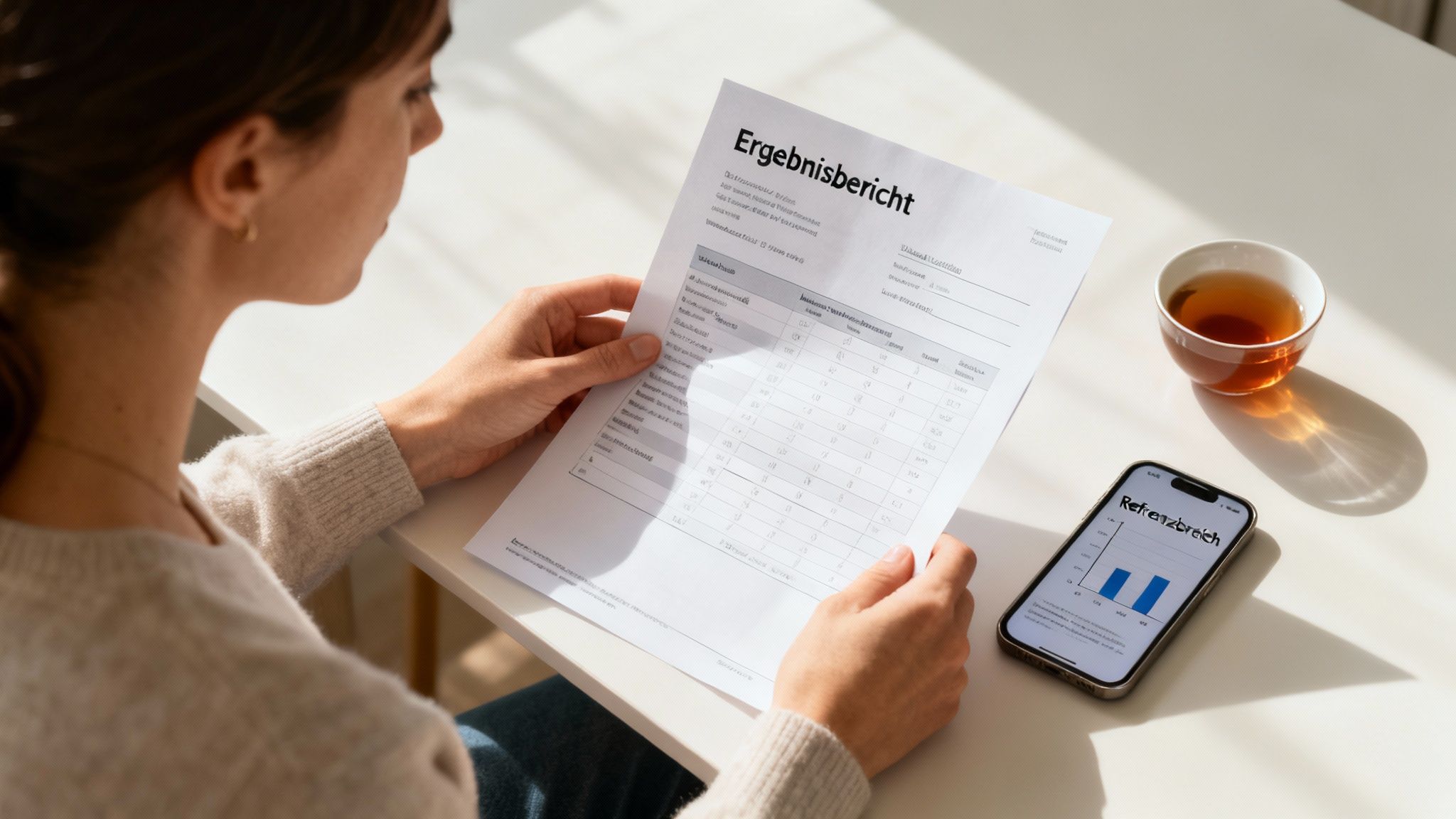
The moment has arrived: Your hormone test report for women is finally ready. Often, the sheer number of numbers, technical terms, and graphs can feel overwhelming at first. But don't worry, we won't leave you hanging. Our goal isn't just to provide you with lab results, but to help you truly understand them and translate them into positive, concrete steps for yourself.
Think of your personal results report as a kind of map of your current hormonal status. Each individual value is presented clearly and concisely, always in comparison to a scientific reference range. This allows you to see at a glance which values are within the normal range and where there might be a need for action.
From number to action
We take the time to translate all the technical jargon into understandable language for you. You'll learn not only what was actually measured, but also why this specific value is so important for your well-being and what a deviation can mean.
Based on this, we provide you with scientifically sound and – most importantly – practical recommendations. To help you get started right away, we've divided them into clear areas of life:
- Nutrition: Which foods can specifically support your hormone balance? Here are some concrete tips.
- Exercise: We give you recommendations for sports that are truly suited to your current hormonal situation.
- Stress & Sleep: You will receive practical tips on how to calm your nervous system and improve your recovery.
A result is not a judgment, but a signpost. It shows you where you currently stand and gives you the tools to take the next step towards your well-being.
Your result as a basis for your doctor's visit
One thing we want to emphasize is extremely important: A home test from mybody-x.com is a fantastic tool for self-care and provides a solid data basis. However, it can and should never replace a medical diagnosis or personal consultation.
Think of your report as excellent preparation for your appointment with your doctor. Instead of going into the meeting with vague symptoms and assumptions, you now have concrete figures to work with. This allows for a much more targeted diagnosis and helps both of you find the best strategy for your health. So, if you're wondering how best to regulate your hormone levels , the report provides you with the perfect starting points.
Frequently asked questions about hormone testing for women
Here I've compiled the answers to the most frequently asked questions I encounter in everyday life regarding hormone tests for women . This will give you more clarity quickly and easily.
Can a home hormone test replace a visit to the doctor?
No, and that's a very important point. A home test is a fantastic tool for gaining initial insights and better understanding your own body. It gives you a solid basis for tracking changes, but it never replaces a medical diagnosis.
See the results as valuable preparation: With this data in hand, you can have a much more targeted conversation with your doctor and discuss the next sensible steps together.
Will the pill affect my test result?
Yes, quite significantly. You have to understand that hormonal contraceptives like the pill massively interfere with the natural hormonal cycle and essentially "shut it down." A test while taking the pill would therefore not show your body's own hormone levels, but rather the state under the influence of the artificial hormones.
To get a truly meaningful picture of your natural values, the pill would have to be discontinued for a certain period of time – naturally only after consulting a doctor.
How often should I have my hormones checked?
That depends entirely on your individual situation and your goal. If you have acute symptoms or want to check the success of a therapy, a test every three to six months can be useful.
For preventative care, especially as you approach perimenopause (usually from age 40 onwards) , an annual check-up is often sufficient. This allows you to detect gradual changes early and take timely countermeasures.
Does the small prick in the finger hurt?
The vast majority of people find the prick barely painful – it's really just a brief pinch. Each test kit includes a sterile, automatic lancing device that makes the process as easy, quick, and comfortable as possible. You just need to overcome your initial hesitation, and it's over.
Are you ready to take control of your well-being and finally gain clarity about your hormones? Discover the mybody-x.com hormone tests for women now and start your journey to more balance and energy. Find the right test for you here .

Share:
Hormone test at home: The honest guide for your body
The 10 best tips against cravings that really work