

Dietary transition 2026: Personalized nutrition in Switzerland
Many people believe that changing their diet means only counting calories or taking DNA tests. But modern personalized nutrition goes far beyond that, integrating genetic, metabolic, and microbiome data to optimize health individually. This evidence-based guide shows you how to change your diet in Switzerland in 2026 using a scientifically sound and sustainable approach to measurably improve well-being, prevention, and quality of life.
Table of contents
- Key insights at a glance
- Foundations of the Swiss dietary transition 2026
- Personalized nutrition methods and scientific analysis
- The health urgency and benefits of the dietary transition
- Nutrition-related problems in Switzerland as a starting point
- Technology and data integration in the dietary transition
- Common misconceptions and corrections in personalized nutrition
- Practical implementation of the dietary transition
- Start your personalized dietary transition with mybody®x
- FAQ on the 2026 dietary transition
Key insights at a glance
| Point | Details |
|---|---|
| Personalized analysis | Combining genetic, microbiome, and metabolic data provides personalized recommendations. |
| Swiss Strategy 2026 | Six goals for health-promoting and sustainable nutrition shape national health policy. |
| Technology drives innovation | AI and wearables enable real-time analysis and dynamic adjustment of nutrition plans. |
| Clarifying misconceptions | A holistic approach instead of DNA hype: lifestyle, environment, and the microbiome are equally important. |
| Practical implementation | Step-by-step testing, monitoring, and digital support ensure long-term success. |
Foundations of the Swiss dietary transition 2026
The Swiss Nutrition Strategy 2025–2032 forms the foundation for health-oriented nutrition policy. It pursues six central goals that closely link health promotion and sustainability. This strategy responds to current challenges: Around 2.2 million people in Switzerland suffer from noncommunicable diseases that can be prevented through targeted nutrition.
The six main goals include:
- Strengthening nutrition literacy across all age groups
- Promoting plant-based diets for health and the climate
- Integrating sustainability into dietary recommendations
- Preventing overweight and diet-related diseases
- Expanding research into personalized nutrition
- Stronger collaboration between the healthcare system, business, and education
These goals are not abstract requirements. They address concrete problems: Swiss people consume too much sugar, salt, and saturated fat, while vegetables, fruit, and legumes are missing from their diets. Approximately 43% of adults are overweight or obese, increasing the risk of diabetes, cardiovascular disease, and other chronic conditions.
The strategy emphasizes the transition from general recommendations to individually tailored approaches. Personalized nutrition is seen as the key to meeting people where they are in terms of their health. Modern analyses provide precise insights into genetic predispositions, metabolic processes, and gut health. This holistic approach makes dietary change in 2026 not only more effective but also more sustainable.
Personalized nutrition methods and scientific analysis
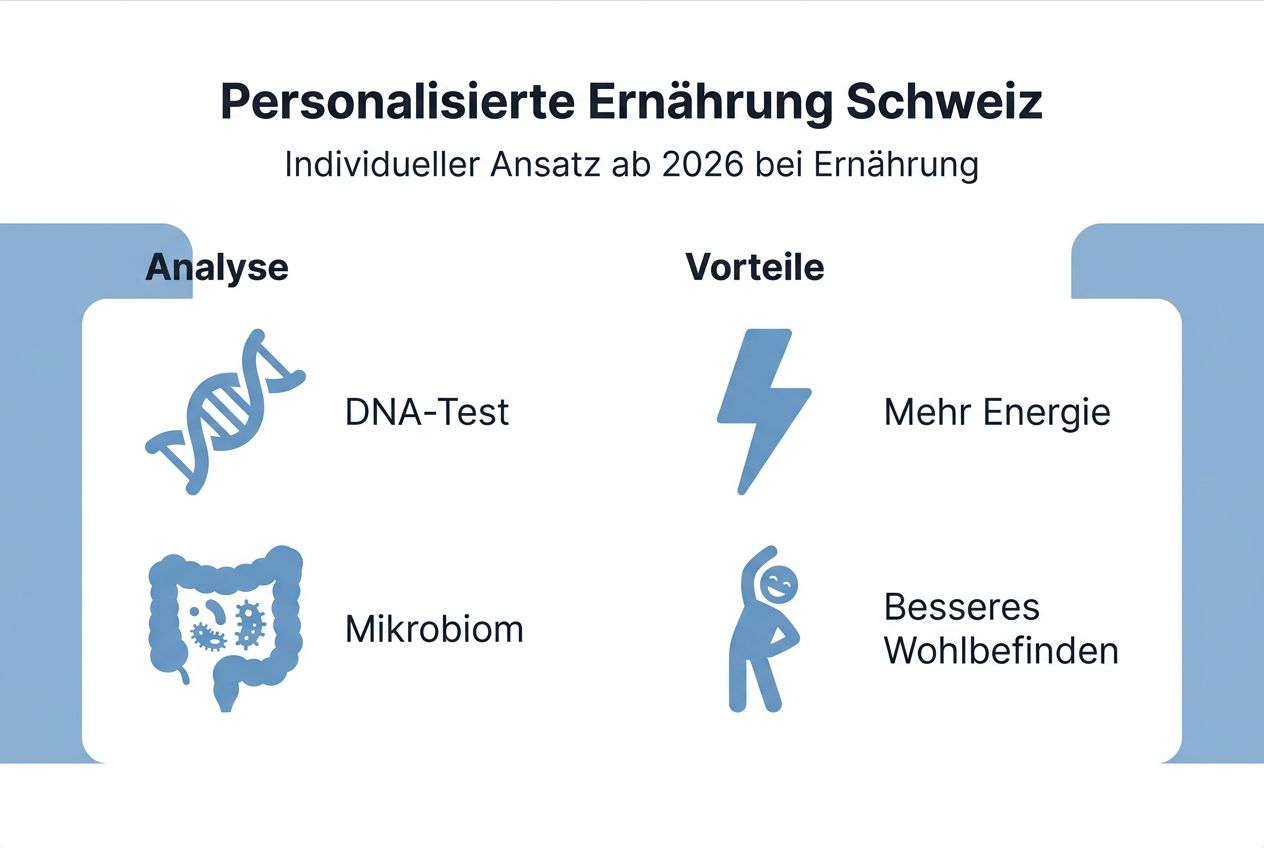
Personalized nutrition is based on individual data from genetics, metabolism, and the microbiome. This multifactorial analysis goes beyond conventional dietary counseling and takes into account how your body actually processes nutrients. The goal is clear: optimal health through tailored recommendations based on scientific data.
Modern testing methods provide the foundation:
- Blood tests analyze micronutrient status, vitamins, and minerals
- Saliva tests detect genetic variations that influence metabolic processes
- Stool tests analyze the composition of the microbiome for gut health and immune function
- Wearables and apps integrate activity, sleep, and vital signs in real time
DNA analyses identify genetic variations that influence how you metabolize lactose, gluten, or certain fats. These insights help you adjust meal plans and avoid intolerances. Metabolic tests show whether you use carbohydrates or fats more efficiently, directly influencing your energy supply and weight management.
Microbiome analyses are particularly valuable. A healthy gut through microbiome analyses strengthens the immune system and enhances well-being. Gut bacteria also determine how well nutrients are absorbed and whether inflammatory processes occur in the body. A targeted diet can positively change the microbiome and thereby alleviate chronic symptoms.
Chrononutrition complements these methods through optimized timing. It adapts meals to your circadian rhythm and improves sleep, metabolism, and blood sugar control. By eating when your body digests best, you maximize nutrient absorption.
Pro tip: Combine DNA-based nutrition with lifestyle data from wearables. Integrating sleep, physical activity, and stress provides a complete picture and makes recommendations even more precise. Learn more about the benefits of personalized nutrition in our health portal.
A DNA test for nutrition is the first step toward this comprehensive analysis. The science behind this method is developing rapidly and offering increasingly precise insights into the complex relationships between genes, the environment, and health.
The urgency and benefits of dietary change for health
The numbers speak clearly: Chronic diseases place a massive burden on the Swiss population. Around 43% of adults are overweight, and the trend is rising. Diabetes, cardiovascular disease, and high blood pressure are consequences of poor nutrition and cost the healthcare system billions every year.
Targeted dietary change is the key lever for prevention. Those who adapt their diet individually reduce the risk of metabolic diseases, improve blood sugar and cholesterol levels, and enhance their quality of life in the long term. The health benefits of personalized nutrition are scientifically proven and go far beyond weight loss.
“Nutrition is not just fuel, but information for your cells. Personalized approaches deliver the right signals at the right time.”
The key benefits of an individualized dietary change:
- Prevention of type 2 diabetes through optimized carbohydrate and fiber intake
- Reduced cardiovascular risk through optimized fatty acid profiles
- Improved gut health and immune function through a microbiome-friendly diet
- Increased energy, concentration, and mental clarity
- Long-term weight control without radical diets or the yo-yo effect
The urgency for public health is also evident in public health policy. The Swiss Nutrition Strategy 2025–2032 responds to these challenges and promotes preventive measures. But prevention starts individually: everyone can actively shape their health through informed decisions.
Nutritional challenges in Switzerland as a starting point
Before planning a successful dietary change, you need to understand which mistakes are particularly common. People in Switzerland consume too much sugar, salt, and fat and too few vegetables and legumes. These imbalances are not minor issues; they actively drive the development of chronic diseases.
Typical dietary problems in Switzerland:
- Excessive sugar consumption: Hidden sugars in processed foods increase the risk of diabetes
- Excessive salt intake: Promotes high blood pressure and cardiovascular disease
- Saturated fats: Animal fats predominate, while healthy omega-3 fatty acids are lacking
- Lack of fiber: Too little vegetables, whole grains, and legumes weaken gut health
- Irregular meals: Eating under stress, late dinners, and a lack of routines disrupt metabolism
These mistakes are not conscious decisions. Often, people simply lack the knowledge of which foods truly suit their bodies. General recommendations are of little help when your genetics or microbiome have specific needs. This is precisely where personalized nutrition comes in: It identifies your individual vulnerabilities and offers tailored solutions.
Dietary mistakes lead to measurable health risks. Elevated blood sugar, poor cholesterol levels, and chronic inflammation are direct consequences. In the long term, quality of life declines while disease risks increase. Timely dietary changes can break this cycle.
Technology and data integration in dietary changes
Modern technology is revolutionizing the way we understand and implement nutrition. Wearables continuously provide data on movement, sleep, and vital signs. This real-time information is incorporated into personalized recommendations, making your diet dynamically adaptable. You no longer merely react to symptoms; you act preventively.

AI and machine learning analyze complex data patterns that people could not identify on their own. Genetic variations, microbiome profiles, and lifestyle data are combined to make precise predictions. The AI continuously learns from your feedback and continually refines its recommendations.
Important technological tools for personalized nutrition:
- Wearables: Fitness trackers and smartwatches measure activity, heart rate, sleep, and calorie expenditure
- Apps: Digital food diaries record meals, symptoms, and well-being
- Laboratory analyses: Blood, saliva, and stool tests provide biochemical data
- AI algorithms: Process multi-omics data and create individualized nutrition plans
- Telemedicine: Consultation and support from experts available remotely
Integrating these tools enables a closed-loop feedback system. You test, receive recommendations, implement them, and track the results. Adjustments are made in real time, based on objective data rather than subjective assessments. This approach makes dietary changes measurable and transparent.
Pro tip: Use digital diaries consistently for self-tracking. Record not only meals, but also energy levels, digestion, and mood. This data helps identify connections between nutrition and well-being. You can find more best practices for changing your diet in our guide.
Technology makes personalized nutrition accessible and affordable. What once required expensive specialist advice is now available through apps and home tests. This democratization opens up health optimization to everyone.
Common misconceptions and corrections in personalized nutrition
Personalized nutrition is based not exclusively on DNA, but also on lifestyle and the environment. Many people believe that a DNA test alone provides all the answers. But genetics is just one of many factors. Your microbiome, exercise habits, sleep quality, and stress levels influence how your body processes food.
Key misconceptions and their corrections:
- Myth: DNA alone determines nutrition. Correction: Multifactorial influences from genetics, epigenetics, the microbiome, and lifestyle are decisive.
- Myth: Radical changes are necessary. Correction: Gradual adjustments are more sustainable and help prevent relapses.
- Myth: Personalization is an expensive trend. Correction: Studies demonstrate measurable health benefits and long-term cost savings.
- Myth: Testing once is enough. Correction: Your body changes, so regular updates are important.
- Myth: Everyone needs supplements. Correction: Only genuine deficiencies should be supplemented, based on test results.
These misconceptions often lead to false expectations. Anyone who believes a DNA test is the universal solution overlooks the importance of lifestyle changes. Personalized nutrition is a holistic process, not a one-time hack.
Moreover, many people think personalized nutrition means complicated diets or expensive superfoods. The opposite is true: it is about optimally aligning everyday foods with your body. Sustainability comes first, not perfection.
Practical implementation of dietary change
Now it’s time to get practical. The theory is clear, but how do you implement personalized nutrition in everyday life? A structured five-step plan takes you from analysis to sustainable implementation.
-
Analyzing genetic and metabolic profiles: Start with a DNA test for dietary change to identify genetic predispositions. Supplement it with metabolic tests that show how your body processes macronutrients.
-
Recording nutrition, exercise, and sleep: Use digital diaries and wearables to gain a complete picture of your daily life. This data complements the laboratory analyses and reveals lifestyle factors.
-
Microbiome analysis for gut health: A stool sample reveals the composition of your microbiome. Gut bacteria influence nutrient absorption, the immune system, and inflammatory processes. Targeted nutrition can optimize the microbiome.
-
Creating individualized nutrition plans: Based on all the data, you or your advisor develop a tailored plan. It takes genetic variations, metabolic type, microbiome status, and lifestyle goals into account. Dynamic adjustments are made continuously.
-
Monitoring and long-term control: Regular blood tests and digital tracking tools show whether the change is working. Adjustments are made based on progress and new findings. Long-term success requires continuous support.
Chrononutrition improves sleep and metabolism and provides a practical complement to personalized nutrition. By adapting your meals to your circadian rhythm, you maximize the impact of every dietary change.
| Criterion | Standard diet | Personalized Nutrition |
|---|---|---|
| Basis | General recommendations | Individual data (DNA, microbiome, metabolism) |
| Adaptation | Static | Dynamic, based on monitoring |
| Goal | Average health | Optimal health, prevention |
| Method | Calorie counting, restriction | Nutrient optimization, enjoyment |
| Success rate | Low (often followed by a yo-yo effect) | High (sustainable, scientifically validated) |
Pro tip: Patience is crucial. Your body needs time to respond to dietary changes. Don’t expect miracles after two weeks; instead, allow three to six months for measurable changes. Implementing changes gradually ensures lasting success.
Learn more about the principles of successful dietary change and our metabolic analysis for nutrition in our expert articles.
Start a personalized dietary change with mybody®x
You now have the knowledge of how personalized nutrition works and why it is crucial for your health. The next step is implementation. mybody®x offers ISO-certified laboratory tests for DNA, microbiome, and metabolic analyses that deliver scientifically validated results. With more than 11,300 satisfied customers and an average rating of 4.77 stars, mybody® is one of the established brands for personalized health in Switzerland. You receive not only test results, but also individualized nutrition recommendations, lifestyle tips, and long-term strategies. Digital support and personal consultation help you implement changes sustainably. Start your personalized dietary change with mybody®x now and shape your health in an evidence-based, preventive, and self-determined way.
FAQ About Dietary Changes 2026
How long does a personalized dietary change take?
A sustainable change usually takes three to six months and happens gradually, depending on individual test results and adjustments. Your body needs time to respond to new eating patterns and adapt metabolic processes. Continuous monitoring through blood tests and digital tools supports success and enables flexible adjustments based on your progress.
Which tests are most important for individualized nutrition?
The combination of DNA analysis, metabolic profiling, and microbiome analysis provides comprehensive data for precise recommendations. DNA tests show genetic predispositions, metabolic tests clarify how you process macronutrients, and microbiome analyses assess your gut health. Lifestyle data from wearables on sleep, exercise, and stress complement the test results for holistic adjustments. Find more information about important nutrition tests in our guide.
How can I measure progress when changing my diet?
Regular blood and micronutrient analyses provide objective data on vitamins, minerals, and metabolic markers. Digital diaries and wearables support tracking nutrition, energy, and well-being in everyday life. Subjective improvements in energy, sleep, digestion, and mental clarity are important indicators. Combine objective measurements with your personal experience to assess success holistically. Learn more about measuring progress when changing your diet in our guide.
Recommendation
- Your Personalized Nutrition: Why a Diet Doesn’t Work – mybody®x
- Yo-Yo Effect – How to Maintain Your Weight with DNA-Based Nutrition – mybody®x
- Personalized Nutrition | Optimize Your Nutrition with Your DNA – mybody®x
- Benefits of Personalized Nutrition for Your Health – mybody®x
- Personalized Meal Plans: Transforming Fitness Nutrition | FitConnect



Share now:
Where can you get a blood test? Your guide for 2026
Gut Microbiome Analysis: A Guide to Your Gut Health