
What to Do About Iron Deficiency? Your Practical Guide to More Energy
At its core, treating iron deficiency means deliberately replenishing empty iron stores. The way to do this involves two key pillars: an iron-rich diet, ideally combined with vitamin C for better absorption, and, if necessary, taking iron supplements recommended by a doctor.
Understanding Iron Deficiency: More Than Just a Little Tired

Do you often feel sluggish and unfocused for no apparent reason? Have you even noticed that your hair is becoming thinner or your nails are splitting? These signals from your body are often more than just the result of a strenuous week. They may be classic signs of iron deficiency—a condition that affects your quality of life much more than you might think.
Iron is far more than just a mineral on a nutrition facts label. It is an essential trace element responsible for countless processes in the body. Without enough iron, your cells cannot transport oxygen, your immune system cannot operate at full capacity, and your muscles cannot produce energy.
The Ignition Key for Your Energy
Imagine your body as a highly complex engine. Every single cell is a tiny power plant that must continuously produce energy so you can think, move, and simply live. In this picture, iron is the ignition key. Without it, the engine does not start properly. Hemoglobin, the red pigment in blood, absolutely needs iron to carry oxygen from the lungs to every cell in your body.
Without this key, the entire engine only sputters or runs in emergency mode. You feel the result immediately: You feel exhausted and drained, and can barely concentrate. This fatigue is often the first and best-known symptom, but the effects of a deficiency go much further.
"Iron deficiency is not a life sentence but a treatable condition. Recognizing the symptoms is the first step toward regaining your energy and zest for life."
More Than Just Fatigue
While constant exhaustion is the most prominent sign, your body often sends other, subtler signals as well. It is important to watch for these too in order to put the puzzle together. Undetected iron deficiency can show up in many ways:
- Pale skin and mucous membranes: A quick look in the mirror or at the inside of your lower eyelids can reveal a lot. If the color looks noticeably pale, it could be a sign.
- Hair loss and brittle nails: When iron is lacking, the body starts economizing on less vital areas. Hair and nails are often the first to suffer.
- Shortness of breath during exertion: If even climbing the stairs becomes a challenge, impaired oxygen transport could be the cause.
- Headaches and dizziness: Your brain also needs sufficient oxygen to function optimally. A deficiency can quickly make itself felt here.
- Restless legs syndrome: This unpleasant tingling or urge to move your legs, especially during periods of rest, is often associated with iron deficiency.
Knowing these symptoms is crucial. They help you interpret your body's signals correctly instead of simply dismissing them as a “bad day.”
Who is particularly at risk?
Although anyone can develop iron deficiency in principle, some groups have a significantly higher risk. In Germany, iron deficiency is one of the most common deficiencies, with women clearly affected more often. Approximately 58% of women are affected, compared with around 14% of men. This major difference is mainly due to monthly blood loss during menstruation, which significantly increases iron requirements. You can find more information about its prevalence on Wikipedia.
If you suspect that your symptoms point to a deficiency, an iron or ferritin self-test can provide useful initial guidance before you make a doctor's appointment. Such at-home nutrient tests quickly and conveniently give you an initial insight into your nutrient levels and help you keep track of your health independently.
Why your ferritin level is your most important indicator

When it comes to iron deficiency, terms like hemoglobin and ferritin often come up. But what do they really reveal about your energy and well-being in everyday life? It is incredibly important to understand that not every value tells the same story. Long before iron deficiency becomes noticeable in a standard blood count through low hemoglobin, there is a much earlier, more meaningful warning signal: the ferritin level.
Simply think of the iron in your body as money. Hemoglobin is your checking account—the money you use every day for your expenses. It transports oxygen and keeps everything running. Your ferritin level, on the other hand, is your savings account. It is the quiet iron reserve your body draws on only when it is not getting enough replenishment from food.
So, incipient iron deficiency does not start with your checking account; it first quietly and unnoticed drains your savings account. Your hemoglobin level may still be completely within the normal range. You may appear perfectly healthy in a standard blood test, even though your reserves are already running dangerously low.
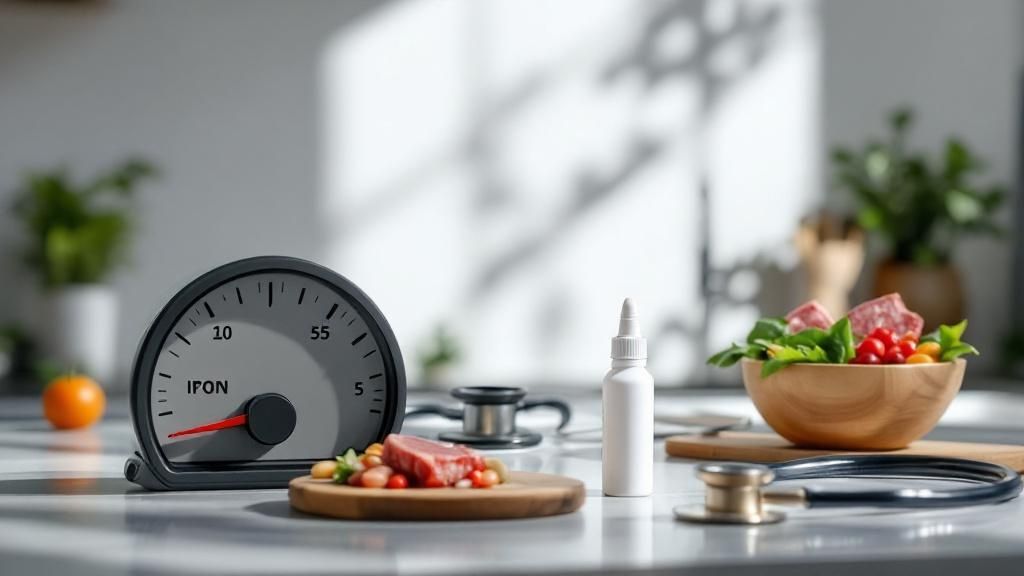
Your Body’s Fuel Gauge
An even more fitting analogy may be your car’s fuel gauge.
- Hemoglobin is essentially the running engine. As long as there is still a drop of fuel in the system, it runs—perhaps not quite smoothly anymore, but it runs.
- Ferritin is the fuel gauge itself. It shows you precisely how much reserve you really have left before the engine starts sputtering and eventually breaks down completely.
Classic iron-deficiency anemia is often diagnosed only when the engine is already sputtering (that is, when hemoglobin is low). But the warning light (low ferritin) starts flashing much, much earlier. And you may already feel this flashing as constant fatigue, difficulty concentrating, or hair loss. That is why ferritin is by far the most important indicator for detecting and addressing a deficiency in time, before it becomes serious.
So, if you want to know what to do about iron deficiency, you first need to know how full your reserves are. Without your ferritin level, you are feeling around in the dark.
What is a truly good ferritin level?
Now things get interesting, because a “normal value” is not the same as an “optimal value.” Many laboratories provide very generous reference ranges. But the truth is that even a value in the lower third of this official range can cause severe symptoms. For women between 18 and 45 years old, the normal ferritin range is often between 6.5 and 131 µg/l. Yet values below 50 µg/l can already lead to noticeable exhaustion, even though they are still formally considered “normal.” You can read more about these normal values in this article on vitalarzt-marquardt.de.
Based on experience, many functional medicine experts therefore recommend target values that are significantly higher. It is not just about avoiding a deficiency, but about achieving genuine vitality.
- Below 30 µg/l: This is considered an absolute deficiency. The stores are empty.
- Between 30 and 50 µg/l: A gray area in which many people are already experiencing noticeable symptoms.
- Between 70 and 100 µg/l: For most people, this is the optimal range for feeling energetic and performing at your best.
These values give you much better guidance when you have your blood results in hand. Don’t settle for a value that only barely puts you above the deficiency threshold! To explore the meaning of these numbers in greater depth, also read our comprehensive article on optimal ferritin levels.
Knowing your personal ferritin level empowers you to take proactive action. An iron-ferritin self-test can be the first simple step toward finally gaining clarity. Instead of waiting until you’re completely burned out, you can identify early on whether your “fuel gauge” is flashing and take the right measures.
The path to a diagnosis: How to shed light on the situation
Do you recognize yourself in these symptoms and have a quiet suspicion that there’s more behind your constant fatigue than everyday stress? Good! That suspicion is the very first and most important step. But what next? Instead of continuing to guess and going around in circles, it’s time to gain clarity and take control of your levels yourself.
The path to a diagnosis doesn’t have to be complicated. I know from personal experience how liberating it is to take that first, concrete step. For me, it was a simple test that finally pointed me in the right direction and prompted me to look more closely. Today, you have two fantastic options for gaining certainty, and they complement each other perfectly.
Your first step toward clarity: the self-test
Fortunately, you no longer have to wait weeks for a doctor’s appointment to get an initial assessment of your iron status. An at-home iron or ferritin self-test is a brilliant way to quickly and easily get an initial overview. These tests are designed so that you can perform them yourself with ease—usually, all it takes is a small prick of the finger.
The benefits are clear:
- Speed: You often receive your results after just a few days and don’t have to wait forever for an appointment.
- Discretion: You can take the test comfortably and privately in your own home.
- Taking responsibility for your health: Such a test is a powerful tool. You take control instead of simply waiting passively.
Of course, such a test does not replace a complete medical diagnosis, but it is an invaluable guide. If the iron-ferritin self-test shows a low value, you have a solid basis for specifically discussing it with your doctor. You are taking proactive action instead of merely reacting.
A self-test is like a first look at the map of your health. It shows you where you currently stand and helps you decide which route to take next.
When seeing a doctor is essential
A self-test is the perfect starting point, without a doubt. But seeing a doctor is essential for a definitive diagnosis and, above all, for investigating the causes. Especially if the test indicates a deficiency or your symptoms are very pronounced, you should not hesitate to make an appointment.
A doctor can not only confirm iron deficiency but—and this is crucial—also uncover its underlying cause. Is it due to your diet? Is there an undetected loss of blood in the gastrointestinal tract? Or could chronic inflammation be blocking iron absorption? These questions must be professionally clarified to find a sustainable solution.
To be fully prepared for your appointment with your doctor, you should know exactly which values really matter. It involves much more than just the ferritin level.
How to request a complete blood count properly
Ask your doctor for a comprehensive blood test that goes beyond standard screening. This is the only way to get a complete picture of your iron status. It is best to write down the following values to make sure everything important is checked:
- Ferritin: As you know, this is your most important value. It shows the level of your iron stores.
- CRP (C-reactive protein): This value is extremely important! It is an inflammation marker. Inflammation in the body can cause the ferritin level to be falsely high even when a deficiency is present. A low CRP confirms that your ferritin level is truly meaningful.
- Hemoglobin (Hb): This value shows whether anemia, or low blood count, is already present.
- Transferrin and transferrin saturation: These two values indicate how well iron is transported in the body. Low saturation is a clear sign of a deficiency.
With these figures in hand, you can decide together what to do to correct your iron deficiency. If you would like to learn more about how to test for nutrient deficiencies in general, you’ll find more valuable information in our guide. Our goal is to give you the knowledge you need to actively and independently manage your health.
Your shopping list for more energy
Okay, the diagnosis is confirmed. That is the first and most important step. But what now? How do you replenish your depleted iron stores and make sure they stay full?
In cases of a truly severe deficiency, iron supplements are often unavoidable—but your doctor must decide that. In the long term, however, a well-planned, iron-rich diet remains your strongest weapon. It is the most sustainable strategy not only for replenishing your stores but also for regaining your everyday energy.
But which foods are the true iron heroes? And—almost more importantly—how can you make sure your body actually absorbs this valuable trace element? Don’t worry, it’s easier than it sounds. Let’s put together your shopping list for more energy.
Not all iron is the same: What your body really needs
Before we reach for the shelves, we need to understand an important distinction. Your body can process two different types of iron, and that makes a huge practical difference.
- Heme iron: Think of it as a “VIP pass” for your body. It comes exclusively from animal sources such as meat and fish. The major advantage: your body can absorb it easily and directly.
- Non-heme iron: This is the form of iron found in all plant-based foods, as well as in eggs and dairy products. Absorption is a little trickier here. But with a few clever tricks, we can significantly improve how well your body uses it.
The top iron sources for your meal plan
Let’s focus on the foods that give you the biggest iron boost. Even small changes during your next grocery trip can have a huge impact.
Animal-based iron power (heme iron):
- Beef and liver: Red meat, especially lean beef, is a true classic. Liver is the absolute champion, but due to its high vitamin A content, it should only appear on the menu occasionally.
- Poultry (dark meat): Chicken thighs or turkey legs contain significantly more iron than the breast meat. A simple choice with a big impact.
- Fish and seafood: Tuna and sardines are great, but oysters and mussels are the true stars among seafood when it comes to iron content.
Plant-based iron heroes (non-heme iron):
- Legumes: Lentils (whether red, brown, or green), chickpeas, and black beans are nutritional powerhouses and extremely versatile.
- Nuts and seeds: Pumpkin seeds, sesame (as tahini in hummus), and flaxseeds are fantastic sources of iron for your muesli, salads, or simply as a snack.
- Whole grains: Oatmeal, millet, and quinoa are a solid foundation for an iron-conscious diet.
- Leafy green vegetables: Spinach, kale, and Swiss chard are good choices, but they also contain substances (oxalates) that slightly inhibit absorption. That’s why the right combination is crucial here.
- Dried fruit: Dried apricots or figs are an ideal, iron-rich snack for when you’re feeling a little hungry between meals.
The clever helpers and the hidden thieves
Knowing the best sources of iron is only half the battle. The real key to success lies in maximizing absorption while avoiding the “iron thieves” that can thwart your efforts.
The most important helper by far for plant-based iron is vitamin C. It acts like a turbocharger and can increase absorption many times over. The rule is simple: always combine your iron-rich meals with a source of vitamin C.
At the same time, there are substances that can seriously block iron absorption. These include tannins (in coffee and black tea), calcium (in dairy products), and phytates (in whole grains).
Practical tip: Don’t drink your coffee or black tea directly with your meal; it’s better to wait an hour. The same applies to your glass of milk or yogurt for dessert. Give your body time to absorb the iron first.
The following graphic gives you an overview of the common causes of iron deficiency.
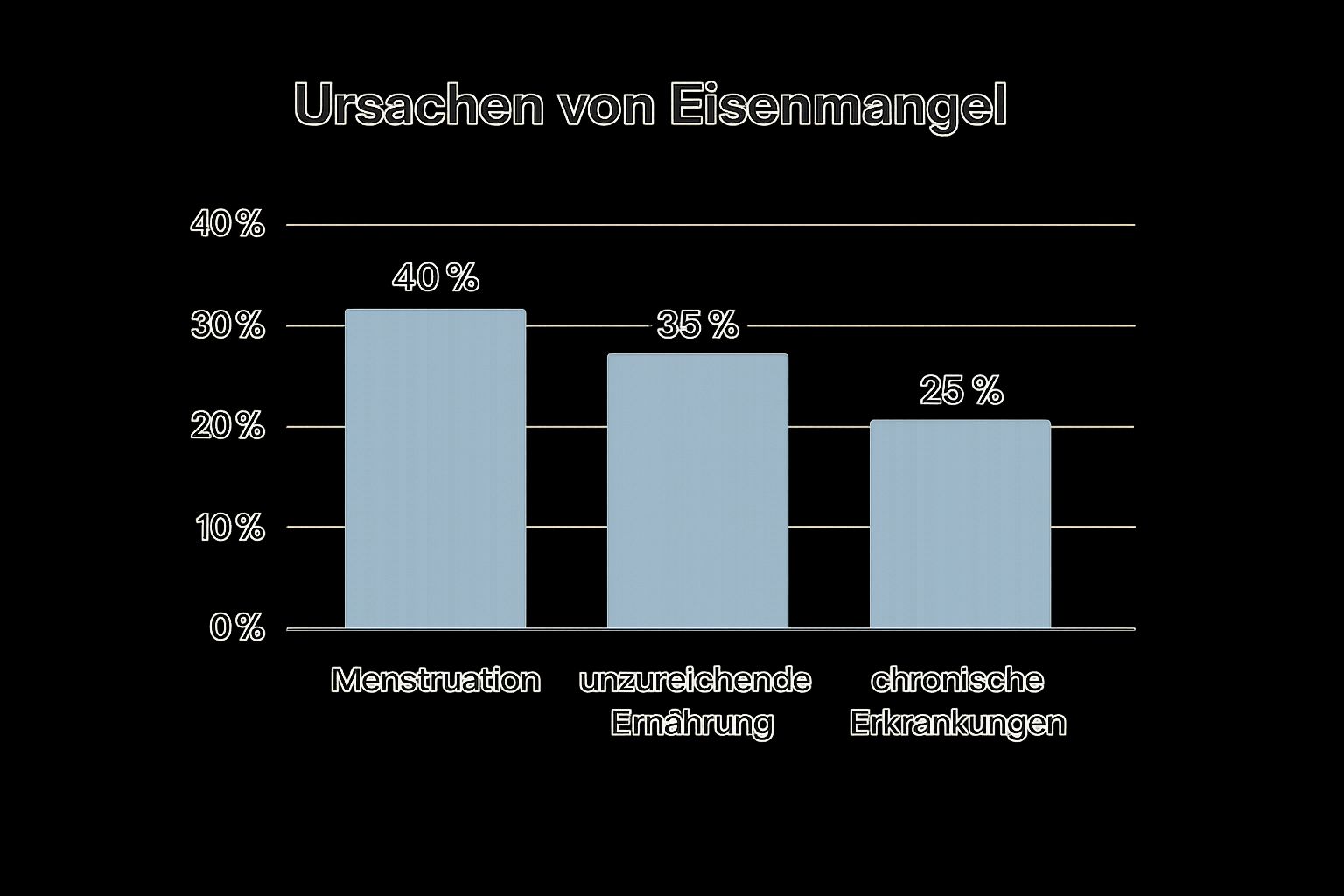
As you can see, it’s not always just about diet. Menstruation plays a central role, especially for women, and explains the often increased need for iron.
Iron-rich foods and their pairing partners
To make getting started easier, I’ve put together a table. It shows you not only the top sources of iron, but also how you can easily increase iron absorption by combining them with foods rich in vitamin C.
| Source of iron (animal-based/plant-based) | Iron content per 100 g (approx.) | Perfect partner (source of vitamin C) | Preparation tip |
|---|---|---|---|
| Beef tenderloin (animal-based) | 2.5 mg | Fresh bell pepper salad | Serve the steak with a side of steamed broccoli or red bell pepper. |
| Red lentils (plant-based) | 7.5 mg | A glass of orange juice or lemon juice in the dressing | Cook a delicious lentil soup and add a generous splash of fresh lemon juice at the end. |
| Pumpkin seeds (plant-based) | 8.8 mg | Fresh berries (e.g., strawberries, raspberries) | Top your morning cereal with a handful of pumpkin seeds and fresh berries. |
| Spinach (plant-based) | 2.7 mg | Tomatoes or a splash of lemon | Blend yourself a green smoothie with spinach, an orange, and a spoonful of flaxseeds. |
This list is just the beginning and is meant to inspire you. The principle is always the same: combine foods wisely and keep the thieves at a distance. This way, your diet becomes your strongest weapon against fatigue and for noticeably more energy in everyday life.
How to use iron supplements correctly and avoid side effects
Sometimes your iron stores are simply so depleted that even the best diet can no longer keep up. If your doctor has diagnosed a clear deficiency, iron supplements are often the fastest and most effective way to replenish depleted stores and get your energy back. I know this from personal experience: After my diagnosis, it was targeted supplementation that finally banished the debilitating fatigue.
But the supplement market is a real jungle. Finding the right product—and, above all, knowing how to take it—is crucial. If used incorrectly, iron supplements can cause quite unpleasant side effects or simply not work. But don’t worry, I’ll show you what matters.
Which form of iron is right for you?
When you look at different iron supplements, you quickly come across terms like iron sulfate, gluconate, or bisglycinate. These are simply different chemical “packagings” for iron, and this packaging determines how well your body can absorb it and how well you tolerate it.
- Iron sulfate: This is the classic—tried and tested, and inexpensive. It works, but it is also notorious for its side effects. Many people complain of nausea, stomach pain, or constipation and stop taking it out of frustration.
- Iron gluconate: This form is considered somewhat gentler on the stomach than sulfate, but it can still cause digestive problems in sensitive people.
- Iron bisglycinate: My personal favorite and also recommended by many experts. Here, the iron is bound to two amino acids. This clever trick protects it on its way through the stomach and ensures that much more of it reaches the small intestine—with significantly fewer side effects.
Practical tip: If you have a sensitive stomach or simply want to ensure that your body uses the iron optimally, iron bisglycinate is usually the best choice. Even if it costs a few euros more, the better tolerability is often worth the investment.
The golden rules for taking it
The best supplement is useless if it is taken incorrectly. To maximize absorption and protect your stomach, there are a few simple but extremely important rules. They are the key to how much of the valuable iron actually reaches your body.
- Always take it on an empty stomach: It is best to take your iron tablet 30 to 60 minutes before breakfast. This prevents other foods from interfering with absorption.
- Combine it with vitamin C: A small glass of orange juice or simply water with a splash of lemon is perfect. Vitamin C is the ultimate booster for iron absorption.
- Keep your distance from iron blockers: Wait at least two hours after taking iron before consuming coffee, black tea, dairy products, or whole-grain products. These contain substances that bind the iron and flush it back out of the body unused.
- Be careful with other minerals: Do not take iron supplements at the same time as zinc, magnesium, or calcium. They compete for the same transport pathways in the intestines.
Anyone who consistently follows these rules helps their body get the maximum benefit from each dose and avoid unpleasant side effects.
Duration of use and the importance of checkups
When asking, “What should you do about iron deficiency?” patience is especially important. It is not enough to take the tablets for just a few weeks. Even if you may feel more energetic after a short time, replenishing your deep stores (your ferritin level) is a marathon, not a sprint. Depending on the severity of the deficiency, this can easily take three to six months or even longer.
That is why one thing is absolutely non-negotiable: medical supervision. Never take iron on your own for an extended period.
An iron overdose can be harmful. Regular blood tests every 8–12 weeks are mandatory to monitor your ferritin level and adjust the dosage. This ensures that you replenish your stores without going to the other extreme.
Medical monitoring is essential, especially in cases of chronic conditions that can cause blood loss, such as Crohn’s disease or ulcerative colitis. You can find more information about treating iron deficiency in inflammatory bowel diseases on norgine.de. In fact, in Germany, approximately 7 to 13 per 1,000 person-years are affected by iron deficiency, with women and older people facing a higher risk.
Incidentally, iron deficiency rarely occurs on its own. It is often useful to keep other nutrients in mind as well. In our guide, you can learn how to recognize and treat vitamin B12 deficiency, as these two nutrients are close partners in blood formation.
Frequently asked questions about iron deficiency
Do you still have questions about iron deficiency? Perfect, because the more you know about it, the better you can take care of yourself and your health. I’ve compiled the most frequently asked questions here and answered them briefly and concisely so you can quickly get an overview.
How quickly will I notice an improvement after taking iron?
Patience is your best friend here, but the first improvements often appear sooner than you might think. Many people report that the debilitating fatigue and lack of motivation noticeably ease after just two to three weeks. You simply feel more alert and have more energy for everyday life.
However, that is only the beginning. Completely replenishing your deep iron stores—that is, raising your ferritin level into an optimal range—is a marathon, not a sprint. Depending on your starting point and dosage, expect three to six months, or sometimes even longer. Sticking with it is the key to long-term success.
Should I take iron supplements without a blood test based on suspicion?
A clear and resounding no. I can’t emphasize this enough: Never take iron supplements simply based on a vague suspicion. As vital as iron is for us, too much of it can harm the body and place stress on the organs. This is known as iron overload.
Supplementation should always be based on a sound diagnosis through a blood test. An iron ferritin self-test is a great first step toward gaining clarity. However, the final decision about the dosage and duration of use should always be made in consultation with your doctor to be on the safe side.
What role does iron deficiency play for athletes?
For anyone who trains regularly, a healthy iron status is not just important—it is essential for performance. Think of iron as the leading player in oxygen transport. It carries oxygen not only throughout the body via hemoglobin in the blood, but also directly to your muscles through what is known as myoglobin.
A deficiency means, quite concretely:
- Less endurance: Your muscles do not receive enough oxygen and tire much more quickly.
- Reduced performance: You simply lack the power for intense training sessions.
- Slower recovery: Your body takes longer to recover after exercise.
So if you are stuck on a performance plateau despite intense training or constantly feel exhausted, you should definitely have your ferritin level checked. The question “What to do about iron deficiency?” is one of the key questions for athletes when it comes to training success.
Can I meet my iron needs entirely through plant-based foods?
Yes, absolutely! It is a persistent myth that a vegetarian or vegan diet automatically leads to iron deficiency. It simply requires a little more know-how and conscious planning when cooking and eating. The key lies in the right combination.
Plant-based iron (non-heme iron) is absorbed by the body somewhat less efficiently than animal-based iron. But with a simple trick, you can increase absorption many times over: always combine iron-rich plant foods such as lentils, tofu, pumpkin seeds, or oats with a source of vitamin C.
A few simple practical examples:
- Lentil salad with a dressing made from fresh lemon juice.
- Oatmeal porridge with a handful of berries.
- Snack on whole-grain bread with hummus and a red bell pepper.
At the same time, you should make sure to consume “iron robbers” such as coffee, black tea, or dairy products about an hour apart from your meals. So the question is not whether, but how you can meet your needs with plant-based foods. Fatigue is often about more than just iron; to understand the bigger picture, also read our article about nutrient deficiencies associated with fatigue and lack of drive.
Are you ready to take the first step and finally gain clarity about your iron levels? With the MYBODY Lab GmbH iron-ferritin self-test, you can quickly and easily find out where you stand. Order your test kit conveniently to your home, perform the test, and receive a scientifically sound evaluation from our ISO-certified laboratory. Take control of your health—get started now at https://mybody-x.com.


Share now:
Understanding & Optimizing Ferritin Levels: Your Guide to Normal Iron Levels
Iron deficiency self-test: Understand symptoms & measure levels correctly