
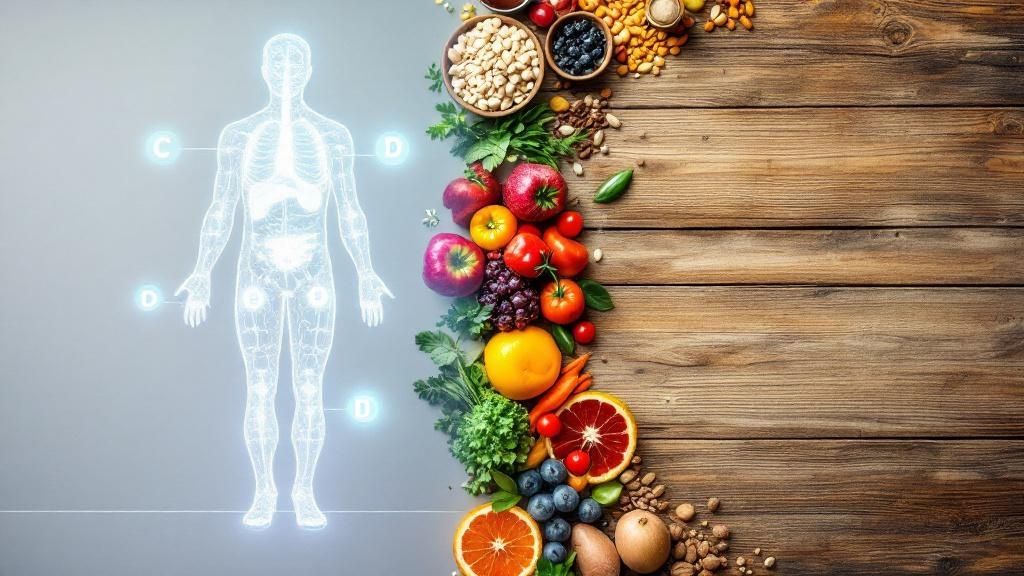
Vitamins and Minerals—How They Improve My Well-Being in the Long Term.
Vitamins and minerals are as fundamental to your health as a foundation is to a house. Think of them as the unsung stars in your body: essential micronutrients that you must obtain from food because your body cannot produce them itself. Yet without them, nothing works—from energy production to immune defense.
Why Vitamins and Minerals Are the Foundation of Your Health

Think of your body as a highly complex structure. Proteins, fats, and carbohydrates are the obvious building blocks—the bricks and mortar. But only vitamins and minerals turn them into a functioning building. They are the invisible yet indispensable helpers working behind the scenes.
They are like the electricians who keep your nervous system running, the structural engineers who ensure stable bones, and the security team that keeps your immune system ready for action at all times. Without these micronutrients, the entire system would start to falter, even if enough larger building blocks were available.
The Silent Heroes in Your Body
Every day, vitamins and minerals quietly perform demanding work. You hardly notice it, but they are involved in thousands of metabolic processes that you take completely for granted.
Here are just a few of their key functions:
- Energy production: B vitamins help release the energy from your food so you feel fit and alert.
- Immune system: Vitamin C, vitamin D, and zinc are the trio that strengthens your defenses and helps keep pathogens at bay.
- Bone health: Calcium, magnesium, and vitamin D work hand in hand to make your bones strong and resilient.
- Cell protection: Antioxidants such as vitamin E and selenium protect your cells from damage caused by free radicals—an important factor in aging and disease prevention.
A deficiency in just one of these nutrients can already have noticeable effects. The tricky part is that the first signs are often nonspecific: persistent fatigue, difficulty concentrating, or a constant susceptibility to infections.
From Feeling to Certainty
Many people live with a mild but chronic deficiency without realizing it. They get used to having lower energy levels and attribute the symptoms to stress or their hectic everyday lives. Yet the cause could be as simple as an inadequate supply of micronutrients.
A balanced diet is the best foundation, of course. However, factors such as stress, intense exercise, or certain diets can quickly increase your needs. You can read more about the prevalence and causes in our article on vitamin and mineral deficiencies in Germany.
It is not about being perfect. It is about developing an awareness of your body’s signals. Understanding how you can support it in a targeted way is the first and most important step toward greater well-being and the foundation for taking your health into your own hands.
The key difference between vitamins and minerals
Although the terms vitamins and minerals are often mentioned in the same breath, they are fundamentally different. You can think of it this way: vitamins are like the intelligent “software” of your body, while minerals form its robust “hardware.” Both are absolutely essential, but their functions could hardly be more different.
Vitamins are organic compounds. This means they come from living nature—that is, from plants and animals. They act as finely tuned regulators that steer countless metabolic processes in the right direction. Without them, the complex processes in our cells simply would not function.
Minerals, on the other hand, are inorganic elements. They originally come from the earth and water. Plants absorb them, and we then eat either the plants or the animals that feed on them. These substances form the material foundation of our bodies, giving them structure and stability.
The two types of vitamins
To make this even more tangible, we divide vitamins into two main groups. The distinction depends on how your body processes and stores them.
- Fat-soluble vitamins (A, D, E, K): As the name suggests, these vitamins require fat to be absorbed by the body. A major advantage is that they can be stored in fatty tissue and the liver. So you do not need to replenish them every day. At the same time, this also carries the risk of an overdose if you take highly concentrated supplements without proper control.
- Water-soluble vitamins (B complex, vitamin C): The body cannot store this group, or can store it only in tiny amounts. Any excess is simply excreted in the urine. In other words, you need to obtain them regularly through your diet to stay consistently well supplied.
This graphic wonderfully illustrates how vitamins and minerals work hand in hand in central areas such as energy production, the immune system, and bone formation.
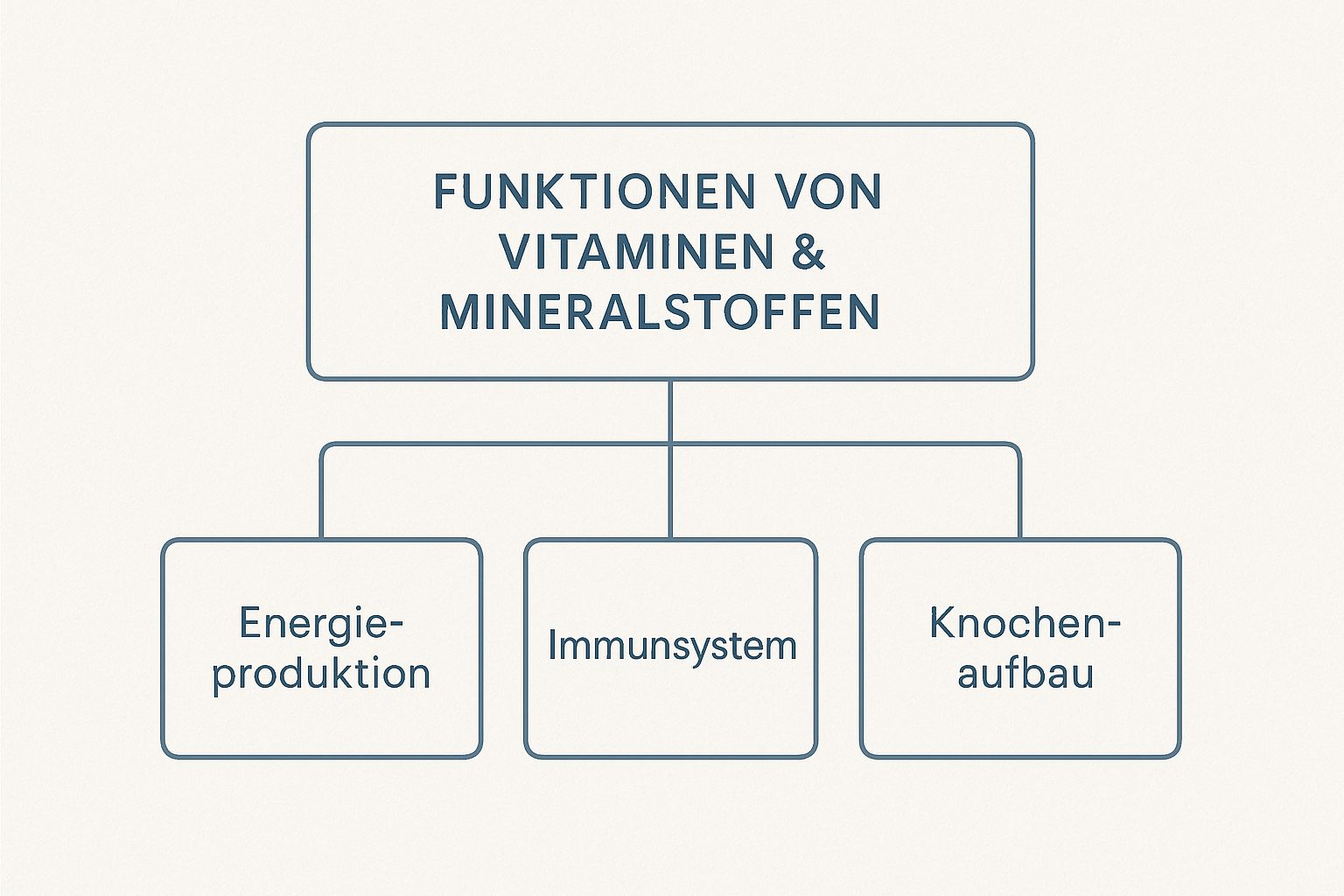
The presentation clearly shows that these nutrients do not act in isolation. They are a well-coordinated team that keeps your body's fundamental functions running.
Macrominerals vs. trace elements
Minerals also have an important distinction based on the amount the body needs. This is not about which ones are more important—they are all essential. It is solely about how much of each your body needs.
- Macrominerals: Your body needs comparatively large amounts of these (more than 50 mg per kilogram of body weight). They are the main building blocks of bones and teeth and also regulate water balance as well as nerve and muscle function. Examples include calcium, magnesium, potassium, sodium, and phosphorus.
- Trace elements: As the name suggests, you only need tiny “traces” of these (less than 50 mg per kilogram of body weight). However, their role is no less important. They are often components of enzymes and hormones and are therefore key players in metabolism. Examples include iron, zinc, selenium, iodine, copper, and manganese.
The crucial point is this: Your body needs a balanced intake of all these micronutrients. The absence of a single element can throw the entire finely tuned system out of balance.
A basic understanding is the first step. If you would like to delve deeper into the subject, our article explains in detail what exactly a nutrient is and what different types there are.
Understanding whether you are truly getting enough of all the important building blocks is the key to greater well-being. Often, subtle deficiencies show up as fatigue or an increased susceptibility to infections. Targeted knowledge about your own body helps you move from mere speculation to purposeful action.
The most important vitamins and their functions in the body
Now that we have clarified the fundamental difference between vitamins and minerals, it is time to take a closer look at the most important vitamins. You can easily think of them as a team of highly specialized professionals in the body, each with a unique, indispensable role. Understanding their roles can help you interpret your body's signals much better.
This is not about stoking fears, but about giving you practical knowledge. You will learn how, through a conscious diet and by recognizing subtle signs, you can actively take charge of your well-being. So let’s take a closer look at the profiles of the most important vitamins and minerals.
Vitamin C: the immune system’s protective shield
Vitamin C, also known as ascorbic acid, is probably the most famous of all vitamins. Most of us immediately think of fighting off colds—and quite rightly so. It is a central building block of a strong immune system because it supports the formation and activity of white blood cells.
But that is far from all. Vitamin C can do much more:
- Antioxidant effect: It is a powerful antioxidant that protects your cells from damage caused by free radicals. Think of it simply as rust protection for your body.
- Collagen production: Vitamin C is essential for the production of collagen. This protein is the basic framework for skin, bones, teeth, and blood vessels, providing the necessary elasticity and strength.
- Iron absorption: It helps the body absorb iron from plant-based foods more effectively—a crucial point, especially for vegetarians and vegans.
A deficiency often manifests as fatigue, increased susceptibility to infections, or bleeding gums. You can find plenty of it in citrus fruits, bell peppers, broccoli, and berries.
Vitamin D: the sun manager for bones and mood
Vitamin D holds a truly special position because our bodies can produce it themselves with the help of sunlight. The problem is that in our latitudes, especially during the darker months, the sun’s strength is often simply not sufficient.
Vitamin D is far more than just a “bone vitamin.” It works similarly to a hormone in the body and is involved in regulating over 2,000 genes. So it plays a role in countless processes, from immune defense to cell division.
Its most important functions include:
- Calcium balance: It controls the absorption of calcium and phosphate in the intestines and their incorporation into the bones. Without enough vitamin D, your body can barely use calcium, which increases the risk of osteoporosis.
- Immune system: Just like vitamin C, it plays a key role in regulating the immune response and helps ward off infections.
- Muscle function: An adequate supply is essential for normal, powerful muscle function.
Typical signs of a deficiency include constant fatigue, muscle weakness, low mood, and an increased susceptibility to infections. Oily fish such as salmon or herring are good dietary sources, but the sun remains by far the most important supplier.
B vitamins: the power plant operators
The B vitamins are a group of eight different vitamins that often work together as what is known as the B complex. They can be described as the central operators of our cellular power plants (the mitochondria), because they are essential for obtaining energy from food.
Let’s take a look at the most important team members:
- Vitamin B1 (thiamine): This “nerve vitamin” is essential for carbohydrate metabolism and the functioning of your nervous system. A deficiency can manifest as difficulty concentrating and fatigue. You can find it in whole-grain products, legumes, and pork.
- Vitamin B12 (cobalamin): Since this vitamin is found almost exclusively in animal products, it is a critical nutrient for vegans. It is urgently needed for blood formation, cell division, and nerve function. The first signs of a deficiency are often exhaustion and neurological symptoms such as tingling in the hands and feet.
- Folic acid (vitamin B9): Folic acid is particularly important for women of childbearing age and during pregnancy, as it is essential for cell division and the healthy growth of the unborn child. A deficiency can lead to anemia. Leafy green vegetables such as spinach and kale are top sources.
The importance of some vitamins is also reflected on store shelves. A market analysis of dietary supplements in Germany showed that vitamin preparations accounted for a full 38.7% of sales in 2022. The top sellers were vitamin C, with 32.8 million packages sold, and vitamin D, with 12.4 million packages. You can read more about market figures and trends in dietary supplements here.
Vitamin A and K: the specialists
To conclude, let’s take a look at two fat-soluble vitamins with very specific functions.
Vitamin A (retinol) is essential for:
- Vision: It is a building block of visual purple in the retina and is therefore indispensable for seeing at dusk and at night.
- Skin and mucous membranes: It keeps our skin and mucous membranes healthy and intact—the first and most important barrier against pathogens.
- Growth: It is involved in numerous growth processes and in the development of cells.
A deficiency can manifest as night blindness and dry skin. You can find it as retinol in animal products such as liver and milk, or as a precursor (beta-carotene) in carrots, sweet potatoes, and spinach.
Vitamin K is the expert for:
- Blood clotting: Without vitamin K, wounds could not heal properly, as it is absolutely essential for the formation of several clotting factors.
- Bone metabolism: Here, it works closely with vitamin D and helps firmly incorporate calcium into the bones.
A deficiency is rare, but it can lead to an increased tendency to bleed. The best sources are green vegetables such as kale, spinach, and broccoli.
This knowledge of the functions of individual vitamins is the foundation for truly understanding your body. If you feel that something is still not quite right despite eating a healthy diet, a targeted analysis can finally provide clarity. The nutrient deficiency tests from mybody-x.com offer you a precise way to determine your individual status and replace speculation with facts.
An overview of the most important minerals and trace elements
After looking at the world of vitamins, we now turn to their equally important partners: minerals and trace elements. They are the quiet heroes working behind the scenes of your health. While vitamins are often the “software” that gives commands, minerals form the tangible “hardware.” They provide your body with structure, stability, and the tools it needs for countless biochemical processes.
You can think of them as a team of highly specialized craftsmen, each with a unique and indispensable task. From building strong bones to transmitting signals in the brain—without them, the entire operation would quickly grind to a halt.
Magnesium: the relaxation manager
Magnesium is probably one of the best-known and most popular minerals—and for good reason. Think of it as your personal “relaxation manager.” It is calcium’s natural counterpart and ensures that your muscles can relax again after tensing.
Its main functions are impressively diverse:
- Muscle and nerve function: It is essential for smooth communication between nerves and muscles. A classic sign of a deficiency is therefore nighttime calf cramps or annoying muscle twitching.
- Energy production: Magnesium is the ignition key for hundreds of enzymes responsible for converting your food into usable energy. If you often feel tired and sluggish, a deficiency could be the reason.
- Mental balance: Because it helps calm the nervous system, it is often referred to as an “anti-stress mineral.” It makes a crucial contribution to normal psychological function.
You can find plenty of magnesium in whole-grain products, nuts (especially almonds and cashews), seeds, and green leafy vegetables. But beware: stress, intense exercise, or certain medications can significantly increase your requirements.
Calcium: the bone builder
Calcium is the mineral found in the greatest quantity in your body. More than 99 % of it is stored in your bones and teeth, perfectly illustrating its role as the supreme “bone builder.” It gives your skeleton the necessary hardness and strength.
But its role goes far beyond that. Calcium is also essential for:
- Signal transmission between nerve cells
- Muscle contraction (the interaction with magnesium is crucial here)
- Blood clotting
- Maintaining a normal heart rhythm
Good sources of calcium naturally include dairy products, as well as green vegetables such as kale and broccoli, and calcium-rich mineral water. But it is important to know that without its helpers, vitamins D and K2, the body can hardly incorporate calcium effectively into the bones.
Iron: the oxygen taxi
Think of iron as your body’s “oxygen taxi.” As the core component of the red blood pigment hemoglobin, it grabs oxygen in the lungs and carries it to every single cell in your body. The equation is simple: Without oxygen, there is no energy.
Iron deficiency is one of the most common nutrient deficiencies worldwide, particularly among women of childbearing age. The symptoms often develop gradually but are clear: constant fatigue, paleness, shortness of breath even with light exertion, and difficulty concentrating.
In addition to transporting oxygen, iron is also crucial for a strong immune system and our cognitive fitness. The body absorbs animal-based iron (heme iron) from meat and fish most effectively. Plant-based iron, such as that found in legumes or whole grains, is best combined with vitamin C to improve absorption. Since the body regulates its iron balance very precisely, it is important to know your iron status. If you want to learn more about the significance of the iron-storage protein, you can find valuable information in our article about ferritin levels and what they indicate.
Zinc: the wound-healing expert
Zinc is a true all-rounder among trace elements. You could call it the “wound-healing expert” and, at the same time, the “manager of the immune system.” It is involved in the work of over 300 enzymes and therefore plays a central role in almost all metabolic processes.
Zinc’s core functions include:
- Immune system: Without zinc, our immune cells cannot develop and function properly. A deficiency often manifests as increased susceptibility to infections.
- Skin and hair: Zinc is crucial for cell division and therefore for healthy skin, rapid wound healing, and the growth of hair and nails.
- Fertility: It contributes to normal fertility and is important for maintaining stable testosterone levels.
Good sources of zinc include meat and cheese, as well as plant-based sources such as oats and lentils. Since the body cannot store zinc well, regular intake through food is particularly important.
Selenium and iodine: the thyroid specialists
These two trace elements are an inseparable team and absolutely essential for a healthy thyroid. You can think of the thyroid as the accelerator pedal of metabolism—it regulates how quickly or slowly your body burns energy.
Iodine is the central building block of thyroid hormones. A deficiency can lead to an underactive thyroid and visible enlargement of the thyroid gland (goiter). Selenium, in turn, is needed to convert these hormones into their active form in the first place. At the same time, it protects the sensitive thyroid tissue from oxidative stress.
The sales figures also show how important these micronutrients are for many people. In Germany alone, 225 million packs of food supplements were sold in 2018, with vitamins and minerals accounting for around two-thirds of sales. Magnesium led the mineral category, closely followed by calcium and zinc.
These insights make it clear how crucial a good supply of vitamins and minerals is for your daily well-being. Taking a precise look at your personal needs can help you move from simply guessing to taking targeted action and build a solid foundation for your health.
When you should take a closer look at your nutrient intake

A balanced diet lays the foundation for a good supply of vitamins and minerals. Of course. But our lives rarely go according to plan—they are dynamic and constantly changing. Certain stages of life, personal choices, or periods of high stress can significantly disrupt your nutrient needs.
Understanding when your body needs special attention is an important step toward self-care and prevention. It is not about looking for problems, but about consciously supporting your body so it remains capable and healthy.
Situations in which your body needs more
There are circumstances in which the body demonstrably needs more nutrients or there is a higher risk of inadequate intake. Do you recognize yourself in one of these situations? Then taking a closer look at your levels could be particularly revealing.
- Pregnancy and breastfeeding: During this special time, your body achieves incredible things. The need for nutrients such as folic acid, iron, iodine, and calcium rises sharply to optimally support not only you but also your growing child.
- Vegan and vegetarian diets: A purely plant-based diet can be extremely healthy, but it requires a little more planning. Critical nutrients found almost exclusively in animal products include vitamin B12, as well as iron, zinc, calcium, and long-chain omega-3 fatty acids.
- Competitive athletes: Those who train regularly and intensively not only burn more calories but also lose important minerals such as magnesium, zinc, and iron through sweat. At the same time, the body needs more building blocks for muscle recovery and energy production.
- Seniors: Metabolism also changes with age. The body may no longer absorb or produce certain nutrients, such as vitamin B12 and vitamin D, as effectively. Loss of appetite or chewing problems may also make it more difficult to consume enough.
Your lifestyle is the decisive factor. This is not about judging you, but about honestly assessing whether your body currently needs more support than usual.
From suspicion to certainty
Chronic stress, gastrointestinal disorders, or the long-term use of certain medications can also interfere with nutrient absorption. Do you often feel tired, are you susceptible to infections, or do you simply want to make sure that everything is in good shape? Then simply guessing is not the solution.
The first step is to gain clarity about your personal status. If you would like to learn more about how to determine your individual needs, read our guide on testing for nutrient deficiencies and how to use the results for yourself.
A targeted analysis helps you move from general knowledge to concrete action. Only when you know exactly where a deficiency exists can you address it in a targeted and effective way. This is the key to taking responsibility for your health and safeguarding your well-being in the long term.
From knowledge to action: Why a nutrient test is the next logical step
You now have a good understanding of the key roles vitamins and minerals play in your body. But what if, despite eating mindfully and leading a healthy lifestyle, you often feel tired, unfocused, or simply not at your best? The symptoms are usually nonspecific, and the causes are difficult to identify.
This is exactly where the guessing game begins for many people. Could it be iron? Or is it actually vitamin D? Simply taking supplements without knowing your individual needs is like feeling your way through the fog. It is not only ineffective; in the worst case, it can even backfire. An overdose of certain nutrients can disrupt your body's delicate balance just as much as a deficiency.
The path to clarity leads through precise data
The only logical and truly effective next step is to gain clarity. Instead of continuing to speculate, you can gain precise insights into your body and find out what you are actually lacking. This is the moment when abstract knowledge becomes a concrete, personal action.
We see these tests as a tool for empowerment. They give you the opportunity to take responsibility for your health and take targeted action instead of groping in the dark.
When you know your individual nutrient status, you can optimize your intake in a targeted way that meets your needs. This is the foundation for a personalized health strategy based on facts rather than assumptions.
Your body, your laboratory
A nutrient deficiency test is your personal health assessment. It shows you in black and white where gaps exist in your nutrient supply, giving you back control.
Instead of general recommendations, you get a data-based foundation for your decisions. This enables you to:
- Take targeted action: Replenish only the nutrients your body actually needs.
- Measure progress: Check whether your dietary changes or supplementation are working.
- Act preventively: Identify deficiencies before they develop into serious problems.
Find out your personal status now. With the nutrient deficiency tests from mybody-x.com, you receive the scientifically sound data you need to take charge of your health independently and effectively.
Your most frequently asked questions about vitamins and nutrient tests
Do you still have a few questions before you get started? No problem! Here we briefly and concisely answer what most people want to know about vitamins, minerals, and the appropriate tests. This helps clear up any remaining uncertainties so you can take the next step with confidence.
Can I meet my needs through diet alone?
A balanced, wholesome diet is and remains the best foundation for good nutritional intake. There is no getting around that.
But life does not always follow the plan. During special phases—such as pregnancy, periods of intensive exercise, or stressful times at work—the need for certain nutrients can suddenly increase sharply. With specific eating patterns, such as a vegan or highly restrictive diet, it can also become a real challenge to get everything you need from food alone. In precisely these moments, a targeted test provides valuable clarity.
Are high-dose supplements from drugstores always useful?
Not really. Simply taking a tablet as a blanket measure without knowing what your body is lacking is rarely a good idea. At best, it will have no effect; at worst, it could even be harmful because it can disrupt the balance of nutrients. Think of it like watering with a watering can—much of it lands elsewhere and never reaches where it is needed.
It is much better and safer to specifically replenish what has been proven to be missing. This gives your body exactly the building block it really needs right now.
How does an at-home nutrient deficiency test work?
We developed our tests so that you can perform them yourself easily and discreetly. You collect a small sample—usually a few drops of blood from your fingertip or a saliva sample are sufficient—comfortably at home. No waiting rooms, no stress.
You then send the sample in the prepared envelope to our certified partner laboratory. After a short time, you will receive your detailed, easy-to-understand results report directly online. It shows you at a glance where there are deficiencies, so you can take targeted action immediately.
From knowledge to action—that is the crucial step. Find out with mybody-x.com what your body really needs, and optimize your health based on facts, not mere assumptions. Discover the right nutrient deficiency tests for your individual needs now.



Share now:
What are minerals, and how can they help me?
Symptoms of mineral deficiency: How to recognize your body’s signs