

L-thyroxine Side Effects: Essential Information & Tips for You
What is referred to as a “side effect” of L-thyroxine is often not a classic intolerance at all. Instead, it is usually a clear signal from your body that the dosage is not yet right. Many people affected experience symptoms such as palpitations, constant inner restlessness, or sleep disturbances—and they strikingly resemble the signs of an overactive thyroid. This is no coincidence; it indicates that the dose is probably set too high.
What You Should Know About L-thyroxine Side Effects
If you are taking L-thyroxine or are just starting treatment, it is absolutely essential that you know not only the medication but also its possible side effects. The good news upfront: The vast majority of unwanted effects can be completely avoided through careful, individualized dose adjustment.
This guide is intended to give you a clear and easy-to-understand overview of the most common side effects. You will quickly see why close collaboration with your doctor is essential for minimizing symptoms and maintaining your quality of life. This basic knowledge is the foundation for everything that follows. If you would like to refresh your understanding of the basics, take a look at our overview article on L-thyroxine and how it works.
The following table gives you a quick overview of the most common side effects, sorted by their likelihood.
Quick overview of the most common L-thyroxine side effects
This table summarizes the most common side effects of L-thyroxine and categorizes them by frequency to give you a quick overview.
| Frequency | Side effect | Typical symptoms |
|---|---|---|
| Very common (more than 1 in 10) | Overactive thyroid symptoms | Palpitations, insomnia, inner restlessness, headaches |
| Common (up to 1 in 10) | Nervous system & cardiovascular system | Rapid heartbeat (tachycardia), nervousness, trembling (tremor) |
| Uncommon (up to 1 in 100) | General & skin reactions | Skin rash, hives (urticaria), increased sweating |
| Rare (up to 1 in 1,000) | Gastrointestinal tract & muscles | Diarrhea, vomiting, muscle weakness, muscle cramps |
As mentioned, these symptoms are almost always a sign of an overdose. Adjusting the dose in consultation with the treating physician generally leads to rapid improvement.
How common are the symptoms really?
L-thyroxine is one of the most frequently prescribed medications in Germany—and for good reason, as it treats hypothyroidism very effectively. Although it is generally considered well tolerated, more than 10% of patients experience symptoms such as palpitations, insomnia, and headaches.
With up to 10 % Some users also experience a racing heart and noticeable nervousness. In almost all cases, these reactions are a direct result of an overdose. However, there are other accompanying symptoms that may occur:
- Heart rhythm disturbances and heavy sweating
- Restlessness, muscle weakness, and a fine tremor
- Gastrointestinal problems, especially diarrhea
- Unintentional weight loss (even though the active ingredient is explicitly not suitable for weight loss!)
The body may react this way at the beginning of therapy or when the dose is adjusted. That is why gradual and precise dose adjustment is so incredibly important. You can also find more details about the frequency and types of L-thyroxine side effects at Netdoktor.de. Ultimately, a precise dosage tailored to you is the key to avoiding unwanted effects and ensuring your well-being.
Why the correct dosage is crucial
Regarding L-thyroxine side effects, we need to be very clear about one thing: In most cases, they are not side effects in the classic sense. Rather, they are almost always the direct result of an incorrect dosage. It is either too high or too low.
It is best to think of L-thyroxine as a tailor-made replacement for a hormone that your body can no longer produce in sufficient quantities on its own. This synthetically produced T4 makes up for the deficiency and gets your metabolism moving again. But if you give your body too much of a good thing, the engine essentially runs at full speed all the time. The result: You feel restless and nervous, and your heart pounds in your chest—all typical signs of hyperthyroidism.
The fine line between effectiveness and overdose
Finding the perfect dose requires precise fine-tuning. The range between the optimal dose, which relieves your symptoms, and an overdose that creates new problems is often very narrow. Your individual needs depend on many factors, such as your body weight, age, and even your lifestyle.
That is precisely why the dose-adjustment phase at the beginning of treatment is such a critical time. Your body first has to gradually get used to the hormone supply. For this reason, doctors always start with a low dose and increase it step by step. Even a tiny adjustment of just a few micrograms can have a major impact on your well-being.
What you need to understand: Your body responds to the hormone, not to the medication itself. An overdose of L-thyroxine causes exactly the same symptoms as “true” hyperthyroidism.
Why your body reacts so sensitively
Thyroid hormones are the major regulators in our bodies. They influence almost every cell—from your heartbeat and digestion to your body temperature. If you supply too much L-thyroxine from outside, this delicate system quickly falls out of balance.
The following areas are particularly sensitive to a dose that is too high:
- Cardiovascular system: Overstimulation can lead to a rapid heartbeat, irregular heart rhythms, and elevated blood pressure.
- Nervous system: You may feel constantly restless, shaky, or nervous and be unable to settle down at night.
- Metabolism: Your basal metabolic rate shoots up, which often becomes noticeable through heavy sweating and unintended weight loss.
This knowledge is invaluable. It helps you better interpret your body’s signals and describe precisely what you are feeling when speaking with your doctor. This is the only way you can work together to find the dosage that is exactly right for you.
Symptoms and side effects in detail

To really understand the side effects of L-thyroxine, it is helpful to examine the symptoms systematically. You need to understand that in the vast majority of cases, these are not classic side effects in the sense of an intolerance, but rather the typical signs of an artificially induced overactive thyroid. This happens when the dose is higher than your body currently needs.
The effects can become noticeable in many different areas of the body. A clear structure helps you better interpret your body’s signals and recognize the connections.
Effects on the heart and circulation
The cardiovascular system is often the first to react, and particularly sensitively, when it is effectively overstimulated by too many thyroid hormones. You can think of it as the metabolic engine running permanently at full speed—and you feel that directly in your pulse.
The following symptoms are typical:
- Palpitations or rapid heartbeat (tachycardia): You suddenly perceive your heartbeat as uncomfortably strong or fast, even when resting. Some describe it as feeling as though the heart is “skipping a beat” or pounding up into the throat.
- Blood pressure fluctuations: Because the heart has to pump more forcefully and rapidly to supply the overactive body, blood pressure may rise.
- Tightness in the chest (angina pectoris-like symptoms): A relatively rare but serious sign. The increased oxygen demand of the heart muscle can cause pain or a feeling of pressure in the chest, which is particularly risky for people with pre-existing heart conditions.
You should never take these signs lightly. They require prompt medical evaluation because, over time, this strain poses a risk to your heart.
Effects on the nervous system and psyche
Thyroid hormones are essential not only for the body, but also for our psyche and nervous system. An overdose acts like a constant internal driver that simply does not let you calm down.
This often manifests in the following symptoms:
- Inner restlessness and nervousness: You feel tense, fidgety, or barely able to sit still all the time. General irritability or being “thin-skinned” is also a classic sign.
- Sleep disturbances: Many people affected complain of difficulty falling asleep or waking repeatedly during the night. The body simply cannot enter the necessary state of rest.
- Fine tremor: A slight, involuntary trembling may occur, especially in the hands, and is particularly visible when the fingers are extended.
- Headaches: Persistent headaches, often described as throbbing, can also be a side effect.
These psychological and nervous symptoms can be extremely draining in everyday life. They are a clear sign that the current hormone dose needs to be reviewed and will probably need to be adjusted.
Metabolism, skin, and digestion
Because L-thyroxine directly affects the regulation of the entire metabolism, its effects are particularly wide-ranging here. The body burns energy significantly faster than intended, affecting weight, body temperature, and, of course, digestion.
Examples of these L-thyroxine side effects include:
- Unwanted weight loss: Although your appetite is normal or even increased, the pounds fall away.
- Increased sweating and heat intolerance: You often feel too warm and start sweating at the slightest exertion because your basal body temperature is slightly elevated.
- Hair loss: Hair follicles react very sensitively to hormonal fluctuations. An overdose can therefore lead to diffuse hair loss, meaning hair loss spread across the entire scalp.
- Digestive problems: The accelerated metabolism also stimulates intestinal activity, which can manifest as more frequent bowel movements or even diarrhea.
These symptoms make clear how profound the effects of an incorrect dosage can be. They never affect just one organ, but disrupt the finely balanced equilibrium of the entire body.
Special risks of long-term use

In the vast majority of cases, treatment with L-thyroxine is a lifelong decision. That is precisely why it is so important to keep an eye on the possible long-term risks. These primarily develop when the dose has not been quite optimally adjusted over the years.
You have to imagine it like this: A dose that is permanently too high puts your body into a kind of chronic state of stress. Your metabolism runs at full speed without interruption. You may barely notice this at first, but in the long run, this strain can take its toll and place more stress on certain organs than necessary.
Two areas of the body are particularly vulnerable here: the bones and the cardiovascular system. Regular doctor visits and blood tests are therefore not an unpleasant chore but essential for nipping these risks in the bud.
The risk to your bone health
If the body is flooded with thyroid hormones over a long period, this can throw bone metabolism out of balance. Put simply, more bone tissue is then broken down than newly formed. The result: bone density gradually declines.
This problem particularly affects women after menopause. Their bones are already more fragile due to hormonal changes. Constantly taking too much L-thyroxine acts like an accelerant here and can noticeably increase the risk of osteoporosis—and therefore of painful bone fractures.
Important to know: Around 35 million people in Germany live with a thyroid disorder. An international study has shown that long-term use of L-thyroxine can lead to a significant loss of bone density, particularly in older patients (average age 73)—even when blood values are normal. You can learn more about these important findings at the German Thyroid Center.
Long-term effects on the cardiovascular system
The heart also does not respond well in the long term to being constantly driven. A permanently overstimulated metabolism forces the heart muscle to pump faster and harder continuously than is actually necessary.
This sustained strain is toxic to the cardiovascular system and can significantly increase the risk of serious conditions. These include, above all:
- Atrial fibrillation: One of the most common heart rhythm disorders, particularly in older age.
- Heart failure: The heart's pumping capacity gradually declines due to constant overexertion.
- High blood pressure: The constantly elevated pressure in the blood vessels becomes a chronic strain on the entire system.
It is precisely for this reason that regular blood tests are essential not only at the start of therapy but throughout the entire treatment period. This is the only way you and your doctor can be sure that the dose is always perfectly tailored to your individual needs. Sometimes other health factors also play a role in influencing thyroid function, such as an undetected infection. You can read more about this in our guide on the connection between Helicobacter pylori and the thyroid.
How to avoid side effects through proper use
The good news first: Most L-thyroxine side effects are not inevitable. In fact, with the right dosing strategy and close coordination with your doctor, they can be completely avoided in the vast majority of cases.
The key to success is to gradually acclimate your body to the hormone. In medical terminology, this process is called “gradual dose titration.” Your doctor will therefore start with a very low dose and then carefully increase it every few weeks until your individual target dose is reached.
The right start with the “titration phase”
This gradual increase gives your body the time it needs to adjust to the new hormone levels. This prevents your metabolism from going from zero to one hundred and becoming overwhelmed. This gentle start is particularly important for older patients or people with known heart disease.
Regular blood tests are just as important during this initial phase. The doctor pays particularly close attention to three values:
- TSH (thyrotropin): This hormone from the pituitary gland controls the thyroid. A value within the normal range indicates that the dosage is well adjusted.
- fT3 (free triiodothyronine): This is the biologically active thyroid hormone that acts directly in the cells.
- fT4 (free thyroxine): The precursor of the active hormone, which you take directly with the L-thyroxine tablet.
Taken together, these values provide a precise picture of how your body responds to the medication and allow the dosage to be adjusted precisely.
Tips for daily use
To ensure that L-thyroxine actually reaches where it is needed, a few simple everyday rules are invaluable. The most important rule is: Always take your tablet in the morning, at least 30 minutes before breakfast, on a completely empty stomach and only with a glass of still water.
Why is this so crucial? Quite simply: Certain foods and drinks, such as coffee, dairy products, or a very high-fiber diet, can block the absorption of the active ingredient in the intestine. The same applies to other medications or dietary supplements.
The following graphic illustrates which substances can particularly significantly impair hormone absorption.
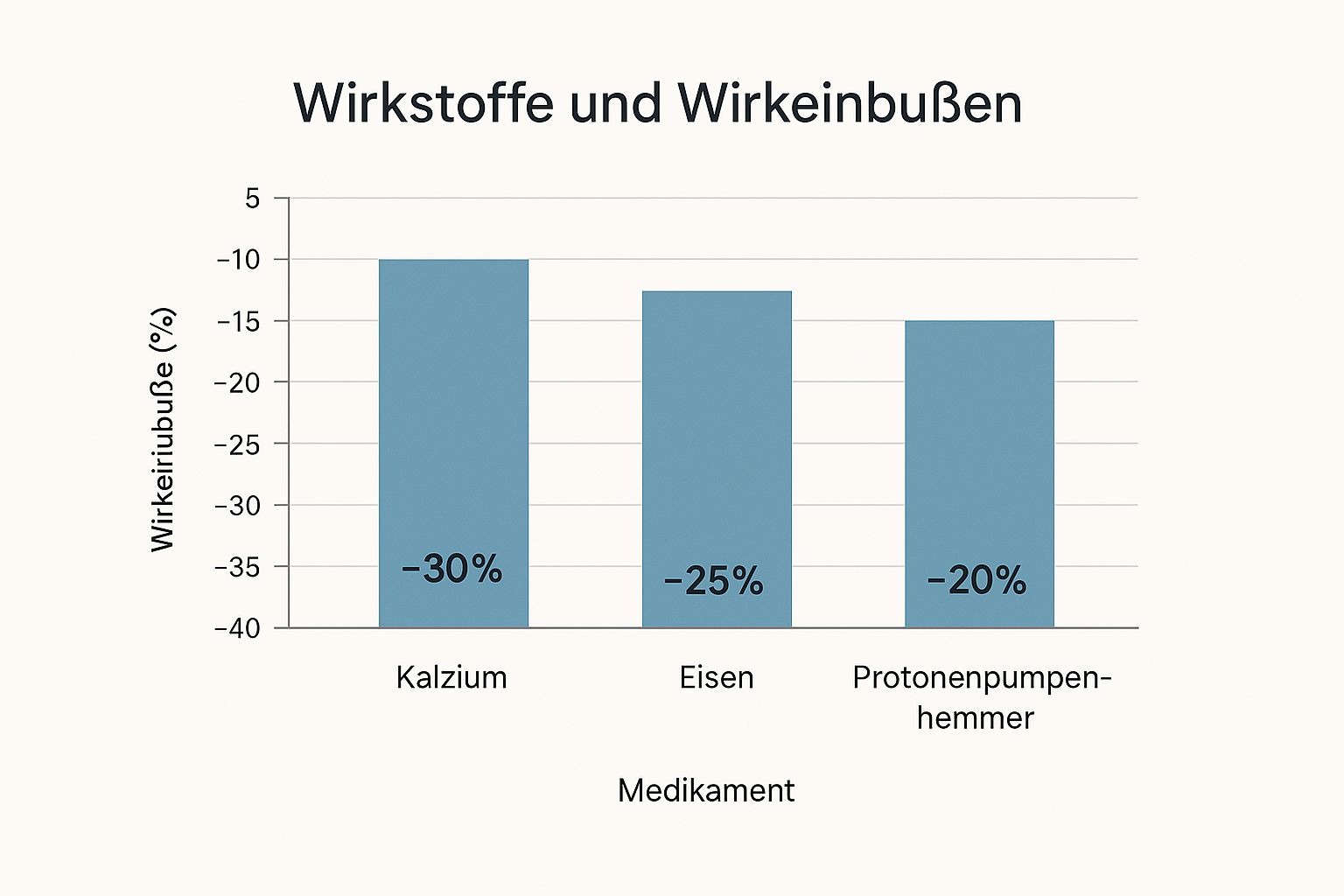
It is clear that calcium or iron supplements can reduce effectiveness by up to 30 %. Therefore, always plan an interval of several hours between taking your thyroid hormone and such products. Iron in particular is essential for healthy thyroid function. If you have a deficiency, the right diet for iron deficiency can provide additional support for your thyroid health.
Many patients initially make the same mistakes, which makes finding the right dosage more difficult. The following overview is intended to help you avoid them from the outset.
Common mistakes when taking it and how to avoid them
This table shows typical mistakes when taking L-thyroxine and provides practical tips for avoiding them to ensure effectiveness and reduce side effects.
| Common mistake | Why it is a problem | How to do it correctly |
|---|---|---|
| Taking the tablet with breakfast | Food, especially fat and fiber, binds L-thyroxine in the intestine and reduces absorption. | Take the tablet on an empty stomach at least 30 minutes before your first meal. |
| Taking it with coffee or milk | The calcium in milk and the ingredients in coffee can form complexes with the active ingredient and make it ineffective. | Use only a glass of still tap water to take the tablet. |
| Taking iron or calcium supplements at the same time | These minerals bind very strongly to L-thyroxine, meaning significantly less hormone reaches the bloodstream. | Leave an interval of at least 2, preferably 4 hours between taking L-thyroxine and these preparations. |
| Adjusting the dose without medical advice | Changing the dose on your own can quickly lead to an overdose or underdose, with corresponding symptoms. | Always discuss any dose change, no matter how small, with your doctor first. |
| Forgotten dose | Irregular use leads to fluctuating hormone levels and can cause symptoms of hypothyroidism to return. | Incorporate taking the medication into your morning routine. A pill dispenser or a phone reminder can help. |
By following these simple but effective rules, you lay the foundation for successful, side-effect-free treatment.
What you can do if side effects occur
If you notice symptoms that could indicate L-thyroxine side effects, the most important thing is to stay calm and act thoughtfully. Panic is a poor adviser right now. The first and crucial step is always to speak with your treating doctor.
Under no circumstances should you stop taking the medication or reduce the dose on your own. A sudden interruption of hormone replacement can plunge your body back into severe hypothyroidism. This would not only bring back the original problems but could even make them worse.
How to prepare for your appointment with the doctor
Good preparation is invaluable for giving your doctor the best possible basis for making a decision. The more precise your information, the faster you can find the cause together and adjust the treatment.
A symptom diary is an incredibly useful tool here. Record daily which symptoms you experience, how severe they are, and what time of day they occur. This gives you an objective basis for discussion.
It is best to document the following:
- Which symptoms exactly? (e.g., rapid heartbeat, inner restlessness, heavy sweating)
- When do they occur? (e.g., in the morning immediately after taking it, in the evening before going to bed)
- How intense are they? (e.g., on a scale of 1 to 10)
- Have there been any other changes? (e.g., in your sleep patterns, appetite, or weight)
These detailed notes help identify patterns and clearly distinguish L-Thyroxin side effects from other possible causes. Sometimes symptoms such as fatigue or difficulty concentrating may also indicate other deficiencies. You can also read our guide on how to identify and treat vitamin B12 deficiency.
What your doctor typically does
Based on what you have described, your doctor will normally order a blood test to check your current thyroid levels (TSH, fT3, fT4). If the suspicion of an overdose-related side effect is confirmed, the logical next step is to adjust the dose.
In most cases, the dose is reduced only slightly, often by just 12.5 or 25 micrograms. Even though that may not sound like much, this small change can make an enormous difference to your well-being. However, it may take several weeks for the new dose to take full effect and for the symptoms to subside. So give your body some time.
Frequently asked questions about L-Thyroxin—explained briefly and clearly
Here you will find answers to the questions we are most frequently asked in practice about L-Thyroxin and its side effects. This section is intended as a quick guide and summarizes the most important points from our guide for you.
Do the side effects of L-Thyroxin disappear on their own?
No, in the vast majority of cases, they do not. The reason is simple: Most symptoms are directly related to the dosage. They are a clear signal from your body that either too much or too little hormone is reaching it.
The symptoms will not subside until your doctor has adjusted the dose and your body has adapted to the new dosage. If you experience L-thyroxine side effects, be sure to speak with your doctor and never experiment with the dosage on your own. A little patience is needed here, as it can take several weeks for hormone levels to stabilize.
Can I gain weight from L-thyroxine?
Weight gain while taking L-thyroxine is rather unusual and is often a warning sign that the dose has been set too low. An underactive thyroid that is not adequately treated slows down the metabolism—and this can lead to weight gain. A dose that is too high, on the other hand, greatly speeds up the metabolism and tends to lead to weight loss.
If you gain weight during treatment, it is important to have your thyroid levels checked by a doctor. This ensures that the dosage is still optimally suited to your individual needs.
What interactions are there with food and medications?
Yes, definitely, and this is a crucial point for achieving stable control and thus avoiding L-thyroxine side effects. Certain substances can significantly interfere with the hormone's absorption in the intestine and substantially weaken its effect.
The most important "interfering factors" include:
- Preparations containing calcium or iron: These minerals are known to bind the hormone in the intestine, preventing it from being fully absorbed by the body.
- Certain stomach-protective medications: So-called proton pump inhibitors in particular can negatively affect absorption.
- Coffee or soy-based products: These can also reduce the active ingredient's bioavailability.
An important practical tip: Always leave an interval of at least 30 minutes before breakfast and several hours before taking the preparations or consuming the foods mentioned. Ideally, take your tablet in the morning immediately after getting up, on an empty stomach, with only a large glass of still water. This ensures the best possible absorption.
Would you like to take a proactive approach to your health and better understand your body? The laboratory tests from mybody®x provide precise insights into your metabolism, nutrient supply, and gut microbiome. Discover how you can specifically support your health and find your personal path to greater well-being with our analyses. Get to know your body at https://mybody-x.com.



Share now:
Your guide to taking L-Thyroxin
Snack recipes – healthy ideas for in between meals