

Your guide to taking L-Thyroxin
Welcome to your ultimate guide to L-Thyroxin. Perhaps you are holding your first prescription in your hands or simply want to understand what this widely used medication does in your body. Don’t worry—we explain everything important here, without complicated medical jargon.
L-Thyroxin is essentially a tailor-made replacement key for your metabolism. It is a synthetically produced thyroid hormone that precisely imitates the function of the body’s own hormone thyroxine (T4). It is used whenever your thyroid can no longer produce enough of it—a condition known as an underactive thyroid or hypothyroidism.
What L-Thyroxin does for your thyroid
L-Thyroxin steps in precisely when your body’s hormonal system has fallen out of balance. Think of your thyroid as your body’s power plant: It produces hormones that influence virtually every cell and keep the engine running.
Your thyroid acts like a director for your entire metabolism. It controls your heartbeat, body temperature, digestion, and energy levels. When its hormones are lacking, these processes run at a bare minimum.
The central role in an underactive thyroid
With an underactive thyroid (hypothyroidism), your body produces too little of these important hormones. You often feel the effects throughout your entire body. Many people affected feel constantly tired, get cold easily, gain weight for no apparent reason, or struggle with a lack of energy. This is where L-Thyroxin comes in:
- It replenishes the deficiency: It replaces the missing T4 hormone, thereby restoring hormonal balance.
- It boosts your metabolism: By normalizing hormone levels, it gets your metabolism moving again.
- It improves your well-being: Symptoms such as fatigue and weight gain can improve significantly, helping you feel more energetic again.
A widespread and important medication
If you have been prescribed L-Thyroxin: You are not alone. L-Thyroxin is one of the most frequently prescribed medications in Germany.
Prescription rates have risen sharply in recent decades. While around 736 million doses were prescribed in 2004, the figure had already exceeded 1.14 billion by 2012. This increase of more than 50% is partly due to changes in the medical reference ranges for laboratory parameters. Learn more in the insights into thyroxine prescribing.
The goal of treatment is to restore your inner balance and help improve your quality of life. Properly adjusted medication can often go hand in hand with an adapted diet to provide additional support for your metabolism. You can also find helpful tips in our guide to losing weight through diet without giving anything up.
How to find your optimal L-Thyroxin dosage
Finding the perfect L-Thyroxin dosage is not a standard process, but rather a fine adjustment that you make together with your doctor. Think of it like adjusting a thermostat: You keep turning it until you reach the perfect temperature for your well-being. That’s exactly how it works with your medication.
The search for the ideal dosage begins at the doctor’s office. Factors such as your body weight, age, and above all, your blood values serve as the basis for the initial assessment. From there, your doctor will gradually adjust the dosage until your body is optimally supplied and you feel balanced again.
The TSH level as your personal compass
The most important lab value along the way is the TSH level (thyroid-stimulating hormone). You can think of it as a kind of messenger from the pituitary gland that tells the thyroid whether or not it should produce more hormones.
- A high TSH level practically screams: “More hormones, please!” This means the thyroid is too sluggish, and the control center in the brain has to call loudly for more output. This indicates an underactive thyroid, and the L-Thyroxin dosage will probably need to be increased.
- A low TSH level, on the other hand, signals: “Stop, that’s enough!” There are already sufficient or even too many thyroid hormones in the blood. The control center reduces its instructions, which is often a sign that the dosage is too high.
That’s why regular blood tests are essential. They help find this delicate balance and ensure that your body receives exactly the amount of hormones it needs to feel well.
The right dosage has been found when your TSH level is in the optimal range and—most importantly—you feel well at the same time. How you feel is at least as important as the lab results themselves.
Taking L-Thyroxin is extremely common, by the way. This is also reflected in the figures: In Germany, L-Thyroxin ranks fourth among the most frequently prescribed medications. This shows how widespread treatment for an underactive thyroid is. At the same time, experts caution that every prescription should be carefully considered to avoid overtreatment. Read more about this in the background on prescribing practices at springermedizin.de.
Listen to your body's signals
Your body is a pretty good indicator and sends clear signals when the dosage is incorrect. Learn to interpret these signs so you can make the right decisions together with your doctor.
The following graphic shows how important taking it correctly—usually in the morning—is for stable hormone levels throughout the day.
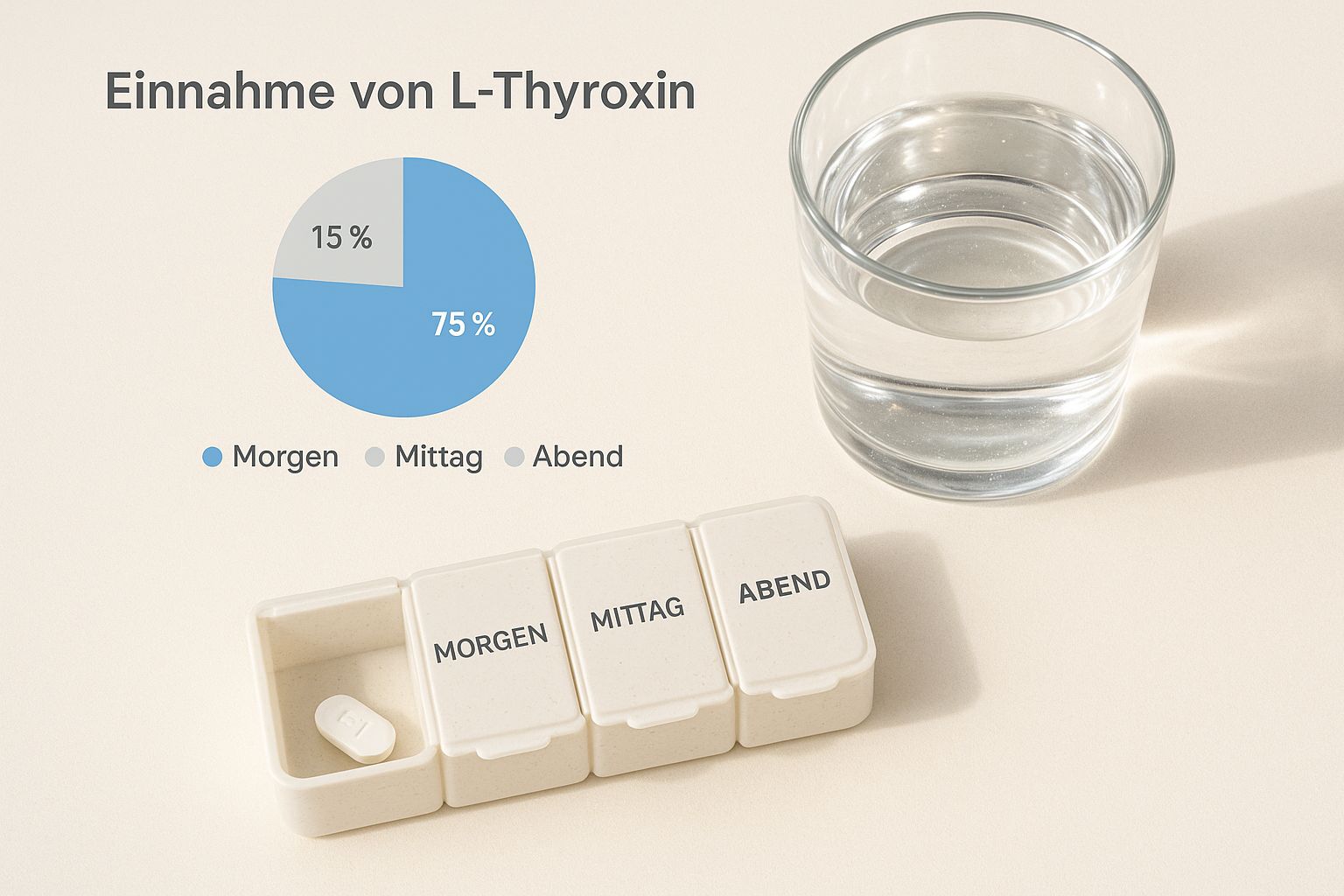
A consistent routine is key. It helps stabilize the effects of L-Thyroxin and supports your body in regaining its balance.
Signs of an incorrect L-Thyroxin dosage
How your body feels is an important gauge. The following table helps you quickly recognize and classify the symptoms of an overdose or underdose.
| Symptom | Possible cause: underdose | Possible cause: overdose |
|---|---|---|
| Heart & circulation | Slow pulse, low blood pressure | Rapid heartbeat, palpitations, high blood pressure |
| Energy level | Constant fatigue, lack of drive | Inner restlessness, nervousness, hyperactivity |
| Weight | Unexplained weight gain | Unexplained weight loss |
| Body temperature | Constantly feeling cold, cold hands/feet | Increased sweating, feeling hot |
| Mental health & sleep | Difficulty concentrating, low mood | Sleep disturbances, irritability, feelings of anxiety |
| Digestion | Constipation | Diarrhea |
| Skin & hair | Dry skin, brittle nails, hair loss | Thin hair, warm and moist skin |
Pay close attention to how you feel and talk to your doctor if you notice one or more of these signs. They provide valuable clues for adjusting your dose perfectly.
Be patient with yourself and your body. Fine-tuning can take several weeks or even months. But the goal is worth it: a stable dosage that gives you back your energy and zest for life.
Managing side effects and interactions safely

Any medication that works can of course also have side effects or interactions. The most important thing is to know about them and understand how to deal with them safely. The good news first: With L-Thyroxin, genuine side effects are rare and almost always occur only when the dose is incorrect.
So if your body is properly adjusted, the treatment is generally very well tolerated. You are only giving your body back what it lacks. Problems usually arise only from an overdose or underdose, which we already looked at in the previous chapter.
Possible side effects caused by an incorrect dose
Signs of an overdose often feel like symptoms of an overactive thyroid. You may feel an inner restlessness, your heart may beat faster, or you may suddenly sweat more. These are clear signals from your body that it is currently receiving too much hormone.
Bone health deserves special attention, especially in the case of long-term overdosing. L-thyroxine is repeatedly discussed in this context because too high a dose can accelerate bone metabolism. A study presented at an American radiology congress provided indications that an overdose could increase the risk of osteoporosis in older people. You can learn more about the background of bone health and L-thyroxine at deutsches-schilddruesenzentrum.de.
The most important takeaway: Side effects from L-thyroxine are almost always a dosage problem. Careful adjustment and regular checkups with your doctor are the best protection against preventing such effects in the first place.
Interactions you should be aware of in everyday life
Much more relevant to your everyday life are interactions with other substances. They can interfere with the absorption of L-thyroxine in the intestines and thus weaken the effect of your medication. Your body then simply does not receive the full dose it actually needs.
Some foods, drinks, and other medications can act like a sponge: They bind the hormone before it can even enter the bloodstream. As a result, it is excreted unused.
Here is a checklist of the most common “troublemakers” you should watch out for:
- Coffee and tea: Your morning hot drink can reduce the absorption of L-thyroxine by up to 40%. You should therefore wait at least 30 to 60 minutes after taking your tablet before drinking coffee or black tea.
- Calcium-rich products: Milk, yogurt, or calcium-fortified plant-based drinks can also block absorption. The same applies to calcium supplements.
- Iron and magnesium supplements: These minerals can also bind L-thyroxine. Keep an interval of at least two, and preferably four, hours.
- Soy products: Soy can impair absorption in the intestine. So a large soy latte right after taking the tablet is not a good idea.
- High-fiber foods: A very high-fiber breakfast, for example with flaxseed or bran, immediately after taking it can also reduce its effectiveness.
To avoid these interfering factors, taking it correctly is essential. The golden rule is: Take your tablet in the morning on an empty stomach, with only a glass of tap water, and then wait at least 30 minutes before having breakfast or consuming other drinks.
How Nutrition Supports Your Thyroid Health
Your L-thyroxine therapy is the foundation for bringing your thyroid hormones back into balance. But you have other strong partners by your side: your diet and your lifestyle. Think of them as a well-coordinated team that ensures your medication can work optimally and that your body gets everything it needs for healthy hormone function.
This section is, so to speak, your personal toolbox. Here you will learn how to specifically support your thyroid health with the right nutrients. It is about providing your body with the building blocks it needs to produce thyroid hormones properly and—very importantly—to activate them as well.
The Three Musketeers for Your Thyroid
Certain micronutrients play an absolutely central role in the theater of your thyroid hormones. Without them, production is sluggish, or the hormones cannot do their job properly. Think of iodine, selenium, and zinc as the three most important employees in your hormone factory.
-
Iodine: This is the fundamental building block for the thyroid hormones T4 and T3. Without iodine, your thyroid simply cannot produce hormones. Good sources include sea fish, seaweed, and iodized table salt.
-
Selenium: This trace element is the activator. It helps convert the storage hormone T4 into the active hormone T3. It also protects the thyroid from oxidative stress that occurs during hormone production. You can find plenty of it in Brazil nuts, fish, meat, and eggs.
-
Zinc: Zinc is the third member of the team and also supports the conversion of T4 into T3. It is also involved in regulating TSH levels. It is found in oats, lentils, beef, and pumpkin seeds.
A deficiency in these nutrients can impair thyroid function, even if you take L-Thyroxine. A balanced diet ensures that your hormone production and utilization function optimally.
So targeted nutrient intake is not just a "nice-to-have," but a decisive factor in your well-being. Here is a brief overview of which other nutrients also play a role:
Important Nutrients for Your Thyroid
An overview of key vitamins and trace elements, their function, and the foods in which they are found.
| Nutrient | Function for the thyroid | Good food sources |
|---|---|---|
| Iron | Important for hormone production and the conversion of T4 to T3. | Red meat, lentils, spinach, pumpkin seeds |
| Vitamin D | Plays a role in regulating the immune system (important in Hashimoto’s). | Fatty fish, egg yolk, mushrooms, sunlight |
| Vitamin B12 | A deficiency is more common among thyroid patients. | Meat, fish, dairy products, eggs |
| Magnesium | Supports the conversion of T4 to T3 and may help with fatigue. | Nuts, seeds, whole-grain products, leafy green vegetables |
| Tyrosine | An amino acid that is another building block for thyroid hormones. | Meat, fish, eggs, nuts, beans |
Remember: It’s all about balance. A varied diet rich in these nutrients lays the best foundation.
Myths and Facts About Nutrition
All kinds of myths circulate online, especially when it comes to nutrition for thyroid problems. One of the most persistent is the advice to completely avoid cabbage vegetables such as broccoli, cauliflower, or kale. The reason: They contain so-called goitrogens, substances that supposedly inhibit iodine absorption.
The truth is, you would have to eat huge amounts of raw cabbage for this effect to be noticeable at all. As soon as you cook or steam the vegetables, these substances lose much of their effect. So eating cabbage vegetables in normal amounts is not only safe, but actually very healthy thanks to their many vitamins and fiber.
To dive deeper into these connections and get practical tips, read our detailed article on nutrition for hypothyroidism.
More Than Just Food on Your Plate
Your thyroid health depends not only on what you eat, but also on your lifestyle. Chronic stress and poor sleep are two major adversaries of a stable hormonal system.
Stress causes the release of the hormone cortisol, which can interfere with the conversion of T4 into active T3. This means that although you take your L-Thyroxin, your body may not be able to use it optimally. So find ways to help you relax—whether that is yoga, a walk in nature, or meditation.
Good sleep is also essential. At night, your body regulates its hormone production. Maintain a regular sleep routine and a relaxing evening routine. A holistic approach that considers nutrition, stress management, and sleep is the true key to feeling completely well with L-Thyroxin.
L-Thyroxin during pregnancy, breastfeeding, and old age
Your life is constantly changing—and so is your body. During special phases such as pregnancy, breastfeeding, or old age, your hormonal balance adapts. This also means that your L-Thyroxin dose may need to be readjusted. Understanding these connections gives you the confidence to take an active role in your well-being.
Your body’s needs are not set in stone, and a dose that has been established once is not an inflexible rule. It is better to view L-Thyroxin therapy as support that adapts flexibly to your life.
L-Thyroxin during pregnancy
Pregnancy is a tremendous task for your body, during which hormone metabolism runs at full speed. The need for thyroid hormones can increase by up to 50 %. The reason is simple: you are supplying not only yourself but also your unborn child. Its own thyroid gland only gradually begins working from the 12th week of pregnancy.
Until then, your baby is completely dependent on your hormone supply. These hormones are absolutely crucial for the healthy development of its brain and nervous system.
A well-regulated thyroid is essential during pregnancy. That is why frequent blood tests—about every four to six weeks—are indispensable. This is the only way your doctor can adjust the L-Thyroxin dose in time to meet the increasing need.
Maintaining stability while breastfeeding
Even after giving birth, your hormonal system is still changing. During breastfeeding, however, the need for L-Thyroxin usually returns to the pre-pregnancy level. Stable regulation is especially important now so that you have the energy you need for the demanding but wonderful time with a newborn.
And don’t worry: only tiny amounts of L-Thyroxin pass into breast milk, and it is completely safe for your baby. Still, talk to your doctor to adjust the dose correctly after giving birth and schedule follow-up appointments.
Adjustments in advanced age
Many processes in the body change over the years. Metabolism often slows down, and the way hormones are processed can also change. This may mean that the L-thyroxine dose that was perfect for you for years suddenly becomes too high as you get older.
In fact, the need for thyroid hormones often decreases slightly with age. A dose that is too high could then increase the risk of cardiac arrhythmias or reduced bone density. Regular monitoring of thyroid levels is therefore crucial in old age as well, to avoid an overdose and reduce the dose if necessary. Naturally, an adapted lifestyle also plays an important role, as you can read in our articles about longevity experiences.
No matter what stage of life you are in, the key to success is close cooperation with your doctor. Together, you can ensure that your L-thyroxine treatment is always optimally tailored to your body’s current needs.
Frequently asked questions about taking L-thyroxine
The same questions come up again and again in everyday life with L-thyroxine—often the very ones that did not occur to you during your conversation with your doctor. That’s why we’ve collected the most common ones for you and provide clear, easy-to-understand answers that you can put into practice right away.
This section is designed to give you peace of mind and clear up the small uncertainties that can arise when taking your medication. From a forgotten tablet to your next holiday trip, you’ll find everything you need to know here.
What happens if I forget to take my tablet?
It happens to the best of us and is generally no cause for concern. L-thyroxine has a long half-life, which means that the active ingredient remains active in your body for several days. Forgetting it just once will not immediately throw your hormone balance out of order.
Here’s what to do:
- Noticed on the same day: If you notice it in the morning, you can simply take the missed dose. The only important thing is that you have not eaten anything for the past two hours and remain fasting for at least 30 minutes after taking it.
- Only noticed the next day: Simply take your normal dose at the usual time the next morning. You should under no circumstances swallow twice the amount to make up for the missed dose. This could quickly lead to symptoms of an overdose, such as a racing heart.
Can I take my L-thyroxine tablet in the evening as well?
The standard recommendation is clear: take it in the morning on an empty stomach. The reason is simple—it allows the active ingredient to be absorbed by the body most effectively. However, studies show that taking it in the evening can also be a good alternative if it fits better into your daily routine.
When taking it in the evening, the interval since your last meal is crucial. Ideally, three to four hours should pass in between. However, always discuss such a change with your doctor first so that your levels remain stable and can be monitored.
How should I manage L-thyroxine when traveling?
Don’t worry, traveling with L-thyroxine is not a problem at all, even across time zones. A little planning is all it takes. It’s best to always pack a sufficient supply of your tablets in your carry-on luggage—just in case your suitcase gets lost.
For small time differences of a few hours, you can simply maintain your usual routine. For larger time changes, such as when traveling overseas, just adjust your medication schedule to the new local time. So take your tablet as usual with breakfast at your holiday destination. The body can easily cope with a one-time shift of a few hours.
What should I do if I have a stomach bug?
If you have to vomit or have severe diarrhea, the absorption of L-thyroxine may indeed be impaired. So it is quite possible that your body cannot fully absorb the tablet.
If the symptoms last only one or two days, they are usually not a cause for concern. However, if you continue to experience them for longer, be sure to speak with your doctor. It may be advisable to have your thyroid levels checked afterward to make sure your hormone levels are still within the normal range.
Do you have more questions about this or other health topics? In our FAQ section, you’ll find answers to many frequently asked questions that may help you.
mybody-x.com supports you on your journey toward a better understanding of your body. With our scientifically based at-home tests, you can check and specifically optimize your nutrient supply to best support your thyroid health. Discover the possibilities now at https://mybody-x.com.



Share now:
What symptoms did you have with Helicobacter? The 7 most common signs explained
L-Thyroxin Side Effects: Important Information & Tips for You