

Why measure body fat percentage? Manage your health precisely
Many people rely on the scale or BMI to assess their health. However, these methods do not distinguish between muscle and fat mass, which can lead to misleading conclusions. Body fat percentage provides more accurate insight into your body composition and helps you assess health risks more effectively. This article explains why measuring body fat percentage is important, which methods are available, and how to use the results to achieve your fitness and health goals effectively.
Table of contents
- Why is measuring body fat percentage more important than weight or BMI?
- Health risks of inaccurate assessment: What body fat percentage reveals
- Overview of body fat measurement methods: Pros and cons compared
- Reference ranges and individual interpretation of body fat percentage
- How to use body fat percentage measurements for personalized nutrition and training plans
- Discover personalized health with Mybody®x
- Frequently asked questions
Key findings
| Point | Details |
|---|---|
| More precise body analysis | Body fat percentage distinguishes between fat and muscle mass more accurately than BMI or weight. |
| Assessing health risks | It helps assess the risks of diabetes, heart disease, and hormonal disorders more accurately. |
| Different measurement methods | BIA, calipers, DEXA, and other methods offer varying levels of accuracy and cost. |
| Personalized adjustments | Regular measurements enable personalized nutrition and training plans. |
| Trends matter more than individual readings | Long-term observation shows genuine progress; individual fluctuations are normal. |
Why is measuring body fat percentage more important than weight or BMI?
Most people use the scale or BMI to assess their health. However, these measures have significant limitations. BMI does not take into account whether your weight consists of muscle or fat. A muscular athlete can have the same BMI as someone with a high body fat percentage, even though the health implications are completely different.
Body fat percentage is measured to provide a more precise picture of your body composition. It shows you exactly how much of your body weight consists of fat mass and how much consists of muscle, bone, and water. This differentiation is crucial when tracking your training progress or seeking to optimize your health.
The benefits of measuring body fat compared with simply weighing yourself:
- You can recognize genuine fitness progress even when the scale remains unchanged
- You can track muscle gain and fat loss separately
- You gain the foundation for personalized nutrition tailored to your body composition
- You avoid misinterpretations caused by water retention or muscle mass
Pro tip: Use body fat measurement as a motivational tool. When you see that your body fat percentage is decreasing while muscle mass remains stable, you know that your training plan is working, even if your weight barely changes.
Regularly measuring your body fat percentage gives you control over your health again. Instead of letting a number on the scale frustrate you, you understand what is actually happening in your body. This enables you to adjust your nutrition and training strategies precisely and achieve long-term success.
Health risks caused by inaccurate assessment: what body fat percentage reveals
An excessively high or low body fat percentage carries significant health risks that are often underestimated. While the scale only shows you a total number, your body fat percentage reveals whether your body is in a healthy balance or whether action is needed.
With an excessively high body fat percentage, the risks of hypertension, type 2 diabetes, and cancer increase significantly. Visceral fat is particularly dangerous because it accumulates around the internal organs. It produces pro-inflammatory messengers and disrupts metabolism. This fat cannot be identified simply by weighing yourself, but only through targeted body fat and circumference measurements.
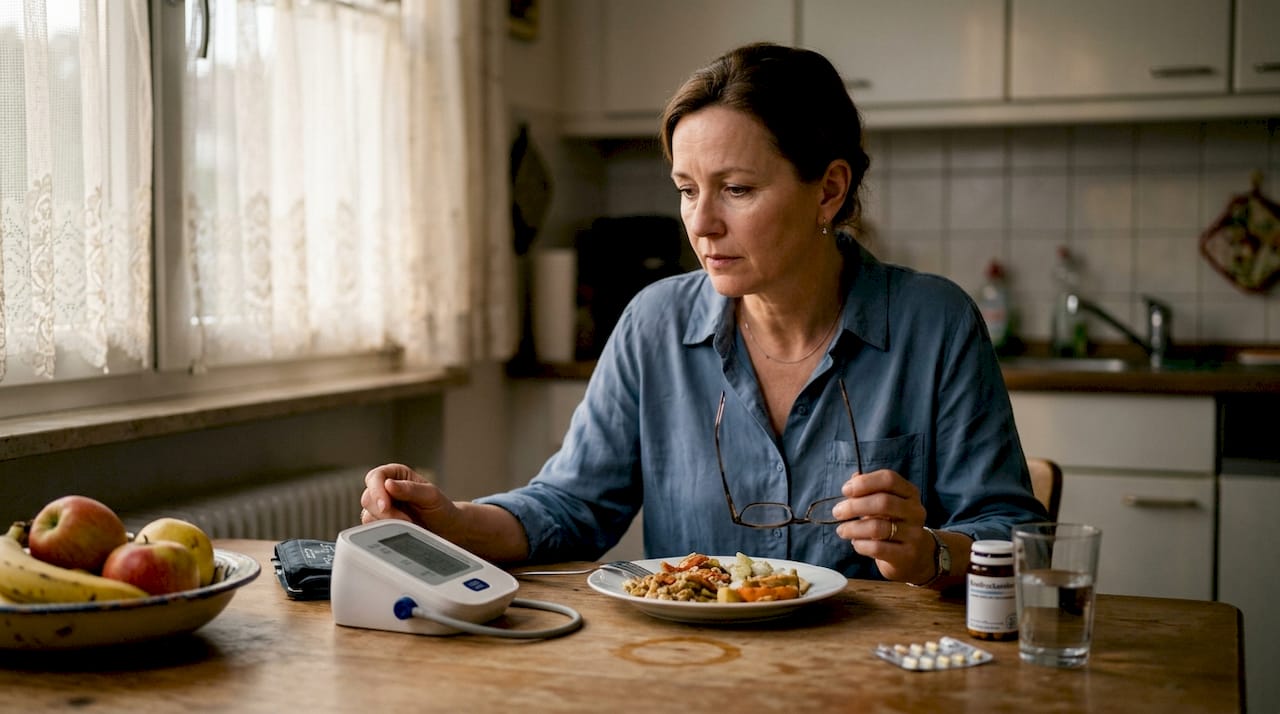
However, having too little body fat can also be problematic. If your body fat percentage falls below the essential threshold, hormonal disorders and a weakened immune system may result. Women need at least 12% body fat for normal hormone production, while men need around 7%. If you fall below these levels, menstrual disorders, bone loss, and increased susceptibility to infections may occur.
Health risks at a glance:
- Cardiovascular disease caused by an increased amount of visceral fat
- Insulin resistance and type 2 diabetes due to chronically high body fat
- Increased risk of cancer, particularly hormone-dependent cancers
- Hormonal disorders caused by an excessively low body fat percentage
- Weakened immune system and increased susceptibility to injury
Men and women have different risk profiles. Men tend to store fat around the abdomen, which increases the risk of cardiovascular disease. Women tend to store fat around the hips and thighs, which is less problematic metabolically. Nevertheless, both sexes benefit from regular body fat measurements to understand their individual risks.
Pro tip: Combine body fat measurement with measuring your waist circumference. A waist circumference over 94 cm for men and over 80 cm for women indicates increased visceral fat, even if total body fat percentage is still within the normal range.
Knowing your body fat percentage precisely allows you to identify health risks early and take corrective action. Combining regular measurements with personalized nutrition helps you stay within a healthy range and remain fit in the long term.
Overview of body fat measurement methods: advantages and disadvantages compared
There are several methods for measuring your body fat percentage. Each has specific advantages and disadvantages regarding accuracy, cost, and practical applicability. Choosing the right method depends on your goals, budget, and desired level of precision.
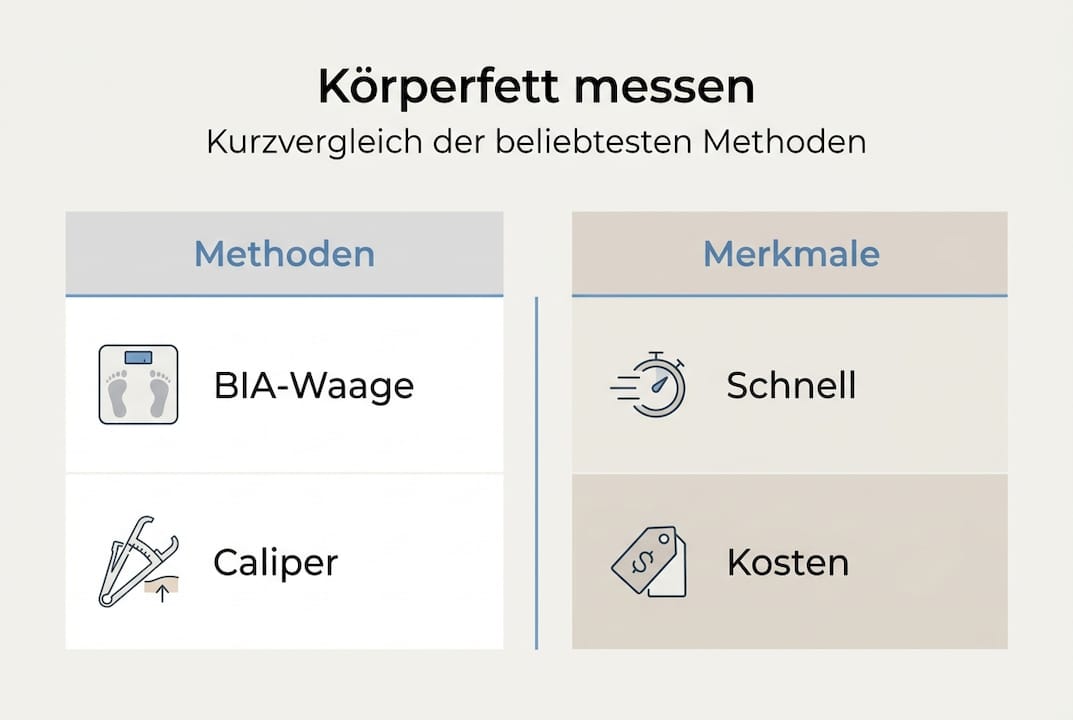
DEXA is the gold standard but expensive, while BIA is fast and affordable but can become inaccurate with fluctuations in hydration. Bioelectrical impedance analysis (BIA) sends weak electrical impulses through your body and measures resistance. Fat tissue conducts electricity less effectively than muscle tissue, which is used to calculate body composition. This method is integrated into many home scales and is easy to use.
The caliper method uses a special instrument to measure skinfold thickness at various points on the body. Body fat percentage is calculated from these measurements. This method is inexpensive and portable but requires practice to produce consistent results. Accuracy depends heavily on the experience of the person taking the measurements.
| Method | Accuracy | Cost | Availability | Effort required |
|---|---|---|---|---|
| BIA scale | Moderate | Low | At home | Very low |
| Calipers | Moderate | Very low | Anywhere | Moderate |
| DEXA | Very high | High | Laboratory/Clinic | Low |
| Hydrostatic weighing | High | Moderate to high | Specialized facilities | High |
| Ultrasound | High | Moderate | Gyms/Medical practices | Moderate |
DEXA scans (Dual-Energy X-ray Absorptiometry) are considered the gold standard. They provide precise data on fat, muscle, and bone mass and even show fat distribution throughout the body. The drawback is the high cost of €50 to €150 per scan and limited availability.
Hydrostatic weighing is based on the principle of water displacement. You are weighed underwater, and your body fat percentage is calculated from your body density. This method is very accurate but time-consuming and available only at specialized facilities.
How to choose the right method:
- Determine your main goal: BIA is sufficient for monitoring trends, while DEXA is better for precise baseline values
- Consider your budget: Calipers and BIA are inexpensive, while DEXA and hydrostatic weighing cost more
- Check availability: BIA scales are available everywhere, while DEXA is only available in laboratories
- Consider the measurement frequency: Home devices are more practical for frequent measurements
Pro tip: If you use a BIA scale, always measure at the same time of day, on an empty stomach, and after using the restroom. Avoid measuring after exercise or when dehydrated, as this can distort the results.
For most people who want to improve their fitness, a combination makes sense. Use a BIA scale for regular trend measurements at home and get a DEXA scan every 6 to 12 months for a precise assessment of your current status. This combines practical everyday measurements with scientific accuracy, allowing you to track your progress optimally. The combination with DNA analyses can provide additional insights into your genetic predispositions.
Normal values and individual interpretation of body fat percentage
After measuring your body fat percentage, you are probably asking yourself: Is my value normal? The answer is not that simple, because normal values vary depending on age, sex, and individual goals. Long-term development is more important than a single value.
Normal values for men aged 20–39 are 8–19%, and 21–32% for women. The minimum essential body fat percentage is above 7% for men and above 12% for women. These minimum amounts are necessary for normal bodily functions such as hormone production, organ protection, and temperature regulation.
| Age group | Men (normal) | Men (athletic) | Women (normal) | Women (athletic) |
|---|---|---|---|---|
| 20–39 years | 8-19% | 6-13% | 21-32% | 14-20% |
| 40–59 years | 11-21% | 7-15% | 23-33% | 15-22% |
| 60+ years | 13-24% | 9-17% | 24-35% | 16-24% |
This table provides guidance, but individual factors play a major role. Your genetics influence where and how quickly you store fat. Some people naturally have a lower body fat percentage, while others have a higher one, without this automatically indicating health problems.
Instead of fixating on a fixed target value, you should monitor trends. Is your body fat percentage decreasing continuously over several weeks while you feel good and remain capable of performing well? Then you are on the right track. Is the value stagnating despite exercise and dietary changes? Then it is time to adjust your strategy.
Factors that influence your body fat percentage:
- Genetic predisposition to fat distribution and metabolic rate
- Hormonal balance, particularly testosterone, estrogen, and cortisol
- Hydration status, which affects BIA measurements
- Training status and muscle mass
- Eating habits and calorie balance
- Sleep quality and stress levels
Pro tip: Combine body fat measurements with other health markers such as waist circumference, blood pressure, and blood glucose levels. This holistic view gives you a more complete picture of your health than a single body fat reading.
The distinction between subcutaneous fat (under the skin) and visceral fat (around the organs) is particularly important. Two people can have the same overall body fat percentage but completely different health risks, depending on where the fat is located. That is why additional measurements such as waist circumference are so valuable.
For most health-conscious people, the goal is not to achieve the lowest possible body fat percentage, but to find a sustainable, healthy range. This is often in the middle of the normal range and can be maintained long term without extreme diets or excessive training. If you want to lose weight in specific areas, you should set realistic interim goals and document your progress regularly.
How to use body fat measurements for personalized nutrition and training plans
Measuring your body fat percentage is only the first step. The real benefit lies in using this data to make specific adjustments to your nutrition and training. Regular measurements show you whether your current strategy is working or whether you need to make adjustments.
Through regular body fat measurements, you can implement personalized nutrition and training, for example by combining a calorie deficit with strength training to lose fat while preserving muscle. If you find that your body fat percentage is decreasing while your muscle mass remains stable or even increases, you know that your calorie deficit is appropriately sized and your training is effective.
If your body fat percentage does not decrease despite dieting, there may be several reasons. Your calorie deficit may be too small, or you may be losing muscle mass instead of fat because your protein intake is too low. Measuring your body fat helps you identify such issues early and take corrective action.
Practical recommendations for using your measurement data:
- Keep your calorie deficit moderate (300–500 kcal per day) to avoid muscle loss
- Incorporate strength training at least three times a week to maintain muscle mass
- Ensure adequate protein intake (1.6–2.2 g per kg of body weight)
- Measure your body fat percentage every 4–6 weeks under the same conditions
- At the same time, document your nutrition and training performance for better correlations
Pro tip: Use tracking apps to record body fat percentage, weight, measurements, and training performance. After a few weeks, you will recognize patterns that show you which nutrition and training strategies work best for you.
Personalized nutrition is based on your individual body composition. For example, if you have a high body fat percentage along with low muscle mass, you should focus on strength training and a protein-rich diet. If you already have good muscle mass and moderate body fat, you can focus on fine-tuning.
Hydration plays an important role, especially with BIA measurements. Dehydration can lead to falsely elevated body fat readings, while water retention can lower them. Therefore, always measure under comparable conditions: in the morning after waking up, after using the restroom, and before breakfast.
Combining regular body fat measurements with personalized nutrition maximizes your chances of success. You no longer follow general recommendations, but a plan tailored to your body and your progress. This not only increases effectiveness but also your motivation, because you can see tangible results.
Discover personalized health with mybody®x
Now that you understand how valuable measuring body fat percentage is for your health, you may be wondering how to make the most of these insights. mybody®x offers scientifically backed solutions that go far beyond simple body fat measurements.
DNA analyses reveal how your body responds to different nutrients and which diet is genetically best suited to you. This information perfectly complements your body fat measurements and enables you to tailor your diet even more precisely. Instead of general diet plans, you receive personalized recommendations based on your individual genetics and body composition.
Combining regular body fat measurements with genetic analysis shows you not only where you stand, but also which strategies are most likely to work for you. Whether you want to lose weight effectively, build muscle, or simply optimize your health, the personalized reports provide clear recommendations for nutrition, training, and lifestyle.
Frequently asked questions
How often should I measure my body fat percentage?
Experts recommend taking measurements every 4 to 8 weeks under consistent conditions. More frequent measurements can be misleading due to natural fluctuations, while longer intervals may cause you to miss important trends. It is essential to measure at the same time of day, in the same hydration state, and using the same method each time. This allows you to reliably identify real changes in your body composition.
Which measurement methods are suitable for use at home?
For home use, BIA scales and calipers are the most suitable options. BIA scales are easy to use and provide quick results, while calipers are affordable and portable. Both methods require consistent measurement conditions for reliable trend tracking. If you are willing to invest some time in practice, the caliper method offers a good balance between accuracy and cost.
How should I interpret fluctuations in body fat percentage?
Fluctuations of 1 to 2 percentage points are completely normal and can be caused by hydration, food intake, menstruation, or training intensity. It is important to look at long-term trends over several weeks or months rather than individual measurements. Document additional factors such as sleep quality, stress, and training volume to better assess fluctuations. A single elevated reading is no cause for concern, but a sustained upward trend should motivate you to take action.
Are there low-risk target values for body fat percentage?
Normal values range from 8 to 19 percent for men and from 21 to 32 percent for women, depending on age. Values that are too low—below 7 percent for men or 12 percent for women—carry risks such as hormonal disorders and a weakened immune system. Values that are too high increase the risk of diabetes, cardiovascular disease, and certain types of cancer. Individual assessment should always take additional factors such as fat distribution, waist circumference, and general health markers into account, as normal values are only guidelines.
Recommendation
- Genetic test for weight loss: My honest experience – Is it worth it? – mybody®x
- Metabolic analysis for weight loss: Your path to your goal weight – mybody®x
- Risk factors for weight management: Genetics and strategies 2026 – mybody®x
- Optimize your diet based on test results: Step-by-step guide – mybody®x


Share now:
Metabolism and weight loss: Your guide for 2026
Benefits of Home Tests: Overview for Switzerland 2026