
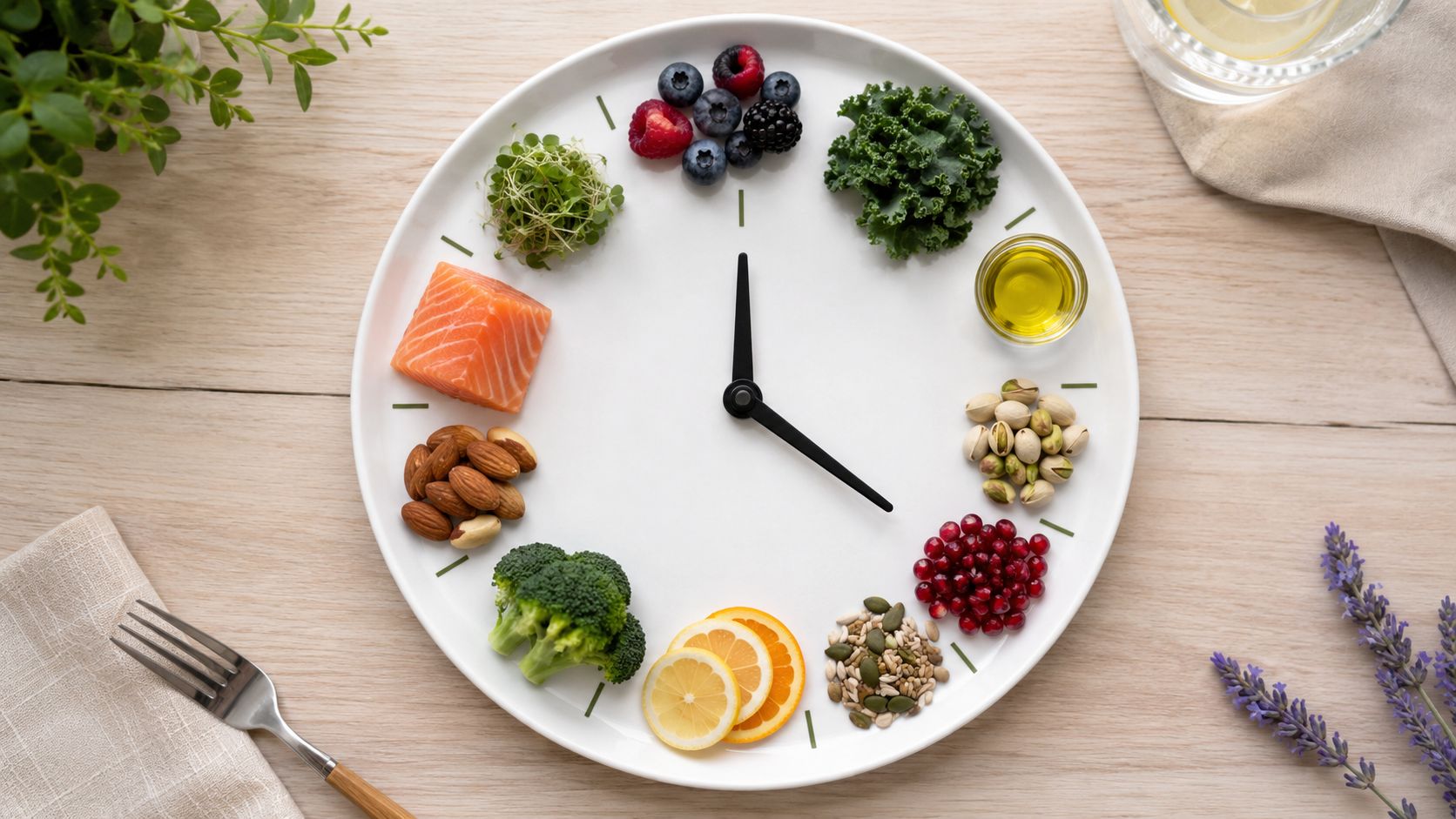
Your plan for anti-aging nutrition: Younger in 2026
You often do not notice it as one major turning point, but through many small signals. Your skin looks a little duller in the morning. After a long day at work, you run out of energy more quickly. Recovery, focus, and elasticity no longer feel as effortless as they once did.
This is exactly where many people's interest in anti-aging nutrition begins. Not out of vanity, but from the desire to keep their own body capable, resilient, and full of life for longer. Nutrition cannot eliminate aging. But it can influence the processes that determine how you age.
The desire for timeless vitality
Many people first look for a list of foods that help with wrinkles, fatigue, or declining performance. This is understandable, but it does not go far enough. Your body does not age in just one place. Skin, muscles, bones, the immune system, and energy metabolism are interconnected. That is why anti-aging nutrition does not work as a single trick, but as a support system for your cells.
In Germany, there is an important reality check on this. The National Nutrition Survey II was conducted from 2005 to 2007 and showed that the population eats too little fruit and vegetables on average. These data are still used as an important foundation for prevention because these food groups in particular are central to a nutrient-dense diet, as described in the article on NVS II and anti-aging nutrition on the Thieme Natürlich portal.
This is more than a theoretical observation. When fruit, vegetables, whole grains, legumes, and fish are neglected in everyday life, the very nutrients your body needs for protection, repair, and regeneration are often missing.
What many people misunderstand about it
Anti-aging nutrition does not mean eating as exotically as possible. It is not about powders, miracle berries, or a rigid list of forbidden foods. It is about a nutrient-dense, minimally processed, practical everyday diet that reliably nourishes your body.
Typical misconceptions include:
- Focusing only on the skin. Skin aging is visible, but the foundation also lies in muscle mass, inflammatory balance, and nutrient supply.
- Relying on individual superfoods. No single food can make up for an overall poor diet.
- Starting too late. Prevention does not only work from a certain age onward. It begins when you start.
Important thought: Healthy aging is not a beauty project. It is everyday cell care.
If you want to use anti-aging nutrition sensibly, you first need a clear picture of what actually ages in the body. Only then do recommendations such as omega-3, vitamin D, or the Mediterranean diet become truly tangible.
What really happens in the body as it ages
Aging often seems simple from the outside. Inside, it is an interplay of many small processes. Some happen quietly over the years. Others are further fueled by lack of sleep, stress, smoking, lack of exercise, or a highly processed diet.

Oxidative stress and silent inflammation
You can think of oxidative stress as tiny sparks that strike cellular structures. Your body can handle this. It becomes problematic when this strain remains high over time and the protective systems can no longer keep up effectively.
Then there is chronic, low-grade inflammation. You usually do not notice it directly like acute inflammation after an injury. Nevertheless, it continuously consumes resources. The body then does not repair itself optimally but is constantly occupied with counteracting the effects.
Both processes are closely linked to nutrition. A plant-rich, fiber-focused, minimally processed diet provides protective nutrients and supports an internal environment that is less taxing. Gut health also plays a role. If you want to explore this further, you will find a helpful article here on building a healthy gut flora.
Telomeres and repair capacity
Then there is the level of cell division and DNA stability. The image of protective caps on chromosomes is often used to explain this. These protective regions are called telomeres. Over time, they become shorter. This is part of biological aging.
More important than any individual buzzword, however, is the principle behind it: cells constantly need building material and a supportive environment so that repair processes can run as cleanly as possible. Nutrition cannot make this repair happen magically. But it can improve the conditions.
Glycation and tissue quality
Another factor is glycation. This is when sugar molecules bond with proteins such as collagen. This can make tissue less elastic. It is particularly relevant for the skin, connective tissue, and blood vessels.
In practical terms:
- Highly processed, sugar-rich products often provide few protective nutrients.
- Protein-rich, plant-focused meals are more likely to provide building material for maintenance and regeneration.
- Consistency beats short-term extremes.
Your body does not age only because time passes. It also ages according to how well protection, repair, and nourishment work together in everyday life.
The most important nutrients for your cells
If your body were a house, nutrients would not be the decoration, but the concrete, wiring, insulation, and tools. For anti-aging nutrition, the key substances are those that support cellular protection, tissue building, muscle function, and regeneration.
A key point for German-speaking regions is vitamin D. In Germany in particular, medical sources often report inadequate levels. Vitamin D is important because, together with calcium, it supports the maintenance of muscle and bone function. That is why checking your levels and following a protein-rich diet are particularly relevant, as described in the medical assessment of anti-aging nutrition by Dorow Clinic.
The nutrient groups you should know
Some nutrients appear in almost every well-founded anti-aging recommendation. Not because they are magical, but because they are involved in many basic functions.
| Nutrient | Anti-aging function | Top foods |
|---|---|---|
| Omega-3 | supports cell membranes and balanced inflammation regulation | Fatty fish, nuts, seeds |
| Vitamin D | important for muscle and bone function, particularly relevant when levels are low | Fatty fish, eggs |
| Protein | provides building blocks for muscles, tissue, and regeneration | Fish, eggs, dairy products, legumes |
| Magnesium | involved in many metabolic processes | Nuts, seeds, legumes, whole grains |
| Zinc | important for repair processes and tissue function | Nuts, seeds, legumes, animal-based foods |
| Antioxidant plant compounds | support cellular protection against oxidative stress | Berries, grapes, green vegetables, herbs |
What these nutrients mean in everyday life
Omega-3 fatty acids are especially important if your diet contains little fish or other high-quality sources of fat. They are part of cell membranes and are often associated with the skin barrier and inflammation modulation in the anti-aging context.
Protein is often underestimated, especially when people associate anti-aging only with skincare. Yet visible vitality also depends on how well you maintain muscle mass, recover, and renew tissue.
Magnesium and zinc are rarely the first nutrients people notice, but they are involved in many functions behind the scenes. If your diet is very one-sided, you are often missing not just one nutrient, but an entire team.
Think food before capsules
Before reaching for supplements, it is worth looking at your everyday routine:
- Review breakfast. If you start with only white flour and sugar, you often lack lasting satiety and micronutrient density.
- Distribute protein across each main meal. This is more practical than trying to make up for everything in the evening.
- Increase the color on your plate. More vegetables, herbs, berries, and legumes automatically increase nutrient variety.
If you are specifically looking for foods with antioxidant potential, this overview of antioxidant foods can also help.
Practical rule: The best anti-aging diet does not maximize one nutrient. It fills nutritional gaps before looking for optimization.
Your plate as an anti-aging powerhouse
In everyday life, theory only helps if it makes it onto your plate. This is exactly where the Mediterranean diet is so helpful. It is not a diet in the sense of deprivation, but an eating style that is simply structured and naturally brings together many anti-aging principles.

The Mediterranean diet is considered the gold standard in the anti-aging context. As a practical benchmark, 3 servings of vegetables and 2 servings of fruit per day, as well as 2 fish meals per week are often recommended to support antioxidants, omega-3s, and micronutrients and reduce oxidative stress, as described in the overview of the Mediterranean diet and anti-aging nutrition by Eau Thermale Avène.
This is what it looks like in practice
Many readers think of the Mediterranean diet as involving complicated recipes. In reality, it is often very simple:
- At lunchtime a large plate with vegetables, olive oil, legumes, and some whole grains.
- In the evening fish with roasted vegetables and a portion of beans or lentils.
- Between meals nuts, fruit, or plain yogurt instead of highly processed snacks.
The basic logic is what matters. More whole foods. More plants. Better fats. Fewer highly processed products.
Shopping instead of perfecting a meal plan
The biggest impact often comes not from cooking, but from shopping. When your kitchen is well stocked, you automatically make better choices.
A simple shopping list for anti-aging nutrition includes:
- Vegetable base such as leafy greens, tomatoes, broccoli, bell peppers
- Fruit such as berries, apples, citrus fruits
- Sources of protein such as fish, eggs, yogurt, legumes
- Healthy fats such as olive oil, nuts, seeds
- Sources of fiber such as oats, whole grains, beans, lentils
If you want to explore the topic further in the direction of healthy aging, this article on longevity nutrition is also a good fit.
A good anti-aging plate rarely looks spectacular. It is colorful, filling, rich in protein, and easy to repeat in everyday life.
Why blanket advice is often not enough
General recommendations are useful. They provide direction. But they do not answer the question that is crucial for you: What does my body specifically need?
Two people can eat similarly and still respond differently. One feels stable and capable with more carbohydrates, while the other feels sluggish. For some, vitamin D is a real game changer. Others need to pay closer attention to omega-3, magnesium, or zinc. This is exactly where the difference between good information and true personalization begins.
The same diet, different effects
Genes do not determine your fate. But they influence how your body processes, transports, or uses nutrients. This is the core of nutrigenetics. It examines why standard recommendations work well for person A but only moderately well for person B.
Anyone who finds this interesting can get a good introduction to how genes and lifestyle interact through epigenetics explained simply.
An example of the difference
A specific example is provided in the provider’s context: A 45-year-old customer showed a collagen gene variant in a DNA test. As a result, the diet was specifically supplemented with vitamin C and collagen peptides. According to the account, after 8 weeks, the skin appeared visibly firmer and energy levels increased.
What matters is not generalizing from an individual case. The point is a different one: the general recommendation might simply have been to eat more antioxidant-rich foods or take a standard supplement. The personalized approach, however, focused on a specific weakness.
That is the real value of personalization. You stop simply eating “healthily” and start eating with a specific goal.
Where standard tips reach their limits
General advice is often not enough when:
- symptoms persist despite a healthy diet. Fatigue, poor recovery, or dull skin may still persist.
- you take supplements just in case. Without context, you can easily miss the mark.
- you want to know what should take priority. Not every issue is equally important.
Personalization turns general health advice into a plan that suits your metabolism and everyday life.
Find your personal anti-aging strategy
The best strategy is rarely the strictest. It is the one that suits your biology and can be implemented in everyday life. To do this, you need two types of information: first, indications of your genetic tendencies; second, an overview of your current nutritional status.

What questions personalized data can answer
A DNA test can help clarify where your potential focus areas lie. According to the briefing, omega-3, vitamin D, resveratrol, magnesium, and zinc are particularly relevant to anti-aging. The benefit is not that everyone needs everything, but that it makes differences visible.
A blood test or nutrient check adds to this picture. Genes show tendencies. Biomarkers show the current state. Together, they become something practical rather than merely interesting.
How data becomes an everyday system
A useful process often looks like this:
-
Identify the basic pattern
You first look at nutrition, sleep, physical activity, and symptoms. This prevents data from being interpreted without context. -
Put genetic insights into context
A DNA analysis shows which nutrients or metabolic pathways you should examine more closely. -
Check biomarkers
For vitamin D, protein intake, or other critical factors, a lab test can help compare assumptions with measured values. -
Prioritize measures
Not ten changes at once. Just a few highly relevant steps.
Such an analysis is available, among other providers, through MYBODY Lab GmbH. The provider offers DNA, nutrient, and other health analyses for use at home, from which individualized nutrition recommendations and lifestyle guidance can be derived.
A plan is only good if you actually follow it
The most common mistake is not knowing too little. It is trying to change too much at once. A good anti-aging plan might mean regularly scheduling fish meals for one person and having their vitamin D levels checked. For another person, protein distribution, magnesium intake, and sleep consistency may be the priorities.
That is why personalization works so well. It reduces complexity. Instead of following every trend, you focus on the factors that make the biggest difference for you.
Not everyone needs the same plan. But everyone benefits from knowing their own most important levers.
Common anti-aging nutrition myths debunked
Few nutrition topics are as prone to half-truths as anti-aging. That is because people look for quick solutions. Understandable, but risky. Simple promises often lead to unnecessary restrictions, expensive purchases that miss the mark, or disappointment.

Myth: Superfoods Fix Everything
The most well-known misconception is that a single superfood can noticeably transform skin, energy, and cellular aging. It sounds appealing because it is simple. In reality, the overall pattern of your diet matters.
A handful of berries can be beneficial. But it cannot replace a consistently poor choice of foods or too little protein, fiber, or healthy fats.
Myth: Fat Makes You Age
Many people still associate fat with being heavy, unhealthy, or damaging to the skin. That is too simplistic. The type of fat makes the difference. High-quality fats from fish, nuts, seeds, and plant oils are part of a balanced anti-aging diet.
People who eat too little fat, protein, and too many highly processed foods out of fear of fat often harm themselves more than they help themselves.
Myth: More is better with supplements
This is another common misconception. Supplements can be useful, especially when there is a critical deficiency or an individual increased need. But supplements are not a substitute for a sustainable nutritional foundation.
Watch out for these warning signs:
- you collect products instead of strategies
- you take supplements without a clear goal
- you expect capsules to do what your everyday habits should really accomplish
Supplements make sense when they specifically fill a gap. Not when they are supposed to imitate a good diet without a clear plan.
Myth: Anti-aging means deprivation
Many people imagine anti-aging nutrition as a joyless diet full of restrictions. The opposite is often true. When implemented well, it brings more flavor, color, and satiety to everyday life.
Herbs, spices, olive oil, vegetable dishes, good sources of protein, and natural snacks do not make food more boring; they usually make it better. Nutrition only becomes sustainable when it is not just sensible but also practical to maintain.
Conclusion: Take charge of your healthy aging
Aging cannot be stopped. But you can influence the conditions under which your body ages. That is precisely what anti-aging nutrition is about. Not perfection. Not fear of wrinkles. Instead, it is about an internal environment that supports protection, maintenance, and regeneration.
The most important fundamentals are clear. A plant-rich, protein-conscious, minimally processed diet with high-quality fats and good nutrient density creates a strong foundation. The decisive step comes when you move from general recommendations to your personal levers.
Maybe vitamin D is an issue for you. Perhaps it is omega-3, protein, magnesium, or the question of how well your body uses certain nutrients. That is exactly where knowledge becomes action.
If you take the topic seriously, you do not have to change everything at once. Start with an honest look at your everyday life. What really ends up on your plate? Where are quality, consistency, or the right nutrients lacking? And where would a test be more useful than more guesswork?
Healthy aging is not a coincidence. It is the result of many small, smart decisions that you repeat.
If you want to find out which nutrients and dietary levers should be your personal focus, you can explore the DNA and health analyses from MYBODY Lab GmbH. They help translate general recommendations into an individual, data-based action plan for nutrition, lifestyle, and healthy aging.



Share now:
Strengthen your immune system: Your evidence-based guide for 2026
How much sodium per day: limits, requirements & DNA test 2026