
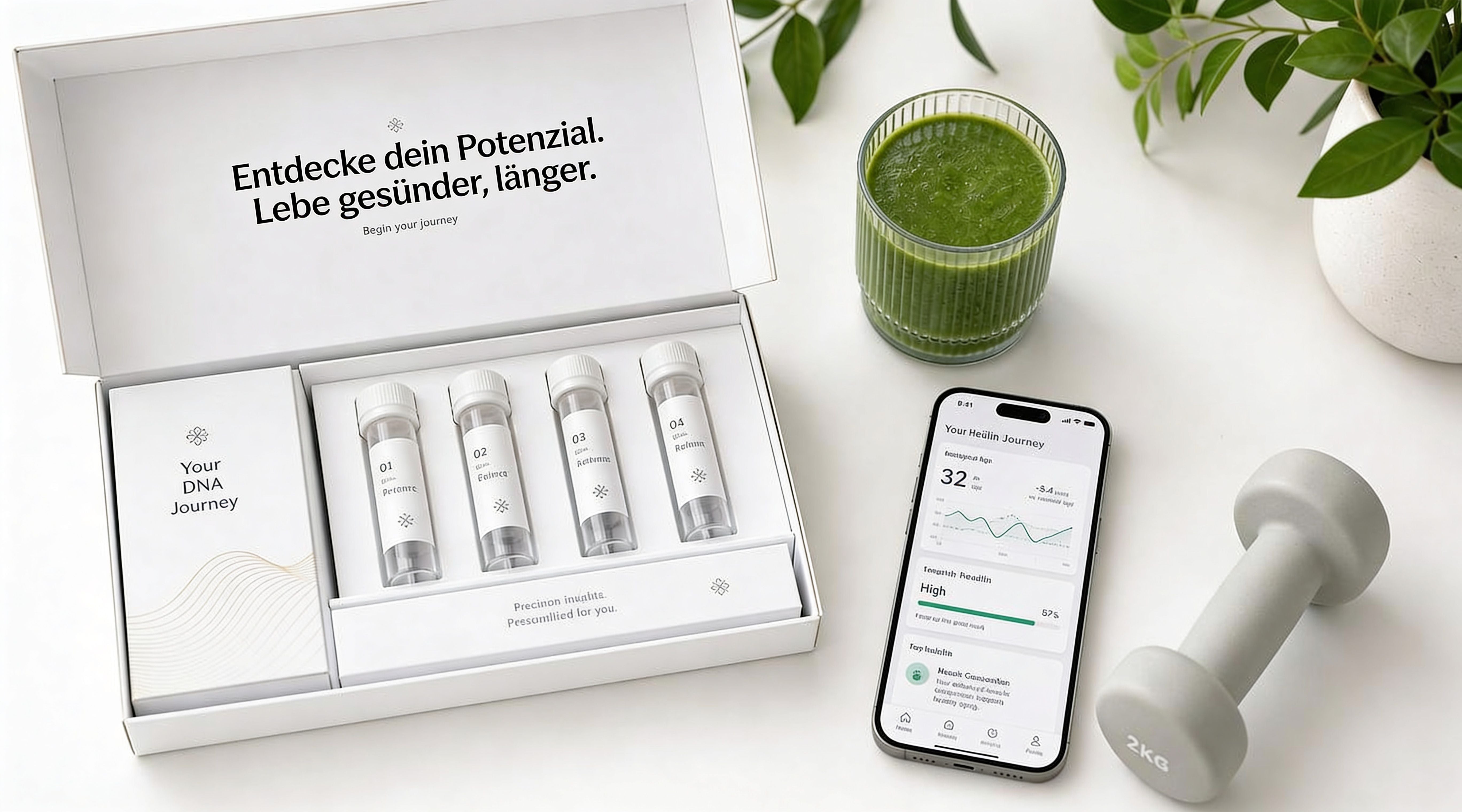
Slow the aging process: Your strategy for 2026
You often do not notice it in a single day. It is more of a gradual shift. Recovery takes longer, sleep is more easily disrupted, your stomach reacts more sensitively to stress, and in the mirror you see not only wrinkles but also less freshness.
This is exactly where many people ask the wrong question. Not: “Which remedy will make me younger?” But: “Which processes in my body are currently aging faster than they should?” If you want to slow the aging process, you do not need magic. You need a system that distinguishes between how you feel, how you look, and biological reality.
More than just wrinkles – Can you control your biological age?
In the morning, your face may look a little more tired in the mirror than it used to. But something else is decisive: How well do you recover after exertion, how stable is your energy level throughout the day, and how quickly does your body recover from stress, poor sleep, or heavy meals? This is often where your biological age becomes apparent.
Chronological age is listed on your ID. Biological age describes the actual condition of your systems. This includes inflammation levels, metabolism, hormonal balance, cellular health, and recovery capacity. In practice, it is the much more useful value because it can be changed.

Biological age is the value you can work with
Many people focus first on visible signs when it comes to anti-aging. That is understandable, but as a standalone strategy, it is too limited. Those who optimize only their skin, weight, or individual symptoms often overlook the mechanisms beneath them. The plan may then look disciplined, but it does little to improve the actual drivers of aging.
A system with three clear steps makes more sense: Test, Intervene, Monitor.
First measure what is currently out of balance. Then intervene strategically. Afterwards, check whether the measure really had the desired effect. If you want to understand the criteria used to interpret this value, the article on calculating biological age provides a good foundation.
Rule of thumb: Work toward better function. Looking younger is often a consequence of that, not the actual goal.
What you can influence and what you can’t
You cannot change your date of birth. But you can certainly influence how quickly wear-and-tear processes progress. Lifestyle, sleep, training stimulus, nutrition, stress management, and smoking habits may not seem spectacular, but they directly affect the biology of aging.
The catch: Not every lever benefits every person equally. More training helps little if recovery and protein intake are inadequate. A stricter diet achieves little if chronic stress continually worsens blood sugar and sleep. That is exactly why a measurable methodology works better than blindly optimizing according to trends.
The same pattern appears again and again in consultations. People look for a powerful single intervention even though their daily lives are working against them in several ways at once. The greater progress usually comes not from the next hype, but from a plan that sorts causes, sets priorities, and makes results verifiable.
Determine Your Baseline—Knowledge Instead of Guesswork
Many anti-aging plans fail not because of a lack of discipline, but because of a simple error in thinking. People start taking action before they know their baseline. Then they try things, switch, add more, and discard them again. It feels proactive, but is often just expensive guesswork.
If you want to intervene strategically, you need markers that show you where your body currently stands.

The Big Four for Practical Use
In everyday life, four areas have proven particularly useful if you want to do more than just feel aging—you want to structure it.
- CRP shows whether low-grade inflammation is an issue for you. Chronically elevated inflammation is one of the classic accelerators of wear and tear.
- Telomere parameters provide insight into cellular health and stability. They are not a lifestyle gimmick, but part of a long-term biological perspective.
- HbA1c shows how well your body manages blood sugar over time. This matters because poor glucose control can indirectly accelerate aging processes.
- Cortisol and hormone status help assess stress load, recovery, and hormonal shifts more accurately.
These markers answer different questions. An elevated inflammation marker calls for different steps than an abnormal long-term blood sugar level or a hormonal imbalance. That is why a single “longevity routine” for everyone achieves little.
Measurable does not mean perfect, but it does mean manageable
An important point is often overlooked. Biomarkers are not a crystal ball. They are tools for making better decisions. That is more than enough.
The Swiss DO-HEALTH study is a good example. It showed that 1 g of omega-3 per day could slow biological aging, measured with epigenetic clocks, by up to four months. In some cases, the combination of omega-3, vitamin D, and exercise was even more effective (contextualization of the DO-HEALTH results in sports medicine).
The practical core is not just the supplement. The core is this: aging processes can be measured and influenced through interventions. That is precisely why testing is not a luxury, but the logical starting point.
What to start with specifically
If you want to start at home, choose a test that does more than output raw values and translates them into actionable steps. One example is the biological age test, which assesses your current status and derives starting points for nutrition, everyday life, and recovery.
A simple sequence has proven effective in practice:
| Focus | Question |
|---|---|
| Inflammation | Is stress in your system constantly running in the background? |
| Glucose metabolism | Does your body respond consistently to nutrition and everyday life? |
| Cellular health | Are there signs of accelerated wear and tear? |
| Hormones and stress | Do you lack resilience more than motivation? |
Knowing your starting point usually saves time. And often prevents bad purchases.
Laying the foundation – Your basic strategy for longevity
You now know your starting point. From here, what matters is not activism, but a system you can maintain for months and later review properly. In practice, a simple process works best: stabilize the basics first, then refine them selectively, and observe the effects through markers and everyday signals.

Nutrition that eases inflammation and metabolism
Nutrition is the lever you use several times a day. That is precisely why it often delivers more than searching for the next specialty supplement. The goal is clear: keep blood sugar steadier, reduce unnecessary inflammatory stimuli, and avoid constantly slowing cellular repair through overnutrition.
Three rules are practical and meaningfully measurable:
- Include protein and fiber in every main meal. This improves satiety, supports muscle mass, and dampens major fluctuations after eating.
- Reduce ultra-processed products. Not out of ideology, but because they often worsen appetite regulation, calorie control, and energy levels.
- Consciously manage your eating window and portion sizes. Those who snack constantly give their metabolism and digestion hardly any chance to rest.
If you are looking for a practical way to get started, the guide to everyday longevity nutrition can help.
The trade-off is important: Very strict diet plans look good on paper but often fail in real life. It is better to follow a pattern that fits your work, family, and social life. Otherwise, you will not stick with it long enough to measure any change.
Exercise as a daily repair signal
Exercise slows aging processes through more than calorie expenditure alone. It improves insulin sensitivity, preserves muscle, supports the mitochondria, and reduces the risk of losing physical capacity prematurely with age. As noted earlier, long-term, significant health gains usually come from a few consistent habits, not extreme programs.
For the basics, a clear distribution is enough:
- Strength training two to three times per week, to maintain muscle mass and strength.
- Daily everyday movement, such as brisk walking, taking the stairs, or short movement breaks between periods of sitting.
- Endurance exercise at moderate intensity, so the heart, blood vessels, and recovery benefit.
Many people underestimate what happens between training sessions. Sitting for eight hours and then exercising for 45 minutes does not automatically mean you are in good shape. Especially for people with office jobs, paying attention to movement during the workday can help them manage posture, strain, and small movements more consciously.
Sleep and stress. The part that often makes good plans fail
In consultations, this is often the real bottleneck. Sleep deprivation increases appetite, worsens glucose control, reduces training performance, and makes stress responses harder to regulate. If this area is poorly managed, you get only part of the potential benefit from nutrition and exercise.
This works reliably in practice:
- Consistent bedtimes and wake-up times, kept as similar as possible even on days off
- A calm final block of the evening, without late meals, a routine of alcohol, or constant stimulation
- Short decompression rituals, such as a 10-minute walk, breathwork, or a clear transition out of work
Starting small is smarter than changing everything at once. Two weeks with a consistent sleep schedule often achieve more than a perfect plan that falls apart after three days.
Supplements only on a solid foundation
Supplements can be useful. However, they are no substitute for sleep, exercise, and nutrition. Depending on your findings and life situation, omega-3 or vitamin D are often relevant as part of basic care. Whether they are right for you should be considered in relation to your diet, daylight exposure, and ideally your levels.
This is exactly where the difference between hope and methodology becomes clear. Test first, then intervene, then monitor. This way, you can determine whether your foundational strategy is really working or merely sounds good.
Good longevity work is rarely spectacular. It is clear, repeatable, and measurable.
Targeted interventions for maximum impact
Once the foundation is in place, personalization is worthwhile. This is where a general health-oriented lifestyle differs from a truly effective longevity strategy. Not everyone ages in the same way, and not every intervention addresses the same bottleneck.
Who may need more than general advice
A common mistake is the one-size-fits-all approach. Everyone receives the same supplements, the same morning routine, and the same training idea. This is convenient, but rarely precise.
In consultations, a clear pattern emerges time and again: Some people primarily have an inflammation issue. Others mainly struggle with hormonal imbalance, stress physiology, or a sluggish metabolism. The intervention must match the problem. Otherwise, at best, it will only work partially.
The Swiss intervention study provides a useful point for reflection. Taking 1 gram of omega-3 fatty acids daily slowed biological aging by up to 4 months. The effect was measurable in blood samples across several epigenetic clocks (summary of the Swiss intervention study at Universimed). This is interesting, but certainly not a free pass for indiscriminate supplementation.
Typical personalization cases
Certain stages of life change requirements particularly significantly.
| Situation | Key focus |
|---|---|
| Women over 45 | Hormonal balance, sleep, stress resilience |
| Men over 50 | Metabolism, energy, hormonal context |
| People with high everyday demands | Cortisol, regeneration, inflammation management |
| Athletic people experiencing exhaustion | Nutrient status, recovery, training management |
In practice, women over 45 often benefit from a closer look at hormonal changes. Not because hormones explain everything, but because perimenopause and similar transitions can affect energy, sleep, body composition, and mood simultaneously.
For men over 50, it is often worthwhile to take an objective look at metabolic markers and hormonal context. The same applies here: do not automatically treat; understand first.
Where advanced approaches may make sense
Alongside basic supplements, substances such as NMN often appear. Such approaches may be interesting for some people, but only after the fundamentals are in place. If you sleep poorly, barely exercise, are chronically stressed, and then turn to an advanced supplement, you are building on shaky foundations.
It is also helpful to understand the biological mechanisms behind such concepts. Anyone who wants to explore the topic in greater depth will find the article What is epigenetics? a useful explanation of why lifestyle can leave measurable traces in biological aging processes.
Personalization does not mean more complicated. It means more suitable.
Measure progress and stay the course
Many programs fail at a simple point. Changes are made, but not checked. As a result, an intervention may feel good, seem sensible, or sound modern without it being clear whether it is actually having any biological effect.
This is particularly risky in the longevity field. DZD and Helmholtz Munich report on animal models in which some popular anti-aging approaches appeared to have a rejuvenating effect externally, but did not slow biological aging (DZD on anti-aging products and biological aging). The difference between “looking better” and “aging more slowly” is therefore crucial.

Your dashboard instead of gut feeling
When you start a strategy, you should determine in advance how you will recognize success. Otherwise, you may switch too early or stick too long with something that delivers little benefit.
A useful dashboard could look like this:
- CRP as a marker of systemic inflammation
- Telomere parameters as part of the assessment of cellular health
- HbA1c for metabolic health
- Cortisol and hormone status for stress and regulation
- Subjective markers such as energy, sleep quality, resilience, and recovery
The combination matters. A purely subjective assessment is not enough. But purely technical values without relevance to everyday life are not enough either.
What effective adjustments trigger
In practice, progress is rarely linear. Sometimes an inflammation marker decreases while sleep improves only later. Sometimes energy levels improve even though weight stays the same. That is exactly why you should not focus on just one result.
Based on the provider’s available real-world data, it is known that customers following a targeted protocol showed measurably lower CRP levels and more stable telomere parameters after 12 weeks. This is not a reason to make blanket promises. But it is a useful indication of how monitoring can be used in everyday life.
A simple decision-making framework is helpful:
- If both markers and well-being improve, stay the course.
- If only individual areas improve, refine those areas specifically.
- If barely anything happens, review the intervention, dosage, daily routine, or adherence.
- If your values deteriorate, do not simply “push harder”; reassess.
What you do not measure is easy to misinterpret.
The most common thinking error
Many people give an intervention too much credit simply because it sounds plausible. This applies just as much to expensive supplements as to extreme routines. If you want to slow the aging process, you need a sober perspective. Not everything that looks modern addresses your needs. And not everything that feels noticeable in the short term improves your long-term biology.
Monitoring turns hope into a manageable strategy. That is precisely where its value lies.
Your compass for a long and healthy life
Slowing the aging process is not a project for two motivated weeks. It is a repeatable cycle of testing, intervening, and monitoring. This process protects you from two common mistakes: aimless activism and blind faith in trends.
The order is crucial. First understand where you stand. Then work on the right levers. After that, check whether your body is actually responding. This is how an interest in health becomes a reliable practice.
You do not have to optimize everything at once. It is usually wiser to address the biggest obstacles first. For one person, that is nutrition. For another, sleep. For someone else, a chronically overloaded stress system or a hormonal shift. Good longevity work is rarely spectacular, but it is clear.
If you take away only one thing, let it be this: Do not confuse activity with progress. A full supplement cabinet, hard workouts, and perfect routines on paper do not necessarily mean that your biological aging is progressing more favorably. Progress requires feedback.
That is why the best compass is not a trend, but a process. You collect data, make decisions, observe responses, and adjust. This creates a strategy that suits your body instead of merely sounding good.
Ultimately, it is not about outrunning age. It is about staying capable, clear-minded, resilient, and full of vitality for longer. That is the true essence of longevity.
If you want to approach your aging process based on measurable markers rather than gut feeling, choosing the right test can be the most sensible first step. MYBODY Lab GmbH offers at-home analyses for biological age, hormones, nutrients, and other areas of health. Making a good decision is not about testing as much as possible, but about choosing data that can guide concrete action.



Share now:
Nutrigenetics Test Experiences: What the Field Proves and What It Does Not
Strengthen your immune system: Your evidence-based guide for 2026