

Weight loss with a DNA test: Your personal roadmap to your ideal weight
Are you wondering if weight loss with a DNA test really works? Imagine it like this: Instead of blindly following general diet rules, you receive a completely personalized plan tailored precisely to your body. The analysis of your genes reveals the secret of how your body truly processes fats, carbohydrates, and proteins. This helps you break the frustrating cycles of losing weight and finally work purposefully towards your goals.
Why your body loses weight differently than others
Does this sound familiar? The latest fad diet works wonders for a friend or colleague, but your scale just doesn't budge. You're definitely not alone. Many people torture themselves for years going from one diet to the next, meticulously counting calories and exercising – often with disappointing results. The reason for this is usually not a lack of discipline, but simply your biology.
Your body is unique and follows its own genetic blueprint. Standardized weight-loss programs that recommend the same thing to everyone completely ignore this crucial point. They're like a universal key that ultimately hardly fits any lock. If your lock is built differently, the door to success remains closed.
Your genetic fingerprint decides
Imagine your friend is having huge success with a low-carb diet, while you just feel sluggish and constantly hungry without pasta and bread. That's no coincidence. Your bodies are genetically programmed differently. To understand this, we need to look at how your metabolism works . It's the engine of your body, and your genes determine which fuel this engine burns best.
The science that deals precisely with this fascinating interplay between genes and nutrition is called nutrigenetics . It deciphers how certain genetic variants control your bodily reactions.
- Appetite and satiety: Genes, such as the well-known FTO gene , can influence how strong your hunger is and how quickly you feel full.
- Fat metabolism: Other genes, for example MC4R , play an important role in how efficiently your body stores fats or uses them for energy.
- Muscle building and performance: Your DNA even gives clues as to whether you are more the type for long endurance sports or for short, intense strength training sessions.
These genetic nuances are precisely why a "one-size-fits-all" weight-loss solution is almost always doomed to failure. If you'd like to delve deeper into this topic, our article on the fundamentals of nutrigenetics offers fascinating insights.
No more guesswork!
The constant cycle of hope, deprivation, and disappointment is simply exhausting. But the good news is: you don't have to remain in the dark any longer. In Germany, around 67% of men and over 50% of women struggle with being overweight. Studies show that up to 95% of weight loss attempts fail – often because individual metabolism is completely ignored.
A DNA metabolic test analyzes genes such as FTO or POMC, which regulate satiety and fat metabolism. For example, certain variants in the POMC gene increase the risk of obesity in women by a substantial 44% .
A DNA test isn't a miracle cure, but it's a scientifically sound compass that shows you the path to your personal success. It doesn't take responsibility away from you, but it gives you the knowledge to finally make the right decisions for your body.
So instead of trying the next generic diet, it's about understanding your body from the ground up. With the insights from a DNA weight loss test , you receive a personalized guide precisely tailored to your genetic predisposition. This way, you finally work with your body instead of fighting against it.
How to unlock your personal weight loss code
You now know that your genes play a crucial role in weight loss. But how do you get from this knowledge to a plan that actually works in everyday life? Many people imagine a DNA test to be complicated and time-consuming, but the opposite is true. It's a surprisingly simple way to finally get the answers that generic diets have so far failed to provide.
The entire process is designed to fit seamlessly into your life. No doctor's appointment, no complicated instructions. Your personal roadmap to success begins comfortably at home.
From saliva sample to your genetic profile
It all starts with a small test kit that arrives directly in your mailbox. Inside you'll find everything you need: a sterile cotton swab and a sample tube. The sample collection itself is completely painless and takes less than a minute.
You simply rub the swab gently along the inside of your cheek. This collects a few cells from your oral mucosa, from which your DNA will later be extracted in the lab. To ensure the results are accurate, you shouldn't eat or drink anything for 30 minutes beforehand.
Then you put the sample in the enclosed, pre-paid return envelope and take it to the post office. That's it. The most important step to unlocking your personal weight-loss code is complete.
As soon as your sample arrives at our ISO-certified laboratory , the actual analysis begins. Using specialized techniques, our experts isolate your DNA and examine precisely the genetic markers relevant to your metabolism. Your data is, of course, pseudonymized and handled according to the highest data protection standards (GDPR). Your privacy is our top priority.
This graphic shows you the straightforward path from initial uncertainty through DNA analysis to your clear, personal result.
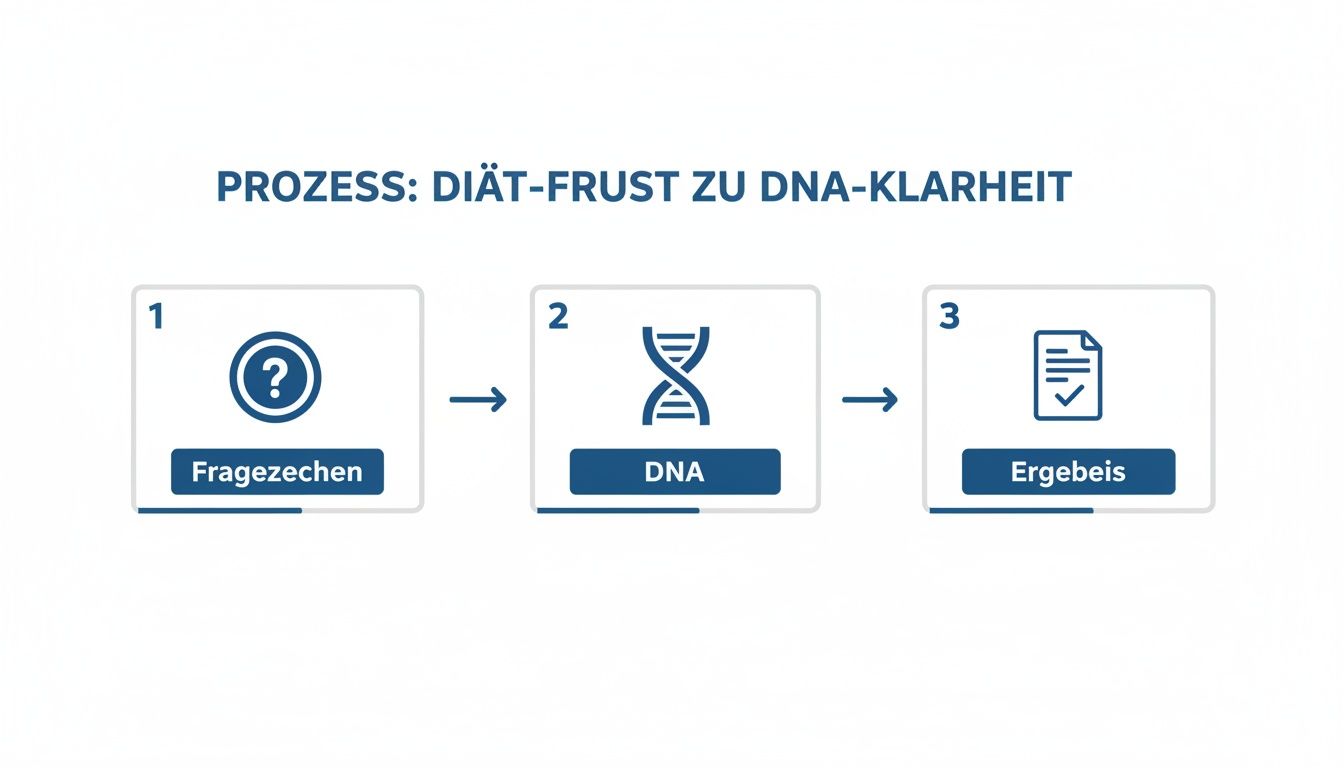
The process transforms the initial guesswork ("Why can't I lose weight?") into a sound plan that you can implement immediately.
What your results report really means
After a few weeks, you'll receive your personal results report. But don't worry, it's not an incomprehensible scientific treatise. Your report is a clear, easy-to-understand guide that translates the complex genetic information into practical recommendations.
Essentially, it's about determining your individual metabolic type . You'll finally learn how well your body actually processes the three main nutrients – carbohydrates, fats, and proteins.
This table shows an example of how diets can differ based on different genetic profiles, to give you an idea.
Dietary recommendations differ depending on metabolic type.
| Metabolic type (example) | Genetic tendency | Optimal macronutrient distribution | Examples of recommended foods |
|---|---|---|---|
| Carbohydrate type | It efficiently utilizes carbohydrates for energy production. | Higher proportion of complex carbohydrates, moderate protein, less fat. | Wholemeal bread, oatmeal, lentils, quinoa, sweet potatoes. |
| Protein type | Requires more protein for satiety and muscle maintenance. | High in protein, moderate in fat, and low in carbohydrates. | Chicken breast, fish, eggs, skyr, tofu, chickpeas. |
| Fat type | It metabolizes fats particularly well; fats provide long-lasting satiety. | Higher proportion of healthy fats, moderate protein, low carbohydrates. | Avocado, nuts, salmon, olive oil, flaxseeds. |
Your result is therefore much more than just a list of "good" and "bad" foods. It's a guide that shows you how your body works.
Your results report is not a set of rules, but a liberation. It gives you permission to break free from rigid diet dogmas and listen to your body's unique needs.
This knowledge is the key to finally making peace with food. You'll learn which foods give you energy and optimally support you on your journey to your ideal weight. If you'd like to understand the connections in more detail, read our article on how a detailed DNA metabolic analysis works .
From knowledge to everyday implementation
Let's say your DNA test for weight loss revealed that you're a protein type. This doesn't mean you should only eat steak and eggs from now on. Rather, it means that you'll particularly benefit from a protein-rich diet to regulate your satiety signals and prevent cravings.
This is what a typical day might look like for the protein type:
- Breakfast: Instead of the classic jam roll, try a protein-rich skyr with berries and a few nuts. This will easily keep you full until lunchtime and keep your blood sugar levels stable.
- Lunch: A large mixed salad with a good portion of chicken breast or chickpeas provides you with valuable protein and important vitamins.
- Dinner: A salmon fillet with roasted vegetables is not only delicious, but also packed with protein and healthy omega-3 fatty acids.
As you can see, personalized nutrition doesn't have to be complicated. It's about making conscious choices and small but effective adjustments that perfectly match your genetic profile. Finally, you're working with your body instead of constantly fighting against it.
Finding the right training for your genes
A diet tailored to your DNA will get you a long way. But it's only half the battle on the road to your ideal weight. Perhaps you've experienced this: you spend hours at the gym, stick rigidly to your training plan, but the scale just won't budge. This isn't just frustrating, it's often a clear sign that your workout isn't suited to your genetic predisposition.
Your DNA doesn't just hold the key to optimal nutrition. It also reveals which type of physical activity will get you to your goal fastest. A DNA test for weight loss from mybody-x therefore specifically examines the genetic markers that are crucial for your athletic performance.

Endurance or strength type – what your muscles reveal
Imagine your muscles as a team of two types of players: the slow, tenacious marathon runners (Type I muscle fibers) and the fast, explosive sprinters (Type II muscle fibers). Each of us has a unique mix of these fiber types, and this ratio is largely determined by our genes.
- Type I fibers (endurance): These muscle fibers work rather slowly, but extremely efficiently and hardly fatigue. They are perfect for long, steady activities like jogging, cycling, or swimming.
- Type II fibers (strength): In contrast, these fibers can generate enormous force in a flash, but they also tire more quickly. They are the stars of short, intense efforts such as sprints or heavy weightlifting.
A gene like ACTN3 , often called the "sprint gene," has a huge influence on which muscle fiber type is dominant in your body. A DNA test analyzes such markers very precisely and gives you a clear indication of whether you are better suited for endurance sports or strength training.
This knowledge is invaluable. It doesn't mean you should completely abandon other training methods. But it clearly shows you where you need to focus your efforts to achieve the best results for your physique and fat burning.
Suddenly you understand why you torture yourself for hours on the treadmill, but only with short, intense HIIT (High-Intensity Interval Training) sessions does anything really happen – or vice versa.
Tailor your training to your genetic profile
With the insights from your DNA analysis, you can finally plan your workouts strategically, instead of just hoping you're already doing the right thing. You invest your time and energy exactly where they will have the greatest impact.
Example of the endurance type: If your genes indicate endurance, your body responds particularly well to longer cardio sessions at moderate intensity.
- Training focus: Integrate 3-4 sessions of 45-60 minutes per week, such as running, cycling or using the cross trainer, into your plan.
- Practical tip: Instead of struggling with heavy weights, focus on strength endurance training with more repetitions ( 15–20 ) and less weight. This shapes your muscles and boosts fat burning at the same time.
Example of the strength type: If your DNA shows a predisposition for strength and speed, you benefit from short but very intense exertion.
- Training focus: Aim for 2-3 intense strength training sessions per week, supplemented by HIIT workouts. These will keep your metabolism running at full speed for hours (afterburn effect).
- Practical tip: Focus on basic exercises like squats, deadlifts, and bench presses with fewer repetitions ( 8–12 ) and heavier weights. This will effectively build muscle, which in turn increases your basal metabolic rate and helps you lose weight.
This personalized approach not only makes your training significantly more efficient, but it also boosts your motivation because you finally see tangible results. Frustrating plateaus are a thing of the past, and you create a workout that perfectly suits you and your body. If you'd like to learn more about how your genes influence your athletic success, you can find further information on genetics and sports here .
By combining genetically optimized nutrition with a tailored training plan, you create the best possible conditions not only to reach your ideal weight, but also to maintain it in the long term.
What a gene-based diet can really achieve
Let's be honest: A DNA test for weight loss isn't a miracle cure that will make the pounds melt away overnight. But think of it as an extremely precise compass for your body – a tool that finally shows you the right path after perhaps years of wandering aimlessly through the diet jungle.
It's about no longer seeing your body as an opponent you must conquer with deprivation and iron discipline. Instead, you learn to work with it. You understand its unique needs and begin to respect them. Your genetic profile provides you with the scientifically sound roadmap for this.
Your DNA result as a roadmap, not a law
Your results report is like a detailed map of your metabolism. It shows you the most efficient routes, the best fuel sources for your engine, and warns you of potential dead ends. But the map alone won't get you to your destination – you still have to drive the car yourself.
To put it simply: Your genes determine a tendency, but they are not your destiny.
- Do your genes indicate a sensitive reaction to carbohydrates? That doesn't mean you can never eat pasta again. It's an indication that you'll likely benefit much more from consciously choosing complex carbohydrates (whole grains, legumes) in moderate amounts than someone whose body metabolizes carbohydrates very efficiently.
- Does your test indicate a predisposition to strength training? This doesn't mean you have to become a bodybuilder. Rather, it's a valuable tip that short, intense strength training sessions could be more effective for fat burning than hours of monotonous jogging.
So it's not about rigid prohibitions, but about making smart decisions and prioritizing the strategies that have the greatest impact on your body.
What science says about it
Research in the field of nutrigenetics is developing rapidly. One of the best-known studies is the "DIETFITS" study from Stanford University. This study examined over 600 overweight adults to determine whether a diet tailored to their genes (low-carb or low-fat) is more successful.
The result was surprising at first glance: On average, there was no significant difference between the groups. But that's only half the story. The study clearly demonstrated one thing above all: There is no single perfect diet for everyone. In each group, there were people who lost weight fantastically, and others for whom hardly anything changed. This is precisely where personalized nutrition comes in: It aims to find out which group you belong to.
Obesity is a massive societal problem. In Germany alone , 8.7 million people are affected by type 2 diabetes, a disease closely linked to body weight. Genes like MC4R and PPARG play a key role in how efficiently our bodies burn and store fat. Experience shows that genome-based adaptation can be very effective. For example, this approach led to an average weight loss of 7–12% in just 6 months for mybody-x customers. Those who want to delve deeper into the figures can find further fascinating facts in the 2023 Health Report of the German Diabetes Association .
A DNA test gives you the scientific basis to break free from endless guesswork. You'll learn which biological triggers have the greatest impact on you, allowing you to invest your energy precisely where it's truly worthwhile.
Your commitment, your habits, and your everyday decisions remain the engine of your success. The DNA test simply provides you with the best possible spark plug so that this engine finally runs smoothly and reliably takes you to your goal. See it as the starting point of a journey toward a better understanding of your body, not as the finish line itself.
How to implement your new insights in everyday life
Your DNA test results are in front of you – this is the official starting signal for a new, conscious journey. But knowledge alone doesn't change anything. True success with weight loss using a DNA test lies in consistent implementation. Don't worry, it's not about turning your whole life upside down overnight.
Rather, it's about small, smart adjustments that perfectly match your genetic blueprint. Imagine swapping just a few ingredients in your favorite dish or adjusting the duration of your workout—and achieving more than with any radical diet before. That's exactly what's now possible.

Your kitchen as a genetic control center
The biggest change begins in your kitchen. Knowing your metabolic type transforms your weekly grocery shopping into a strategic mission rather than a guessing game. You'll learn to instinctively choose the foods your body loves and can efficiently process.
Meal prep tailored to your metabolic type
Meal planning, also known as meal prep , is your strongest ally. Instead of deciding spontaneously and often unhealthily what to eat each day, you plan your meals several days in advance. This ensures that every meal meets your genetic needs.
- For the protein-loving type: Prepare a larger quantity of lean chicken, boiled eggs, or lentils. This way, you always have a high-quality protein source on hand to enhance salads, wraps, or bowls and stay full for longer.
- For the carbohydrate type: Cook a portion of quinoa or brown rice. These complex carbohydrates are your ideal energy source and can be used perfectly as a base for various dishes.
- For the "fat type": Make sure you always have healthy fat sources at home. A ripe avocado, a jar of nuts, or high-quality olive oil can transform a simple meal into a satisfying and optimal dish for you.
If you are looking for inspiration for practical implementation, you can find a guide to a healthy weekly nutrition plan on our blog, which you can easily adapt to your personal type.
Small steps with a big impact
The key to long-term success lies in not trying to do everything at once. Start with small, manageable changes that can be easily integrated into your daily routine. Instead of forbidding yourself everything, focus on adding the right things.
It's not about perfection, but about progress. Every small step you take in the right, genetically predisposed direction is a victory for your health and well-being.
Celebrate these small successes! Perhaps you managed to adapt your breakfast to your metabolic type for a week. Or maybe you tailored your training to your genetic predisposition for the first time. These are the moments that keep you motivated and turn new actions into solid habits.
More than just the number on the scale
Your goal is to lose weight, but don't forget the many other positive changes that come with a lifestyle tailored to you. Your body will thank you in countless ways.
Pay close attention to these signals:
- More energy in everyday life: Do you no longer feel tired and lethargic after lunch?
- More stable sleep: Do you sleep more deeply and wake up feeling more refreshed?
- Improved mood: Is your mood more balanced because your blood sugar levels are no longer fluctuating wildly?
- Increased performance: Do you notice that you have more strength or endurance when exercising?
These non-scalable successes are often far more valuable than mere weight loss. They show you that you are absolutely on the right path to not only reaching your ideal weight, but also to feeling completely comfortable in your body – permanently.
Your questions about the DNA test – our answers
Are you considering whether a DNA test for weight loss is the right approach for you, but still have a few questions? Perfect! Asking detailed questions is the first step towards a good decision.
Here we've compiled the most frequently asked questions we receive. We want to show you openly and honestly what's behind the method, so you can feel confident.
Is there real science behind this?
Yes, absolutely. The entire approach is based on nutrigenetics – a fascinating branch of science that explores the direct connection between our genes, nutrition, and our health. It's important to understand, however, that a DNA test is not a miracle cure, but rather a scientifically sound guide to your body.
Our analysis focuses on genetic markers whose influence on metabolism has been demonstrated in numerous studies. The evaluation itself takes place exclusively in ISO-certified laboratories . This guarantees you the highest scientific standards and results you can rely on.
What happens to my genetic data? Is it safe?
Protecting your data is not just an obligation for us, but our top priority. We know how personal and sensitive this information is, and we handle it with the utmost care.
Your trust is the basis for everything, which is why we meticulously adhere to the strict General Data Protection Regulation (GDPR).
- Pseudonymization: As soon as your sample arrives at the lab, it is pseudonymized. Your name is replaced by a neutral code. This way, no one can establish a direct link to you.
- Secure processing: Your data is processed exclusively on highly secure servers within Europe. No data transfer to insecure third countries.
- Guaranteed destruction: After analysis, your biological sample will be completely and irrevocably destroyed in the laboratory.
You can therefore be 100% certain that your genetic data is in the best hands with us. It will never be used for other purposes or even passed on to third parties.
Your genetic code belongs to you alone. Our promise: We use this information exclusively to help you achieve your health goals – safely, transparently, and with absolute confidentiality.
When can I expect to see initial results with weight loss?
That's the crucial question, of course. From ordering your test kit to receiving the finished results report in your inbox, it usually only takes a few weeks. And as soon as you have your personal analysis, you can get started right away.
Most people notice the first positive changes within the first four to eight weeks . This doesn't necessarily mean a huge drop in weight right away. Often, it's other things that become noticeable first:
- You feel more energetic and less tired during the day.
- The feeling of fullness after eating is stronger and lasts longer.
- The constant craving for sweet or salty foods noticeably decreases.
Sustainable weight loss is a marathon, not a sprint. Your DNA profile essentially dictates the perfect route for you. How quickly you reach the finish line is up to you – but you'll notice how much easier it feels when you finally work with your body and no longer against it.
For whom is such a DNA metabolic test actually useful?
A DNA metabolic test is a powerful tool for anyone tired of generic diet advice and finally seeking personalized answers. It's especially valuable if you recognize yourself in the following:
- You are frustrated by countless diets that ultimately never worked.
- You finally want to understand your body from the ground up and know why it works the way it does.
- You are looking for an efficient way to optimize nutrition and training without wasting more time with the wrong strategies.
- You want to do something for your health in the long term and need a strategy that truly suits you and your life.
In short: If you are ready to take the reins yourself and want to use a scientifically sound tool to do so, then this test is just right for you.
Are you ready to stop the guesswork and discover your personal path to greater well-being? With DNA analysis from mybody-x, you'll receive your individual roadmap for nutrition and fitness.

Share:
DNA test for diet: Can your genetics reveal your weight loss secret?
Weight loss with genetic testing: Your genetic blueprint as the key to success