
Weight loss with DNA analysis: Your path to a sustainable, feel-good weight
Have you tried countless diets, but the scale just won't budge? Then this might be the decisive push you need. Weight loss with DNA analysis isn't some new fad diet, but a scientific approach that unlocks your unique blueprint. Instead of blindly following the next trend, you'll learn what your body truly needs to find its balance.
Why most diets fail and what your genes reveal
Does this sound familiar? You start a new diet full of enthusiasm, meticulously counting calories, cutting out carbohydrates or fats – and at first, the pounds even melt away. But at some point, your weight plateaus, and shortly after, the dreaded yo-yo effect strikes.
This frustrating rollercoaster ride is rarely a matter of willpower. It's often the logical result of a fundamental problem: Standardized "one-size-fits-all" concepts simply cannot work for everyone.
The reason lies deep within your biology, more precisely: in your DNA. Your genetic code is absolutely unique and dictates how your metabolism reacts to certain nutrients. Perhaps your best friend loses weight effortlessly on a low-carb diet, while you tend to gain weight using the exact same method. This isn't a coincidence, but simply genetics.
Your metabolism has a genetic fingerprint.
Think of your genes as a personal instruction manual for your body. This manual controls countless processes that are crucial for your weight:
- Your metabolic type: Do you process carbohydrates, fats, or proteins particularly well? Your genes reveal which nutrients your body prefers as an energy source and which it tends to store as fat reserves.
- Your appetite: Genes like the well-known FTO gene can influence how strong your hunger is and how quickly you feel full. A tiny genetic variation can make the difference between constant cravings and a pleasant feeling of satiety.
- Your fat distribution: Why does fat accumulate in some people's stomachs and in others' hips? This is not a coincidence, but is largely determined by your genes.
Traditional diets completely ignore these individual needs. They impose general rules that happen to work for a handful of people, but are doomed to failure in the long run for the vast majority.
Losing weight with DNA analysis means ending the guesswork. Instead of rigid restrictions, you get a personalized strategy that works with your body – not against it.
To illustrate the differences, we have compared the two approaches.
Comparison: Traditional diet vs. DNA-based nutrition
This table shows you the key differences between a general dietary approach and a personalized nutrition strategy based on your DNA.
| feature | Classic diet (one-size-fits-all) | Weight loss with DNA analysis |
|---|---|---|
| basis | General recommendations, trends | Your individual genetic predisposition |
| Approach | General rules (e.g. "low fat") | Personalized nutrient recommendations |
| effectiveness | Often only short-term, high risk of yo-yo dieting | Designed for sustainable, long-term success |
| motivation | Based on renunciation and discipline | Based on an understanding of one's own body |
| Result | Frustration when it doesn't work | Clarity as to why previous attempts failed |
As you can see, DNA-based nutrition is about finally understanding why your body reacts the way it does. That's the key to lasting success without frustration.
The frustrating reality of the diet jungle
The numbers speak for themselves: In Germany, around 67% of men and over 50% of women struggle with being overweight. Most of them have already tried to lose weight several times. Studies show that up to 95% of these attempts are considered to have failed after five years.
The main reason is often the yo-yo effect – and even the susceptibility to it is genetically influenced. A study by Charité found that certain epigenetic changes can increase the risk of obesity in women by up to 44% . You can find more information about the background of obesity and genetic factors at buergerspital-wertheim.de .
Instead of continuing to guess which diet might be right this time, a genetic analysis finally provides you with clear facts. It's the missing puzzle piece that explains why your previous efforts may not have yielded the desired results. With this knowledge, you can develop a diet that truly suits you and sustainably leads you to your ideal weight.
If you would like to delve deeper into the topic, also read our article on personalized nutrition for further exciting insights.
How your genes really influence metabolism and weight
Your body isn't a black box. Each of us carries a unique genetic blueprint – essentially a personal instruction manual. This manual is invaluable, especially when it comes to weight loss. It determines how your metabolism reacts to different nutrients and why some diets work wonders for you – while others don't at all.
This is where we delve into the fascinating world of nutrigenetics . It's about understanding the interplay between your diet and your genes. Imagine finally knowing whether your body prefers carbohydrates or fats as an energy source. A DNA analysis makes this possible. It takes a close look at specific gene variants that control your metabolism, your appetite, and even your tendency to store fat.
The key players in your DNA
There isn't one single gene that determines your weight. Rather, it's a team of factors whose interaction makes all the difference. One of the best-known players is the FTO gene . Scientists often call it the "obesity gene" because certain variants of it can increase feelings of hunger and suppress the body's satiety signal.
People with an unfavorable FTO variant are more prone to cravings and tend to eat more before feeling full. This has nothing to do with a lack of discipline, but is a biological predisposition. Once you know this, you can counteract it – for example, with meals that are rich in protein and fiber and simply keep you feeling full for longer.
Your genes are not your destiny, but your personal roadmap. They show you the most efficient way to your goal – but you're still in the driver's seat.
Besides the FTO gene, there are other important players:
- MC4R (melanocortin-4 receptor gene): This gene plays a central role in regulating your energy balance. It helps maintain the balance between calorie intake and energy expenditure.
- POMC (proopiomelanocortin gene): It plays a key role in how feelings of hunger and satiety arise. Depending on the variant, it can make your appetite stronger or weaker.
- APOA5 (Apolipoprotein A5 gene): This gene plays a role in how your body metabolizes fats. Certain variants allow your body to use fats more efficiently for energy, while others tend to store them more in fat deposits.
The following graphic beautifully illustrates how DNA analysis paves the way from a generic diet to a truly personalized and therefore successful weight loss process.
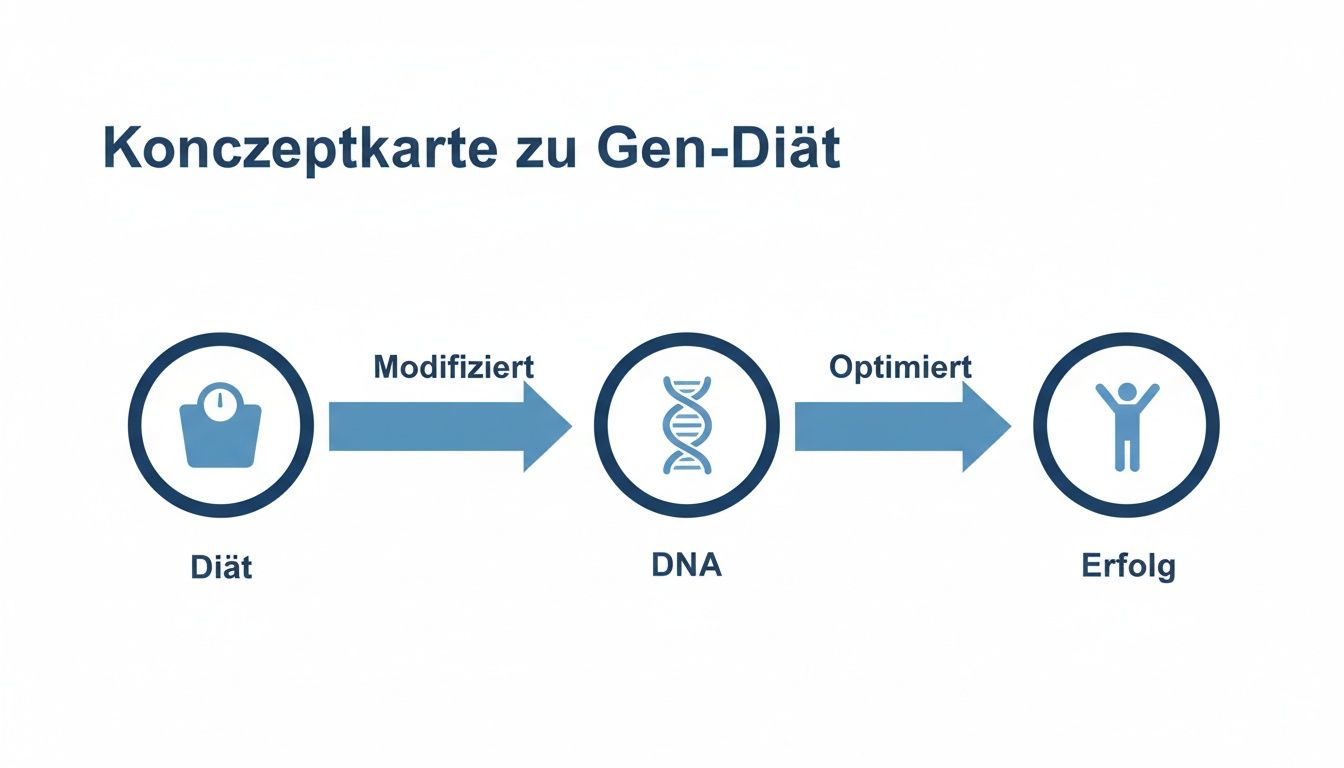
The graphic makes it clear: The key to success lies in deciphering your very personal genetic information in order to find the right nutritional strategy for you.
Why your friend loses weight with pasta and you don't
Have you ever wondered why your workout partner stays slim on a high-carb diet, while you seem to gain weight just by looking at pasta? The answer most likely lies in your genes. A tiny variation in your genetic makeup can determine whether a low-carb diet is the right path for you, or whether you should focus on healthy fats and complex carbohydrates.
A great example of this is fat sensitivity . Your genes determine how sensitive your body is to saturated fatty acids, which are often found in processed foods, sausages, or fatty cheeses. If you have a genetic predisposition that makes you more sensitive, a high-fat diet can completely sabotage your weight loss goals—even if you meticulously count calories. For someone else without this predisposition, the same diet might work perfectly.
And this is exactly where DNA analysis comes in. It gives you very specific information about your metabolic type:
- Carbohydrate type: Your body is a master at efficiently processing carbohydrates.
- Fat type: Your metabolism preferentially uses fats as its primary energy source.
- Mixed type: You tolerate both fats and carbohydrates well.
This knowledge is incredibly liberating. It takes the pressure off you to follow some trendy diet just because it worked for others. Instead, you can finally tailor your diet to your biological needs. It's not about having "good" or "bad" genes, but about knowing your unique profile and using it wisely for yourself.
If you would like to delve even deeper into the subject, read our article that explains what nutrigenetics is and how it determines our lives .
Your path to DNA analysis with mybody®: It's this easy
You might be wondering if the path to your personal genetic blueprint is complicated. The good news: It's easier than you think. At mybody®, we've designed the entire process so you can do everything comfortably from home, without any hassle.
Forget doctor's visits or cumbersome blood tests. Losing weight with DNA analysis begins with a simple step that fits seamlessly into your daily routine.
From order to trial in just a few steps
It all starts with ordering your mybody® DNA test. Once the kit arrives, you'll find everything you need for a simple and painless sample collection.
The entire process is really straightforward:
- Order online: Choose the test that suits your goals on our website and have it sent directly to your home.
- Simple saliva test: Instead of blood, we use a simple saliva test. Using the enclosed cotton swab, simply take a sample from your oral mucosa – this only takes a few seconds.
- Free return shipping: Pack the sample securely in the enclosed envelope and send it free of charge to our partner laboratory in Germany.
We deliberately kept this process as simple as possible to make it as easy as possible for you to get started. You don't need to be an expert or have any prior knowledge to complete the test correctly.
What happens to your DNA sample in the lab
Once we receive your sample, the scientific part begins. And here we place the utmost importance on quality, safety, and transparency, so that you feel well cared for at all times.
Your sample will be analyzed in a specialized laboratory in Germany certified according to ISO standards . This means that every single step is subject to the strictest quality controls. As soon as your sample arrives at the laboratory, it will also be pseudonymized . Your name will be replaced by a unique code, so that no one in the laboratory can directly link it to you.
Your data and your privacy are our most valuable assets. We treat your genetic information with the same care as our own – strictly in accordance with the guidelines of the European General Data Protection Regulation (GDPR).
The security of your data is not a secondary concern for us, but a core commitment. Reputable providers like mybody® prove every day that at-home DNA analysis is safe and absolutely reliable. The home tests using a saliva sample are simple, ISO-certified, and your sample is destroyed in accordance with regulations after analysis. In Germany, the Genetic Diagnostics Act has regulated such tests since 2010, and as a leading provider, we set the highest standards.
Your results report: More than just raw data
After a few weeks, the analysis is complete and you receive your personalized results report. This is precisely where a high-quality test differs from simple genetic tests. You don't receive a confusing table with gene names, but rather a clear and practical analysis.
Your mybody® report is essentially your personal user manual. It translates complex science into clear, practical recommendations:
- Your metabolic type: You'll find out whether you process fats or carbohydrates better.
- Personalized food lists: You can see exactly which foods are ideal for you and which you should avoid.
- Individual nutrient recommendations: Your report shows you whether you have an increased need for certain vitamins or minerals.
- Suitable sports: Discover whether endurance or strength training is a better fit for your genetics to achieve your goals.
This report is not a rigid set of rules, but a guide. It helps you make conscious and informed decisions about your health and transforms abstract science into a concrete tool for your everyday life. You can also find details about the entire process in our overview of the exact procedure of a mybody® DNA test .
Here's how to implement your results in everyday life
You're finally holding your mybody® results report in your hands. An exciting moment and the starting point for your journey to a healthier you. But knowledge alone doesn't change anything – the real magic begins now, with putting it into practice in everyday life.
Don't worry, it's easier than it sounds. This section is your personal guide, showing you how to translate the scientific findings from your DNA analysis into simple, practical habits.

Unlock your personal macronutrient map
Your report contains a clear recommendation for the ideal distribution of macronutrients – that is, carbohydrates, fats, and proteins. Don't see this as a rigid rule, but rather as your personal roadmap to optimal satiety and a metabolism running at full speed.
Let's say your analysis shows an increased sensitivity to saturated fats . This is no reason to panic and doesn't mean you have to eliminate fat completely. Rather, it's a valuable indicator: your body will benefit if you reduce your intake of animal fats and opt for high-quality plant-based alternatives.
- Clever swaps: Replace the butter on your bread with a delicious avocado spread or the sausage with hummus.
- Shop consciously: Opt for lean meats like chicken or turkey and take a look at the ingredient list of ready-made products – fats are often hidden there.
- Choose good fats: nuts, seeds, olive oil, and fatty fish like salmon are your friends. They provide valuable unsaturated fatty acids that your body loves.
Perhaps your DNA indicates an increased protein requirement . Fantastic! This is your secret weapon against cravings and for maintaining muscle mass while losing weight. Protein keeps you feeling full for longer and really boosts your metabolism.
Your genetic results are not a judgment, but a tool. They give you the power to make conscious decisions that perfectly suit your biology.
This personalized approach is precisely why weight loss with DNA analysis is so effective. You finally work with your body instead of fighting against it.
From knowledge to a full shopping cart
The implementation starts with the shopping. Your personalized grocery list from the mybody® report will become your best friend. Simply take a photo of it with your phone or write down the most important items before you head out.
A very practical example: Your report recommends a moderate carbohydrate diet. Instead of panicking and banishing all carbohydrates, you simply choose the better ones.
- Whole grain instead of white flour: Swap the classic white bread for a moist whole grain bread and white pasta for lentil or whole grain varieties.
- Smart side dishes: Opt for quinoa, sweet potatoes, or legumes more often instead of fries or croquettes. They provide you with sustained energy and valuable fiber.
It is precisely these small but targeted adjustments that make a huge difference to your energy levels and your weight loss success.
Plan and prepare meals cleverly
Our most successful clients have one thing in common: they plan their meals. It sounds more complicated than it is. Take half an hour on the weekend and roughly outline your main meals for the coming week.
A sample day focusing on proteins could look like this:
- Breakfast: Greek yogurt with fresh berries and a handful of nuts.
- Lunch: A large mixed salad with grilled chicken breast and a light yogurt dressing.
- Snack: A hard-boiled egg or a protein shake for in between meals.
- Dinner: A delicious salmon fillet with colorful roasted vegetables.
With a little planning, you can avoid the trap of impulse buys and unhealthy choices when hunger strikes. You'll stay in control and ensure that every meal brings you a step closer to your goal. You can find detailed tips on this in our guide to optimizing your diet after your test results .
The scientific basis for this success is compelling. Studies show that DNA-guided weight loss can yield 20–40% better results compared to standard diets. For fitness enthusiasts, DNA tests further optimize training: Genetic markers for optimal protein intake can increase muscle growth by 15–25% .
By gradually integrating these practical steps into your daily routine, you'll transform the complex data of your DNA into visible and lasting results. You'll learn to listen to your body's signals again and give it exactly what it needs to regain balance and reach your ideal weight.
What DNA analysis can really do – and where its limits are
To be perfectly honest: DNA analysis is an incredibly powerful tool on your journey to your ideal weight. However, it's not a magic switch that changes everything overnight. To get the most out of your results, it's important to have an open and realistic discussion about what it can and cannot do.
Imagine your body as a complex puzzle. Your genes are a central part of it—the framework that holds everything together, so to speak. But they aren't the whole picture. Your lifestyle, your sleep, your stress levels, and even the health of your gut are other important puzzle pieces that massively influence your weight loss success.
Your genes are a map, not a destiny.
Many people worry that a genetic analysis will deliver a final verdict. This is a major misconception. Your genetics indicate tendencies, but they do not prescribe an unalterable fate.
- An analysis won't tell you: "You must never eat chocolate again."
- Instead, she explains: "Your body is more sensitive to sugar, so you should enjoy it more consciously."
This knowledge is incredibly liberating because it gives you back control. Suddenly you understand why small slip-ups might have a bigger impact on you than on others. This way you learn to plan your diet cleverly so that such indulgences still have room without sabotaging your goals.
Your DNA analysis provides the "why" behind your body's reactions. It's your personal compass, helping you make smarter decisions instead of guessing blindly.
Science and the significance of the results
Nutrigenetics, the science of the interplay between genes and nutrition, is developing rapidly. The genes we analyze—such as the well-known FTO or APOA5 genes —have been clearly linked to metabolic processes in countless studies. Nevertheless, the research is not yet complete. Not every single gene has been fully deciphered.
What a DNA analysis can do:
- It identifies well-researched genetic variations (so-called SNPs).
- It reveals your personal tendencies in metabolism, appetite, and nutrient utilization.
- It forms a scientifically sound basis for highly personalized recommendations.
What it does not do:
- She cannot diagnose diseases.
- It never replaces medical advice if you have health problems.
- It cannot predict exactly how many kilos you will lose in a given timeframe.
The key to success always lies in the combination of your genetic predisposition and your behavior. A study might show that a specific gene variant increases the risk of being overweight by 20% . However, this doesn't mean you'll inevitably become overweight. It simply means that a conscious diet and regular exercise are all the more important for you to actively counteract this predisposition.
Data protection and trust? Our top priority.
A crucial point is how we handle your sensitive data. At mybody®, we guarantee the highest security standards. Your sample is pseudonymized in the lab, destroyed according to regulations after analysis, and your data is handled strictly in accordance with GDPR guidelines. You can rely on that.
Ultimately , weight loss with DNA analysis is a partnership. The analysis provides the map, but you walk the path yourself. By realistically assessing the possibilities and knowing the limitations, you use it for what it is: a powerful, scientifically sound ally on your journey to a healthier and lighter life.
Frequently asked questions about DNA analysis for weight loss
You're hearing about losing weight using your genes for the first time, and naturally your head is full of questions? That's totally understandable – and a good thing! It shows that you want to make an informed decision for yourself.
We've compiled the most frequently asked questions from our customers and provide clear and honest answers. This will help you decide if this path is right for you.
How quickly will I see initial results with a DNA diet?
We get this question almost every day. The honest answer? It varies from person to person. Your pace depends on your starting weight, your metabolism, and of course, how consistently you integrate the recommendations into your daily routine.
Many of our customers report noticeable changes within the first four to six weeks . They're not just referring to the number on the scale, but also a new energy level and a better sense of their own body. Unlike crash diets, this isn't about quick, short-term success, but about a sustainable transformation that truly suits you and your lifestyle.
Is a DNA analysis even suitable for me?
Generally, yes. A DNA analysis is a worthwhile investment in one's health for every adult. It's ideal for anyone who finally wants to understand how their body works in order to specifically improve their diet and lifestyle.
But it is especially valuable for people who:
- have already tried countless diets and are simply frustrated.
- to finally put an end to the dreaded yo-yo effect.
- Seek clarity on which diet – low-carb, low-fat or something completely different – works best for them personally.
- want to take their athletic performance to the next level.
This gives you a scientifically sound map of your body, so you no longer have to grope in the dark.
What actually happens to my genetic data at mybody®?
We know how personal and sensitive your genetic information is. That's why protecting your data is our highest priority. You can rely on that.
Your sample will be pseudonymized immediately in the lab. This means it will be assigned a random code and from that moment on will no longer be directly linked to your name.
The analysis itself takes place in a specialized laboratory in Germany certified according to ISO standards – not somewhere abroad. Once the analysis is complete, your biological sample will be professionally and securely destroyed. We strictly adhere to the European General Data Protection Regulation (GDPR) and would never share your data with third parties. That's a promise.
Does DNA analysis replace a visit to the doctor?
No, and that's a crucial point. Our DNA analysis is a fantastic tool for optimizing your diet and lifestyle. However, it is not a medical diagnosis .
It provides valuable insights for a healthier lifestyle and helps you achieve your goals. However, if you have health problems, chronic illnesses, or other medical questions, your doctor or therapist is and remains the right person to contact. See the analysis as a perfect complement, but never a replacement. It empowers you to take preventative and proactive responsibility for your health.
Are you ready to stop the guesswork and discover your personal path to greater well-being? At mybody®, you'll find scientifically sound DNA analyses that provide you with clear and actionable recommendations for your diet and lifestyle. Discover the right test for you now and start your journey to a healthier you at https://mybody-x.com .



Share:
Weight loss with genetic testing: Your genetic blueprint as the key to success
Discover the DNA test: Your personal key to health, nutrition & fitness