

Recognize, understand, and proactively prevent vitamin deficiency
TL;DR:
- Many people in Switzerland suffer from vitamin D deficiency, especially in winter.
- Symptoms are often nonspecific, such as fatigue and concentration problems.
- Blood tests are the most reliable method for detecting a deficiency.
Fatigue that does not go away. Concentration that is waning. An immune system that is constantly weakening. Many people in Switzerland are familiar with these symptoms, but they rarely look for the cause where it often lies: a vitamin deficiency. In fact, up to 34% of adults in Switzerland have vitamin D levels that are too low, and more than 80% have suboptimal levels in winter. This article explains what causes vitamin deficiency, how to recognize the signs, and what specific steps you can take.
Table of contents
- The basics: What does vitamin deficiency actually mean?
- How can you recognize a vitamin deficiency? Typical signs and risk factors
- Diagnosis: How is vitamin deficiency reliably detected?
- Prevention: How can vitamin deficiencies be prevented?
- An honest look: Why vitamin deficiency is often underestimated
- Your next steps toward better health
- Frequently asked questions
Key findings
| Point | Details |
|---|---|
| Vitamin deficiency is widespread | More than one-third of the Swiss population is affected by vitamin D deficiency. |
| Symptoms are often nonspecific | Symptoms such as fatigue or concentration problems often go unrecognized. |
| Targeted diagnostics are crucial | Only tests and professional assessment can reliably determine a deficiency. |
| Prevention is possible | With the right diet and supplements when needed, anyone can prevent a deficiency. |
| Take advantage of individual advice | Professional health analyses support a sustainable supply of all vitamins. |
The basics: What does vitamin deficiency actually mean?
Vitamin deficiency sounds like a problem from the past. Scurvy among sailors, rickets among malnourished children. But anyone who thinks it is no longer an issue today is mistaken. In modern Switzerland, where food shelves are full and meals seem plentiful, a deficiency in essential vitamins is surprisingly widespread. And it rarely appears dramatically; instead, it develops gradually and often remains invisible.
What exactly is vitamin deficiency? A vitamin deficiency occurs when the concentration of a particular vitamin in the body drops to the point where bodily functions are impaired. Medical professionals distinguish between three conditions:
- Manifest deficiency: The vitamin level is so low that clear physical symptoms occur. For example, bone pain in cases of severe vitamin D deficiency or anemia with an extreme B12 deficiency.
- Latent deficiency: Laboratory values are below the optimal range, but clinical symptoms have not yet appeared. This condition is most often overlooked, but it is harmful to health in the long term.
- Optimal supply: All markers are within the desired range, allowing the body to perform all functions fully.
"Most people who have a vitamin deficiency don't know it. Their levels are in the latent range; they don't really feel ill, but they don't feel quite well either."
For Switzerland, two vitamins in particular are critical. Vitamin D deficiency is especially common because of the latitude and the long, cloudy winters. Vitamin B12 deficiency, in turn, mainly affects older people and vegans because it occurs exclusively in animal products and requires a special protein called intrinsic factor for absorption in the intestine. If this protein is missing, even a diet rich in B12 is of little help.
The symptoms of a vitamin deficiency can be so nonspecific that they are mistaken for stress, lack of sleep, or normal aging. That is precisely what makes early detection so difficult—and so important. Anyone who wants to detect a vitamin D deficiency in time should not rely solely on their subjective sense of well-being.
How can you recognize a vitamin deficiency? Typical signs and risk factors
Now that we understand what a vitamin deficiency is, we can turn to the specific signs and risk factors. The tricky thing about a deficiency is that the symptoms often resemble everyday complaints. Who hasn't gone through phases of feeling exhausted or sleeping poorly? This normality makes it easy to overlook genuine warning signs.
Typical symptoms at a glance:
- Persistent tiredness and exhaustion despite getting enough sleep
- Concentration problems and mental sluggishness
- Muscle weakness or muscle cramps
- Depressed mood or lack of motivation
- Frequent colds and a weakened immune system
- Hair loss or brittle nails
- Tingling or numbness in the hands and feet (typical of vitamin B12 deficiency)
- Bone pain or an increased risk of fractures (typical of vitamin D deficiency)
What this list shows: None of these symptoms is conclusive on its own. Fatigue can have a hundred causes. The same goes for hair loss. That is why it is important to consider several symptoms together and not hastily attribute them to stress or lack of sleep.
Table: An overview of the most important deficiency conditions
| Vitamin | Common symptoms | Main risk groups |
|---|---|---|
| Vitamin D | Fatigue, bone pain, frequent infections, depressed mood | All Swiss people in winter, people with little sun exposure, older people |
| Vitamin B12 | Exhaustion, tingling, concentration problems, anemia | Vegans, older people, people with gastrointestinal disorders |
| Folic acid | Anemia, exhaustion, memory problems | Pregnant women, women of childbearing age, alcohol consumers |
| Vitamin C | Frequent infections, impaired wound healing, bleeding gums | Smokers, people with an unbalanced diet |
| Iron (not a vitamin, but often deficient at the same time) | Fatigue, paleness, rapid heartbeat | Women, vegans, athletes |
According to current data, 21 to 41% of adults in Switzerland are particularly at risk of B12 deficiency, especially older people and vegans. These figures surprise many, because B12 is not considered an “exotic” vitamin. However, the body cannot produce it itself, and intestinal absorption is impaired in many people.
For a comprehensive overview of all possible symptoms of vitamin deficiency, it is worth knowing the various patterns in detail. For example, knowing the typical vitamin B12 deficiency symptoms helps you recognize warning signs earlier and take targeted action. The causes of vitamin B12 deficiency range from an improper diet to diseases of the digestive tract.
Pro tip: Do not focus on individual symptoms, but on patterns. If fatigue, concentration problems, and a weakened immune system occur at the same time, this is a clearer signal than any symptom on its own.
Diagnosis: How is vitamin deficiency reliably detected?
After considering the symptoms, the crucial question is: How can you check your vitamin status accurately and reliably? Symptoms alone are not enough. Fatigue can also indicate thyroid problems, iron deficiency, or depression. Only a test provides certainty.
The blood test as the gold standard
The most direct way to diagnose a deficiency is a blood test. In the laboratory, the blood levels of certain vitamins are measured, such as 25-OH vitamin D for vitamin D or holotranscobalamin for vitamin B12. These values show whether there is an inadequate supply. The problem in Switzerland: Since 2022, health insurers have only covered blood tests to a limited extent, particularly for vitamin D and B12. Many people have to pay the costs themselves, which discourages them from finding out their status at all.

Functional markers as a supplementary method
A simple blood level test shows how much of a vitamin is present in the blood. But whether the body can actually use this vitamin is another question. This is where so-called functional markers help. Methylmalonic acid (MMA) is one such marker for vitamin B12. Elevated MMA levels in the blood or urine indicate that the body cannot adequately utilize B12, even if the B12 level itself is still within the borderline range. This makes MMA a more sensitive early warning sign.
Step-by-step self-diagnosis:
- Document symptoms: For two to four weeks, write down which symptoms occur and how often. Patterns are more informative than individual bad days.
- Check risk factors: Are you vegan, over 60, do you work mainly indoors, or do you live in a country with few hours of sunlight? These factors significantly increase your risk.
- Use a self-test: High-quality vitamin deficiency self-tests enable convenient blood collection at home. The sample is sent to a certified laboratory, and the result arrives via app or report.
- Interpret results correctly: Laboratory values have reference ranges, but being “within the normal range” does not automatically mean “optimal.” Always have your results interpreted by an expert.
- Take targeted measures: Only once it is clear which vitamins are actually lacking does targeted supplementation or dietary adjustment make sense.
Anyone who wants to know their status precisely can use mybody® to test specifically for nutrient deficiencies while also relying on laboratory-tested quality. Precise methods are now available, particularly for measuring vitamin B12 deficiency, going far beyond a simple estimate.
Pro tip: Borderline laboratory results do not mean that everything is fine. A value at the lower end of the normal range combined with matching symptoms is a finding that should be taken seriously. Always have your results reviewed by a specialist, not just by the table on the laboratory report.
Prevention: How can vitamin deficiencies be prevented?
If a deficiency has been identified or there is an increased risk, prevention is the most important next step. And even those who currently have no symptoms can benefit in the long term from smart preventive care. The body stores some vitamins, while it needs others freshly every day. This makes the strategy individual.
What really helps, concretely and practically:
- Promote vitamin D synthesis: Getting 15 to 30 minutes of midday sun on your arms and face every day from April to October is enough for many people. In winter, this hardly works in Switzerland.
- Strengthen vitamin B12 sources: Meat, fish, eggs, and dairy products provide B12. Vegans must rely on supplements or fortified foods, as plant-based sources do not contain a usable form.
- Make use of seasonal produce: Fresh regional fruit and vegetables contain more vitamins than imported produce that has been transported for weeks.
- Recognize high-risk periods: Winter, pregnancy, breastfeeding, chronic illnesses, and intense exercise increase vitamin requirements. During these periods, the body needs more.
- No blind supplementation: Anyone who starts taking supplements without a test result risks overdosing. Vitamins A and D are fat-soluble and can accumulate when taken in excess.
Comparison: Natural intake versus supplementation
| Criterion | Natural intake through diet | Targeted supplementation |
|---|---|---|
| Bioavailability | Often optimal, as vitamins are absorbed with accompanying nutrients | Varies greatly depending on the product and form |
| Dosage control | Difficult because levels in foods vary | Can be precise when based on test results |
| Risk of overdose | Very low with a normal diet | Possible, especially with fat-soluble vitamins |
| Cost | Generally less expensive | Can become costly without targeted use |
| Practicality for everyday use | Requires planning and knowledge of food sources | Simple and time-saving |
| Recommendation | Foundation for everyone | Beneficial in cases of confirmed deficiency or increased risk |
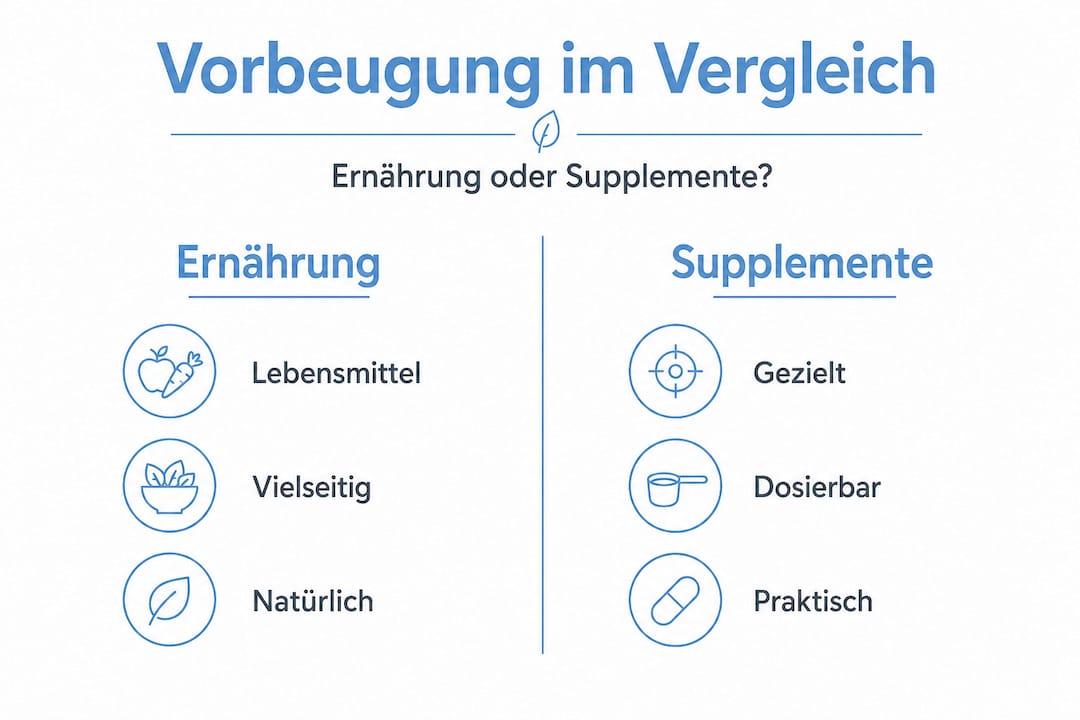
Specific recommendations apply in Switzerland: In winter, 800 international units of vitamin D daily are recommended as a supplement for at-risk groups. Vegans should supplement B12 as a matter of course. For practical dietary guidance, useful information on vitamin B12 nutrition shows which foods really provide it and which only sound good on paper.
A well-thought-out strategy for preventing nutrient deficiencies always combines several approaches: a good diet as the foundation, targeted supplementation when a deficiency has been confirmed, and regular monitoring of your own status.
Expert tip: If you belong to a risk group—namely, if you are vegan, over 60 years old, or spend little time outdoors in winter—you should have your vitamin status tested more than once. An annual check-up gives you peace of mind and helps you take corrective action early, before symptoms appear.
An honest look: Why vitamin deficiency is often underestimated
There is an uncomfortable truth that many people would rather not hear: Even those who eat mindfully, have salad every day, consume little meat, and take care of their health can have a vitamin deficiency. A healthy diet alone is no guarantee.
Why? Because many factors come into play that have nothing to do with the quality of your food. Switzerland's geographical latitude, for example. From October to April, the sunlight is simply insufficient for the skin to synthesize enough vitamin D. That is physics, not a lifestyle issue. Even people who go for a walk every day remain inadequately supplied in winter. The high prevalence of vitamin D deficiency in Switzerland is not an individual's weakness, but a geographical reality.
There is another trap as well: the feeling that you would already know if something were wrong. This thought is tempting, but incorrect. The body compensates for a latent deficiency for a long time before symptoms appear. It is a master at compensating. By the time symptoms emerge, a deficiency may already have existed for months or years. Waiting for obvious symptoms is therefore not a good strategy.
Something we repeatedly notice at mybody® is that people who feel healthy are sometimes the most surprised when their test results show that vitamin D, B12, or other nutrients are not in the optimal range. Subjective well-being and objective vitamin status often do not match. That is precisely why individual measurements are so valuable. They replace gut feeling with facts.
Another misconception is the assumption that supplementation is always the solution. Taking capsules on a whim without a testing basis does not optimize anything. Too much vitamin A can damage the liver. Too much vitamin D raises blood calcium levels to a dangerous level. And too little of a particular vitamin that you are not supplementing remains too little. Only those who know their status can take targeted action.
The solution is not panic, but clarity. If you know your vitamin status and where you stand, you can make informed decisions. And today, that is easier than ever. Nutrient deficiencies can be addressed in a targeted way once you know whether and where they exist. The first step is always measurement.
We believe that preventive health analyses are not a luxury, but one of the smartest investments you can make in yourself. Recognizing early where the body needs support helps you live healthier, more capable, and with fewer complaints in the long term. This is not a promise; it is biology.
Your next steps toward better health
You now know that vitamin deficiencies are widespread in Switzerland, often go undetected, and can affect health even at latent levels. This knowledge is valuable. But knowledge alone is not enough. What matters is the next concrete step.
At mybody®, you can conveniently have your vitamin status tested from home. Using ISO-certified laboratory analyses of small blood samples you collect yourself, you receive a personalized report with precise values, clear interpretations, and individual dietary recommendations. No waiting for a doctor’s appointment. No uncertainty about insurance coverage. Just reliable data you can use to take action. More than 11,300 customers have already chosen this approach and sustainably improved their health status. Be one of them.
Frequently asked questions
Why is vitamin D deficiency so widespread in Switzerland?
Due to its geographical location and limited hours of sunlight in winter, many people in Switzerland have vitamin D levels that are too low. Up to 34% of adults fall below the recommended threshold, and more than 80% have suboptimal levels in winter.
Which symptoms indicate a vitamin deficiency?
Typical symptoms include fatigue, difficulty concentrating, muscle weakness, or a depressed mood. Several of these symptoms occurring together should raise awareness, as a single symptom alone is rarely conclusive.
Are blood tests to detect vitamin deficiencies covered by health insurance in Switzerland?
Since 2022, health insurers have covered blood tests only to a limited extent. Especially for vitamin D and B12, many people have to pay the costs themselves. Affordable home tests are a practical alternative.
How can I best prevent a vitamin deficiency?
A varied diet, sufficient outdoor exercise, and targeted supplementation when needed are key. For at-risk groups, experts recommend 800 IU of vitamin D daily in winter, as well as ongoing B12 supplementation for vegans.
Are vegans or older people particularly at risk?
Yes, older people and vegans in particular often have a vitamin B12 deficiency. 21 to 41% of adults are affected, and these groups should have their status checked regularly and specifically.
Recommendation
- Recognize vitamin deficiencies and take individual action – mybody®x
- Recognize nutrient deficiency symptoms and address them effectively – mybody®x
- Recognize vitamin B12 deficiency symptoms and take the right action – mybody®x
- Recognize and sustainably address vitamin B12 deficiency – mybody®x
- Vitamin D deficiency symptoms: Recognize the signs in time – Vitaminone.dk



Share now:
Eat for a healthy gut: Your guide to greater well-being
Gut Health Test: Your Path to Greater Well-Being