

How magnesium naturally and effectively helps with period pain
For many women, magnesium is no longer a secret tip but a proven and, above all, natural aid for period pain. Its superpower lies in specifically relaxing tense uterine muscles while also reducing the production of the messengers that trigger the pain in the first place. Countless women already rely on magnesium to noticeably relieve unpleasant cramps and general discomfort during their period.
Why magnesium is your ally against period pain
Period pain, medically known as dysmenorrhea, can make your entire day miserable. Many people then almost automatically reach for painkillers. But there is a natural approach that not only masks the symptoms but addresses the root of the problem. This is where magnesium comes in—a mineral that plays an absolutely key role in your well-being during your period.
Think of your uterus as a strong muscle. During menstruation, it contracts to shed the uterine lining. The process is controlled by hormone-like messengers called prostaglandins. When their production gets out of control, excessive, painful cramps occur. Magnesium intervenes at two key points:
- It is the natural relaxation manager: Magnesium is calcium’s direct counterpart. While calcium is responsible for muscle tension, magnesium promotes relaxation. A healthy magnesium level therefore helps calm excessive uterine contractions and restore balance.
- It curbs pain messengers: The mineral helps reduce the production of pain-causing prostaglandins. Fewer prostaglandins generally also mean less severe pain.
A widespread but often unrecognized problem
The real problem is that many women have a magnesium deficiency without even realizing it. The reasons are varied: a modern, often acid-heavy diet, chronic stress that depletes your magnesium reserves, or intense exercise. This unnoticed deficiency can significantly worsen the symptoms of menstrual discomfort and premenstrual syndrome (PMS).
There is a direct connection: Low magnesium levels often correlate with severe menstrual pain. Studies show that women with pronounced symptoms frequently have significantly lower magnesium levels than women without cramps.
Unfortunately, inadequate intake is not uncommon in Germany. According to the National Nutrition Survey (NVS II), women's average magnesium intake is just 284 mg per day. That is significantly less than the recommended 300–500 mg. This becomes particularly relevant when you consider that more than three-quarters of women of childbearing age experience PMS—a condition closely linked to low magnesium levels. Learn more about how diet affects your menstruation on zentrum-der-gesundheit.de.
So if you want to actively address your symptoms instead of merely treating them, taking an honest look at your magnesium levels is a fundamentally important first step. A mybody®x nutrient test can provide clarity and show you whether a deficiency could be the cause of your pain.
How magnesium really affects your period pain
To understand why magnesium plays such a crucial role in period pain, we need to take a brief journey into the fascinating world of your body. Imagine your uterus as an incredibly strong yet sensitive muscle. During your period, this muscle contracts—you feel this as the typical cramps. Here, two minerals act as opponents on the same team: calcium and magnesium.
Calcium is responsible for tension and muscle contraction. Magnesium, on the other hand, is the body's natural relaxation manager. It ensures that the muscle can relax again after tensing. When there is an imbalance in your body and too little magnesium is present, calcium gains the upper hand.
The result? The muscle remains tense. The contractions become stronger, last longer, and consequently feel significantly more painful. An adequate magnesium level ensures that this delicate balance is maintained and that the cramps do not become so intense in the first place.
The double blow against pain
But magnesium does more than just relax the muscles. It acts on a second, equally important front to relieve your period pain. This involves hormone-like chemical messengers known as prostaglandins.
Prostaglandins are the actual triggers of uterine contractions. High levels of these chemical messengers cause severe cramps. But that's not all: They also increase your sensitivity to pain and can promote inflammation in the body.
This is exactly where magnesium comes in:
- It slows production: A healthy magnesium level helps regulate the release of pain-triggering prostaglandins to a normal level.
- It blocks pain transmission: Magnesium can block receptors in the brain responsible for pain perception (NMDA receptors), which may further reduce the intensity of the pain felt.
So, magnesium does not just combat a symptom; it directly addresses two of the main causes of period pain: muscle tension and the excessive production of pain messengers.
Magnesium acts like a peacemaker in the body: It calms overactive muscles and soothes the pain-triggering messengers. Instead of merely numbing the pain, it helps eliminate the causes of the chaos.
This concept map visualizes the direct connection between a deficiency, the resulting pain, and relief through magnesium.
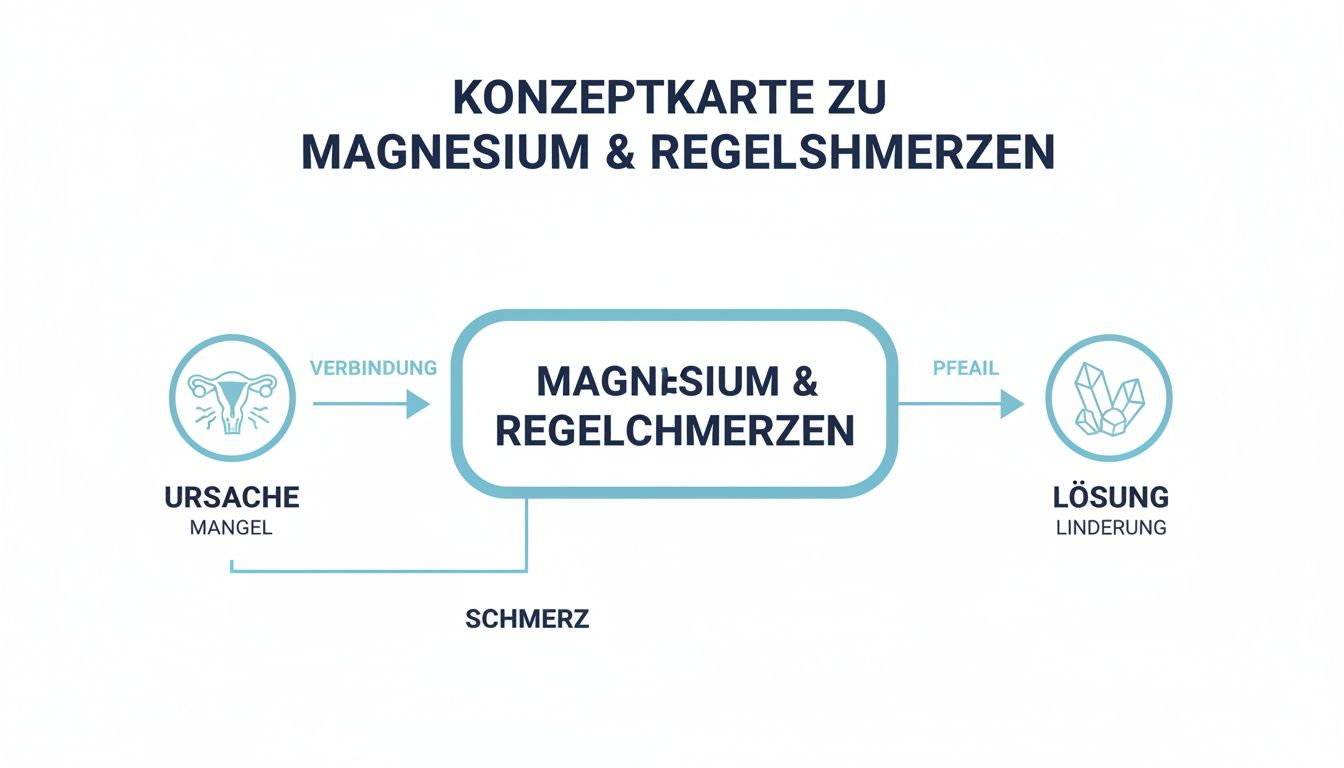
The graphic makes it clear at a glance: The mineral is the direct and logical answer to the problem of uterine cramps because it addresses the root cause directly.
Why your body needs more magnesium
The modern lifestyle can be a real magnesium drain. Stress, an unbalanced diet with lots of processed foods, and even intense exercise can deplete your magnesium stores.
This makes it difficult for many women to get enough of this important mineral through their diet alone. Your body cannot produce magnesium itself, so it is completely dependent on an external supply. If there is a deficiency, it can become particularly painful during your period.
The logical consequence is to keep an eye on your magnesium status. Before you reach indiscriminately for supplements, however, it makes sense to get clarity. A targeted mybody®x nutrient test can show you exactly how well you are supplied with magnesium and other important minerals. With this knowledge, you can support your body in a targeted way and no longer have to grope in the dark.
How to use magnesium for maximum effectiveness
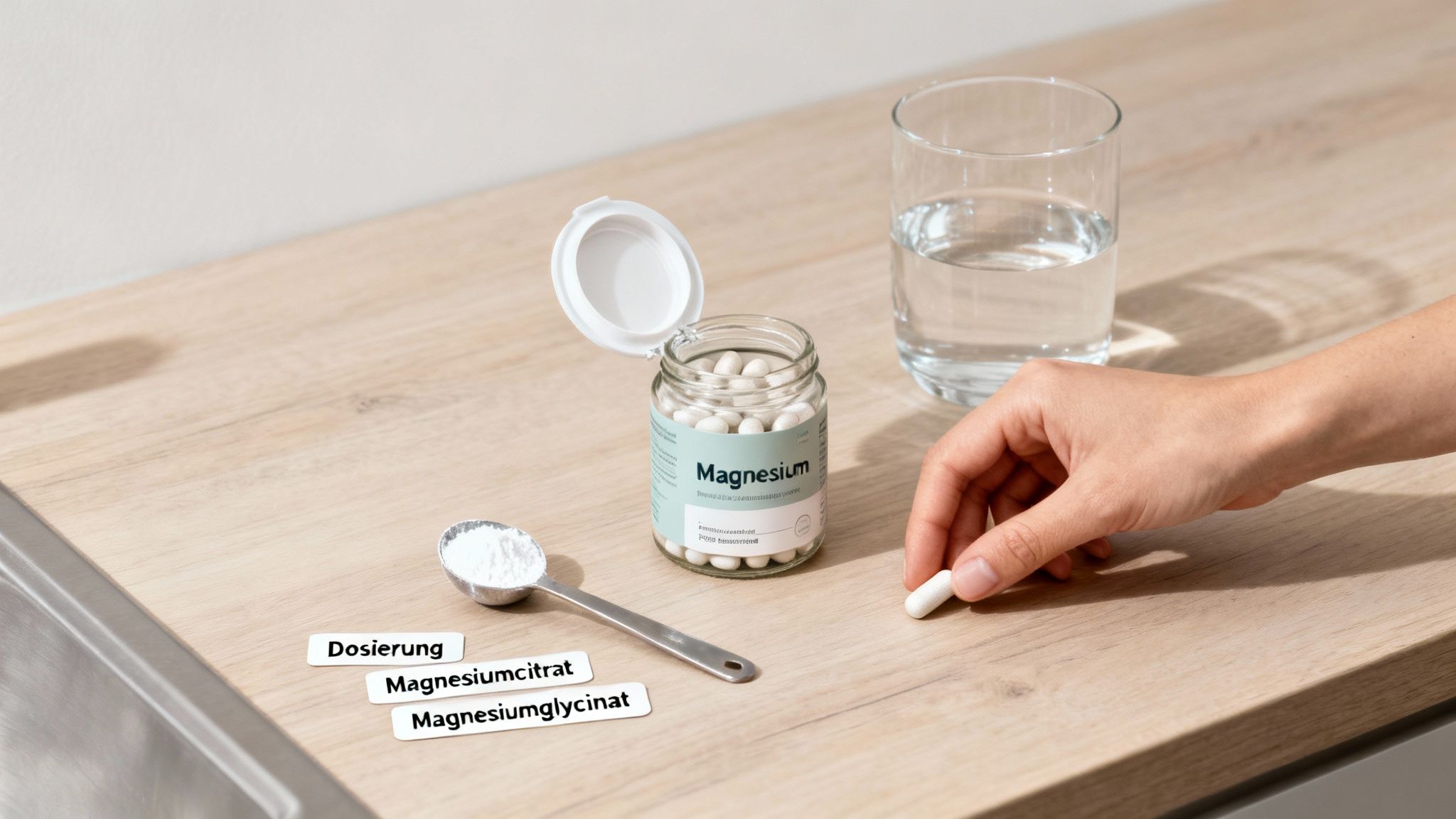
Okay, you now know why magnesium can be such a powerful ally against period pain. But the how is just as important. It’s not enough to simply take any magnesium supplement. For the best results, the right form, the appropriate dosage, and the ideal timing are key.
Let’s go through this step by step so you can truly get the most out of it.
Which form of magnesium is best for you?
Do you also sometimes feel at a loss in front of the shelf of dietary supplements? The selection of magnesium compounds can be genuinely overwhelming: citrate, glycinate, oxide—which is the difference, and which one works best for cramps? The key word here is bioavailability.
This term describes how well your body can absorb and actually use a substance. Not every form reaches your cells equally well.
Overview of common forms of magnesium and their suitability
The world of magnesium supplements is diverse, but don't worry—you don't have to be a chemist to make the right choice. The following table gives you a quick overview of what each compound does best. This makes it easier to find the product that exactly suits your needs.
| Form of magnesium | Bioavailability (absorption by the body) | Particularly suitable for |
|---|---|---|
| Magnesium citrate | High | Fast relief from muscle cramps and tension. Caution: High doses may sometimes have a laxative effect. |
| Magnesium glycinate | Very high | Very gentle on the stomach, making it ideal for sensitive digestion. The glycine also provides an additional calming effect. |
| Magnesium malate | High | Good for exhaustion and fatigue, as it supports cellular energy production. |
| Magnesium oxide | Low | Inexpensive, but the body can absorb only a small amount of it. Not very suitable for targeted relief from menstrual pain. |
For targeted use against menstrual pain, magnesium citrate and magnesium glycinate are therefore almost always the best choices. They are well absorbed by the body and work exactly where it matters: by relaxing your muscles.
The right dosage and the best time to take it
The question of the right amount is, of course, crucial. Too little will have no effect, while too much can cause loose stools. As a general recommendation for women, around 300 mg of magnesium per day is considered appropriate.
But the right timing is almost even more important. The key to success lies in prevention, not acute treatment. Magnesium works best when your stores are already well replenished before the pain even begins.
An exciting study of German female students with dysmenorrhea demonstrated this impressively. Over a period of two months, the participants took either 150 mg or 300 mg of magnesium daily. Both groups experienced significant relief compared with the placebo group, with the higher dose proving even more effective. As you can see, even moderate amounts—but especially regular intake—can make a huge difference. You can read more about these interesting study results on femna.de.
Here are a few practical tips for your routine:
- Start slowly: Begin with a smaller dose (e.g., 150–200 mg) and see how your body responds. If everything is fine, you can gradually increase it to around 300 mg.
- Stay consistent: It’s best to take magnesium daily, not just in the days before your period. Ideally, start at least one week beforehand or simply incorporate it into your routine continuously.
- Split the dose: To improve absorption and avoid digestive problems, you can split your daily dose—for example, take half in the morning and the other half in the evening.
- Take with food: Taking magnesium together with a meal makes it more tolerable for many people.
Whether you ultimately choose powder, capsules, or tablets is purely a matter of preference. The most important thing is consistency. This is the only way to build up a stable magnesium level that relaxes your uterus and helps you get through your period more gently.
How to meet your magnesium needs through your diet
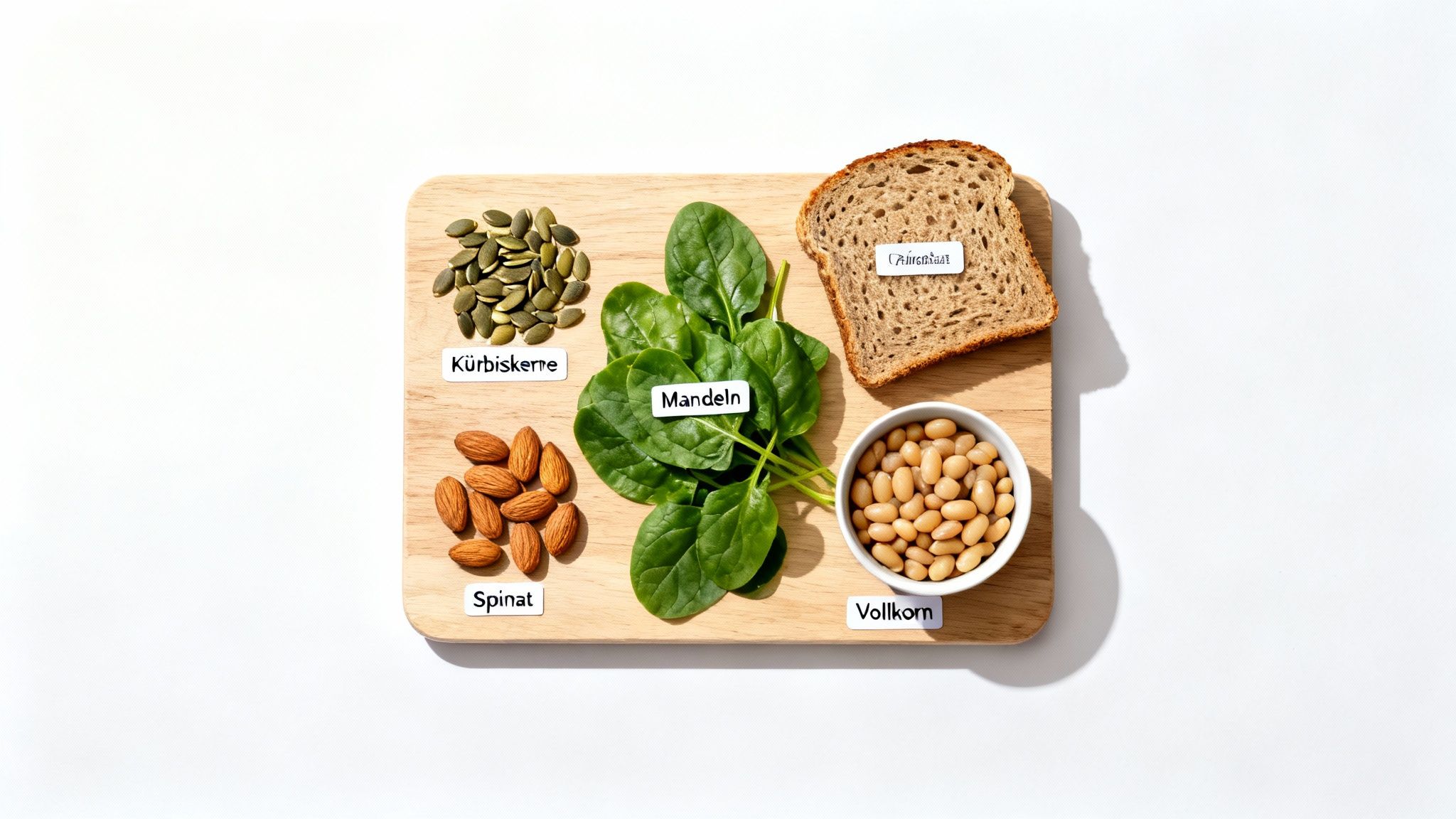
Dietary supplements are a fantastic and often necessary support for deliberately replenishing your magnesium stores. No question about it. But you always lay the real foundation for long-term well-being with a mindful diet. Fortunately, nature has given us an abundance of foods packed with this valuable mineral.
By cleverly incorporating these little powerhouses into your everyday life, you create the ideal foundation for a balanced cycle and can use magnesium for menstrual cramps preventively. It’s not about strict deprivation, but about smartly enriching your meal plan.
The top magnesium sources for your plate
Some foods are true magnesium powerhouses and are incredibly easy to incorporate into your meals. Instead of boring you with dry numbers, we’re giving you a practical overview here that shows how easy it can be to increase your intake.
Top 10 magnesium-rich foods for your meal plan
The following list is your supermarket cheat sheet. It shows you which foods should be at the top of your shopping list and how you can effortlessly incorporate them into your daily routine.
| Food | Magnesium content per 100 g (approx.) | Practical everyday tip |
|---|---|---|
| Pumpkin seeds | 592 mg | Simply snack on a handful or sprinkle over salads and soups as a crunchy topping. |
| Almonds | 291 mg | A perfect companion for your morning muesli or as nutritious almond butter on your whole-grain toast. |
| Dark chocolate (>70%) | 228 mg | A piece of high-quality chocolate can satisfy cravings while also providing valuable magnesium. Yes, you read that right! |
| Cooked white beans | 140 mg | Ideal for creamy dips such as hummus, as a filling ingredient in stews, or as a base for vegetarian burgers. |
| Cooked spinach | 87 mg | A classic in a morning smoothie, as a side dish for lunch, or fresh in a salad. |
| Whole-grain bread | 82 mg | Swap white bread for a good whole-grain variety to easily increase your daily magnesium intake. |
| Avocado | 58 mg | Versatile as a spread, in salads, or as a creamy base for dips and sauces. |
| Salmon | 53 mg | An excellent source of healthy omega-3 fatty acids and magnesium. Perfect for a light dinner. |
| Banana | 27 mg | The ideal quick snack on the go, providing you with not only magnesium but also potassium. |
| Plain yogurt | 19 mg | A great base for your breakfast that pairs wonderfully with nuts, seeds, and fruit. |
These foods are not only packed with magnesium, but also provide many other important nutrients your body needs for a balanced cycle. If you would like to delve deeper into the world of minerals, you can find fascinating background information in our article about what are minerals.
Watch out for these magnesium blockers
Knowing the so-called “magnesium blockers” in your diet and avoiding them is just as important as getting enough magnesium. Certain foods and habits can block the absorption of this mineral in the intestines or cause it to be excreted more quickly.
Imagine your body as a garden. You can water it as much as you like (provide magnesium), but if the soil has holes (because of magnesium blockers), too little ultimately reaches the plants.
Some of the most common culprits include:
- Highly processed foods: Ready-made meals, fast food, and many snacks often contain phosphates that bind to magnesium and make it unusable for your body.
- Sugar and white flour products: A high intake of refined sugar causes your body to excrete more magnesium through the urine.
- Phosphate-containing beverages: Cola and other soft drinks in particular are rich in phosphoric acid, which binds magnesium in the intestines before it can be absorbed.
- Excessive alcohol consumption: Alcohol has a diuretic effect and literally flushes valuable minerals, including magnesium, out of the body.
Being mindful of these foods helps you effectively protect your magnesium stores and get the most out of your healthy diet.
When a magnesium deficiency test makes sense for you
You have now read a great deal about how crucial magnesium can be for period pain. Perhaps you recognize some of the symptoms described and are wondering: Could a deficiency be the true cause of my discomfort? Or do you simply want clarity before deliberately turning to dietary supplements? That is exactly when it is time to take a closer look at your magnesium status.
Instead of taking something blindly, you give yourself the opportunity to make an informed decision for your health. A test provides facts instead of assumptions and is the first step toward taking control yourself.
Recognizing your body’s warning signs
Severe period pain is often just the tip of the iceberg. Magnesium deficiency can manifest through a whole range of additional, often nonspecific symptoms that you may not immediately associate with your cycle. Your body is sending you signals—you just need to learn how to interpret them.
Look out for the following signs, which often occur alongside typical menstrual symptoms:
- Muscle twitches and cramps: Nocturnal calf cramps are the classic example, but an annoyingly twitching eyelid can also be a clear sign.
- Persistent tiredness and exhaustion: Do you often feel inexplicably sluggish and lacking in energy, even though you actually get enough sleep?
- Headaches and migraines: Migraine attacks that occur regularly around your period in particular are often associated with low magnesium levels.
- Inner restlessness and sleep disturbances: Magnesium acts like a natural calming agent for the nervous system. When it is lacking, it is often harder to unwind in the evening and sleep through the night.
- Craving chocolate: This is no coincidence! Your body is instinctively signaling what it needs—dark chocolate is an excellent source of magnesium.
If several of these points sound all too familiar, this is a strong indication that your magnesium stores may not be optimally replenished. You can also find comprehensive information on this topic in our guide to the many symptoms of magnesium deficiency.
Why a simple blood test is often not enough
You may now be thinking of the classic blood test at the doctor’s office. But there is one crucial catch: Standard measurement in blood serum is often not truly meaningful. Why? Because only about 1 % of all the magnesium in the body is found in the blood serum at all. By far the largest share is stored in your bones, muscles, and cells.
Your body is a master at maintaining balance. It tries to keep the magnesium level in your blood stable at all costs. If the level falls, it simply takes the missing magnesium from its reserves, for example from the bones. A normal blood value can therefore cleverly conceal a deficiency in the cells.
A measurement of magnesium directly in the red blood cells (erythrocytes) is therefore much more informative. This value reflects your long-term supply and provides a much more accurate picture of your actual status.
The direct route to clarity with a mybody®x home test
To make this process as easy and straightforward as possible, there are at-home nutrient tests. With the mybody®x nutrient test, you can conveniently have your magnesium levels and other important minerals and vitamins checked from home.
It is this simple: You take a small blood sample from your fingertip, send it to our certified German laboratory, and receive a detailed, easy-to-understand report after a short time. Based on your individual results, you receive specific recommendations tailored to your needs.
Instead of continuing to guess, you gain real clarity. This allows you to adjust your diet and any supplementation in a targeted way. That is the crucial step toward taking responsibility for your health and giving your body the best possible support.
Magnesium instead of painkillers: How to break the vicious cycle
For many women, reaching for ibuprofen or naproxen during their period is just as routine as using a menstrual cup or tampons. These painkillers often provide quick relief, but honestly: They do not address the problem at its root. They merely numb the symptom while your body continues to struggle in the background. In the long term, this can not only put strain on the stomach but also cause other side effects. But what if there were a gentler, more sustainable approach?
This is exactly where magnesium as an alternative to painkillers comes in. Instead of simply blocking pain signals, magnesium addresses the issue much more deeply: It acts as a natural muscle relaxant for the uterine muscles and helps reduce the production of pain-triggering prostaglandins. So magnesium is not a short-term fix, but genuine, root-cause-oriented support for your body.
Long-term relief instead of quick numbing
The key difference lies in the approach. While painkillers rush in like the fire department only once something is already burning, magnesium works preventively and over the long term. The aim is to keep your magnesium stores continuously topped up so that these agonizing cramps do not arise in the first place.
Think of magnesium as a peacemaker in the body: It promotes relaxation and balance before the “battle”—that is, severe pain—has even begun. Painkillers only step in once chaos has already broken out.
Impressive long-term observations from Germany confirm exactly that. In a study in which women with period pain received magnesium for six months, a remarkable 80 percent of them were symptom-free by the end. These results cast the sole use of painkillers for acute treatment in a whole new light and show the enormous potential of maintaining a consistent magnesium supply. You can find more information in this article about the research on magnesium for PMS on diasporal.com.
When magnesium can supplement or replace painkillers
Magnesium is not necessarily a one-to-one replacement for an acute painkiller in every situation. Instead, think of it as a smart strategy for drastically reducing the need for such medications from the outset. When the pain is very severe, it can absolutely make sense to combine both at first.
However, if you notice that your cramps become milder and less frequent with regular magnesium intake, you can gradually try to stop taking painkillers. Many women report that they were able to significantly reduce their use of painkillers or even stop taking them altogether.
But remember that combining dietary supplements and medications always requires careful consideration. To make sure there are no unwanted reactions, you should learn about possible interactions. Our article on medications and their interactions contains important information on this topic.
The goal is long-term well-being—a perspective in which you are no longer dependent on painkillers, but instead give your body the building blocks it needs to help itself.
Your questions about magnesium for period pain—answered briefly and concisely
You have now learned a lot about how magnesium can become your secret weapon against those nasty cramps. But you probably still have a few very practical questions on your mind. That’s completely normal!
Here, we have answered the most frequently asked questions for you. This way, you can plan your next steps with confidence and peace of mind.
How quickly does magnesium work for period pain?
Magnesium is not a sprinter like a conventional painkiller, but more of a marathon runner. You generally will not feel its effects within minutes. This is because it does not simply numb a symptom but addresses the root of the problem: It relaxes tense muscles and replenishes the body's own stores.
The key to success is therefore regular and preventive use. The aim is to continuously give your body what it needs.
Many women report noticeable relief from their symptoms after about one to three cycles during which they consistently took magnesium. So think less in terms of taking an acute pill when the pain strikes and more in terms of a long-term strategy to prevent severe cramps from becoming so intense in the first place.
Can I take magnesium together with the pill?
Yes, this is generally completely harmless. So far, no negative interactions between taking magnesium and hormonal contraceptives such as the birth control pill are known. You can therefore safely combine the two.
In fact, there is even evidence that the pill may slightly increase your body's magnesium requirements. Supplementing your intake can therefore be particularly beneficial for keeping your levels stable and supporting your overall well-being.
Safety comes first: If you are unsure or are taking other medications, it is best to briefly consult your doctor or pharmacist. This way, you can be sure that everything works together optimally for you personally.
What side effects can taking magnesium cause?
Magnesium is generally a very well-tolerated and safe mineral. The most common side effect usually occurs only when you increase the dose too quickly or take an amount that is too high for your body all at once.
The typical sign of this is soft stools or mild diarrhea. This is not dangerous; it is simply a signal from your body that it currently cannot absorb more magnesium than you are providing. If this happens to you, simply reduce the dose until your digestion has settled again.
A good tip is always to start with a lower dose (e.g. 150-200 mg) and then gradually increase it over several days. This way, you can calmly find your personal ideal dose without overtaxing your digestion.
Do you finally want clarity about your nutrient status instead of continuing to guess? With the self-tests from mybody®x, you can easily and conveniently measure your magnesium levels and many other important values from home. Take control and give your body exactly what it needs. Find the right test for you at mybody-x.com now.



Share now:
Your food allergy test as a clear guide to your diet
At-home milk protein allergy test: Understand your body’s signals