

Glycemic index table for everyday use
A glycemic index table is essentially a simple ranking: it sorts carbohydrate-containing foods according to how they affect your blood sugar level. Foods with a low GI cause it to rise slowly, while those with a high GI cause a rapid spike.
What the glycemic index really tells you
You've probably heard of the glycemic index (GI), but what is behind this number, and what does it actually mean for your body? The best way to think of the GI is as a kind of speedometer for carbohydrates. On a scale of 0 to 100, it measures how quickly a food raises your blood sugar level. The higher the value, the faster the rise.
This knowledge is by no means only relevant for people with diabetes. A stable blood sugar level is the key to consistent energy throughout the day and better concentration, and it can also help with weight management. When you avoid sharp blood sugar spikes, you also prevent the dreaded cravings that often follow eating high-GI foods. Your metabolism naturally plays a central role here, as you can also read in our guide on what metabolism is.
Understanding the three GI categories
In practice, foods are usually divided into three simple categories:
- Low GI (under 55): These foods provide a slow, controlled rise in blood sugar. Perfect for long-lasting energy without crashes.
- Medium GI (55–69): They fall in the middle range and are perfectly fine in moderation.
- High GI (over 70): They give you a quick sugar boost, but should be used mindfully—for example, after exercising.
The following infographic gives you an overview of how foods typically fall into these three categories.
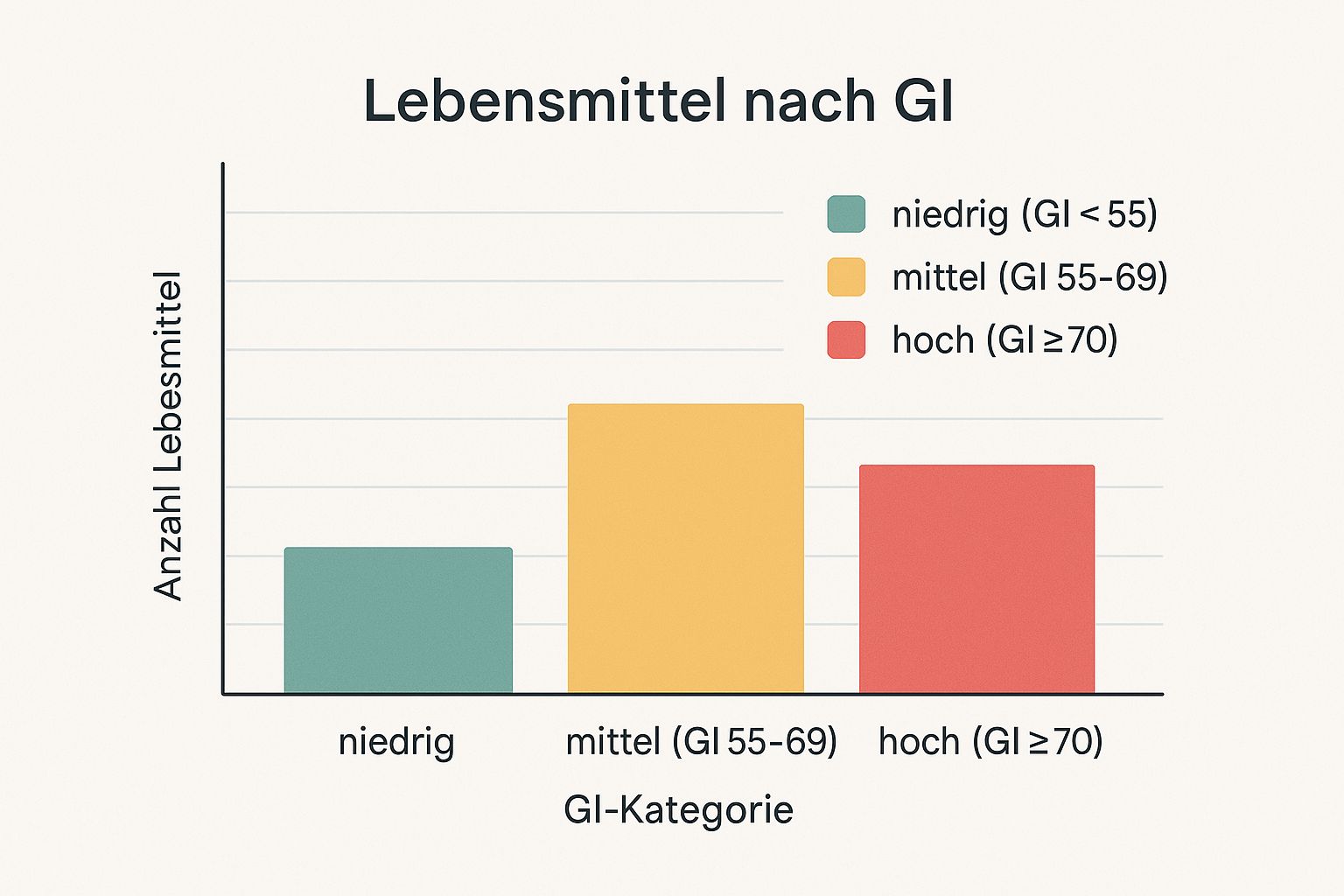
As you can see, there is a huge selection in every category. A smart, blood-sugar-friendly diet is therefore anything but boring.
The comprehensive glycemic index table for reference
So, now we're getting to the heart of the matter. Here is the centerpiece of this guide: a comprehensive and easy-to-use glycemic index table. It's your practical companion for shopping and cooking, helping you effortlessly put theory into practice.

So you do not have to search for long, we have divided the foods into clear categories and marked them with colors. This lets you see at a glance whether a food has a low (green), medium (yellow), or high (red) GI value.
A small but important note beforehand: The values in the table are guidelines. How your blood sugar actually responds depends on many factors—for example, the cooking method, the ripeness of a fruit, or the combination with fats and proteins. And most importantly: your individual genetic predisposition.
How to read the table
The following list provides you with specific figures. These values help you get a feel for how differently foods can affect you. For example, a grapefruit has a GI of about 30, while boiled potatoes have a value of 78 can make a very different impact. Even French fries have a value of around 75 just below.
These figures show that even related foods can have very different effects. If you want to explore the topic in greater depth, you can also find detailed GI tables from DKV.
For a quick overview, you can use these three categories as a guide:
- Foods with a low GI (<55): Perfect as the basis for your meals. They provide a stable, long-lasting supply of energy without major blood sugar spikes.
- Foods with a medium GI (55–69): In moderation, they are a good addition to a balanced diet. Here, the quantity and combination matter.
- Foods with a high GI (>70): You should use these more consciously. They can be useful, for example, after intense exercise to quickly replenish energy stores, or should otherwise be consumed only in small quantities.
By the way, consciously choosing low-GI carbohydrates is a central element of many low-carb concepts. If that interests you, take a look at our guide to suitable low-carb foods.
Ultimately, every body responds differently to carbohydrates. What works great for one person may be less ideal for another. If you want to know exactly, a DNA metabolic analysis can show you precisely how your body genetically responds to fats and carbohydrates.
Comprehensive Glycemic Index Table
A sortable table of common foods, categorized by food type and color-coded according to low, medium, and high GI.
| Food | Category | Glycemic index (GI) | GI rating (Low/Medium/High) |
|---|---|---|---|
| Lentils (cooked) | Legumes | 29 | Low |
| Quinoa (cooked) | Grains | 53 | Low |
| Whole-grain bread | Baked goods | 51 | Low |
| Apple | Fruit | 38 | Low |
| Carrots (cooked) | Vegetables | 47 | Low |
| Oatmeal (raw) | Grains | 55 | Medium |
| Basmati rice (cooked) | Grains | 58 | Medium |
| Honey | Sweeteners | 61 | Medium |
| Pineapple | Fruit | 66 | Medium |
| Popcorn | Snacks | 65 | Medium |
| White bread | Baked goods | 75 | High |
| Watermelon | Fruit | 76 | High |
| Mashed potatoes | Vegetables | 87 | High |
| Cornflakes | Grains | 81 | High |
| Glucose | Sweeteners | 100 | High |
This table is intended as a starting point. Use it to develop a better understanding of foods and their effects on your blood sugar levels. Over time, you'll intuitively know which foods are good for you and which you should enjoy in moderation.
Using the glycemic index correctly in everyday life
A glycemic index table is a great tool, of course. But its true value only becomes apparent when you use it cleverly in everyday life. It's not about rigidly focusing on numbers, but about making conscious choices for your blood sugar levels. One of the most important tricks is strategically combining foods.
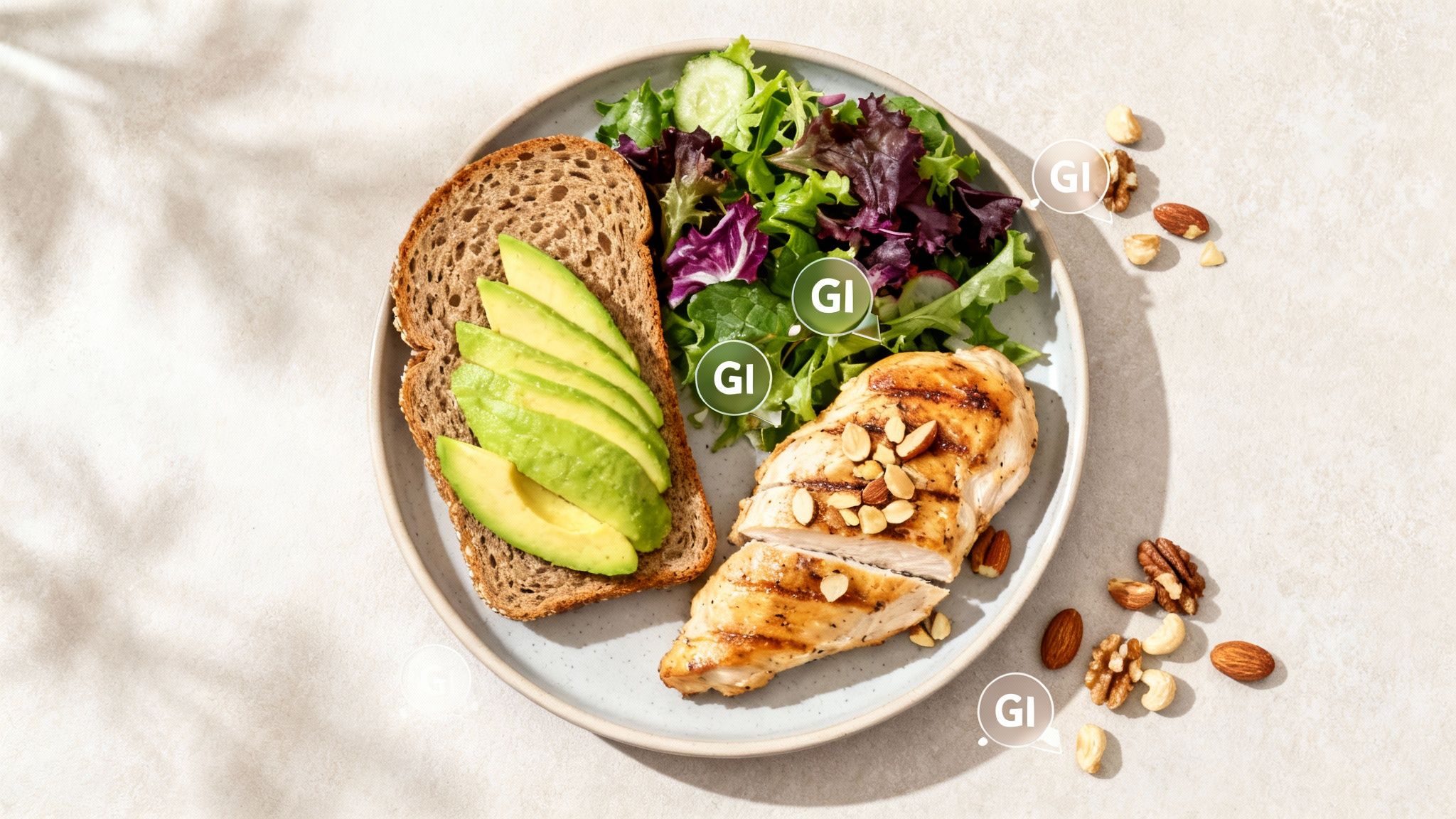
The good news: You don't have to completely avoid foods with a high GI. The key lies in the combination. If you eat something with a high GI together with foods rich in protein, fat, or fiber, the absorption of sugar into the bloodstream is significantly slowed.
Combining meals cleverly
Imagine eating a slice of white bread (high GI). But if you combine it with avocado (healthy fats) and an egg (protein), your body's blood sugar response looks completely different—much gentler. The fats and proteins act almost like a brake on the fast-acting carbohydrates.
Here are a few simple examples you can put into practice right away:
- Breakfast: Instead of cornflakes (high GI), try oatmeal (low GI) with berries, a handful of nuts, and a spoonful of yogurt.
- Lunch: Always combine a serving of rice (medium GI) with a large serving of vegetables and a source of protein such as chicken or lentils.
- Dinner: A baked potato (high GI) is significantly better for blood sugar when paired with quark and a colorful salad than when eaten on its own.
Another important factor, by the way, is the glycemic load (GL). It is often even more informative because it considers not only the quality of the carbohydrates (the GI), but also the amount in a typical serving.
However, every body responds a little differently. If you really want to know how your metabolism is genetically adapted to carbohydrates and fats, a DNA metabolic analysis can provide valuable, highly personal insights. This allows you to tailor your diet even more precisely to your needs.
What conscious carbohydrate choices mean for your health
A diet that takes the glycemic index into account is about much more than blood sugar control. It is a truly effective strategy for your long-term health and everyday well-being. By favoring foods that raise your blood sugar only slowly, you avoid the sharp spikes and deep crashes that are often responsible for cravings and fatigue.
Stable blood sugar is your best ally in the fight against the dreaded afternoon slump and uncontrolled binge eating. Instead of quick energy boosts that leave you feeling drained again shortly afterward, you provide your body with steady, reliable energy. This not only helps you stay more focused and productive, but also supports you with weight management along the way.
Long-term effects on your health
However, the benefits go far beyond your daily energy levels. Making smart carbohydrate choices can significantly reduce your risk of serious diseases.
For example, a large international study showed that a diet consisting predominantly of high-glycemic foods is associated with an increased risk of cardiovascular disease. Typical German eating habits in particular, such as frequently reaching for white bread (GI approx. 73) or potato products, can contribute to this risk. If you want to take a deeper dive, you can find more about the study results here on Wikipedia.
A low-GI diet is not a short-term diet, but a sustainable investment in you and your health. It helps you stabilize your energy, manage your weight, and protect your heart.
But be careful: Every body works differently and responds individually to carbohydrates. If you want to understand exactly how your metabolism is genetically structured, a DNA metabolic analysis from mybody-x can provide crucial and, above all, personalized insights. Discover the benefits of an individual DNA analysis and optimize your nutrition in a targeted way—for you and your body.
The GI as a Tool for Your Athletic Performance
As an athlete, you know that timing your carbohydrate intake correctly can make the difference between victory and defeat. It is about performance, recovery, and being able to give your all at the right moment. The glycemic index table is an incredibly useful tool for managing your energy supply in a targeted way. Depending on when and what you eat, you directly influence your performance.
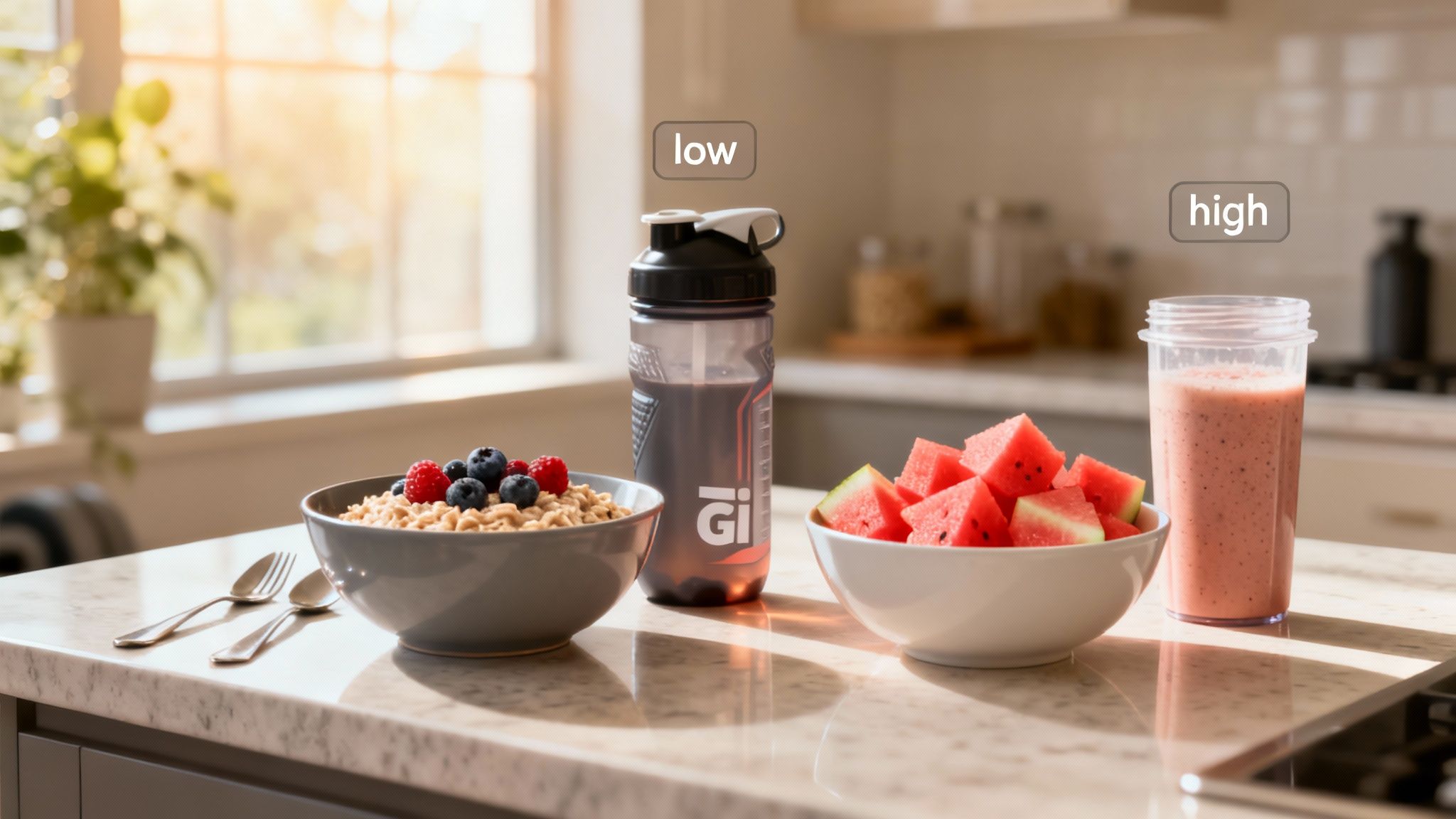
The goal is not to completely remove certain foods from your diet. Instead, you learn to use them strategically. Foods with a low GI are ideal before training to keep your energy levels steady over a long period, while a high GI after exercise can boost recovery.
The Right Choices Before and After Exercise
To make this a little more tangible, here are a few concrete examples of how you can make the GI work for you:
- Before training (approx. 1–2 hours beforehand): Slowly digestible carbohydrates with a low GI are what you need now. Think of a small bowl of oatmeal or a slice of whole-grain bread with some cottage cheese. This provides you with sustained energy and helps you avoid a sudden drop in performance in the middle of your workout.
- After training (within 30 minutes): Your body now needs quickly available carbohydrates with a high GI to replenish depleted glycogen stores. A ripe banana or a glass of grape juice is perfect for starting recovery immediately.
Your personal genetics play a huge role in how your body responds to carbohydrates and which nutrition strategy really works for you.
Every metabolism works differently. If you want to know exactly how yours works and optimally coordinate your training and nutrition, a DNA test for athletes can provide valuable insights that go far beyond general recommendations.
Why your individual metabolism matters
A glycemic index chart is a great tool for getting started—but it doesn’t tell the whole story. The reason is quite simple: each of us is different. Your body responds to carbohydrates in its own unique way, and what works great for your friend may not have the same effect on you.
Your body’s individual response to sugar and starch is deeply rooted in your genetics. General recommendations are a good starting point, but the key to achieving real, lasting results lies in truly understanding your own body. So instead of just guessing, you can know for sure.
Find out what really works for you
This is exactly where a DNA metabolism analysis comes in. It gives you insights that go far beyond any general chart. The best way to think of it is as a personal instruction manual for your body. You discover what type of metabolism you have and how your genes control the processing of carbohydrates, fats, and proteins.
With this knowledge, you no longer have to feel like you’re in the dark. You get a scientifically sound foundation for precisely tailoring your nutrition to your genetic predisposition and purposefully managing your well-being.
This highly personalized approach takes your nutrition to a whole new level. Instead of following rigid rules, you make choices that truly suit you. If you want to delve deeper and learn how strongly your metabolism is rooted in your genes, take a look at our detailed article on the subject.
Questions and answers about the glycemic index
Great, you now have a solid foundation! But in everyday life, detailed questions often still come up. To help you apply your new knowledge with confidence and avoid common pitfalls, we’ve summarized the most frequently asked questions for you here.
Does cooking change the GI value of foods?
Yes, preparation definitely has an impact, even if the benefit is not completely lost. The longer you cook starchy foods such as potatoes or pasta, the softer the starch becomes—and the faster your body can convert it into sugar. This raises the GI value.
The classic example: pasta cooked “al dente” has a lower glycemic index than mushy, overcooked pasta. So gentle cooking that preserves a firm texture is always a good idea for maintaining a low GI.
Is a low-GI diet automatically healthy?
A low GI is often a good guide because it usually leads you to unprocessed foods such as vegetables, legumes, or whole grains. But GI is only one piece of the overall nutrition puzzle.
A food can have a low GI while also being full of fat and calories—chocolate is a good example. At the end of the day, what always matters is a balanced and varied diet in which everything is served in the right proportions.
Do I now have to completely avoid foods with a high GI?
No, absolutely not! It is not about bans, but about conscious balance and smart combinations. A food with a high GI loses its frightening aspect when you eat it together with protein-rich, fiber-rich, or high-fat partners.
These combinations noticeably slow the rise in blood sugar. Think of a slice of white bread with avocado and chicken breast instead of eating it plain. And after an intense workout? Foods with a high GI can actually be very useful for replenishing your depleted energy stores in no time.
Glycemic index vs. glycemic load—what is the difference?
The glycemic index (GI) assesses how quickly the carbohydrates in a food cause blood sugar levels to rise—essentially, the “speed.” The glycemic load (GL) goes one step further and also takes into account the amount of carbohydrates in a normal serving.
That is why GL is often the more practical measure. The best example is watermelon: it has a high GI but a very low GL. Why? Because a typical serving consists almost entirely of water and contains hardly any carbohydrates. So the rise in blood sugar remains small despite the high GI.
Every body is unique and responds differently. While the glycemic index chart offers fantastic guidance, the real key to your optimal nutrition lies in your DNA. mybody-x.com helps you find out exactly that. With a DNA metabolism analysis, you gain personalized insights that go far beyond general charts and show you how your body really works.



Share now:
Apple Cider Vinegar for Weight Loss: Really Effective for Your Success?
Understand skin aging and take proactive action