

Understanding Nutrigenomics: Personalized Nutrition for Your Genes
TL;DR:
- Nutrigenomics examines the interaction between genes and nutrition.
- Individualized nutrition is based on genetic, microbial, and metabolic data.
- Reputable tests (e.g., in Switzerland) require certification and data protection.
Why does your body react completely differently to the same diet than your best friend’s? The answer lies not in willpower or discipline, but in your genes. General dietary recommendations often fall short because genetics plays a central role in how your body absorbs, processes, and stores nutrients. Nutrigenomics is the science that addresses precisely this intersection: It combines nutritional science with genomics and makes it possible to develop recommendations that truly suit you. This article explains what lies behind it, how the methods work, and what you can expect from it in Switzerland.
Table of Contents
- What Is Nutrigenomics and Why Is It Relevant?
- How Does Nutrigenomics Work? An Overview of Methods and Analyses
- In practice: From analysis to personalized nutrition
- Opportunities, limitations, and ethical challenges of nutrigenomics
- Why Nutrigenomics Is Inspiring – And What the Scientific Community Usually Overlooks
- Your next step: Experience personalized nutrition for yourself
- Frequently asked questions about nutrigenomics
Key Findings
| Point | Details |
|---|---|
| Nutrigenomics Explained | Nutrigenomics investigates how genes and nutrition interact to enable individualized dietary recommendations. |
| Using Modern Analyses | With multi-omics and machine learning, more precise recommendations than ever before can now be made. |
| Weighing the Benefits and Risks | Personalized nutrition offers many opportunities, but requires critical awareness of data, ethics, and evidence. |
| Practical Application | Studies and digital services show how nutrigenomics can already be used in everyday life in Switzerland. |
What Is Nutrigenomics and Why Is It Relevant?
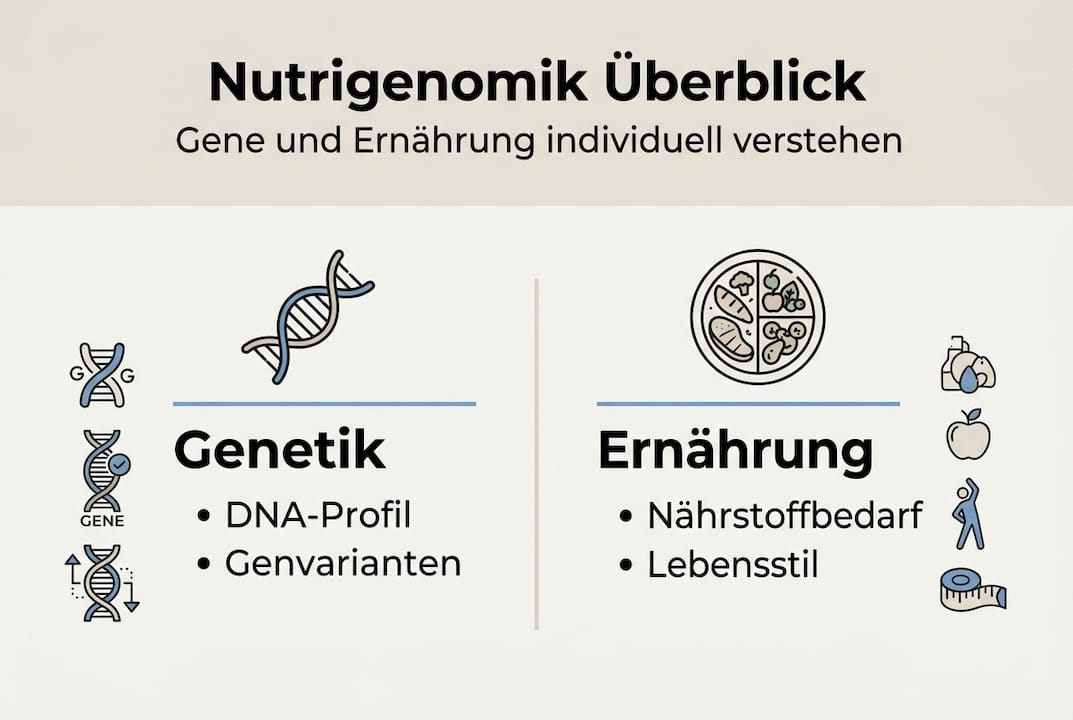
Nutrigenomics examines the interaction between nutrients and the genome, meaning the complete set of a person’s genes. Put simply: What you eat influences which genes are active. Conversely, your genetic profile determines how your body responds to certain foods. This is not science fiction, but active research at universities worldwide.
The history of nutrigenomics began in the early 2000s, when the decoding of the human genome opened up new possibilities. Since then, the field has developed rapidly. Current priorities include preventing chronic diseases such as type 2 diabetes, cardiovascular disease, and obesity. The idea is simple: If you understand early on how your body responds to food, you can take targeted action before diseases develop.
For health-conscious people in Switzerland, this is particularly relevant. Switzerland is one of the countries with high life expectancy, but it also faces rising healthcare costs. Personalized nutrition offers a preventive approach that strengthens not only long-term health but also personal responsibility.
What does nutrigenomics specifically make possible?
- Identifying individual nutrient needs based on genetic variants
- Early detection of risks for nutrient deficiencies or intolerances
- Optimizing weight management through genetically tailored macronutrient distribution
- Adapting exercise programs to genetically determined recovery and performance profiles
- Long-term prevention strategies for familial disease risks
One important distinction: nutrigenetics examines how individual gene variants respond to nutrients. Nutrigenomics goes further and analyzes how nutrition changes the entire gene expression pattern. Both disciplines complement each other, but nutrigenomics provides the bigger picture.
Pro tip: When choosing commercial genetic tests, look for ISO-certified laboratories and transparent privacy policies. Not every provider on the market operates according to scientific standards. The benefits of personalized nutrition can only be fully realized when the underlying data is valid.
Current supplement trends in 2026 also show that personalized supplementation based on genetic profiles is increasingly in demand. The market is growing, and so is the need to distinguish reputable offerings from hype products.
How Does Nutrigenomics Work? An Overview of Methods and Analyses
Nutrigenomics involves more than a simple saliva test. Multi-omics integration, GWAS, polygenic risk scores, and machine learning play central roles in modern research and practice. These terms may sound complex, but they can be explained clearly.
The key methods at a glance:
- Genome-Wide Association Studies (GWAS): Thousands of genetic variants are analyzed simultaneously to identify associations between specific gene variants and dietary responses.
- Polygenic Risk Scores (PRS): Multiple genetic variants are combined to create an overall risk profile, for example for lactose intolerance or elevated cholesterol levels.
- Multi-omics integration: Genomics, metabolomics (metabolic products), and microbiomics are combined to obtain a more complete picture of individual metabolism.
- Machine learning (ML): Algorithms identify patterns in large datasets and continuously improve the accuracy of nutrition recommendations.
| Method | What it analyzes | Typical accuracy |
|---|---|---|
| GWAS | Individual genetic variants | High for common variants |
| Polygenic Risk Score | Combination of many genes | Very high for complex traits |
| Microbiome analysis | Gut flora and metabolism | Up to 92% for nutritional effects |
| Multi-omics | All levels combined | Highest precision |
The strength lies in the combination. A single genetic test reveals little. Only when genetic data are combined with microbiome profiles, blood markers, and lifestyle information do reliable recommendations emerge. That is the difference between a simple online test and scientifically grounded DNA-based nutrition.
A practical example: Two people have the same BMI and eat identically. Yet one person breaks down carbohydrates efficiently, while the other preferentially stores them as fat. The reason lies in variants of the PPARG gene and the composition of the microbiome. Without this data, every nutrition consultation remains a guessing game.

For your gene diet, this means: The method behind the test determines its usefulness. Ask which omics layers are analyzed and whether the laboratory is certified.
In practice: From analysis to personalized nutrition
What does the journey from genetic analysis to a concrete nutrition strategy look like? In practice, this process takes place in several steps that you can help shape yourself.
Typical steps:
- Sample collection: Saliva, blood, or stool is collected at home and sent to the laboratory.
- Laboratory analysis: The laboratory sequences relevant genetic variants and, where appropriate, analyzes the microbiome.
- Data analysis: Algorithms compare your profile with study data and derive recommendations.
- Personalized report: You receive specific guidance on macronutrients, micronutrients, foods, and behavior changes.
- Implementation and adaptation: Recommendations are tested in everyday life and adjusted as needed.
Meta-analyses show that personalized nutrition is superior to generic diets, with microbiome predictions achieving up to 92% accuracy. This is an impressive figure that demonstrates how far science has already advanced.
In Switzerland, the Swiss Food & You study provides concrete insights into how epigenetics and dietary habits are connected. The results confirm that individual responses to food vary so greatly that blanket recommendations simply do not work for many people.
| Feature | Generic diet | Personalized nutrition |
|---|---|---|
| Basis | Average values | Individual genetic data |
| Adaptation | None | Possible on an ongoing basis |
| Long-term success | Low | Significantly higher |
| Motivation | Often low | Higher through personal responsibility |
Pro tip: A DNA test for nutrition delivers its greatest benefit when you actively integrate the results into your everyday life. A report alone changes nothing. Combine the recommendations with regular monitoring of your energy levels, digestion, and body composition.
It is important to have realistic expectations: nutrigenomics is not a miracle cure. It provides you with well-founded guidance that you must implement yourself. Those who view personalized nutrition as a tool rather than a cure-all will benefit in the long term.
Opportunities, limitations, and ethical challenges of nutrigenomics
Nutrigenomics offers real opportunities for precision prevention. At the same time, there are open questions that must be addressed honestly.
Opportunities:
- Early detection of risks for nutrient deficiencies and chronic diseases
- Greater effectiveness of nutritional interventions through personalization
- Greater personal responsibility and motivation
- Long-term cost savings in the healthcare system
Limitations and challenges:
- Edge cases, high inter-individual variability, and ethical challenges such as data privacy and the risk of discrimination are real and must be taken into account.
- Many commercial tests analyze only a few hundred gene variants, while the human genome contains more than three billion base pairs.
- Science has not yet advanced to the point where every recommendation can be made with absolute certainty.
- Genetic data are highly sensitive and can be misused by unscrupulous providers.
“The greatest challenge facing nutrigenomics lies not in the technology, but in the responsible handling of genetic data and in maintaining realistic expectations about the significance of the results.”
In Switzerland, renowned health insurers and institutes recommend paying attention to certifications, data protection policies, and the scientific basis when choosing genetic tests. Epigenetics and nutrition are closely linked, but that does not mean every genetic test automatically provides valid recommendations.
Data protection is a particularly sensitive issue in Switzerland. Genetic data fall under particularly sensitive personal data. Reputable providers pseudonymize samples and destroy them after analysis. Ask about this proactively before commissioning a test. Personalized nutrition and individuality begin with protecting your data.
Why Nutrigenomics Is Inspiring – And What the Scientific Community Usually Overlooks
In public debate, nutrigenomics is often portrayed either as a revolutionary solution or as overblown hype. Both views fall short. Contrasting perspectives between optimism and justified skepticism shape the professional debate, and that is a good thing.
What we observe in practice: The greatest strength of nutrigenomics does not lie in calculating the perfect diet. It lies in showing people why their bodies respond the way they do. This understanding changes behavior more sustainably than any calorie chart.
What the medical and scientific community often overlooks: The microbiome is frequently more influential than individual gene variants. Anyone who looks only at DNA data and ignores the gut microbiome sees only half the truth. Understanding nutrigenetics is valuable, but only by combining it with microbiome analyses does a complete picture emerge.
Our recommendation: Use nutrigenomics as a framework for guidance, not as dogma. The science is developing rapidly, and those who make informed decisions today will be better prepared tomorrow.
Your next step: Experience personalized nutrition for yourself
After these insights, the question arises: How can you start your own journey toward personalized nutrition? At mybody®x, you will find ISO-certified DNA analyses that combine genetics, the microbiome, and metabolism to derive concrete, scientifically validated recommendations. All tests can be conveniently completed at home, and samples are pseudonymized and destroyed after analysis. With over 11,300 satisfied customers and a rating of 4.77 stars, mybody® is a reliable partner for anyone who wants to shape their health based on evidence. Discover the benefits of personalized nutrition now and take the first step toward nutrition that truly suits you.
Frequently asked questions about nutrigenomics
What is the difference between nutrigenetics and nutrigenomics?
Nutrigenomics examines the interaction between nutrients and the entire genome, while nutrigenetics considers individual gene variants and their influence on the response to nutrition. Both disciplines complement each other and together provide a more complete picture.
How accurate are genetically based nutrition recommendations?
Multi-omics approaches achieve up to 90% accuracy, but commercial tests vary widely in quality. The microbiome and lifestyle also influence the results and should always be taken into account.
Is a DNA test for nutrition worthwhile in Switzerland?
Studies show clear benefits, but experts recommend caution when choosing a provider. Only reputable, certified tests with transparent data protection deliver reliable results.
What role does the microbiome play in nutrigenomics?
The microbiome predicts up to 92% of individual nutritional effects and therefore often has a stronger influence than individual genes. Modern nutrigenomics approaches therefore routinely integrate microbiome data.
Recommendation
- Gene diet: How your DNA optimizes nutrition – mybody®x
- Nutrigenetics for your personalized nutrition – mybody®x
- Personalized nutrition | Optimize your nutrition with your DNA – mybody®x
- Genetic nutrition test: Your DNA as a nutrition coach – mybody®x
- Top supplement trends in 2026: boost your fitness now – ElevateSupplements



Share now:
Nutrition plan: Step by step to success
Personalized Food: Your Path to a Gene-Based Diet