
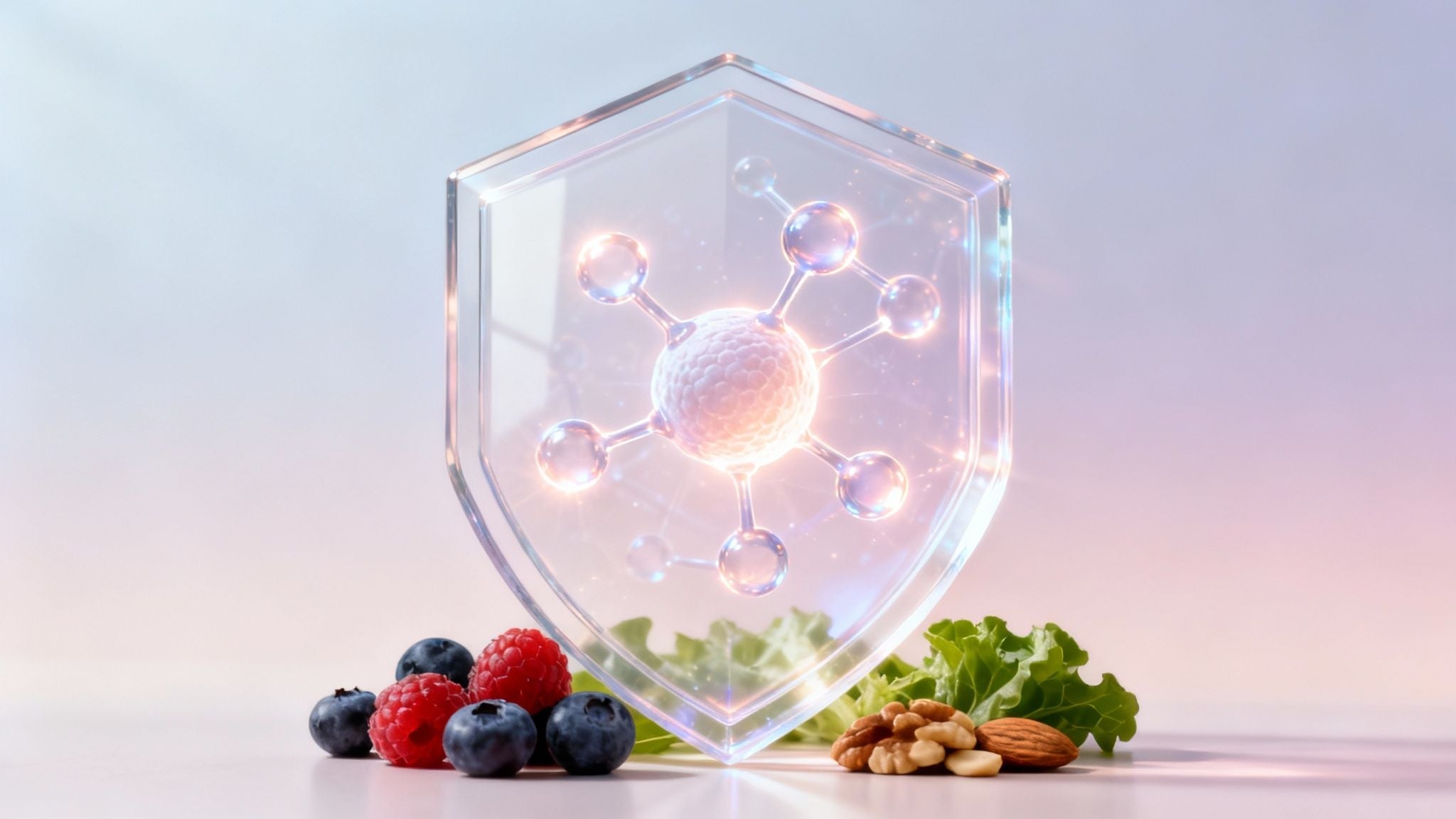
Antioxidant action for your skin and cells
Imagine your body's cells had a kind of invisible protective shield. That is exactly what antioxidant action is. This ingenious mechanism defends your body against attacks by aggressive molecules and is extremely important for your health and youthful-looking skin.
What is behind antioxidant action?
Have you ever cut open an apple and watched it turn brown in the air? That is oxidation—a completely natural process that also constantly takes place in your body's cells. The so-called free radicals are responsible for it.
Free radicals are unstable, highly aggressive molecules. They are produced in your body during everyday processes such as metabolism, but also by external influences. Think of UV radiation, air pollution, an unhealthy diet, or simply stress. These little troublemakers are like thieves searching for electrons to steal from other molecules in order to stabilize themselves. This "electron theft" starts a dangerous chain reaction that can ultimately damage cell structures, proteins, and even your DNA.
Your cells' bodyguards
And this is exactly where antioxidant action comes into play. Antioxidants are essentially your cells' bodyguards. They voluntarily donate an electron to free radicals, rendering them harmless without becoming unstable themselves. They interrupt the harmful chain reaction before real damage can occur.
This protective mechanism is essential for maintaining balance in your body. It protects your cells from premature aging and ensures that they function properly.
Your body can produce some antioxidants itself, but for many of them, it depends on an external supply. You mainly get these bodyguards through a balanced diet. The most important sources are:
- Vitamins: Vitamins C and E are the best-known fighters against free radicals.
- Trace elements: Selenium and zinc support the body's natural defense systems.
- Secondary plant compounds: Carotenoids (such as those found in carrots) and polyphenols (found in berries) also provide powerful protection.
Your personal need for cell protection
But how well this protective shield works varies from person to person. Your genetic makeup plays a huge role in how efficiently your body can defend itself against free radicals and how much your personal need for protective nutrients actually is.
Some people are genetically predisposed to having weaker antioxidant protection. They may specifically need more of certain vitamins or nutrients to effectively protect their cells—and therefore their skin—from aging processes. Instead of relying on general advice, a personalized analysis addresses this very point. With the mybody-x Skincare DNA Stoffwechsel Test, you can find out what your body really needs. You gain deep insights into your genetic predispositions and can finally tailor your diet and skincare precisely to them, strengthening your protective shield in a targeted way.
How free radicals cause your skin to age
To truly understand the impressive antioxidant effect, we first need to look at its counterparts: free radicals. Imagine them as small, hyperactive troublemakers in your body, constantly seeking stability while creating plenty of chaos along the way.
These molecules are not external intruders; they arise naturally during everyday metabolic processes, for example when your cells produce energy. The real problem is that certain external influences cause their production to skyrocket—and your skin is exposed to these stresses nonstop.
The sources of cellular stress
There are several factors that massively fuel the formation of free radicals and keep your cells under constant attack:
- UV radiation: Sunlight is probably the best-known accelerant of free radicals in the skin.
- Air pollution: Pollutants such as fine particulate matter directly attack and weaken your skin barrier.
- Unhealthy diet: Sugar, highly processed foods, and alcohol further fuel inflammatory processes and, consequently, oxidative stress.
- Psychological stress: When you are constantly under pressure, your hormonal balance is disrupted, which also increases the production of free radicals.
These unstable particles trigger a destructive chain reaction. They steal healthy cells’ electrons, which the cells need to survive. The devastating part is that the attacked cell itself becomes a free radical, and the vicious cycle starts all over again.
From free radicals to visible skin aging
When the army of free radicals becomes larger than that of your protective antioxidants, the balance tips. We call this state oxidative stress. You could also describe it as a kind of “cellular rust” that slowly but surely causes your skin to age from the inside out.
Oxidative stress is one of the main causes of premature skin aging. It attacks the foundations of your skin—collagen and elastin—which directly shows in wrinkles, sagging skin, and a tired complexion.
The consequences quickly become visible. The collagen fibers that give your skin firmness are broken down. Your skin loses elasticity, becomes thinner, and wrinkles become increasingly deep. At the same time, oxidative stress can lead to unsightly age spots (hyperpigmentation) and inflammation. If you want to explore the mechanisms in greater depth, read our article about the causes of skin aging.
The following graphic illustrates this process using the example of an apple turning brown in the air. A very similar process takes place at the cellular level in your skin.
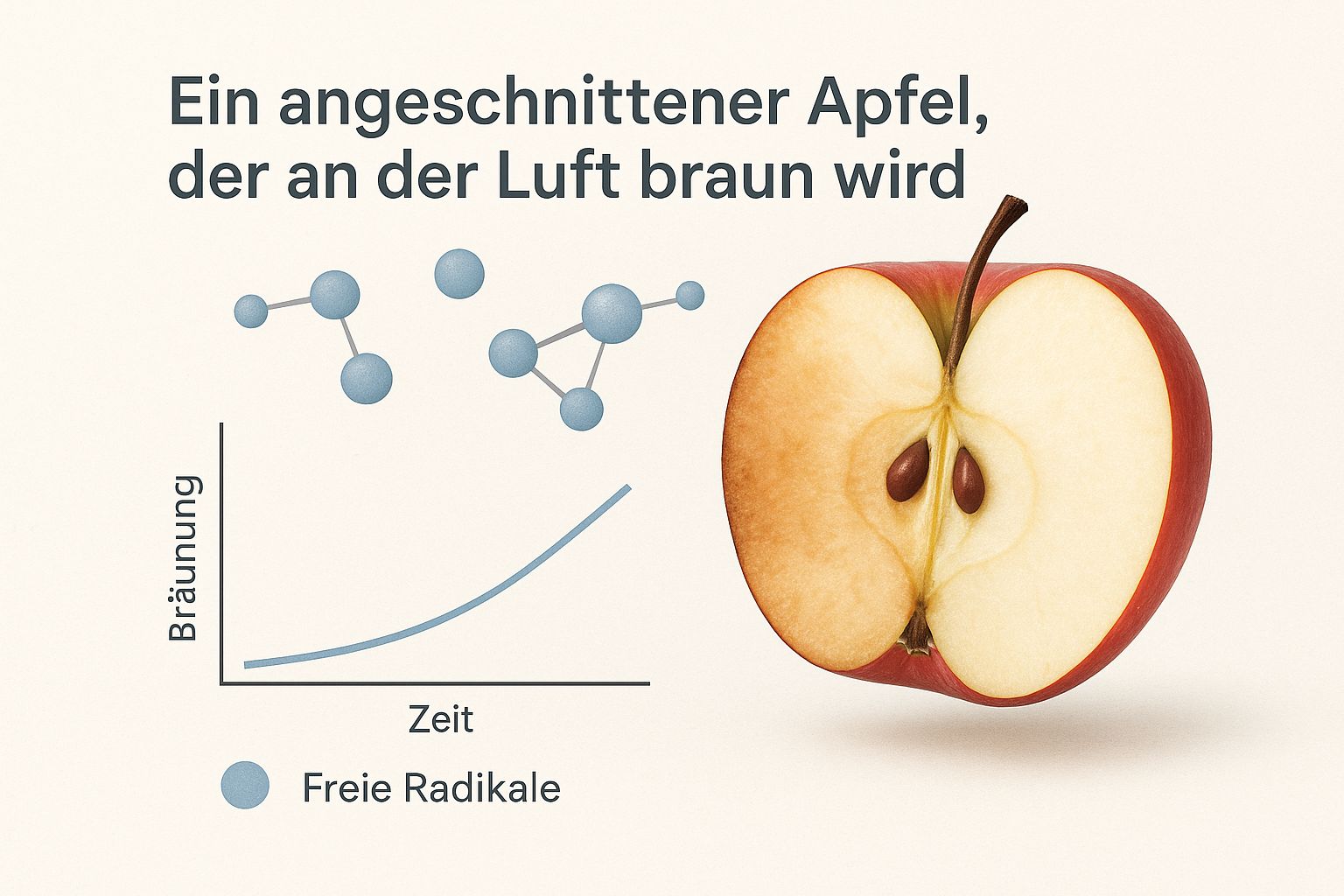
As you can see, oxidation is a natural process of decay. Free radicals accelerate it and visibly damage tissue—in an apple just as in your skin.
Your genetic shield against oxidative stress
The good news is that you are not defenseless against this process. A strong antioxidant system captures free radicals and neutralizes them. However, how well your body can maintain this protective shield depends heavily on your genes.
Each of us has a unique genetic makeup that determines how efficiently the body copes with oxidative stress. Some people naturally need more protective antioxidants to keep their skin cells healthy and counteract premature aging.
This is exactly where personalized analysis comes in. Instead of following only general recommendations, you can find out specifically what your body really needs. The mybody-x Skincare DNA Metabolism Test analyzes your genetic markers and tells you how well your innate antioxidant defense system is equipped. With this knowledge, you can declare war on free radicals—with a strategy perfectly tailored to you.
The most important antioxidants for protecting your cells
Okay, now that you’ve met the villains—the free radicals—it’s time for the heroes of the story: antioxidants. The world of these protective substances is incredibly diverse, and each has its own unique superpowers. Most of the time, however, they work as a team to defend your cells from all sides and boost the antioxidant effect in your body.
Imagine them as a perfectly organized defense team: some intercept attacks directly on the front line, others take care of repairing damage that has already occurred, and still others reinforce the defensive lines. Together, they keep your body strong and resilient.
The vitamin superstars C and E
When talking about antioxidants, vitamins C and E are almost always in the spotlight—and rightly so. They are among the best-known and most powerful fighters against oxidative stress.
-
Vitamin C (ascorbic acid): This water-soluble vitamin is a true all-rounder. It captures free radicals directly in the watery environment of your cells and is essential for restoring its partner, vitamin E, to its active state. On top of that, it is indispensable for collagen production and therefore a cornerstone of firm, healthy skin.
-
Vitamin E (tocopherol): As a fat-soluble vitamin, its specialty is protecting fatty cell membranes. You can think of it as a protective coating that prevents free radicals from attacking and damaging the delicate outer layer of your cells.
Trace elements as quiet helpers
Alongside vitamins, there are a few quiet but immensely important helpers: trace elements. They often do not intervene directly, but are the crucial building blocks for the body's own enzymes, which act as professional free-radical scavengers.
Selenium is another powerhouse. It is the core component of the enzyme glutathione peroxidase, one of the most important protective systems in our entire body. Without enough selenium, this system operates only at half strength. In our article on the effects of selenium, we go into even more detail.
Zinc is just as indispensable. It not only protects cell structures from oxidative damage, but also plays a role in another important antioxidant enzyme, superoxide dismutase.
The colorful power of secondary plant compounds
Nature has developed a vast range of additional protective compounds that we know as secondary plant compounds. These are precisely the substances that give fruits and vegetables their bright colors and intense aromas—and at the same time provide us with potent antioxidant protection.
Secondary plant compounds such as carotenoids and polyphenols are true masters at neutralizing a wide variety of free radicals. Their diversity is their greatest strength.
Two groups are particularly fascinating:
-
Carotenoids: These pigments that color carrots orange (beta-carotene) or tomatoes red (lycopene) are powerful antioxidants. They are particularly known for protecting the skin from UV-related damage.
-
Polyphenols: This huge group includes thousands of compounds, including flavonoids (found in berries, dark chocolate, and green tea) and resveratrol (found in red grapes). They are renowned for their anti-inflammatory and cell-protective properties.
This table gives you an overview of which antioxidants are important and which foods contain them, helping you optimize your diet in a targeted way.
Top antioxidants and their best food sources
| Antioxidant | Effect in the body | Daily requirement (German recommendation) | Top food sources |
|---|---|---|---|
| Vitamin C | Captures free radicals in aqueous environments and recycles vitamin E | 90–110 mg | Bell peppers, blackcurrants, citrus fruits |
| Vitamin E | Protects fat-rich cell membranes from oxidation | 11–15 mg | Hazelnuts, almonds, wheat germ oil |
| Selenium | Building block of the protective enzyme glutathione peroxidase | 60–70 µg | Brazil nuts, fish, eggs |
| Zinc | Protects cell structures; part of the enzyme superoxide dismutase | 7–16 mg | Pumpkin seeds, oats, cashews |
| Carotenoids | Neutralize free radicals and protect the skin from UV radiation | - | Carrots, tomatoes, kale, sweet potatoes |
| Polyphenols | Have anti-inflammatory and cell-protective effects | - | Berries, green tea, dark chocolate, red wine |
As you can see, it’s not that difficult to get the nutrients you need. A varied and colorful diet is the best way to provide your body with all these important protective compounds.
How to easily meet your needs
The best part is that you don’t have to memorize complicated formulas. A balanced and colorful diet generally provides everything you need. The recommended daily intake of vitamin C is 90–110 mg—a serving of blackcurrants is enough. For vitamin E, 11–15 mg is recommended, which you can easily get from a handful of hazelnuts. Just 1–2 Brazil nuts can cover your selenium requirement of 60–70 µg, while pumpkin seeds or cashews are an excellent source for your zinc requirement of 7–16 mg.
But how well your body can actually use these nutrients—and how high your personal needs really are—is also a matter of genetics. The mybody-x Skincare DNA Metabolism Test can give you precise insights—for example, whether you have a predisposition to an increased need for certain antioxidants to optimally protect your skin from premature aging.
How to increase your antioxidant intake
Enough theory—now let’s get practical! We’ll show you how to easily turn your diet into a real weapon against oxidative stress. The key is a simple but extremely effective strategy you can put into practice right away.
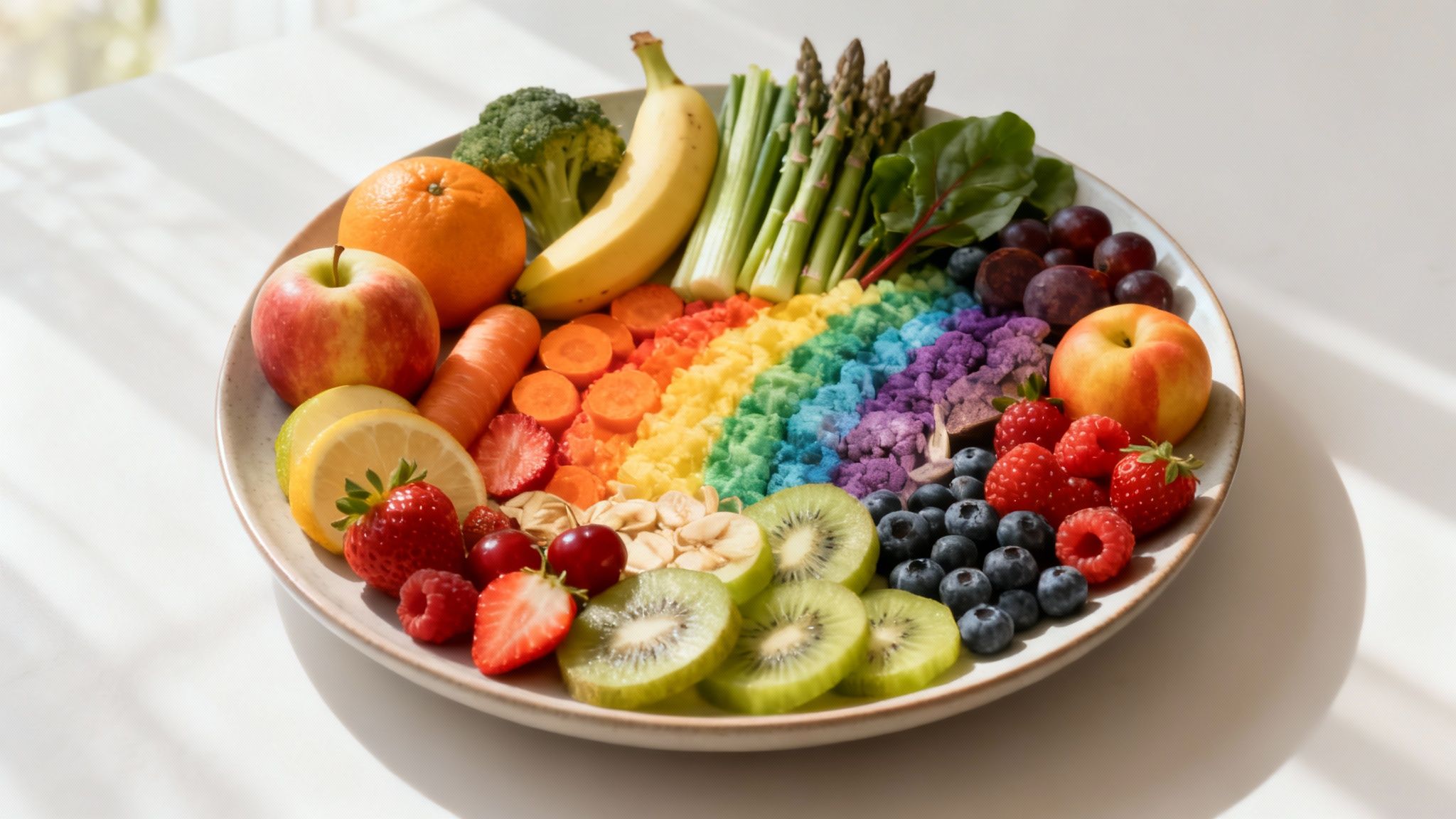
The best way to absorb a huge range of protective compounds is the so-called “rainbow diet”. The principle could not be simpler: Eat fruits and vegetables in as many different colors as possible. Each color represents specific secondary plant compounds with unique antioxidant properties. This ensures that your body has a diverse team of bodyguards at its disposal.
Harnessing the Power of Colors
Think of the vibrant colors on your plate as a direct signal of high nutrient density. Each individual color group offers its own benefits and strengthens your defenses in its own special way.
- Red (e.g., tomatoes, red bell peppers, strawberries): Provides lycopene and anthocyanins, which are especially beneficial for the heart and skin.
- Orange & Yellow (e.g., carrots, sweet potatoes, citrus fruits): Full of carotenoids such as beta-carotene, a precursor to vitamin A, which strengthens eyesight and the immune system.
- Green (e.g., kale, spinach, broccoli): Packed with lutein, zeaxanthin, and sulforaphane—known for their cell-protective and anti-inflammatory properties.
- Blue & Purple (e.g., blueberries, eggplant, red cabbage): Contains abundant anthocyanins, which are considered extremely powerful free-radical scavengers and may support brain function.
- White (e.g., garlic, onions, cauliflower): Provides allicin and quercetin, which keep your immune system running smoothly and have antioxidant effects.
A balanced diet is the best and safest source of antioxidants—far more effective than isolated supplements. Your body is designed to make optimal use of nutrients in their natural combination within foods.
Studies repeatedly show that the lion’s share of our antioxidant intake comes from food. For example, a large-scale US study showed that around 75% of the antioxidants consumed came from a normal diet, while only 25% came from dietary supplements. It is no coincidence that the German Nutrition Society (DGE) recommends eating 250 grams of fruit and 400 grams of vegetables every day.
The Top List of Antioxidant-Rich Foods
Some foods are true powerhouses with an especially high concentration of protective compounds. If you want to strengthen your defenses in a targeted way, these should be at the top of your menu.
- Berries: Blueberries, raspberries, and strawberries are the undisputed frontrunners.
- Dark chocolate: Cocoa with a high content (over 70 %) is rich in valuable flavonoids.
- Leafy green vegetables: Spinach, kale, and Swiss chard are true nutrient powerhouses.
- Nuts and seeds: Walnuts, pecans, and flaxseeds provide important vitamin E and polyphenols.
- Green tea: It is known for its high concentration of catechins.
If you would like to explore the topic in more depth, take a look at our comprehensive guide to antioxidant foods.
Simple tips for your everyday life
Don't worry—you don't have to turn your life upside down. Even small, mindful changes can make a huge difference and sustainably strengthen your protective shield.
- Start your day with color: Simply add a handful of berries to your muesli, yogurt, or smoothie.
- Snack smart: Reach for a handful of nuts or an apple between meals instead of processed snacks.
- Enhance your meals: Add fresh herbs such as parsley or cilantro to salads, soups, or curries.
- Drink smart: Replace sugary drinks with green tea or a glass of water with fresh lemon and mint.
But even the best diet only works optimally when it is tailored to your individual needs. Your genetics play a crucial role in how well your body can utilize certain nutrients and how high your personal need for protection actually is. The mybody-x Skincare DNA Metabolism Test can show you whether you may have a genetic predisposition to an increased need for certain vitamins. This allows you to tailor your diet even more precisely to protect your skin and cells as effectively as possible.
Why your DNA holds the key to skin protection
A colorful, varied diet is and remains the foundation for healthy cells. That is absolutely true. But have you ever wondered why your skin still tends to age prematurely even though you are doing everything right on paper? The answer could be hidden deeper than you realize—namely, in your genes.
Each of us is unique. You can see that not only in eye color or height, but the same is true of our internal biochemistry. Your DNA is the blueprint that determines how well your body copes with oxidative stress. It determines how powerful your cellular defense systems are and how high your personal need for protective antioxidants really is.
Your genetic blueprint for skin health
Imagine your body has a kind of built-in protective force against free radicals. How strong and well-equipped this force is lies in your genes. Some people naturally have more robust defenses, while others have a genetic predisposition that makes them more susceptible to damage from oxidative stress.
These very genetic differences can explain why some people develop wrinkles faster or react more sensitively to the sun despite living a healthy lifestyle. It is not about “good” or “bad” genes, but about understanding your own personal blueprint. Because only when you know your individual weaknesses can you support them in a targeted way.
Your DNA is not an unchangeable fate, but a valuable map. It shows you where to start to proactively manage your skin health and give it exactly what it needs based on your predisposition.
When you know your genetic predispositions, you move away from general advice and toward a truly personal strategy. This is the crucial step toward no longer guessing, but making informed decisions for your skin.
Personalized insights through DNA analysis
This is exactly where the mybody-x Skincare DNA Metabolism Test comes in. This test is not a glimpse into a crystal ball, but a scientifically grounded analysis of your genetic markers that play a role in your skin health. It deciphers how your body deals with oxidative stress, collagen breakdown, and other factors of skin aging at the genetic level.
The analysis provides you with specific, actionable answers to questions such as:
- Are you prone to a weaker antioxidant defense system? This could mean that you have an increased need for vitamin C, E, or selenium.
- Is your collagen production genetically less stable? Vitamin C plays a crucial role here, and a genetically determined increased need can be balanced through the right diet.
- How does your skin react to inflammatory processes? Certain genes influence how strongly your body responds to stimuli with inflammation—and this can accelerate skin aging.
This screenshot of the mybody-x Skincare DNA Test shows how detailed your personal results are presented.
So you receive not only the raw data, but also clear, easy-to-understand explanations and recommendations for action tailored directly to your genetics.
From genetics to targeted action
With this knowledge, you can finally tailor your diet and skincare precisely. For example, if your test shows that you have a gene variant that promotes collagen breakdown, you can specifically choose foods rich in vitamin C to stimulate collagen production. Or your analysis may reveal a predisposition to weaker protection against oxidative stress—in that case, a diet rich in berries, nuts, and green leafy vegetables becomes even more important for you.
It’s about harnessing the power of your genes instead of fighting against them. You’ll learn not only what is good for your skin, but why it is personally good for you. This personalized approach is far more effective than any one-size-fits-all recommendation.
If you’d like to take a deeper dive into how our genes control our well-being and how we can positively influence them through our lifestyle, read our detailed article on the definition of epigenetics on our science portal. It explains how your actions help determine the activity of your genes. The Skincare DNA Test is your first step toward using this interaction intentionally for healthy, radiant skin.
Dietary supplements: A critical look inside the pillbox
Anyone who hears about the impressive antioxidant effects of certain nutrients quickly asks themselves: Can’t I simply take this protection in pill form? After all, drugstores and pharmacies are packed with high-dose capsules promising vitamin C, vitamin E, or beta-carotene. As tempting as that sounds, unfortunately, it isn’t quite that simple.
The scientific debate surrounding this is heated and shows one thing above all: Isolated, high-dose antioxidants are not automatically the best solution. Sometimes, they can even have the opposite effect. Our bodies are incredibly complex systems in which the simple principle that “more is better” rarely works.
Why the pill can’t replace the original
Imagine an apple. Its beneficial effects don’t come solely from vitamin C. It contains hundreds of other substances—secondary plant compounds, fiber, minerals—that are perfectly coordinated and support one another. An individual, isolated capsule can never replicate this team effect.
Nature gives us a clever overall package in which the individual parts work together. If we take out just one active ingredient, this synergy is lost, and the hoped-for protective effect may not materialize.
The evidence from studies is far from clear here as well. Although many observational studies show that people with antioxidant-rich diets become ill less often, once isolated supplements are tested in controlled studies, the results are often disappointing.
A well-known example is the so-called “Finnish Smoker Study.” In smokers, taking high-dose vitamin A did not lead to fewer cases of lung cancer, but actually to more. Studies on vitamin E and beta-carotene were similarly disappointing, with no protective effects demonstrated either. You can find more information in the scientific assessment of antioxidants on apotheken.de.
Targeted support instead of taking things blindly
That does not mean that all dietary supplements are bad. The only important thing is to understand them correctly: not as a substitute for healthy food, but as targeted support when there is a genuine need. Such a deficiency can result from certain stages of life, illnesses, or your genetic predisposition.
And this is exactly where things become personal again. Before you reach for supplements, you should find out what your body really needs. Anything else is like taking a shot in the dark and is often simply a waste of money.
Our clear recommendation is therefore a smart three-part approach:
- Get the basics right: A varied, nutrient-rich diet is and remains the foundation of your health. There is no getting around it.
- Know your needs: Find out where your personal weaknesses lie. The mybody-x Skincare DNA Metabolism Test can show you, for example, whether you have a genetically determined higher need for certain protective nutrients.
- Fill gaps strategically: Once you know what you are lacking, you can supplement strategically and in the right dosage—instead of blindly following the latest marketing hype.
With this approach, you learn to distinguish empty promises from real facts and make decisions that truly suit you and your health.
Your questions, our answers
Here we have compiled the most common questions about antioxidants, oxidative stress, and their role in your skin health. Concise, easy to understand, and straight to the point.
What exactly is the difference between antioxidants and free radicals?
Imagine free radicals as small, aggressive troublemakers wreaking havoc in your cells. They are caused by stress, too much sun, or an unbalanced diet. Antioxidants, on the other hand, are your body’s bodyguards—they capture these troublemakers and neutralize them before they can cause serious damage.
This ongoing attack by free radicals is also known as oxidative stress and is one of the main causes of premature skin aging. A diet with high antioxidant activity is therefore like a protective wall that fends off these attacks.
Is a healthy diet enough to get sufficient antioxidants?
Yes, absolutely! For the vast majority of people, a balanced, colorful diet rich in fruit, vegetables, nuts, and whole-grain products is entirely sufficient. Nature provides us with a brilliant interplay of countless protective substances that no pill in the world can replicate.
Our tip: Eat the rainbow! Each color in fruit and vegetables represents different antioxidants with very specific protective functions. Variety is key here.
Do antioxidant supplements make sense at all, then?
Sometimes, yes—but only when there is an individual, proven need. Simply taking high-dose supplements as a blanket approach is often not only useless but can even harm the body. The first and most important step is always to consciously change your diet.
How do I know whether I have an increased need?
That depends very much on your personal genetics. Some people naturally have a weaker built-in defense system against oxidative stress. Their DNA means they need more external support to stay balanced.
A DNA analysis, such as the mybody-x Skincare DNA Metabolism Test, can show you exactly how your body works. You’ll find out whether you have a genetic predisposition to a higher need for certain antioxidants, such as vitamins C or E. This allows you to optimize your diet in a targeted way at last, instead of groping in the dark.
Are you ready to uncover the secrets of your skin and put your skincare routine on a scientific foundation? At mybody-x, you’ll find the right test to understand what your body really needs. Discover the Skincare DNA Metabolism Test now and give your skin the support it deserves.


Share now:
Find the best stretch mark cream: What your skin really needs
What is DNA analysis? Everything you need to know