
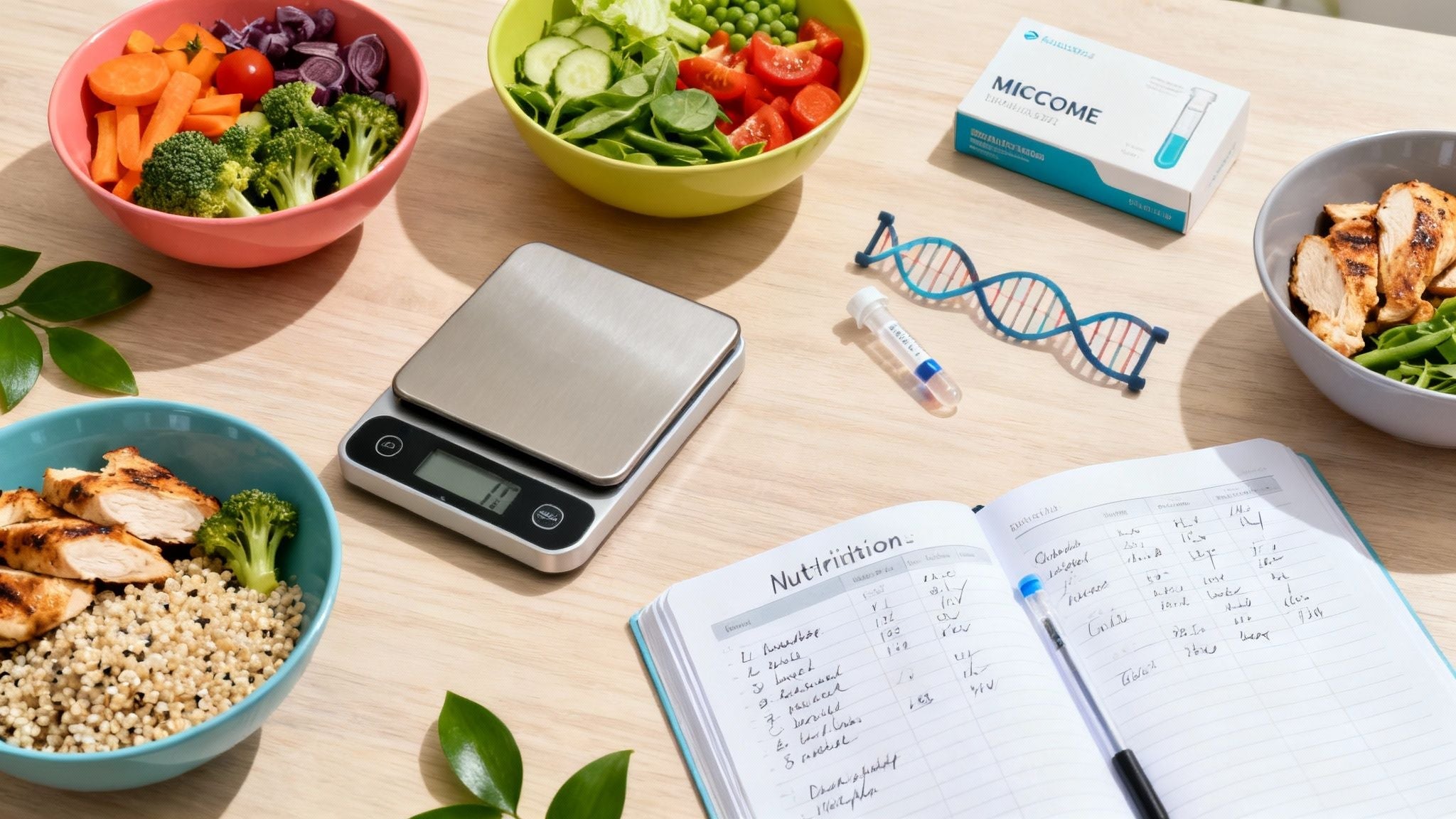
Weight Loss Through Nutrition: Your Path to Your Feel-Good Weight Starts on Your Plate
If you want to lose weight sustainably, your diet is the pivotal factor. The goal is to create a slight calorie deficit through smart food choices without forgoing important nutrients. Quality clearly beats quantity here—because that's the only way to optimally nourish your body and keep your metabolism active.
Why Your Diet Is the Key to Success
Do you know the feeling? You work out for hours at the gym, but the scale simply doesn't budge. The answer is often closer than you think: on your plate. Exercise is undoubtedly an important building block of a healthy lifestyle, but nutrition plays the absolute leading role in weight loss. It's not called “Abs are made in the kitchen.” for nothing.
One very simple principle determines success or failure: energy balance. To lose body fat, you need to burn more energy than you take in through food. Exercise can certainly help boost your expenditure, but this effect is often overestimated. Half an hour of jogging may burn 300 calories—you can immediately consume them again with a small chocolate bar or a latte macchiato.
The Power on Your Plate
Weight loss through nutrition isn't about forbidding yourself everything or starting one radical diet after another. Rather, it's about developing a smart and, above all, sustainable way of eating that truly fits you and your life. The benefits are enormous:
- Better satiety: Foods rich in protein, fiber, and healthy fats keep you feeling full for much longer. Cravings? Goodbye!
- Stable blood sugar: The right carbohydrates, such as those found in whole-grain products, prevent the dreaded blood sugar spikes that make you tired and quickly trigger hunger again.
- Optimal nutrient supply: You give your body all the vitamins and minerals it needs to keep your metabolism running and help you feel good all over.
Unfortunately, reality often looks different. The TK Nutrition Study “Eat Up, Germany!” shows that only around 59 percent of people in Germany eat fresh fruit and vegetables every day. Among those under 40, the figure is even lower at just 49 percent. The recommendation is clear, however: at least five portions a day to keep your body fit and prevent overweight. If you want to learn more, you can find all the details in the full 2023 TK Nutrition Study.
The right mindset is everything
Your journey to your desired weight begins in your mind. Changing your diet is not a sprint, but a marathon. It is about establishing new, healthy habits and building a relaxed relationship with food.
Losing weight through nutrition is not an act of deprivation, but an act of self-care. You consciously give your body what it truly needs to be strong, healthy, and full of energy.
When you focus on the quality of your food, you automatically learn to interpret your body's signals better. Every one of us is unique and reacts differently to certain foods. This is exactly where personalized approaches come in, such as those offered by mybody-x.com through modern analyses. Instead of following rigid plans, you discover what your metabolism really needs. This individualized approach not only gets you to your goal faster, but also strengthens your self-confidence and motivation to stick with it in the long term.
The calorie deficit: Your key to weight-loss success
If you are exploring the topic of losing weight through nutrition, you cannot avoid one term: the calorie deficit. But what is really behind it? Basically, it is quite simple: You provide your body with less energy (that is, fewer calories) than it uses throughout the day. To fill this gap, it has to draw on its own energy reserves—and these are primarily stored body fat.
This exact mechanism makes the pounds melt away. A healthy and, above all, sustainable deficit is usually between 300 and 500 calories per day. That is enough to achieve visible results (around 0.5 kg per week), while remaining moderate enough to prevent unpleasant cravings or nutrient deficiencies. An excessively extreme deficit would merely put your body into alarm mode, slow down your metabolism, and almost guarantee the infamous yo-yo effect.
The following infographic perfectly summarizes the interplay between nutrition, mental strength, and energy.
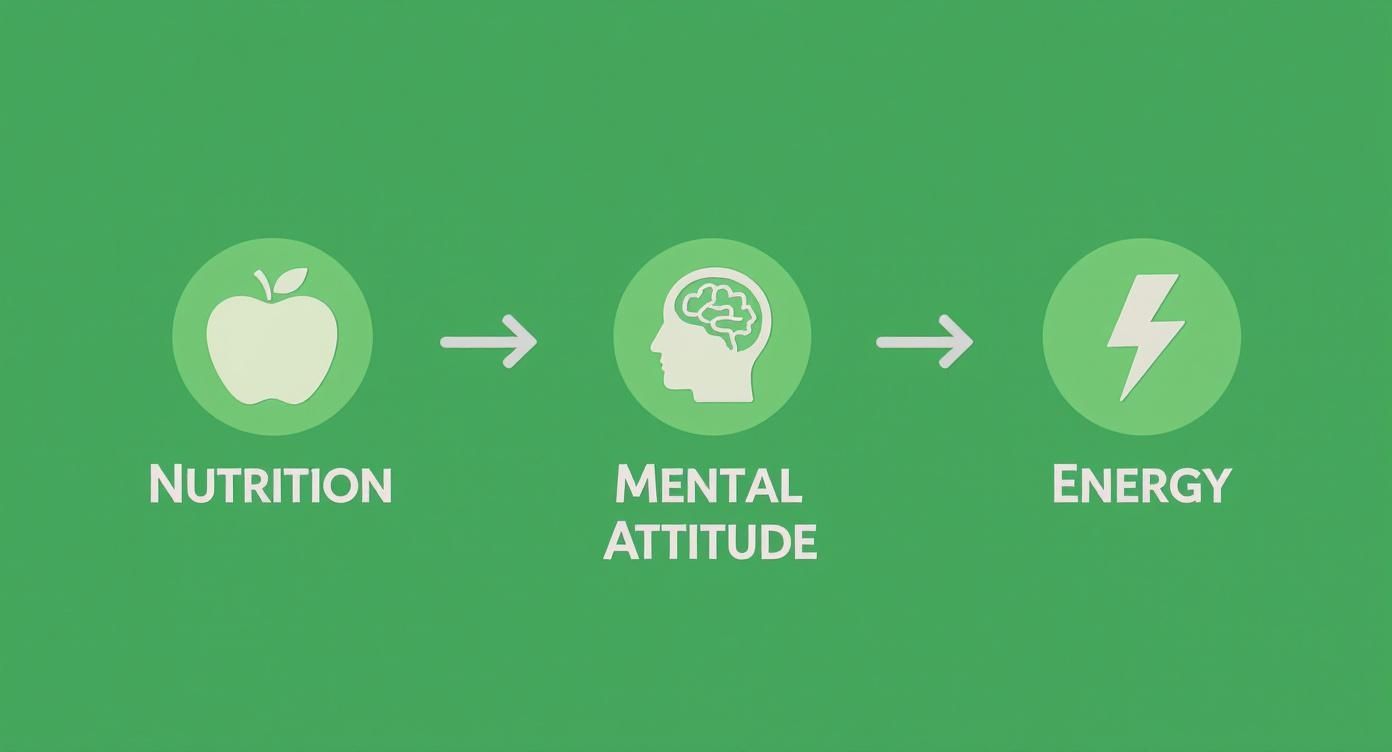
It is clear: A nutrient-rich diet forms the foundation. It promotes a positive mindset and gives you the energy you need for your journey—all crucial factors for achieving your goal.
How to find your personal calorie deficit
Everyone is different. Your individual calorie needs depend on many factors—age, sex, height, weight, and especially your daily activity level. There is therefore no one-size-fits-all calorie recommendation. The first step is to determine your approximate total daily energy expenditure.
- Basal metabolic rate: This is the amount of energy your body uses when completely at rest—essentially just for vital functions such as breathing, heartbeat, and metabolism.
- Active energy expenditure: This energy comes on top of that and includes everything you burn through movement—from walking the dog to a sweaty workout at the gym.
Online calculators can provide an initial rough estimate. Subtract the recommended 300 to 500 calories from this figure. Voilà, that’s your daily calorie target.
Quality beats quantity—always!
Achieving a calorie deficit by simply eating half as much is the worst way to go about it. Think about it: 500 calories from a bag of chips affect your body completely differently than 500 calories from a meal of grilled chicken breast, quinoa, and a large pile of vegetables.
The real secret lies in choosing foods that provide your body with plenty of nutrients and, above all, keep you full for a long time with relatively few calories. This way, you are not constantly battling hunger while still giving your body everything it needs for an active metabolism.
Focus on nutrient-dense foods. These are mainly:
- Protein: Lean meat, fish, legumes, and low-fat quark. They are highly satiating and protect your valuable muscle mass from being broken down.
- Fiber: Plenty of vegetables, fruit, and whole grains. They fill your stomach, keep your blood sugar levels stable, and help prevent cravings.
- Healthy fats: Avocados, nuts, and high-quality plant oils. They are essential for hormonal balance and the absorption of fat-soluble vitamins.
You’ll quickly notice that when you improve the quality of your diet, you often automatically eat fewer calories without feeling like you have to give anything up. This approach not only helps you lose weight but also lays the foundation for a sustainably healthy lifestyle. A well-functioning metabolism is, of course, essential. Would you like to dive deeper and learn how to train your body specifically to use fat as its primary energy source? Then check out our article explaining how to switch your metabolism to fat burning.
Your Nutrition Building Kit for Macro- and Micronutrients
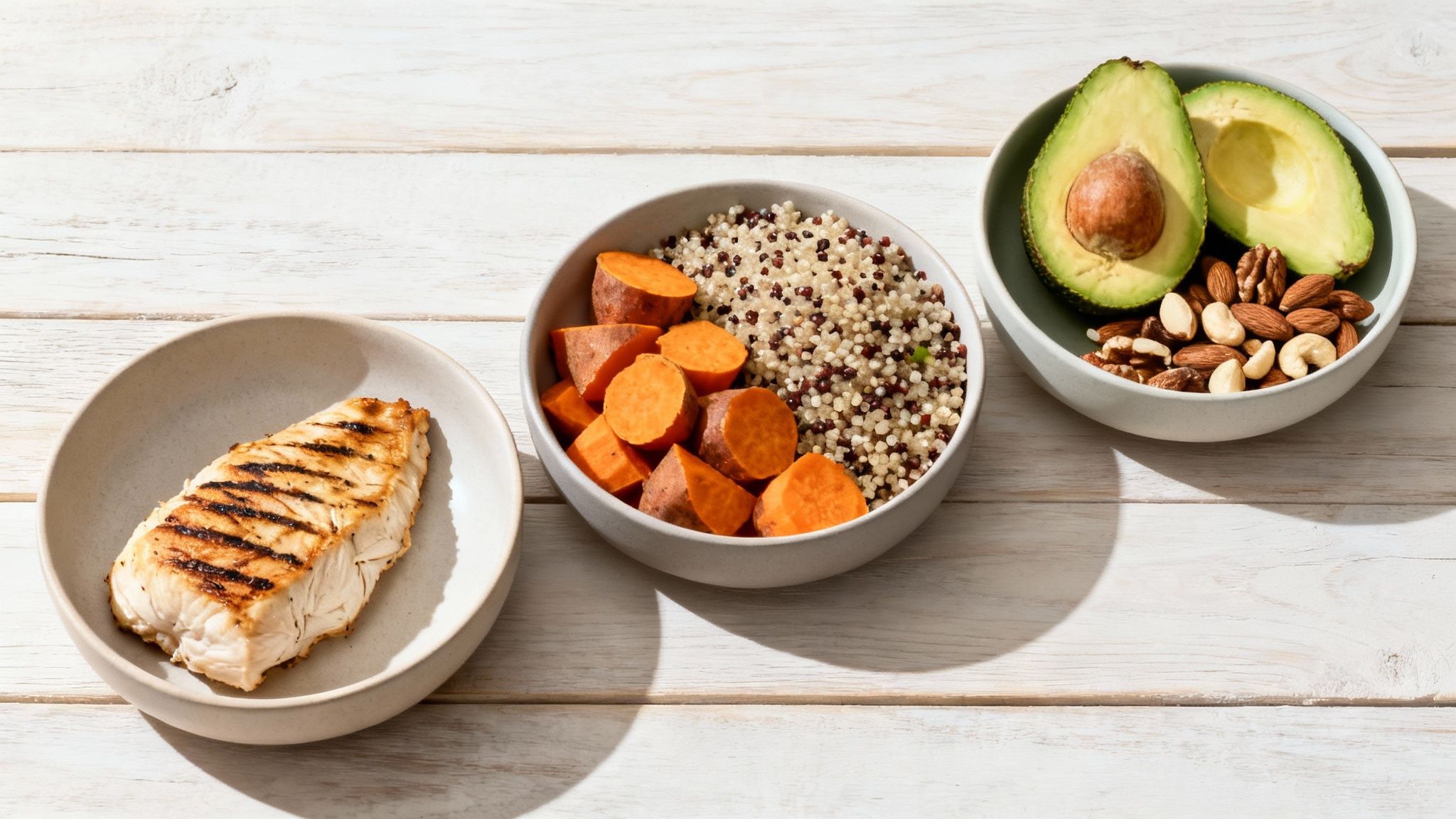
A calorie deficit is the foundation, but the true art of losing weight lies in the composition of your meals. Think of your diet as a construction kit: to build something stable and full of energy, you need the right building blocks in the right amounts. When losing weight through nutrition, these are the macro- and micronutrients.
It’s about so much more than simply cutting calories. The focus must be on giving your body exactly what it needs for its demanding tasks—from preserving muscle and producing hormones to providing energy for everyday life. Only then can you avoid cravings, stay productive, and prevent your metabolism from switching to low-power mode.
The Three Pillars of Your Diet: Macronutrients
Macronutrients are your body’s primary sources of energy. We distinguish between three groups: proteins, carbohydrates, and fats. Each group performs unique and indispensable functions, especially when you want to lose weight in a healthy and sustainable way. Finding the right balance is the key to success.
The following table gives you a quick overview of why each of these building blocks is so important and where you can find them.
| Macronutrient | Role in weight loss | Good sources |
|---|---|---|
| Proteins | Keep you full for a long time, protect muscle mass from breakdown, and boost metabolism through the thermic effect. | Lean meat (chicken, turkey), fish, eggs, low-fat quark, skyr, legumes (lentils, chickpeas), tofu |
| Carbohydrates | Provide energy for the brain and muscles as the preferred energy source. Complex, fiber-rich varieties keep blood sugar levels stable. | Whole-grain products (oatmeal, quinoa), sweet potatoes, regular potatoes, vegetables, legumes, fruit |
| Fats (healthy) | Are essential for hormone production and the absorption of fat-soluble vitamins (A, D, E, K). They have anti-inflammatory effects. | Avocado, nuts & seeds (walnuts, flaxseeds), olive oil, rapeseed oil, fatty fish (salmon, mackerel) |
As you can see, each macronutrient plays a crucial role. It’s not about completely banning any one of them, but about intelligently combining the right sources.
Protein – Your Best Friend in a Calorie Deficit
Clearly, protein is your most important ally when losing weight. Why? It has the highest satiating effect of all macronutrients. A protein-rich meal simply keeps you full for much longer.
Your body also uses more energy when digesting protein—this is called the thermic effect of food (TEF). But the most important point is protecting your muscles. When you’re in a deficit, your body tends to break down muscle along with fat. A high protein intake counteracts this and helps preserve your valuable, calorie-burning muscle mass.
Carbohydrates—The Smart Energy Providers
Carbohydrates have an undeservedly bad reputation. Your brain and muscles love them as a source of energy. The trick is choosing the right ones. Forget simple carbohydrates from white flour and sugar, which send your blood sugar levels on a roller coaster ride and trigger cravings.
Instead, choose complex, fiber-rich carbohydrates. They are digested slowly, provide long-lasting energy, and keep your blood sugar levels stable. Plus, fiber is great for your digestion and helps you feel fuller.
Healthy Fats—Essential for Your Hormones
Fat doesn’t automatically make you fat—in fact, the opposite is true. Healthy fats are essential for life. They are crucial for absorbing vitamins A, D, E, and K and play a central role in hormone production, which in turn regulates your metabolism and appetite. Simply focus on unsaturated fatty acids from sources such as avocados, nuts, olive oil, and fatty fish.
Micronutrients: The Unsung Heroes
In addition to the major building blocks, there are micronutrients—vitamins, minerals, and trace elements. Although they provide no energy, they are absolutely essential for thousands of metabolic processes. A deficiency can sabotage your progress without you noticing right away.
Imagine your metabolism as a Swiss watch. Micronutrients are the fine oil that ensures all the gears mesh smoothly. If even a single drop is missing, the entire machine begins to grind to a halt.
Especially when you’re in a calorie deficit and eating less overall, the risk of a deficiency increases. Symptoms such as constant fatigue, difficulty concentrating, or a weak immune system can be early warning signs. For example, iron deficiency can lead to exhaustion, while a lack of magnesium can promote muscle cramps.
A colorful, varied diet rich in vegetables and fruit is the best insurance against such deficiencies. If you want to dive deeper into the world of nutrients, our guide explains in detail exactly what a nutrient is and why good nourishment is so crucial.
Ultimately, it’s about finding an intelligent balance. Choose unprocessed, nutrient-rich foods. Every meal is a new opportunity to nourish your body optimally and support it as effectively as possible on the way to your goal.
Find out what your body really needs
Standard diets have one crucial flaw: They ignore the most important factor of all—you. Each of us has a unique metabolism, shaped by our genes, lifestyle, and even the tiny bacteria in our gut. The key to sustainable weight loss through nutrition therefore lies not in blindly following a generic plan, but in deliberately listening to the signals from your own body.
Modern analyses help you decipher precisely these signals. They are your tool for moving from guessing to knowing and giving your body exactly what it needs to function optimally. This finally makes losing weight effective and frustration-free.
Why your metabolism works differently
Have you ever wondered why your friend can eat pasta without any problems, while it seems to go straight to your hips? The answer could be hidden in your DNA. A DNA metabolism test reveals how your body naturally processes fats, carbohydrates, and proteins.
These insights are pure gold. Imagine discovering that you’re a metabolic type that converts fats into energy particularly efficiently. In that case, healthy fats from avocados, nuts, or olive oil may be a much better energy source for you than a large serving of pasta.
It’s not about demonizing entire nutrient groups. It’s about finding the optimal balance for you, based on your unique biological makeup.
This personalized approach takes the frustration out of the weight-loss process. Instead of generic rules, you use targeted, effective strategies. If you're curious about how it works and what insights you can gain, our guide contains all the details about a comprehensive metabolism analysis.
The hidden power of your gut
Another often underestimated factor in weight management is your microbiome—the community of trillions of bacteria in your gut. These tiny helpers have a huge influence on how you digest food, how many calories you absorb, and even what you crave.
When your gut flora is out of balance, it can lead to low-grade inflammation, which in turn disrupts your metabolism and make losing weight a real struggle. A microbiome analysis shows you how healthy your gut is and provides concrete tips for improvement. Often, even small adjustments can make a huge difference:
- More fiber: Certain gut bacteria thrive on fiber from vegetables, legumes, and whole grains. They use it to produce short-chain fatty acids, which reduce inflammation and promote a feeling of fullness.
- Probiotic foods: Yogurt, kefir, and sauerkraut provide beneficial bacteria that can help restore balance in your gut.
- Variety on your plate: The more colorful and varied your diet, the more diverse and resilient your microbiome will be.
By specifically supporting your gut, you create a stable foundation for a healthy metabolism and sustainable weight loss.
Nutrient deficiencies as an invisible brake
Sometimes it’s tiny micronutrients that are missing and quietly hold back your progress. An iron deficiency can cause fatigue and a lack of energy—turning exercise into a chore. If you’re deficient in vitamin D or magnesium, important metabolic processes can slow down.
A high nutrient density is all the more important when you’re in a calorie deficit and eating less overall. A nutrient and mineral check can uncover such hidden deficiencies. This allows you to take targeted action by adding the right foods to your plan or, after consulting an expert, supplementing sensibly.
This desire for a more mindful approach to nutrition is no longer a niche issue, either. The 2024 Nutrition Report shows that 72 percent of people in Germany want to eat more healthily—compared with just 54 percent in 2018. This shows how awareness is growing that targeted nutrition is the key to greater well-being. You can learn more about current nutrition trends in Germany in the BMEL’s full report.
By keeping these three pillars—genetics, gut health, and nutrient supply—in mind, you’ll take your nutrition to a whole new level. You’ll leave behind the well-trodden path of one-size-fits-all diets and develop a strategy that truly suits you—based on scientific facts about your own body.
Your nutrition plan for the perfect start

Enough theory! You now understand what matters when it comes to a calorie deficit and nutrients. Now let’s get practical, and I’ll show you how simple and delicious losing weight through nutrition can really be.
Think of this section as a flexible guide. The suggestions here are not strict rules, but a source of inspiration that you can easily adapt to your taste, preferences, and daily routine.
A flexible weekly plan for inspiration
A good plan gives you a clear structure without forcing you into a rigid framework. Here is an example of what a week could look like—rich in nutrients, filling for a long time, and perfect for supporting your calorie deficit.
- Breakfast (approx. 350–450 kcal): Focus on a good portion of protein and complex carbohydrates. This gives you energy for the day and helps prevent cravings in the morning.
- Lunch (approx. 400–500 kcal): A colorful combination of lean protein, plenty of vegetables, and a small portion of fiber is ideal. This way, you’ll stay productive in the afternoon without falling into the typical post-lunch slump.
- Dinner (approx. 400–500 kcal): Lighter meals focused on protein and vegetables are often the best choice in the evening. This allows your body to focus on recovery instead of having to deal with heavy digestive work.
Here are a few simple recipe ideas you can try right away:
| Meal | Recipe idea | Why it works |
|---|---|---|
| Breakfast | Skyr or low-fat quark with berries, a spoonful of flaxseed, and a handful of nuts. | Protein power: Skyr and low-fat quark are extremely filling. Berries provide vitamins, and the nuts provide healthy fats. |
| Lunch | Large mixed salad with grilled chicken breast strips, chickpeas, and a light yogurt dressing. | Nutrient powerhouse: The vegetables provide fiber and micronutrients, while chicken and chickpeas help keep you full. |
| Dinner | Oven-baked salmon fillet with steamed broccoli and a small spoonful of olive oil. | Light & healthy: Salmon is rich in omega-3 fatty acids, broccoli provides important nutrients, and the meal is easy to digest. |
The game changer: Meal prep
One of the biggest enemies when losing weight? Lack of time. After a long day at work, most of us find it difficult to prepare an elaborate fresh meal. That’s exactly where meal prep comes in—the art of preparing meals cleverly in advance.
On Sunday, simply set aside one to two hours to cook some components for the coming week in advance. This not only saves an incredible amount of time and stress, but also keeps you from making unhealthy impulse purchases when hunger strikes.
Simple meal prep tips to get started:
- Cooking grains: Cook a larger quantity of quinoa, rice, or millet in advance. That way, you always have a healthy source of carbohydrates on hand.
- Chop vegetables: Wash and cut vegetables such as bell peppers, cucumbers, and carrots, and store them in airtight containers. Perfect for salads or as a quick snack.
- Prepare proteins: Cook a batch of lentils, fry some chicken breast, or hard-boil eggs. You can then easily add them to your meals as needed.
Meal prep puts you in control. You consciously decide what you eat and are no longer tempted by sudden hunger to make poor choices.
The smart shopping list for your success
A successful meal plan starts at the supermarket. My tip: Never shop when you’re hungry, and stick to your list. This protects you from impulse purchases and ensures you always have the right ingredients at home.
Your basic shopping list could look like this:
- Sources of protein: Eggs, low-fat quark, Skyr, legumes (lentils, beans, chickpeas), tofu, lean meat or fish.
- Complex carbohydrates: Oatmeal, quinoa, whole-wheat pasta, (sweet) potatoes.
- Healthy fats: Avocado, nuts (walnuts, almonds), seeds (flaxseeds, chia seeds), olive oil.
- Vegetables & fruit: Choose seasonal and colorful produce! Broccoli, spinach, bell peppers, berries, apples.
- For flavor: Fresh herbs, onions, garlic, unsweetened spices.
Would you like even more inspiration and in-depth information? Our comprehensive guide to healthy eating for weight loss offers many more valuable tips and delicious recipe ideas.
Healthy snacks for when hunger strikes
Snacks are absolutely not forbidden—they just need to be chosen wisely. Instead of reaching for a bag of chips, you should always have a healthy alternative on hand. This stabilizes your blood sugar and prevents cravings.
Ideas for smart snacks:
- A handful of unsalted nuts.
- An apple with a spoonful of nut butter.
- Vegetable sticks (carrots, cucumbers) with herb quark dip.
- A small bowl of Greek yogurt.
- A hard-boiled egg.
This practical approach helps you put theory into practice and see your first successes. Remember: Every meal is a new opportunity to do something good for your body and take one step closer to your goal.
Overcome common hurdles and stay motivated
Every path has its stumbling blocks—and the journey to your feel-good weight is no exception. That’s completely normal. Sometimes the scales stop moving, sometimes an invitation to dinner proves tempting, or your motivation suddenly runs out. It’s simply part of the process.
What matters is not avoiding these moments at all costs, but learning to handle them confidently. With the right strategies in mind, you’ll also get through difficult phases without immediately throwing everything away. See setbacks for what they are: part of the process that you can learn from.
When the scale won’t budge: Breaking through the plateau
You’re sticking to your plan, but nothing has changed on the scale for days or weeks? Congratulations—you’ve reached a weight-loss plateau. There’s no reason to panic; on the contrary, it’s a sign that your body has already adapted to the new situation.
Your now-lighter body simply uses a little less energy than it did at the beginning. This is the time for a small course correction, not frustration.
- Check your portions honestly: Portions often start getting a little larger again without you noticing. Take a few days to track your intake briefly and honestly—it can work wonders.
- Introduce new training stimuli: If you exercise, challenge your body in new ways. Try a completely different sport or slightly increase the intensity of your usual workouts.
- Keep an eye on sleep and stress: Too little sleep and too much stress can raise your cortisol levels and slow down fat burning. So make sure to consciously give yourself enough rest.
Hidden calorie traps and social hurdles
Everyday life is full of little traps that can sabotage your calorie deficit unnoticed. The spoonful of sugar in your morning coffee, the supposedly “healthy” ready-made dressing on your salad, or that one extra handful of nuts—all of it adds up. Above all, awareness is key.
Invitations to eat at friends’ homes or at a restaurant are another classic. But here too, you don’t have to give up everything.
You don’t have to say no to the invitation—just say yes cleverly to the right dishes. Choose grilled rather than fried foods, ask for the sauce to be served separately, and opt for a side salad instead of fries.
Many people are also held back by the concern that healthy eating is an expensive luxury. But that’s not true. It is entirely possible to get by well on a limited budget while still eating mindfully. The trick is to shop seasonally, look out for deals, and above all, cook for yourself.
Avoid the yo-yo effect once and for all
The dreaded yo-yo effect is almost always the price of overly radical diets. When you starve your body, it switches into emergency mode: It breaks down valuable muscle mass and slows your metabolism. As soon as you start eating “normally” again, it stores every available calorie out of fear of the next famine. The result: You quickly weigh more than before.
The key to preventing this? A moderate calorie deficit and a high-protein diet that protects your muscles. Sustainable weight loss through nutrition means establishing new, healthy habits that you can maintain for life—instead of putting yourself through a short-term crash diet.
Deeply ingrained eating habits are often the biggest hurdle. Studies on food consumption in Germany show that, despite increased awareness, high meat and sugar consumption is still the norm. Effective weight loss therefore often requires consciously reducing precisely these food groups, as a WWF study emphasizes. You can find all the details about Germans' eating habits in the WWF study on food consumption.
Motivation is what gets you started. Habit is what keeps you going.
Motivation is a feeling—and feelings come and go. So don't rely on it alone. Instead, build strong, positive habits. Sunday meal prep, a set time for your walk, or a glass of water before every meal: routines like these will carry you through the days when your motivation is at rock bottom.
Be kind to yourself. If one day completely gets out of hand, it's not the end of the world. Put it behind you and simply start fresh the next morning. Every single day is a fresh chance to move one step closer to your goal. Patience and self-compassion are your strongest tools for long-term success.
You now have all the tools you need to achieve your goal. But the truly crucial step is moving from general knowledge to a personal strategy. Your body is unique—so why shouldn't your nutrition plan be, too?
At mybody-x.com, we help you find out exactly that. With a scientifically based DNA or microbiome analysis, you can understand what your metabolism really needs. Stop guessing and start taking targeted, effective action.



Share now:
Function of Metabolic Tests: Everything You Need to Know
Types of Metabolic Analyses: The Complete Guide