
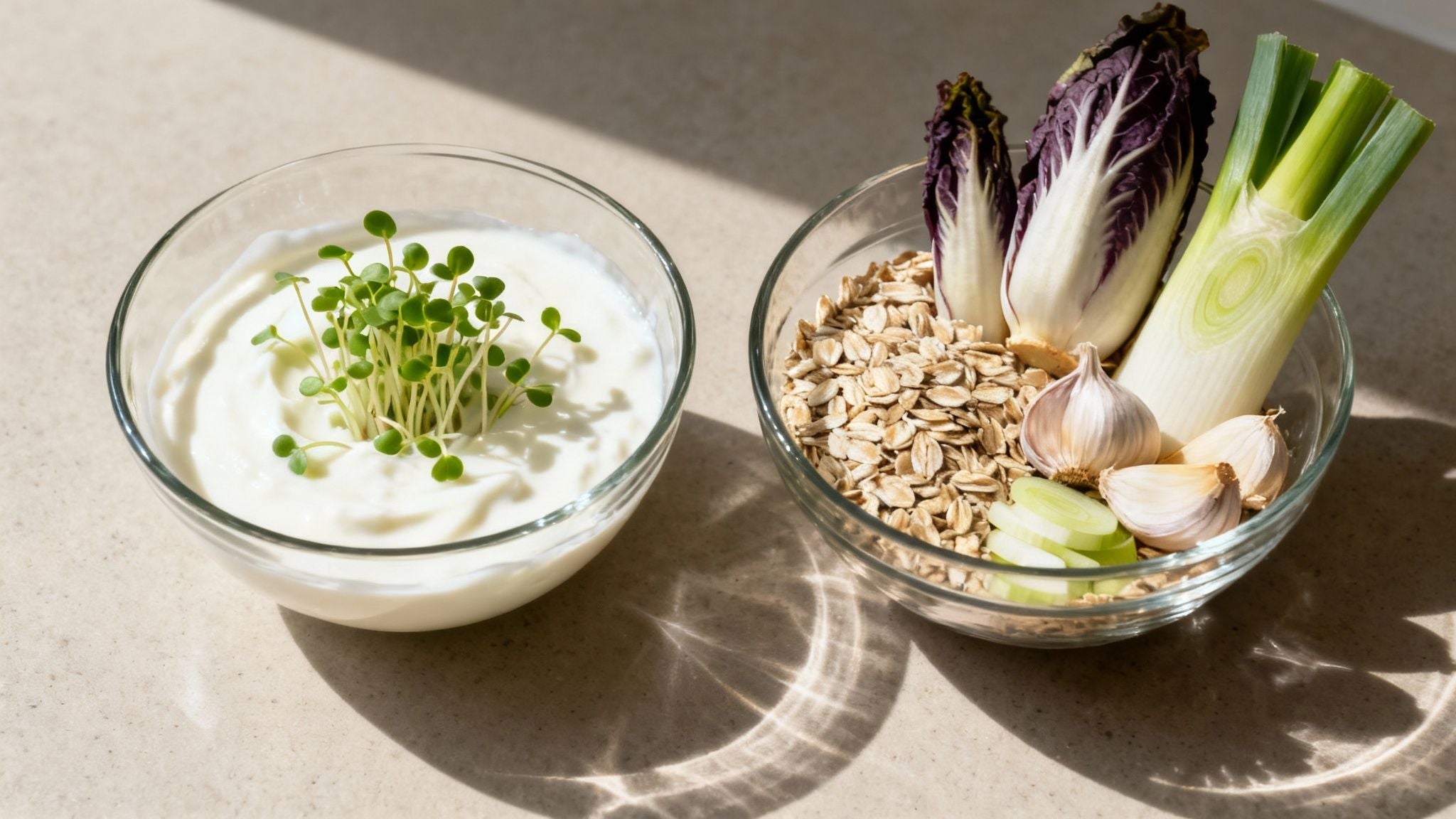
The Difference Between Probiotics and Prebiotics: Simply Explained
Probiotics and prebiotics—often mentioned in the same breath, but essentially two completely different allies for your gut. To understand what really benefits your digestion, it is worth taking a closer look. The difference is actually quite simple once you understand it.
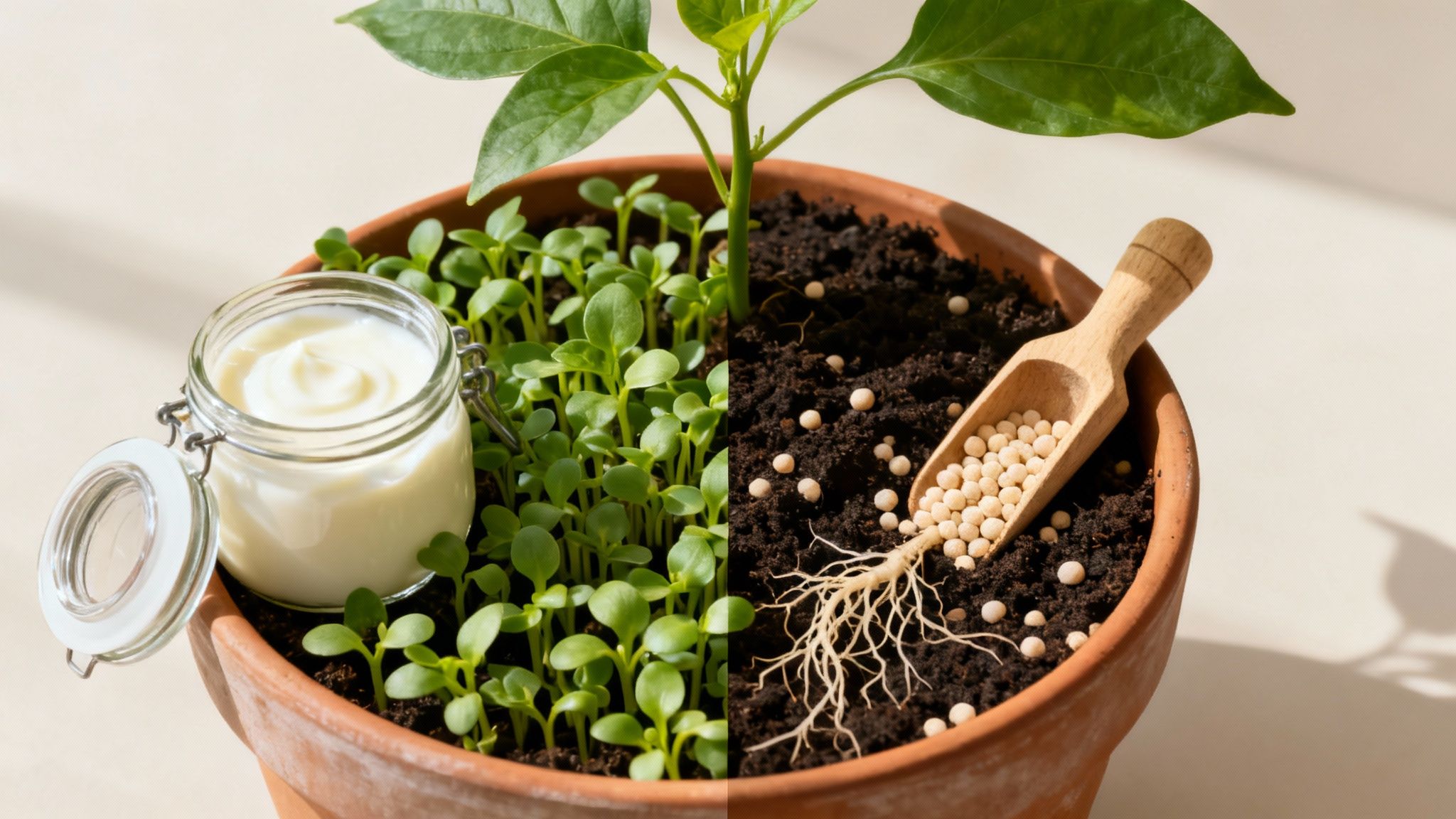
Imagine your gut as a garden: Probiotics are the diligent gardeners or the new seeds you sow. They are living, beneficial bacteria that actively support and enrich your gut flora. Prebiotics, on the other hand, are the fertilizer. They are indigestible dietary fibers that serve as food for the beneficial bacteria already present and help them grow.
So both are important, but they fulfill fundamentally different roles.
What really distinguishes probiotics and prebiotics?
Although they are an unbeatable team, the roles of probiotics and prebiotics in your body could hardly be more different. If you want to specifically promote your gut health, you should know the difference.
The crucial point lies in their nature. Probiotics are living microorganisms—that is, “good” bacteria—that reach the gut directly and strengthen the existing bacterial community there. They actively help stabilize the balance of the gut flora or restore it after a disruption, such as one caused by antibiotics.
Prebiotics, on the other hand, are not living organisms. They are special dietary fibers such as inulin or fructooligosaccharides (FOS). Your body cannot digest them, but they are a real feast for your beneficial gut bacteria. They therefore work indirectly by specifically stimulating the growth of the beneficial bacteria that are already established.
The garden example makes it clear
To make it even more tangible, let’s stick with the image of a garden:
- Probiotics are the seeds: You introduce new, beneficial plants (bacteria) into your garden to increase diversity and make it more resilient.
- Prebiotics are the fertilizer: You give the plants that are already there the nutrients they need to grow strong. Even the best seeds grow poorly without the right soil.
This distinction is extremely important because many health-conscious people want to better understand and proactively support their digestive system. A healthy microbiome, supported by both components, is therefore becoming increasingly important.
The following infographic gives you another direct comparison of these two allies for gut health.
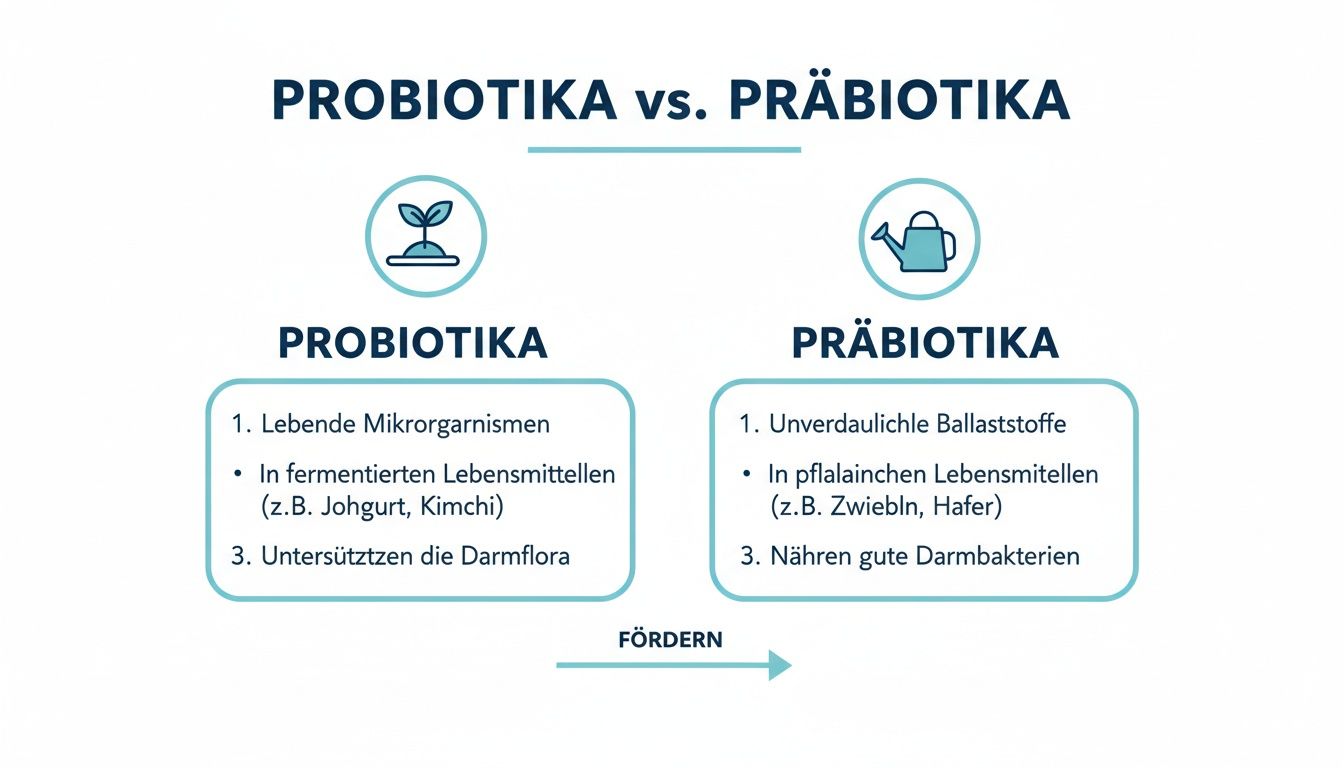
As you can see here, probiotics actively introduce new bacteria, while prebiotics feed the existing flora. This is a crucial distinction for your dietary strategy. Ultimately, a balanced intake of both is the key to healthy digestion. If you want to explore this in greater depth, read our guide on how to build your gut flora with the right diet.
The key point is: Probiotics add, while prebiotics promote. A healthy microbiome benefits from both. However, specifically supporting and strengthening the good bacteria already present is often the more sustainable approach.
Probiotics vs. prebiotics: The key differences at a glance
To highlight the key differences once again, a direct comparison is helpful. This table gives you an overview of the central characteristics of probiotics and prebiotics at a glance—from their function to the best everyday sources.
| Characteristic | Probiotics | Prebiotics |
|---|---|---|
| What it is | Living, beneficial microorganisms (bacteria & yeasts) | Indigestible plant fibers (dietary fiber) |
| Main function | Colonize the intestines and support the existing flora | Serve as “food” for the good gut bacteria |
| Effect | Direct: Add new bacteria to the microbiome | Indirect: Promote the growth of existing bacteria |
| Examples in foods | Yogurt, kefir, sauerkraut, kimchi, miso, kombucha | Onions, garlic, leeks, asparagus, bananas, chicory |
| State | Must reach the intestines alive to be effective | Are not alive and are therefore less sensitive |
| Goal | Increase diversity, restore balance | Targeted strengthening of the “good” bacterial population |
As you can see, the two complement each other perfectly. While probiotics bring in fresh energy, prebiotics take care of the well-being of your gut’s long-established inhabitants.
How probiotics directly support your gut flora
Now that we have clarified the fundamental difference, let’s take a deeper look into the world of probiotics. It’s best to think of them as highly specialized little helpers with a very clear mission: to actively and directly enrich your gut ecosystem. Probiotics are living microorganisms—“good” bacteria or yeasts—that provide health benefits when they reach your gut in sufficient quantities.
However, their journey there is quite challenging. To have any effect at all, they must survive the aggressive stomach acid and reach the intestines alive. Only then does their actual work begin.
The mechanism of action of living helpers
The effects of probiotics are based on several clever strategies. They temporarily attach themselves to the intestinal wall, where they compete with potentially harmful microbes for space and nutrients. You can really think of it as a competition in which the “good” bacteria displace the “bad” ones.
In addition, some probiotic strains produce substances that actively inhibit the growth of unwanted bacteria. They also strengthen the gut barrier—the important protective layer that prevents harmful substances from entering the bloodstream. This mechanism is crucial for a well-functioning immune system, much of which is located in the gut.
The best-known representatives among probiotics are:
- Lactobacilli: You often find these lactic acid bacteria in yogurt and other fermented dairy products. For example, they help digest lactose.
- Bifidobacteria: These bacteria are important inhabitants of a healthy colon. There, they play a central role in producing valuable short-chain fatty acids. Learn more about the function and importance of bifidobacteria for your gut health in our detailed guide.
- Saccharomyces boulardii: This is a yeast that has proven particularly effective in alleviating diarrhea, especially after taking antibiotics.
Important note: Probiotics are not a universal solution. Their health benefits are always strain-specific. This means that a bacterial strain that helps with digestive problems is not necessarily effective for the immune system as well.
Challenges and the right sources
One of the biggest challenges with probiotics is their long-term colonization of the gut. Many probiotic strains are merely “temporary visitors” and must be consumed regularly to maintain their beneficial effects. Their effectiveness therefore depends heavily on the dosage and the respective strain’s ability to survive.
To support your gut flora with probiotics, you can turn to natural food sources. These include fermented products such as:
- Yogurt with live cultures
- Kefir
- Sauerkraut (very important: not pasteurized)
- Kimchi
- Kombucha
When you reach for dietary supplements, look for a high number of colony-forming units (CFUs) and enteric-coated capsules. This is the only way to ensure that the bacteria actually reach the gut alive. However, not everyone needs probiotics indiscriminately. Targeted support is often more useful than a one-size-fits-all approach, because an excess or the wrong strain can sometimes cause bloating.
Why prebiotics are the sustainable foundation for your microbiome
While probiotics are often presented as quick helpers, the true long-term strength behind a healthy gut flora often lies in prebiotics. Think of them as the gardeners of your inner ecosystem—often underestimated, but absolutely crucial. Instead of introducing new bacteria from outside, prebiotics work exactly where it is most sustainable: with the beneficial gut inhabitants you already have.
Prebiotics are essentially special, indigestible fibers. This means your own body cannot break them down and use them as an energy source. For your beneficial gut bacteria—above all the important bifidobacteria and lactobacilli—they are a veritable feast.
This targeted “fertilizing effect” is precisely the key difference from probiotics. Prebiotics selectively feed the bacterial strains that are most beneficial to your health. In this way, they strengthen your microbiome from within, so to speak.
The engine of your gut health
When your beneficial gut bacteria metabolize these prebiotics, something extremely important happens: short-chain fatty acids (SCFAs) are produced. The best-known and most important of these is probably butyrate.
These small molecules are real powerhouses for your gut. Butyrate serves as the primary energy source for the cells lining your intestine. And that has far-reaching positive effects:
- Strengthening the gut barrier: A well-nourished intestinal lining is denser and more resilient. This prevents unwanted substances from entering your bloodstream—an effect also known as “leaky gut.”
- Anti-inflammatory effects: SCFAs help regulate inflammatory processes in the gut, which plays a central role, especially in chronic conditions.
- Improved nutrient absorption: A healthy gut can absorb important minerals such as calcium and magnesium much more effectively.
- Appetite regulation: Short-chain fatty acids are even involved in the production of hormones that control your feeling of fullness.
By consciously enriching your diet with prebiotics, you’re not only investing in the growth of good bacteria. You’re also actively promoting the production of these valuable metabolic products. This is a truly sustainable approach that goes far beyond the often only temporary colonization provided by probiotics.
The best prebiotic sources for your everyday life
What’s great about prebiotics? You’ll find them in perfectly ordinary foods that you probably already have at home. So you don’t need to hunt down exotic ingredients to do something good for your gut flora. Some of the most potent sources include fibers such as inulin and fructooligosaccharides (FOS).
The following foods are particularly rich in these helpers:
- Chicory: The root is one of the richest natural sources of inulin.
- Onions, garlic, and leeks: These everyday heroes provide a substantial dose of prebiotics.
- Asparagus: Not only delicious, but also an excellent fertilizer for your gut bacteria.
- Jerusalem artichokes: This often-forgotten tuber is also an inulin champion.
- Artichokes: They contain valuable fiber that your gut flora will love.
Incidentally, slightly underripe bananas also contain resistant starch, which acts very similarly to a prebiotic. You can learn more about the benefits of bananas and their fiber for your health in our special guide. Simply incorporating these foods into your meals is already a huge step toward a strong microbiome.
Prebiotics can significantly boost the growth of your body's own bifidobacteria, while probiotics introduced from outside often fail to establish themselves permanently. Prebiotics such as beta-glucan from oats or resistant starch from bananas serve as targeted nourishment, improve the gut barrier, and have been shown to reduce inflammation. The Federal Centre for Nutrition (BZfE) also offers further insights into this topic.
Harnessing the synergy of synbiotics for maximum effectiveness
Okay, now you know the difference between probiotics and prebiotics—the former are the diligent helpers, while the latter are their favorite food. But what happens when you combine the two? Then we are talking about synbiotics, and this is where the real magic for your gut health begins.
The idea behind it is as simple as it is ingenious: Why choose one when both together are so much more effective? A synbiotic gives you both in one go—the beneficial probiotic bacteria and the right prebiotic food to go with them.
Why the team is stronger than the individual player
Imagine sending a group of highly motivated specialists (probiotics) into a completely new work environment (your gut). Without the right resources or proper onboarding, they will struggle to find their way around and do their jobs.
This is exactly where prebiotics come in. In a synbiotic product, they are essentially the “starter pack” or provisions brought along for the new probiotic strains.
This approach has clear advantages:
- Improved chances of survival: The prebiotics ensure that the new bacteria are well supplied on their journey through the stomach and small intestine and actually arrive alive at their destination.
- Faster colonization: With their favorite food in tow, probiotics can colonize the gut, multiply, and become active much faster.
- Increased effectiveness: This synergistic effect ensures that the positive effects of probiotics—such as the production of short-chain fatty acids—are significantly enhanced.
A synbiotic is more than just the sum of its parts. It is an intelligent strategy for maximizing probiotic effects and supporting the microbiome in a targeted and effective way.
How to easily incorporate synbiotics into everyday life
The best part? You do not have to immediately turn to expensive supplements to benefit from this principle. You can easily put together your own synbiotics by cleverly combining the right foods.
Here are a few simple but incredibly effective examples for your everyday life:
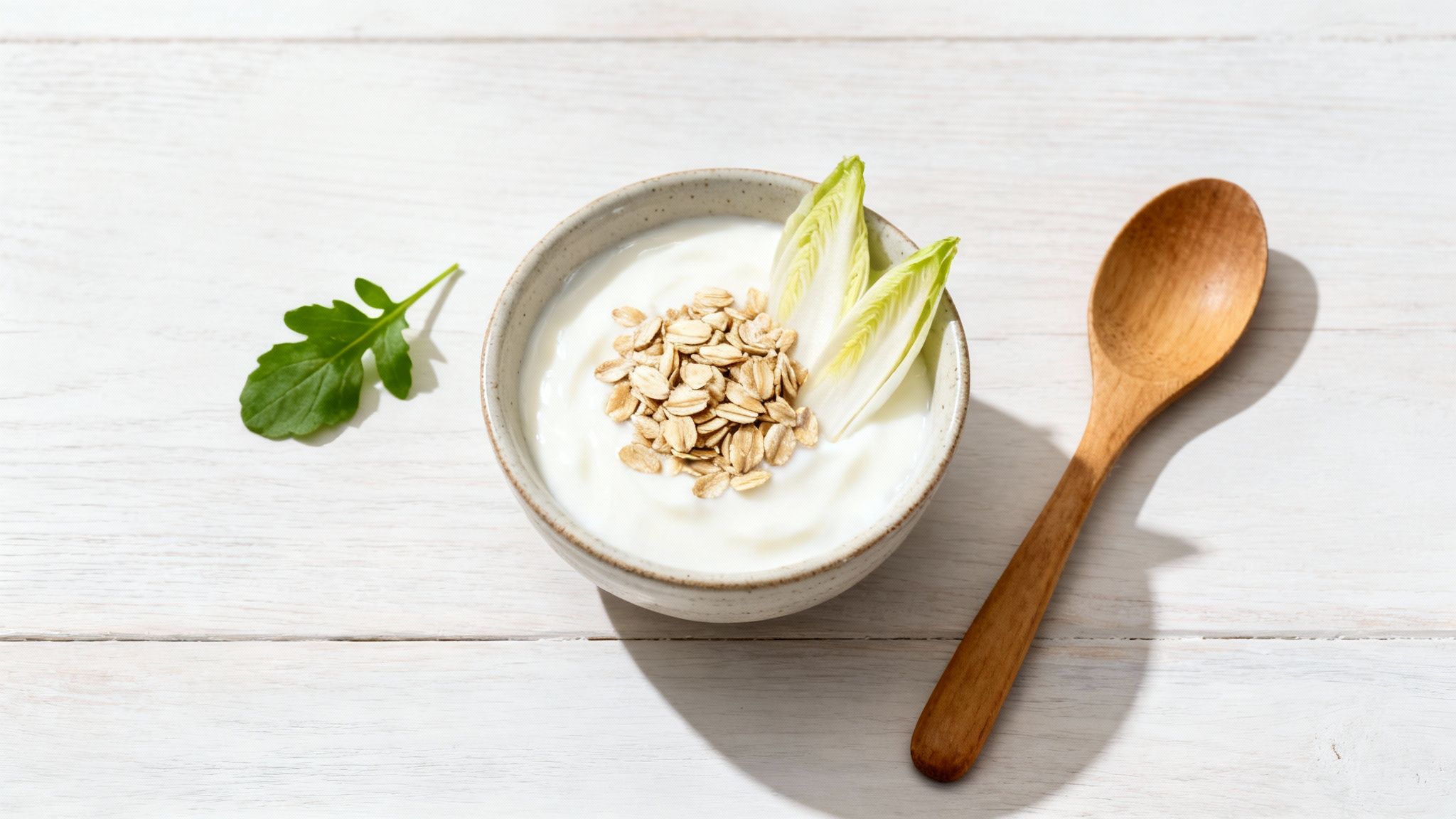
- Yogurt with oats and banana: The yogurt provides probiotic lactobacilli, while the oats and banana serve as the perfect prebiotic fertilizer.
- Kefir smoothie with flaxseeds: Kefir is packed with a variety of probiotic cultures. The flaxseeds provide valuable fiber that directly nourishes these cultures. If you would like to learn more about the health benefits of fermented dairy products, take a look at our guide answering the question “Is kefir healthy?”.
- Sauerkraut with whole-grain bread: Fresh, unpasteurized sauerkraut provides you with live lactic acid bacteria, while the fiber in whole-grain bread feeds your beneficial gut microbes.
These combinations are not only healthy but also delicious and can be effortlessly incorporated into any meal. They show how simple it can be to apply knowledge about probiotics and prebiotics directly.
When are synbiotic supplements useful?
Although a balanced diet should always be the foundation, there are situations in which a targeted synbiotic dietary supplement can make perfect sense. This applies especially after antibiotic treatment, in cases of persistent digestive problems, or when changing your diet alone does not bring the desired results.
When choosing a product, you should look for clearly defined bacterial strains and a sufficient amount of prebiotics such as inulin or fructooligosaccharides (FOS). Quality is paramount here so that the synergy really works. However, it is often wiser to first understand your own individual needs before turning to general remedies.
When a microbiome test can bring clarity to your gut
You are really making an effort: You eat healthily, exercise, and take care of yourself. Yet you are plagued by digestive problems, often feel sluggish, or your skin acts up. Does this sound familiar? You are not alone. The cause often lies deeper – in your gut microbiome.
Instead of continuing to grope in the dark and trying probiotics or prebiotics at random, you can take a targeted look inside your body. This is exactly where personalized analysis comes in. It is the crucial step away from guesswork and toward genuine knowledge about your gut’s needs.
From general advice to precise insight
Your gut is a vast, complex ecosystem containing trillions of microorganisms. General advice such as “Eat more yogurt” may be a starting point, but it rarely solves individual problems. The difference between probiotics and prebiotics alone shows how targeted your approach actually needs to be. But how do you know what your gut really needs?
A gut microbiome test answers exactly this question. Instead of making blanket assumptions, it provides you with a detailed snapshot of your gut flora. You receive precise data on the composition and diversity of your bacterial community.
A mybody®x gut microbiome test looks at, for example:
- The diversity of your microbiome: High diversity is a clear sign of a robust and healthy gut ecosystem.
- The ratio of beneficial to potentially harmful bacteria: Is there an imbalance (dysbiosis) that could explain your symptoms?
- The presence of specific bacterial strains: Could you be lacking important bifidobacteria or lactobacilli? Or have unwanted pathogens multiplied too much?
- The production of short-chain fatty acids: Does your gut produce enough butyrate to nourish your intestinal lining and keep inflammation in check?
This analysis provides you with a scientifically sound basis for finally making the right decisions for your health. It is the guide that shows you where to start.
A microbiome test is like a map of your inner ecosystem. It not only shows you where you are right now, but also which path you need to take to reach your goal – greater well-being.
Probiotics, prebiotics, or both – the individual answer
With your test results in hand, the question of whether you need probiotics, prebiotics, or a combination of both suddenly becomes crystal clear. The analysis shows you in black and white which strategy makes the most sense for you.
Let’s imagine three possible scenarios that a test could reveal:
Scenario 1: Deficiency of beneficial bacteria Your result shows that certain important groups of bacteria, such as bifidobacteria, are present only in very small numbers.
- Your recommended course of action: Carefully selected probiotics could be worth their weight in gold here to fill this gap directly. At the same time, the new and remaining beneficial bacteria need the right food—namely prebiotics such as inulin from chicory.
Scenario 2: Low diversity and few butyrate producers Your gut flora is generally in good condition, but it lacks diversity and the important butyrate-producing bacteria.
- Your recommended course of action: The focus here is clearly on prebiotics. A diet rich in resistant starch (e.g., from cooled potatoes) and fiber from leeks, onions, and whole-grain products is now the key. This specifically nourishes the beneficial bacteria already present and boosts their activity.
Scenario 3: A severe imbalance (dysbiosis) The test shows a clear dominance of potentially harmful bacteria, while beneficial strains are in the minority.
- Your recommended course of action: In this case, a combined strategy (synbiotics) is most effective. High-dose, specific probiotics help displace the “bad” bacteria. At the same time, prebiotics create an environment in which the “good” bacteria can thrive and prevail over the long term.
A mybody®x gut microbiome test therefore provides you not only with data, but also with a personalized course of action. You learn which foods and nutrients your gut needs right now to regain its balance. This turns your diet into personalized support for your gut.
Develop your personal strategy for greater well-being
A test result is only the beginning—so to speak, the starting point for your journey toward greater well-being. Now comes the really exciting part: You transform the insights from your mybody®x gut microbiome test into a concrete, actionable plan that fits you and your life perfectly.
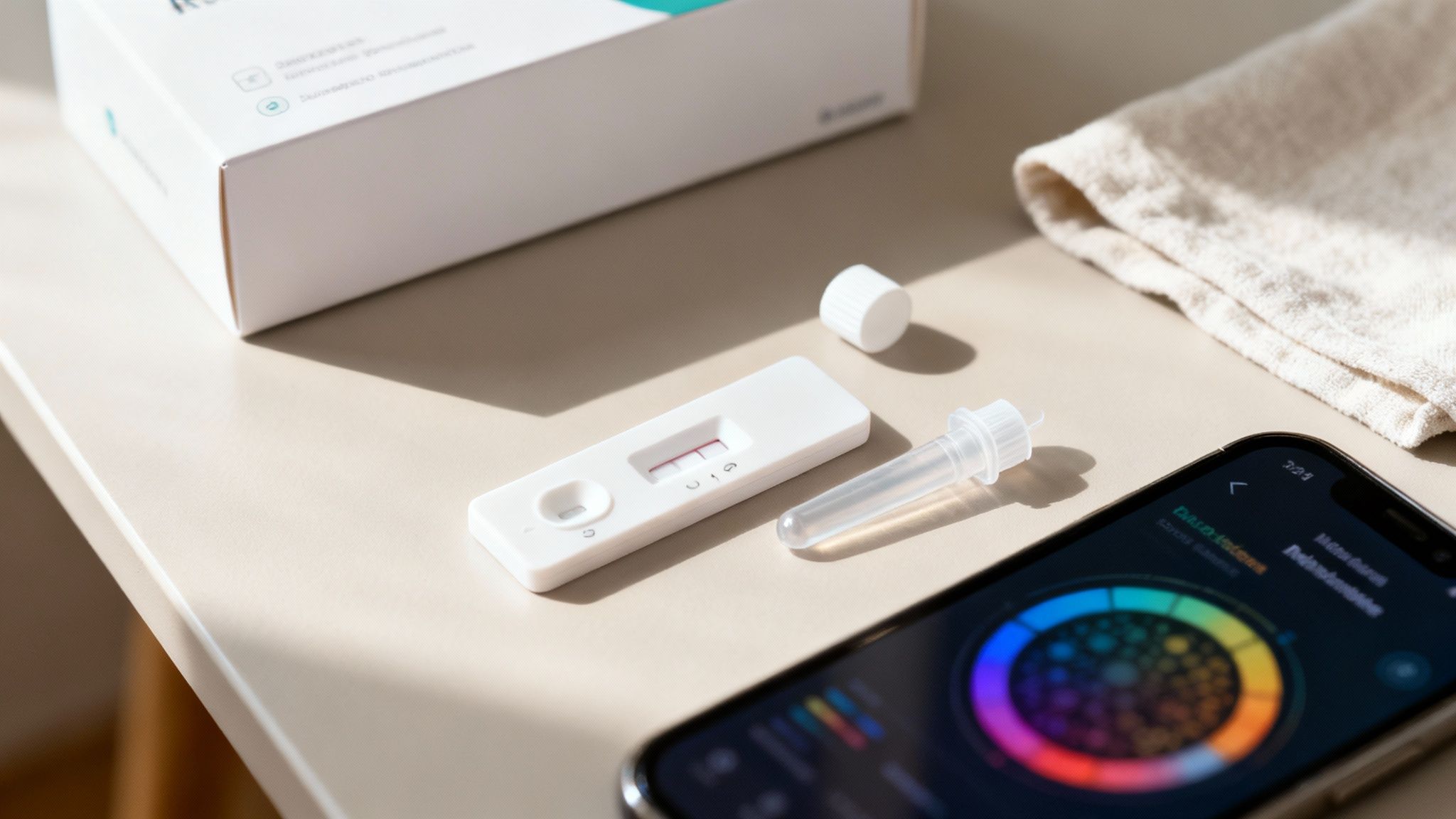
Instead of generic advice, you get a truly personal roadmap built around your gut’s unique needs. This clarity takes the endless guesswork out of your health routine and puts you back in control.
From data to your everyday plan
A test result may look complex at first glance, but don’t worry: We translate the scientific data into simple, everyday steps you can take. This way, you can immediately see where to start to achieve the greatest impact.
Your personal recommendations could look something like this:
- Focus on prebiotics: Your test shows a good diversity of bacteria, but the butyrate producers could use a little more support. The clear recommendation would then be to deliberately incorporate more leeks, asparagus, and oats into your diet. We’ll even provide you with specific recipe ideas to make this easy.
- Targeted probiotics: A deficiency in specific bifidobacteria may have been identified. Your strategy could then be to eat probiotic yogurt or kefir containing exactly these strains for a limited time.
- Combined strategy: In the case of a more pronounced imbalance, we may suggest a synbiotic approach—the smart combination of fermented foods (probiotics) and fiber-rich vegetables (prebiotics).
However, this holistic approach from mybody®x looks not only at your diet but also at your lifestyle. Sometimes, even small adjustments to stress management or sleep quality can give your microbiome the decisive positive boost.
Your test result is not a verdict, but your personal compass. It shows you how you can actively take charge of your well-being through targeted measures—whether understanding the difference between probiotics and prebiotics becomes more relevant to you or both work together.
You’re not alone on your journey
Knowledge is the first step, but putting it into practice in everyday life is what really matters. That’s exactly why we don’t leave you alone with your results. Every mybody®x test includes free coaching with our experienced health experts.
In this personal consultation, we help you:
- Fully understanding your results: We explain in clear language what the data means and which connections are important for you.
- Prioritizing your recommendations: Together, we determine which steps are easiest for you to implement and will provide the greatest benefit.
- Creating a realistic plan: We support you in successfully integrating the recommendations into your everyday life without stress.
Our goal is to empower you to take charge of your health. With us, you get more than just a test—you get a partner by your side who supports you in achieving lasting improvements and enhancing your well-being over the long term.
Practical questions: What you really want to know
Probiotics, prebiotics—the terms are clear now. But what does using them look like in everyday life? We have collected the most frequently asked questions and answer them here so you can make confident, informed decisions for your gut health.
Probiotics and prebiotics: Take them every day or only when needed?
There is no one-size-fits-all approach here—it all depends on what you want to achieve.
Prebiotics are the daily bread of your beneficial gut bacteria. Regular intake through your diet is not only recommended but also the foundation of a strong microbiome. Think of onions, garlic, leeks, or oatmeal—they are the fertilizer that builds and nurtures your gut flora over the long term.
With probiotics, things are different. A course of treatment often makes the most sense, for example after antibiotic treatment, to quickly recolonize the gut flora after it has become unbalanced. However, for chronic symptoms or specific health goals, taking them continuously may also be beneficial.
What side effects should I expect?
To be completely honest: Yes, mild side effects can occur at first. However, they are usually harmless and short-lived. Bloating or a feeling of fullness are typical signs that something is happening in your gut—your microbiome is reorganizing and getting used to the powerful support.
Our practical tip: Give your body time and start slowly. Instead of taking the full dose right away, gradually increase the amount of prebiotic foods or your probiotic. This allows your gut to adjust at its own pace and helps you avoid the typical initial problems.
Is a healthy diet not enough?
For most people, a balanced, fiber-rich diet really is the key and is often entirely sufficient to meet their need for prebiotics. Those who regularly choose whole-grain products, legumes, plenty of vegetables, and fruit generally provide their gut bacteria with everything they need.
However, there are stages of life or situations in which targeted supplementation can make a real difference. After antibiotic treatment, with certain intestinal diseases, or when your diet has been very one-sided for an extended period, a high-quality probiotic or synbiotic can help effectively and specifically get your microbiome back on track.
Not sure what your gut really needs? Instead of guessing, get the facts. The mybody®x gut microbiome test gives you crystal-clear, personalized insights and shows you which strategy is right for you. Find your way to greater well-being now at https://mybody-x.com.



Share now:
Intestinal Candida yeast: symptoms you should know about
Microbiome Diagnostics: The Key to Gut Health