

Microbiome diagnostics: The key role in gut health
Many health-conscious people are constantly looking for ways to specifically improve their well-being, but often encounter uncertainties surrounding digestion and nutrition. Particularly in Central Europe, microbiome diagnostics is becoming increasingly important because it provides individual insights for a gut-healthy lifestyle and enables personalized recommendations. Standardized laboratory analyses ensure that the results obtained are precise and comparable.
Table of contents
- What does microbiome diagnostics specifically involve?
- Different testing methods and laboratory standards
- How microbiome analyses are evaluated
- Important everyday applications
- Limitations, risks, and costs of microbiome tests
Important findings
| Point | Details |
|---|---|
| Microbiome diagnostics provides important insights | Analyzing the gut flora enables individualized nutrition and health strategies. |
| Different testing methods have different advantages and disadvantages | The choice of method influences the accuracy and depth of the results. |
| Professional evaluation is crucial | A well-founded interpretation of the results is necessary for precise health recommendations. |
| Costs and risk assessment are important | Investing in microbiome tests should be carefully considered and discussed with specialists. |
What does microbiome diagnostics specifically involve?
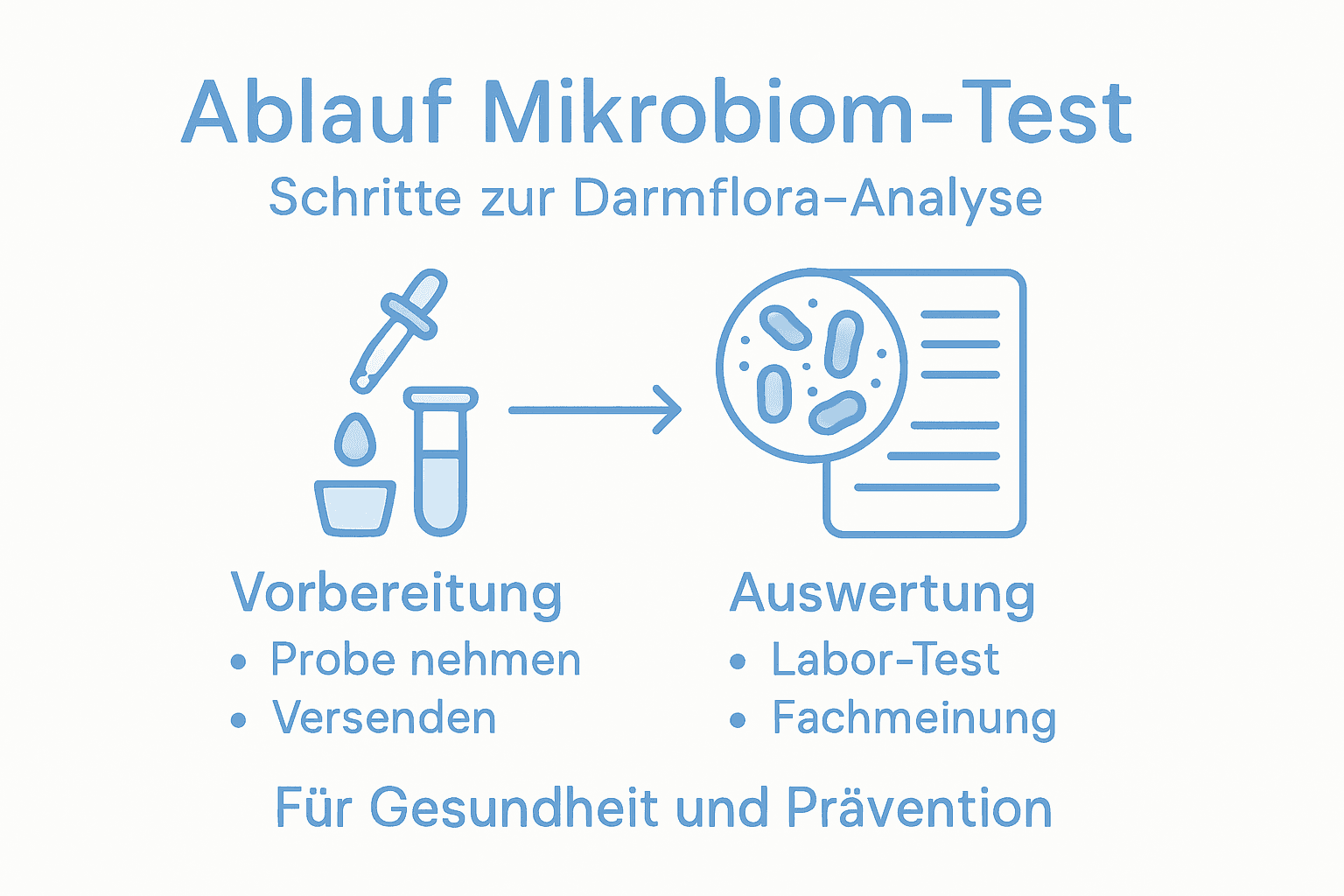
Microbiome diagnostics is a modern medical examination method that provides you with deep insights into the composition and health of your gut flora. This scientific procedure involves a detailed analysis of your gut bacteria to gain insights into your digestive health.
The microbiome diagnostic process comprises several important steps:
- Collection of a representative stool sample
- Genetic analysis of bacterial strains
- Identification of bacterial species and their ratio to one another
- Assessment of microbial diversity
- Preparation of a personalized health report
In practice, this means that scientists use microbiome testing methods to decipher the complex world of gut bacteria. It is not only about the number of bacteria, but also about their function, interaction, and potential effects on your health.
The analysis reveals important aspects, such as:
- Presence of beneficial bacterial strains
- Possible imbalances in the gut microbiome
- Indications of inflammatory processes
- Potential dietary recommendations
Pro tip: Take a microbiome test to detect changes in your gut flora at an early stage and take targeted countermeasures.
Different testing methods and laboratory standards
Microbiome diagnostics encompasses various scientific methods for analyzing the gut flora, which differ in their techniques and levels of accuracy. Standardized laboratory analyses play a crucial role in obtaining precise results.
The most important testing methods can be divided into the following categories:
- Culture-based methods: Traditional method for identifying bacterial species
- Molecular genetic analyses: Modern technology with greater precision
- 16S PCR methods: Genetic analysis of specific bacterial markers
- Metagenomic sequencing: Comprehensive genetic analysis of the microbiome
Each method has specific advantages and disadvantages in terms of level of detail and information content. While culture-based methods effectively reveal individual bacterial strains, molecular genetic techniques enable a more comprehensive analysis of the microbial composition.

Standardized laboratory protocols are essential for scientific reliability:
Here is a comparison of the most important microbiome testing methods:
| Method | Scope of analysis | Advantages | Limitations |
|---|---|---|---|
| Culture-based growth | Individual strains | Cost-effective and established | Limited diversity detection; time-consuming |
| Molecular genetic tests | Entire microbiome | Precise and sensitive | Higher costs; specialized evaluation required |
| 16S PCR analysis | Marker bacteria | Specific and standardized | Not all bacteria can be detected |
| Metagenomic sequencing | Entire genes | Comprehensive and detailed | Very high data requirements and expensive |
- Use of CE-certified sampling kits
- Uniform sample processing
- Comparable analytical methods
- Strict quality controls
- Validation by reference laboratories
What matters is not only the technology but also the standardized interpretation of microbiome data.
Pro tip: When choosing a microbiome test, pay attention to the analytical technologies and laboratory standards used to obtain meaningful results.
How microbiome analyses are evaluated
The evaluation of a microbiome analysis is a complex scientific process that provides detailed insights into the composition and function of your gut flora. Microbiome test analysis requires highly specialized methods and expertise.
The evaluation process comprises several key steps:
- Quantitative analysis: Determination of the quantity of bacteria
- Qualitative assessment: Identification of specific bacterial strains
- Diversity index: Measurement of microbial diversity
- Functional interpretation: Assessment of metabolic activities
- Comparative analysis: Comparison with reference data
The results are interpreted by highly qualified experts who assess complex relationships between bacterial strains, their relative proportions, and potential health effects.
Key evaluation criteria include:
- Ratio of beneficial to harmful bacteria
- Presence of potentially problematic microorganisms
- Indications of inflammatory processes
- Metabolic activity of gut bacteria
- Possible dietary recommendations
The quality of the evaluation determines the significance of the microbiome analysis.
Pro tip: Always have the results of your microbiome analysis interpreted by a specialist to receive precise health recommendations.
Important everyday applications
Microbiome diagnostics is no longer an abstract scientific concept, but a practical tool for people who want to actively manage their health. Personalized health optimization is at the heart of various areas of application.
Typical areas of application include:
- Nutritional optimization: Personalized dietary recommendations based on your gut flora
- Chronic diseases: Understanding connections in gastrointestinal complaints
- Immune system support: Analysis of the interactions between gut bacteria and the immune system
- Weight management: Insights into metabolic processes
- Stress management: Examination of the gut–brain axis
Microbiome analyses are particularly important for people with:
- Recurring digestive problems
- Food intolerances
- Chronic inflammation
- Metabolic disorders
- A weakened immune system
Microbiome diagnostics enable a personalized approach to health concerns.
Pro tip: Consider microbiome analysis an individual health compass that helps you specifically improve your gut health.
Limitations, risks, and costs of microbiome tests
The microbiome test is a powerful diagnostic tool, but it should not be regarded as a cure-all. Microbiome test and health insurance raise complex questions about costs and reimbursement.
The key limitations and risks include:
- Snapshot: The test shows only the current state of the gut flora
- Individual variability: Results can change quickly
- Limited significance: Not every change in bacteria indicates a disease
- Room for interpretation: Scientific evaluation requires expertise
- Data protection concerns: Sensitive personal health information
Cost aspects vary depending on the provider and scope of the examination:
This table summarizes typical cost and risk aspects of microbiome tests:
| Aspect | Description | Impact on everyday life |
|---|---|---|
| Costs | 50 to 500 euros depending on the scope of the analysis | Financial planning is necessary |
| Data protection | Processing of sensitive health data | Potential for misuse; choose providers carefully |
| Snapshot | Only the current status of the gut flora can be measured | Repeat testing is advisable when changes occur |
| Scientific evaluation | Requires experienced experts | Improper analysis can promote misinterpretation |
- Basic tests: 50–100 euros
- Comprehensive analyses: 150–300 euros
- Special supplementary examinations: Up to 500 euros
- Health insurers usually do not cover the full cost
- Private supplementary health insurance may provide support
Investing in a microbiome test should be carefully considered and discussed with a doctor.
Pro tip: Compare different providers and pay attention to the qualifications of the scientific experts conducting the analysis.
Take control of microbiome diagnostics for a healthy gut flora
Analyzing your microbiome is an important step toward getting to the root of digestive problems, inflammation, or an imbalanced gut environment. With a precise gut flora analysis, you gain in-depth insights into the composition of your individual gut flora and can thereby influence your well-being and health.
At mybody®x, you will find scientifically validated microbiome tests that can be conveniently performed at home. Rely on certified laboratories, personal advice, and tailored recommendations for nutrition and lifestyle. Discover our products for Gut Flora Analysis – For a Healthy Gut Flora - mybody®x and benefit from holistic support in Understanding and Relieving Digestive Problems | mybody®x. Don’t let imbalances in your gut determine your life. Start your personal microbiome diagnosis today at mybody-x.com and take charge of your gut health in a self-determined and sustainable way.
Frequently asked questions
What are microbiome diagnostics?
Microbiome diagnostics are a medical examination method that analyzes the composition of your gut flora to gain insights into your digestive health.
How is a microbiome analysis carried out?
A microbiome analysis begins with collecting a stool sample, followed by genetic analyses to identify the bacterial strains and their relative proportions.
Which testing methods are used in microbiome diagnostics?
Testing methods vary and include culture-based methods, molecular genetic analyses, 16S PCR methods, and metagenomic sequencing, each offering different advantages and disadvantages.
What are the everyday applications of microbiome diagnostics?
Microbiome diagnostics are often used to optimize nutrition, analyze chronic diseases, strengthen the immune system, and manage weight and stress.



Share now:
Difference Between Probiotics and Prebiotics: Simply Explained
Gut dysbiosis: How the imbalance affects your health