
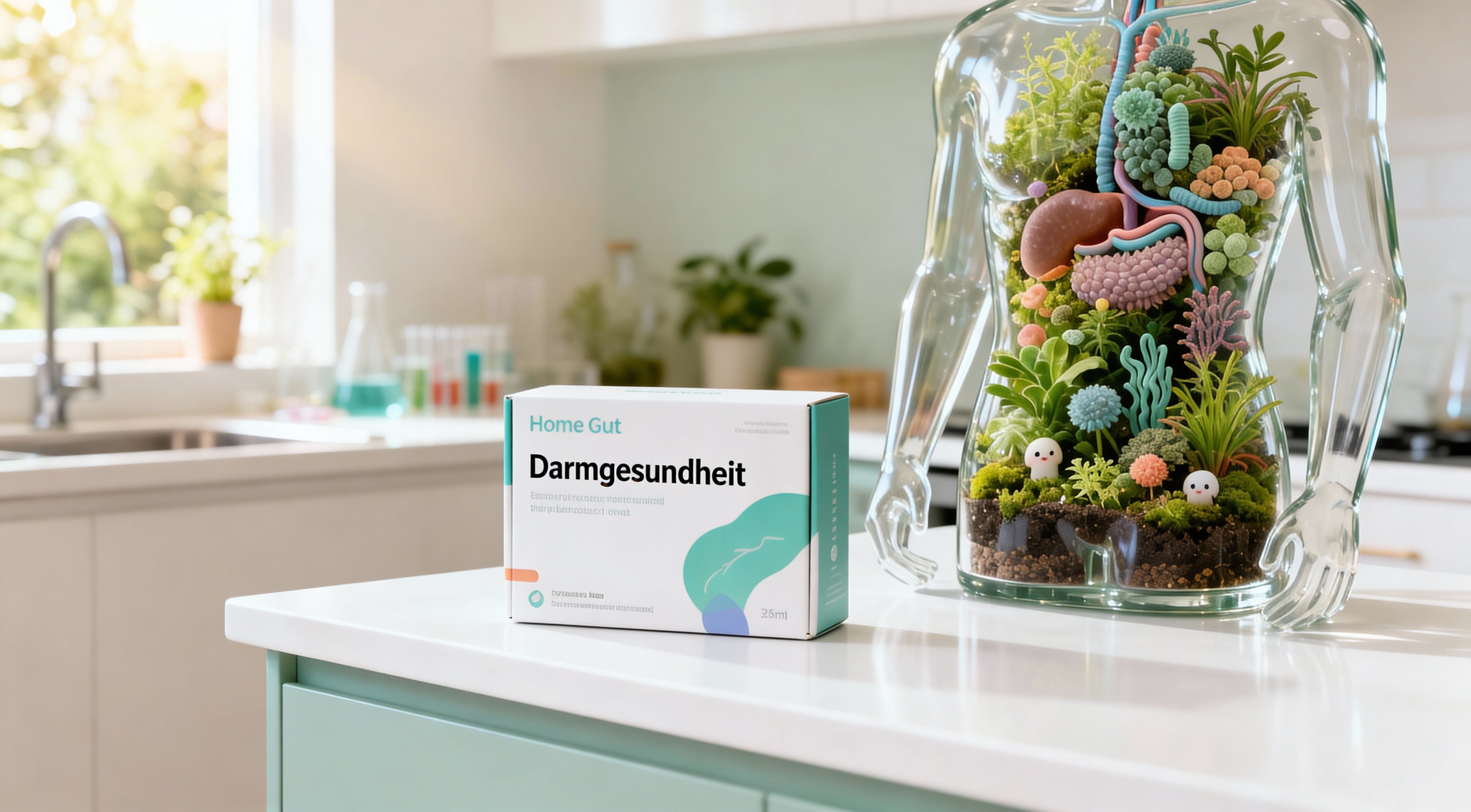
Gut microbiome test: Why this self-test boosts your well-being
A gut microbiome test is essentially an inventory of your inner ecosystem. It finally shows you in black and white the true state of the balance among the trillions of microorganisms in your gut. So instead of continuing to grope in the dark about what might be causing your symptoms, an easy at-home self-test from mybody-x.com provides you with a precise analysis. You learn everything about the diversity and composition of your gut bacteria and suddenly understand why you may often feel tired or why your digestion is acting up.
Your gut—the hidden center of your well-being
Do you often feel tired or bloated, or struggle with digestive problems even though you generally eat healthily? The answer to these questions could lie directly in your abdomen—or more precisely, in your gut microbiome.

Simply imagine your gut as a living, flourishing garden. This unique ecosystem is home to trillions of microorganisms—bacteria, viruses, and fungi—that work tirelessly for you. As long as the right “plants” thrive and everything lives together in harmony, everything runs smoothly. Your body can absorb nutrients optimally, your immune system is strong, and even your mood benefits.
But what happens when this delicate balance is disrupted?
When the inner garden gets out of balance
A so-called dysbiosis occurs when “weeds” and “pests”—that is, unwanted bacteria—spread and displace the helpful little organisms. This imbalance can have far-reaching effects and manifest in a wide range of symptoms that you might not initially associate with your gut.
And if you think you are alone in this: A recent study shows that three out of five Germans suffer from digestive problems. According to the Mintel Gut Health Market Report, 60% of respondents experienced issues such as bloating, constipation, or diarrhea in the past six months. You can find out more in the findings on gut health in Germany.
A modern gut microbiome test is like a detailed analysis of your inner garden. It gives you an accurate map showing which beneficial bacteria are missing, where unwanted microbes have spread, and where targeted action is needed.
So instead of blindly trying out random probiotics or changing your diet on a whim, a test provides you with reliable data. It enables you to take targeted measures that truly match your body’s needs.
A home gut flora test, such as the one from mybody-x.com, is the first but crucial step toward regaining control over your well-being. You receive not just a report, but a clear roadmap for specifically supporting your gut health and noticeably improving your quality of life.
What modern gut flora tests really measure
When you hold a gut flora test in your hands, it is far more than just a sample you send to a laboratory—it is the key to gaining a deeper understanding of your body. But what exactly happens to it? Modern analyses have absolutely nothing in common with the old methods, in which a handful of bacteria had to be painstakingly cultured and identified under a microscope.
Today’s tests, such as the one from mybody-x.com, rely on advanced DNA analysis methods. Think of it this way: Instead of looking at just a few individual trees in a vast forest, a complete, high-resolution satellite map of the entire ecosystem is created. This allows the genetic fingerprint of thousands of different microbial species in your gut to be analyzed, giving you an incredibly detailed picture of your inner world.
This technological quantum leap makes it possible to measure highly specific metrics that are crucial to your health.
Decoding the diversity of your microbiome
One of the most important metrics provided by a modern gut flora test is bacterial diversity. This metric essentially describes the variety of species in your gut. High diversity is like a resilient garden ecosystem: the more different plant species grow there, the better the garden can fend off pests and withstand dry periods.
Applied to your gut, high diversity means that your microbiome is more stable, can perform more functions, and is better equipped to withstand disruptions. Low diversity, on the other hand, is often associated with an increased risk of chronic inflammation, digestive problems, and a weaker immune system. It can be an early, clear sign that your “inner garden” urgently needs care.
Important bacterial strains and their functions
In addition to overall diversity, a detailed test also examines the presence and proportions of specific bacterial groups very closely. These specialized inhabitants have specific jobs that directly affect your well-being.
-
Firmicutes/Bacteroidetes ratio: This ratio is considered an important indicator of your metabolism. An imbalance, often involving a higher proportion of Firmicutes bacteria, is repeatedly associated in studies with a tendency toward obesity. The reason? These bacteria are particularly efficient at extracting energy from food and storing it for lean times.
-
Akkermansia muciniphila: This bacterium is a true hero for your intestinal lining. It feeds on the mucus that protects your intestinal wall while also stimulating its renewed production. A healthy population of Akkermansia therefore strengthens your intestinal barrier and protects you from so-called “leaky gut syndrome.”
-
Faecalibacterium prausnitzii: This microorganism is one of the most important producers of butyrate, a short-chain fatty acid. Butyrate is essentially super fuel for the cells lining your intestines, has a powerful anti-inflammatory effect, and therefore supports the health of your entire gut.
A modern gut flora test translates the complex language of your gut bacteria into clear, actionable insights. You don't just learn names like Akkermansia; you also understand the role these microbes play in your energy levels, digestion, and immune system.
These precise measurements make it possible to get to the bottom of the causes of your symptoms. Instead of general advice, the gut flora test from mybody-x.com gives you a sound basis for making targeted adjustments to your diet and lifestyle. This allows you to promote exactly the beneficial bacteria your body needs most and strengthen your well-being from within.
How your at-home gut flora test works
To be honest: The thought of providing a stool sample may be off-putting at first. But don't worry—with a modern at-home test kit from mybody-x.com, the whole process is much easier, more discreet, and more hygienic than you probably imagine. The biggest advantage is obvious: You save yourself a trip to the doctor and the unpleasant situation of sitting in a waiting room. Everything happens conveniently in your own home, at your own pace.
So that you know exactly what to expect, we will now guide you step by step through the entire process. From preparing the sample to sending it off—we will take away any uncertainty.
Preparation is the key to accurate results
To ensure that your gut flora test really provides an accurate picture of your microbiome, a little preparation is important. Certain things can temporarily affect the composition of your gut bacteria and distort the results.
Please therefore pay attention to these three points:
- Antibiotics: If you have taken antibiotics recently, please wait at least four weeks before taking the test. Antibiotics disrupt your bacterial diversity and could make the results unusable.
- Probiotics: Stop taking probiotics in capsule form or consuming probiotic-rich foods such as kefir or kombucha about three to five days before collecting the sample.
- Diet: Eat normally in the days before the test, just as you always do. A sudden, drastic change in diet would distort the results.
These simple measures ensure the validity of your analysis and provide a realistic picture of your gut health.
Sample collection: Simple, clean, straightforward
As soon as you have your mybody-x.com test kit in your hands, you will see that everything has been thought of to make collecting your sample as easy as possible. The set includes detailed, illustrated instructions that guide you clearly through every step.
A home test gives you the freedom to complete the entire process at your own pace and in familiar surroundings. This takes the pressure off and ensures a relaxed, discreet experience from start to finish.
The key to collecting a clean sample is the paper stool catcher, which you simply hang in the toilet. This prevents the sample from coming into contact with water or cleaning products in the first place. Then use the small spoon firmly integrated into the sample tube to collect a tiny amount—a quantity the size of a grain of rice is completely sufficient. Screw the tube shut, place it in the included protective bag, and put it in the prepaid return box. If you are still unsure, you can find an even more detailed guide in our advice section on how to collect a stool sample correctly.
This graphic gives you an overview of the entire process at a glance—from the simple sample collection to your personal results report.
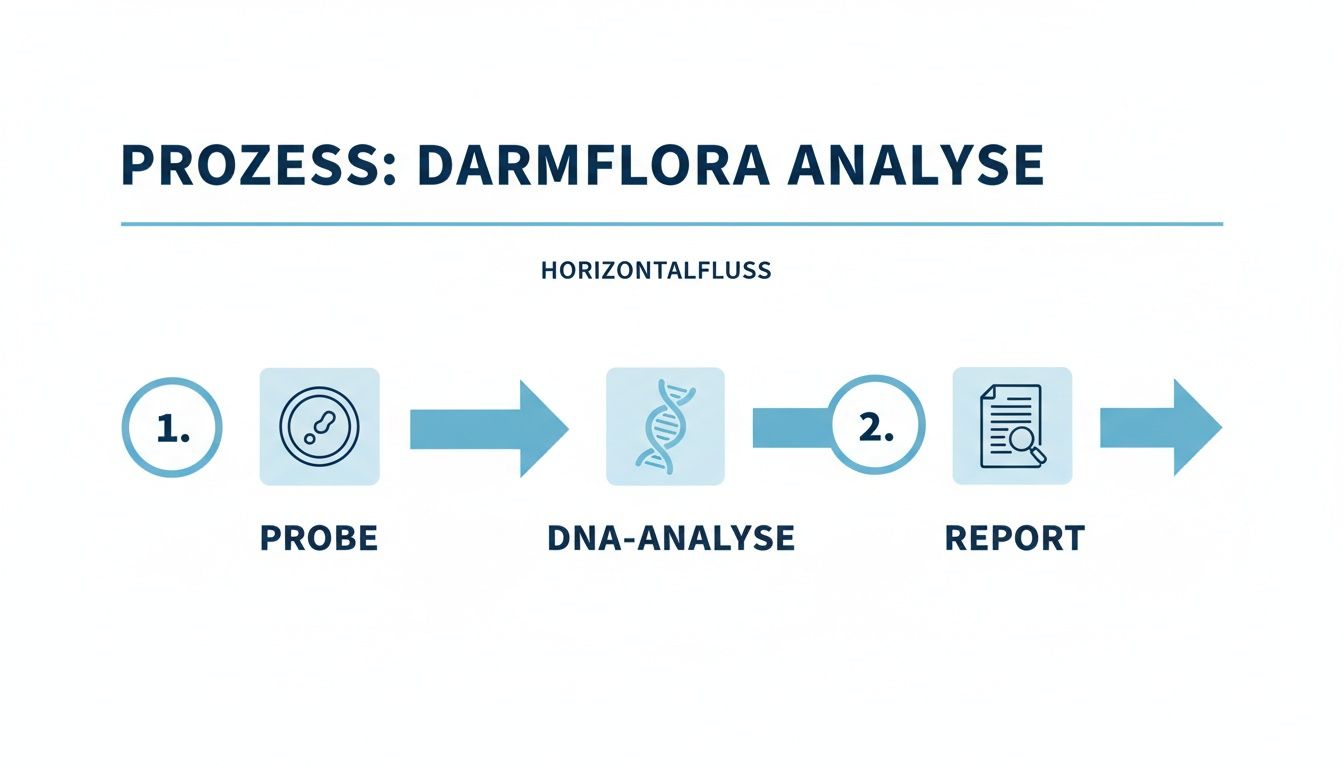
The entire process is designed to make your journey to valuable insights into your gut health as convenient as possible.
Once everything is packed, simply drop the box in the nearest mailbox. Shipping to our German, ISO-certified partner laboratory is completely free for you. There, your sample will be analyzed using state-of-the-art DNA analysis, and you will soon receive your comprehensive report directly in your secure online customer account.
How to correctly interpret your gut flora test results
You are holding the results of your gut flora test in your hands—a collection of charts, numbers, and perhaps a few terms that raise more questions than they answer. What does all this mean for you and how you feel in your gut? Don’t worry, we won’t leave you out in the cold with just the raw data. Think of this section as your personal translator, turning technical jargon into valuable knowledge about your body.
Your report is essentially a detailed map of your inner ecosystem. It shows you not only who lives in your gut, but also how they interact and whether the team chemistry is right. Let’s explore the most important areas of this map together.
Your bacterial diversity as an anchor of stability
One of the first and most important values in your report is bacterial diversity. Think of the variety in your gut as similar to the diversity of species in a healthy forest. A forest where only spruce trees grow is extremely vulnerable to bark beetles. A colorful mixed forest, on the other hand, with oak trees, beeches, shrubs, and countless plants is robust and much better able to withstand change.
Exactly the same applies to your gut:
- High diversity: Your gut ecosystem is stable and resilient, enabling it to optimally perform its many functions—from digestion to immune defense.
- Low diversity: Your gut is more susceptible to disturbances. This may manifest as digestive problems, more frequent infections, or even a constant feeling of fatigue.
Low diversity is often the first clear indication that your gut needs a little support to return to balance.
The main players in your gut
Your report also shows which major bacterial groups, known as phyla, are dominant in your gut. Two of the most important main players are Firmicutes and Bacteroidetes. The ratio of these two groups to each other reveals a great deal about your metabolism.
An imbalanced ratio, often involving an excess of Firmicutes bacteria, is observed more frequently in scientific studies among people who tend to be overweight. These bacteria are true masters at extracting even the very last calorie from the last lettuce leaf and making it available to the body. Your result here can therefore help you understand how efficiently your body extracts energy from food.
Your gut microbiome report is not a verdict but an opportunity. It shows you precisely where the levers for a noticeable improvement in your health lie, enabling you to take targeted rather than general measures.
Specific markers of dysbiosis and inflammation
But a modern gut microbiome test looks even more closely. It also identifies highly specific bacteria that serve as a kind of guidepost for certain conditions. This reveals whether important helpers such as Akkermansia muciniphila (the bodyguard of your intestinal lining) or Faecalibacterium prausnitzii (an important producer of anti-inflammatory butyrate) are present in sufficient amounts.
At the same time, potentially harmful or inflammation-promoting microbes are also detected. An increased proportion of these bacteria may indicate the onset of dysbiosis, or an imbalance. This is often directly linked to symptoms such as bloating, abdominal pain, or food intolerances. If you would like to take a deeper look at how such an analysis works, you can find more details in our guide to gut microbiome testing.
By understanding these connections, you turn abstract data into a very concrete starting point. You can see in black and white why you may feel the way you do—and then take targeted action.
What your gut microbiome test tells you—and what you can do now
Holding the results of a gut flora test in your hands is not the end, but the exciting starting point for positive change. You finally have a kind of map of your gut that shows you exactly where you can begin. The guesswork is over. Instead, you can take targeted, genuinely effective measures. Here, we provide you with a clear roadmap—packed with tried-and-tested recommendations you can implement immediately.
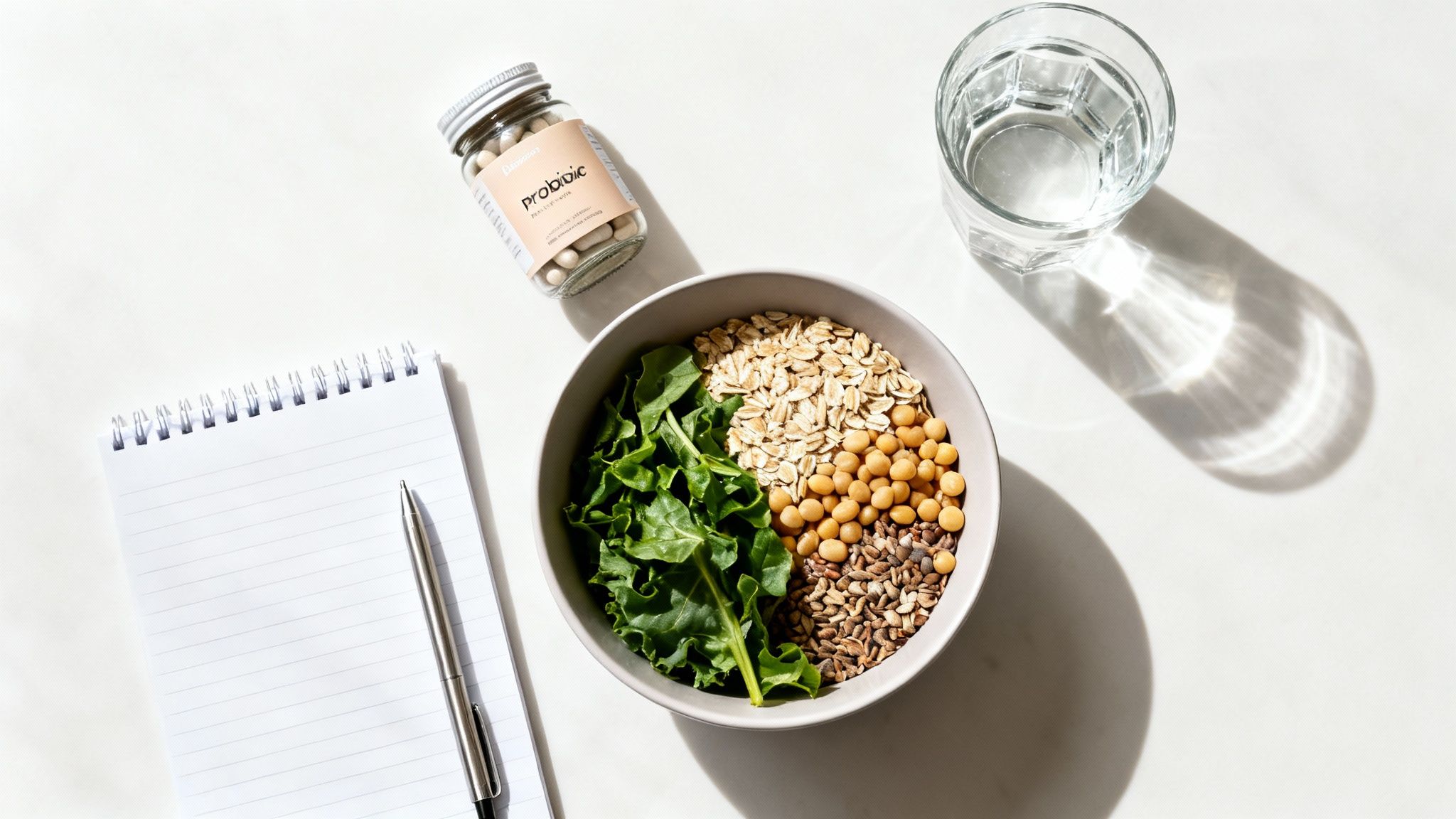
The journey to a healthy gut microbiome rests on two essential pillars: prebiotics and probiotics. It is best to think of them as the gardeners and fertilizer for your inner garden.
Feed your good bacteria with prebiotics
Prebiotics are essentially nothing more than food for your beneficial gut bacteria—more precisely, special types of fiber. When you feed these microbes well, they multiply and thank you by producing valuable substances such as short-chain fatty acids (e.g., butyrate). These, in turn, strengthen your intestinal lining and may reduce inflammation.
A lack of these fibers causes your good bacteria to literally starve. The goal is to incorporate about 30 grams of fiber per day into your diet.
Here are some of the best prebiotic foods:
- Jerusalem artichokes, chicory, and onions: They are particularly rich in inulin, one of the most potent prebiotics, which especially promotes beneficial bifidobacteria.
- Legumes such as lentils and chickpeas: They provide a huge amount of fiber and are also an excellent plant-based source of protein.
- Whole-grain products: Oatmeal, rye bread, and brown rice provide your gut inhabitants with complex carbohydrates they love.
- Chilled potatoes, pasta, or rice: Cooling creates resistant starch, a special type of fiber that also serves as excellent food for bacteria.
Establish new helpers with probiotics
Probiotics are living microorganisms that, when they reach you in sufficient quantities, provide genuine health benefits. They help increase the diversity in your gut and restore a disrupted balance.
Instead of relying on expensive individual supplements, you can easily get many beneficial bacterial cultures through fermented foods. The advantage: They contain a natural variety of different microbes.
Regularly incorporate a small portion of fermented foods into your diet. It is not about the quantity, but about the continuous supply of new, beneficial microorganisms for your gut ecosystem.
Probiotic powerhouses for your everyday life:
- Plain yogurt and kefir: Make sure to choose products without added sugar that contain live cultures.
- Sauerkraut: An excellent source of lactic acid bacteria. It is best to choose fresh, unpasteurized sauerkraut from the refrigerated section.
- Kimchi: The Korean counterpart to sauerkraut is also rich in probiotic cultures and often pleasantly spicy.
- Kombucha: A fermented tea drink that can be a great alternative to sugary soft drinks.
Small lifestyle changes with a big impact
In addition to diet, other factors also play a crucial role in your gut health. Chronic stress, for example, can negatively affect the composition of your microbiome and trigger inflammation-promoting processes in the body.
Therefore, incorporate targeted moments of relaxation into your day. This does not have to be a meditation program lasting for hours. Often, just five minutes of deep breathing, a short walk in the fresh air, or a yoga session is enough to reduce your stress levels. Adequate, restful sleep is just as important, as it is essential for the regeneration of your gut.
Your gut flora test has shown you the way. Now it is up to you to take the first steps. Set realistic goals and start with small changes. Every step, no matter how small, contributes to a healthier feeling in your gut and greater well-being. If you would like to explore how you can specifically support your microbiome in greater depth, you will find valuable tips in our guide on how to naturally build up your gut flora.
Frequently asked questions about the gut flora test
A topic this comprehensive often raises one question or another. Completely normal. So that you feel absolutely confident before taking the first step toward greater clarity about your gut health, we have answered the most frequently asked questions for you here.
How often should you take a test?
Your first test is a kind of assessment—it shows you the current state of your microbiome, essentially the starting point of your journey. If you then make targeted changes to your diet or lifestyle, we recommend a follow-up test after about three to six months.
This period is ideal because it gives your gut enough time to respond to the new impulses and reorganize itself. This way, you can see in black and white what progress you have made and be sure that your measures are actually having the desired effect.
Can I take the test while taking antibiotics?
No, that’s not a good idea. For your gut ecosystem, antibiotics are like a clear-cut, because they can’t distinguish between “good” and “bad” bacteria. Taking the test during or shortly after antibiotic treatment would therefore give you a severely distorted picture—not a truly meaningful result.
To get a realistic picture of your microbiome, you should wait at least four weeks after your last course of antibiotics before collecting the sample for your gut flora test.
Is the gut flora test suitable for everyone?
Basically, yes. The test is ideal for any adult who wants to finally learn more about their gut health. It can help uncover the causes of nonspecific symptoms such as recurring digestive problems, constant fatigue, or skin blemishes.
However, if you have acute or severe medical symptoms, a doctor should always be your first point of contact. The test is intended for prevention and to help you better understand your body, but it does not replace a medical diagnosis.
What distinguishes the mybody-x.com test from others?
Quality and your safety come first for us. Your gut flora test is evaluated in a German medical laboratory certified according to ISO 15189. Your personal data is protected in accordance with the strict requirements of the GDPR and the ISO 27001 security standard.
But our service doesn’t stop at a simple laboratory report. We won’t leave you alone with the results; instead, we offer personal consultations with our health experts. This ensures that you truly understand your results and can turn them into a concrete, actionable plan for your everyday life.
Are you ready to take control of your well-being and understand the language of your gut? Discover the fascinating world of your microbiome with mybody-x.com. Start your journey to better gut health now with our gut flora test.



Share now:
Science Behind Microbiome Analysis: Evidence, Methods, Benefits
Intestinal cleanse quiz: Find out how to boost your well-being from within