

The science behind microbiome analysis: evidence, methods, benefits
People who suffer from recurrent digestive problems often spend a long time looking for a solution that offers more than general dietary advice. The precise analysis of the bacterial composition in the gut can provide crucial clues about how closely the microbiome is connected to our health and well-being. This article explains how modern, certified microbiome analyses work and how they can help you identify specific options for improving your individual gut health.
Table of contents
- What does a microbiome analysis really involve?
- Analytical methods: From 16S to metagenomic sequencing
- Key parameters: diversity, bacterial profiles, dysbiosis
- Areas of application: diagnostics, prevention, and therapy
- Limitations, risks, and valid results of at-home tests
Key findings
| Point | Details |
|---|---|
| Microbiome analysis | A microbiome analysis provides comprehensive insights into the microbial composition of our bodies and its effects on health. |
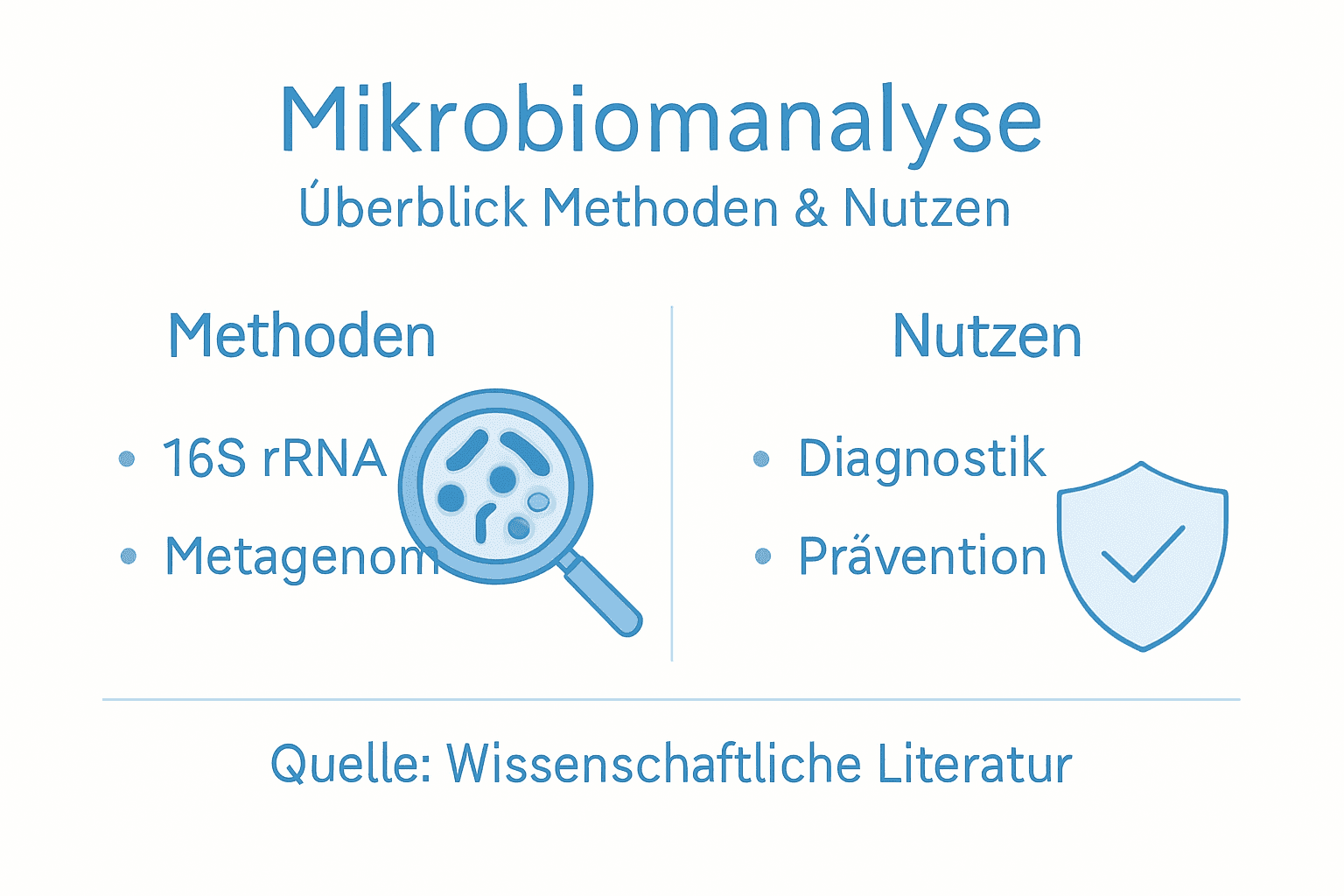
| Analysis methods | The main methods are 16S rRNA sequencing for bacterial identification and metagenomic sequencing for comprehensive genetic analyses. |
| Areas of application | Microbiome analyses are used in diagnostics, prevention, and therapy to support individualized health management. |
| Home tests | Home tests can provide insights, but they have limitations in terms of significance and interpretation; professional advice is essential. |
What does a microbiome analysis really involve?
A microbiome analysis is a highly precise scientific examination of the microbial communities in our bodies, particularly in the gut. Bacterial compositions are recorded and analyzed in genetic detail.
The analysis comprises several essential components:
- Identification of different bacterial strains
- Determination of microbial diversity
- Examination of functional properties
- Assessment of the balance of intestinal bacteria
The aim is to gain a comprehensive understanding of the microbial composition and identify potential links to health. Genetic information is used to decipher the complex interactions between microorganisms and our bodies.
Modern microbiome analysis goes far beyond simply counting bacteria. It provides insights into individual metabolic processes, immune functions, and even the risk of certain diseases. With highly advanced molecular genetic methods, researchers can now make precise statements about the composition and functionality of our gut microbiota.
Pro tip: Consult an expert to interpret your individual microbiome results holistically and receive personalized health recommendations.
Analytical methods: From 16S to metagenomic sequencing
Microbiome analysis encompasses various modern molecular techniques that enable researchers to decipher the complex world of microorganisms. High-throughput sequencing with MiSeq platforms is one of the most advanced methods for precisely identifying microbial communities.
Two main analytical methods are primarily used:
-
16S rRNA gene sequencing
- Specifically for bacterial identification
- Analysis of variable gene regions
- Cost-effective method
-
Metagenomic sequencing
- Comprehensive genetic analysis
- Capture of complete microbial genomes
- Detailed functional insights
Bioinformatic analysis plays a crucial role. Modern methods make it possible to process large datasets and provide precise insights into the composition, activity, and interactions of microorganisms.

The complexity of these analytical methods now allows for far more differentiated insights than earlier microbiological studies. Researchers can not only identify the species of microorganisms, but also understand their genetic functions and interactions within the human microbiome in detail.
The following table compares the most important analytical methods used in microbiome analysis in terms of their characteristics:
| Method | Information content | Effort & costs | Areas of application |
|---|---|---|---|
| 16S rRNA sequencing | Identification of bacterial species | Low effort, cost-effective | Screening, basic research |
| Metagenomic sequencing | Functional and genetic details | Time- and cost-intensive | Research, individual diagnostics |
| Culture-based methods | Detection of individual cultures | Very labor-intensive, limited | Identification of specific pathogens |
This overview helps select the appropriate method for different questions.
Pro tip: Have an expert advise you on interpreting your microbiome analysis results so that you can properly understand the complex data.
Key parameters: diversity, bacterial profiles, dysbiosis
A microbiome analysis provides detailed insights into the complexity of our gut microbiome by examining various essential parameters. Microbial parameters such as diversity and bacterial profiles are key elements in assessing gut health.
The key parameters examined include:
-
Microbial diversity
- Measure of species diversity
- Indicator of gut health
- The higher the diversity, the more resilient the microbiome
-
Bacterial profiles
- Detailed composition of bacterial strains
- Ratio of different bacterial groups
- Functional characteristics of microorganisms
-
Dysbiosis
- Pathological shift in the bacterial balance
- Possible indicator of health problems
- Identification of potential risk factors
Interpreting these parameters requires highly specialized expertise. While high diversity is generally considered positive, subtle shifts in bacterial profiles can indicate different health conditions. The analysis helps identify individual patterns and potential health risks at an early stage.
Pro tip: Have your microbiome analysis results interpreted by an expert who understands the complex relationships within the gut microbiome.
Areas of application: diagnostics, prevention, and therapy
Microbiome analysis is developing into a revolutionary tool in modern medicine with diverse areas of application. Microbiome analyses are increasingly being used in various medical contexts to better understand and treat health conditions.
The main areas of application include:
-
Diagnostics
- Detection of microbial imbalances
- Identification of disease risks
- Early detection of chronic diseases
-
Prevention
- Analysis of individual health risks
- Development of targeted prevention strategies
- Strengthening the immune system
-
Therapeutic approaches
- Personalized treatment strategies
- Targeted intervention for microbiome imbalances
- Support for healing processes
Microbiome analysis offers valuable insights, particularly in chronic inflammatory diseases. It shows how closely gut health, immune function, and metabolism are interconnected, thereby enabling more holistic treatment approaches.
The following overview summarizes the possible medical applications of microbiome analysis:
| Area of application | Benefit for patients | Typical question |
|---|---|---|
| Diagnostics | Early detection of diseases | Are there abnormal bacterial profiles? |
| Prevention | Risk reduction, prophylaxis | How can I prevent diseases? |
| Therapy | Individually tailored treatments | Which intervention is effective? |
The table illustrates the practical benefits of microbial examinations in medicine.
Pro tip: Have your microbiome analyzed regularly to identify potential health risks at an early stage and develop targeted preventive measures.
Limitations, risks, and valid results of at-home tests
Microbiome-at-home tests offer interesting insights, but require a critical assessment of their significance. At-home microbiome analyses have specific limitations that consumers should be sure to understand.
The key limitations include:
-
Methodological limitations
- Lack of standardized sample collection
- Limited comparability of results
- No professional interpretation
-
Potential risks
- Possible misinterpretation of the results
- Incorrect self-diagnosis
- Neglect of professional medical advice
-
Limited validity
- No comprehensive clinical evidence
- Limited scientific significance
- Need for additional examinations
The significance of such tests is often limited, which is why professional interpretation by experts is essential. At-home tests can provide initial guidance, but they can never replace a comprehensive medical diagnosis.
Pro tip: Always consult a specialist if your test results are abnormal for a professional evaluation and further examinations.
Discover the full potential of your gut health with mybody®x
The science behind microbiome analysis shows how crucial precise analysis of diversity and bacterial profiles is for your health. If you want to better understand and specifically improve your gut flora, Gut Flora Analysis – For a Healthy Gut Flora - mybody®x offers the perfect solution. With certified laboratory quality and well-founded evaluations, you receive personalized recommendations that go far beyond conventional tests.
Take the opportunity to optimize your health independently and based on evidence. Now is the ideal time to lay the foundation for greater well-being with a professional at-home gut health and intolerance test – mybody®x. Visit https://mybody-x.com and begin your personal microbiome journey toward a healthier life.
Frequently asked questions
What is microbiome analysis?
Microbiome analysis is a scientific examination of microbial communities in the body, particularly in the gut. It records bacterial compositions in genetic detail and analyzes their functional properties.
Which analysis methods are used in microbiome analysis?
The main methods are 16S rRNA gene sequencing to identify bacterial species and metagenomic sequencing, which enables comprehensive genetic analyses of microbial communities.
Why is microbial diversity important?
Microbial diversity is a measure of the variety of species in the microbiome and is considered an indicator of gut health. Greater diversity is generally associated with a more robust microbiome.
What are the applications of microbiome analysis?
Microbiome analysis is used in diagnostics to detect microbial dysbiosis, in prevention to analyze individual health risks, and in therapeutic approaches to develop personalized treatment strategies.
Recommendation
- Microbiome Test: Your Guide to Better Gut Health – mybody®x
- Microbiome Test Explained: How Gut Flora Analysis Works – mybody®x
- Gut Analysis Test: Find Your Way to Better Gut Health – mybody®x
- Gut Flora Testing: 12 Providers Reviewed for 2025 – mybody®x
- Understanding Hair Analysis: Insights for Healthy Hair | MyHair



Share now:
Role of the gut barrier – key to holistic health
Gut Flora Test: Why This Self-Test Improves Your Well-Being