
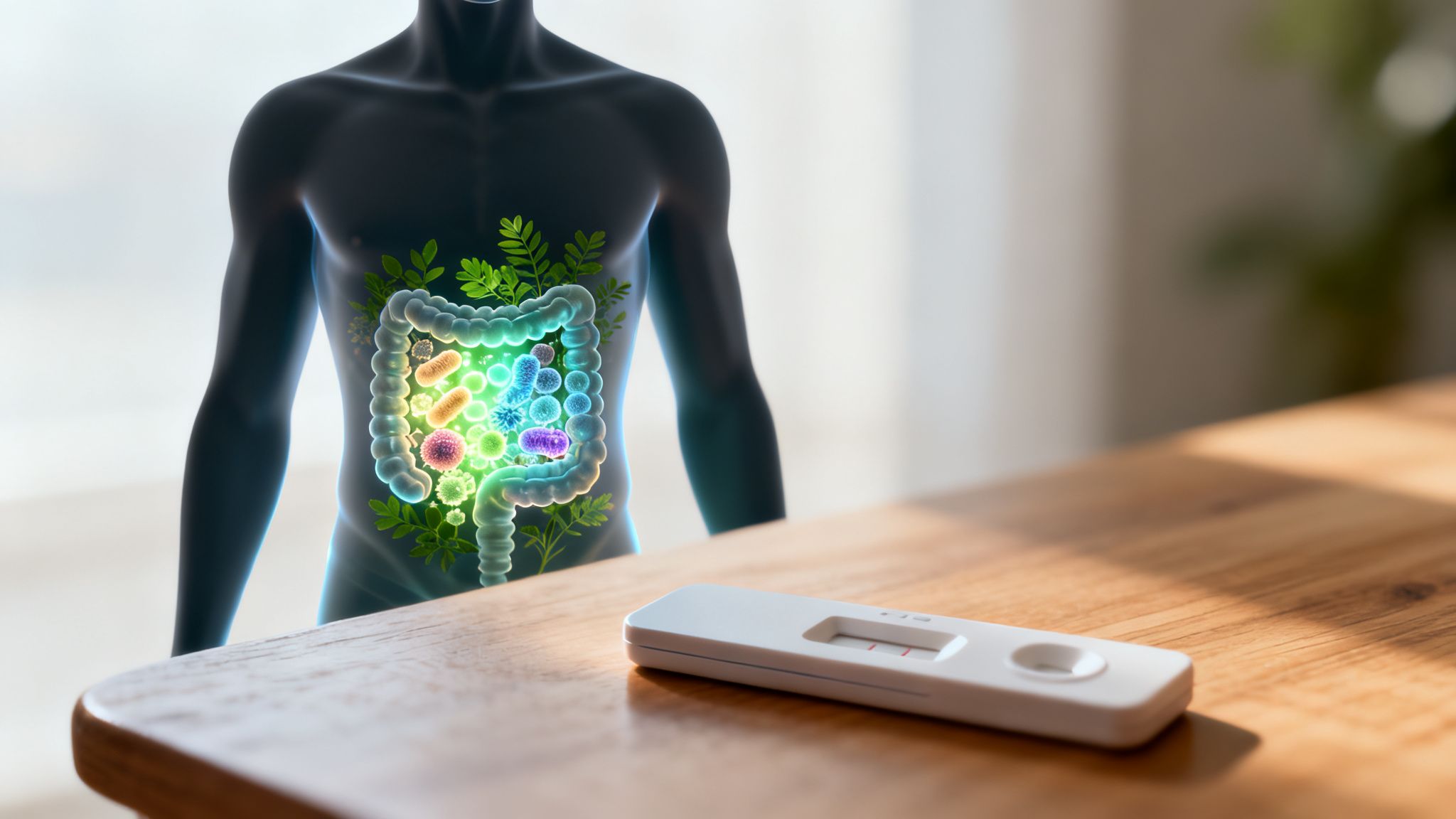
Gut health test: Find out how to strengthen your well-being from within
A gut health test is essentially a snapshot of your gut microbiome—the unique ecosystem of trillions of microorganisms in your digestive tract. It shows you exactly which types of bacteria live in your gut, how abundant they are, and whether your gut is in balance or needs support.
What a gut health test reveals about your health
Imagine your gut as a vast, living garden. It is teeming with countless microorganisms that not only regulate your digestion but are also crucial to your overall well-being. This complex interplay—your personal gut microbiome—plays a role in your immune system, your mood, and even your body weight.

A gut health test, often also called a microbiome analysis, is essentially a detailed assessment of this inner garden. It analyzes the exact composition of your gut flora and detects possible imbalances (dysbiosis)—the very troublemakers that often lie behind everyday complaints.
When your gut becomes a problem
Do you often feel bloated, suffer from irregular bowel movements, or feel constantly tired? Perhaps you also struggle with skin problems or simply feel that your digestion is not running smoothly. Such symptoms are not uncommon. They are widespread signs that your gut ecosystem has fallen out of balance.
An imbalance in the gut can affect the entire body. It goes far beyond digestive complaints alone and can affect your energy, your skin, and your overall quality of life.
Many people live with nonspecific symptoms for years without knowing the true cause. The figures show how widespread the issue is: According to a BARMER study, around 11 million people in Germany were already suffering from symptoms such as diarrhea or constipation in 2017. The gut health market is growing rapidly, and three out of five Germans report digestive problems. You can read more about the background and market developments in gut health here.
Common symptoms are often just the tip of the iceberg. The following table shows which gut problems could be behind them and why a test can provide clarity here.
Common symptoms and their connection to the gut
| Common symptom | Possible cause in the gut | How a test can help |
|---|---|---|
| Bloating & feeling of fullness | An imbalance between gas-producing and gas-consuming bacteria, and a lack of digestion-promoting strains. | Identifies which bacterial groups are missing or present in excess so you can take targeted countermeasures. |
| Persistent fatigue | A lack of bacteria that produce important nutrients (e.g., B vitamins); chronic inflammation that drains energy. | Shows whether nutrient-producing strains are underrepresented and provides indications of inflammatory markers. |
| Skin problems (acne, eczema) | A compromised intestinal barrier (“leaky gut”) that allows inflammatory substances into the body and irritates the skin. | Analyzes markers of intestinal barrier function and identifies inflammation-promoting bacteria. |
| Irregular bowel movements | A lack of fiber-degrading bacteria, which help maintain healthy stool volume and good intestinal motility. | Provides insights into the diversity and composition of the gut flora, which are crucial for regulated digestion. |
These examples make it clear that many everyday problems can be caused by a specific imbalance in the gut—one that a test can reveal.
Your path to greater clarity
In such cases, a gut health test is often the first decisive step toward improvement. Instead of groping in the dark and trying out various diets or home remedies at random, it provides you with a scientifically sound basis for taking action.
A test may be worthwhile for you if you:
- suffer from persistent digestive complaints such as bloating, cramps, or irregular bowel movements.
- often feel tired, listless, or exhausted without finding a clear reason.
- struggle with blemishes, eczema, or other skin problems.
- want to strengthen your immune system and proactively improve your overall health.
The mybody-x gut microbiome test offers you a simple and reliable way to gain precisely these insights. You can collect the sample conveniently and discreetly at home and receive a detailed analysis that helps you understand the connections between your gut and your well-being. This makes the test your personal compass on the way to a better quality of life.
How the mybody-x test works
You’re probably wondering: How does a gut microbiome test actually work? Is it complicated? Do I have to see a doctor? The good news is: No, you don’t. We’ve designed the entire process so you can complete it easily, discreetly, and conveniently from home. We’ll take away any uncertainty by guiding you step by step through the entire process.
Of course, the thought of a stool sample may not sound very appealing at first. But our test kit is designed so cleverly that collecting the sample is completely hygienic and takes just a few minutes. You don’t need to be an expert—a clear, illustrated guide is included and makes the process truly easy.
Your path to your result in four simple steps
The entire mybody-x gut microbiome test is a clearly structured process. The goal: maximum clarity for you with minimal effort. From ordering to receiving your completed report, we have optimized every single step for you.
- Order and get started: Simply order your test kit from us online. We will send it to you quickly and discreetly in plain packaging, directly to your home.
- Collect your sample: The kit contains everything you need to collect your sample. Follow the simple instructions—the entire process really takes just a few minutes.
- Free return: Safely package the sample in the enclosed return envelope. We cover the postage in full—you only need to drop the package off at the post office.
- Analysis and report: As soon as your sample arrives at our partner laboratory, the scientific analysis begins. After a few weeks, you will receive your personal report in your secure online account.
As you can see, the process has been deliberately kept simple. If you would like to take another detailed look at how our tests work, you will find a clear summary here.
Science and security behind the scenes
While you wait for your result, highly precise laboratory work is taking place behind the scenes. Your sample is not analyzed just anywhere, but in one of our ISO-certified partner laboratories in Germany. This certification is an important mark of quality and guarantees that the analysis is carried out according to the highest scientific standards.
Your trust is our greatest asset. That’s why we combine scientific accuracy with uncompromising data protection. Your personal data and test results are handled in strict accordance with the General Data Protection Regulation (GDPR).
Put simply: Your data is completely secure and processed anonymously. Only you have access to your results. We understand that this concerns your personal health. That’s why we handle this information with the utmost care and responsibility you can expect from us.
More than just a result
The mybody-x process doesn’t end when we send you your report. We know from experience that a laboratory report full of data points can initially raise questions. That’s why our goal is not only to provide you with numbers, but also to give you genuine understanding.
As soon as your results report is ready, we’ll make it available in your personal, secure mybody-x customer area. There, the complex data from your microbiome is presented in easy-to-understand charts and clear explanations. This allows you to see at a glance where your gut’s strengths lie and where there may still be room for improvement. This approach ensures that you don’t just read the results, but truly understand them and can use them for yourself.
Understanding your personal gut report
The moment has arrived: Your gut test results report is ready. But instead of clear answers, you may initially see a host of technical terms, charts, and numbers. That can feel quite overwhelming at first, but don’t worry—we won’t leave you alone with it. Together, we’ll decode your report so that you don’t just read the results, but truly understand them and can use them for your health.
Think of your report as a detailed map of your gut. It shows you exactly which bacterial strains are growing in your “microbiome garden,” which may be somewhat too dominant, and where there are gaps that should be filled. Every individual value has a meaning, and together they provide a clear picture of the current state of your gut.
As this overview shows, the journey from ordering your test kit to receiving your completed report is remarkably simple:
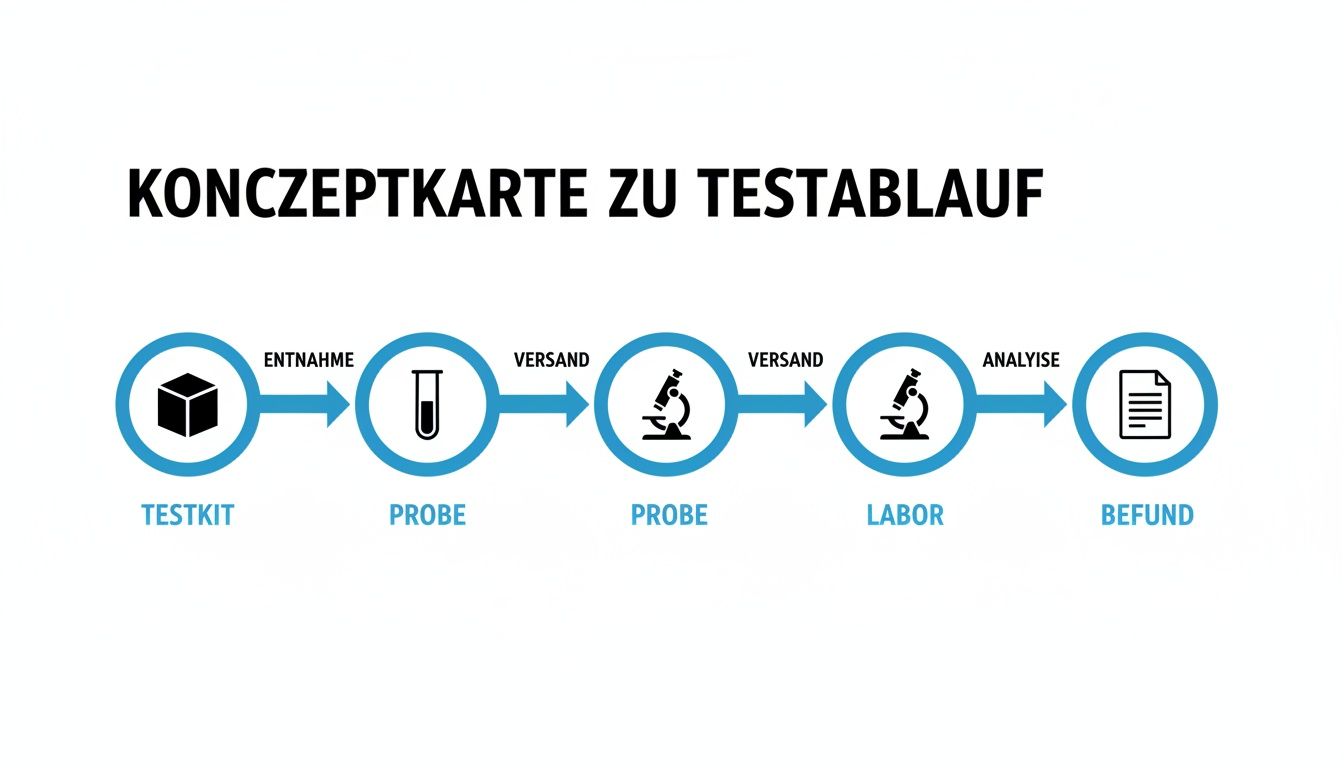
Every step, from the test kit and simple sample collection to laboratory analysis, is designed to provide you with an understandable and meaningful report in the end.
The most important measurements in your report
A central part of your results report is bacterial diversity, also known simply as diversity. You can think of it like the variety of species in a healthy rainforest: The more different plant and animal species there are, the more stable and resilient the entire ecosystem is. The same applies to your gut—a high diversity of bacteria is a strong sign of a healthy, robust microbiome.
Another crucial factor is the ratio of the different bacterial groups to one another. We take a particularly close look at two major phyla:
- Firmicutes: These bacteria are true experts at extracting energy from food. A certain proportion is important, but a clear excess is often associated with overweight.
- Bacteroidetes: They specialize in breaking down plant fibers and complex carbohydrates. A healthy balance between Firmicutes and Bacteroidetes is crucial for a balanced metabolism.
When this delicate balance is disrupted, experts refer to it as dysbiosis. This is not a medical diagnosis, but describes a condition that can form the basis for many nonspecific complaints such as bloating, persistent fatigue, or skin problems.
What your results specifically mean
Your mybody-x report translates this scientific data into tangible information for you. Instead of overwhelming you with raw data, we use easy-to-understand charts to show where your values fall compared with those of a healthy reference group. At a glance, you can see whether and where action may be needed.
Your report could, for example, reveal:
- A deficiency of lactobacilli and bifidobacteria: These “good” bacteria are essential for digestion and for strengthening your intestinal barrier. If they are lacking, unwanted microbes can spread more easily.
- An elevated stool pH: This may indicate that your gut environment is too alkaline, making it more difficult for beneficial bacteria to grow and promoting the growth of harmful bacteria.
- Low butyrate production: This short-chain fatty acid is the main source of energy for your intestinal cells and has a strong anti-inflammatory effect. A deficiency can weaken the intestinal wall.
Each of these points is explained clearly and understandably in the report. We show you the connections between the measured values and possible symptoms you may be experiencing. If you would like to dive even deeper into the fascinating world of the gut, you will find exciting additional information in our article about microbiome analysis and its significance.
Our goal is to give you the tools you need to become an expert on your own gut. Your report is the first step—it provides the facts you can use to make targeted, effective changes for your well-being. You will learn not only what is happening in your gut, but also why it is happening and how you can positively influence it.
Your personal roadmap for everyday life
A test result is only as valuable as the steps that follow. Your gut microbiome test provides the essential foundation of knowledge, but its true value emerges only when you put these insights into practice in your everyday life. That is why your mybody-x results are much more than just a laboratory analysis—they are your personal roadmap to greater well-being, packed with specific, immediately actionable recommendations.

We know from experience that major changes often fail because of small everyday obstacles. That is why our recommendations are designed to be easy to integrate without completely turning your life upside down. They are based on three central pillars that together form a strong foundation for your gut health.
Your diet as food for beneficial bacteria
The most important factor for a healthy microbiome is what you eat every day. Your gut bacteria feed on what you give them. Based on your results, we show you which “food” strengthens your beneficial helpers and which foods you may want to avoid for a while.
This does not mean that you have to follow a strict diet. Rather, it is about making smart, targeted adjustments:
- More fiber: If your test shows a deficiency of fiber-digesting bacteria, we specifically recommend foods such as lentils, whole-grain products, broccoli, or berries.
- Variety on your plate: You can achieve high bacterial diversity through a varied diet. We give you ideas for incorporating more different types of vegetables, herbs, and fermented foods such as yogurt or sauerkraut.
- Reduce sugar: An excess of simple sugars can promote the growth of undesirable bacteria. We show you healthy alternatives that ease the burden on your gut.
These recommendations are always personal. If someone has a deficiency of butyrate-producing bacteria, the recommendation might be to eat more resistant starch from cooled potatoes or green bananas. Another set of results may require completely different measures.
Targeted support through probiotics and prebiotics
Sometimes your gut needs very targeted support. This is where probiotics and prebiotics come in. But instead of blindly reaching for just any product from the drugstore, we give you recommendations that are precisely tailored to your individual results.
Probiotics are living microorganisms that enrich your gut flora, while prebiotics are the “food” for these beneficial bacteria. The targeted use of both components can help correct an imbalance.
Our recommendations are based on which bacterial strains are underrepresented in your gut. We don’t just tell you that a probiotic might be beneficial, but also which specific strains (e.g., Lactobacillus rhamnosus GG or Bifidobacterium lactis) are likely to benefit you most. This way, you can invest in your health strategically instead of taking a scattershot approach.
Your lifestyle as the key to well-being
Your gut is not an isolated unit—it is closely connected to your entire body and your mental well-being. Factors such as stress, sleep deprivation, and too little exercise can negatively affect your microbiome, even if your diet is perfect.
That’s why our recommendation package also includes easy-to-implement lifestyle tips:
- Stress management: Chronic stress can weaken the gut barrier. We provide suggestions for relaxation techniques such as breathing exercises or short meditations.
- Sleep quality: While you sleep, your gut regenerates too. Tips for better sleep hygiene can make a significant difference here.
- Exercise: Regular, moderate exercise supports intestinal activity and the diversity of your gut microbiota. Even a daily walk can make a big difference.
This holistic approach is crucial. In our guide, you’ll find 7 more tips for supporting your microbiome health in everyday life that explore these ideas in greater depth.
To give you a better idea of what such recommendations look like in practice, we have created a brief overview.
Measures based on your test result
This table shows, as an example, how a specific finding from your gut test can be translated into concrete recommendations for your everyday life.
| Example finding | Dietary recommendation | Probiotic/prebiotic recommendation | Lifestyle tip |
|---|---|---|---|
| Bifidobacteria deficiency | Eat more fermented foods such as yogurt and kefir, as well as fiber-rich vegetables such as leeks and artichokes. | A probiotic with various Bifidobacterium strains (e.g., B. lactis) and prebiotics such as inulin or FOS. | Incorporate gentle exercise into your daily routine, such as a 20-minute walk after lunch, to stimulate intestinal activity. |
| Low butyrate production | Include resistant starch: cooled potatoes, green bananas, legumes, and oats. | Prebiotic fibers such as acacia fiber or psyllium husks can specifically “feed” butyrate producers. | Make sure you get enough sleep (7–8 hours), as intestinal cells regenerate at night and butyrate plays a key role in this process. |
| Low bacterial diversity | Goal: 30+ different plants per week. Don’t count only vegetables, but also fruit, nuts, seeds, herbs, and whole-grain products. | A broad-spectrum probiotic with many different strains can help increase diversity. | Avoid unnecessary stress. Techniques such as deep breathing before meals can improve digestion and protect the gut flora. |
As you can see, the path to a healthy gut is not a guessing game, but a logical sequence of analysis, understanding, and targeted action.
We won’t leave you on your own
We know that putting new habits into practice can raise questions. That’s why we offer you free coaching with our health experts. In a personal conversation, you can clarify any questions about your results and receive additional support to integrate the recommendations perfectly into your life. This personal contact helps ensure that you stay motivated and achieve the best possible results for your health.
When each test really makes sense
With the abundance of health information out there, it is easy to lose track. You may also be wondering: Do I need a test for my gut microbiome, or should I opt for medical screening instead? A gut health test like the one from mybody-x and medical colorectal cancer screening are two completely different things. Let’s clear things up so you can make the best decision for your health.
The mybody-x Gut Microbiome Test is your very own tool for optimizing your well-being. It takes a close look at your intestinal ecosystem, helps you identify the cause of vague symptoms such as bloating or constant fatigue, and ultimately gives you specific tips for your diet and lifestyle. Think of it as a preventive health check for your gut.
The crucial difference from medical screening
On the other hand, there is classic colorectal cancer screening, above all the colonoscopy. This is an absolutely essential examination for detecting serious conditions such as colorectal cancer or its precursors at an early stage. It is performed by a doctor and is an indispensable part of preventive healthcare, especially once you have reached a certain age.
A self-test like the one from mybody-x can never replace, and is not intended to replace, a visit to the doctor or a medically necessary examination. It is a valuable supplement for anyone who wants to take a proactive approach to their health and improve their well-being based on scientific data.
Colorectal cancer remains a serious threat, but early detection can save lives. That is why people with statutory health insurance in Germany are entitled to screening from the age of 50. While these medical examinations focus on detecting diseases, wellness tests like ours focus on something else: They are ideal for people with unexplained symptoms because they reveal the composition of your gut bacteria, which has a huge impact on your digestion, immune system, and metabolism. You can find more information about the official colorectal cancer screening guidelines here in the Medical Service’s reports.
Who is each type of examination intended for?
To make the decision easier for you, here is a clear distinction:
A mybody-x gut microbiome test is ideal for you if:
- You want to improve your overall digestion and well-being.
- You finally want to understand what is causing your persistent bloating, irregular bowel movements, or lack of energy.
- You want to tailor your diet specifically to your gut’s needs.
- You are simply curious about how your lifestyle affects your gut flora and want to actively do something for your health.
A medical screening examination is essential if you:
- You have reached the recommended age for colorectal cancer screening (usually from 50).
- Bowel diseases have already occurred in your family.
- You are experiencing acute or severe symptoms such as blood in your stool, severe pain, or sudden weight loss.
- You have been diagnosed with a chronic inflammatory bowel disease such as Crohn’s disease or ulcerative colitis.
A self-test is therefore your partner for optimizing your daily health. It provides valuable insights and specific recommendations that you can implement immediately to improve your quality of life. It empowers you to make informed decisions for your body and better understand the fascinating interplay between your gut and your health.
Frequently asked questions about the gut health test
You have already learned a great deal about what a gut health test can do and what valuable insights it provides for your everyday life. Even so, very specific questions often arise when you are about to take the first step. We have collected those questions here and provide clear, honest answers—so you can start your personal gut analysis feeling confident.
How often should I repeat a gut health test?
We hear this question often, and the answer is as individual as your gut. Think of the first test as an incredibly valuable snapshot of your microbiome. It is your personal starting point, showing you exactly where you are right now. From there, you can begin making targeted changes to your diet and lifestyle.
When you actively implement these recommendations, your microbiome begins to change—ideally, of course, for the better. To make this progress truly visible, we recommend repeating the test after approximately three to six months. This period is ideal because the gut flora does not change overnight. After a few months, however, clear adjustments can already be identified.
A follow-up test has an invaluable advantage: you can see in black and white which of your efforts are paying off. Perhaps the diversity of your bacteria has increased, or the production of anti-inflammatory butyrate has risen. At the same time, you can identify where there may still be room for improvement. This turns the gut health test into a dynamic tool that accompanies you on your journey and helps you continually readjust your strategy.
What sets the mybody-x test apart from other providers?
The self-testing market is growing, and it’s not always easy to keep track of everything. At mybody-x, however, we’re about much more than simply sending out data. We’ve put together a well-designed package built on three key pillars.
First, scientific precision. Your sample is processed exclusively in our ISO-certified partner laboratories in Germany. This certification is not a marketing gimmick but a rigorous quality standard that guarantees you the highest accuracy and completely reliable results.
Second, your data protection. Health data is extremely sensitive—period. That’s why we strictly comply with the German General Data Protection Regulation (GDPR) and the ISO 27001 standard for information security. Your data is processed anonymously and remains secure with us at all times.
But the most important difference is the personal support. We won’t leave you alone with your results. Every gut microbiome test includes free coaching with our health experts. You can ask all your questions here and receive individual support to seamlessly integrate the recommendations into your daily life. This personal care is exactly what makes the decisive difference for us.
Do I need to change my diet before the test?
No, absolutely not—and this is a crucial point! The test is intended to provide an honest picture of your everyday condition. Imagine suddenly starting to eat completely differently one week before providing the sample. The result might look “better,” but it would not reflect the reality that may be causing your previous symptoms.
For the analysis to be truly meaningful and for us to identify the causes of your symptoms, it is important that you eat as usual during the one to two weeks before collecting the sample. This is the only way we can identify the factors where a change would have the greatest positive effect for you.
In short: Continue eating as usual. The gut cleanse test is not an exam you have to pass, but an honest analytical tool. It shows you the way to greater well-being. A sudden change in diet would only distort the result and make the recommendations less accurate.
Is the test also suitable for vegans or vegetarians?
Absolutely! The test is not only suitable for every type of diet, but also extremely informative. Especially with a plant-based diet, which is naturally very rich in fiber, it is incredibly interesting to see how well your gut can process this diversity.
- Plant-based diversity: The test shows you whether you eat a sufficiently broad range of plant-based foods to promote high bacterial diversity.
- Nutrient production: It can provide indications of whether your gut bacteria produce sufficient amounts of important nutrients such as B vitamins, which can sometimes be a concern in an exclusively plant-based diet.
- Fiber digestion: You will learn how well your microbiome is specialized in utilizing the complex carbohydrates found in vegetables, legumes, and whole grains.
Of course, our personalized recommendations are then tailored precisely to your diet. If you follow a vegan diet, you won't receive suggestions for dairy products, but suitable plant-based alternatives that specifically support your microbiome. The test therefore helps you align your plant-based diet even more closely with your body's and gut's needs—an invaluable tool for anyone who wants to take conscious control of their health.
Do you finally want clarity about your gut health and understand the causes of your symptoms? Discover the mybody-x Gut Microbiome Test now and receive your personal roadmap to greater well-being. Learn more at https://mybody-x.com.



Share now:
Gut Flora Test: Why This Self-Test Improves Your Well-Being
Perform a microbiome test at home: Step-by-step guide