

What not to eat with histamine intolerance: How to specifically avoid symptoms
More than two-thirds of those affected in Central Europe often do not recognize their histamine intolerance until years later because the symptoms can vary so widely. Anyone who constantly struggles with skin reactions, headaches, or digestive problems suffers not only physically but also in everyday life. This article provides guidance on how to improve your quality of life through targeted food choices and an individualized approach.
Table of contents
- Understanding histamine intolerance: Causes and symptoms
- Which foods are particularly problematic?
- Recognizing histamine liberators and biogenic amines
- Food processing and storage: What should you look out for?
- Individual tolerance: How self-tests can help
- Avoiding mistakes: Typical everyday pitfalls
Key findings
| Point | Details |
|---|---|
| Understanding histamine intolerance | Histamine intolerance often requires an individualized diagnosis and dietary adjustments. |
| Avoid trigger foods | Certain foods, such as aged cheeses and alcohol, should be avoided. |
| Use self-tests | Self-tests help identify personal triggers and adjust your diet accordingly. |
| Manage stress | Stress can significantly worsen symptoms; relaxation techniques are recommended. |
Understanding histamine intolerance: Causes and symptoms
Histamine intolerance is a complex metabolic disorder in which your body has difficulty processing the signaling protein histamine effectively. This intolerance can have a wide range of health effects.
The causes of this condition are usually genetic or characterized by enzymatic disorders. Specifically, this means that the enzyme diamine oxidase (DAO) cannot break down enough histamine in the intestines. As a result, histamine is not eliminated from the body quickly enough and accumulates.
The symptoms of histamine intolerance are very diverse and can easily be confused with those of other conditions. Typical signs include:
- Skin rashes and flushing
- Severe headaches
- Stomach cramps and diarrhea
- Unexplained sweating
- Heart palpitations and fluctuations in blood pressure
- Extreme fatigue
It is important to understand that these symptoms often occur only after consuming histamine-rich foods. However, the timing and intensity can vary greatly from person to person.
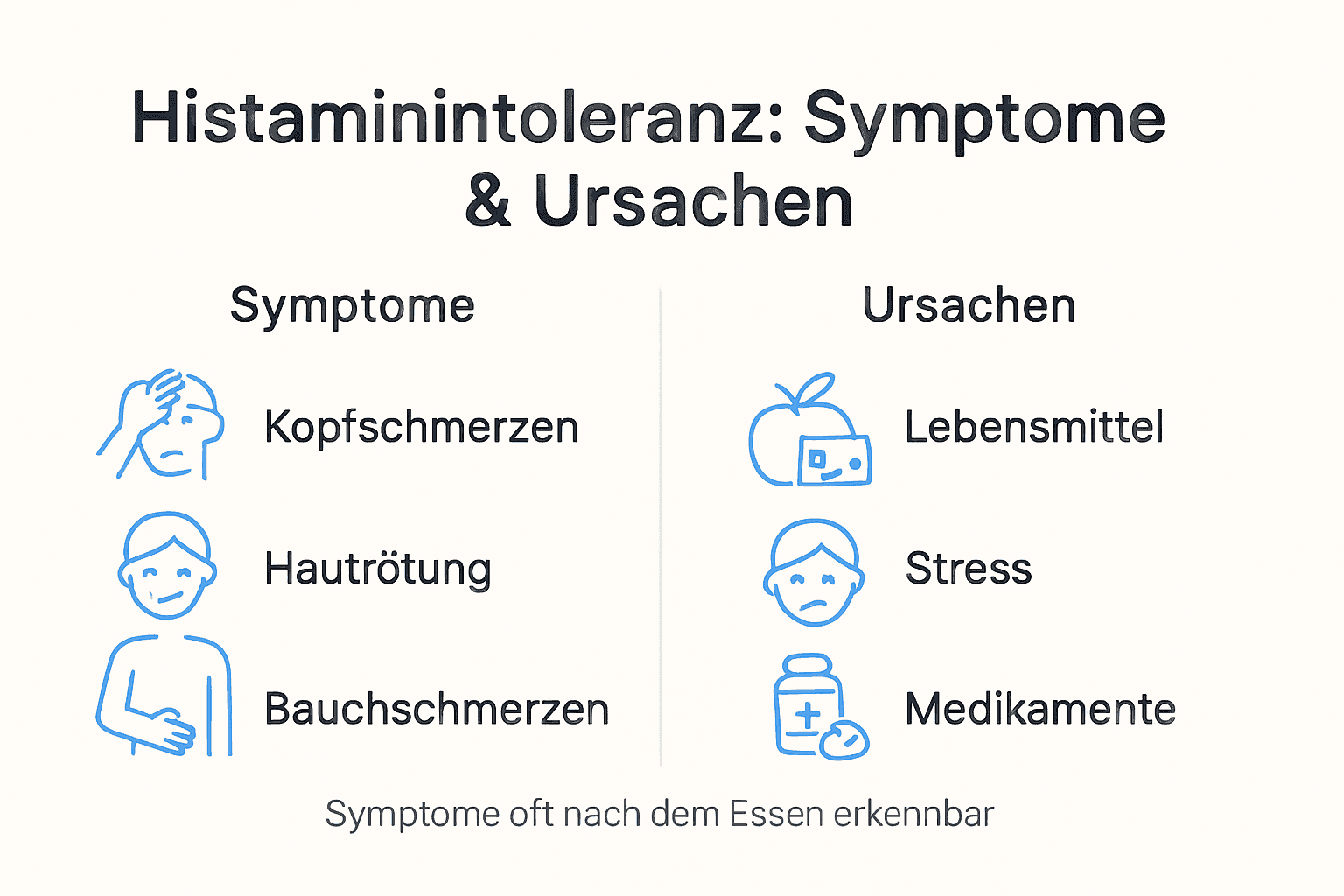
To provide a clearer overview of how the various symptoms of histamine intolerance arise, the following table summarizes the key connections:
| Symptom group | Possible cause | Recommended action |
|---|---|---|
| Skin reactions | Increased histamine concentration | Avoid foods, keep them cool |
| Headaches | Histamine's effects on the nervous system | Keep a food diary |
| Digestive problems | DAO deficiency in the intestines | Fresh, well-tolerated food |
| Circulatory problems | Stimulation of the heart by histamine | Stress reduction, relaxation |
| Fatigue | Systemic inflammation, histamine | Check enzyme activity |
Pro tip: Keep a food diary to identify and document your individual triggers precisely.
Which foods are particularly problematic?
With histamine intolerance, certain foods are particularly problematic and can trigger symptoms. Diet plays a crucial role in symptom control and well-being.
Foods with a high histamine content or those that stimulate histamine production in the body are primarily responsible for the symptoms. The most critical foods include:
- Aged cheeses
- Cured meats such as salami and ham
- Fermented fish products
- Alcoholic beverages, especially red wine
- Seafood
- Tomatoes
- Chocolate
- Nuts
- Citrus fruits
- Sauerkraut
These foods may either contain high levels of histamine directly or stimulate the body's own histamine production. Individual tolerance varies greatly, which is why a personalized dietary strategy is crucial.

Another important aspect is that not only histamine content but also factors such as ripening, fermentation, and storage duration play a significant role. The longer a food is stored, the higher its histamine content generally becomes.
Pro tip: Keep a detailed food diary to identify and specifically avoid your individual histamine triggers.
Recognizing histamine liberators and biogenic amines
Histamine liberators pose a complex challenge for people with histamine intolerance. These substances can significantly influence histamine production in the body, regardless of their own histamine content.
The most important histamine liberators include:
- Foods such as strawberries
- Citrus fruits
- Chocolate
- Seafood
- Alcohol
- Nuts
Biogenic amines such as tyramine and phenylethylamine are also particularly significant. These substances are normally broken down by the enzyme diamine oxidase (DAO), but function differently in people with histamine intolerance. They can further impair histamine processing and intensify symptoms.
The interactions between histamine liberators and biogenic amines are complex. They can trigger allergy-like reactions, accelerate inflammatory processes, and impair digestion. It is important to understand that every body reacts individually and that symptoms can vary greatly.
Pro tip: Document your reactions to different foods in a food diary to identify your personal triggers.
Food processing and storage: What should you look out for?
Fermentation and ripening processes play a decisive role in the histamine content of food. The longer food is stored, the higher its histamine content becomes.
The following food groups are particularly critical:
- Aged cheeses
- Fermented meat and fish products
- Long-stored sausages
- Pickled vegetables
Important to know: Biogenic amines such as histamine are thermostable. This means they are not destroyed by cooking. Proper storage and freshness are therefore extremely important. The faster food is chilled and processed, the less histamine is formed.
The cold chain is crucial. Microbial activity and ripening processes promote histamine production. Fresh food, rapid freezing, and careful processing are therefore key elements for people with histamine intolerance.
The effects of typical food storage and processing methods on histamine levels are outlined below:
| Process | Effect on histamine | Recommended action |
|---|---|---|
| Fermentation | Significant increase in histamine | Avoid whenever possible |
| Long storage | Histamine accumulates | Buy and store fresh |
| Rapid chilling | Inhibits histamine formation | Chill or freeze immediately |
| Cooking | No histamine breakdown | No reduction through heat |
Pro tip: Buy food as fresh as possible and process or freeze it immediately to keep histamine levels to a minimum.
Individual tolerance: How self-tests can help
Histamine intolerance is highly individual, which is why self-tests can play a crucial role in diagnosis and dietary adjustments. Every body reacts differently to histamine and biogenic amines.
The key aspects of a professional self-test include:
- Identification of specific triggers
- Measurement of individual enzyme activity
- Documentation of personal symptom patterns
- Objective assessment of histamine sensitivity
This is not just about a snapshot, but about a comprehensive understanding of your body's own reaction mechanisms. A self-test can help you specifically identify foods that trigger or worsen your symptoms.
The results enable an individually tailored dietary strategy. They give you valuable insights into your personal histamine intolerance and help you make informed dietary choices.
Pro tip: Always combine self-test results with a food diary for maximum insight.
Avoiding mistakes: Typical everyday pitfalls
The biggest challenges of histamine intolerance often lie in unnoticed everyday pitfalls that can unintentionally worsen symptoms.
The most common pitfalls include:
- Unintentional exposure to stress
- Inadequate meal planning
- Improper food storage
- Overlooking hidden sources of histamine
- Failure to document personal reactions
Stress plays a particularly significant role. It can dramatically increase the body's own histamine production and severely worsen symptoms. Therefore, relaxation techniques such as meditation, deep breathing, or gentle exercise are not only recommended but almost necessary.
Ready-made products and highly processed foods carry additional risks. They often contain additives, preservatives, and flavor enhancers that can negatively affect histamine intolerance. A conscious, self-prepared diet is therefore the key to well-being.
Pro tip: Keep a detailed food diary and mark days with increased stress to identify connections.
Understanding histamine intolerance better and avoiding symptoms in a targeted way
Histamine intolerance often raises many questions. The wide range of symptoms and the challenge of finding suitable foods make eating a daily challenge. This is exactly where an individual analysis can help you reliably identify your personal triggers and specifically avoid them. With a professional at-home intolerance test from mybody®, you can find out exactly which substances your body does not tolerate well and thus alleviate symptoms in the long term.
Take the opportunity to optimize your diet based on scientific evidence and receive valuable personalized recommendations. Rely on ISO-certified laboratory analyses and a simple testing process at home. So you can take the first step toward greater well-being today, mybody®x offers a wide range of allergy and intolerance tests, including those in the Allergy & Intolerance Tests category. Get started now and finally feel confident about your diet again.
Frequently Asked Questions
Which foods should I avoid if I have histamine intolerance?
Avoid foods high in histamine, such as aged cheeses, cured meats, fermented fish products, alcohol (especially red wine), seafood, tomatoes, chocolate, nuts, and citrus fruits.
What are histamine liberators, and which foods contain them?
Histamine liberators are substances that stimulate histamine production in the body. They include strawberries, citrus fruits, and alcohol. You should avoid these foods as well.
How can I reduce my histamine levels through food processing?
To minimize histamine levels, foods should be processed fresh and immediately refrigerated or frozen. Avoid storing and fermenting foods for long periods.
What are the symptoms of histamine intolerance?
Typical symptoms include skin rashes, severe headaches, stomach cramps, unexplained sweating, heart palpitations, and extreme fatigue, which may occur after consuming histamine-rich foods.


Share now:
Understand the menstrual cycle – relieve symptoms
Nutrient deficiencies during breastfeeding – symptoms and prevention