

Nutrient deficiency during breastfeeding – symptoms and prevention
Many breastfeeding mothers in Central Europe underestimate that their daily energy needs increase by around 500 kilocalories, significantly raising the risk of nutrient deficiency. Fatigue, hair loss, or a weakened immune system are common warning signs that often develop gradually. Recognizing symptoms early and using targeted laboratory analyses provides valuable insight into one’s micronutrient status and allows the diet to be adjusted individually to safeguard the long-term health of both mother and child.
Table of contents
- Nutrient deficiency during breastfeeding: What does it mean?
- Common micronutrient deficiencies and their causes
- Typical symptoms in mothers and effects on the child
- Diagnostics and personalized laboratory analyses at home
- Prevention, nutrition, and targeted supplementation
Key findings
| Point | Details |
|---|---|
| Nutrient deficiency | A nutrient deficiency during breastfeeding affects both the mother’s health and the quality of her breast milk. |
| Micronutrients | Pay particular attention to critical micronutrients such as iron, iodine, and calcium to prevent deficiencies. |
| Nutritional strategy | A balanced and nutrient-rich diet is essential for the well-being of both mother and child. |
| Self-diagnosis | Regular blood tests can help detect nutrient deficiencies early and take targeted countermeasures. |
Nutrient deficiency during breastfeeding: What does it mean?
During breastfeeding, your body goes through an intensive phase of nutrient supply. A nutrient deficiency means that your body is not receiving sufficient essential vitamins and minerals, which can affect both your own health and the quality of your breast milk.
Research data show that a nutrient deficiency can develop gradually and manifest through various symptoms. Mutterinstinkte shows that a deficiency can impair vital processes, causing symptoms such as fatigue, hair loss, or reduced immune defenses. Iron deficiency is particularly common after childbirth and can cause lack of energy and increased susceptibility to infections.
A breastfeeding mother’s energy needs increase by around 500 kilocalories per day. This means that a particularly balanced and nutrient-rich diet is essential. A comprehensive nutritional strategy can effectively prevent deficiency symptoms in both mother and child by consuming a wide variety of high-quality foods.
Pro tip: Keep a food diary to document your nutrient intake and identify gaps early.
Common micronutrient deficiencies and their causes
During breastfeeding, the female body goes through a phase of increased nutritional needs. Micronutrient deficiencies can frequently occur during this sensitive period and represent a significant challenge for breastfeeding mothers.
Micronutrient deficiencies primarily include iron, iodine, calcium, folate, and vitamin B12, which are essential for the health of mother and child. Iron is often reduced by blood loss during childbirth, while iodine plays a central role in thyroid function and the child's mental development. Calcium can be depleted by intensive milk production and increases the risk of reduced bone density.
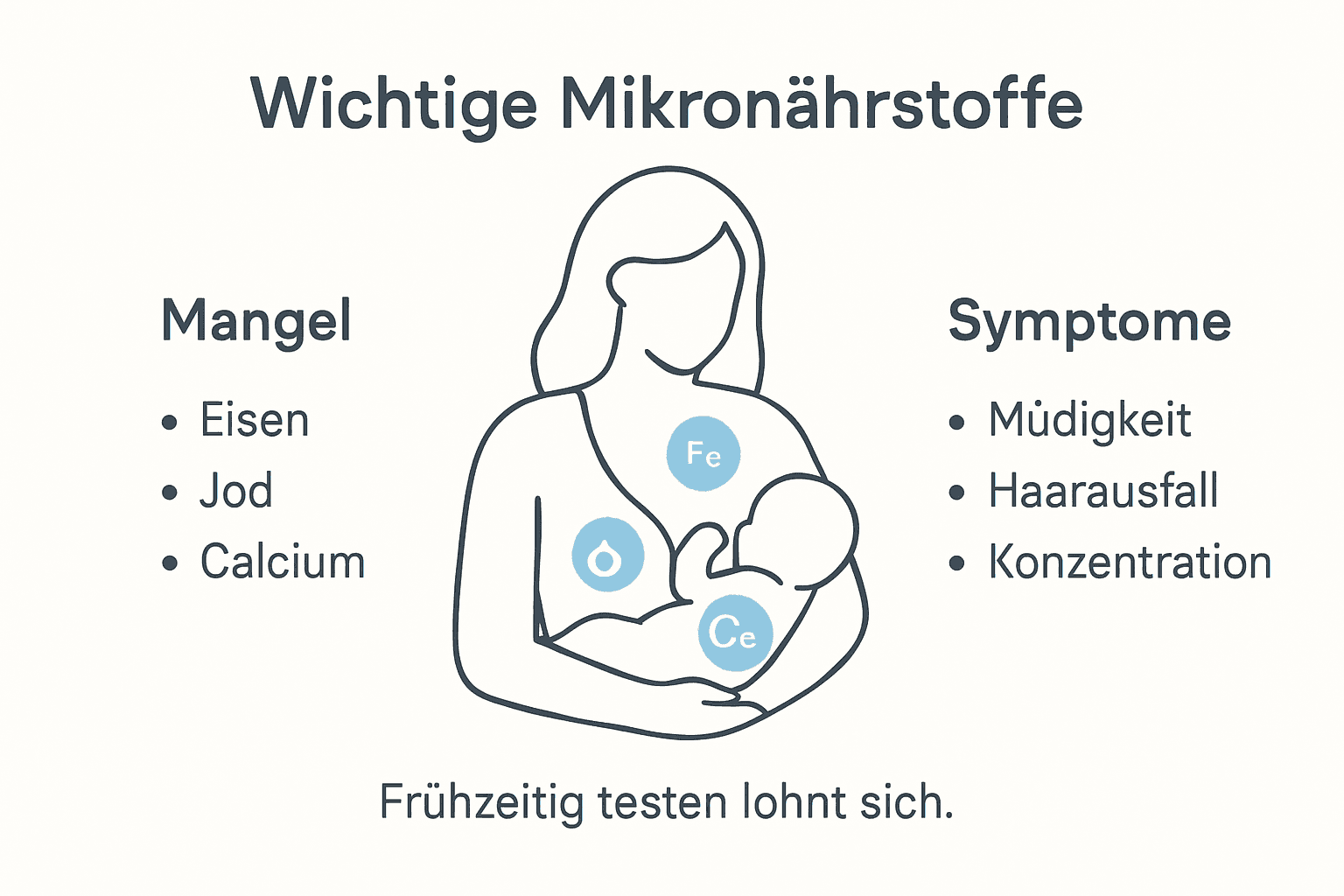
According to experts, these deficiencies are primarily caused by the increased physiological needs during the breastfeeding period. Milk production significantly increases nutrient requirements, making a targeted and balanced dietary strategy essential. Choline, folic acid, and vitamin B12 in particular are critical micronutrients whose deficiency can have serious consequences for mother and child.
Here is an overview of the most common micronutrient deficiencies and their key functions during breastfeeding:
| Nutrient | Important for | Main cause of deficiency |
|---|---|---|
| Iron | Oxygen transport, energy | Blood loss during childbirth |
| Iodine | Metabolism, brain development | Increased needs during breastfeeding |
| Calcium | Bone health, nervous system | Loss through breast milk |
| Folic acid | Cell division, growth | Increased needs and dietary gaps |
| Vitamin B12 | Nervous system, energy metabolism | Vegetarian/vegan diet |
Pro tip: Have your nutrient levels checked regularly with a blood test to identify deficiencies early and address them specifically.
Typical symptoms in mothers and effects on the child
Nutrient intake during breastfeeding is crucial for the health of both mother and child. A deficiency can manifest in many ways and affect both.
For breastfeeding mothers, nutrient deficiencies manifest through a range of warning signs that should not be underestimated. These include pronounced fatigue, hair loss, brittle nails, inner restlessness, and lack of motivation. Iron deficiency is particularly dangerous because it can weaken not only physical condition but also psychological well-being.

The effects of a nutrient deficiency on the child are no less significant. Micronutrient deficiencies can affect the child's overall development, particularly the nervous and immune systems. Critical nutrients such as iron and iodine play a crucial role in cognitive development and growth. A deficiency can lead to developmental delays and weakened immune defenses.
The following table shows typical symptoms of deficiencies and potential consequences for the baby:
| Symptom in the mother | Possible impact on the child |
|---|---|
| Severe fatigue | Delayed development |
| Hair loss | Weak immune system |
| Brittle nails | Impaired cognitive performance |
| Mental exhaustion | Increased susceptibility to infections |
Pro tip: Keep a food diary and pay attention to a balanced diet with a variety of nutrients to identify and compensate for deficiencies at an early stage.
Diagnostics and personalized laboratory analyses at home
The self-diagnosis of nutrient deficiencies during breastfeeding has made tremendous progress in recent years. Modern technologies enable breastfeeding mothers to obtain important health information directly from home.
Personalized laboratory analyses offer a precise way to check individual nutrient status. Key micronutrients such as iron, vitamin D, and vitamin B12 can be conveniently tested using a capillary blood test. These analyses help detect deficiencies at an early stage and develop targeted countermeasures.
Modern at-home blood tests provide detailed insights into your health and enable personalized nutrient optimization. The benefits are numerous: fast results, high accuracy, and the ability to identify deficiencies early, before they have serious effects on mother and child.
Pro tip: Combine home tests with advice from nutrition experts to interpret your test results professionally and assess them individually.
Prevention, nutrition, and targeted supplementation
Nutrient intake during breastfeeding requires a holistic and mindful nutrition strategy. A balanced diet forms the foundation for the health of both mother and child.
A nutrient-rich diet should include a variety of food groups. These include fruit, vegetables, whole-grain products, dairy products, lean meat, and fish. Nutrients such as iodine, calcium, and iron are particularly important, as the need for them increases significantly during breastfeeding.
Targeted supplementation may be useful when nutritional needs cannot be met through food alone. Vegans or women with diagnosed deficiencies should be particularly attentive. Dietary supplements can help close critical nutrient gaps, but should always be taken in consultation with a healthcare professional.
Pro tip: Keep a food diary and document your nutrient intake to identify gaps early and address them specifically.
Nutrient deficiency during breastfeeding: Identify it early and take targeted action
Breastfeeding is a special phase of life during which many mothers face the risk of a nutrient deficiency. Fatigue, exhaustion, and a lack of energy can be early warning signs that must not be ignored. To ensure optimal nutrition for you and your baby, it is important to identify and specifically address nutrient deficiencies at an early stage. This is where the innovative support from mybody®x comes in.
With our Recognize & prevent nutrient deficiencies – at-home tests | mybody® – mybody®x, you can easily check your personal micronutrient status yourself. Rely on scientifically validated analyses from ISO-certified laboratories and benefit from personalized nutritional recommendations specifically for breastfeeding. This allows you to effectively combat symptoms such as lack of energy and hair loss and give your family the best.
Don't miss out on valuable time—take the opportunity to actively manage your health. Discover your options now at Recognize and address vitamin deficiencies | mybody®x and learn more at mybody-x.com about state-of-the-art self-diagnostics for your individual health. Start today for more energy and well-being during breastfeeding.
Frequently asked questions
What are the typical symptoms of a nutrient deficiency during breastfeeding?
Symptoms of a nutrient deficiency during breastfeeding may include severe fatigue, hair loss, brittle nails, and inner restlessness. These warning signs should not be underestimated.
Which micronutrients are especially important during breastfeeding?
Important micronutrients during breastfeeding include iron, iodine, calcium, folate, and vitamin B12. These nutrients are essential for the health of both mother and child.
How can I prevent nutrient deficiencies while breastfeeding?
A balanced, nutrient-rich diet is essential. A combination of fruit, vegetables, whole-grain products, dairy products, and lean meat can help. Targeted supplementation may also be beneficial, especially when deficiencies have been identified.
How can I check my nutrient status at home?
Personalized laboratory analyses and modern at-home blood tests make it possible to check key micronutrients such as iron and vitamin B12. These tests help detect deficiencies early and develop targeted countermeasures.



Share now:
What not to eat with histamine intolerance: specifically avoid symptoms
Menopause in women: Your guide to stages, symptoms, and hormone tests