

What can you do about iron deficiency to regain your energy?
Do you often feel tired, unfocused, and lacking energy even though you have actually slept enough? If this sounds familiar, you are not alone. These are often the first subtle signs of iron deficiency, which you should never ignore. The key is to interpret your body’s signals correctly and take targeted action—and that begins with knowing your iron status and following a conscious diet.
Interpreting your body’s first signals correctly

Perhaps you know the feeling: The alarm goes off, but you feel as if you have not slept at all. Your concentration at work quickly fades, and the thought of exercising feels like climbing Mount Everest. This constant exhaustion is more than just “a bad day”—it is often your body’s loudest signal that it is missing something important.
That crucial something is often iron. Iron is far more than just a trace element; it is the fuel that powers your energy. As a central component of the red blood pigment hemoglobin, it is responsible for transporting oxygen from the lungs to every single cell in your body. If your cells do not receive enough oxygen, they cannot produce energy either. The result? You feel weak, tired, and lacking in motivation.
When the body cries out for help
Iron deficiency usually develops gradually. Your body is very good at compensating for deficiencies for a while by drawing on its stored reserves. But eventually, those stores run out, and the symptoms become impossible to miss.
Look out for these specific signs:
- Persistent tiredness and exhaustion: By far the most common symptom. Even after getting enough sleep, you simply do not feel rested.
- Pale skin and mucous membranes: A look in the mirror or at the inside of your lower eyelids can be revealing. Noticeable paleness often indicates a lack of red blood cells.
- Hair loss and brittle nails: Is your hairbrush fuller than usual, or are your nails splitting and developing ridges? This can be a clear sign of an inadequate supply of nutrients.
- Difficulty concentrating and headaches: Do you find it difficult to focus, or do you suffer from headaches more often? A lack of oxygen in the brain can also be the cause here.
- Increased susceptibility to infections: A weakened immune system and frequent colds can also indicate iron deficiency, because iron is essential for the proper functioning of immune cells.
If you ignore these symptoms, you risk developing iron deficiency anemia in the long term. In this condition, the deficiency is so severe that the body can no longer produce enough healthy red blood cells. This severely impairs your performance and well-being.
Who should be particularly careful
Certain stages of life and lifestyles significantly increase the risk of iron deficiency. It is important to know whether you belong to one of these groups so that you can take proactive action.
Your body sends you clear messages. Persistent fatigue, pale skin, or hair loss are not normal side effects of a stressful everyday life, but often direct cries for help indicating a nutrient deficiency such as iron deficiency.
Those at particular risk include:
- Women of childbearing age: Regular menstruation causes ongoing iron loss. With heavy bleeding, the loss is correspondingly greater.
- Pregnant and breastfeeding women: During these stages, iron requirements increase enormously because not only the mother but also the growing child needs to be supplied.
- Athletes and very active people: Those who sweat a lot lose iron. In addition, intense endurance exercise can cause tiny amounts of blood loss in the gastrointestinal tract, further increasing the requirement.
- People following a plant-based diet: Iron from plant sources (non-heme iron) is absorbed by the body much less effectively than iron from animal products (heme iron). This makes it especially important to understand how to combine foods correctly.
The first step to breaking out of the cycle of fatigue and exhaustion is to take these signals seriously. They are not imaginary, but valuable clues from your body. By learning to understand them, you take control of your health and lay the foundation for regaining your full energy. A simple blood test, such as the mybody®x Nutrient Test, can quickly and easily provide clarity.
How to reliably determine your iron status from home
The symptoms of iron deficiency can be quite vague and overwhelming. Constant fatigue, pale skin, difficulty concentrating—does that sound familiar? But making assumptions and guessing won't get you anywhere. To take targeted action, you need certainty. The crucial first step is therefore a reliable test that finally gives you a clear picture of your current iron status.
Fortunately, you no longer have to endure overcrowded waiting rooms or wait weeks for a doctor's appointment. You can take control yourself—conveniently and discreetly from home.
The mybody®x nutrient test as your guide
The mybody®x nutrient test was developed precisely for this purpose: to give you convenient, scientifically based clarity about your supply of important micronutrients such as iron. The entire process is remarkably simple and eliminates any uncertainty.
Here's how it works:
- Simple sample collection: Everything you need is included in the test kit. Using the small lancet provided, you collect a few drops of blood with a tiny prick to your fingertip. It is really quick and barely noticeable.
- Safe shipping: Pack your sample securely in the enclosed return envelope and send it to our laboratory free of charge.
- Professional analysis: Your sample is analyzed in our German specialist laboratory, certified according to ISO standards. This ensures that you receive a precise and absolutely reliable result.
This method gives you the opportunity to take proactive action without having to interrupt your daily routine. You decide when and where to perform the test.
More than just a number: the ferritin level
The most important value we determine for you is ferritin. You can think of ferritin as the warehouse for iron in your body. While the iron content in your blood (serum iron) is subject to daily fluctuations, your ferritin level shows how well your long-term stores are actually filled.
A low ferritin level is often the very first sign of developing iron deficiency—before the concentration of red blood cells falls and true anemia develops. It is therefore a crucial early warning indicator.
Your ferritin level is the key to detecting iron deficiency early and taking steps to counteract it. It provides a reliable basis for taking the right steps for your health before more serious symptoms manifest.
Statistics show that this is a relevant issue: One in ten women in Germany has an iron deficiency, with ferritin stores below 30 µg/l. This causes symptoms such as persistent fatigue and reduced performance, which is particularly risky for active people between the ages of 18 and 40, who also lose additional iron through exercise. Find out more about the background and statistics on iron deficiency.
After a few business days, you will receive your personal results report. It contains not only your laboratory values, but also an understandable explanation of what they mean and specific recommendations tailored to you. This scientifically grounded evaluation is the perfect basis for taking the right measures independently—whether through a targeted change in diet or the appropriate supplement. If you would like to delve deeper into the subject, you can find more information about the at-home iron test in our guide.
Your diet as a daily iron booster
A conscious and targeted diet is your strongest and most effective tool in the fight against iron deficiency. When you know which foods replenish your stores and how to combine them cleverly, you can actively contribute to greater energy and well-being every day. It's not about complicated diets, but about smart knowledge for your everyday life.
The key to success lies in understanding that not all iron is the same. Your body handles iron from animal and plant sources very differently, which has a huge impact on your iron levels.
Animal-based vs. plant-based iron: the small but significant difference
In the world of iron, there are two main players: heme iron and non-heme iron. This distinction is crucial if you truly want to optimize your diet.
You find heme iron exclusively in animal products such as red meat, poultry, and fish. Its great advantage is that it is already present in a form your body can absorb directly and very efficiently. Bioavailability here is a strong 15–35 %.
Non-heme iron is the form found in plant-based foods—think lentils, beans, spinach, oats, and nuts. Although these foods are often rich in iron, your body is much less able to utilize this non-heme iron. The absorption rate here is only 2–20 %But don't worry: With the right tricks, you can increase this rate significantly.
This overview shows you the simple way to check your iron status with the mybody®x test—from uncomplicated sample collection to receiving your personal results report.
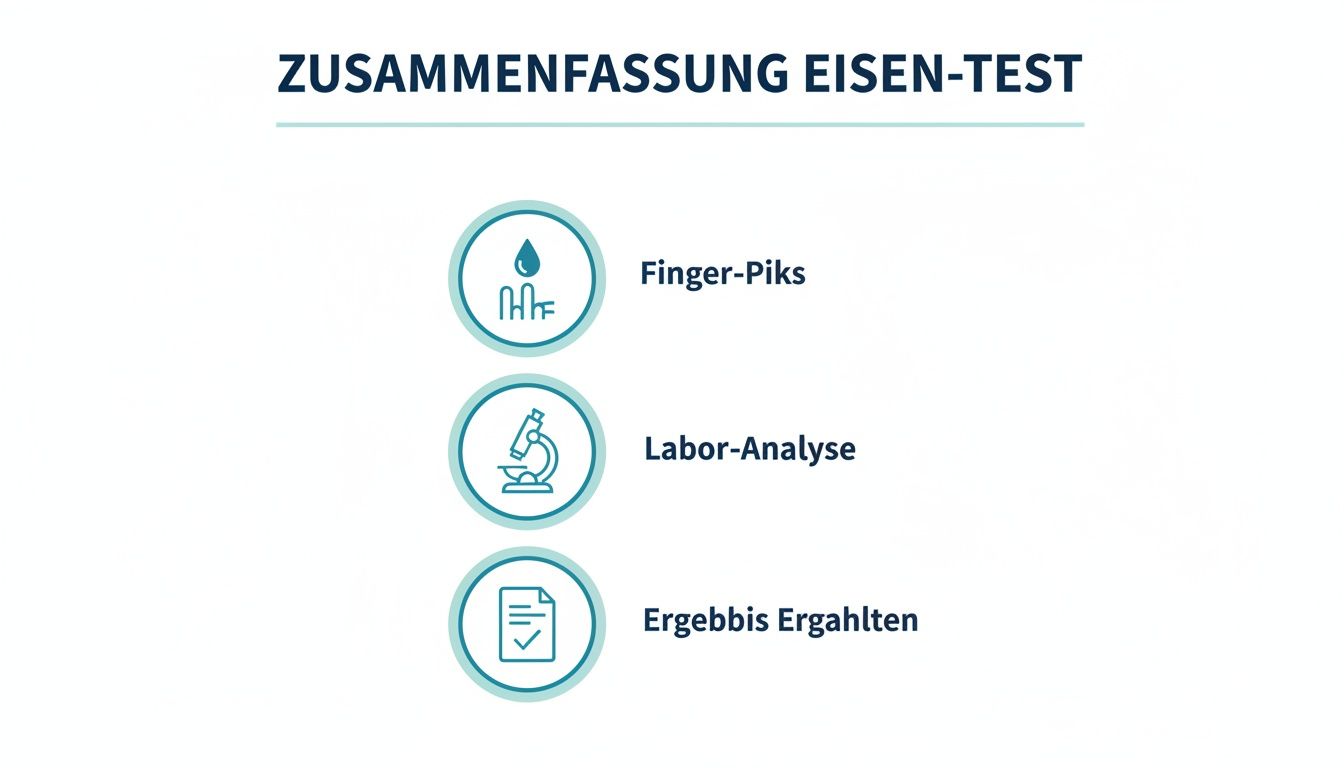
The test provides you with a reliable foundation for optimally tailoring your nutrition strategy to your individual needs and making your progress measurable.
The power of combination: How to maximize iron absorption
The real game-changer in combating iron deficiency is not just choosing iron-rich foods, but combining them strategically. Certain substances can enhance iron absorption, while others can practically block it.
Your best friend here is clearly vitamin C. It can convert plant-based non-heme iron into a form that is much more readily available to the body. The effect is impressive: Vitamin C can increase iron absorption two- to threefold.
Think of vitamin C as the key that opens the door to the iron in your body. Every iron-rich meal you combine with a source of vitamin C is a direct boost to your iron stores and energy.
Here are some practical examples of unbeatable power duos:
- Oatmeal for breakfast? Combine it with fresh berries, a splash of lemon juice, or a small glass of orange juice.
- Lentil salad for lunch? Add plenty of diced red bell pepper, parsley, and a lemon vinaigrette.
- Whole-grain bread in the evening? Top it with hummus (made from chickpeas) and garnish it with fresh tomato or cucumber slices.
- Spinach as a side dish? Always add a splash of lemon juice before serving.
These small adjustments can have a huge effect on your iron levels and are incredibly easy to incorporate into any meal.
Know the antagonists: These foods inhibit iron absorption
Just as there are enhancers, there are also inhibitors that can block iron absorption. You should not consume these directly with your iron-rich meals.
The best-known iron blockers are:
- Tannins in coffee and black tea: These tannins bind iron in the intestine, making it virtually unavailable to the body.
- Calcium in dairy products: Calcium competes with iron for the same absorption pathways in the intestine.
- Phytates in whole-grain products and legumes: These substances can also bind iron. (Tip: Soaking, sprouting, or fermenting reduces the phytate content.)
This doesn’t mean you have to give up your morning coffee or yogurt. The key is proper timing. Leave at least one to two hours between your iron-rich meal and consuming these inhibitors.
The following table shows at a glance how to combine the best sources of iron with the perfect partners and which antagonists you should avoid.
Iron sources and their perfect partners
This table shows you the best plant-based and animal-based sources of iron and how to combine them with vitamin C-rich foods to maximize absorption. You’ll also see examples of inhibitors you should avoid.
| Iron-rich food (per 100 g) | Perfect partner (source of vitamin C) | Opponent to avoid (inhibitor) |
|---|---|---|
| Lentils (approx. 8 mg) | Chopped bell pepper and parsley in the salad | A glass of milk or yogurt dressing |
| Oatmeal (approx. 4.7 mg) | Fresh berries or a glass of orange juice | A cup of coffee or black tea |
| Beef (approx. 2.5 mg) | Broccoli or Brussels sprouts as a side dish | Cheese sauce or a glass of red wine |
| Pumpkin seeds (approx. 8.8 mg) | A splash of lemon juice over the salad | Calcium-rich mineral water |
| Spinach (approx. 2.7 mg) | Tomatoes and lemon dressing | Feta cheese in salad |
As you can see, it is often small adjustments that make a big difference. By applying these principles, you can turn your daily meals into a powerful iron booster. For more information and recipe ideas, also read our article on Nutrition for iron deficiency.
When iron supplements really make sense
An iron-conscious diet is and remains the foundation. But sometimes that simply is not enough. If a deficiency already exists and your mybody®x nutrient test shows that your ferritin level is extremely low, trying to correct it through diet alone would be a hopeless endeavor.
Think of it this way: You are trying to fill an empty swimming pool with a watering can. It would take forever.
This is exactly where iron supplements come in. They provide targeted and highly effective support to quickly replenish your stores. This helps bridge the gap until your dietary changes take effect, allowing you to regain your strength much faster.
However, the dietary supplement market can be truly overwhelming. The shelves are packed, and it is difficult to recognize what is genuinely good.
Choosing the right form of iron
Iron is not just iron. The chemical form of iron in the supplement largely determines how well your body can absorb it—and how well your gastrointestinal tract tolerates it.
Here is a brief overview of the most common forms:
- Ferrous sulfate: The classic that is often prescribed. It is effective, but unfortunately notorious for its side effects. Many people complain of nausea, constipation, or stomach pain.
- Iron bisglycinate: This modern form is a real insider tip. Here, the iron is cleverly bound to two amino acids. This trick allows it to pass through the stomach virtually unnoticed and only reach the small intestine. The result? Excellent tolerability and really high bioavailability.
- Plant-based iron (e.g., from curry leaves): These supplements are often gentler, but usually have a lower dose. They are great for meeting daily needs or correcting a mild deficiency, but are often too weak for quickly replenishing depleted stores.
So when it comes to specifically replenishing depleted stores, iron bisglycinate is usually the best choice. It combines effectiveness and tolerability perfectly.
The art of taking it correctly
Even the best supplement cannot work effectively if you take it incorrectly. With a few simple tips, you can get the most out of it and avoid unnecessary side effects.
Always remember: The right dosage is everything. Too much iron can be harmful. Your decision to take a supplement and its dosage should always be based on clear test results—like those provided by the mybody®x nutrient test.
The golden rule is: Take your iron supplement on an empty stomach, preferably 30–60 minutes before breakfast. Your stomach is then empty, and nothing interferes with absorption.
Always take it with a glass of water or—even better—a small glass of orange juice. The vitamin C in it acts like a turbo booster and significantly improves iron absorption.
What you should absolutely avoid is taking it at the same time as:
- Coffee or black tea
- Milk and dairy products
- Calcium or magnesium supplements
Leave an interval of at least two hours here; otherwise, you will undermine its effectiveness. If you have a very sensitive stomach, taking it directly after a small, light meal may be an alternative, even though this slightly reduces absorption.
Your test result, particularly your ferritin level, is your compass. It shows you in black and white how your iron stores are doing. You can read more about the significance and optimal ranges in our detailed article on ferritin levels. With this knowledge, you can make a decision based on facts rather than mere guesswork.
How your lifestyle affects your iron balance
Diet is naturally a huge lever for replenishing your iron stores—no question. But perhaps you know the feeling: You pay attention to iron-rich foods, yet the fatigue remains. The reason often lies in an area we like to overlook: your personal lifestyle.
Your iron status is about far more than just the sum of your meals. Your entire daily routine directly influences how well your body absorbs iron, how much it uses, and how efficiently it can utilize it at all. It’s about seeing the bigger picture and strengthening your body holistically.
Intense exercise as a hidden iron thief
Regular exercise is fantastic for your health, there’s no question about that. But intensive endurance training, such as long-distance running or cycling, can significantly increase your iron needs. This happens in several ways.
On the one hand, you lose iron during every sweat-inducing workout—this can be as much as 1–2 mg per hour. On the other hand, the constant impact, especially in running, causes tiny, unnoticed microbleeds in the gastrointestinal tract. This effect, sometimes also referred to as “runner's anemia,” adds up over time.
Your body is not a machine. After a hard workout, it needs not only protein and carbohydrates for recovery, but also targeted support for its mineral balance. Regularly checking your iron levels is not a luxury for you as an athlete, but a necessity.
There is also a hormonal response. After intense workouts, your body releases more of the hormone hepcidin. Hepcidin is essentially the gatekeeper of iron and blocks its absorption from the intestines for several hours.
So if you eat your iron-rich meal immediately after training, significantly less of it will be absorbed than you might hope.
The central role of your gut health
You can eat the most iron-rich foods and take the best supplements—but if your gut isn't cooperating, only a fraction of them will actually be absorbed. The small intestine is where it all happens: this is where iron absorption takes place. A healthy intestinal lining and a balanced microbiome are therefore the absolute foundation for maintaining stable iron levels.
Various factors can sabotage your gut health and therefore iron absorption:
- Chronic stress: Constant stress puts your body in a perpetual state of alert. This can slow digestive function, irritate the intestinal lining, and cause inflammation that blocks nutrient absorption.
- Disrupted microbiome: An imbalanced gut flora can negatively affect the absorption of minerals. Probiotic foods such as yogurt, kefir, or sauerkraut, along with prebiotic fiber from vegetables and whole-grain products, are your best friends here.
- Taking acid blockers: Medications that reduce stomach acid (proton pump inhibitors) are widely used. But this very stomach acid is crucial for making iron from food soluble and therefore absorbable by the intestines in the first place.
A healthy gut is therefore important not only for digestion but also directly determines your energy and vitality. A mybody®x Gut Microbiome Test can give you valuable insights into the condition of your gut flora and where you can take action.
Ultimately, it is about recognizing the connections. Your efforts to improve your iron status will only truly pay off if you look beyond your plate and also keep an eye on your training, stress levels, and gut health.
What you may still be wondering about
Okay, you now know the most important factors for getting your iron balance back on track. But especially when you start changing things, very specific questions often come up. That is completely normal, because every body and daily routine is different. We have collected the questions we receive again and again here—briefly, precisely, and straight to the point, so you do not have to search for long.
How quickly will I notice an improvement with iron deficiency?
This is probably the question everyone is eager to have answered. Anyone who constantly feels tired and drained naturally wants to regain their energy as quickly as possible. The exact pace depends largely on how low your levels were and how consistently you stick with it.
With consistent use of supplements, you will often notice a significant improvement in typical symptoms such as fatigue and lack of motivation after just two to four weeks. Your body immediately uses the new iron to produce blood cells and transport oxygen—and you notice this boost in energy relatively quickly.
It is important to understand, however, that replenishing your actual iron stores, meaning your ferritin level, takes much longer. It can easily take three to six months for this “warehouse” to be fully stocked again. So a little patience is needed here.
The first surge of energy is the starting signal, not the finish line. Only when your ferritin stores are back in the optimal range is your body truly prepared to prevent another crash.
Regular check-ups are therefore essential. A follow-up test after around three months, such as the mybody®x Nutrient Test, which you can easily do at home, shows you in black and white whether your strategy is working or whether you may need to adjust the dosage. This also helps you prevent a risky overdose.
Can too much exercise cause iron deficiency?
Yes, absolutely. This is a factor that ambitious endurance athletes in particular often underestimate. Although exercise is very healthy, intense and regular training can increase the risk of iron deficiency in several ways.
These are the main reasons:
- Losses through sweat: Sweat causes you to lose not only water and electrolytes but also small amounts of iron. During long, strenuous sessions, this adds up.
- Microscopic intestinal bleeding: Constant impact, such as when running on asphalt, can cause tiny, imperceptible bleeds in the lining of the gastrointestinal tract.
- Hormonal blockage: After an intense training session, your body releases more of the hormone hepcidin. It acts like a bouncer for iron, blocking its absorption in the intestines for several hours.
This means that as an athlete, you not only have higher requirements but often also absorb iron from food less efficiently. Regularly checking your iron status is therefore not optional for you—it’s essential to maintaining your performance and recovery over the long term.
What role does gut health play in this?
A crucial one. You can eat an iron-rich diet, but if your intestines can’t absorb the iron, your efforts will be in vain. Iron absorption takes place entirely in the small intestine.
A healthy intestinal lining and a balanced gut microbiome are essential prerequisites for stable iron levels. Chronic inflammation, a disrupted intestinal barrier (the so-called “leaky gut”), or a lack of stomach acid can severely hinder absorption. So if you’re still not seeing any improvement despite all your efforts, this could be the root of the problem. A mybody®x gut microbiome test can provide valuable insights and show whether this is where you should start.
Do I have to give up coffee and tea completely if I have iron deficiency?
No, you don’t. But timing is everything. The tannins in coffee and black tea are real iron thieves. In the intestines, they bind the iron from your food into insoluble clumps that your body can no longer absorb.
The simple solution: Keep your distance. Don’t drink your coffee or tea right alongside your iron-rich meal or when taking your iron supplement. Give your body a window of at least one to two hours before and afterward. This gives it the chance to absorb the valuable iron undisturbed, while you still don’t have to give up your beloved coffee.
Do you finally want clarity about your iron status and an understanding of what your body really needs? At mybody®x, you’ll find scientifically backed at-home blood tests that provide precise results and clear recommendations for action. Take control of your health now and begin your journey toward greater energy and well-being.



Share now:
Fasting Before a Blood Test: Why Water Is Your Best Friend
Cortisol Deficiency Symptoms in Women: How to Recognize the Signs Early