
What is normal blood pressure? Your comprehensive guide
Are you wondering, “What is normal blood pressure?” and hoping for an answer you can understand without studying medicine? Sure, the ideal value is often around 120/80 mmHg, but this number is not set in stone. Your age, lifestyle, and even your genes play an important role and can influence this value.
Your compass for healthy blood pressure
Simply imagine your circulatory system as the plumbing system in a house. Blood pressure is the pressure in the pipes that ensures water—in your case, oxygen and nutrients—reaches every corner, no matter how remote. But if this pressure is constantly too high or too low, the entire system will eventually suffer damage. That’s exactly why it’s so important to know and understand your readings.

This guide will walk you through it. We’ll start with the basics, show you the right measurement technique, and explain which factors you can influence yourself. You’ll learn not only what the two numbers on the display mean, but also how to take an active role in protecting your heart health. Being mindful of your body is the best key to long-term well-being.
Why knowing your blood pressure is so important
Healthy blood pressure is one of the most important indicators of your overall fitness. If your readings get out of control, this can be an early warning sign of problems that might otherwise go unnoticed for a long time.
Here are a few good reasons to keep an eye on your readings:
- Recognize risks early: Persistently high blood pressure puts immense strain on the heart and blood vessels. This can significantly increase the risk of serious conditions.
- Motivation for a healthier everyday life: Knowing your readings can be incredibly motivating when it comes to making changes. Nutrition and exercise are key levers here. If you need inspiration, take a look at our 10 tips for a healthy lifestyle.
- Understand your body better: When you know your readings, you can assess much better how your body responds to stress, certain foods, or exercise.
Your blood pressure is so much more than just a number. It is direct feedback from your body about your state of health. Take this feedback seriously—it is your personal compass.
If you’d like to delve deeper into the connections, you can find more information about blood pressure and pulse here.
Understanding the two numbers on the monitor
When you measure your blood pressure, the device always displays two values, usually separated by a slash—for example, 120/80 mmHg. But what is actually behind them? Think of your heart as a powerful pump that keeps your blood circulation moving. Each number describes a very specific phase of this pumping process.
The first, always higher number is the systolic blood pressure. This value indicates the maximum pressure in your arteries, precisely when your heart contracts and pumps oxygen-rich blood through your body. You can think of it as the powerful surge that occurs when you turn a garden hose on full blast—this is the moment of greatest strain in the system.
Systolic and diastolic values explained
The second, lower number is the diastolic blood pressure. It describes the residual pressure in the blood vessels while the heart relaxes to fill with blood again. To continue with our analogy, this is the baseline pressure that remains in the hose even when you have just turned off the tap.
Only the two values together provide a complete picture of your cardiovascular health. Persistently high systolic pressure means that your artery walls are constantly exposed to enormous strain. A diastolic value that is too high, on the other hand, is a clear sign that your blood vessels can no longer relax properly, even during the resting phase.
Normal blood pressure is not a matter of chance, but the result of a finely balanced interaction. Systolic and diastolic pressure are like two dancers—they have to stay in step so that your cardiovascular system remains healthy and efficient.
What the official guidelines say
The question “What is normal blood pressure, anyway?” is best answered by looking at the latest medical recommendations. The European Society of Cardiology (ESC) provides clear reference values, which are also used as the standard in Germany.
A value around 120/80 mmHg is considered ideal and particularly desirable. If the values remain above this level over time, it is already cause for concern: Blood pressure readings between 120–139 mmHg (systolic) and 80–89 mmHg (diastolic) are already considered elevated and should be monitored. Only values above 140/90 mmHg are considered true high blood pressure. You can find more about the exact thresholds and risk assessments on herzstiftung.de.
With this knowledge, you can interpret your own measurements much better. You now understand why it’s so important to keep an eye on both numbers—they are the key to interpreting your body’s signals and taking an active role in your health.
How normal blood pressure values change with age
There is no single answer to the question “What is normal blood pressure?” that applies for an entire lifetime. Your readings are not set in stone; they naturally adjust over the years. One of the main reasons is that our blood vessels lose elasticity over time. Think of them as rubber bands that become somewhat more brittle and stiff over the years.
That means your heart has to work harder to pump blood through your body, which causes the pressure in your blood vessels to rise slightly. This is a completely normal process that you should understand so you can correctly interpret your readings.
Why your age shifts the benchmark
A blood pressure reading that is considered excellent for a 25-year-old is assessed quite differently in a 65-year-old. This age-related development is well known: while adolescents often have readings around 110/70 mmHg, approximately 120/80 mmHg is considered ideal for adults between 20 and 50.
As you get older, blood pressure often rises slightly because the arteries simply become stiffer. This means that values around 140/90 mmHg can still be within the age-specific range for people aged 61 and over. However, it’s important to keep an eye on them to minimize health risks, even if higher values are more common with age.
The following overview helps you classify your values at a glance and understand where you stand.
Blood pressure reference values by age group
This table shows the average normal blood pressure values (systolic/diastolic in mmHg) for different age groups, making it easy to classify your values.
| Age group | Normal systolic value (mmHg) | Normal diastolic value (mmHg) |
|---|---|---|
| Newborns | 60-80 | 40-50 |
| Infants (up to 1 year) | 80-100 | 50-70 |
| Toddlers (1–5 years) | 90-105 | 60-70 |
| School-age children (6–12 years) | 100-115 | 60-75 |
| Adolescents (13–18 years) | 110-120 | 70-80 |
| Adults (19–60 years) | 120-130 | 80-85 |
| Seniors (61 and older) | 130-140 | 85-90 |
As you can see, blood pressure changes over the course of a lifetime. It’s therefore not about rigid thresholds, but about personal reference values.
For better orientation, the following graphic shows the three main categories of blood pressure.
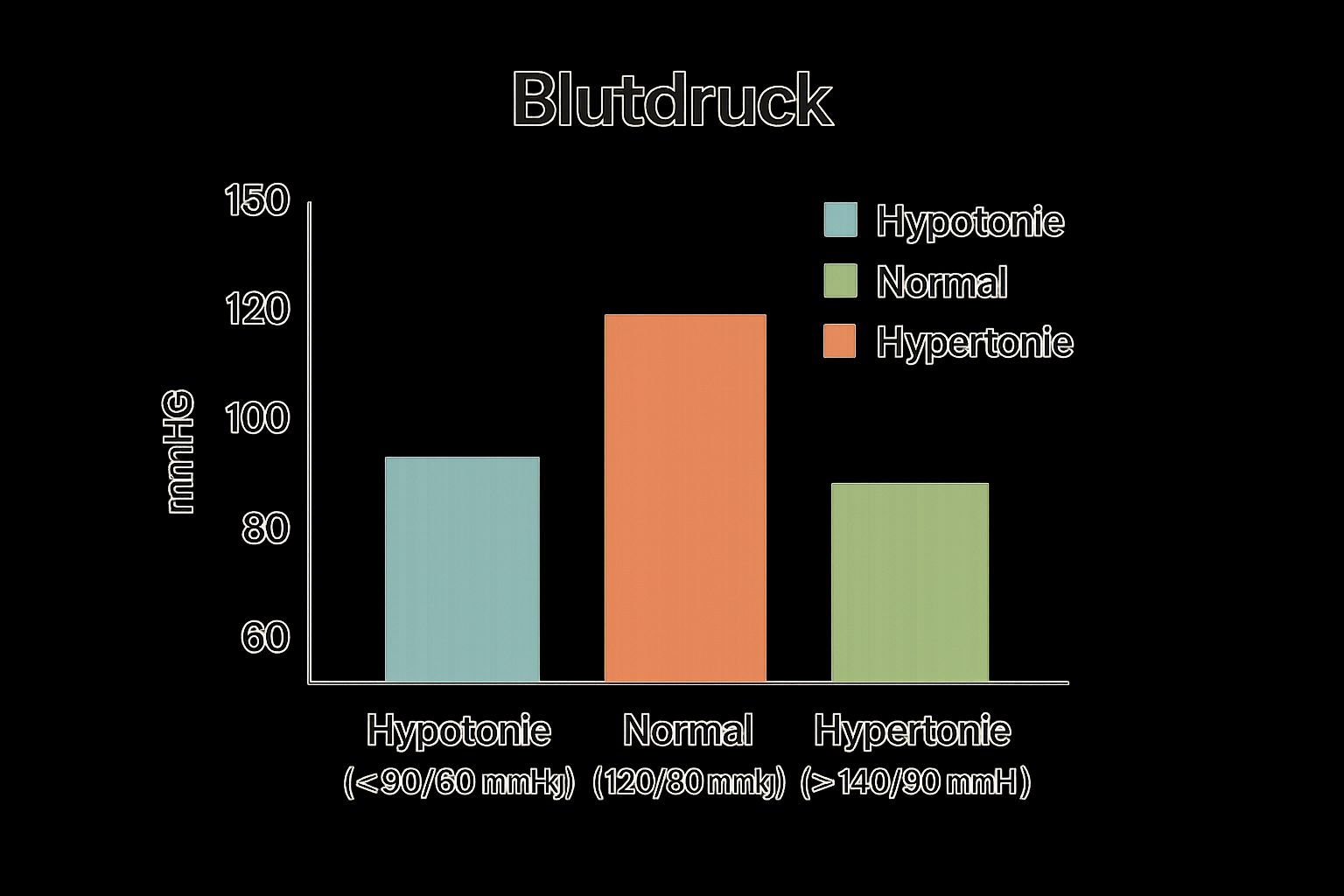
The visualization makes it clear: The ideal value of 120/80 mmHg is the healthy middle ground between blood pressure that is too low and too high—the golden mean for our cardiovascular system.
Small but significant differences between the sexes
Age is not the only factor; sex also plays a role. At younger ages, men tend to have slightly higher blood pressure readings than women.
Interestingly, this trend often reverses after menopause. Hormonal changes can then cause women's blood pressure to rise and even exceed men's readings.
Your blood pressure is therefore not a static number, but the result of a complex interplay of age, sex, genetics, and lifestyle. Interpreting your readings therefore always requires looking at the bigger picture.
This knowledge helps you assess your readings realistically and avoid panicking when the numbers do not match the textbook ideal of 120/80 mmHg. Much more important is recognizing trends and understanding when it is time to take a closer look.
Don't forget: Your genetic predisposition also has a major influence on how your body develops over time. Learn more about how your genes influence healthy aging in our article about the Longevity DNA Test.
Factors that influence your blood pressure every day
The question “What is normal blood pressure?” may have a simple answer, but reality is much more complex. Your blood pressure is not a fixed value set in stone—think of it more like a dynamic gauge for your body. It responds to countless influences, from the meal you are currently eating to the thoughts running through your mind.
These fluctuations throughout the day are completely normal. What matters, however, is understanding which levers you can control yourself. Your lifestyle, diet, and even your emotional state are powerful tools for positively influencing your levels and strengthening your heart health over the long term.
The role of diet and exercise
What ends up on your plate has a direct impact on the pressure in your arteries. Two minerals in particular play a central role here, acting almost like natural opponents: salt (sodium) and potassium.
- Salt as a driver: Too much sodium acts like a water magnet in the body. This additional fluid volume increases pressure in the blood vessels—and blood pressure rises. The tricky part is often the hidden salt in ready-made meals, processed meats, or snacks.
- Potassium as a protector: Potassium is the balancing partner. It helps the kidneys eliminate excess sodium while also ensuring that the vessel walls relax. You can find plenty of it in bananas, spinach, sweet potatoes, and avocados.
Exercise, in turn, is like fitness training for your blood vessels. Regular physical activity, especially endurance sports such as running, swimming, or cycling, makes the arteries more flexible and elastic. This means your heart has to pump less forcefully to send blood through your body, which can noticeably lower both systolic and diastolic pressure.
Stress and sleep as silent adversaries
Your head and your heart are an inseparable team. Stress—whether at work or in your personal life—puts your body into a kind of constant state of alert.
Stress hormones such as adrenaline and cortisol constrict the blood vessels and make blood pressure shoot up in an instant. If this state becomes a constant companion, it can develop into chronic high blood pressure.
The quality of your sleep is just as important. During sleep, blood pressure and heart rate normally decrease, giving your entire cardiovascular system a well-deserved break. Lack of sleep or restless nights disrupt this important recovery process and can raise your average blood pressure throughout the day.
When the causes lie deeper
Sometimes it’s not just the obvious levers in everyday life. Your hormonal balance also has a say.
For example, an imbalance in thyroid hormones can disrupt your metabolism and, as a result, your blood pressure. Another important player is your cortisol level. A persistently elevated level, often a result of chronic stress, is considered a clear risk factor for high blood pressure. If you would like to learn more about what cortisol is and how it affects your body, you can find more information with us.
If you suspect that hidden imbalances could be playing a role, the nutrient and hormone tests from mybody-x can shed some light. They help you better understand the connections in your body and take targeted action to bring your blood pressure back into a healthy range.
How to measure your blood pressure correctly at home
Even the best reference values are useless if your measurement is inaccurate. Correct measurement at home is your foundation for making informed decisions about your health. Only precise and regular checks give you and your doctor a data base you can truly trust.

The good news is that measuring correctly is not rocket science. There are a few simple but crucial rules that make the difference between an inaccurate snapshot and a truly meaningful result. This way, you can be sure that your readings reflect reality.
The golden rules of self-measurement
To collect reliable data that you can use as a guide, you should keep a few basic things in mind. These help you rule out the most common sources of error from the outset and obtain readings that you can genuinely compare with one another.
Simply follow this checklist every time you measure:
- Relax: Sit quietly for at least five minutes before measuring. Hurrying, stress, or physical exertion immediately beforehand can significantly distort the result.
- Adopt the correct posture: Sit upright on a chair with both feet flat on the floor and lean back comfortably. Important: Do not cross your legs!
- Choose the right arm: Ideally, always measure on the same arm so that the readings remain comparable. Rest your forearm comfortably on a tabletop so that the cuff is approximately at heart level.
- Remain silent during the measurement: Talking or fidgeting can temporarily raise your blood pressure. Simply remain seated and still for the short duration of the measurement.
The time of day is also important. Ideally, always measure at the same time, for example in the morning immediately after getting up and before breakfast. This will help you establish a reliable routine and obtain comparable readings.
To make the process easier and help you avoid common mistakes, we have put together a short checklist for you.
Checklist for accurate blood pressure measurement
This table summarizes the most important steps and most common mistakes so that you can measure correctly at home and obtain accurate results.
| Step / factor | How to do it correctly | Common mistake |
|---|---|---|
| Preparation | Sit quietly and relax for at least 5 minutes. | Measuring immediately after climbing stairs or experiencing a stressful situation. |
| Body position | Sit upright on a chair with your feet flat on the floor and your back supported. | Measuring with your legs crossed, hunched over, or standing. |
| Arm position | Rest your arm at heart level on a table without tensing it. | The arm hangs freely in the air or is positioned too high or too low. |
| Cuff | The cuff fits and is positioned correctly on the bare upper arm. | Measuring over clothing or using a cuff that is too loose or too tight. |
| During the measurement | Remain still; do not speak or move. | Talking, watching television, or allowing yourself to be distracted. |
| Time | Measure at the same time of day every time, preferably in the morning and evening. | Irregular measurement times that do not allow for comparison. |
With these instructions in mind, your measurements will become more reliable each time.
What do the official values for home measurements say?
It is important to know that the thresholds for measuring at home are somewhat stricter than those used in a doctor's office. Why? Because measurements taken in your usual, relaxed environment are generally slightly lower than those taken under the mild tension of a doctor's visit—the famous “white coat effect.”
In Germany, according to the German Hypertension League, systolic values between 120 and 129 mmHg and diastolic values between 80 and 84 mmHg are considered normal for adults. Ideally, a reading should be below 120/80 mmHg. From readings of 135/85 mmHg when measuring at home, this is already considered high blood pressure. A blood pressure diary is invaluable for giving you and your doctor an overview of how your readings change over time.
By following these simple rules, you actively take control of an important health marker. You collect valuable data that helps you better understand your body. If you want to look deeper and identify connections between your lifestyle and important bodily responses, our at-home self-tests offer an excellent way to check additional health markers.
Take charge of your heart health
Now you have everything you need to understand what constitutes healthy blood pressure and which factors you can influence yourself. Stable blood pressure is the foundation for a long, active life. Your most important tools? Regular measurements and a mindful lifestyle.
Knowledge is the first step toward making a change. Use the tips from this article to take an active role in caring for your health and better interpret your body's signals.
You have the power to make a difference—every small step you take today is a valuable investment in your well-being tomorrow.
Would you like to dive deeper and find out what may be causing possible deviations? The mybody-x self-tests can provide you with valuable insights into your nutrient or hormone status. This will help you identify where you can take targeted action to optimally support your body.
Your most frequently asked questions about blood pressure
To wrap up, we want to answer a few questions we receive time and again. We hope this knowledge gives you even more confidence when dealing with your blood pressure readings and helps you better understand your body's language.
Is low blood pressure dangerous?
Low blood pressure, medically known as hypotension, is usually defined as readings below 100/60 mmHg. The good news is that in the vast majority of cases, this is completely harmless. Sometimes it may even put less strain on your cardiovascular system rather than more.
Of course, symptoms such as dizziness or fatigue can be quite bothersome, but they are rarely a cause for concern. As long as you feel well despite them, you generally do not need to do anything. Only when the symptoms noticeably interfere with your daily life should you speak with your doctor, to make sure nothing else is behind them.
How quickly can I lower my blood pressure?
A healthy and, above all, lasting reduction in blood pressure is a marathon, not a sprint. If you focus on a better lifestyle with a balanced diet and more exercise, it often takes several weeks to months for lasting results to appear. Patience is key here.
For the moment, targeted relaxation exercises such as deep breathing can lower your readings somewhat in the short term. If you take medication, its effect usually begins within a few days. But remember: what matters is the long-term impact, not the quick effect over a single day.
How does coffee affect blood pressure?
Yes, the caffeine in coffee can actually raise your blood pressure temporarily. This is especially noticeable in people who only rarely drink coffee. The effect then lasts for about two to three hours.
However, if you drink coffee regularly, your body gets used to it. Experts call this the development of tolerance. The rise is then often much smaller or may even disappear completely. Even so, never measure your blood pressure immediately after a cup of coffee, so you do not distort the readings.
Why is my blood pressure higher in the morning than in the evening?
A slight rise in the morning is a completely normal biological rhythm. After all, your body wants to wake you up and get you ready for the day. To do this, it releases hormones such as cortisol, which rev up the entire system—and therefore also raise blood pressure.
This mechanism is harmless for most people. However, if the rise in the morning is extremely pronounced—known as the “morning surge”—the risk of cardiovascular problems could be increased. In such a case, it is advisable to have this checked by a doctor as a precaution.
Would you like to understand even more precisely how your body works and which nutrients or hormones affect your health? The analyses from mybody-x provide scientifically sound insights and personalized recommendations to help you actively manage your well-being. Learn more at https://mybody-x.com.



Share now:
Magnesium deficiency symptoms: When your body sends you signals
Itchy Scalp Due to a Nutritional Deficiency: Causes & Solutions