

Recognize vitamin deficiency and take individualized action
TL;DR:
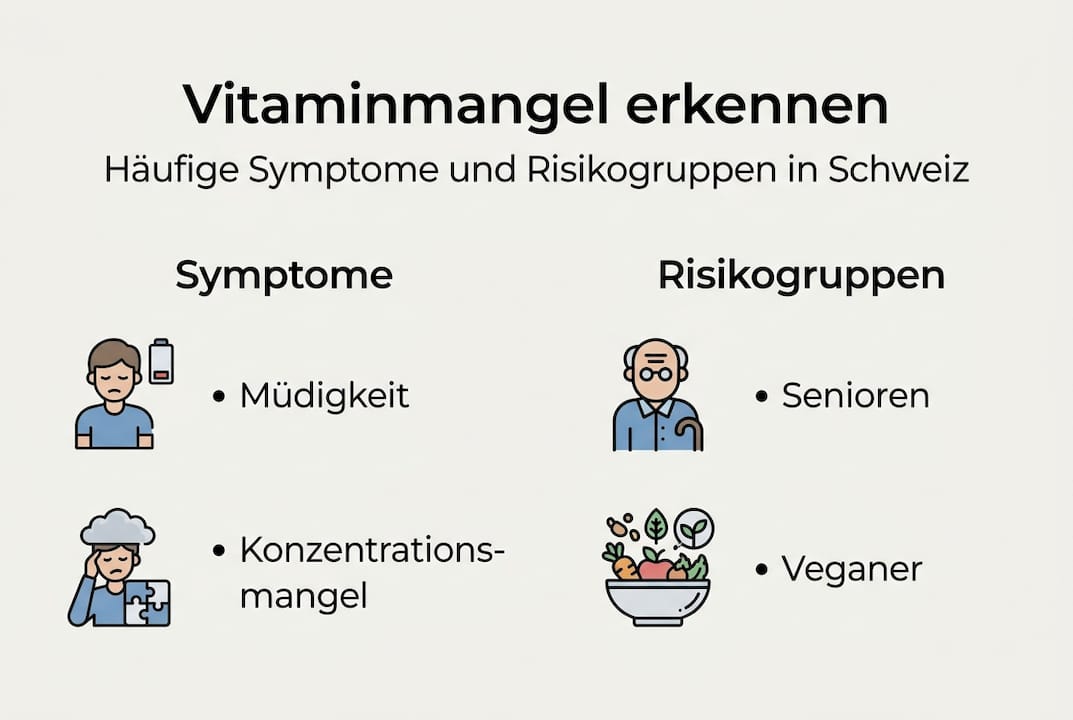
- Vitamin deficiency often manifests as fatigue, hair loss, and difficulty concentrating.
- Regular blood tests and food diaries help detect deficiencies early.
- Individual measures such as sunlight, targeted nutrition, and supplementation are crucial.
Persistent fatigue, difficulty concentrating, hair loss: Many people in Switzerland experience these symptoms but look for the cause in the wrong place. Vitamin deficiency is a frequently overlooked health factor that develops gradually and is easily mistaken for stress or lack of sleep in everyday life. Those who pay attention early can take targeted action before serious consequences arise. This guide shows you which warning signs you should know, which deficiencies are most common in Switzerland, how testing can provide clarity, and which individual strategies really help.
Table of contents
- Recognize the symptoms and warning signs of a vitamin deficiency early
- The most common vitamin deficiencies in Switzerland and risk groups
- Self-checks and medical diagnostics: How to gain clarity
- Individual strategies: Preventing and addressing vitamin deficiencies in a targeted way
- Why standard advice about vitamin deficiencies often leads people astray
- Next steps: Take individual action now and strengthen your health
- Frequently asked questions about recognizing vitamin deficiencies
Key findings
| Point | Details |
|---|---|
| Recognize early symptoms | Fatigue, difficulty concentrating, and susceptibility to infections may indicate a vitamin deficiency. |
| Keep high-risk groups in mind | Vegans, older people, and pregnant women are particularly susceptible to vitamin D and B12 deficiencies. |
| Testing provides clarity | Regular blood tests help determine individually appropriate measures. |
| Nutrition first | A balanced diet remains the most important protection against deficiency symptoms. |
| Apply individual strategies | Personal observation and precise action support a sustainable supply of essential nutrients. |
Recognize the symptoms and warning signs of a vitamin deficiency early
The body sends signals long before a deficiency becomes clearly visible in blood tests. The problem is that these signals are nonspecific. Fatigue has many causes, and brittle nails may also be due to dryness. That is precisely why vitamin deficiencies are so often detected late.
Typical warning signs to watch for:
- Persistent fatigue despite getting enough sleep
- Difficulty concentrating and mental exhaustion
- Increased susceptibility to infections, especially in winter
- Hair loss or dull, brittle hair
- Brittle nails and dry, flaky skin
- Tingling or numbness in the hands and feet
- Low mood without an identifiable trigger
These vitamin deficiency symptoms can occur individually or in combination. The duration is decisive: Anyone who has suffered from several of these complaints for three weeks or longer should stop waiting for improvement and take action.
The difference between short-term complaints and genuine deficiency symptoms often lies in the pattern. A stressful month makes you tired. But if the fatigue persists even after the situation has eased, that is an indication of something structural. The same applies to hair loss: seasonal hair loss in autumn is normal, but persistent hair loss over several months is not.
A common everyday mistake is to immediately reach for multivitamin supplements without knowing what they are actually lacking. This is not only inefficient but can even lead to excessive intake of fat-soluble vitamins such as vitamins A or D.
Important: Symptoms alone are not enough for a diagnosis. They are an indication, not proof. Only a blood test provides certainty.
A practical tool that many people underestimate is a food diary. Anyone who records what they eat for a week quickly identifies gaps: little fish, hardly any dairy products, no legumes. These patterns help with the conversation with your doctor and make identifying nutrient deficiencies more targeted.
Pro tip: Keep a simple food diary on paper or in an app for seven days. Also note how you feel each day: energy, concentration, and sleep quality. This record is worth its weight in gold at your next doctor's appointment.
The most common vitamin deficiencies in Switzerland and risk groups
Not every deficiency is equally common. In Switzerland, there are two clear front-runners that research and medical practice repeatedly confirm.
Vitamin D and B12 deficiencies affect a significant proportion of the population: up to 85% of people are deficient in vitamin D in winter, while vitamin B12 deficiency affects 21 to 41% of adults. These figures are not a marginal detail—they are a call for attention.
| Vitamin | Prevalence in Switzerland | Typical symptoms | Main risk groups |
|---|---|---|---|
| Vitamin D | 34 to 85% (winter) | Fatigue, bone pain, infections | Older people, little sun exposure, dark skin |
| Vitamin B12 | 21 to 41% | Fatigue, tingling, memory problems | Vegans, vegetarians, people over 60 |
| Folate (B9) | Especially women | Fatigue, anemia | Pregnant women, women of childbearing age |
| Iron | Common among women | Pallor, hair loss, dizziness | Menstruating women, pregnant women |
| Iodine | Regional differences | Thyroid problems, poor concentration | General population, pregnant women |
According to current data, the following groups are particularly at risk:
- Vegans and vegetarians: Vitamin B12 is found almost exclusively in animal products. Those who avoid these products must take supplements or have their levels tested regularly.
- People over 60: The absorption of B12 from food decreases with age, while older people also spend less time outdoors.
- Pregnant and breastfeeding women: The need for folate, iron, iodine, and vitamin D increases significantly.
- People with malabsorption: Those with celiac disease, Crohn’s disease, or a history of stomach surgery absorb nutrients less effectively.
- People with limited sun exposure: Office work, shift work, or living in more northerly regions of Switzerland significantly increases the risk of vitamin D deficiency.
A vitamin D deficiency test is therefore a sensible routine check for many people in Switzerland, especially after winter. Those who belong to a risk group should also consider detecting vitamin B12 deficiency as a regular part of their preventive healthcare. The combination of B12 and iron deficiency symptoms in particular is often confused in everyday life because both deficiencies cause similar symptoms of fatigue.
Routine checks do not have to be a complicated affair. In most cases, an annual check of the most important values, tailored to your personal circumstances, is sufficient.

Self-checks and medical diagnostics: How to gain clarity
If you notice symptoms or belong to a risk group, the question arises: How can I gain certainty? There are various ways, and each has its justification.
The menuCH study shows that 45% of children in Switzerland have nutrient deficiencies and that women are particularly often undersupplied with vitamin D, folate, calcium, iodine, and iron. These figures make one thing clear: vitamin deficiency is not a marginal issue.
Comparison of testing options:
| Method | Advantages | Limitations |
|---|---|---|
| Self-check at home (blood test kit) | Convenient, fast, discreet | No consultation with a doctor |
| General practitioner / blood draw | Complete picture, consultation | Waiting time, cost |
| Direct laboratory test | Precise, broad panel | Interpretation required |
| Self-monitoring of symptoms | No effort | Unreliable on its own |
This is what a sensible diagnostic process looks like:
- Document symptoms: Record their duration, frequency, and intensity.
- Create a dietary log: Write down everything you eat for seven days.
- Check whether you belong to a risk group: Do you belong to one of the groups mentioned?
- Choose a doctor or home test: If you have multiple symptoms or belong to a risk group, go directly to a doctor or use a certified home test.
- Interpret laboratory values: Know the reference ranges and discuss them with your doctor.
The following values are particularly relevant when visiting the doctor: 25-OH vitamin D (the storage value in the blood), vitamin B12, ferritin (iron stores), folate, TSH (thyroid), and a complete blood count. If you want to test for nutrient deficiencies specifically, you can start with a home test and then discuss the results with your doctor.
Important: A single laboratory value says little without context. Symptoms, diet, and lifestyle should always be considered together.
Pro tip: Don't go to the doctor fasting without asking first. Fasting is mandatory for certain tests, such as iron or blood sugar, but not for others. A quick question beforehand can save you a second appointment. If you want to address your symptoms specifically, our guide to addressing symptoms specifically offers practical guidance.
Individual strategies: Preventing and addressing vitamin deficiencies in a targeted way
Knowing your own status is the first step. The second is a strategy that fits your life, not an average person from a study.
Prevention measures that really work in everyday life in Switzerland:
- Daily sun exposure: 15 to 30 minutes of midday sun on your arms and face from April to October is enough for the body's own vitamin D production. In winter, this is hardly possible in Switzerland.
- Adjust your diet: Fatty fish (salmon, mackerel) twice a week, legumes for folate, and dairy products or fortified plant milk for calcium and B12.
- Use fortified foods: Many plant-based milk alternatives and breakfast cereals are fortified with B12, vitamin D, and calcium. This is not a substitute for a good diet, but it is a useful supplement.
- Use supplements selectively: Not as insurance, but in response to a proven deficiency or a clear risk situation.
- Schedule regular checkups: For at-risk groups, an annual vitamin D test in winter is considered advisable; B12 screening is also advisable for vegans and older people.
An often-overlooked aspect: Stress increases the body’s use of certain nutrients, especially magnesium and B vitamins. People under chronic stress may have a higher requirement, even without dietary deficiencies.
Pro tip: Always take your vitamin D with a meal containing fat. Vitamin D is fat-soluble and is barely absorbed without fat. This simple trick can double its effectiveness in some cases.
For a structured overview of possible mineral deficiency symptoms, it is worth looking at the specific signs, which differ from those of classic vitamin deficiencies. Anyone who wants to nourish their body well in the long term should not think in terms of individual supplements, but rather of an overall picture comprising diet, lifestyle, and targeted monitoring.
Why standard advice about vitamin deficiencies often leads people astray
There is an uncomfortable truth in the field of dietary supplements: Many recommendations come from companies that sell supplements. That does not mean these products are bad. It means the recommendations are rarely neutral.
Official health authorities such as the Federal Food Safety and Veterinary Office clearly emphasize that supplements are only useful in cases of a proven deficiency or for specific risk groups. Nevertheless, advertising and social media create the impression that everyone needs a dozen capsules every day.
The real problem with standard advice is its blanket nature. “Take vitamin D daily” sounds simple, but it ignores the fact that someone with 25 ng/ml in their blood needs a different dose than someone with 15 ng/ml. And someone who works outdoors every day may not need any at all in summer.
At mybody®, we see every day how different individual test results can be. Two people with identical symptoms may have completely different causes. Ignoring this and taking supplements indiscriminately does not solve the problem; it merely masks it. A nutrient deficiency guide is not a substitute for a diagnosis, but it sharpens your focus on what really matters: your individual profile, not the average.
Next steps: Take individual action now and strengthen your health
You now have the knowledge to recognize vitamin deficiencies, get tested, and take targeted action. The next step does not have to be a big one. A simple home test gives you clarity about your most important values within a few days, conveniently from home and without waiting for a doctor's appointment.
At mybody®x, you will find ISO-certified blood and nutrient tests specifically designed to address the most common deficiencies in Switzerland. The results come with personalized recommendations tailored to your values, not to an average person. Knowing where you stand allows you to address nutrient deficiencies specifically instead of groping in the dark. More than 11,300 satisfied customers and a rating of 4.77 stars speak for themselves.
Frequently asked questions about recognizing vitamin deficiencies
Which blood values should I have checked for vitamin deficiencies?
The most important values are vitamin D and B12, as these are the most commonly deficient in Switzerland. If known risk factors are present, expanded screening including ferritin, folate, and iodine is recommended.
How often should I get tested for vitamin deficiencies?
For at-risk groups, an annual vitamin D test in winter is advisable; vitamin B12 should also be checked regularly in vegans and people over 60.
Can I recognize a vitamin deficiency myself?
You can observe many warning signs yourself, such as fatigue and difficulty concentrating, but only a blood test can provide a reliable diagnosis.
Are supplements always necessary to prevent vitamin deficiencies?
No. Official recommendations put nutrition first; supplements are useful in cases of confirmed deficiency or a clearly increased need, not as a blanket preventive measure.
Recommendation
- Recognizing vitamin B12 deficiency symptoms and taking the right action – mybody®x
- Recognizing nutrient deficiency symptoms and addressing them effectively – mybody®x
- Iron and vitamin B12 deficiency symptoms: recognize them & take action – mybody®x
- Vitamin D deficiency: 7 signs & why a test is important now – mybody®x
- Top vitamins for male executives to boost vitality in 2026



Share now:
Food Intolerance Test 2026: Your Guide to Greater Well-Being
Allergic rash: Find the causes & take the right action