

Optimal nutrient intake: Your step-by-step guide
TL;DR:
- Up to 85 percent of the Swiss population suffers from vitamin D deficiency in winter.
- Individual nutrient assessment through blood tests is essential for targeted nutrition and supplementation.
- Long-term success requires a combination of a balanced diet, monitoring blood values, and mindful everyday habits.
Up to 85% of the Swiss population has a vitamin D deficiency in winter. Nevertheless, many people think their diet is good enough. The problem is that nutrient deficiencies often do not show immediately. Fatigue, concentration problems, or a weakened immune system can be early signs that are easily overlooked. The question is not only whether you eat enough, but whether you are getting the right nutrients in the right amounts. This guide shows you step by step how to identify your individual needs, take targeted action, and optimize your nutrient intake over the long term.
Table of contents
- Understanding the fundamentals of nutrient intake in Switzerland
- Diagnosis: How to determine your individual nutrient requirements
- Measures: Implementing optimal, personalized nutrient intake in everyday life
- Monitoring & optimization: Measuring the success of your nutrient strategy
- Perspective: What really matters in personalized nutrient optimization
- Your next step toward optimal nutrient intake
- Frequently asked questions about optimal nutrient intake
Key findings
| Point | Details |
|---|---|
| Foundation: Food pyramid | The Swiss food pyramid is the evidence-based foundation for your nutrient intake. |
| Individual diagnosis is crucial | Blood tests reliably identify deficiencies; self-tests and apps are no substitute for medical monitoring. |
| Personalization with moderation | DNA/microbiome tests provide useful indications, but optimal results come from combining nutrition, blood values, and lifestyle. |
| Use supplements strategically | Use supplements only on a doctor's recommendation and when a need has been confirmed. |
Understanding the fundamentals of nutrient intake in Switzerland
Now that you know how significant the problem of nutrient deficiencies is, it is worth taking a look at the scientific recommendations. The Swiss food pyramid provides the official basis for a balanced diet in Switzerland. It offers clear guidance on which food groups should be on your plate each day and in what quantities.
The foundation consists of water, vegetables, fruits, and whole-grain products. Next come dairy products, legumes, fish, meat, and eggs. Oils and nuts are also included, but in smaller quantities. Sweets, salty snacks, and alcohol are at the very top, meaning they should be consumed rarely.
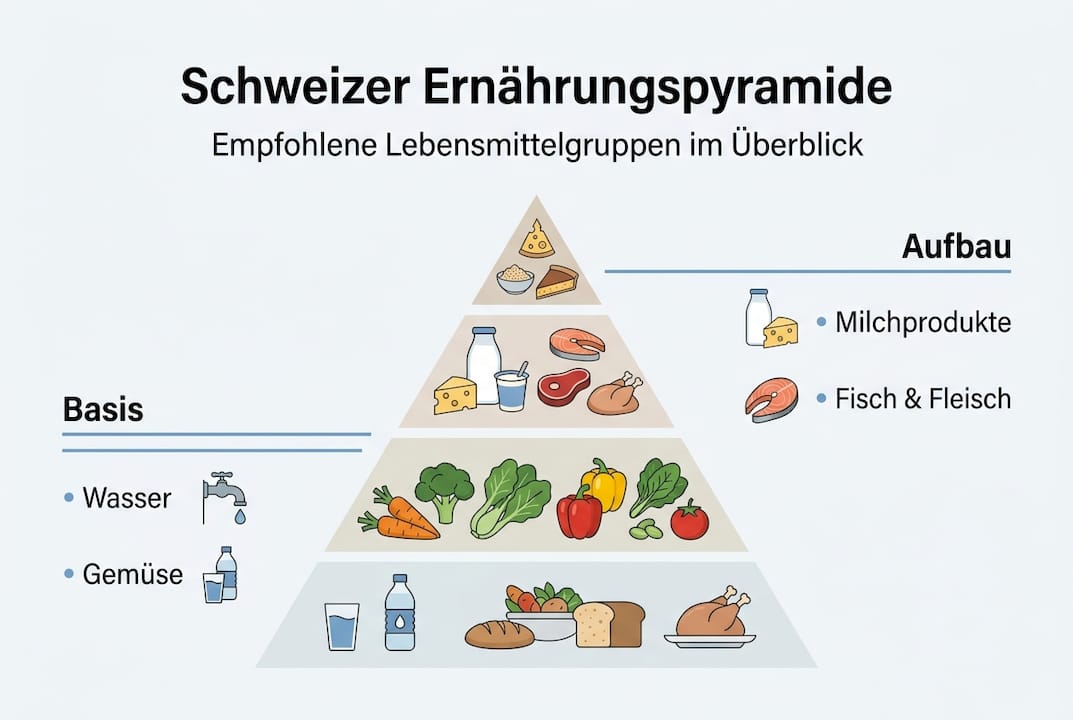
Yet there is a wide gap between what is recommended and what is actually eaten. menuCH data show that too few vegetables and fruits are consumed. At the same time, meat consumption remains too high in many households, while legumes such as lentils, chickpeas, and beans rarely make it onto the table.
An overview of common nutrient deficiencies in Switzerland:
| Nutrient | Risk group | Possible consequences |
|---|---|---|
| Vitamin D | Older people, office workers, winter months | Weak bones, weakened immune system |
| Omega-3 fatty acids | People who eat little fish | Cardiovascular risk |
| Folate | Women of childbearing age | Neural tube defects in the child |
| Iron | Women, vegans | Fatigue, anemia |
| Iodine | People living inland | Thyroid problems |
The most common everyday mistakes that lead to deficiencies:
- Too little variety on the plate, often the same foods
- Highly processed products instead of whole-food alternatives
- Too little green leafy vegetables as a source of folate and magnesium
- Little or no fish, which provides omega-3 fatty acids
- Too much red meat at the expense of plant-based protein sources
Another factor is often underestimated: bioavailability. Not every nutrient on your plate is fully absorbed by the body. Iron from plant sources, for example, is absorbed less efficiently than iron from meat. Vitamin C improves absorption, while coffee or tea consumed directly with a meal can inhibit it. Anyone pursuing personalized nutrition must therefore consider not only the quantity but also the combination of foods.
Knowing these fundamentals is the first step. But general knowledge is not enough when your body has individual characteristics.
Diagnosis: How to determine your individual nutrient requirements
The basic knowledge is enough. Next, you assess what your body actually needs. Two people can have the same diet and still have completely different nutritional statuses. Age, sex, activity level, gut health, and genetic factors all play a role.
The most reliable starting point is a medical blood analysis. It provides specific measurements for micronutrients such as vitamin D, ferritin, folate, vitamin B12, and zinc. These values show you in black and white where a deficiency exists and where it does not. Blood tests are evidence-based for identifying deficiencies, while DNA and microbiome tests can provide only general recommendations.

What can DNA and microbiome tests tell us? They provide indications of genetic predispositions—for example, whether you tolerate lactose less well or metabolize certain fatty acids less efficiently. This is interesting and can complement your nutrition strategy. But they do not replace laboratory results. They show tendencies, not diagnoses.
Comparison of diagnostic methods:
| Method | Strengths | Limitations |
|---|---|---|
| Blood analysis | Specific measurements, evidence-based | Snapshot, not a long-term picture |
| DNA test | Genetic predispositions identifiable | No current deficiencies measurable |
| Microbiome analysis | Gut environment visible | Interpretation not yet very standardized |
| Symptom diary | Practical for everyday life, simple | Subjective, no laboratory values |
Recommended steps for determining individual needs:
- Document symptoms: Fatigue, hair loss, and mood swings can be early indications.
- Talk to a doctor: Have laboratory tests performed for the most important micronutrients.
- Keep a food diary: Write down what you eat for three to seven days to identify patterns.
- Consider at-risk groups: Pregnant women, vegans, older adults, and competitive athletes have increased needs.
- Use supplementary tests sensibly: DNA-based nutrition or DNA test for nutrition as additional guidance, not as the sole basis.
Pro tip: At your next doctor's appointment, have your vitamin D, ferritin, and vitamin B12 levels tested specifically. These three values are often not automatically measured during routine checkups, but they are crucial for energy production and immune function.
Diagnosis is not a one-time process. Those who know their needs can take targeted action. And that is exactly what the next step is about.
Measures: Implementing optimal, personalized nutrient intake in everyday life
You now know your specific needs. Now it is time to put them into practice. That sounds easier than it is, because there is often a wide gap between knowledge and habits.
The most important principle: food comes before supplements. A balanced diet usually covers all nutritional needs, except for vitamin D. Eating whole, varied, regional foods provides the best foundation. Supplements are additions, not substitutes.
Practical steps for implementation:
- Shop seasonally and locally: Fresh regional vegetables contain more vitamins than produce transported over long distances. In autumn: pumpkin, carrots, cabbage. In spring: spinach, asparagus, herbs.
- Introduce meal prep: Anyone who prepares meals two to three times a week saves time and is less likely to reach for processed products.
- Incorporate legumes: Lentils, chickpeas, and beans provide iron, folic acid, and plant-based protein. Simply add them to soups, salads, or serve them as a side dish.
- Include oily fish: Salmon, mackerel, or herring twice a week provide sufficient omega-3s.
- Targeted vitamin D supplementation: In winter, supplementation is sensible for most people in Switzerland. 800 to 2,000 IU daily are considered safe and effective.
Useful everyday habits:
- Have nuts as a snack instead of chips or sweets
- Eat green leafy vegetables daily in smoothies or salads
- Choose whole-grain bread instead of white bread for more fiber and B vitamins
- Combine legumes with vitamin C-rich foods for better iron absorption
- Drink coffee or tea at least 30 minutes after iron-rich meals
Pro tip: Create a simple weekly table with the most important food groups. Check off what you have eaten each day. It takes two minutes and clearly shows you where gaps arise after a week.
Knowing your genetic characteristics can help you take an even more targeted approach. A genetic nutrition test, for example, can show whether you process folic acid less efficiently or are particularly sensitive to saturated fatty acids. This is not essential, but it is a helpful addition for anyone who wants to refine their strategy.
Monitoring & optimization: Measuring the success of your nutrient strategy
Dietary changes work. But how do you keep track of your progress? Without monitoring, you do not know whether your measures are working or whether you need to make adjustments.
The structured approach to monitoring your progress:
- Check lab values regularly: Have a blood test every six to twelve months, particularly for vitamin D, ferritin, and B12.
- Use a nutrition app: Tools such as Cronometer or MyFitnessPal show how well your diet covers your nutrient needs.
- Monitor your body’s signals: Better sleep, more energy, and a more stable mood are good signs. Persistent fatigue or hair loss are warning signs.
- Adjust supplement dosages: What makes sense in winter may be too much in summer. Adjust dosages according to the season and lab results.
“Dietary supplements are not a free pass. Taking too much of a good thing can lead to overdoses, which can be just as harmful as a deficiency.”
30% of Swiss people take dietary supplements. However, adjustments should be made individually, and overdosing should be avoided. Fat-soluble vitamins such as A, D, E, and K in particular can accumulate in the body and be harmful if consumed in excessively high amounts over a prolonged period.
What helps with self-monitoring:
- Keep a simple health diary: briefly note your energy, sleep, and mood each day
- Compare laboratory values over time, not just individual readings
- Discuss changes with your doctor
- Read other people's testimonials, such as a DNA test experience report, to develop realistic expectations
Long-term motivation does not come from perfection, but from progress. People who see that their vitamin D level is within the normal range after three months of supplementation stay committed. Making small successes visible is the strongest motivator.
Perspective: What really matters in personalized nutrient optimization
Equipped with all the tools and methods, it is worth taking a critical look at the reality of personalization. The market for personalized nutrition is growing rapidly. And so are the promises.
The uncomfortable truth: No test in the world can replace a good basic diet. Personalization works best through a combination of blood values, lifestyle, and a balanced basic diet—not through DNA or microbiome tests alone. That does not mean these tests are worthless. But they are tools, not miracle cures.
What really works is consistency. People who monitor their bodies over months, take laboratory results seriously, and gradually adjust their diet achieve sustainable results. Those who try the next trendy supplement every six months, on the other hand, lose time and money.
DNA and microbiome tests can help identify blind spots, such as genetic variants that affect folate processing. But they are a starting point, not the conclusion. Anyone who reads experiences with DNA tests will find that the best results arise when test results are combined with medical guidance and genuine behavioral changes. Personalized nutrition is a process. Not a one-time experiment.
Your next step toward optimal nutrient intake
You now know how nutrient deficiencies arise, how to determine your needs, and how to take targeted action. The next step is up to you. mybody® Lab GmbH offers ISO-certified analyses of blood, saliva, and stool that you can conveniently perform at home. Whether a nutrient check, microbiome analysis, or DNA metabolism test: the results provide you with specific, scientifically validated recommendations for your diet and lifestyle. With more than 11,300 satisfied customers and a rating of 4.77 stars, mybody® is a reliable partner for anyone who wants to manage their health independently. Start your personal check-up now at mybody-x.com.
Frequently asked questions about optimal nutrient intake
Which nutrient deficiency is most common in Switzerland?
Deficiencies most commonly occur in vitamin D, omega-3 fatty acids, folic acid, and iron. Vitamin D in particular is an issue for almost the entire population during the winter months.
How can I find out whether I have a nutrient deficiency?
Reliable diagnoses are made through medical blood tests, not apps or self-tests. Blood tests are evidence-based and provide specific measurements that allow you to take targeted action.
Should I simply take dietary supplements as a precaution?
Targeted use after laboratory analysis is sensible, whereas blanket preventive testing is not. 30% of Swiss people take supplements, but overdosing can be just as problematic as a deficiency.
How relevant are DNA or microbiome tests for my diet?
They can provide starting points and reveal genetic tendencies, but are currently not recognized as the sole basis for complete personalization. Commercial DNA and microbiome tests are viewed critically by experts and should always be used in combination with medical laboratory values.
Recommendation
- 7 scientifically sound principles for changing your diet – mybody®x
- Test for nutrient deficiencies and address them specifically – mybody®x
- Test for nutrient deficiencies: Recognize symptoms and address deficiencies specifically – mybody®x
- Lose weight with nutrition: Your path to a comfortable weight starts with T – mybody®x



Share now:
How much does an allergy test cost? Costs & procedure in 2026
Inflammation markers in your blood: Your guide to clarity