

Nutrient Deficiency Test: Your Path to More Energy and Clarity
A nutrient deficiency test finally provides clarity. Instead of guessing whether your body is lacking important vitamins or minerals, you'll receive fast and precise answers. A blood test from mybody-x delivers facts directly from your blood – the perfect basis for taking targeted action for your health and well-being.
Recognize your body's signals of nutrient deficiency
Do you often feel exhausted for no apparent reason? Do you have trouble concentrating or notice that your hair is thinning? These aren't just your imagination, but often tangible signals your body is giving you that something is wrong.
Your body is a clever system. If it's lacking something, it sends you exactly these kinds of signals. They're essentially little cries for help, indicating that the invisible helpers – your micronutrients – aren't enough to keep all processes running smoothly. Vitamins and minerals are the fuel for energy, a strong immune system, and mental clarity.
When small causes have a big effect
Perhaps you're familiar with this: You actually get enough sleep, but fatigue clings to you like chewing gum. Or your nails keep breaking, no matter how lovingly you care for them. We often blame such everyday ailments on stress, but often the real cause is a nutrient deficiency.
Let's look at a few typical examples:
- Constant fatigue and pale skin can be warning signs of low iron or vitamin B12 levels. Without enough iron, your blood can't transport sufficient oxygen – and that makes you feel tired.
- Brittle nails and hair loss are classic signs of a biotin (vitamin B7) or zinc deficiency. Both are essential for the formation of keratin, the building block for healthy hair and nails.
- Frequent infections or poor wound healing often indicate a deficiency in vitamin C or zinc. Both are crucial for a functioning immune system.
Your body is constantly communicating with you. Symptoms like difficulty concentrating, mood swings, or dry skin aren't simply "normal"—they're messages you should take seriously.
Interpreting these signals correctly is the first important step towards taking control of your health again. Instead of just fighting symptoms, you tackle the problem at its root.
A nutrient deficiency test is your most important tool. It translates your body's signals into clear, understandable data and shows you in black and white where the deficiencies lie. If you want to delve even deeper into the world of warning signs, you'll find many more examples in our article on nutrient deficiency symptoms .
Ultimately, this knowledge gives you back control. It empowers you to proactively care for your well-being and give your body exactly what it needs to get back to peak performance.
The most common nutrient deficiencies in Germany

Nutrient deficiencies are no longer a fringe phenomenon affecting only a few. In Germany, they have become a widespread problem, affecting all age groups and lifestyles – often without us even realizing it. Although we live in abundance, there are often significant gaps in our supply of essential micronutrients.
Current nutritional reports paint a fairly clear picture: a large portion of the population is simply deficient in certain nutrients. These aren't exotic substances, but rather the fundamental building blocks of our health. Vitamin D, iron, folic acid, and iodine are at the forefront of this list. These deficiencies often develop gradually and can have a lasting negative impact on our well-being.
Modern lifestyle and its consequences
The reasons for this are manifold and go far beyond an unbalanced diet. Our modern daily lives often take their toll, depleting our nutrient stores faster than we can replenish them.
- Job stress: Chronic stress is a real nutrient robber. Under constant tension, your body uses significantly more magnesium, B vitamins, and vitamin C to keep stress hormones in check.
- Special dietary requirements: A vegan or vegetarian diet can be very healthy, but carries risks of typical deficiencies such as vitamin B12 , iron or iodine if you don't take specific countermeasures.
- Chronic illnesses: Persistent health problems can disrupt the absorption or utilization of nutrients in the body. This further increases the need for nutrients.
Even a seemingly healthy and balanced diet is no guarantee of optimal nutrition. Long transport routes, storage, and food preparation can reduce nutrient content. So, the apple on your plate might not be as nutrient-rich as you think. A nutrient deficiency test is therefore often the only way to finally get certainty.
Numbers that speak volumes
The data impressively confirms this. A comprehensive study on nutrient supply in Germany shows that approximately one-third of the population suffers from a vitamin D deficiency. At the same time, around 30% of adults are not optimally supplied with iodine – a mineral that is absolutely essential for our thyroid function. Anyone wanting to know the details can read the 13th DGE Nutrition Report .
Every person is unique and has individual nutritional needs. What is sufficient for one person may be far too little for another.
These facts make it clear that nutritional deficiencies are a widespread problem that can affect any of us. It's not about eating perfectly, but about knowing your own nutritional status and taking targeted action. If you'd like to delve deeper into the subject, you can learn more about vitamin and mineral deficiencies in Germany in our follow-up article. Taking a conscious look at your own nutritional intake is the first and most important step towards more energy and well-being.
This is how a nutrient deficiency test from mybody-x provides clarity.
Do you often feel tired or have trouble concentrating? If such symptoms point to a deficiency, guesswork is the wrong approach. A blood test is the only sensible step to turn vague assumptions into concrete facts. It gives you a precise, data-driven foundation with which you can make truly informed decisions about your health.
And the best part: The process is simpler than ever before. A home nutrient deficiency test from mybody-x saves you long waiting times for a doctor's appointment. Instead, you simply take matters into your own hands – conveniently, quickly, and completely discreetly.
The easy way to precise results
The idea of having blood drawn puts many people off. But don't worry, modern home tests make it easy. With a mybody-x test, you only need a few drops of blood from your fingertip. A small prick that barely hurts and is over in just a few minutes.
The whole process is this uncomplicated:
- Easy sample collection: With the mybody-x test kit, you can easily collect the sample at home. Simple instructions guide you through each step.
- Secure shipping: Pack your sample securely in the enclosed return envelope and send it free of charge to our certified partner laboratory in Germany.
- Professional analysis: In the laboratory, your blood is analyzed according to the same high quality standards that apply in doctors' offices.
- Easy-to-understand results report: You'll receive your personal results report digitally within just a few days. No cryptic lab values, but clear graphs and easy-to-understand explanations.
This simple process allows you to gain an accurate insight into your nutrient supply.
The following infographic shows you at a glance the most important differences between a home test and the classic laboratory test at the doctor's office – especially in terms of time and cost.
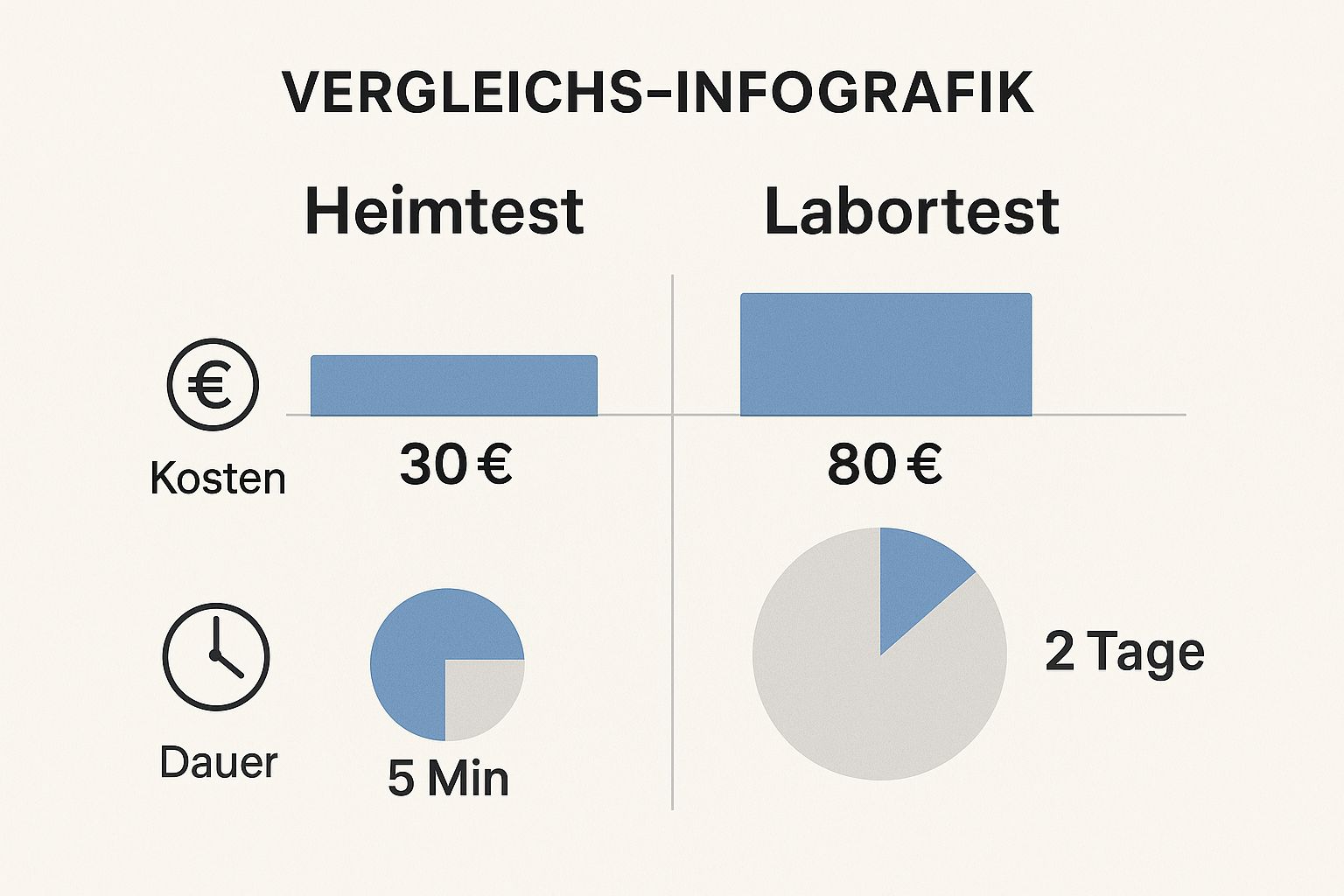
You can see immediately: A home test is not only significantly cheaper, but also saves a lot of time. It can be perfectly integrated into modern everyday life.
Act strategically instead of blindly adding to existing content
The biggest advantage of a nutrient deficiency test is obvious: you put an end to the "one-size-fits-all" approach. Far too many people resort to dietary supplements on a hunch, without knowing their actual needs. This not only costs money, but in the worst case, can even be risky. An overdose, especially of the fat-soluble vitamins A, D, E, and K, can harm your health.
A clear test result gives you control. You can then specifically supplement only what your body truly needs. This individualized approach is the smarter, safer, and ultimately more effective way to achieve greater well-being.
To illustrate how widespread nutrient deficiencies are, a look at current studies is enough. According to the Robert Koch Institute and the National Nutrition Survey II, a shocking 82% of men and 91% of women do not reach the recommended daily intake of vitamin D. The situation is similarly dramatic for vitamin B9 (folate), where 79% of men and 86% of women are deficient.
A test therefore gives you the power to actively manage your health. You invest your money specifically in the products you really need and save yourself the expense of unnecessary preparations.
If you want to know exactly how to test for a nutrient deficiency and make the most of the results, it's best to continue reading our comprehensive guide. This will ensure that every step you take is based on a solid foundation.
Understanding your test result and taking the right action

The moment has arrived: You're holding your mybody-x results in your hands. But what do you do now with all those numbers and graphs? Don't worry, this section is your personal guide to understanding the results of your nutrient deficiency test and drawing the right conclusions from them immediately.
In your report, you'll find a reference range for each measured value. This clearly shows you which blood concentration is considered normal and healthy. Your personal value is then graphically displayed next to it, so you can see at a glance: is everything within the normal range, borderline, or is there a clear deficiency?
From knowledge to action: Your personal roadmap
Your results are far more than just data on paper. They are the starting point for targeted improvements to your health.
Let's consider a concrete example: Your nutrient deficiency test shows a low ferritin level. Ferritin is the storage protein for iron in your body. A low value here is a great early warning sign of iron deficiency – often long before your regular blood test raises any red flags.
Here's how you could take concrete countermeasures now:
- Adjust your diet: Consciously include more iron-rich foods on your plate. Red meat, lentils, chickpeas, but also spinach and pumpkin seeds are your best friends here.
- Cleverly boost absorption: Always combine plant-based iron sources with vitamin C – a glass of orange juice with your lentil dish or bell peppers with your spinach can improve absorption in the intestine many times over.
- Targeted replenishment: In cases of significant deficiency, a high-quality iron supplement is often the fastest way to replenish depleted stores.
This principle can be applied to every nutrient. The mybody-x analysis gives you the clarity you need to make such informed decisions, instead of continuing to grope in the dark.
A test result is not a judgment, but an opportunity. It gives you the unique chance to understand your body on a deeper level and to give it exactly what it needs.
Why a healthy diet alone is sometimes not enough
One might think that someone who eats a balanced diet can't suffer from deficiencies. Unfortunately, reality often paints a different picture. The National Nutrition Survey II revealed a fascinating paradox: although 66% of men and 51% of women in Germany are overweight, many of them simultaneously suffer from malnutrition. The problem isn't a lack of calories, but rather a lack of truly essential nutrients.
The reason is simple: an unbalanced diet. Vegetables are eaten far too infrequently, while men consume meat and sausages more often than average. You can find more interesting facts about the nutritional situation in Germany in this overview from the Federal Ministry of Food and Agriculture .
This gap between calorie intake and nutrient density is precisely what makes an individual nutrient deficiency test so valuable. It uncovers your personal deficiencies, which can creep in even with a seemingly healthy diet. With your mybody-x results, you're in control and can finally take targeted, effective steps to improve your well-being.
From knowledge to action: Your plan for a consistently good nutrient supply
A one-time test is a great start, but true well-being only comes with consistency. Once you understand your results and have taken initial steps, the crucial part begins: keeping your nutrient intake on track long-term. The goal is a lifestyle that prevents deficiencies from developing in the first place.
A nutrient-rich diet is of course essential. But don't worry, that doesn't mean you have to spend hours in the kitchen or deprive yourself of everything. It's about making smart everyday choices that work even with a busy schedule.
Small habits, big impact – here's how it works
The key is to see your meals as an opportunity to do something good for your body. Instead of counting calories, focus on the density of vitamins and minerals.
A simple starting point is to focus on seasonal and regional foods. A tomato that was allowed to ripen outdoors in the summer is packed with vitamins – quite unlike one that was harvested unripe in winter and transported halfway around the world.
- Cook gently: Steaming or briefly sautéing preserves nutrients, while long boiling in lots of water leaches them out. Did you know that broccoli can lose up to 50% of its vitamin C when boiled? Steaming retains almost all of it.
- Eat colorful food: Bring the rainbow to your plate! Each color in fruits and vegetables represents different valuable plant compounds. A colorful salad not only looks better, it also provides you with a much broader spectrum of nutrients.
- Don't forget healthy fats: High-quality oils like olive oil or flaxseed oil, as well as nuts and avocados, are more than just energy sources. Your body absolutely needs them to be able to absorb fat-soluble vitamins like vitamins D, E, K, and A.
Another factor that is often underestimated is your stress level. Prolonged stress is a real nutrient robber and can severely disrupt absorption in the gut.
Real progress is a marathon, not a sprint. Your body is constantly changing, and your nutrition should adapt to it. A test is like a snapshot – it helps you adjust your course and stay on track.
Make success visible and stay motivated
But how do you know that your new habits are actually working? This is where the circle closes, and another nutrient deficiency test becomes your most important tool. It's your personal control instrument.
After changing your diet or using targeted supplements, a follow-up test after about three to six months is ideal. This way you'll see in black and white whether your results have improved and your strategy is working.
This regular check-up gives you the assurance that you're receiving optimal care. It allows you to make targeted adjustments if your life changes – whether due to increased stress, a new diet, or altered daily demands. With this approach, you actively take control of your health, not just today, but also in the future.
Your most frequently asked questions about the nutrient deficiency test
We frequently receive questions about nutrient deficiency tests. That's great, because it shows you're thinking about it! To give you more confidence on your journey, we've compiled the most important answers for you here.
How reliable is a home test?
We hear this question often, and the answer is quite simple: A home test from mybody-x is very reliable . Your sample is analyzed in a certified German laboratory . These are the same laboratories used by doctors' offices – with the same high quality standards.
You'll receive medically valid results that give you a clear picture of your nutrient status. The only difference? You save yourself a trip to the doctor and can conveniently and discreetly collect the samples from home.
Which nutrients should I have tested?
It all depends on you, your symptoms, and your lifestyle. Do you often feel tired? Do you eat a purely plant-based diet? Do you exercise a lot? All of these things play a role. However, there are a few "classic" deficiencies that are particularly common and often make sense as a first screening step:
- Vitamin D: An absolute must, especially during the dark winter months from October to April. Here in our latitudes, a deficiency is more the rule than the exception.
- Vitamin B12: Essential for everyone who follows a vegan or vegetarian diet. This vitamin is found almost exclusively in animal products, so you should pay close attention to your intake.
- Iron (ferritin): Do you constantly feel tired and lacking in energy? Especially for women, athletes, and those experiencing persistent exhaustion, iron stores (ferritin) are a crucial factor.
- Magnesium: Are you often stressed or do you exercise regularly? Then your magnesium requirement could be increased – a typical candidate for a deficiency.
A test that covers several of these key values naturally gives you the best overview. With the nutrient tests from mybody-x, you can check precisely the values that are relevant to you.
Your test results won't just be a dry column of numbers. They're presented in an easy-to-understand way and include specific recommendations for action. In cases of mild deficiency, you can often achieve a lot simply by making targeted dietary changes.
However, it's also important to note: In cases of significant deviations, if you have pre-existing conditions, or if you feel genuinely ill, you should always discuss your results with your doctor. They are the right person to assess the situation medically.
Do you have more questions? Then take a look at our comprehensive FAQ page , where we have many more answers ready for you.
Are you ready to finally gain clarity and take control of your nutritional intake? With a blood test from mybody-x, the first step is easy. Discover the right test for you now at mybody-x.com and start your journey to more energy and well-being.



Share:
Magnesium deficiency symptoms: When your body sends you signals
Micronutrient analysis: Find out what your body is really lacking