

Recognizing Nutrient Deficiency: Your Step-by-Step Guide
TL;DR:
- Many nutrient deficiencies in Germany commonly involve vitamin D, iron, and vitamin B12. Persistent symptoms such as fatigue, concentration problems, and hair loss should be evaluated by a doctor, preferably through a blood test. A balanced diet should be the priority, while supplements should be used selectively and only after an accurate diagnosis.
You sleep eight hours and are still exhausted. You forget things you actually know. Your skin itches, or your hair is falling out more than usual. Many people attribute such complaints to stress or poor sleep. However, with a subclinical deficiency, the body often sends nonspecific warning signals that are difficult to interpret. This guide systematically explains which symptoms may indicate a nutrient deficiency, how to diagnose it safely, and which personalized recommendations can really help.
Table of contents
- Most common nutrient deficiencies and risk groups
- Typical symptoms and what they mean
- Step by step: How to reliably diagnose a nutrient deficiency
- Personalized recommendations for diet and supplementation
- Why Diet Is the Key—and When Supplements Really Make Sense
- Your next step: Individual advice and testing options
- Frequently asked questions about recognizing nutrient deficiencies
Key findings
| Point | Details |
|---|---|
| Nonspecific symptoms | Many symptoms of a nutrient deficiency, such as fatigue, are subtle and overlap with other complaints. |
| Objective diagnosis | The most reliable way to identify a deficiency is through blood tests for specific biomarkers. |
| Consider risk groups | Vegans, older adults, pregnant women, and people with chronic illnesses are particularly at risk. |
| Prioritize nutrition | A balanced diet is usually more effective and safer than taking supplements spontaneously. |
Most common nutrient deficiencies and risk groups
Not every nutrient deficiency is equally likely. In Germany, certain deficiencies occur far more often than others. Knowing your own risk group can help you pay closer attention to warning signs and respond earlier.
The most common deficiencies in Germany
According to data on nutrient intake in Germany, vitamin D, folate, iodine, iron, and vitamin B12 are among the most common deficiencies in adults. Vitamin D in particular is a widespread issue: Due to Germany's geographic location and the modern lifestyle involving a great deal of time indoors, the skin produces hardly enough vitamin D from sunlight during the winter months.
Iron deficiency mainly affects women of childbearing age because monthly blood loss increases their need. Iodine deficiency remains widespread despite iodized table salt because many people underestimate their iodine intake from processed foods. Vitamin B12 is a particular concern that we will examine separately.
| Nutrient | Commonly affected groups | Typical cause |
|---|---|---|
| Vitamin D | Older adults, office workers, people with dark skin | Little sunlight, lack of supplementation |
| Iron | Women (menstruation), vegans | Blood loss, low absorption from plant-based sources |
| Vitamin B12 | Vegans, older adults, people with stomach disorders | Lack of animal products, poor absorption |
| Iodine | Pregnant women, vegans | Low consumption of seafood and dairy products |
| Folic acid | Pregnant women, people who consume alcohol | Increased need, poor diet quality |
| Zinc | Older people, athletes | Increased consumption, unbalanced diet |
Risk groups and special circumstances
Certain life circumstances significantly increase the risk of nutrient deficiencies. Vegans, older people, pregnant women, and people with chronic illnesses are considered the main risk groups and should pay especially systematic attention to their nutrient intake.
Vegans have a structural problem with vitamin B12: This nutrient is found almost exclusively in animal products. Anyone who does not eat meat, dairy products, or eggs cannot obtain enough B12 from their diet and absolutely needs targeted supplementation. This is not an opinion but a medical consensus.
Older people face the problem of reduced absorption. As we age, the body absorbs nutrients less efficiently, even when the diet appears balanced on paper. Vitamin D, B12, and calcium are particularly critical here.
- Vegans: Vitamin B12, iron, zinc, omega-3, iodine, calcium
- Pregnant women: Folic acid, iron, iodine, vitamin D, omega-3
- Older people: Vitamin D, B12, calcium, magnesium
- Athletes with high training loads: Magnesium, iron, zinc, B vitamins
- People with irritable bowel syndrome or chronic inflammatory bowel disease: Almost all nutrients, especially iron and B12
- People who consume large amounts of alcohol: Thiamine (B1), folic acid, magnesium
Anyone who belongs to one of these groups should consider iron and B12 deficiency first and get tested regularly.
Typical symptoms and what they mean
The real difficulty with nutrient deficiency is not the lack of symptoms, but their abundance. Many complaints are so nonspecific that they could point to a dozen different causes. This makes self-assessment alone so difficult.

Symptoms that may indicate a nutrient deficiency
Persistent tiredness and exhaustion are among the most common signals. They may indicate iron deficiency, vitamin B12 deficiency, vitamin D deficiency, or magnesium deficiency. The problem is that the same symptoms can also result from lack of sleep, stress, thyroid problems, or simply a long workday.
Difficulty concentrating and memory problems are also typical signs. The brain relies on a continuous supply of B vitamins, iron, and omega-3 fatty acids. When these are lacking, it works noticeably more slowly.
- Hair loss and brittle nails: Possible indication of iron deficiency, biotin deficiency, or zinc deficiency
- Dry, flaky skin: May indicate vitamin A deficiency, zinc deficiency, or an omega-3 deficiency
- Tingling or numbness in the hands and feet: Classic sign of vitamin B12 deficiency (neuropathy)
- Frequent infections: May indicate vitamin D deficiency or zinc deficiency
- Muscle cramps and twitching: Often indicate magnesium or potassium deficiency
- Cracks at the corners of the mouth and a burning tongue: Classic signs of B2 or B12 deficiency
- Pale skin and mucous membranes: Strong indication of iron or B12 deficiency
The problem with this list is well known: Each of these symptoms can also have a completely different cause. Hair analyses and self-tests are considered unreliable for diagnosing nutrient deficiencies. Only a validated laboratory test from a blood sample provides truly reliable results.
When should you seek medical evaluation?
The simple answer: as soon as symptoms persist for more than two to three weeks without you recognizing another clear cause. A quick symptom test using a validated blood test is the safest first step.
You should pay particular attention to combinations of symptoms. Anyone who is simultaneously tired, suffers from concentration problems, and notices hair loss has a significantly higher probability of an actual deficiency than someone who is only occasionally exhausted. If the topic of nutrient deficiency and fatigue concerns you, it is worth taking a closer look.
Pro tip: Keep a brief symptom diary for a week before speaking with a doctor. Note the time, intensity, and circumstances accompanying each symptom. This helps the doctor enormously in assessing whether a test is appropriate and saves you unnecessary waiting time.
Also important: addressing symptoms specifically only works if you know what you are addressing. Anyone who takes various supplements just in case risks nothing at best and an overdose of certain fat-soluble vitamins, such as vitamin A or vitamin D, at worst.
Step by step: How to reliably diagnose a nutrient deficiency
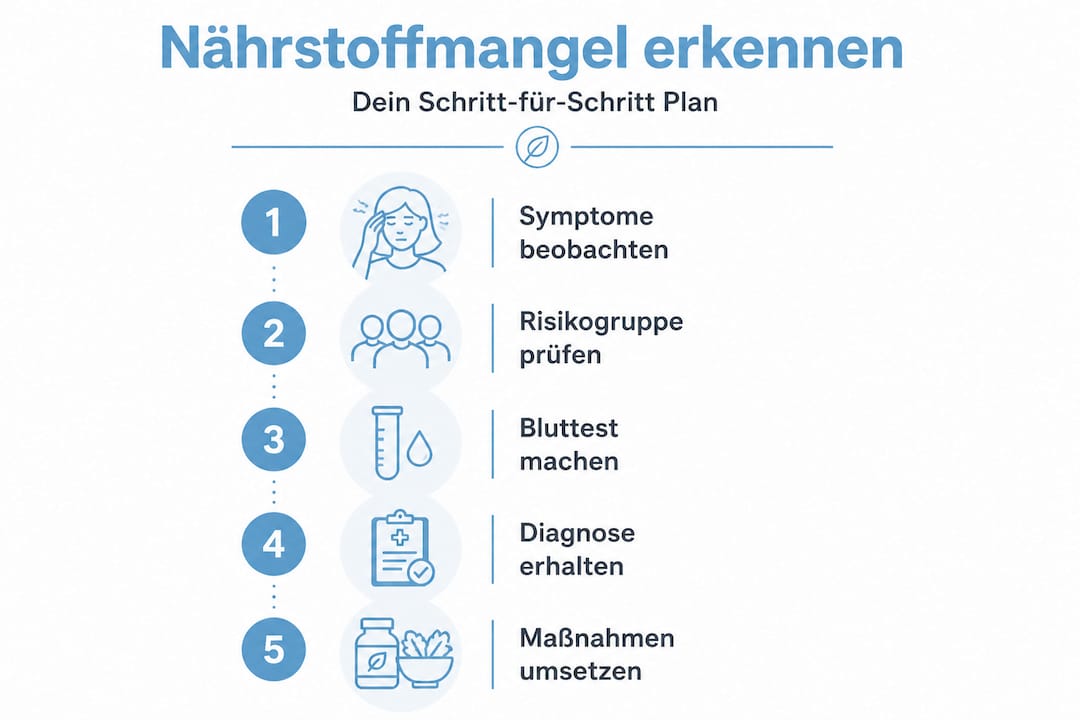
Now it gets specific. The following step-by-step guide gives you a clear roadmap from the initial observations to a confirmed diagnosis.
The four steps to a reliable diagnosis
-
Keep a symptom diary: Note all symptoms from the past four to six weeks. How often? How intense? At what time of day? What foods did you eat? The diary does not need to be medically precise, but it should be honest.
-
Keep a food diary: Record what you eat for seven days. Use a simple app or notebook. This will quickly show whether certain nutrient sources are completely missing from your diet. Anyone who never eats fish, consumes very few dairy products, and eats no meat has structurally increased risks.
-
Have a validated blood test performed: This is the crucial step. The primary method of diagnosis is a blood test for specific biomarkers. For a meaningful nutrient status check, at least the following values should be determined: 25-OH vitamin D (storage form), ferritin (iron stores), holotranscobalamin (active form of vitamin B12), magnesium, and a complete blood count including MCV and MCH.
-
Discuss the results with a doctor or qualified advisor: Laboratory values without context are of limited use. A ferritin level of 20 ng/ml is technically within the reference range of many laboratories, but it is already functionally too low for many people. An expert will interpret what the numbers mean for you personally.
The most important biomarkers at a glance
| Biomarker | What it measures | Why it is important |
|---|---|---|
| 25-OH vitamin D | Vitamin D storage status | More informative than direct vitamin D measurement in the blood |
| Ferritin | Iron stores | More sensitive than serum iron alone |
| Holotranscobalamin (HoloTC) | Active vitamin B12 | Early deficiency detectable before the blood count changes |
| Homocysteine | Indirect B12/folate marker | Elevated level in functional deficiency |
| Magnesium | Blood magnesium level | Note: Serum magnesium is a poor reflection of whole-body status |
| TSH | Thyroid function | Important for ruling out hormonal disorders as a cause |
| Complete blood count (MCV, MCH) | Size and color of blood cells | Indicator of iron and B12 deficiency |
Pro tip: When having a blood test, specifically ask for holotranscobalamin instead of the standard vitamin B12 measurement. Many routine blood tests measure the total concentration of B12, which is significantly less informative. Holotranscobalamin shows the biologically available B12.
An important note on self-diagnosis: Experts do not recommend routine screening for everyone, but at-risk groups clearly benefit from targeted tests. This means that anyone without symptoms who does not belong to an at-risk group does not need a comprehensive nutrient scan. However, anyone who is in an at-risk group or has persistent symptoms should not hesitate.
You can find more about the possibilities of a nutrient deficiency test and how a test and targeted treatment are connected in our in-depth articles.
Personalized recommendations for diet and supplementation
The diagnosis is one thing. What next? This is the part many people skip, jumping straight to “Which supplement should I buy?” That's a mistake.
Food first: The foundation of good nutrient intake
Diet should always take priority over supplements. This isn't a romantic idea; it's the medical recommendation. Foods provide nutrients in a matrix of fiber, phytonutrients, and cofactors that improve absorption and enhance their effects.
The foundation of a nutrient-rich diet can be clearly defined:
- Colorful vegetables and fruit: At least 400 to 500 grams daily, with as many different colors as possible to provide various micronutrients
- Whole-grain products: Provide B vitamins, magnesium, zinc, and fiber, which are often lacking in animal sources
- Legumes: Lentils, chickpeas, and beans are excellent sources of plant-based iron, folate, and zinc
- Nuts and seeds: Small nutrient powerhouses packed with magnesium, vitamin E, zinc, and healthy fatty acids
- Animal products in moderation: Meat, fish, and dairy products provide highly bioavailable B12, iron, and vitamin D (especially fatty fish)
- Regularly eat fish (for non-vegans): Two portions per week provide a good amount of omega-3 and vitamin D
Supplements: Targeted, properly dosed, and medically supervised
Anyone with a confirmed deficiency after a blood test should discuss supplementation with a doctor or qualified nutritionist. The dosage depends on the initial deficiency, not on general recommendations on the packaging. This is a crucial difference.
The German Nutrition Society (DGE) publishes reference values that serve as a guide but are not therapeutic dosage recommendations. A confirmed vitamin D deficiency often requires significantly higher short-term doses than the recommendation for prevention.
Pro tip: Don't buy multivitamin supplements as a solution for a specific deficiency. They often contain too little of the nutrient you need and too much of nutrients you don't need at all. In this case, targeted is better than broad-spectrum.
Some supplements can affect one another: Calcium and iron block each other when taken at the same time. Vitamin D and vitamin K2 complement each other in supporting bone health. Without professional advice, it is difficult to know about such interactions, yet they can make a significant difference to effectiveness.
You can find more information and tips on specific measures for various deficiencies in our guide.
Why Diet Is the Key—and When Supplements Really Make Sense
There is an uncomfortable truth in the area of nutrient deficiencies that many guides—and especially many supplement providers—do not like to discuss: Most people do not need pills. They need a better diet.
This sounds simple, but it is radically different from what the market suggests. The global dietary supplement market is growing by double digits every year. The message is the same everywhere: Your body needs more, and you get it from the capsule. Yet the evidence paints a different picture. The majority of healthy adults without specific risk factors could meet their nutrient needs through a balanced diet.
The consumer advice center explicitly warns against commercial self-tests, particularly bioresonance tests and hair analyses offered as methods for diagnosing nutrient deficiencies. These tests do not provide medically valid results, yet they often cost substantial sums and lead to unnecessary supplementation.
What we observe at mybody®: People who first take a validated laboratory test and then adjust their diet and, if necessary, supplementation based on the results achieve significantly better outcomes than those who buy supplements indiscriminately based on symptoms or trend articles. This is not marketing; it is the logical conclusion from the available data.
Supplements make genuine sense when the diagnosis is clear, when structural gaps in the diet cannot be addressed otherwise (for example, vitamin B12 for vegans), when daily life prevents sufficient nutrient intake through food, or when requirements are increased due to pregnancy, intense physical activity, or illness.
Outside of these situations, caution is warranted. Buying the “Energy Boost” supplement simply because you feel tired treats a symptom without knowing the cause. It may work, but that is a matter of chance. A better and more cost-effective approach is targeted testing for energy: measure first, then act.
The other side of the coin: Anyone with a confirmed deficiency who does not treat it because they “prefer to take a natural approach” risks real harm to their health. Severe vitamin B12 deficiencies, for example, can lead to irreversible nerve damage. In such cases, a supplement is not optional but necessary.
The lesson is not “supplements are bad.” The lesson is: diagnosis before treatment. Always.
Your next step: Individual advice and testing options
If this guide has shown you that you belong to a risk group, or if your symptoms last longer than you can explain, the next specific step is simple. At mybody-x, you can find ISO-certified laboratory analyses that you can conveniently perform at home. Using a small blood sample, the laboratory analyzes the biomarkers relevant to you and provides a personalized report with specific recommendations for nutrition and, if necessary, supplementation. With more than 11,300 satisfied customers and an average rating of 4.77 stars, mybody® stands for laboratory-quality testing you can use without having to visit a doctor’s office.
Frequently asked questions about recognizing nutrient deficiencies
How reliable are self-tests and hair analyses for nutrient deficiencies?
Self-tests and hair analyses are considered unreliable for diagnosing nutrient deficiencies. Only a validated blood test for specific biomarkers provides medically useful results.
Which symptoms should be checked for a nutrient deficiency?
Persistent fatigue, difficulty concentrating, hair loss, or skin changes lasting several weeks are clear signs that you should seek clarification, as the body often sends out nonspecific warning signals that can only be reliably identified through laboratory results.
Which groups of people are particularly likely to be affected by nutrient deficiencies?
Vegans, older people, pregnant women, athletes, and people with chronic conditions are among the main risk groups who should have their nutrient status checked regularly.
Should you take dietary supplements without a diagnosis?
According to medical advice, dietary supplements should only be taken after a confirmed deficiency and in consultation with a doctor, as uncontrolled supplementation is ineffective at best and harmful at worst.
Recommendation
- Recognize nutrient deficiency: How to test your deficiencies in autumn – mybody®x
- Recognize nutrient deficiency symptoms – Your guide to greater well-being – mybody®x
- Recognize nutrient deficiency: 7 important signs & tips – mybody®x
- Recognize and effectively address nutrient deficiency symptoms – mybody®x



Share now:
Online allergy test: What you really need to know
Blood allergy levels: The meaning of IgE levels explained