
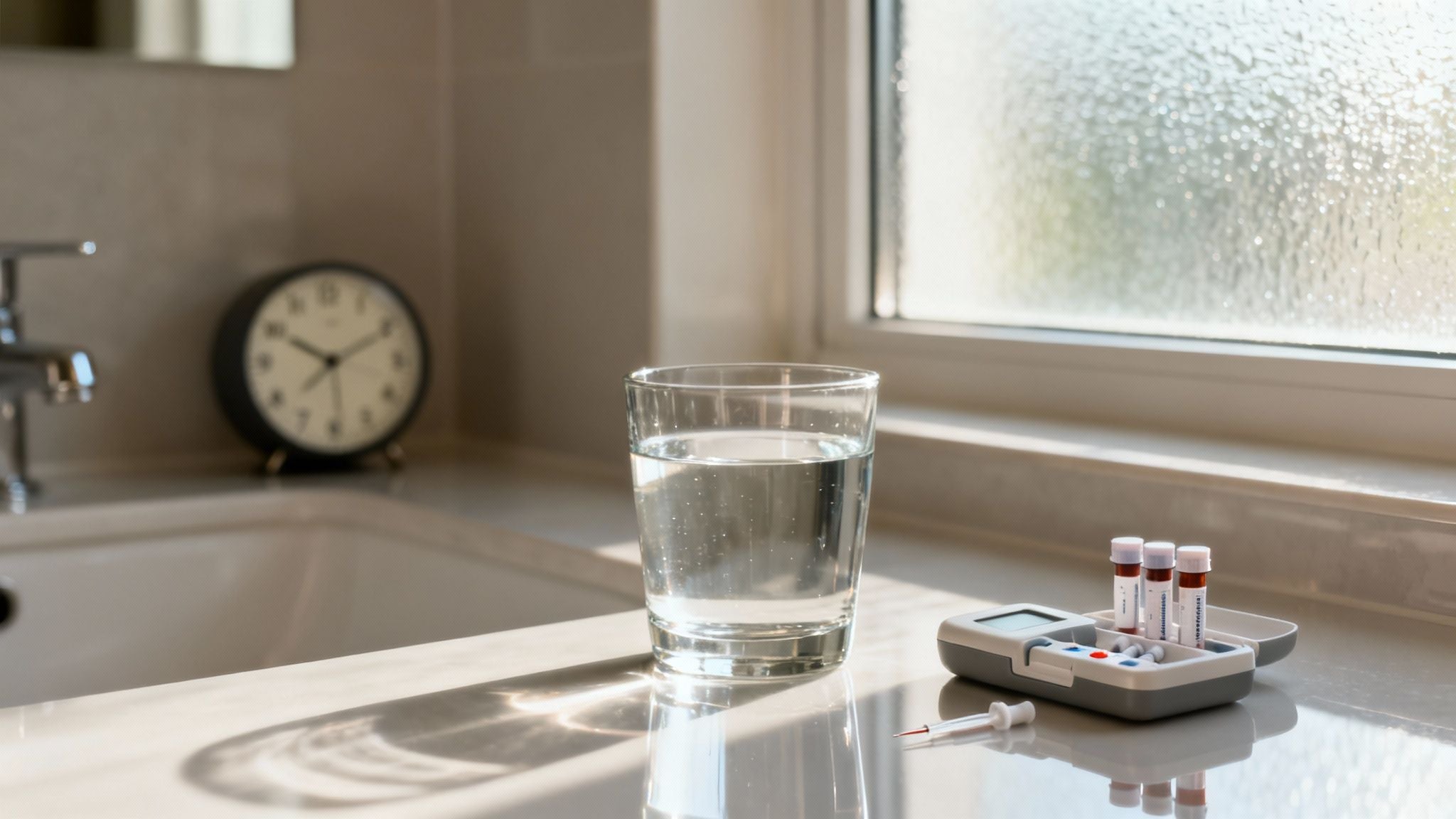
Fasting before a blood draw: Why water is your best friend
The instruction “please arrive fasting” often raises many questions. But the most important one is easy to answer: Yes, drinking water before a fasting blood draw is not only allowed but even highly recommended. A glass of still water before the appointment can make the blood draw much more comfortable and make the results more precise.
What “fasting” really means before a blood draw
Many people think that “fasting” means they must consume absolutely nothing before their doctor’s appointment. But that is not quite true. Essentially, it means avoiding food and certain drinks for a specific period—namely, anything that could temporarily disrupt your blood values.
A clear standard has become established in medical practice. Experts and health institutions agree: You should not eat anything for 8 to 12 hours before a blood draw. This period is ideal for obtaining reliable values. Why? Because everything you eat and drink (except water) directly affects your blood sugar, cholesterol, and triglyceride levels.
Why is this period so crucial?
Imagine your body as a highly sensitive measuring instrument. After eating, it works at full speed to process nutrients such as sugars, fats, and proteins and distribute them through the blood. A blood test during this phase would be like taking a photo of a sprinter in the middle of a race—it shows neither their resting pulse nor their usual state, but rather a snapshot during peak performance. Your values would therefore be distorted.
The purpose of fasting is to put your body into a stable baseline state. This is the only way to assess your blood values objectively and compare them with standard values, which is essential for an accurate analysis.
By the way, this basic rule applies not only to a blood test at the doctor’s office, but equally to taking a mybody-x self-test at home. Whether you want to check your nutrients, hormones, or possible intolerances: Proper preparation is the first and most important step toward meaningful insights. We have summarized more about what fasting means before a blood draw in a separate article for you.
The following overview summarizes the most important preparation guidelines.
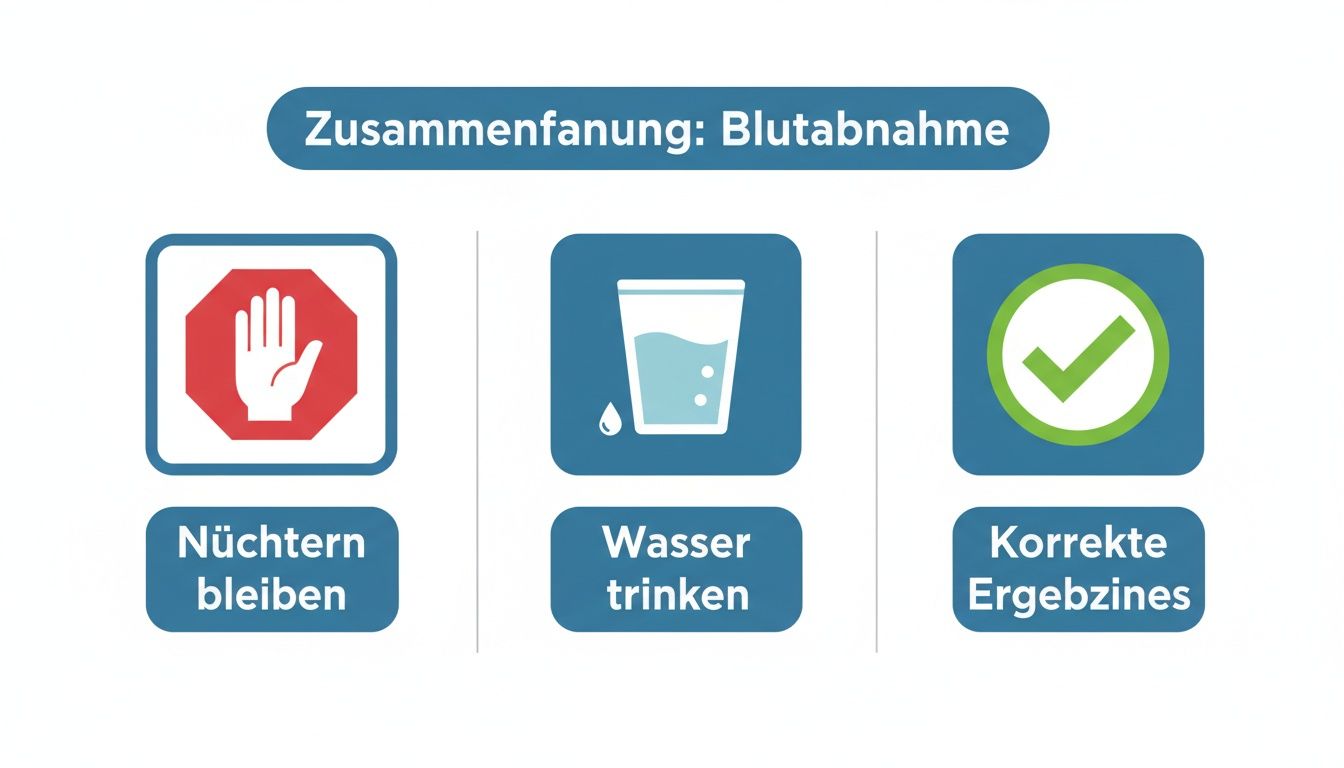
This simple graphic shows you the three pillars of a successful blood draw: Observe the fasting period, drink enough water, and secure reliable results you can rely on.
Why water is so important before a blood draw
When you hear the word “fasting,” you probably think of complete abstinence. But that is one of the biggest myths surrounding blood draws. In reality, water is not only allowed but also the key to a smooth and stress-free test. Without enough fluids, you make things unnecessarily difficult for yourself and the person drawing your blood.
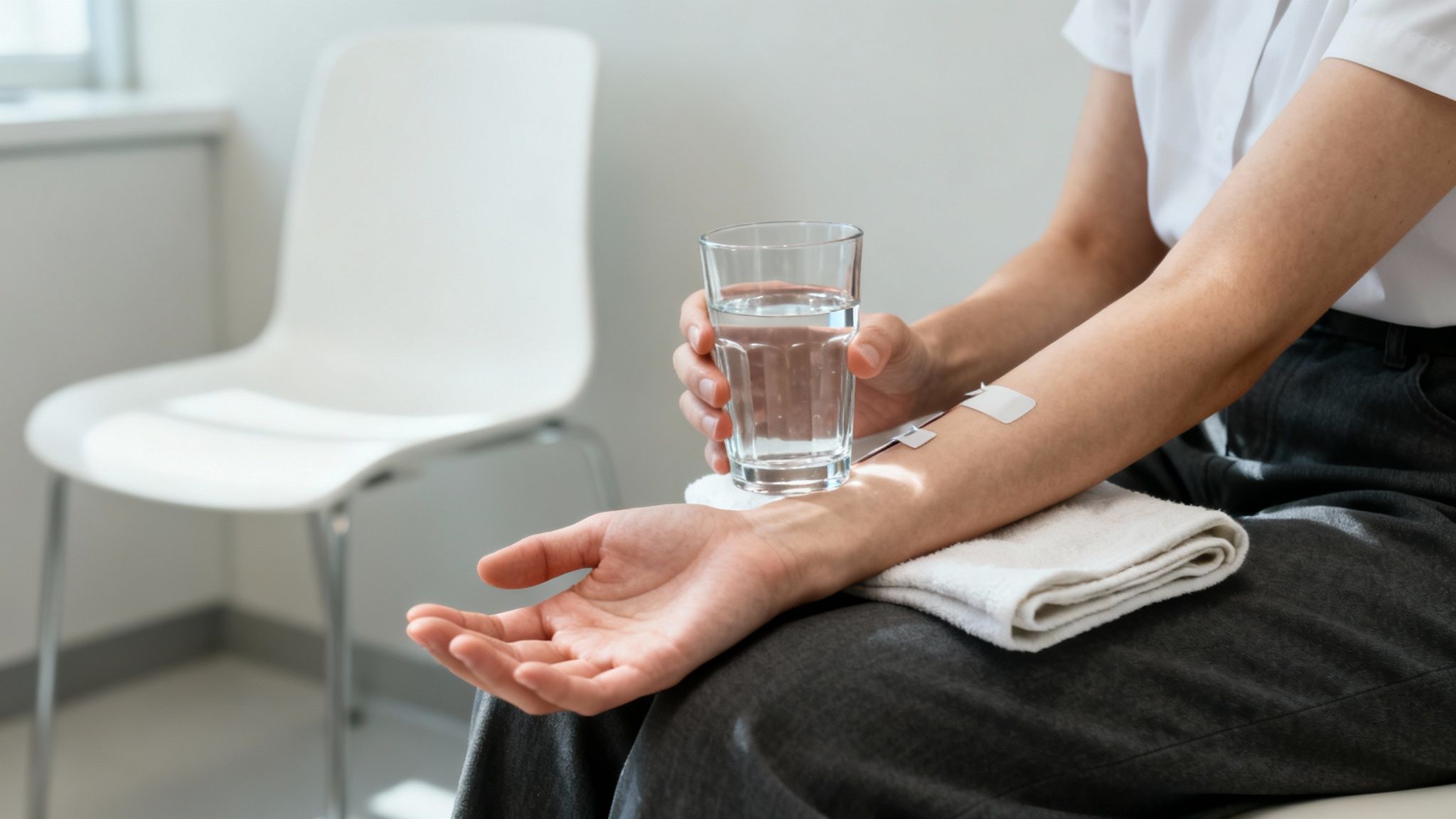
When you’re well hydrated, you’ll notice the benefits immediately. Your veins are fuller and therefore much easier to see and feel—whether for the medical assistant at the practice or for you when performing a home test.
Better veins for an easier blood draw
A well-filled vein system is essential. It makes accessing the vein much easier and reduces the risk of the vein “rolling,” collapsing, or requiring multiple needle sticks. It’s a situation we could all do without.
Water also makes your blood slightly less viscous. This improves blood flow, allowing the sample to be collected more quickly because the blood flows more easily into the tube. So drinking enough is a simple but extremely effective trick for a quick and uncomplicated blood draw.
A well-hydrated body also helps you feel more stable during and after the blood draw. Drinking enough water is one of the best ways to prevent circulation problems, which can occur for some people in this situation.
Crucial for the success of your mybody-x self-test
Especially with mybody-x home tests, such as the Nutrient Test, Hormone Test, or Intolerance Test, good preparation is crucial for success. It’s up to you to collect a sufficient amount of blood from your fingertip. If your body is dehydrated, this otherwise simple step can quickly become a test of patience.
Staying well hydrated ensures that you can easily collect the required sample volume for precise laboratory analysis. This lays the foundation for reliable results that provide genuine insights into your body. Want to know exactly? You’ll find even more answers in our detailed article on this topic.
Current data also shows how important this topic is. According to the TK Drinking Study 2019, there are significant deficits in fluid intake in Germany. In North Rhine-Westphalia, for example, only 61 percent of people reach the recommended daily fluid intake. The shortfall is particularly evident among women: 36 percent even drink less than the minimum requirement. These figures underscore the importance of education—good hydration makes having blood drawn easier for everyone involved.
The right amount of water and the perfect timing
So, water is your best friend when having blood drawn while fasting. But as with so many things in life, it's also about the right amount and timing. Too much of a good thing can backfire just as much as too little.
The good news, however, is that the rules are extremely simple and easy to fit into your daily routine. You don't need to devise complicated plans—just keep a few small things in mind to set yourself up for a successful blood test.
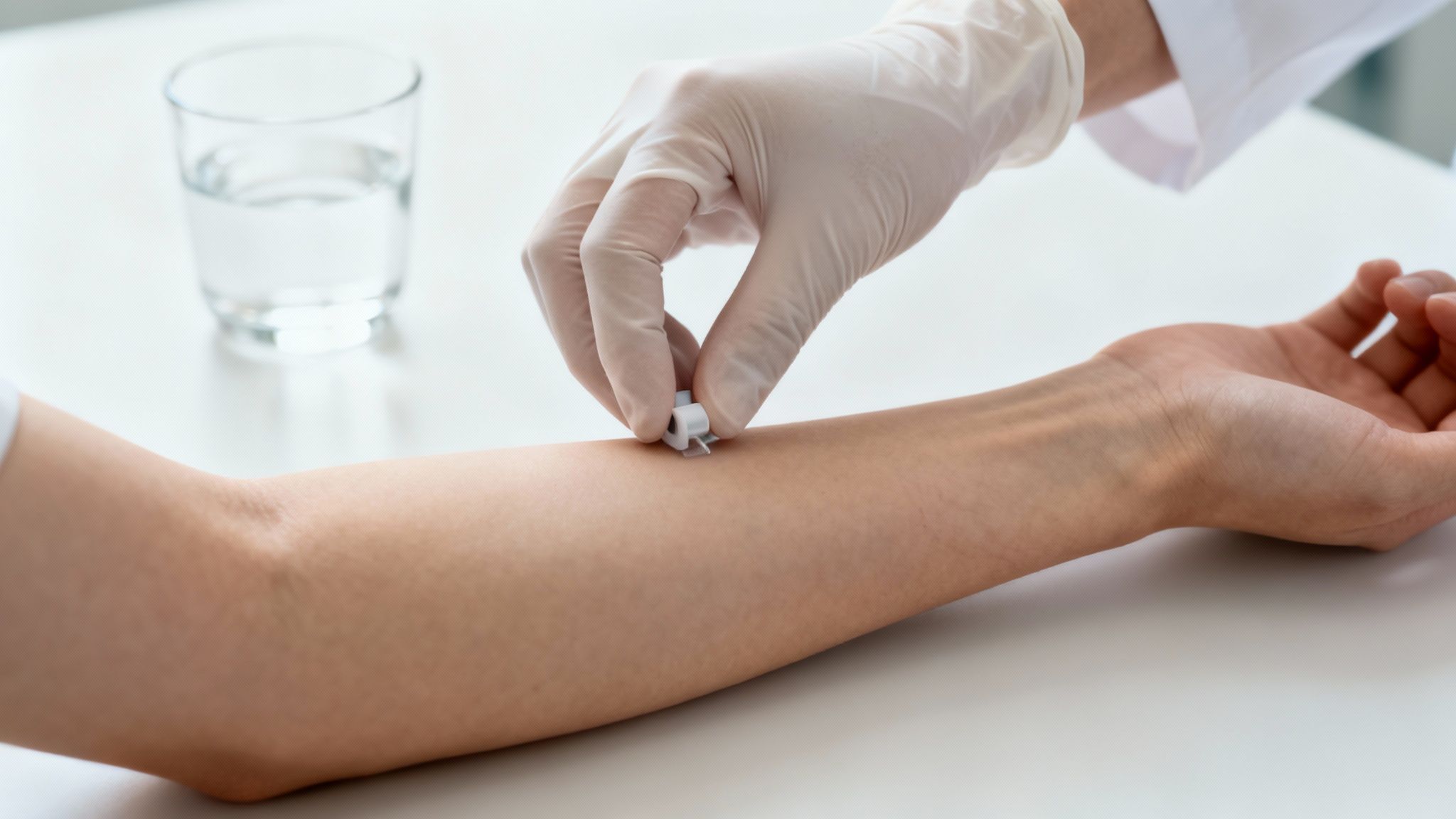
A simple schedule for your preparation
So you don't have to worry, we've put together a simple schedule for you here. It will help you keep track and ensure that you're perfectly hydrated on the day of your blood draw without distorting your results.
The evening before the test
- Drink normally: Simply continue as usual. Over the course of the evening, drink the amount of water or unsweetened tea you normally drink. There's no point in forcing down liters of water in advance.
- Your last meal: Remember to plan your last meal so that you can easily observe the required fasting period of 8 to 12 hours.
On the morning of your blood draw
- A large glass of water: The ideal time is about one hour before your appointment. Treat yourself to a large glass of still water (about 250 ml).
- Don't rush: Please avoid quickly downing a liter of water right before your blood draw. Consuming too much in a short time can slightly dilute the blood (known as hemodilution) and minimally affect certain values, such as hematocrit.
This one-hour buffer gives your body enough time to absorb the fluid and distribute it throughout your system. The result? Nice, plump veins without throwing off the concentration of your blood values.
Still or sparkling water—which is better?
Basically, water is water. But if you want to be on the safe side, it’s best to choose still water. The reason is simple: Carbonation can cause mild belching or a feeling of fullness in some people—simply unpleasant shortly before drawing blood.
Carbonated mineral water also often contains varying amounts of minerals such as calcium or sodium. Even though the effects of just one glass are negligible, still water is simply the purest and most neutral form of hydration. This rules out even the slightest potential source of interference from the outset and creates the perfect basis for your mybody-x analysis.
Your mybody-x home test: How to prepare optimally
mybody-x blood tests, such as the nutrient test, hormone test, or intolerance test, give you the freedom to check important health parameters from the comfort of your own home. The key benefit: You collect the sample yourself. That’s why proper preparation is essential for precise and meaningful results.
Unlike at the doctor’s office, where medical staff are there to support you, here you are your own expert. The rule “stay fasting, but drink water” is therefore even more important for a home test. If you are well hydrated, your blood flows much better, and you can easily collect enough sample material for the analysis.
Practical tips for successful sample collection
Besides drinking a glass of water in the morning, there are a few simple but extremely effective tricks that make drawing blood from your fingertip easier. These tips often go beyond the enclosed instructions and have proven effective for countless users.
We’ve collected the best tips for you so everything goes smoothly:
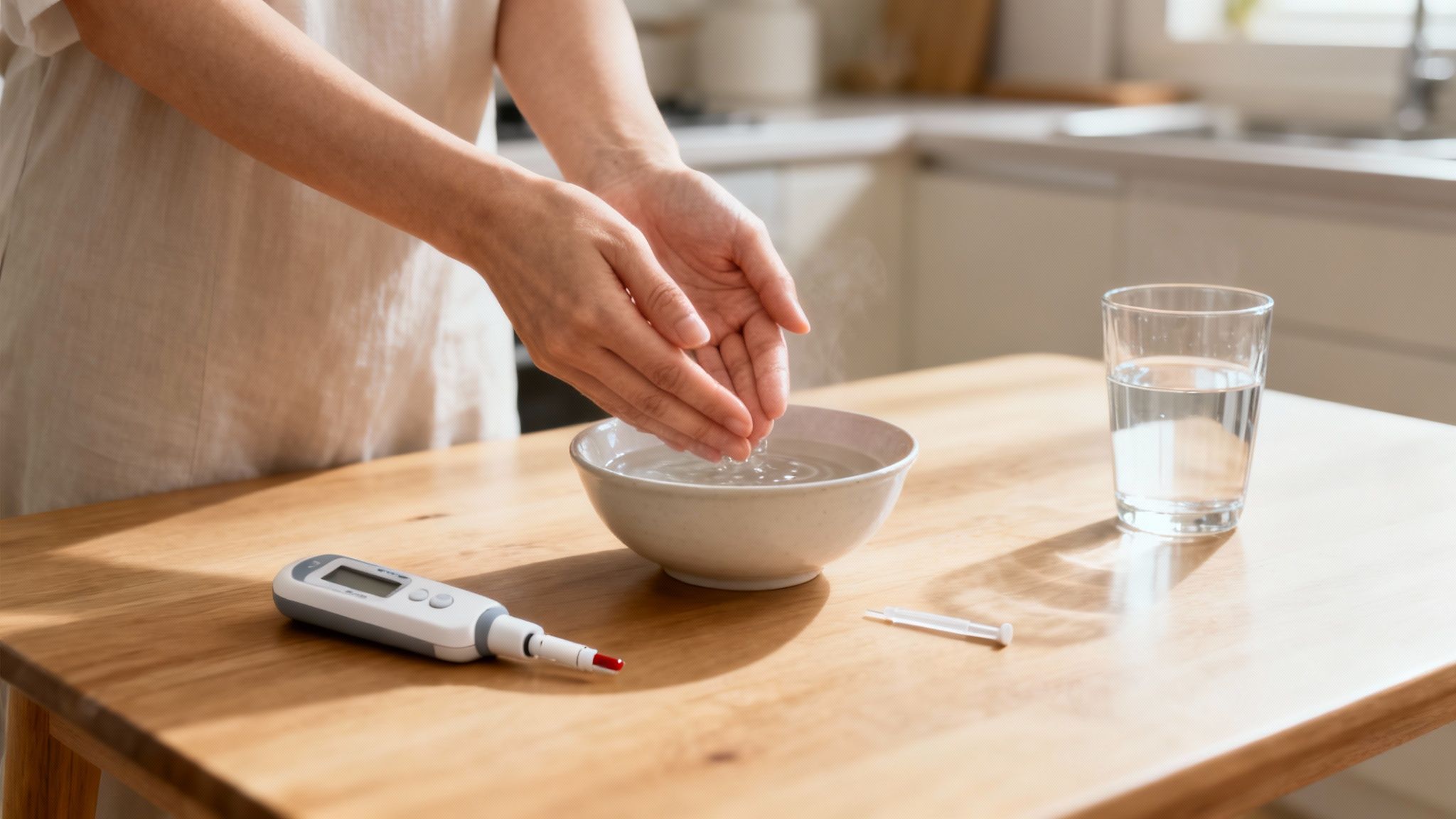
- Warm your hands first: Hold the hand you want to draw blood from under warm water for about one minute. The warmth widens the tiny blood vessels (capillaries) in your fingertip and significantly boosts circulation.
- Move your arms: A few relaxed arm circles or swinging your arm for half a minute also gets the blood flowing to your fingertips. Taking a short walk around the room beforehand enhances the effect.
- Massage your finger gently: Before pricking, gently stroke several times from your wrist toward the selected fingertip. This light pressure helps collect the blood exactly where you need it.
Remember: When taking a home test, every drop counts. Good preparation reduces stress and prevents you from having to prick yourself several times. The goal is to obtain enough blood for the sample tube with a single, clean prick.
These simple steps, combined with enough water, create the perfect conditions for a stress-free and successful sample collection. This ensures that the laboratory receives a high-quality sample and that you ultimately gain reliable insights into your body.
Would you like to learn more about how to do your own blood test and avoid common mistakes? Then take a look at our guide, where you will find plenty of other useful information. With the right preparation, your mybody-x home test will be a simple and informative experience.
These factors can distort your blood values
Imagine this: You prepare perfectly for your blood test, drink only water, and are completely fasting—but in the end, the results could still be somewhat inaccurate. Why is that? It is not only food and drink that affect your blood values. There are a whole range of subtle interfering factors you should know about to gain truly unbiased insights into your body.
Even an intense workout the day before can drive certain values upward. Muscle enzymes such as creatine kinase (CK) and inflammatory markers may be temporarily elevated, creating a misleading picture of your health. Your body reacts naturally to the exertion—and this can be measured in your blood.
Stress hormones and hidden sugar
Severe stress is also a factor that many people underestimate. If you are under a lot of pressure on the morning of the test, your body releases stress hormones such as cortisol. Among other things, these can affect your blood sugar level, even if you have not eaten for hours.
Even seemingly harmless habits can lead to inaccurate results. Did you know, for example, that sugar-free chewing gum can also be problematic? It often contains sweeteners such as sorbitol, which stimulate your metabolism and affect insulin production. The same applies to drinks such as coffee, even if you drink it black. We have explored in a separate article whether coffee is allowed before a fasting blood test.
Your blood values reflect a snapshot of your body. The goal is to make this moment as neutral and representative as possible by minimizing all external influences.
Medications and dietary supplements as a source of interference
Particular caution is advised with medications and dietary supplements. Some preparations can directly distort laboratory values. A classic example is biotin (vitamin B7), which is found in many hair and nail products. High doses can interfere with the test results of various hormone and cardiovascular tests.
To give you clear guidance, we’ve put together a checklist. It summarizes the most important points to keep in mind during the 12 to 24 hours before your blood sample is taken – whether at the doctor’s office or for your mybody-x home test.
Checklist for avoiding influencing factors
This practical overview shows which activities and substances you should preferably avoid before your blood test to prevent your results from being distorted.
| Factor | Why avoid it? | Recommendation |
|---|---|---|
| Intense exercise | Can increase muscle enzymes, such as CK, and inflammatory markers. | Avoid strenuous workouts for 24 hours before the test. A walk is fine. |
| Alcohol & nicotine | They affect numerous metabolic processes and liver values. | Avoid for at least 24 hours beforehand. |
| Chewing gum & candy | Sweeteners, including sugar-free ones, can affect metabolism and insulin levels. | Avoid them completely during the 12 hours before the sample is taken. |
| Dietary supplements | Biotin (vitamin B7) in particular can significantly interfere with hormone and other tests. | Talk to your doctor about which supplements you should stop taking. It is best to discontinue biotin 72 hours beforehand. |
| Severe stress | Raises stress hormones such as cortisol, which can affect blood sugar levels. | Allow enough time in the morning, avoid rushing, and try to stay relaxed. |
By taking these influencing factors into account, you can ensure that your results reflect your actual state of health. This gives you the perfect foundation for making the right and effective decisions for your health based on your mybody-x analysis.
Your questions about fasting blood tests answered
Even with the best preparation, a few uncertainties often remain. That’s completely normal, as every situation is a little different. We’ve collected the most frequently asked questions from the mybody-x community here and provide clear, tried-and-tested answers.
This is how you can approach your next blood test with complete peace of mind – whether it’s a hormone check, a nutrient test, or an intolerance test.
Do I need to stop taking my medication before a blood draw?
This is one of the most important questions, and the answer is clear: Never stop taking prescription medication on your own initiative! Always speak to your doctor first. Many medications, such as those for blood pressure or the thyroid, are essential for maintaining a stable level of active ingredients in the blood.
The situation is different with dietary supplements or over-the-counter preparations. You should take a break from these on the morning of the test.
- Vitamins & minerals: Simply skip your usual vitamin or calcium tablets that morning.
- Biotin (vitamin B7): Caution: Biotin is a known troublemaker in many laboratory analyses! To avoid distorted hormone levels, you should ideally stop taking it 72 hours before the blood draw.
When in doubt, always ask the person who ordered the test for you. Better safe than sorry.
Can I drink water with lemon or flavoring?
A splash of lemon in water is a firmly established morning ritual for many people. Before a fasting blood draw, however, plain water is the better choice. Lemon water contains virtually no calories, but even its acidity can slightly stimulate your metabolism.
To rule out even the slightest influence on your results, stick to plain water. Whether from the tap or a bottle, it is the safest option. Anything with flavor, even if it is sugar-free, could potentially trigger reactions in your body that we do not want to see in the results.
What happens if I accidentally eat something after all?
Don’t panic—this can happen in the heat of the moment. The most important thing now is complete honesty. Be open with the person drawing your blood about what you ate and when.
Depending on which values are being measured, the test may still be possible. However, in the case of blood sugar or blood lipids, for example, the results would no longer be meaningful. In that case, it is wiser to reschedule the appointment rather than draw false conclusions from inaccurate values.
Honesty is the key to reliable results that you, your doctor, or your mybody-x health expert can trust.
Are you ready to take control of your health? With the blood tests from mybody-x, you can gain precise insights into your body, simply from the comfort of your home. Discover the right test for you at mybody-x.com now and start your journey toward greater well-being.



Share now:
Understanding your gamma-GT blood level: What it reveals about your health and how you can lower it
What can you do about iron deficiency to regain your energy?