

Blood test for intolerances: Your guide to greater clarity and well-being
Do you often feel unwell, bloated, or experience skin reactions after eating? A blood test for food intolerances might seem like a quick fix. But beware: not every test that promises quick answers is truly useful. It's crucial to distinguish between scientifically sound analyses and misleading methods to really get to the root of your symptoms and better understand your body.
Your guide through the test jungle
If you suspect that certain foods don't agree with you, you're not alone. Many people are searching for answers and end up faced with a confusing array of blood tests that promise to unmask the "culprits" in their food. But what can a blood test really do – and what can't it?
The crucial question is: Are you looking for a true allergy or an intolerance? These two terms are often used interchangeably in everyday language, but they describe completely different reactions in your body. This is precisely the key to finding the right test for you.
The first step towards greater well-being
A good blood test can be a valuable tool for obtaining initial indications. However, instead of relying on blanket screenings, which often create more confusion than clarity, a targeted approach is the best way.
Before you decide to take a test, you should consider these points:
- Understand the difference: Are your symptoms a rapid, severe allergic reaction, or rather a delayed intolerance that occurs hours later?
- Focus on relevant markers: Concentrate on tests that measure scientifically recognized values, rather than those with questionable validity.
- Holistic approach: View a test as a piece of a puzzle. It helps you plan the right next steps together with experts.
The following graphic shows at a glance how blood tests can differentiate between allergies and intolerances.
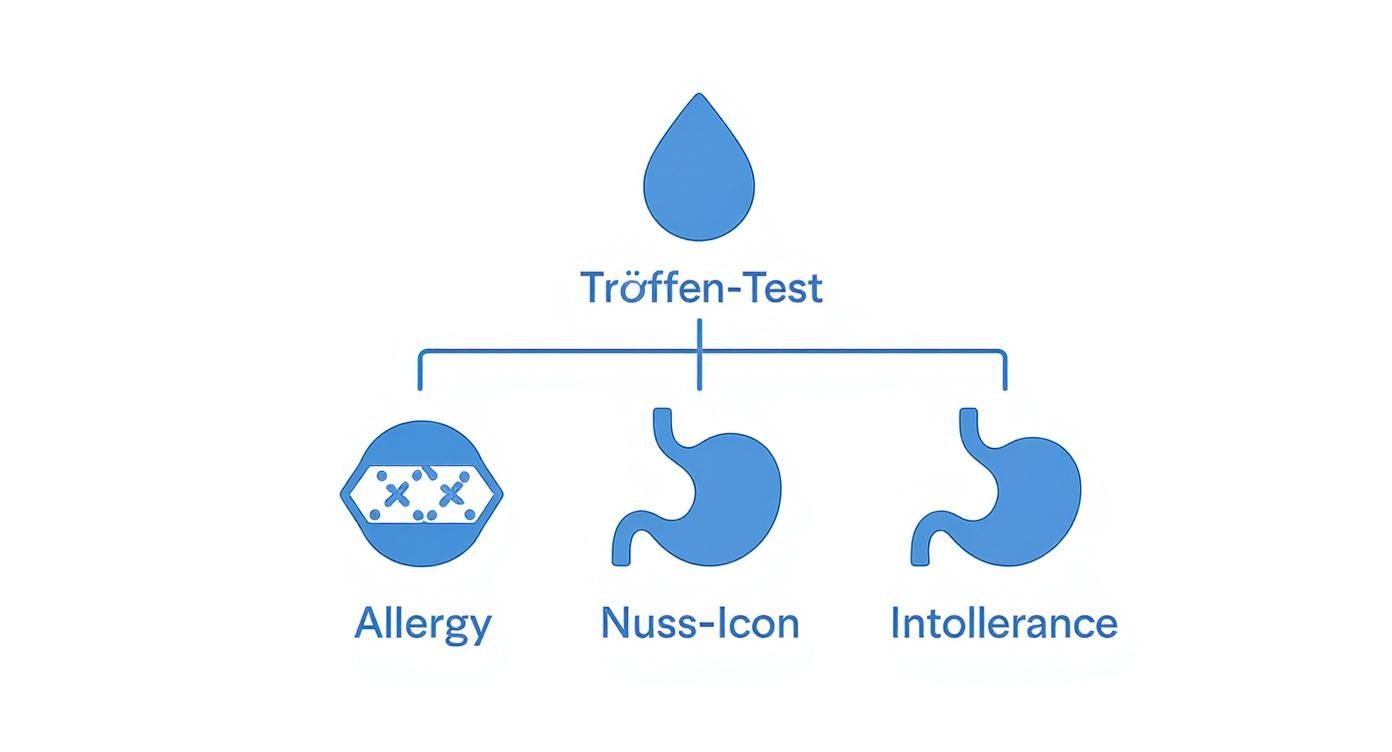
As you can see, different diagnostic approaches are needed for the different reaction pathways of your body.
A good blood test doesn't provide a ready-made diagnosis, but rather a data-driven foundation. It gives you the information you need to take control of your health and make informed decisions.
In this guide, we explain openly why popular IgG tests are often misleading and how you can take a meaningful first step with the targeted home tests from mybody®x. We show you how to easily check relevant health markers from home to finally gain more clarity. If you'd like to delve deeper into the different testing methods, you'll find further valuable information in our article on how to test for food intolerances .
Allergy vs. intolerance: What is the crucial difference?

Before we take a closer look at what blood tests can do, we need to distinguish between two terms that are often used interchangeably: allergy and intolerance . Although both can cause considerable problems after eating, they involve completely different processes in the body. Understanding this difference is crucial to knowing which blood test is actually useful for intolerances or allergies.
Imagine your immune system as an overzealous bodyguard. In the case of a true allergy – doctors call it a type 1 allergy – this bodyguard immediately and completely overreacts. It mistakes a harmless substance, like a protein in peanuts, for a dangerous invader.
This false alarm triggers a whole chain reaction. The immune system sends out its special unit, the so-called IgE antibodies , to fight the perceived enemy. The whole process happens lightning-fast, often within minutes, and the reaction can be extremely severe.
The immediate allergic reaction of the immune system
In an IgE-mediated allergy, your body reacts immediately upon contact with the allergen. The symptoms are usually quite noticeable.
Typical signs of a true allergy include, for example:
- Skin reactions: Sudden skin rash, itchy welts (hives) or severe itching.
- Swelling: Visible swelling of the face, lips, tongue, or throat.
- Respiratory problems: A runny nose, constant sneezing, coughing up to dangerous shortness of breath.
- Gastrointestinal problems: Sometimes abdominal cramps or vomiting can also occur.
Because specific IgE antibodies are detectable in the blood in cases of genuine allergies, a targeted IgE blood test is a scientifically recognized method for identifying the culprits. You can learn more about how this works in our guide on performing your own allergy test .
Intolerance: When digestion rebels
An intolerance, also called an intolerance, usually has nothing to do with the immune system. Think of it more like your body's logistics department is overloaded. Your digestive system simply can't process a particular food component properly.
The most important difference, summarized: An allergy is a malfunction of the immune system. An intolerance is usually a digestive problem, in which the body is lacking, for example, a specific enzyme.
The most well-known example is lactose intolerance. In this condition, the enzyme lactase, which is supposed to break down milk sugar (lactose), is missing. The undigested sugar then passes into the large intestine, where bacteria decompose it. This leads to the typical symptoms, which – unlike with an allergy – often only appear after a delay.
The symptoms of an intolerance often only appear hours after eating and primarily affect the digestive tract:
- Bloating and a painfully distended abdomen
- Abdominal pain or cramps
- Diarrhea or constipation
- General malaise and feeling of fullness
Since no IgE antibodies are involved in these processes, a classic allergy test is completely useless here. This makes it clear why a blood test for intolerances must take a completely different approach – and why many tests that rely on other antibody types are so scientifically controversial.
IgG blood tests for intolerances: A critical assessment
You've probably heard of so-called IgG tests. They promise to detect hundreds of food intolerances at once with just a few drops of blood from your finger. That sounds deceptively simple and like a quick fix for persistent symptoms.
But behind the professional facade lies a method that medical societies and allergy experts worldwide strongly advise against. The reason is as simple as it is crucial and has to do with the fundamental role of immunoglobulin G (IgG).
The role of IgG in your body
Your immune system produces different types of antibodies to protect you. IgG antibodies play a particularly important role – they are, so to speak, the "memory" of your immune system. They indicate which foreign substances your body has previously come into contact with.
So when you eat a food, let's say a piece of bread, your body comes into contact with wheat proteins. In response, your immune system naturally produces IgG antibodies against them. This isn't a cause for alarm, but rather a sign that your body is processing the food and developing a tolerance.
A high IgG level against a food does not mean that you are intolerant to it. It simply means that you eat this food regularly and your immune system is doing its job.
A positive IgG test for wheat, milk, or eggs is therefore completely normal and even expected in most healthy people who eat these products. The values reflect your eating habits, not a pathological reaction.
Why IgG tests can be misleading
The real problem with IgG tests is the fundamental misinterpretation of their results. The providers of these tests suggest that an elevated IgG level is an indicator of an intolerance causing your symptoms. Scientifically, this is simply not valid.
In fact, there are no reliable studies that prove a link between elevated IgG levels and the typical symptoms of food intolerance. These levels can be elevated in people both with and without symptoms and fluctuate constantly.
The main criticisms can be summarized as follows:
- No scientific basis: Leading allergological societies clarify that IgG antibodies do not indicate intolerances.
- They only reflect consumption: The tests merely show what you have eaten, not whether you can tolerate it.
- Risk of unnecessary diets: Based on these findings, many people avoid dozens of foods. This can lead to a severely restricted diet and, in the worst case, to nutrient deficiencies.
For precisely these reasons, the costs for an IgG test are not covered by statutory health insurance – the medical benefit has simply not been proven.
The danger of sweeping dietary changes
Imagine a test shows you high IgG levels for wheat, rye, dairy products, and eggs. The logical consequence, based on the test provider's recommendation, would be to strictly avoid all these staple foods. Such a diet is not only extremely difficult to implement in everyday life, but can also significantly restrict your quality of life.
Even more problematic is that you might be eliminating important nutrient sources like calcium, B vitamins, or protein from your diet without a valid reason. Instead of finding the true cause of your symptoms, you risk creating new health problems. To delve deeper into the scientific background of intolerances, also read our article on the scientific facts about food intolerances .
The demand for simple solutions is enormous: More than 15 percent of Germans report suffering from a food intolerance. This need has triggered a boom in home tests, but as you can see, the popular IgG tests in particular are medically unsuitable for making a reliable diagnosis.
Instead of relying on a blood test for intolerances based on the controversial IgG principle, it makes more sense to choose a targeted and scientifically sound approach.
Which blood tests are truly useful for specific symptoms
If the widely used IgG tests are misleading you, the crucial question is: Which analyses will give you reliable answers about your symptoms? The answer is clear: Instead of testing indiscriminately for hundreds of foods, a targeted look at scientifically recognized markers is by far the better and more sensible approach.
Your blood is like an open book about your health and can provide valuable clues to the true causes of your symptoms. This is precisely where mybody®x tests come in. We focus on what really matters and deliberately disregard questionable IgG values.
Such a targeted approach provides you with solid, usable data. Based on this, you can then make informed decisions for your health, ideally together with an expert – without having to eliminate dozens of foods from your diet on mere suspicion.
Targeted markers instead of blanket screenings
Instead of groping in the dark, specific blood tests allow you to search for the causes of your problems in a targeted way. Depending on the symptoms, very different analyses are possible, each contributing a different piece of the puzzle to the overall picture.
Some of the most important and informative markers you can check with the mybody®x tests are:
- Specific IgE antibodies: These are the gold standard if you suspect a true type 1 allergy. An elevated level against a specific food (e.g., peanut, wheat, egg) is a strong indication of an immediate immunological reaction. Our food reaction test focuses precisely on this.
- Diamine oxidase (DAO): This enzyme is crucial for breaking down histamine in the body. A low DAO level can be an important indicator of a possible histamine intolerance, which is often responsible for nonspecific symptoms such as headaches, skin redness, or digestive problems after eating.
- Essential nutrients: Sometimes it's not the food itself, but rather deficiencies that cause problems. Deficiency in vitamin D, vitamin B12, iron , or magnesium can impair gut health and cause symptoms that are deceptively similar to those of an intolerance.
This approach is far more precise than a generic blood test for intolerances based on unreliable IgG levels. It provides you with concrete clues that you can actually investigate.
The right blood test is like a compass. It doesn't show you the finished destination, but it gives you the exact direction you need to go in to find the cause of your symptoms.
How mybody®x helps you gain more clarity
The mybody®x home tests are precisely tailored to this targeted approach. We want to give you the tools to gain scientifically sound insights into your body – simply and conveniently from home.
Example of histamine intolerance: Do you suffer from headaches or skin rashes after consuming red wine, cheese, or tomatoes? Instead of taking an expensive and inaccurate IgG test, you could use the mybody®x test to specifically determine your DAO level. A low value would be a strong, scientifically relevant indicator that you can then investigate further.
Example of nutrient deficiency: Do you often feel tired, unfocused, and is your digestion acting up? A mybody®x nutrient test can reveal whether you might be lacking essential vitamins or minerals. An iron deficiency, for example, can cause symptoms that are easily mistaken for an intolerance.
This methodical approach helps you systematically rule out or identify possible causes. This way, you invest your time and energy in fact-based measures, instead of getting lost in strict diets based on questionable principles.
No more guesswork: Take control of your health with mybody®x
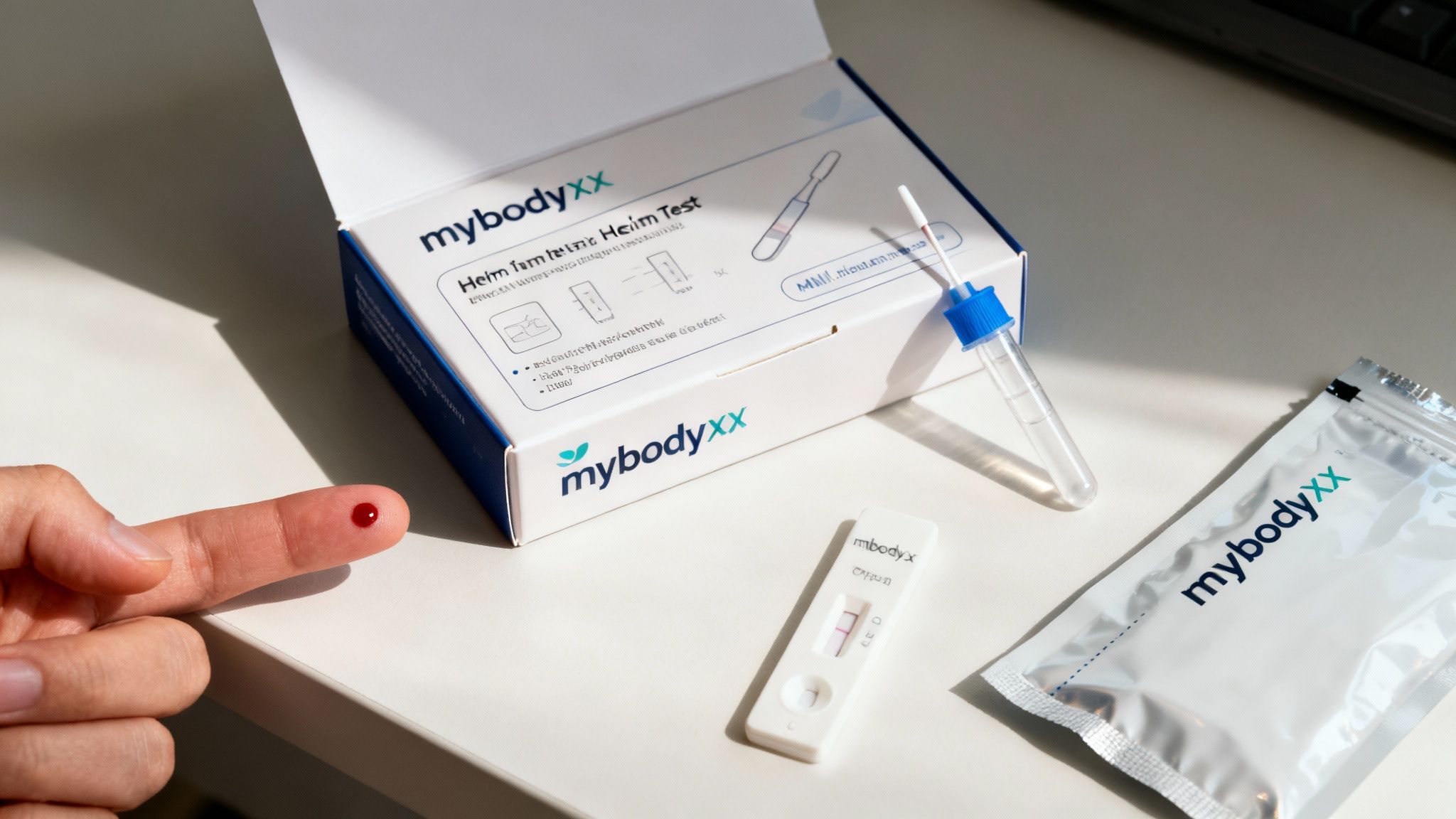
Are you tired of wading through a jungle of opinions and half-truths? Do you finally want clarity based on scientific facts? That was exactly our thought process when developing the mybody®x food reaction test.
That's why we deliberately decided against the controversial IgG screenings. These often raise more questions than they answer and frequently lead to unnecessary diets.
Instead, we focus on what really matters in diagnostics: the measurement of specific IgE antibodies . These are the scientifically recognized markers for genuine type 1 allergies. With our test, you can specifically investigate suspected allergies to the most common culprits, such as milk, eggs, wheat, or nuts. The result is clear, concrete information – not an endless list of foods you should avoid without good reason.
Your path to clarity – in just three simple steps
We believe that access to important health data should be as straightforward as possible. That's why we've designed the entire process so you can complete it comfortably from home.
- Order your test kit: Simply order your personal test kit online. We'll send it to you quickly and discreetly, directly to your home.
- Taking a sample: Follow the simple instructions to take a tiny blood sample from your fingertip yourself. A small prick is all it takes. Everything you need is included in the kit.
- Analysis & Results: Send your sample in the enclosed return envelope to our certified German partner laboratory. The analysis will be completed within just a few days.
As soon as your results are available, we will notify you. Your personal report will then be waiting for you securely and password-protected in your mybody®x account.
Food allergies and intolerances are not uncommon. In Germany, approximately 4 percent of the population suffers from a medically diagnosed food allergy. For intolerances such as lactose or histamine intolerance, the number of undiagnosed cases is likely to be even higher.
More than just a value on paper
A lab result alone doesn't help anyone. A test result is only valuable if you also understand what it means for you and what the next sensible steps are. We won't leave you to figure it out alone.
We translate the "lab jargon" for you. You not only receive your measurement results, but also clear, understandable recommendations for action that help you to correctly interpret the results and decide what to do next.
Imagine your test results show an increased reaction to wheat. This doesn't automatically mean you can never eat bread again. However, it's a strong, scientifically sound indication that you can now investigate further. Our recommendations will show you the best way forward – whether it's consciously changing your diet in consultation with an expert or preparing for a well-informed conversation with your doctor.
With the mybody®x blood test for intolerances , based on validated IgE markers, you replace assumptions with facts. Instead of wasting time with questionable methods, our at-home food reaction test offers a targeted and scientifically sound path to greater well-being.
Understanding your test results and taking the right steps
You're holding your mybody®x results report in your hands – this is a real milestone and the first step towards change. Perhaps one value immediately catches your eye, for example, an elevated IgE level for wheat. And now what? What does that mean for you specifically?
First and foremost: take a deep breath. A single lab result is not a final verdict, but a crucial piece of the puzzle in the overall picture of your health. Don't see the result as a complete diagnosis, but for what it is: a scientifically sound basis that ends the guesswork and points you in a clear direction.
The most important next step is to discuss the results with a professional. A doctor, allergist, or certified nutritionist can take the raw lab results and put them into the context of your personal symptoms and medical history. Only then will a coherent picture emerge.
From result to concrete plan
Together with an expert, you can now create a personalized plan. And this involves much more than just a list of forbidden foods – it's a real strategy for greater well-being.
The next steps often look like this:
- Targeted elimination diet: It sounds complicated, but it's quite simple. You consistently eliminate the suspected food for a set period (usually 2–4 weeks ). The goal is crystal clear: to observe whether your symptoms improve during this time.
- Keep a symptom diary: Note exactly what you eat and how you feel. This will help you and your therapist to recognize connections more clearly and uncover patterns.
- The test (provocation): After the elimination phase, the food is reintroduced very deliberately and under observation. Do the symptoms return? Then you have your answer.
This process gives you the greatest possible certainty as to whether a particular food is truly the cause of your problems.
Your mybody®x report is your ticket to an informed, equal consultation. You no longer go to the doctor with a vague suspicion, but with solid data. This makes finding a solution much easier and faster.
Implementing the next steps in everyday life
Once you know where you stand, it's time to put it into practice. This often means adjusting your diet, shopping more consciously, and rethinking old habits. If you're looking for inspiration on how to make this work even in a stressful professional life, you'll find great tips for healthy eating at work here.
By the way: You're far from alone with your symptoms. A 2021 survey showed that around 18 percent of people in Germany are affected by a food intolerance – and the trend is rising. This clearly demonstrates how important reliable information and testing are.
A blood test for intolerances , based on scientifically valid markers such as IgE, is the perfect starting point. But only the correct interpretation of the results and the measures derived from them are the key to a sustainably improved quality of life.
FAQ about blood tests for intolerances
To give you even more clarity and security on your journey, we answer some of the most frequently asked questions we receive about blood tests for intolerances .
Can a blood test detect lactose intolerance?
No, lactose or fructose intolerance cannot be directly diagnosed through a standard blood test. The reason is quite simple: these are metabolic disorders and not reactions of the immune system involving antibodies.
For example, if you have lactose intolerance, you lack the enzyme lactase, which is supposed to break down lactose (milk sugar). The gold standard for diagnosing this is a hydrogen breath test performed by a doctor. However, a blood test can provide indirect clues – for instance, by revealing nutrient deficiencies, which are often a consequence of persistent digestive problems.
Do I need to change my diet before the blood test?
No, quite the opposite! For the mybody®x tests, which measure scientifically recognized markers such as IgE antibodies or nutrient levels, you should eat normally in the weeks before the sample is taken.
It's crucial that you don't avoid suspected foods out of caution. Only when your body comes into contact with the potential triggers can it produce the corresponding IgE antibodies – if an allergy is indeed present. Of course, detailed and easy-to-understand preparation instructions are included with every test kit.
What is the difference between the mybody®x test and an IgG test?
The crucial difference lies in the scientific validity and reliability of the results. At mybody®x, we deliberately rely on validated markers to provide you with useful and, above all, accurate results.
The mybody®x food reaction test measures specific IgE antibodies . These are considered the recognized gold standard for the detection of true type 1 allergies. A positive result is a strong, clinically relevant indication.
IgG tests, on the other hand, measure IgG antibodies, as already explained. Leading medical societies agree: Their presence merely indicates that your body has come into normal contact with a food. It does not, however, prove an intolerance .
This distinction is at the heart of our philosophy. We don't want to give you confusing lists that ultimately only lead you to unnecessary diets. We want to provide you with solid data. A blood test for intolerances should bring clarity, not create more confusion. With mybody®x, you take the scientifically sound approach to getting to the root of your symptoms.
mybody®x empowers you to take control of your health and make informed decisions based on scientific data. Use our home tests to discover the true cause of your symptoms. Learn more and begin your journey to greater well-being at https://mybody-x.com .



Share:
Hormone Test for Women: When the Test Is Really Useful
Silent Inflammation Test: Uncover Hidden Dangers in the Body