

Losing Weight Despite Hypothyroidism: Your Practical Guide to Success
Yes, losing weight despite hypothyroidism is absolutely possible. It simply requires a different strategy than a healthy metabolism. Forget about just counting calories. The key is to understand the biochemical brakes in your body and deliberately release them—with the right medical treatment, a smart, nutrient-dense diet, and practical adjustments to your everyday routine.
Why the Scale Won’t Budge with Hypothyroidism
You pay meticulous attention to your diet, exercise as much as you can, and yet nothing happens on the scale? Countless people affected by this know the frustration all too well. The most important thing first: This is not due to a lack of discipline, but is pure biochemistry. Your body is not fighting against you; it is simply trying to cope with the wrong signals.
Hypothyroidism, often caused by the autoimmune disease Hashimoto’s thyroiditis, puts your entire body into a permanent energy-saving mode. Think of your thyroid as the accelerator pedal of your metabolism. When it produces too few hormones, your body runs on low power.
The Reduced Basal Metabolic Rate
The thyroid hormones T3 (triiodothyronine) and T4 (thyroxine) are the spark plugs for your energy expenditure. They dictate how quickly your cells burn calories. When these hormones are lacking, your basal metabolic rate—the amount of energy your body uses when completely at rest—drops noticeably.
Specifically, you burn less energy for everything happening in the background, such as breathing, your heartbeat, and regulating your body temperature. And this reduction is anything but trivial. Thyroid hormones actually account for around 30 percent of your total resting energy expenditure.
A slowed metabolism is not imaginary. With hypothyroidism, basal metabolic rate can drop by up to 20 percent. That can quickly amount to several hundred fewer calories burned per day, even though you think you’re doing everything right.
More Than Just a Slow Metabolism
But a slowed metabolism is only half the story. Hypothyroidism often brings a whole host of problems that further sabotage weight loss:
- Water retention: A sluggish metabolism causes so-called glycosaminoglycans to accumulate in the connective tissue. These molecules bind water like a sponge and cause swelling (edema), especially in the face, hands, and feet. This can quickly add a few pounds on the scale that have absolutely nothing to do with body fat.
- Impaired fat and sugar metabolism: Without enough thyroid hormones, the body can no longer process fats and sugars efficiently. The result? A tendency toward fat storage and insulin resistance, which in turn fuels cravings for carbohydrates. A true vicious cycle.
- Fatigue and lack of drive: The heavy exhaustion is a key symptom and makes regular exercise an absolute Herculean task. When there is not enough energy for exercise or even everyday activities, calorie expenditure naturally drops even further.
This cocktail of biochemical disruptions explains why blanket diet advice such as “just eat less” falls completely flat in cases of hypothyroidism. Your body plays by different rules. So if you are wondering why you are not losing weight despite a calorie deficit, you can find more in-depth explanations of metabolic blockages in our guide.
Many people are frustrated that even after starting hormone therapy with L-thyroxine, the pounds do not immediately fall off. A Danish study of more than 4,000 women showed that even slightly elevated TSH levels negatively affect BMI. In Germany, around 8 million people suffer from Hashimoto’s disease—showing how relevant this problem is. Understanding these connections is the very first and most important step toward finally developing a strategy that works for you.
The Right Medical Regulation as the Foundation
Before you invest even a minute in detailed meal plans or strenuous workouts, one thing absolutely has to be in place: your medication dosage. Without an optimally regulated thyroid, it is like trying to drive up a mountain with the handbrake on. It is a battle against windmills.
Your metabolism is running on low power, and no matter how hard you try, the results fail to materialize. So the goal is first to get your body back into a state in which it can respond to your efforts at all.
The following graphic gets to the heart of the problem and shows why a poorly regulated thyroid truly cements any weight-loss blockage.
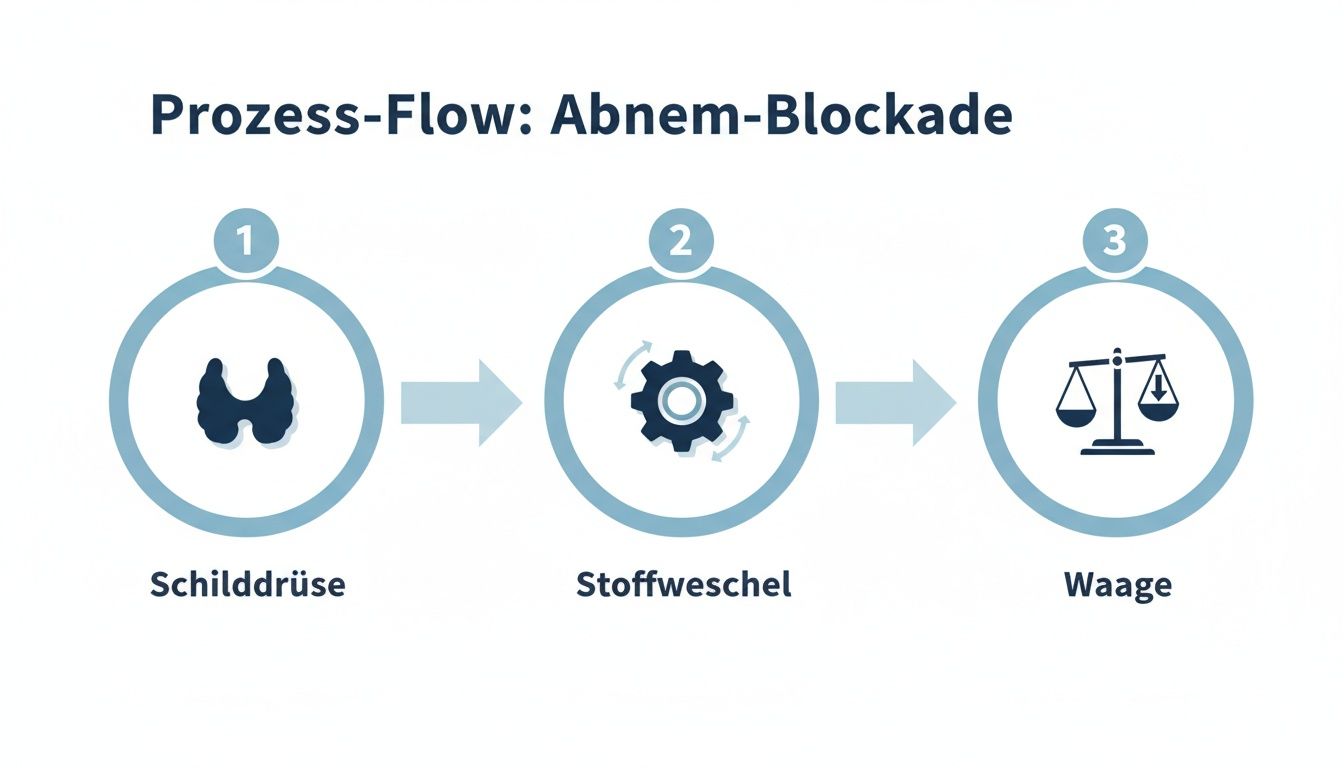
The direct connection is clear here: The thyroid slows down the metabolism, and the scale stops moving. That is precisely why proper medical supervision is so crucial.
Why the TSH Level Alone Is Not Enough
For a long time, the TSH level (thyroid-stimulating hormone) was considered the sole gold standard for checking thyroid function. Clearly, it is an important indicator. It shows how loudly the pituitary gland has to “shout” at the thyroid to make it work. But that is only half the truth.
Think of TSH as a work instruction. What matters much more is the end result—how many hormones the thyroid actually produces and how well they reach the body’s tissues. That’s why it is essential to also measure the free hormones fT3 (free triiodothyronine) and fT4 (free thyroxine).
fT4 is essentially the storage hormone, while fT3 is the truly active hormone that gets your metabolism going. For many people with an underactive thyroid, the conversion of fT4 into active fT3 is impaired. So your fT4 level may look great, but if too little of it is converted into fT3, you may still feel tired, lack motivation, and simply be unable to lose weight.
Your optimal target range for metabolism
The standard TSH reference ranges used by laboratories are often extremely broad. Many doctors still consider a value of up to 4.0 mU/l completely normal. Leading endocrinologists and professional societies take a very different view for patients who are already taking hormones.
Expert tip: Based on experience, most people affected only feel truly well and are able to lose weight successfully when their TSH level is between 0.3 and 1.2 mU/l. Speak openly with your doctor about this narrower target range, especially if your level is higher and you still don’t feel fit.
If Hashimoto’s is suspected, the antibodies (TPO antibodies, TG antibodies) should also be included in the blood test. They provide insight into the autoimmune processes taking place in the background. A complete picture of your thyroid levels is key. If you want to take a deeper look at what your TSH level really means, check out our detailed article on thyroid levels and what they mean.
To give you better guidance for your discussion with your doctor, I’ve put together this brief overview.
Your thyroid levels at a glance Use this overview as a basis for discussing your results with your doctor to find your optimal treatment settings.
| Lab value | What the value indicates | Recommended target range for well-being |
|---|---|---|
| TSH | Indicates how strongly the thyroid is being stimulated. A high value suggests an underactive thyroid. | 0.3–1.2 mU/l (during treatment) |
| fT4 | The storage hormone. Important for supplying the body. | Upper third of the reference range |
| fT3 | The active metabolic hormone. Crucial for energy and well-being. | Middle to upper third of the reference range |
| TPO antibodies / TG antibodies | Antibodies indicating Hashimoto’s thyroiditis. | As low as possible or negative |
This table is intended to help you better assess your own values and ask targeted questions.
How to prepare for your doctor’s appointment
Never go to your doctor’s appointment unprepared. Good preparation is half the battle when it comes to finding the best treatment setting for you together.
My recommendation for you:
- Document your symptoms: Keep a simple diary. Record fatigue, hair loss, weight, concentration, and your general energy level. This makes your symptoms tangible.
- Request your lab results: Always ask for a copy of your blood test results. This helps you keep track and see for yourself how your values change over time.
- Write down questions: Be specific about what you want to know. For example: “My TSH is 3.5, but I’m constantly tired. Could we adjust the dose to aim for a level around 1.0?”
Studies and professional associations, such as the German Association of Nuclear Medicine Physicians, repeatedly confirm: With well-adjusted medication (L-thyroxine) and a TSH target range of 0.3-1.2 mU/l, losing weight works just as well as it does for people with healthy metabolisms. Realistic goals are 0.2 to 0.5 kg per week—achievable through a moderate calorie deficit and exercise.
This medical foundation is non-negotiable. It is the basis on which all further steps, such as nutrition, exercise, and stress management, can fully take effect.
Use your diet as a metabolism booster
If you live with an underactive thyroid, you probably know the routine all too well: Standard diets that focus solely on reducing calories often achieve nothing or lead directly to frustration. The reason is simple: Your body has very specific needs. It’s not about starving yourself, but about deliberately fueling your metabolism with the right nutrients and reawakening it.
Your most powerful lever is an anti-inflammatory and nutrient-dense diet. It helps calm your immune system—which is especially important with Hashimoto’s—and provides exactly the building blocks your thyroid urgently needs to do its job.
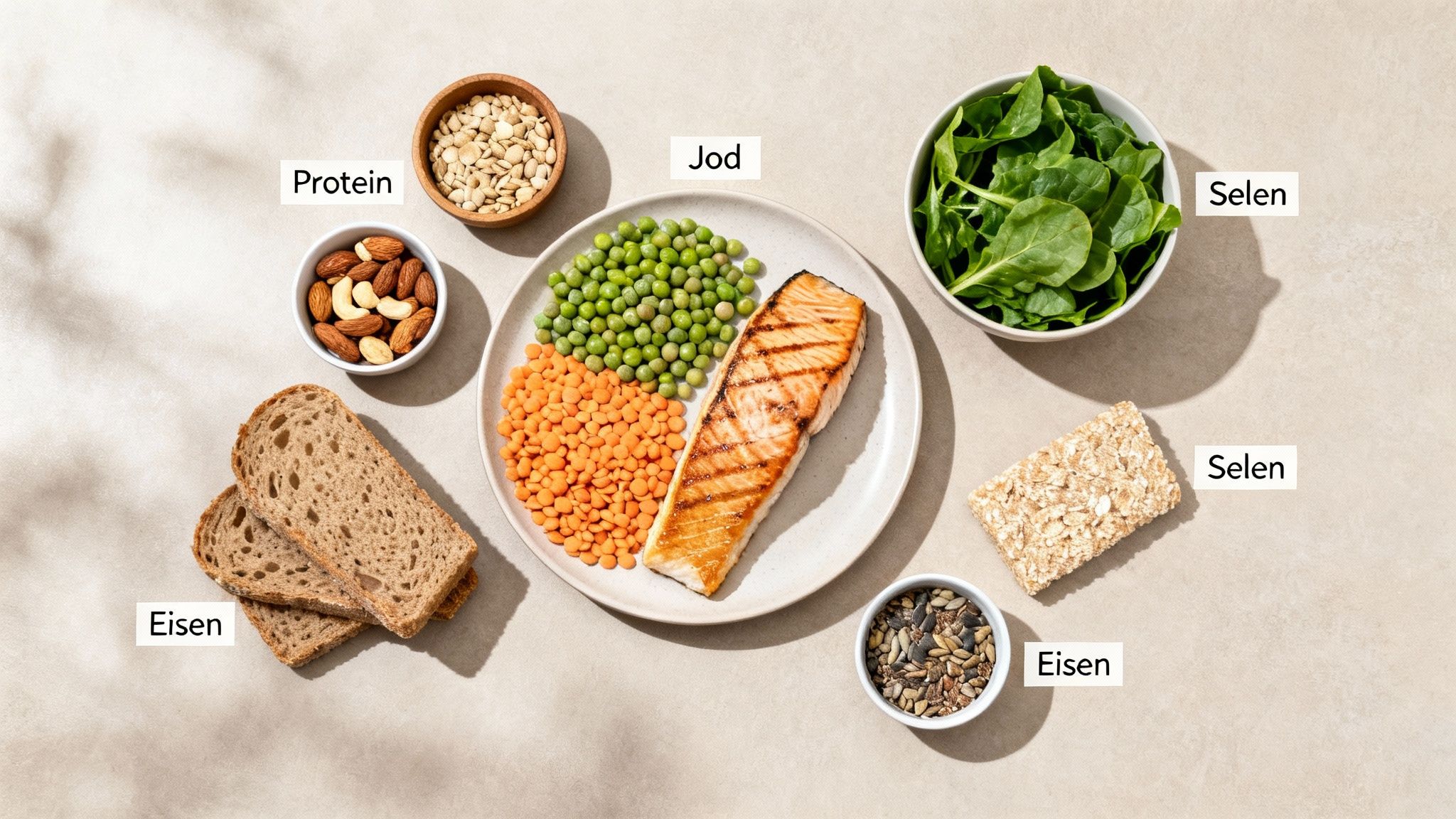
Protein as a guarantee of satiety and muscle protection
One of your most important allies is protein. It is not only essential for your muscles, but also has the highest thermic effect of all macronutrients. This means your body burns some of the calories consumed while digesting protein—a small but valuable bonus for your metabolism.
At the same time, protein provides long-lasting satiety. This is your secret weapon against cravings and makes it much easier to maintain a healthy calorie deficit. A good rule of thumb is about 1.5 to 2 grams of protein per kilogram of body weight.
Here you will find plenty of good protein:
- Animal-based: Lean meat such as chicken or turkey, fish (especially salmon because of its valuable omega-3 fatty acids), eggs, and low-fat quark.
- Plant-based: lentils, chickpeas, beans, tofu, tempeh, and high-quality protein powders.
My practical tip: Include a solid source of protein with every meal. This stabilizes your blood sugar and protects your valuable muscle mass, which in turn keeps your basal metabolic rate high.
Choose the right carbohydrates and fats
Carbohydrates are not inherently bad, but the choice makes all the difference. Simple carbohydrates from white flour and sugar send your blood sugar soaring and make it crash just as quickly. The result? Cravings and increased fat storage.
Instead, choose complex carbohydrates that are digested slowly and keep you full and satisfied for a long time:
- Whole-grain products such as oats, quinoa, or brown rice
- Legumes
- Sweet potatoes
- Plenty of colorful vegetables
Healthy fats are also essential. They are crucial for hormone production and have anti-inflammatory effects. Enjoy avocados, nuts, seeds (flax, chia, and hemp seeds), and high-quality oils such as olive or flaxseed oil.
Your gut is your direct ally when it comes to losing weight. A healthy gut flora influences not only nutrient absorption, but also inflammatory processes and hormone regulation. A fiber-rich, plant-focused diet feeds the beneficial gut bacteria, creating a healthy foundation for your metabolism.
Micronutrients for hormone conversion
Your thyroid primarily produces the storage hormone T4. For your metabolism to really get going, however, it must be converted into the active hormone T3. Certain vitamins and minerals are absolutely crucial for this process.
Your thyroid absolutely needs these nutrients:
- Selenium: Perhaps the most important trace element for converting T4 into T3. It is abundant in Brazil nuts (but beware: 1–2 per day is enough!), fish, meat, and eggs.
- Zinc: It also supports hormone conversion and your immune system. Good sources include oats, lentils, pumpkin seeds, and beef.
- Iron: Iron deficiency can directly slow thyroid function. Women in particular are often affected. You can find iron mainly in red meat, lentils, and spinach.
- Iodine: The fundamental building block of thyroid hormones. It is found in sea fish, algae, and iodized table salt. However, with Hashimoto’s disease, iodine intake should be managed carefully and discussed with a doctor.
You can find even more details and practical tips in our comprehensive guide to nutrition for hypothyroidism.
Personalize your strategy with laboratory tests
Every body works differently. What works great for one person may be the wrong approach for you. This is where modern laboratory analyses come in, helping you put an end to guesswork and develop a strategy truly tailored to you.
A mybody® DNA metabolism test, for example, can reveal how your body genetically processes fats and carbohydrates. Are you perhaps a “carb type” who benefits from more complex carbohydrates, or more of a “fat type” who should focus on healthy fats? This knowledge is a real game-changer.
When you combine this with a targeted nutrient check, you can determine exactly whether you are lacking important micronutrients such as selenium or zinc. This allows you to address deficiencies specifically instead of blindly taking random pills.
This personalized approach is by far the most efficient way to finally identify the right levers for your success. The German Society for Endocrinology also emphasizes how important optimal management is: Thyroid hormones regulate around 30 percent of resting energy expenditure. Even a slightly elevated TSH drives BMI upward, as confirmed by a study involving 4,082 women. You can learn more about the background in this press kit for Hormone Week.
Smart movement that boosts your basal metabolic rate
Do you often feel tired and listless? Does the thought of exercising then seem like climbing a mountain? This is a classic symptom of hypothyroidism and completely understandable. However, the solution is not to push yourself or exhaust yourself for hours on the treadmill. Quite the opposite: intelligent training is the key, not hard training.
Forget excessive cardio training that only puts further strain on your already stressed body. To successfully lose weight despite hypothyroidism, we need a smarter strategy. The answer lies in a clever combination of targeted muscle building and gentle everyday movement.

Strength training as your personal metabolism booster
The most effective way to boost your slowed metabolism is to build muscle mass. Muscle is your most metabolically active tissue. It burns calories even when you're sitting on the couch and relaxing. Every gram of additional muscle mass is like a small power plant working for you around the clock.
Just two to three strength-training sessions per week can make an enormous difference. It's not about lifting heavy weights like a professional bodybuilder. What's important is giving your muscles a targeted stimulus so they can grow.
Here's what a smart start could look like:
- Focus on large muscle groups: Exercises such as squats (Squats), lunges (Lunges), push-ups (against a wall or on your knees), and rowing movements (with a resistance band) engage many muscles at once. That makes them particularly efficient.
- Start with your body weight: You don't need expensive equipment at first. Your own body weight is a fantastic training tool for building a solid foundation.
- Listen to your body: On days when you feel particularly exhausted, a lighter session or even a rest day is the better choice. Quality always comes before quantity.
This approach not only protects your joints, but also prevents flooding your body with the stress hormone cortisol—which would only sabotage your weight-loss success.
Everyday movement: the underestimated calorie burner
Alongside targeted strength training, so-called NEAT (Non-Exercise Activity Thermogenesis) plays a huge role. It sounds complicated, but simply refers to the energy you burn through everyday movements outside your planned workouts. This is where enormous potential lies.
NEAT is the gentle way to increase your calorie expenditure without sending your stress levels through the roof. It's the little things that add up throughout the day and make the difference.
Your goal should be to interrupt inactivity rather than force yourself through exhausting workouts. A short walk may not burn as many calories as a HIIT workout, but it also won't raise your cortisol levels and is sustainable to incorporate into your daily routine.
Practical tips for more NEAT in everyday life:
- The classic: Always take the stairs instead of the elevator.
- Walking while on the phone: Whenever possible, take phone calls while walking—whether at home, in the office, or outside.
- Park farther away: Consciously choose a parking spot a few minutes’ walk from the entrance.
- Hourly alarm: Set an alarm to remind you every hour to briefly stand up, stretch, or walk around the office or house.
These small changes may seem trivial, but together they make a huge difference to your daily energy expenditure. They help you gently break out of energy-saving mode without overwhelming yourself.
By combining these two pillars—targeted strength training and conscious everyday movement—you create a foundation that supports you in losing weight instead of draining you. This helps you develop a positive relationship with exercise and make it an energizing part of your life.
Do not underestimate the role of stress and sleep
You can eat perfectly and stick to your exercise routine, but if your daily life is dominated by chronic stress and poor sleep, your body sabotages every single attempt to lose weight. Many people focus only on their plates and dumbbells while overlooking the invisible brakes working in the background.
These two factors are not minor details, but powerful regulators of your hormone system and therefore your metabolism. Especially when losing weight despite an underactive thyroid, they are often the deciding factors that determine success or frustration.
How stress blocks your weight loss
Chronic stress puts your body in a permanent state of alarm. The result? Your body continuously releases the stress hormone cortisol. A brief increase is vital for survival, but chronically elevated levels have devastating effects on your metabolism and thyroid function.
Permanently high cortisol levels can directly block the crucial conversion of the inactive thyroid hormone T4 into the active, metabolism-stimulating T3 hormone. This means you may be diligently taking your medication, but the hormones may not even reach the places where they are needed.
Cortisol also specifically promotes fat storage, particularly around the abdomen, and can trigger cravings for sugary and fatty foods. A biochemical vicious cycle that you can hardly break out of through willpower alone. If you suspect that your cortisol levels may be too high, you can find valuable information about the symptoms in women in our article here.
Sleep: the underrated superpower for metabolism
While you sleep, your body performs hard work. It regenerates, repairs cells, and regulates essential hormones. Sleep deprivation completely disrupts this delicate balance.
The hormones that control your hunger and satiety are particularly affected:
- Ghrelin: The “hunger hormone” rises sharply with sleep deprivation. You have more appetite, especially for high-calorie foods.
- Leptin: The “satiety hormone,” on the other hand, decreases. Your brain no longer receives a clear signal that you are full.
The result is uncontrollable cravings that are difficult to curb during the day and can ruin any diet. Your goal should be seven to nine hours of high-quality sleep per night.
Only when your body gets the necessary rest and recovery can your metabolism work efficiently again. Stress management and sleep hygiene are not wellness extras but fundamental pillars of successful weight loss with hypothyroidism.
The following illustration shows an example of how a DNA test can provide you with individual insights that are also relevant to optimizing your lifestyle.
This screenshot from the mybody® DNA Test for Weight Loss shows how genetic predispositions—such as sleep patterns or the stress response—are analyzed. These personalized insights help you understand whether you are genetically more susceptible to the negative effects of stress or sleep deprivation and provide targeted starting points for optimization.
Practical strategies for greater calm and recovery
You don’t have to completely overhaul your life. Small but consistent adjustments often make the biggest difference.
For better stress management:
- Mindful breathing breaks: Take three minutes several times a day to breathe deeply in and out from your abdomen. This immediately signals relaxation to your nervous system.
- Gentle exercise: A walk in nature, yoga, or light stretching lowers cortisol levels more effectively than intense exercise.
- Set clear boundaries: Learn to say “no”—both at work and in your personal life. Protect your energy reserves.
For optimized sleep hygiene:
- Consistent sleep schedule: Go to bed and get up at the same time every day, including weekends. This stabilizes your rhythm.
- Screen detox: Avoid blue light from your phone, tablet, or TV for at least one hour before going to bed.
- Cool and dark environment: Make sure your bedroom is cool, dark, and quiet. This promotes the production of the sleep hormone melatonin.
By giving stress and sleep the same priority as nutrition and exercise, you give your body the chance to exit survival mode. This finally clears the way for successful and sustainable weight loss.
Your questions about losing weight with an underactive thyroid
Questions keep coming up on the way to a healthier you with an underactive thyroid. That is completely normal—and even a good thing—because it shows that you are engaging with your body. To conclude this guide, I would like to answer the concerns I encounter most frequently in my practice, to give you additional reassurance and clear up any remaining uncertainties.
Can you lose weight normally at all with an underactive thyroid?
Yes, absolutely—and that is the most important message you should take away. The crucial key is optimal medication management by your doctor. Once your thyroid hormones are within your personal comfort range, your metabolism will once again respond normally to a healthy calorie deficit and exercise.
The process of losing weight is basically the same as for people with a healthy metabolism. It simply requires this stable hormonal foundation so that your efforts can finally bear fruit. Without this foundation, you are fighting a losing battle; with it, you have the wind at your back.
Which foods should I avoid with Hashimoto's and obesity?
Fortunately, there is no blanket list of forbidden foods, because every body reacts differently. However, many people affected benefit enormously from reducing certain food groups that are considered known “troublemakers” and may promote inflammation in the body or intensify symptoms.
My tip: Focus on reduction rather than strict prohibition.
- Highly processed foods: Ready-made meals, fast food, and sweets are often full of hidden sugar, unhealthy fats, and additives. These place unnecessary strain on your metabolism while providing little nutritional value.
- Simple sugars: Soft drinks, sweets, and white-flour products make your blood sugar levels go on a roller coaster ride. The result? Cravings and energy slumps.
- Gluten: A significant proportion of people with Hashimoto's react sensitively to gluten. It can trigger inflammatory reactions in the gut, which disrupt nutrient absorption and further irritate the immune system. Avoiding it on a trial basis for a few weeks can quickly provide clarity.
The most effective strategy is not to focus on what you should eliminate, but on what you can add. A nutrient-rich, anti-inflammatory diet with plenty of fresh vegetables, high-quality protein, and healthy fats nourishes your body so well that unhealthy cravings often disappear all by themselves.
How long does it take before I see the first results?
Here, patience is your most important companion. After your medication has been adjusted, your body often needs several weeks, sometimes even a few months, to readjust hormonally and get your metabolism running properly again. It is a process, not a switch you can flip.
Healthy, sustainable weight loss is around 0.2 to 0.5 kilograms per week. Faster results on the scale are often simply the loss of stored water, not fat. Such rapid losses are rarely lasting and usually lead to frustration.
That is why you should focus less on the number on the scale each day and more on the positive changes you feel:
- Do you have more energy in your everyday life?
- Are you sleeping more deeply and waking up feeling more rested?
- Do you feel mentally clearer and more focused?
These successes beyond the scale are often the first and most valuable signs that your body is on the right track. The actual weight loss then almost inevitably follows.
Isn't it enough to simply reduce calories drastically?
No, that is one of the biggest mistakes you can make and almost always leads you in the wrong direction. A drastic reduction in calories signals a famine to your already stressed body. Its logical response: It slows the metabolism down even further to conserve energy.
This mechanism leads directly to the yo-yo effect and can even further impair thyroid function. Your body needs sufficient energy and, above all, nutrients to produce and convert thyroid hormones at all. A moderate deficit of 300 to 500 calories per day, combined with a nutrient-dense diet, is the only sensible and sustainable approach. Everything else is a battle you cannot win.
The path to successfully losing weight despite hypothyroidism is not a sprint but a marathon. It is about understanding your body's rules and working with it, not against it. With the right analyses and a personalized plan, you can stop guessing and target the right adjustments.
mybody-x.com offers scientifically based analyses such as DNA metabolism tests and nutrient checks that help you understand your body better and personalize your strategy. Discover the right tests for your journey to a comfortable weight now.



Share now:
Sleep disturbances during menopause: what causes are really possible
Iron deficiency symptoms in women: How to recognize the important warning signs