
Healthy snacks for weight loss: what is worthwhile and what only looks that way
The essentials at a glance
Whether a snack helps or hinders weight loss depends less on its label than on its ratio of volume to energy and its protein content. This is exactly where the snacks that keep you satisfied differ from those that merely look healthy.
This article categorizes the common snack types according to these two criteria, explains the underlying rule with supporting evidence, provides ideas for typical situations, and identifies the traps on the shelf.
First, you will read why the snack is rarely the actual problem, followed by a comparison of the types, the rule behind them, concrete ideas, snacks for the office, car, and evening, the typical traps, and finally what to do if nothing is progressing anyway.
What to expect in this article
1. Why the snack is rarely the problem
2. Four snack types compared
3. The rule behind good snacks
4. Twelve snacks that meet the rule
5. Office, car, evening: Snacks for different situations
6. The traps on the shelf
7. When nothing is progressing anyway
8. What you will take away from this article
Frequently asked questions
Sources
Why the snack is rarely the problem
Anyone who wants to lose weight cuts out snacks first. That sounds logical and often goes wrong because it leaves the cause untouched. Reaching into the drawer at four o’clock is rarely a character flaw; it is usually the bill for a lunch that contained too little protein and too little volume.
That is why the first question is not which snack is best, but whether you need one at all. People who eat three filling meals generally manage without one. If there are seven hours between two meals, you need one—and then it should be worthwhile.
The second insight is just as uncomfortable: A snack is not an addition, but part of the daily total. Whatever is in the snack has to be saved elsewhere; otherwise, the numbers do not add up. The word “healthy” on a package does not change that, because at best it describes the ingredients, never the quantity.
And the third: Timing is less important than assumed. An afternoon snack is no worse than a morning one, and one after 8 p.m. does not inherently make you gain weight. What matters is what it contains and whether it replaces or supplements the next meal. Everything else is folklore.
When a snack is really worthwhile
There are three situations in which a snack does more good than harm. The first is a long gap: When seven hours lie between lunch and dinner, hunger builds by evening and influences the portion size. An afternoon snack is then not an addition, but a shift.
The second is a physically demanding day. If you are on your feet a lot, walk long distances, or do physical work, three meals are often not enough. Here, a snack is the simplest way to get through the day without a drop in performance, and it should contain something that keeps you going.
The third is a planned meal that gets delayed. An appointment runs long, dinner is pushed back by two hours, and in between comes the point at which most people eat uncontrollably. A prepared snack is insurance against making a decision while hungry.
Conversely, there are two situations in which no snack is the right answer. The first is boredom, which you can recognize because the hunger disappears as soon as something else begins. The second is stress: what you are looking for then is a break, not food. In both cases, a snack prolongs the pattern instead of ending it, and both are more common than genuine hunger.
Four snack types compared
Common snacks can be sorted into four groups. The table sets them side by side using the same criteria, focusing on how long they keep you going and where the trap lies for each one.
| Criterion | fruit and raw vegetables | nuts and legumes | quark, skyr, cottage cheese | bars from the store shelf |
|---|---|---|---|---|
| What it provides | lots of volume and water with little energy, plus fiber | plant-based protein, fiber, and fatty acids, energy-dense | plenty of protein with a manageable amount of energy, creamy volume | varies; often a lot of sugar with little volume |
| How long it keeps you going | short to medium; raw vegetables last longer than fruit | a long time; even small amounts noticeably keep you full | a long time; the protein content is the reason | often briefly, and then you often reach for something else |
| Where the trap lies | eaten alone, fruit keeps you full only briefly, and then the next hunger hits | the quantity, because a handful can quickly become half the bag | sweetened ready-made cups that turn the protein snack into a dessert | the sporty packaging displayed where confectionery is sold |
| When it fits | when you need volume and the next meal is soon | when it will be a long time until the next meal, portioned out | when the day has been low in protein so far, especially in the evening | on the go, when there is no alternative, while checking the ingredients list |
It is striking that no column wins across the board. Fruit has the best volume-to-energy ratio and the shortest-lasting effect. Nuts last the longest and have the biggest portion trap. High-protein dairy products fall in between and are therefore the understated favorite for the evening. And the fourth column is not a category of food, but a category of packaging.
The practical interpretation is this: The best snacks combine two columns. An apple with a handful of nuts, raw vegetables with cottage cheese, berries with quark. Each of these combinations brings volume and protein together, and that exact mixture is why they keep you full longer than any component alone.
The rule behind good snacks
What appears as a pattern in the table matches a recommendation issued by the German Nutrition Society independently of the topic of weight loss:
Documented source
“Eat legumes at least once a week and a small handful of nuts every day.”
German Nutrition Society (DGE)
DGE recommendations, accessed on 08/26/2026
Two words are crucial here, and they are regularly overlooked: “a small handful.” The recommendation specifies an amount, not a free pass. Nuts are energy-dense, and the portion size is what makes the difference when losing weight. Eating them straight from the bag can quickly turn that into several times the amount without it being noticeable.
The DGE justifies the recommendation by explaining that legumes such as peas, beans, and lentils are rich in protein, vitamins, minerals, fiber, and secondary plant compounds, while nuts also provide essential fatty acids (DGE, accessed 2026). For a snack, the combination of protein and fiber is particularly interesting, because both are why a small amount keeps you full for a long time.
Key point
A good snack combines volume and protein and is portioned in advance. It’s not the ingredient that matters, but the amount that actually ends up on the plate.
This is complemented by the second part of the DGE recommendations, which seems made for snacks: at least five portions of fruit and vegetables per day, preferably during their respective harvest season (DGE, accessed 2026). Anyone who spreads these portions throughout the day instead of attaching them to main meals has answered the snack question along the way.
Twelve snacks that follow the rule
All the following ideas take little time and require no scale. They follow the same rule: volume plus protein, portioned in advance.
A snack that doesn’t fill you up isn’t a snack but an appetizer.
This sentence explains why so many well-intentioned snacks fail. A rice cake snack in the afternoon ends hunger for twenty minutes and then invites the next one. What follows is usually no longer planned. The twelve suggestions below are designed so that nothing else needs to follow them.
Six snacks with no preparation
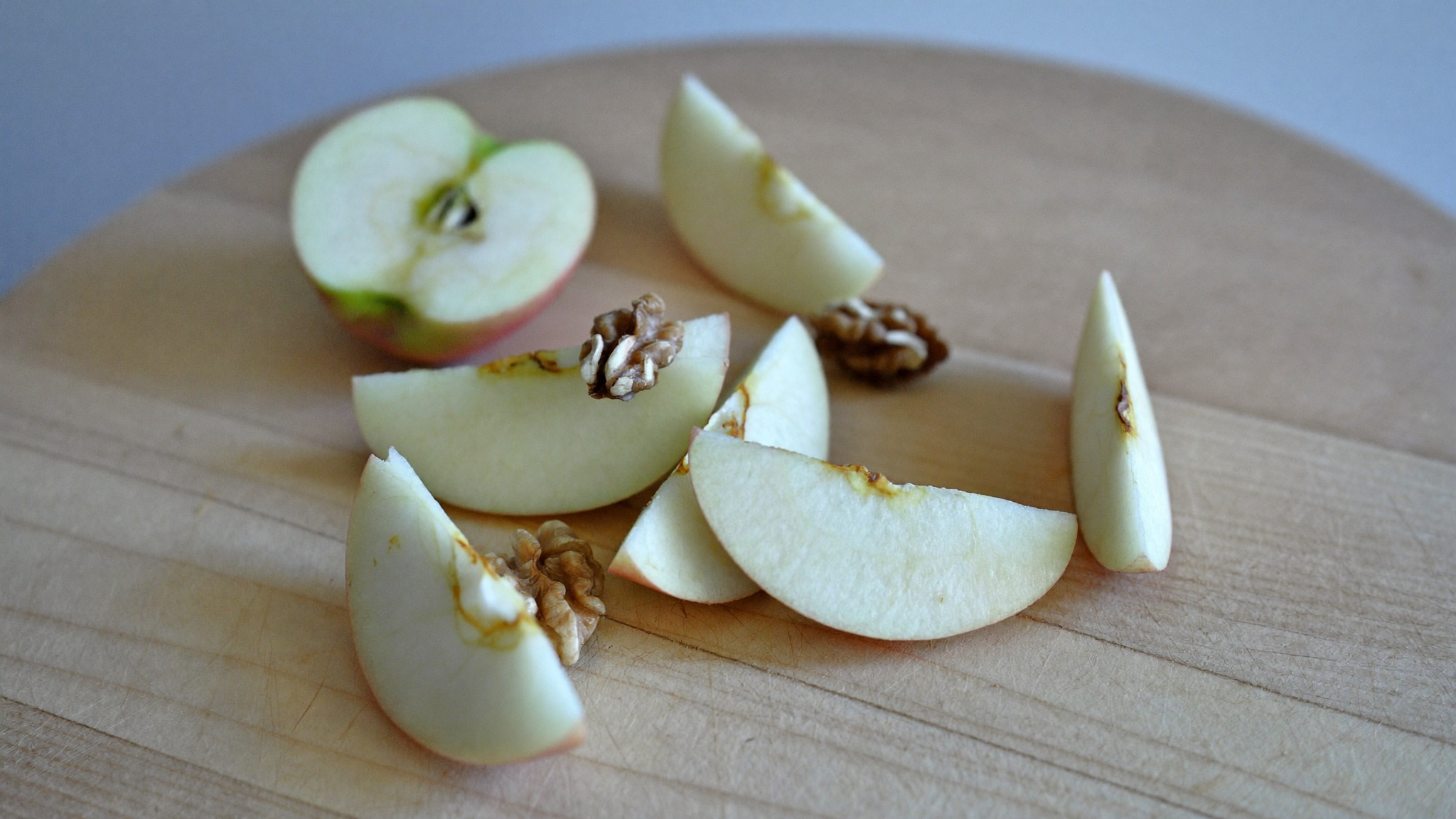
An apple with a small handful of almonds is a classic and meets both criteria. A cup of plain skyr with a handful of berries works just as well, with no added sugar or fruit preparation. A hard-boiled egg with a tomato requires only what you already have in the refrigerator. A handful of edamame from the freezer is ready in just a few minutes and provides plant-based protein. Cottage cheese with cucumber slices and pepper is the quickest high-protein snack of all. And a carrot with a spoonful of hummus combines raw vegetables and legumes in one portion.
These six have one thing in common that matters more than any nutritional information: They require no decision. If you have them at home, you'll reach for them when hunger strikes. If you don't, you'll reach for whatever is available—and that is rarely the better option.
Six snacks with ten minutes of preparation
Oven-roasted chickpeas seasoned with paprika keep for several days and replace salty snacks. A quark dip with herbs and raw vegetable sticks is ready in five minutes and can be prepared for two days. Overnight oats made with skyr instead of yogurt are prepared in the evening and ready in the morning. Lentil soup frozen in small portions makes a warming snack for cold afternoons. Homemade energy balls made from dates and nuts are energy-dense, so freeze them in portions and take them out individually. And a jar of prepared vegetable sticks in the refrigerator is the least glamorous but most effective suggestion on the list.
If you're looking for more ideas, the existing post Snack Recipes offers additional variations, while the post Healthy Snacks considers the same topic from the perspective of energy and cravings.
How to portion without weighing
For energy-dense snacks, the amount matters more than the choice, and you can determine it without a scale. The simplest approach is to transfer the food: pour nuts from the large package into small containers or jars, and whatever is in the container is the portion. Eating straight from the bag is not a lack of discipline; it is a setup that works against you.
The same principle works on the go with small bags that are filled once over the weekend. Prepare six of them, and the week is taken care of—you won't have to decide on a portion any afternoon. It takes just a few minutes and replaces five situations in which you would otherwise improvise.
The second aid is the container itself. A small plate instead of a large bowl, a small dish instead of the package: what is served gets eaten, and what is not served usually does not. It is banal and more effective in everyday life than any resolution because it requires no willpower.
And the third: snacks should be eaten while sitting down, not on the side. If you eat in front of a screen, you barely notice how much you are eating and are no fuller afterward than before. Two minutes at the table turn the same portion into a meal you will remember later.
Office, car, evening: snacks for every situation
The best list is of little use if it does not fit the situation. For most people, three environments determine whether a plan holds or falls apart, and each presents its own requirement.
In the office: resisting the drawer and the coworker's cake
At work, what matters is what you have on hand. If you bring nothing, you reach for whatever is in the kitchen, and that is usually something sweet. Nuts in a small container, a cup of Skyr in the refrigerator, and a supply of fruit cover your needs without requiring a decision.
The second point is drinking. A large share of supposed afternoon hunger is thirst or habit, and a glass of water before reaching for a snack clarifies which of the two it was. This is not a trick to make you feel full, but a quick check that takes two minutes.
On the go: shelf-stable, no refrigeration, no crumbs
In the car or on the train, almost everything that needs to be refrigerated or eaten with a spoon is ruled out. What remains are portioned nuts, roasted chickpeas, a hard-boiled egg for short trips, a small whole-grain sandwich with cheese, and, when time is short, a bar with a short ingredient list.
There is a useful rule of thumb for choosing a bar: the shorter the ingredient list, and the farther toward the front no form of sugar appears under its various names, the more likely it is to be what the packaging promises. Sugar appears as syrup, concentrated juice, malt extract, and in other forms, and distributing it under several names keeps each one farther down the list.
In the evening: the situation with the highest risk of relapse
Evening is when most plans fall apart, and hunger is rarely the reason. After a long day, your decision-making capacity is depleted, the sofa is right next to the kitchen, and reaching for the bowl is a habit, not a response to a need.
If you are genuinely hungry in the evening, a protein-rich snack is the right choice: quark with berries, cottage cheese with vegetables, a glass of milk, or a plant-based alternative with a protein content. If you are not hungry, a snack will not help; you need a substitute for the behavior: make tea, brush your teeth, leave the living room. After keeping this up for a few evenings, you will notice how much of that hunger was simply habit.
The traps on the shelf
The first trap is fruit yogurt in a small package. It sits in the refrigerated section next to plain yogurt, looks similar, and often contains a fruit preparation whose sweetening component is significantly larger than its fruity component. The solution is unremarkable: buy plain yogurt and add the fruit yourself.
The second is dried fruit. It is a concentrated food because the water is missing, which removes precisely the volume that makes a fresh apple a good snack. It makes sense as an addition to nuts, but not as a handful eaten on the side.
The third is the smoothie. Calories consumed in liquid form provide little satiety, and several fruits in one glass are drunk faster than they are eaten. It can work as a meal replacement, but as a snack, a whole apple is the better choice.
And the fourth, which is the hardest to recognize: serving size as an advertising claim. Information on the front often refers to a serving that is smaller than what is actually eaten. Looking at the standard amount per 100 grams and the package contents clarifies this in ten seconds. The article Avoiding the yo-yo effect describes how such patterns add up over the course of the day.
Looking at the ingredients list
The ingredients list is ordered by quantity, and this one piece of information answers most questions. Whatever comes first is present in the greatest amount. If sugar or syrup is listed second in a product that looks like it is made of nuts, it is a sweet product with some nuts, regardless of what the front of the package claims.
The second thing to look at is the nutrition table, specifically the column per 100 grams. It is the only figure that can be compared between products because manufacturers choose different serving sizes. Anyone who looks only at the serving column is comparing apples with pears defined in different ways.
The third point concerns terms without a fixed meaning. Words like natural, mindful, light, or fitness are marketing terms, not protected claims. They say nothing about how much energy is in the package. The only reliable sources are the ingredients list, the nutrition table, and the package contents.
A fifth trap is rarely found on the shelf, but rather in your own kitchen: good intentions in the wrong quantity. Homemade energy balls, nut butter on bread, and avocado are high-quality foods and also calorie-dense. The fact that something is homemade says nothing about the quantity, and this is precisely where many people miscalculate because their attention ends at the checkout.
The common denominator of all five traps is the same: They concern not the quality of the ingredient, but the perception of the quantity. Once you understand that, you no longer need a list of forbidden foods—just an eye for the portion actually in front of you.
When nothing is moving forward anyway
There are situations where all of this has been implemented and yet little changes. Then it is rarely the snacks. More often, it is the meals before them, sleep, physical activity, or simply the fact that the change is smaller than expected.
So before you keep tweaking your snack, it is worth spending a week observing something else: How much protein did lunch contain? How long was the night? How many trips were made on foot? In most cases, the answer lies in one of these three lines, not in the afternoon snack, which is already the smallest part of the day anyway.
At this point, some people start wondering which type of diet suits them at all. At mybody®x (MYBODY Lab GmbH), a DNA analysis answers that question: It shows predispositions that do not change and uses them to provide guidance for their own diet. What it does not do: provide a diagnosis, promise weight-loss results, or replace medical advice.
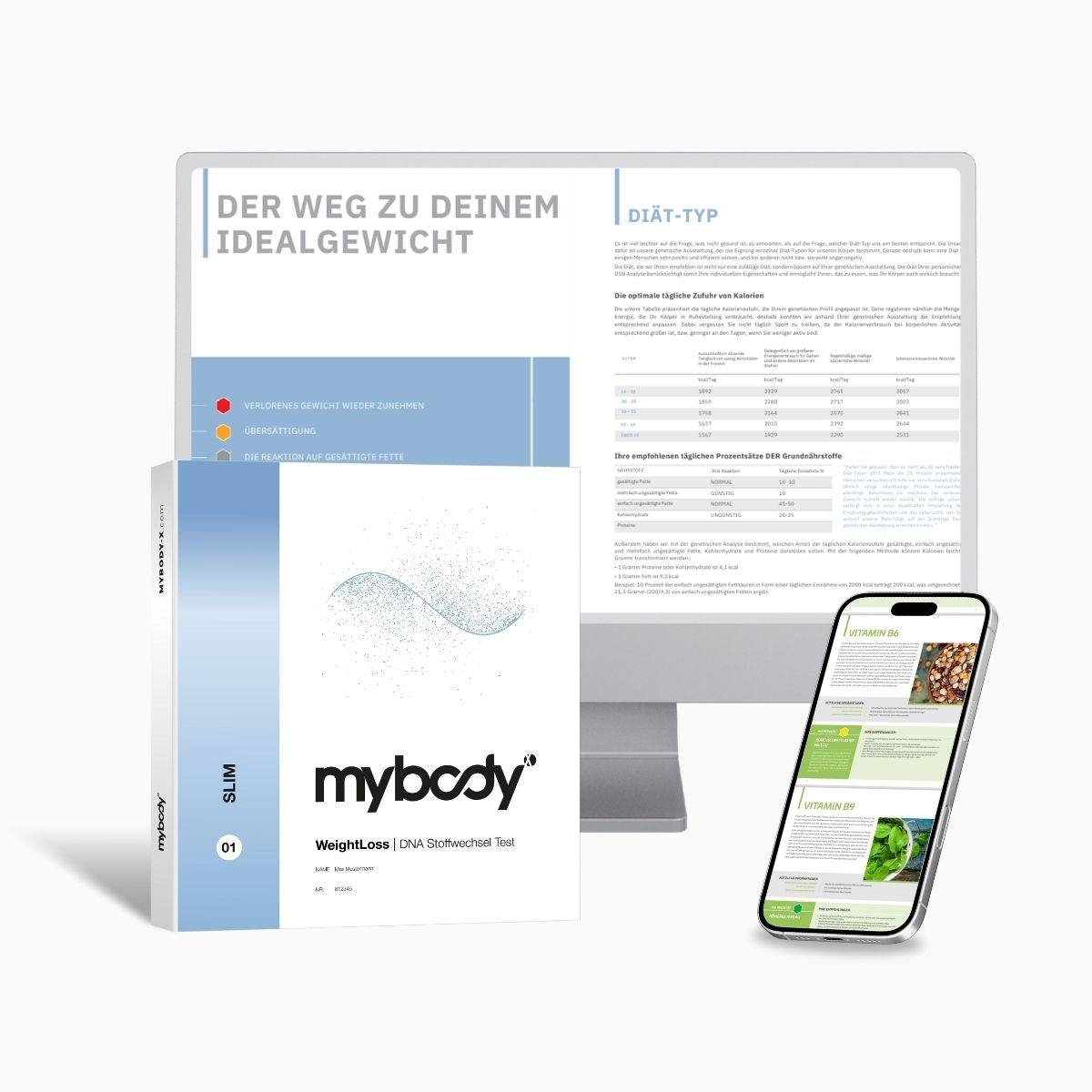
DNA analysis focused on weight loss
WeightLoss | SLIM DNA Test
Analysis from a saliva sample with a digital report on predispositions related to nutrition and weight. What the test does not do: It does not provide a diagnosis, predict weight-loss results, or replace medical advice.
Laboratory analysis 15–25 business days after receipt of the sample
Product page information, accessed 26 August 2026
You can read how others experienced their analysis on the customer reviews page. Whether this kind of analysis is worthwhile for you is answered honestly from both perspectives in the comparison:
Useful for you if …
you are starting a change and want to tailor it to your predisposition rather than follow general rules.
you have tried several approaches and want to know why that particular one did not work for you.
you are interested in the connections and want a report to refer back to.
Probably not, if …
you expect it to make you lose weight by itself. An assessment does not move any weight; plates and physical activity do.
you want to know how you are currently doing. That calls for a blood measurement, not an analysis of predisposition.
you are losing weight unintentionally or have acute symptoms. That requires a direct visit to a doctor.
Next step
If you first want to see where you stand
The SLIM DNA Test classifies predispositions related to nutrition and weight. If you are instead looking for your current status, the Biomarker Lexicon explains which blood values are relevant in this context and what they indicate.
To the SLIM DNA Test To the Biomarker LexiconWhat you should take away from this article
If you remember one thing, let it be this: volume plus protein, portioned out beforehand. An apple with nuts, quark with berries, raw vegetables with cottage cheese. Three combinations that work in any kitchen and carry you through the afternoon more reliably than any product with a promise on the front.
And keep the question before that in mind: Do you even need a snack? If you are full after your main meals, you can skip the discussion. If you are not, you should start with the meals before optimizing the snack. That is the order that requires less effort in the long run.
It started with the question of which snack is suitable for losing weight. The answer is less exciting than hoped, but it works in every situation, from the office to the sofa. If you also want to know what your body is working with: The consultation is free, and it does not sell you anything.
Frequently asked questions
Are snacks allowed when losing weight?
Yes, provided they are part of your daily amount and not added on top. If you are full after your main meals, you do not need a snack. If there are long gaps between meals, you are better off with a protein-rich snack than with skipping it and experiencing cravings later.
How many nuts a day make sense?
The DGE recommends a small handful of nuts every day and legumes at least once a week (DGE, accessed 2026). The portion size is part of the recommendation because nuts are energy-dense. In practice, this means portioning them out beforehand instead of eating straight from the bag.
Do evening snacks make you gain more weight than daytime snacks?
For the daily total, timing plays a smaller role than is often assumed. Evening is more critical mainly because people are less often eating out of hunger and more often out of habit. Anyone who is actually hungry in the evening should choose a protein-rich option.
Is fruit too high in sugar as a snack?
Fresh fruit provides water, volume, and fiber and is unproblematic as a snack. The DGE recommends at least five portions of fruit and vegetables per day (DGE, accessed 2026). The situation is different with dried fruit and juices because they lack volume.
How can I recognize a decent bar?
Look at the ingredients list, not the front. The shorter the list and the farther down sugar appears under its various names, the more likely the bar is to match what the packaging suggests. Checking the information per 100 grams and the package contents is also part of the process.
Read more
You might also be interested in
The context surrounding the snack question: the daily and weekly structure of a plan.
The same topic from an energy and food-craving perspective.
Sources
- German Nutrition Society (DGE): DGE recommendations, accessed on 26.08.2026 – dge.de
The verbatim quote about legumes and nuts, the recommendation of at least five portions of fruit and vegetables per day, and the rationale concerning protein, vitamins, minerals and fiber, secondary plant compounds, and fatty acids come from [1]. All other statements in this article have deliberately been formulated without quantities or calorie figures because there is no documented source for them. Information on price, sample type, scope of services, and laboratory comes from the mybody®x product page, accessed on 26.08.2026; processing times follow the central specification for each test type. The source was accessed and reviewed on 26.08.2026.

mybody®x Editorial & Expert Team
Blood analysis interpretation Nutritional science Laboratory diagnostics
This article was created by the mybody®x editorial and expert team. The team combines expertise in interpreting blood analyses, nutritional science, and laboratory diagnostics. Everyone who contributes to it is listed on the authors page.
Published on 26.08.2026 · Last updated on 26.08.2026
The content is intended for general information and does not replace medical advice, diagnosis, or treatment. Reference ranges depend on the laboratory, method, and age; the information on your test report is always authoritative.


Share now:
Healthy Vegetarian Recipes for Every Day: 10 Dishes with Numbers
Overview of protein-rich foods: what really matters